Contents
Shasta Daisy Flower
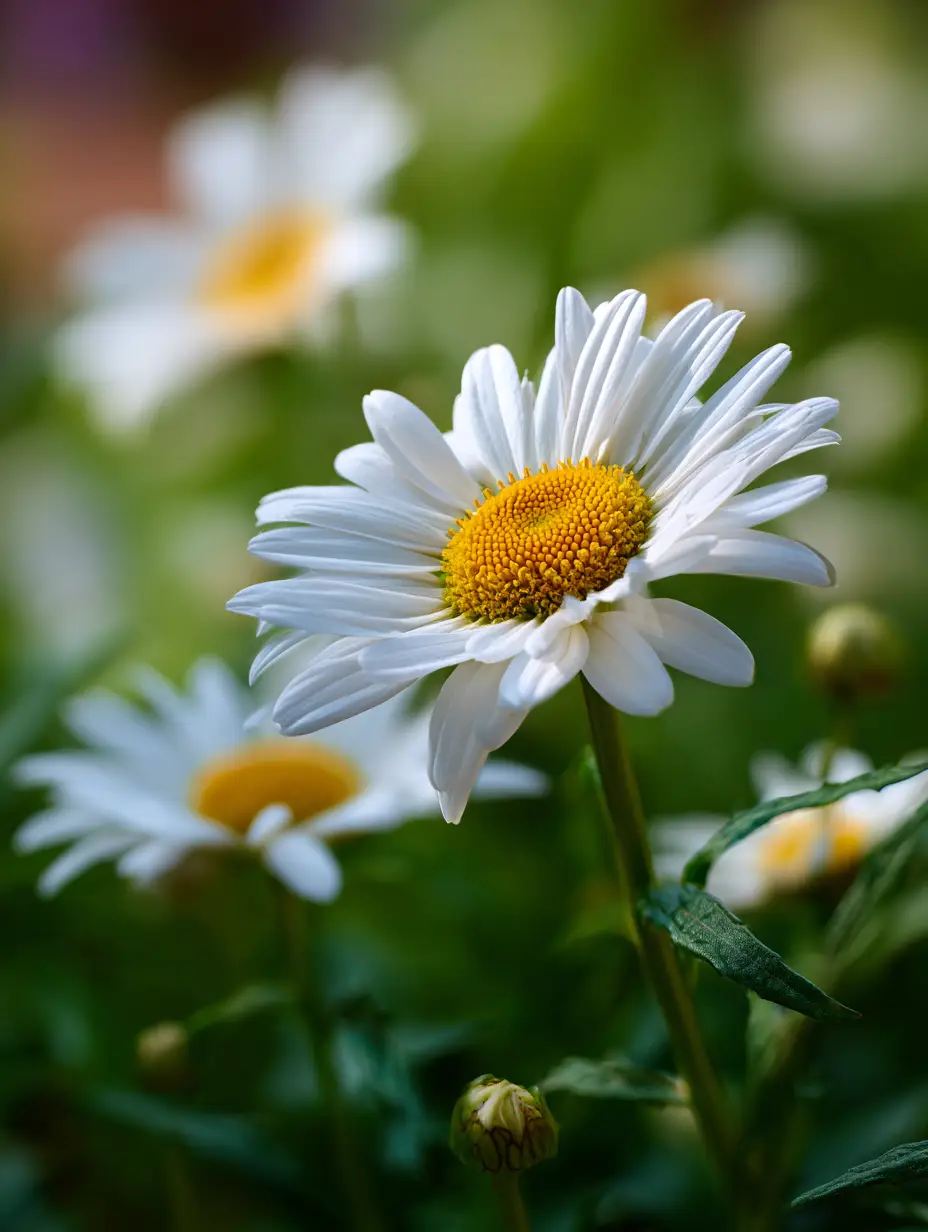
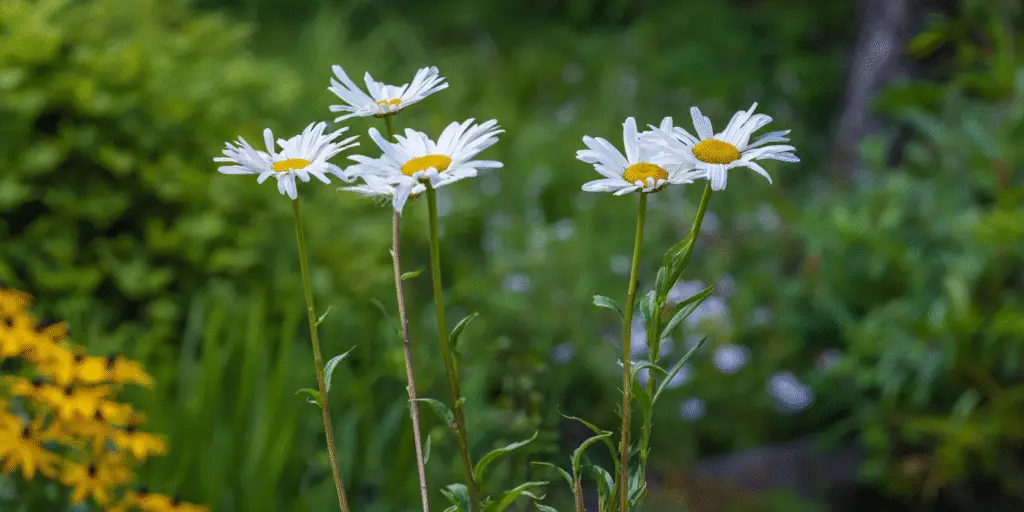
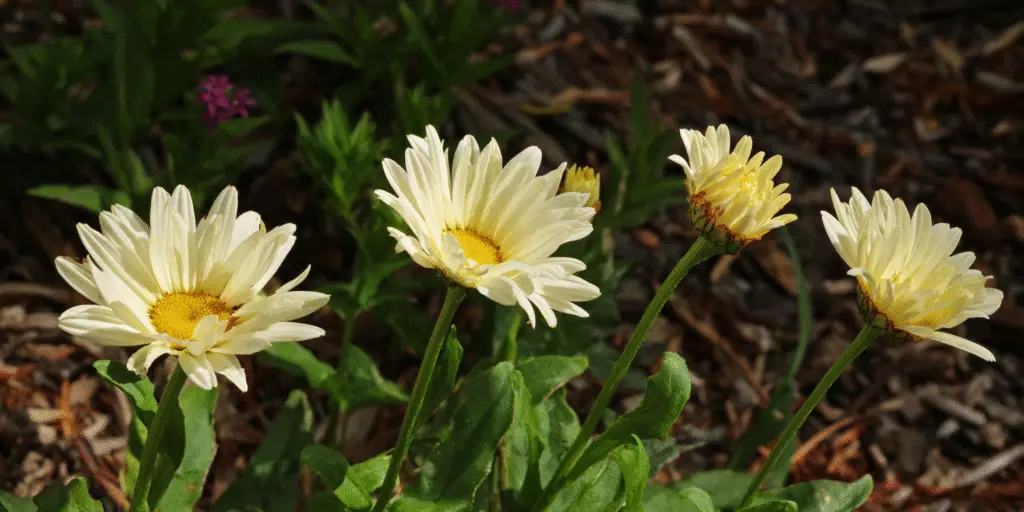
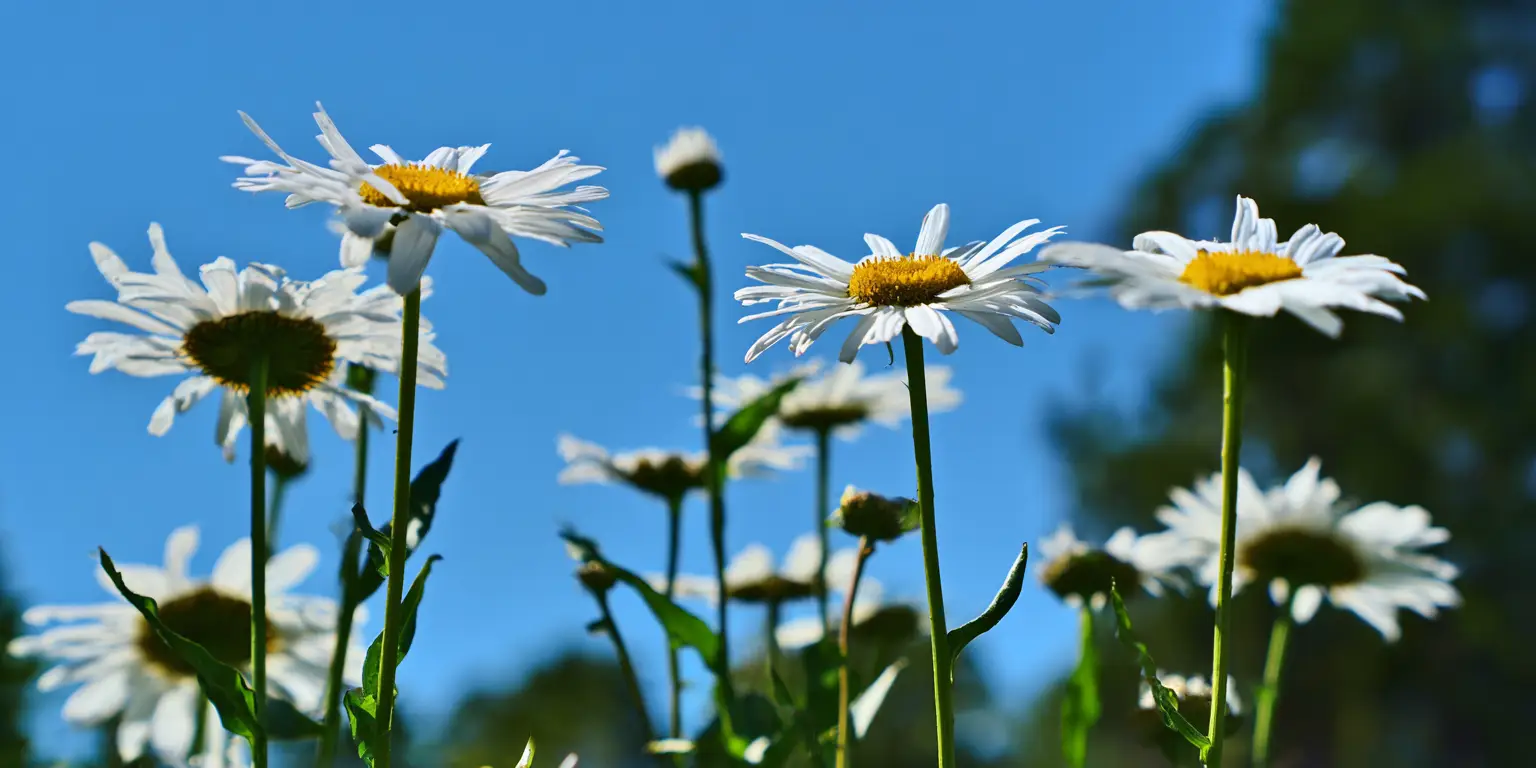
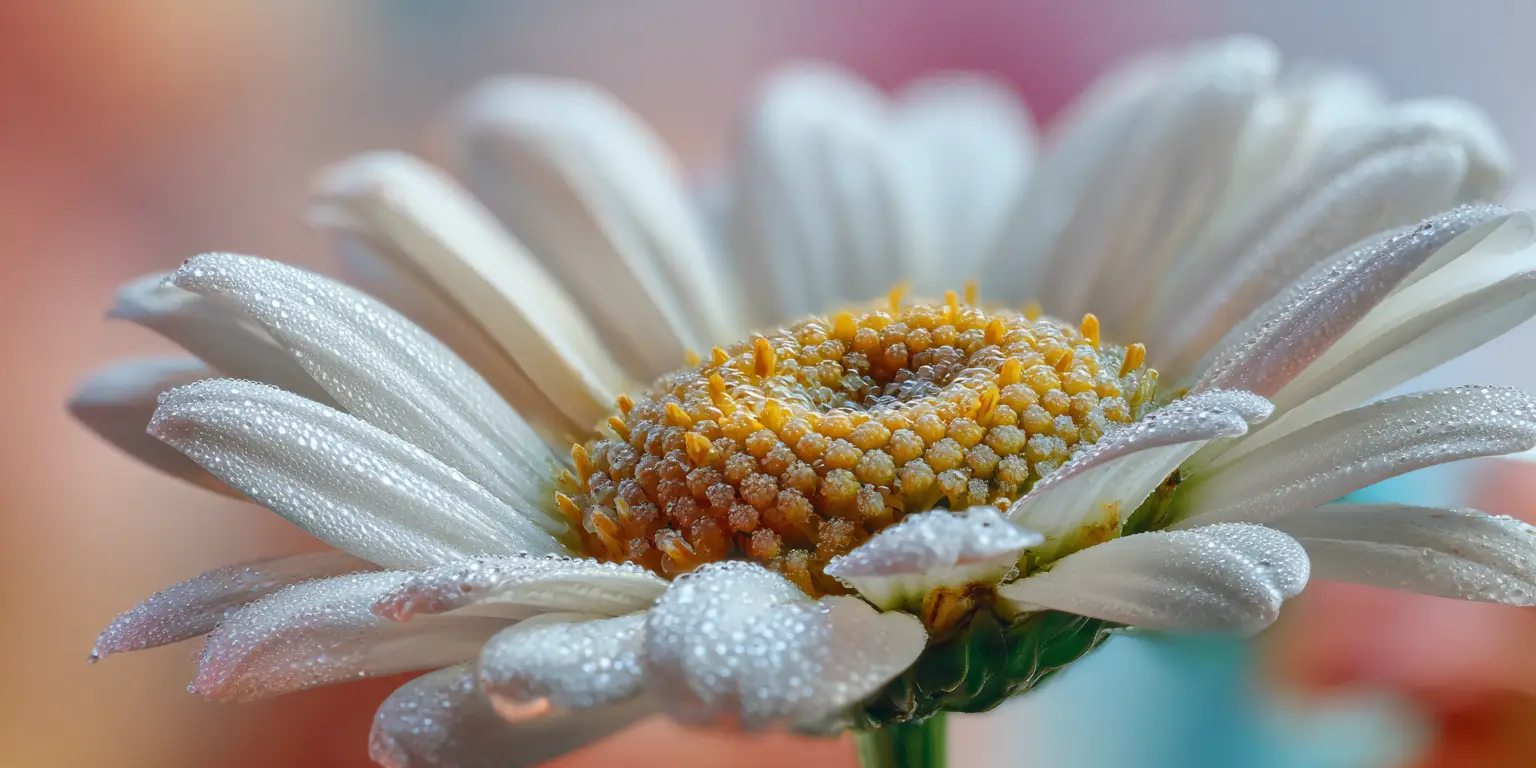
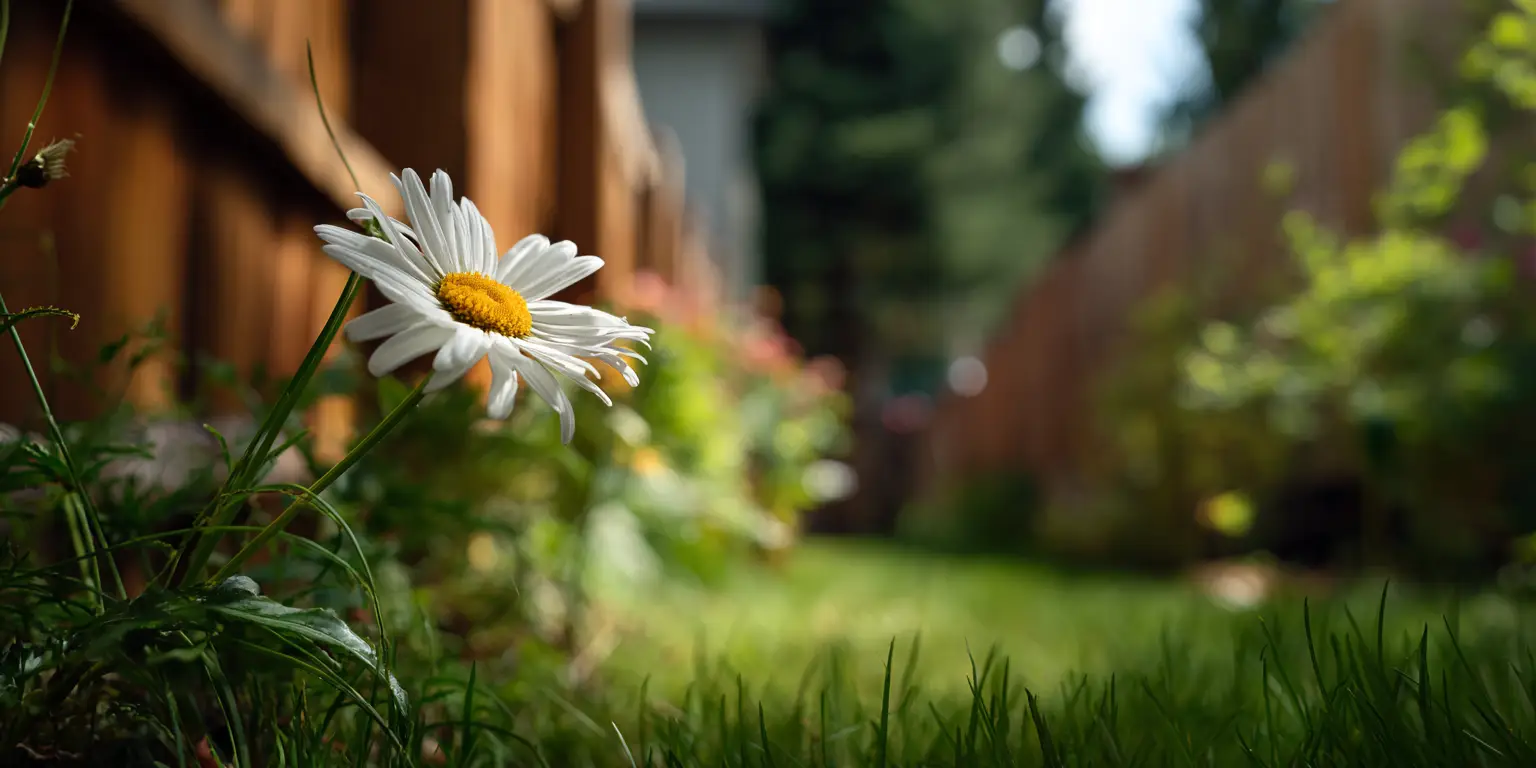
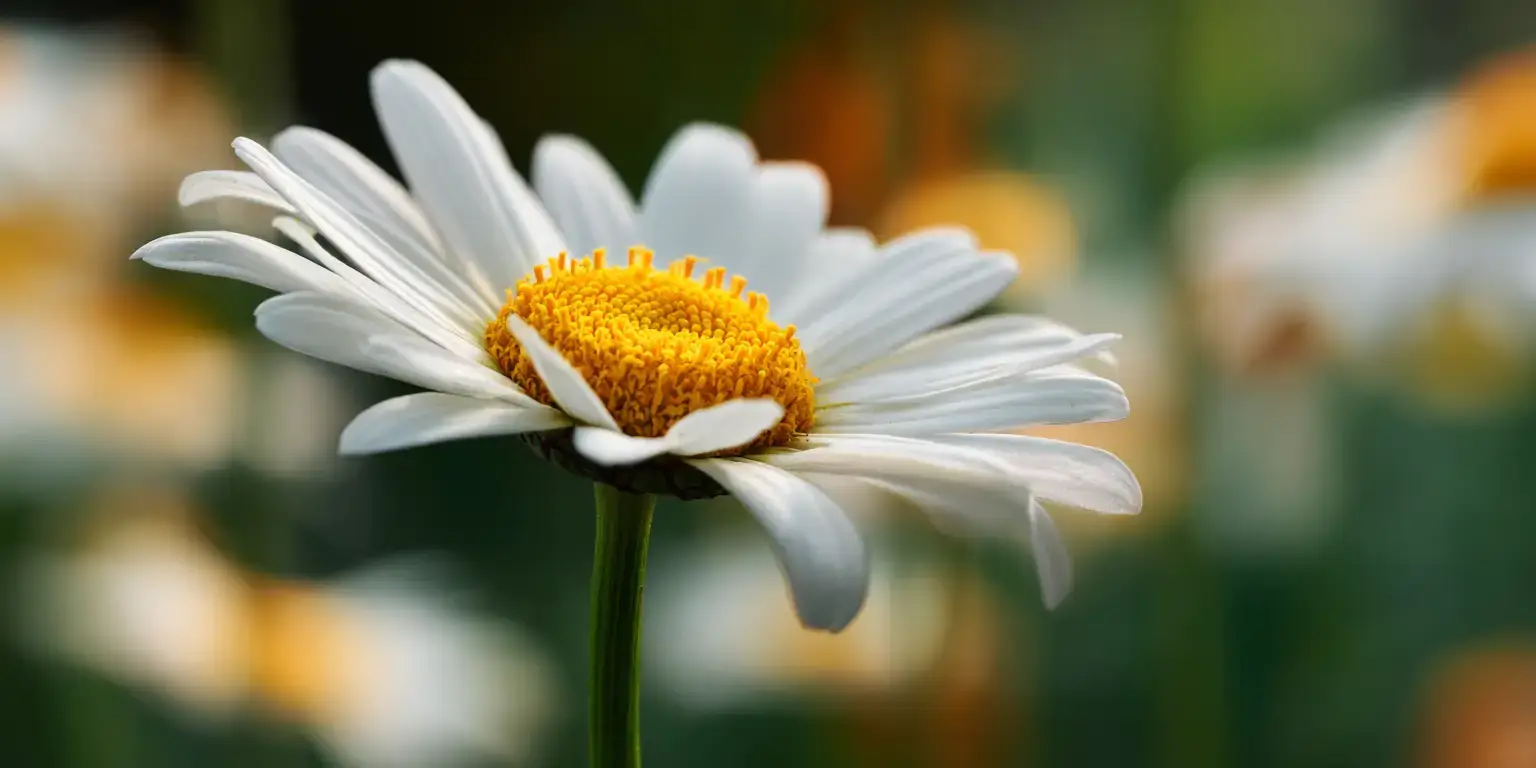
The Shasta Daisy Flower (Leucanthemum × superbum) is a popular herbaceous perennial known for its classic daisy appearance and cheerful garden presence. It features crisp white flowers with bright yellow centers, creating a timeless look that lights up flower beds and borders. Each bloom consists of snowy white petals (ray florets) surrounding a central cluster of tiny yellow flowers (disk florets), giving the plant its signature sunburst looks. Shasta daisies are prized as low maintenance flowers – they are easy to grow and require minimal care, making them ideal for both beginner and experienced gardeners. Thanks to their simple beauty and reliable performance, Shasta daisies have become one of the classic cottage garden favorites and a staple in sunny perennial beds.
Shasta daisies bring a long season of color and attract plenty of pollinators to the yard. Bees, butterflies, and other beneficial insects frequent the blossoms, drawn by the accessible pollen and nectar in the open flower heads. In floral arrangements, these blooms are long-lasting and eye-catching, further adding to their appeal. Overall, the Shasta daisy holds a quintessential place among garden daisies, combining old-fashioned charm with modern ease of care.
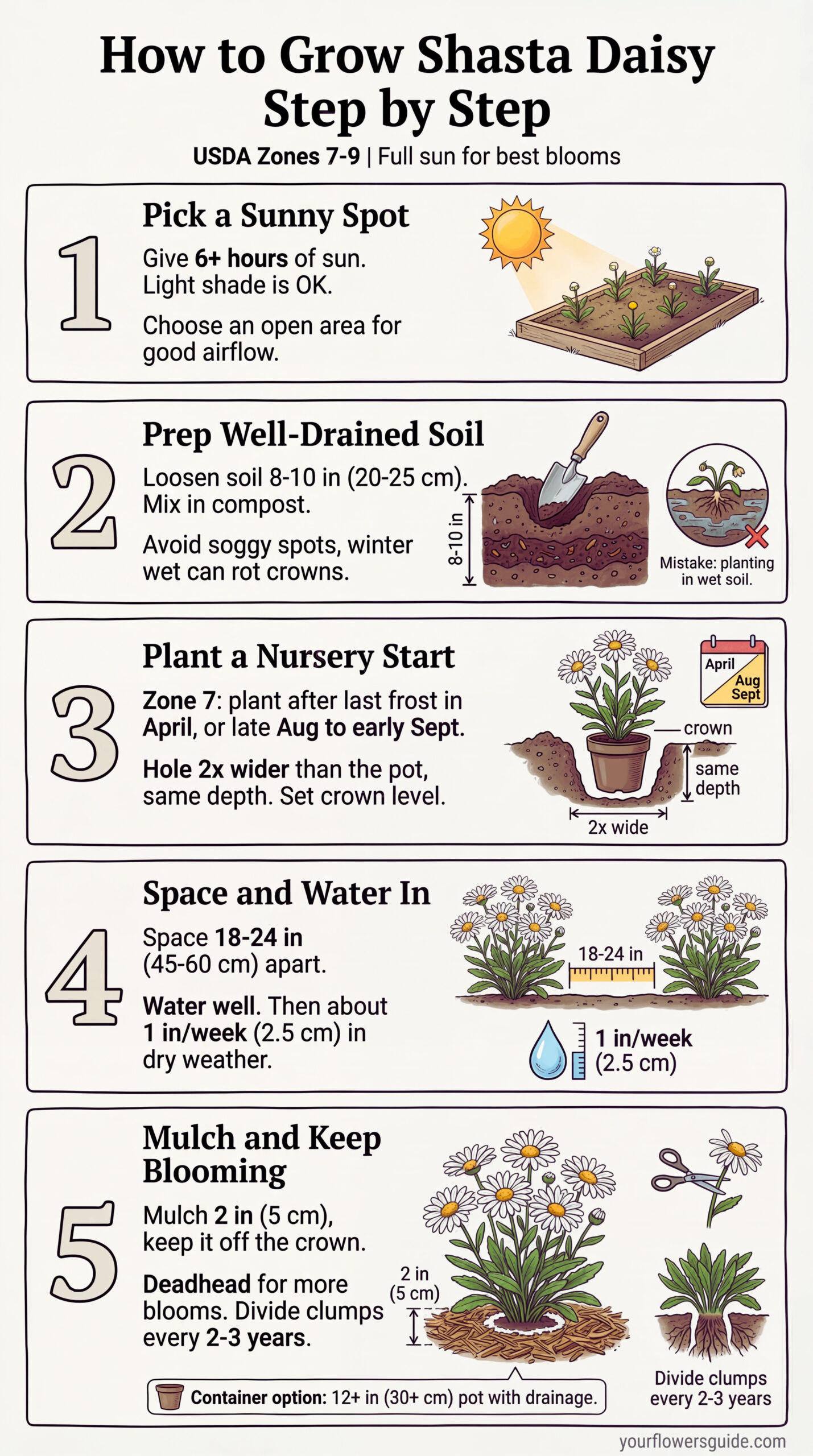
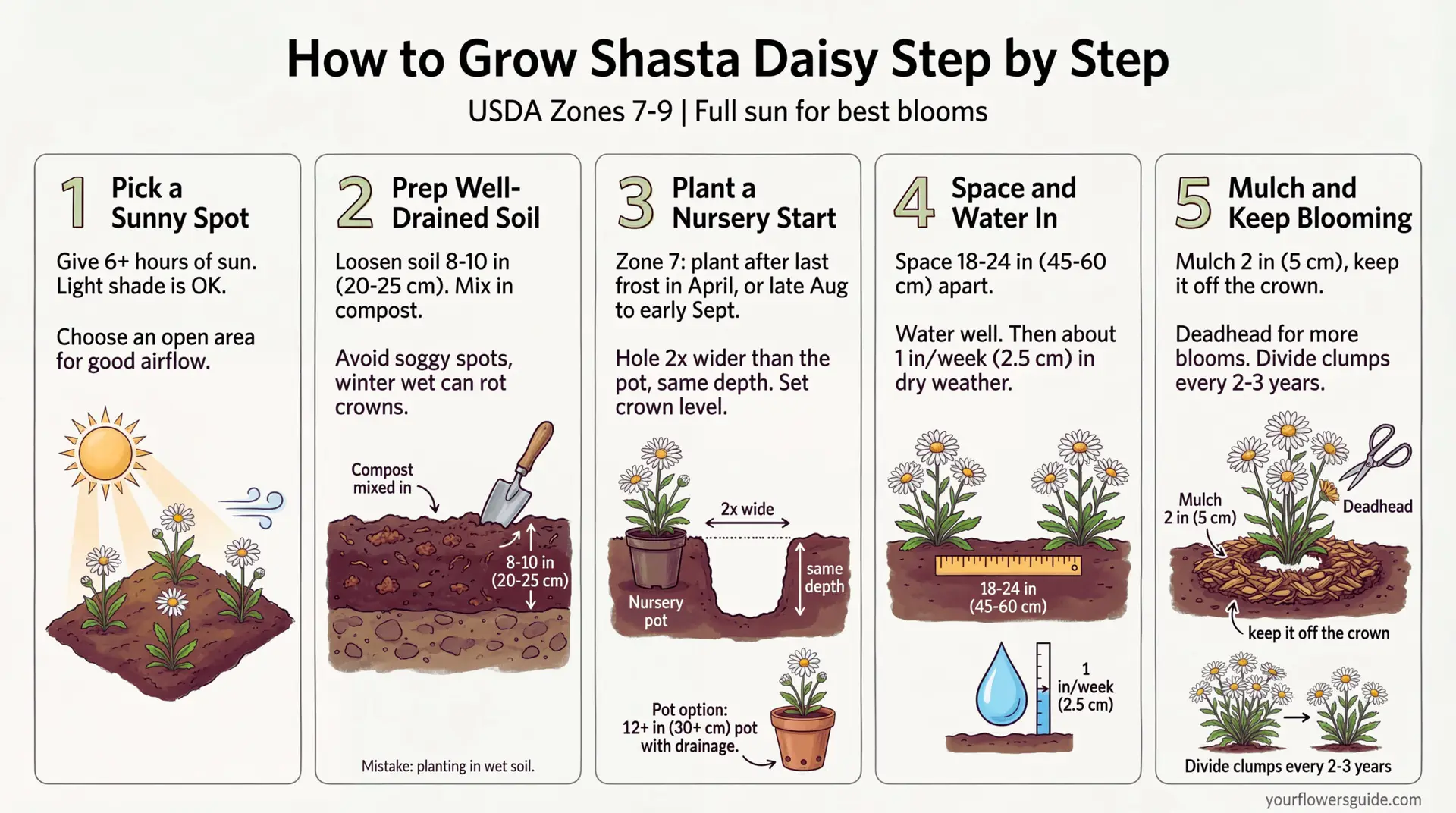
A clear, step-by-step guide to soil, planting, watering, feeding, pruning, and winter care. Includes zone timing, container tips, companions, and quick fixes for common problems.
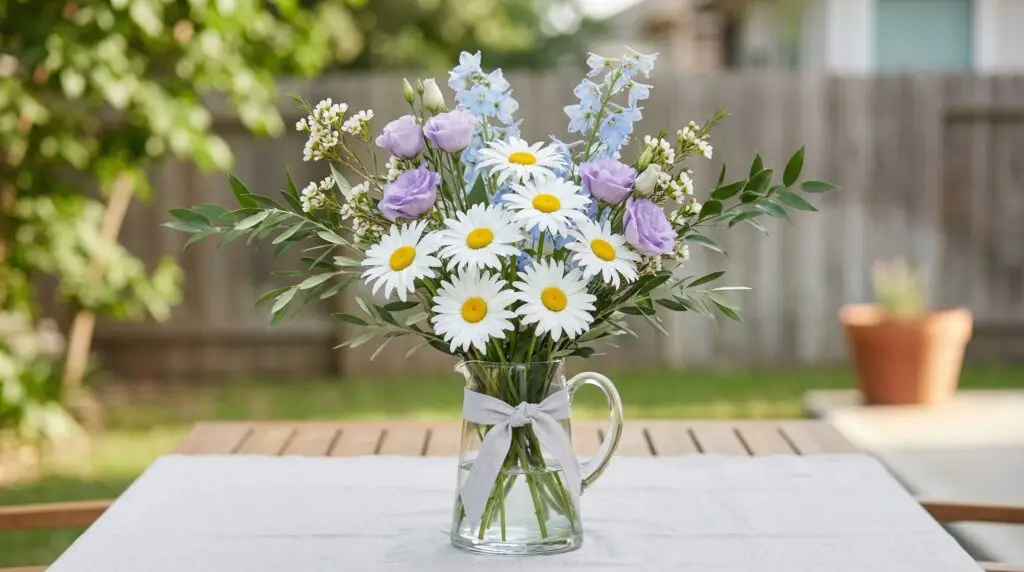
Explore simple, beautiful bouquet ideas for the home, gifts, and special occasions from romantic mixes to clean, minimal styles. Each idea includes suggested flower combinations, color palettes, and sizes, with photos for quick inspiration.
🌱 Taxonomy and origin
Shasta daisy belongs to the daisy family (Asteraceae), which includes sunflowers, chrysanthemums, and many other well-known ornamental plants. Its botanical name is Leucanthemum × superbum, indicating it is a hybrid species. Unlike wild daisies that occur naturally, the Shasta daisy was deliberately bred by the famed horticulturist Luther Burbank around the turn of the 20th century. Burbank created this plant by crossing several daisy species from different parts of the world. He started with the European oxeye daisy (Leucanthemum vulgare) and crossed it with a larger daisy species (Leucanthemum maximum). The offspring were then crossed with a Portuguese daisy (Leucanthemum lacustre), and finally with the Japanese daisy (Nipponanthemum nipponicum). The result of these complex crosses was a vigorous new hybrid with larger, snowier blooms – which Burbank named the “Shasta daisy” after California’s snow-capped Mount Shasta, evoking the image of pure white petals against a mountain backdrop.
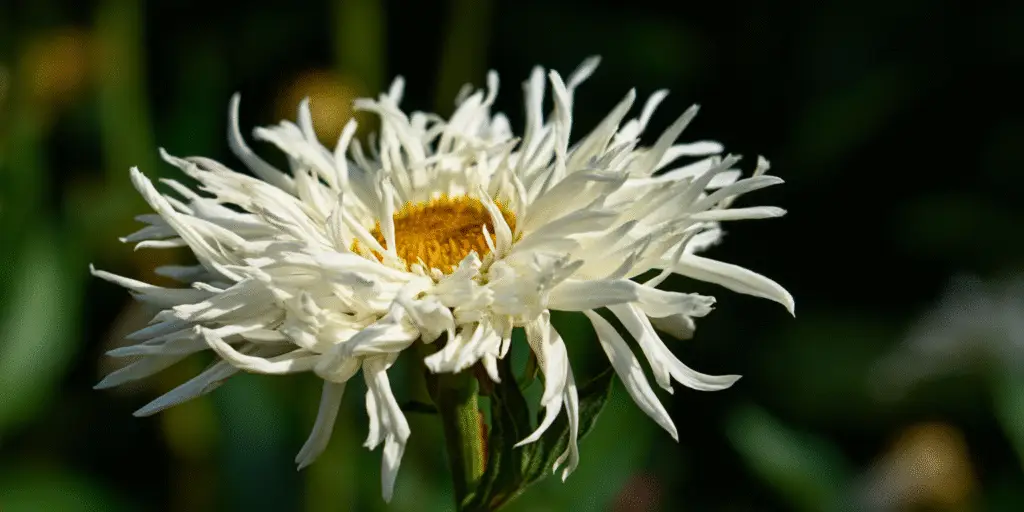
Introduced to gardeners in the early 1900s, the Shasta daisy quickly gained popularity for its impressive blooms and hardy nature. It inherited the best traits of its parent species: robust growth, large flower size, and adaptability. Modern Shasta daisies typically grow in clumps and do not spread aggressively by underground runners, which differentiates them from some wild daisies (like the oxeye daisy) that can become invasive weeds. Today there are many cultivated varieties (cultivars) of Shasta daisy, ranging from compact dwarf forms to tall, classic types, with single or double petal arrangements. All share the same basic “white-petals-with-yellow-center” look that makes daisies so beloved.
🌸 Bloom time
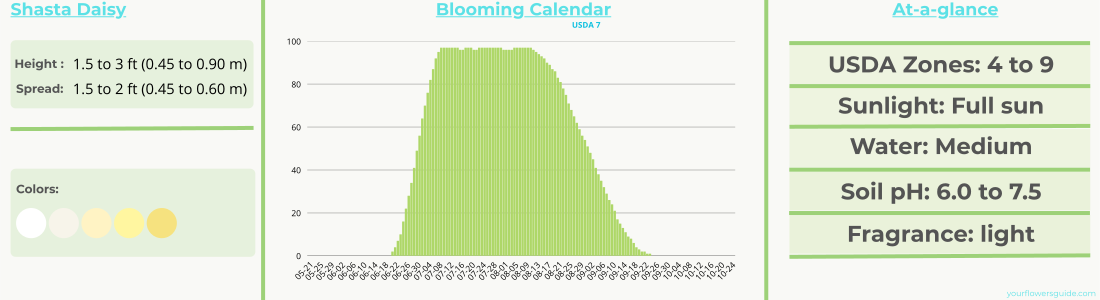
Shasta daisies are summer blooming perennials that put on their main display during the warm months. In most regions, they begin flowering in early summer (around June) and continue through July and August. The peak bloom time generally falls in mid-summer when the weather is warm and days are long. With regular deadheading (removing spent flowers), Shasta daisies can produce successive flushes of blooms, extending the flowering period into late summer or even early fall. In favorable conditions, some cultivars will bloom until September. Each individual flower can last for a week or more on the plant, ensuring a lengthy show of color in the garden.
Gardeners appreciate the reliable summer performance of Shasta daisies, as they fill the gap between spring bulbs and late-season perennials. The flowers hold up well in sun and heat, and their bright white petals resist fading. To encourage the longest bloom time, it is helpful to remove wilted blooms promptly. Deadheading not only keeps the plants looking tidy but also redirects the plant’s energy into producing new buds rather than setting seeds. With this simple maintenance, a healthy Shasta daisy clump can provide cheerful blooms for much of the summer.
📏 Height and spread
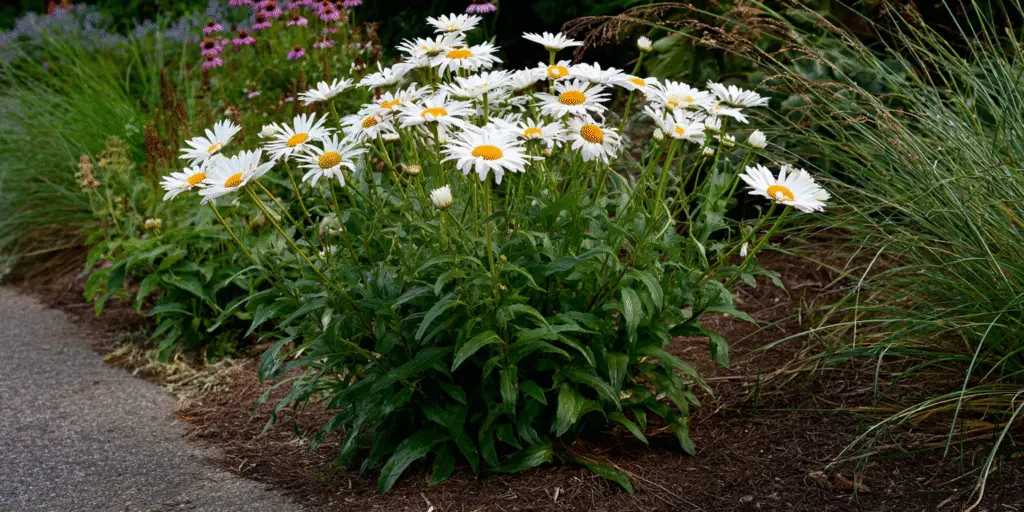
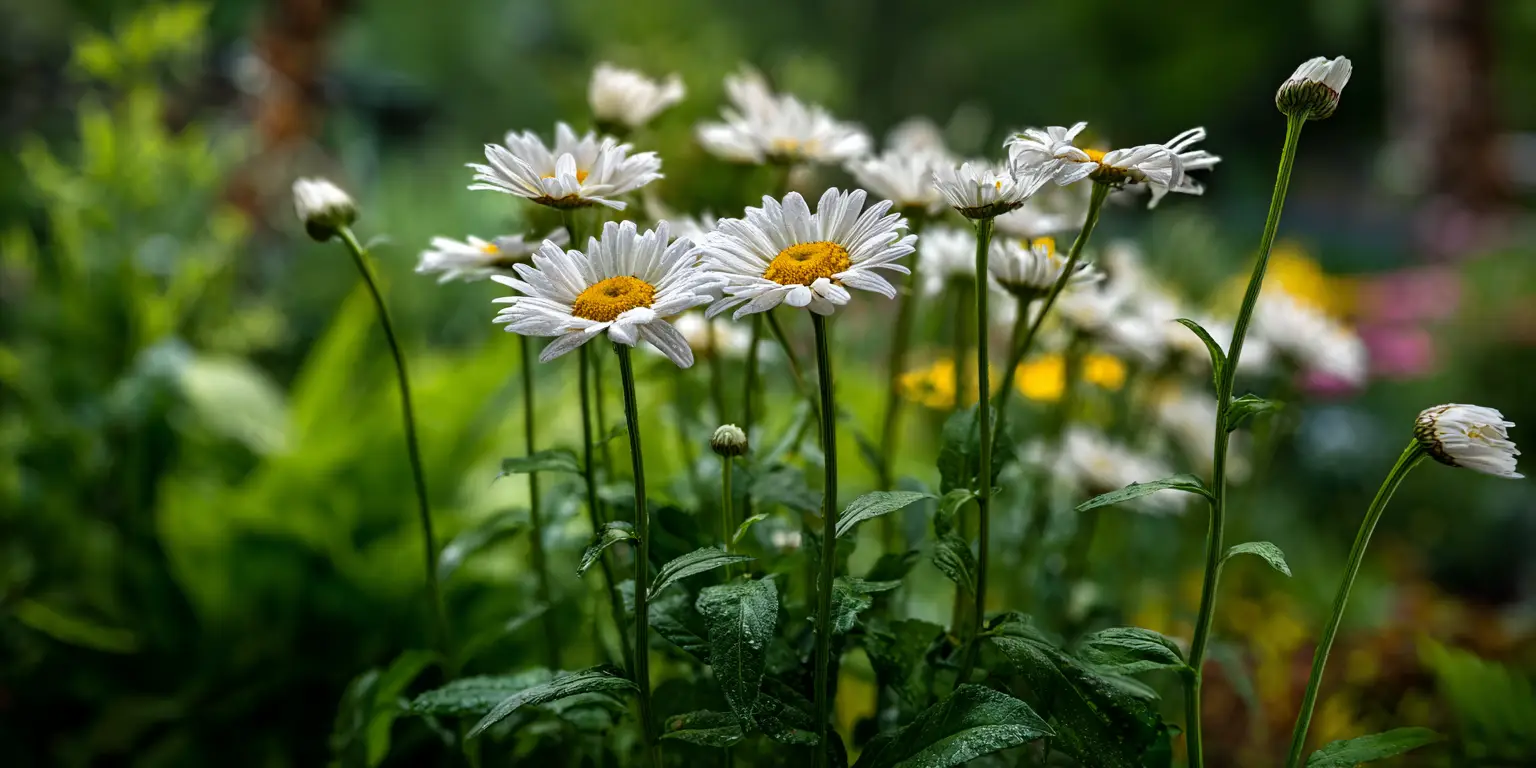
The size of Shasta daisy plants can vary depending on the variety, but most standard types reach a mature height of about 2 to 3 feet (60-90 cm) and spread about 1 to 2 feet (30-60 cm) wide. The plants grow as clumps of upright stems rising from a basal cluster of leaves. Foliage is medium green, with leaves that are narrow, toothed, and somewhat glossy. The flower stems are sturdy and hold the blooms above the foliage, usually without needing much support for average-height varieties. However, taller cultivars (some can approach 3.5-4 feet in height) might benefit from staking or being planted among other supporting plants to prevent flopping in strong wind or rain.
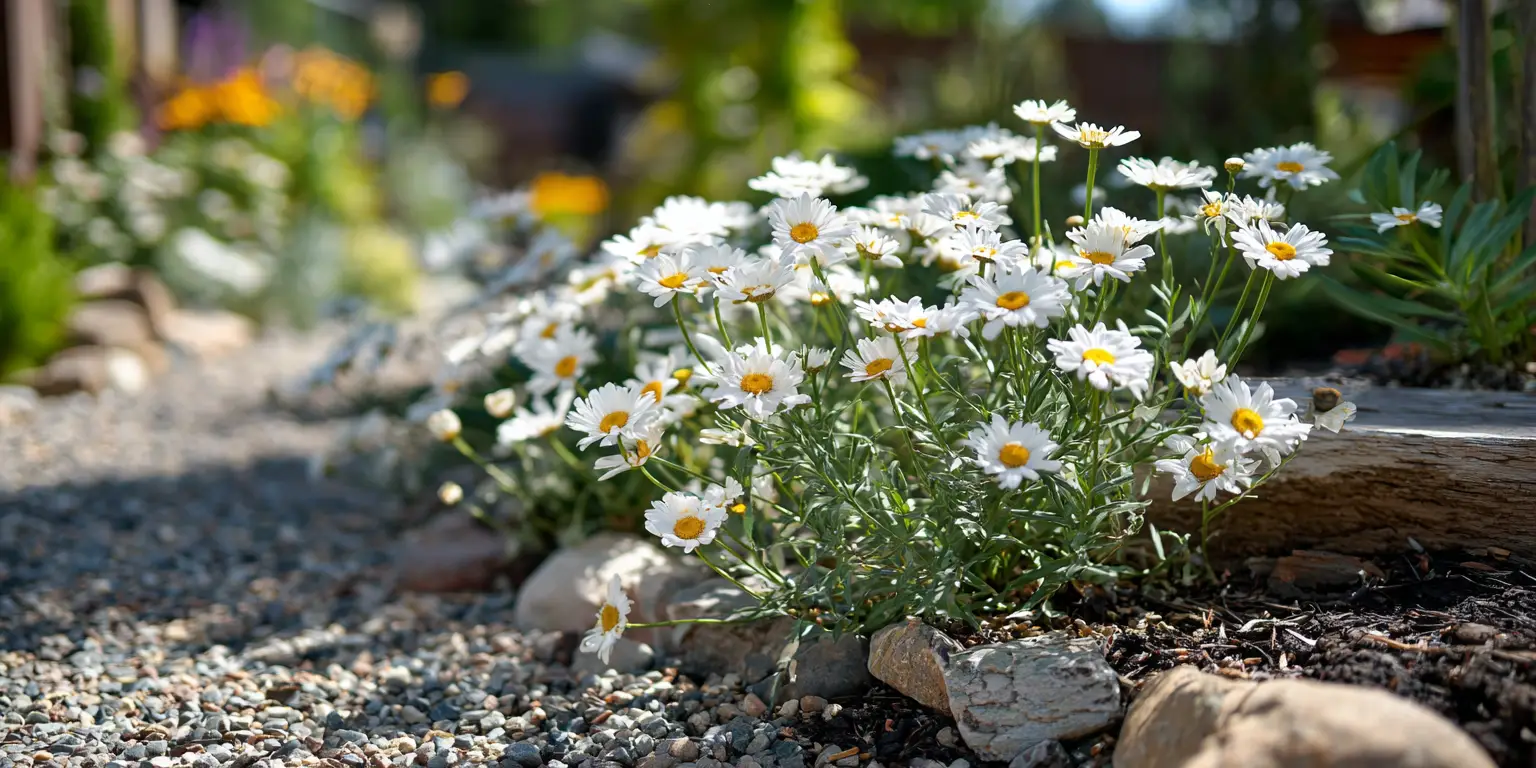
Dwarf and compact Shasta daisy cultivars are also available, which may only reach 10 to 18 inches in height. These smaller varieties are excellent for the front of borders or for container gardening. Regardless of size, Shasta daisies tend to form clumps that slowly expand outward. Over a couple of growing seasons, a single plant will widen as new shoots emerge around the perimeter. When planting multiple Shasta daisies, give them space of roughly 1 to 2 feet apart (depending on the cultivar’s spread) so they have room to grow and form healthy clumps. Crowding them too closely can lead to competition for nutrients and can also reduce airflow, potentially increasing disease risk.
☀️ Light
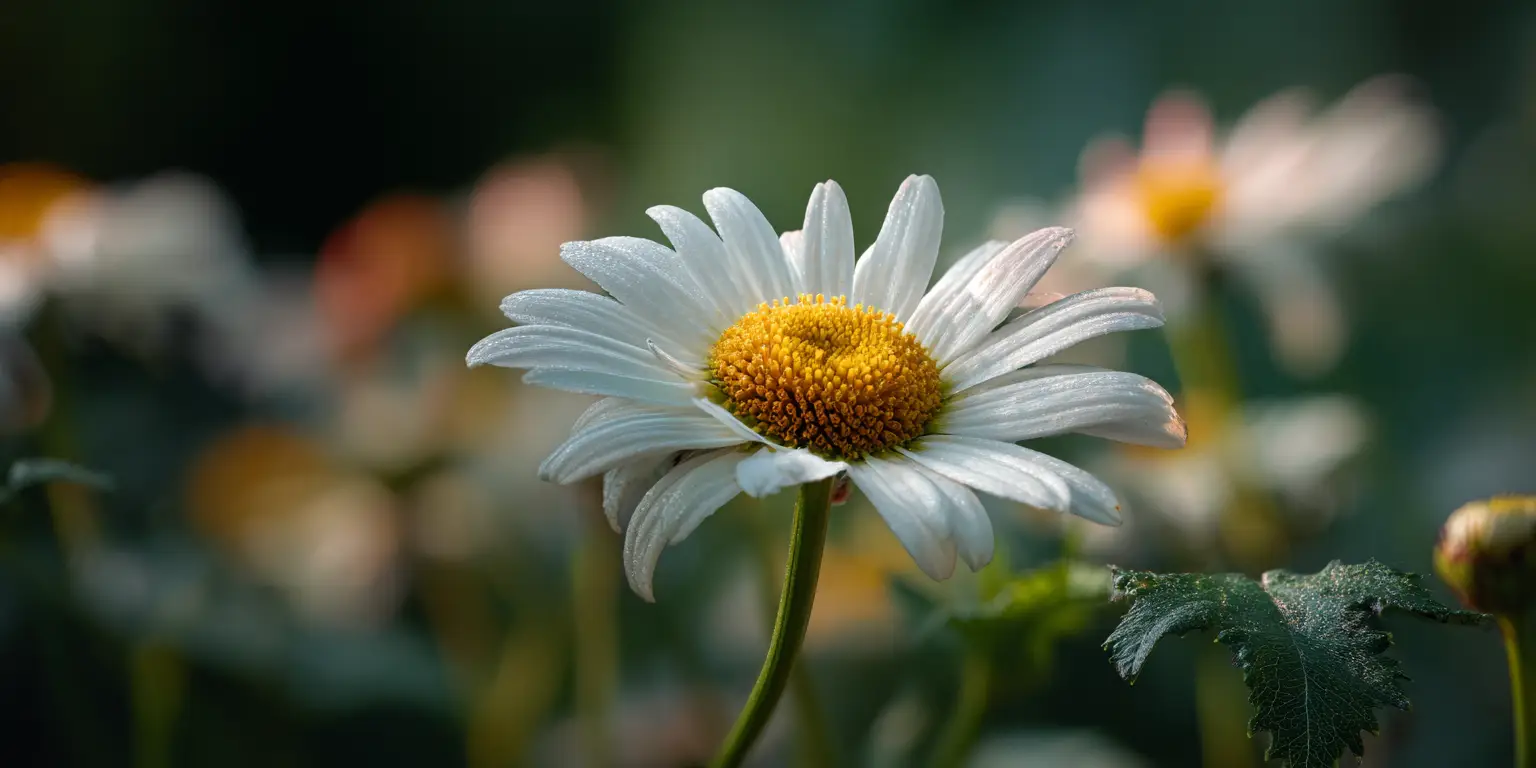
Shasta daisies thrive in bright conditions and prefer full sun for best flowering. “Full sun” means about 6 or more hours of direct sunlight per day. In ample sun, these plants produce abundant blooms and sturdy stems. They can tolerate light partial shade, especially in hotter climates or during the peak of summer afternoons. In regions with very intense sun or extreme heat, a bit of afternoon shade can actually help prevent the flowers from scorching and may prolong bloom. However, if grown in too much shade (for example, in a mostly shady location), Shasta daisies will likely become leggy, reaching for light, and may produce fewer flowers. The stems can also become weaker in shade, causing the plants to flop or lean.
For optimal results, choose a planting site that gets plenty of direct light. Six to eight hours of sun will keep Shasta daisies blooming vigorously. If you notice your daisies aren’t flowering well or look spindly, consider whether trees or structures are casting too much shade on them. Sometimes simply relocating the plants to a sunnier spot can greatly improve their performance. Overall, plenty of sunlight ensures the Shasta daisy lives up to its full flowering potential.
💧 Water
As with many garden perennials, Shasta daisies do best with moderate watering. They prefer consistently moist, well-drained soil, but are relatively tolerant of occasional dry periods once established. Water the plants deeply about once per week, providing roughly 1 inch of water (including rainfall) during the growing season. In the heat of summer or in very sandy soil, they may need water more frequently (for example, twice a week) to keep the soil from completely drying out. Newly planted Shasta daisies, in particular, should be watered regularly until their root systems establish, as they have less drought tolerance in their first season.
It’s important to avoid overwatering and waterlogged conditions. Soggy soil around the roots can lead to rot and fungal diseases that may kill the plant. Always check that the top inch or two of soil has dried out before watering again. Good drainage is key – if water tends to sit or puddle where your daisies are planted, consider amending the soil with organic matter or relocating the plants to a raised area. When watering, aim for the base of the plant rather than splashing the foliage, since wet leaves in humid weather can encourage diseases like powdery mildew. A layer of mulch around the base of the plants can help conserve soil moisture and reduce how often you need to water, but keep mulch a couple of inches away from the plant’s crown to prevent excess dampness at the stems.
🌍 Soil and pH
Shasta daisies are not very fussy about soil as long as it is well-draining. In their parentage, daisies often grow in meadows and open fields with average soil, and similarly in the garden they do well in moderately fertile ground. For best results, plant Shasta daisies in a loamy or sandy soil enriched with some compost. While they can tolerate poorer soils, a bit of organic matter will support better growth and flowering. Avoid extremely rich, heavily fertilized soils, as this can cause the plants to produce lots of lush foliage at the expense of flowers. Overly rich soil can also make stems softer and more prone to bending. A good balance is an average garden soil improved with a little compost for nutrients and structure.
The soil should be moist but well-drained – Shasta daisies will suffer in waterlogged clay. If you have heavy clay soil, mixing in coarse sand or grit along with organic matter can improve drainage. As for soil pH, Shasta daisies prefer neutral to slightly acidic conditions. Aim for a pH around 6.0 to 7.0 if possible. They are quite adaptable and can tolerate slightly alkaline soil (up to around pH 7.5 or 8.0) as well, though extremely alkaline soils might lead to nutrient deficiencies. In most gardens, you won’t need to do anything special regarding pH, typical garden soil in the mildly acidic to neutral range is acceptable. If unsure, a simple soil test can confirm if any adjustments are needed. In summary, give Shasta daisies a well-drained, average soil with a neutral-Ish pH, and they will usually thrive.
❄️ USDA hardiness
Shasta daisies are hardy perennials across a broad range of climates. Most varieties are winter-hardy in USDA hardiness zones 4 through 9. This means they can survive typical winter low temperatures in those zones (approximately -30°F / -34°C in zone 4, up to about 20°F / -7°C in zone 9). In zone 4 and colder parts of zone 5, it’s often recommended to provide a layer of winter mulch after the ground freezes, to insulate the roots from extreme cold and temperature fluctuations. Some specially bred cultivars (such as the ‘Alaska’ Shasta daisy) are even known to survive in zone 3 with proper protection, though generally zone 4 is a safer lower limit for most strains.
In warmer regions (zones 8-9), Shasta daisies will live through mild winters without issue. The plants are deciduous perennials, meaning the top growth (stems and leaves) will typically die back after the first hard frost in fall. The roots and crown remain alive below ground, and new shoots emerge in spring once temperatures rise. In very mild winter areas, Shasta daisies might keep some green foliage year-round, but they will still have a natural rest period and won’t bloom until their normal season. Gardeners in hot summer areas (for example, zone 9 with high heat or humidity) should ensure Shasta daisies have good air circulation and sufficient water, as extreme heat can stress the plants. But overall, these flowers have a strong tolerance for both cold winters and warm summers, making them dependable across many regions.
🌼 Propagation and longevity
Shasta daisies can be propagated by several methods, with division being the most common and reliable way. Every few years, mature clumps tend to get crowded and can start to decline in vigor – often the center of the clump may die out, leaving a ring of healthy growth around it. This is a signal that it’s time to divide the plant. The best time to divide Shasta daisies is in early spring just as new growth begins (you can also divide in early fall in cooler climates, so the divisions have time to re-establish before winter). To divide, dig up the entire clump and gently separate it into smaller sections, each containing multiple shoots and a portion of the roots. Replant these divisions in prepared soil at the same depth they were growing before, spacing them out to avoid immediate crowding. Water the new divisions well and keep them moderately moist as they settle in.
Division not only produces new plants to expand your garden or share with friends, but it also rejuvenates the original planting. Regular division every 2 to 3 years will keep Shasta daisies vigorous and blooming abundantly. In terms of longevity, Shasta daisies are sometimes described as “short-lived perennials.” An individual plant (if never divided) might only live on the order of 3 to 5 years before it weakens or dies out. However, by dividing and replanting the healthiest portions, you can effectively keep the clump going indefinitely. Another propagation option is growing Shasta daisies from seed. They can be started indoors from seed 6-8 weeks before the last frost date and later transplanted outside, often blooming in their first summer if started early. Many cultivars, being hybrids, may not come true to seed (seedlings can show variation in height or bloom form), but they will still produce daisy flowers. Shasta daisies also sometimes self-seed in the garden: you might find volunteer seedlings around established plants. These can be transplanted or left to form naturalistic drifts, but note that removing spent blooms (deadheading) will greatly reduce self-seeding.
Less commonly, Shasta daisies can be propagated by cuttings (for example, taking basal stem cuttings in spring), which is a method used to clone specific cultivars. For the average gardener, division and seeds are usually simpler. Overall, expect to revitalize your Shasta daisy plantings every few years for the best display. With good care and periodic propagation, a clump of Shasta daisies can effectively last for many years in the garden.
👃 Fragrance
Shasta daisy flowers are not particularly known for a strong fragrance. Unlike some highly perfumed garden blooms (such as roses or lilies), daisies have only a mild scent that many describe as fresh or subtly earthy. You might notice a faint sweet or herbal aroma if you put your nose close to the blooms, but generally the scent is understated and easily overlooked. Some people report that certain daisy flowers can have an off-putting smell when in large bouquets or when the blooms start to age – sometimes likened to a slightly musky or “wildflower” odor – but this tends to be mild. In the garden, any fragrance from Shasta daisies is not strong enough to be a feature, they are grown for visual appeal rather than for their smell.
One benefit of the Shasta daisy’s subtle fragrance (and taste) is that it contributes to the plant’s resistance to deer and rabbits. The foliage contains bitter compounds and a hint of acrid odor that, while barely noticeable to us, can deter many grazing animals. So, in a way, the plant’s “fragrance” is more effective as a natural pest repellent than as a perfumed delight. If you are looking for sweetly scented flowers, you might pair your daisies with other fragrant plants nearby. However, if you cut Shasta daisies for arrangements, you generally won’t have to worry about any overpowering smell – just the gentle, classic look of the daisy blooms.
⚠️ Toxicity and pet safety
Gardeners with pets or young children will be reassured to know that Shasta daisies are not severely poisonous, but they do have some mild toxicity. All parts of the plant (leaves, stems, and flowers) contain substances like sesquiterpene lactones and pyrethrins, which are natural compounds also found in chrysanthemums. If ingested in large quantities, these can cause gastrointestinal upset in cats, dogs, or other animals. Symptoms might include drooling, vomiting, or diarrhea, but serious cases are rare because the plant is quite bitter and unpalatable, so animals typically avoid eating much of it. Nonetheless, it’s wise to keep pets from grazing on Shasta daisies or any ornamental plant, just to be safe.
The sap in the stems and leaves can also cause minor skin irritation or contact dermatitis in some people, especially those who are allergic to plants in the chrysanthemum/daisy family. When handling or pruning Shasta daisies, if you have sensitive skin, wearing gloves can prevent any irritation. In terms of pet safety, it’s worth noting again that Shasta daisies are often labeled “mildly toxic.” They rank low on the toxicity scale but are not entirely harmless. The ASPCA does list daisies as toxic to dogs and cats, so caution is warranted if you have a pet known to chew on plants. On the positive side, the same bitter taste that discourages pets also makes Shasta daisies deer and rabbit resistant in the garden. Deer generally will pass them by in favor of less bitter greens (unless food is extremely scarce). So, while you shouldn’t let Fido munch on your daisy patch, you also might not have to worry as much about wild animals devouring these flowers compared to more palatable plants.
🌿 Vase life
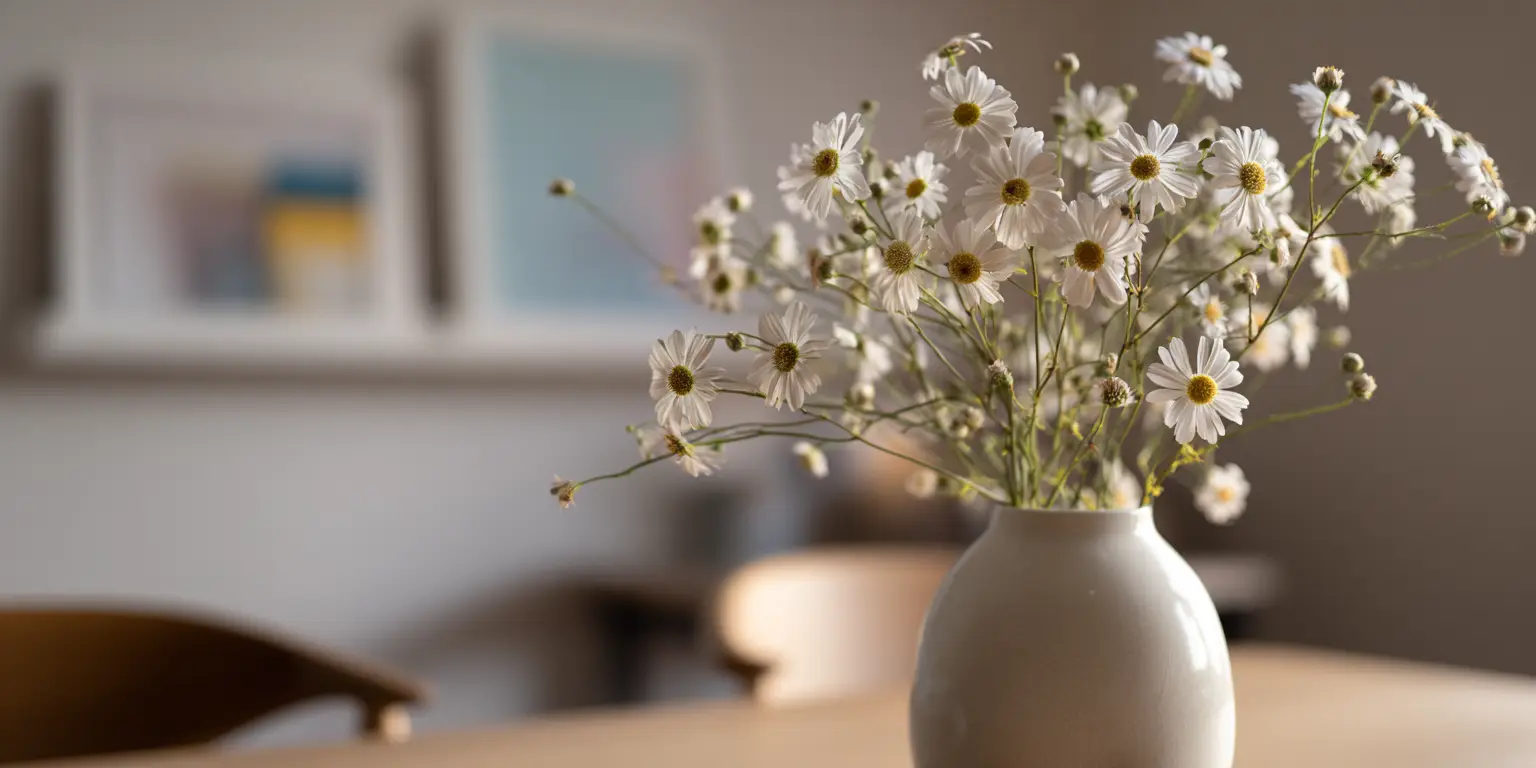
Shasta daisies make excellent cut flowers for arrangements, thanks to their sturdy stems and long-lasting blooms. If you plan to use them in bouquets, a little cut flower care will go a long way in extending their vase life. Start by cutting the flowers at the right time: the best time to cut Shasta daisy stems is in the morning, when the plants are well-hydrated and temperatures are cool. Use clean, sharp pruners or scissors to cut the stems, choosing flowers that are fully open (or nearly so) but still fresh. Immediately place the cut stems in a bucket of clean water to keep them hydrated. Remove any leaves on the lower part of the stem that would sit below the water line in a vase – this helps prevent decay and bacterial buildup in the water.
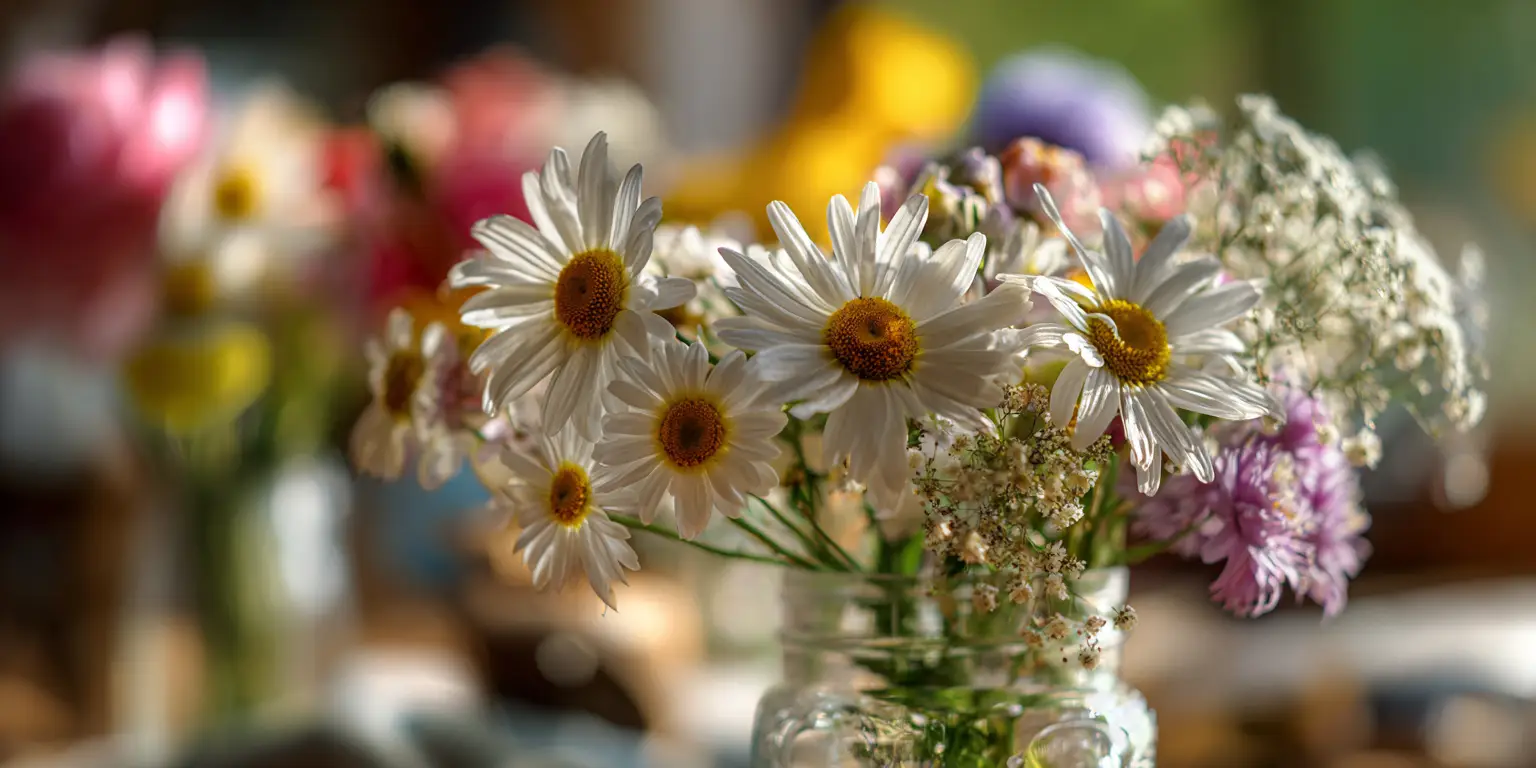
When arranging Shasta daisies in a vase, use fresh water and consider adding a floral preservative if you have it. Change the water every couple of days, trimming a small portion off the stem ends each time to help the flowers take up water. With this basic care, Shasta daisy blooms typically last around 7 to 10 days in a vase, maintaining their form and color well. They pair beautifully with other country-style or summer flowers in arrangements. For example, a bouquet of Shasta daisies mixed with black-eyed Susans, purple coneflowers, and sprigs of baby’s breath can create a charming, rustic display. Keep vases of daisies in a cool spot out of direct sunlight and away from ripening fruit (which releases ethylene gas that can age flowers faster). Thanks to their long vase life and classic look, Shasta daisies are a favorite for casual bouquets and are often grown specifically in cutting gardens.
🐛 Pests and diseases
Shasta daisies are generally robust plants with relatively few serious problems, but they can occasionally face some common garden pests and diseases. On the pest side, insects such as aphids, slugs, and earwigs are the most frequent nuisances. Aphids are small sap-sucking insects that might cluster on stems or flower buds, especially early in the season. A sign of aphids can be distorted new growth or sticky residue on leaves (honeydew). They can be washed off with a strong spray of water or treated with insecticidal soap if they become numerous. Slugs and snails may chew on the foliage, leaving irregular holes in leaves or sometimes nibbling on petals. This is more common in damp, shaded conditions. Using slug bait or traps and keeping the area around the plants free of excessive mulch or debris can help reduce slug damage. Earwigs (and occasionally certain caterpillars) might also chew on petals or leaves, these can often be dealt with by trapping or hand-picking at night if they are a problem.
Regarding diseases, the most common issues for Shasta daisies are fungal problems, especially if the plants are in humid or poorly ventilated conditions. Powdery mildew is one example – it appears as a white, powdery coating on leaves, usually during warm, humid weather or in crowded plantings. While it rarely kills the plant, it can weaken it and look unsightly. To manage powdery mildew, ensure good spacing and airflow, avoid overhead watering, and remove any severely affected foliage. Fungicidal treatments are available if needed for severe cases. Another possible disease is leaf spot (caused by fungi like Septoria or Alternaria), which shows up as brown or black spots on the leaves that can merge and cause foliage to yellow and die. Removing and disposing of infected leaves (do not compost them) and again keeping water off the leaves can help prevent spread. If you notice the center of the plant or lower stems turning mushy and rotten, this could be a sign of stem rot or root rot (often from overwatering or poor drainage). Unfortunately, rot is hard to reverse – the best approach is prevention by correcting drainage issues and avoiding waterlogged soil.
One more thing to monitor is verticillium or fusarium wilt (soil-borne diseases that cause wilting and yellowing starting from the bottom of the plant). If a Shasta daisy inexplicably wilts and has brown discoloration in the stem tissue, it may be infected, and it’s often best to remove and destroy the affected plant to prevent spread. Thankfully, such wilts are not very common with daisies. On a brighter note, Shasta daisies are seldom bothered by deer or rabbits due to their bitter taste, as mentioned earlier. And by practicing good garden hygiene – cleaning up dead leaves in the fall, dividing overcrowded clumps, and rotating planting areas if diseases occur – you can keep your Shasta daisies relatively problem-free. Overall, they are hardy, low maintenance flowers that will flourish if you provide them with the right conditions and a little bit of preventative care.
FAQ
Are Shasta daisies annuals or perennials?
Shasta daisies are perennial flowers. They are herbaceous perennials that come back each year from their rootstock. In winter they die back to the ground (in cold climates), then re-sprout in spring. Keep in mind they are somewhat short-lived perennials, so a given plant may not live for decades, but it will perennialize for several years and can be propagated by division to keep it going.
Do Shasta daisies spread, and when should I divide them?
Shasta daisies grow in clumps that slowly spread wider each year, but they do not invade aggressively beyond where they are planted. Over time a clump can become overcrowded, which is a good opportunity to divide it. It’s recommended to divide Shasta daisies every 2 to 3 years. The best time to divide is early spring (as new growth begins) or early fall. Dig up the clump, split it into sections, and replant the sections to give them more space. This will reinvigorate the plant and help it continue blooming strongly. Dividing also effectively controls how much area the plant covers, keeping your daisies in bounds.
Should I deadhead Shasta daisies?
Yes, deadheading (removing spent flowers) is highly beneficial for Shasta daisies. Snipping off the faded blooms encourages the plant to produce more flowers instead of putting energy into seed production. Regular deadheading can extend the blooming period by several weeks. To deadhead, simply trim off the flower stem down to a lateral leaf or bud junction once the blossom starts to brown or lose its petals. This not only promotes fresh blooms but also keeps the plant looking neat. If you prefer to let some flowers go to seed (perhaps to allow the plant to self-sow or to collect seed for propagation), you can leave a few spent blooms toward the end of the season. Otherwise, for the longest display, keep up with deadheading throughout summer.
How do I care for Shasta daisies in winter?
Shasta daisies are quite hardy and don’t require much special care in winter in most climates. After the plant has finished blooming and once frost hits in autumn, you can cut the stems back to just a few inches above the ground. This cleanup pruning helps prevent pests or diseases from overwintering in the dead foliage and makes room for fresh growth in spring. In regions with cold winters (zone 5 and colder), it’s helpful to apply a layer of mulch over the root area after cutting back – use straw, pine needles, shredded leaves, or similar material about 2-3 inches deep. This will insulate the crown and roots from extreme cold and from the freeze-thaw cycles. In spring, pull the mulch back once the worst freezes are over, to allow new shoots to emerge easily. In very mild winter areas, you might not need to cut back much, just remove any ragged or dead growth and let the plant be semi-evergreen. Either way, Shasta daisies are low-maintenance in winter and will rebound when the growing season returns.
Are Shasta daisies toxic to pets?
Shasta daisies are considered mildly toxic to dogs, cats, and other pets if eaten. They contain compounds that can cause stomach upset and other symptoms if a pet consumes a significant amount of the plant. Fortunately, the bitter taste usually deters animals from eating much. If you have a pet that likes to chew plants, it’s best to plant Shasta daisies out of their reach or supervise them outdoors. Signs of ingestion might include drooling, vomiting, or diarrhea, which should subside once the plant is out of the animal’s system. Always consult a veterinarian if a large amount was eaten or if symptoms seem severe. On the flip side, in the garden Shasta daisies’ taste and smell tend to repel browsing deer and rabbits, so you’re unlikely to lose your plants to those critters.
Will deer or rabbits eat Shasta daisies?
Generally, Shasta daisies are deer-resistant and rabbit-resistant. Most deer and rabbits find the leaves and stems unappealing due to their coarse texture and bitter compounds. This means in gardens with frequent deer or rabbit visitors, Shasta daisies often remain untouched even when other flowers get nibbled. However, no plant is completely deer-proof – a very hungry deer might sample almost anything if food is scarce enough. Young tender shoots might occasionally get nibbled in early spring, but overall Shasta daisies are a safe choice if you’re looking for plants that these critters usually avoid. Many gardeners specifically include Shasta daisies and other daisy-family plants to add beauty to the landscape without attracting herbivores.
Why are my Shasta daisies not blooming?
If your Shasta daisies have healthy green growth but few or no blooms, a few factors could be at play. The most common issue is insufficient sunlight – daisies need plenty of sun (around 6+ hours a day) to bloom well. If they’re in too much shade, flowering will be sparse. Over-fertilization can also cause lots of leafy growth and few flowers, these plants don’t need heavy feeding. Use a balanced, slow-release fertilizer sparingly, or simply enrich the soil with compost once a year. Another factor could be overcrowding or aging clumps. If the plants haven’t been divided in several years, the congested roots and shoots may reduce flowering – dividing the clump can renew its vigor. Additionally, stress conditions like drought or extreme heat can temporarily halt blooming, ensure the plants are getting adequate water (but not sitting in soggy soil). Lastly, check for any signs of pests or disease, an infestation or root problem can weaken the plant and impact its ability to flower. By addressing these issues – sunlight, soil nutrition, plant spacing, and general care – you can usually get your Shasta daisies blooming happily again.
Can Shasta daisies grow in containers?
Yes, Shasta daisies can be grown successfully in containers, provided the pot is large enough and has good drainage. Dwarf varieties of Shasta daisy (which stay under about 1-2 feet tall) are better suited for container gardening than the tallest types. Choose a pot that is at least 12 inches in diameter and depth (larger if you plan to keep the plant for multiple years). Use a quality potting mix that drains well – you might mix in some perlite or coarse sand to ensure good drainage, as Shasta daisies won’t tolerate waterlogged soil. Place the container in full sun for best results. Container-grown daisies will dry out faster than those in the ground, so monitor soil moisture and water when the top inch of soil is dry. They may need watering several times a week in hot weather. Also, since nutrients leach out of potting soil with regular watering, feed your potted Shasta daisies occasionally (for example, apply a slow-release fertilizer in spring, or a diluted liquid fertilizer every few weeks during the growing season). With attentive care, Shasta daisies can thrive and bloom in pots, brightening up patios and balconies just as well as they do garden beds.
Interesting tips
- The Shasta daisy was named after Mount Shasta in California because its bright white petals were said to resemble the mountain’s snow. This origin gives the flower a charming backstory linking it to a picturesque natural landmark.
- Deadheading is the key to extended bloom. If you remove spent Shasta daisy flowers regularly, the plants will reward you with continuous blooms and might even flower again later in the season.
- Shasta daisies are excellent companions in the garden. They mix well with other perennial flowers like coneflowers, salvia, and yarrow, and with yellow flowers such as black-eyed Susans. These combinations create a classic cottage garden look and provide a long season of color.
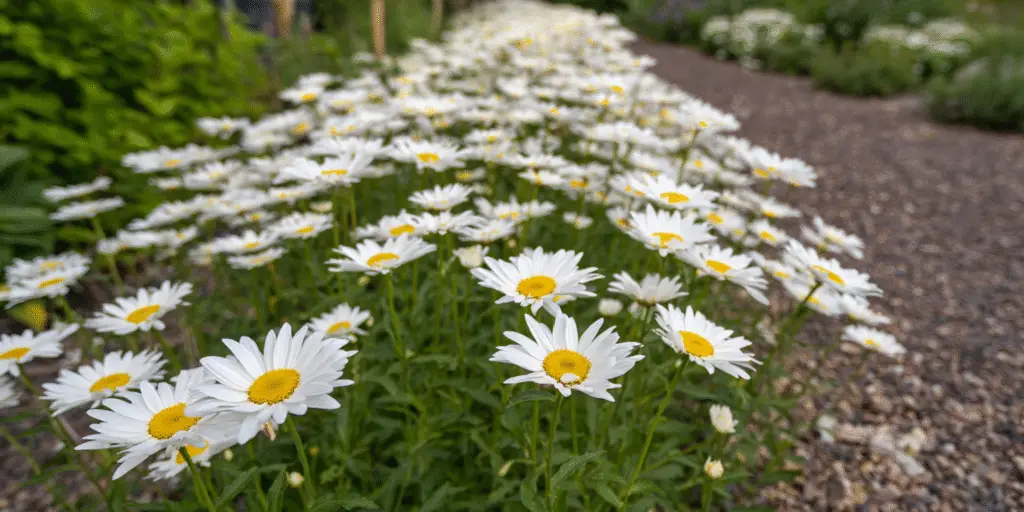
- Try planting Shasta daisies in groups of three or five for a bold display. Mass plantings of daisies have a striking effect and are more visible from a distance than a solitary plant.
- These cottage garden favorites are also pollinator magnets. The open-centered daisies provide an easy landing pad for butterflies and bees, making them a great choice for pollinator-friendly landscapes.
- Remember to divide your clumps every few years. Not only does this prevent overcrowding, but it also gives you new starter plants to expand your garden or share with friends – essentially free plants from your original garden daisies!
- When cutting Shasta daisies for bouquets, choose stems with flowers that are just fully opened. With proper conditioning (clean water, trimmed stems), these daisies will last over a week in arrangements, adding a happy, rustic touch to your indoor decor.
Related Guides & Flowers
- Gerbera Daisy (Gerbera jamesonii) – Big, modern “daisy” heads for beds and bouquets, long bloom in warm weather.
- Black-eyed Susan (Rudbeckia) – Sunny yellow rays with a dark cone, tough, pollinator-friendly, late-summer color.
- Coreopsis (Tickseed) – Airy, long-blooming daisylike disks in yellow and bicolors; excellent for dry, sunny borders.
- Calendula (Pot Marigold) – Cool-season daisylike flowers in gold to apricot; great for edging and cutting.
- Zinnias (Zinnia) – Bold, daisylike heads in every color; fast annuals for cutting gardens and summer massing.
- Coneflower (Echinacea) – Sturdy prairie perennial with a prominent cone, loved by bees and finches.
- Yarrow (Achillea) – Flat-topped daisylike clusters, drought-tolerant, feathery foliage, long bloom.
References
- NC State Extension: Shasta Daisy (Leucanthemum × superbum) – Plant Profile
Culture, bloom window, uses, and cultivar notes for the classic garden “daisy.” - University of Minnesota Extension: Oxeye Daisy (Leucanthemum vulgare)
Clear ID traits and management; often treated as invasive outside cultivation. - ASPCA: Gerbera Daisy – Toxicity to Pets
Confirms Gerbera daisy is non-toxic to dogs and cats; helpful for bouquets and pet-safe lists. - University of Maine Cooperative Extension: Oxeye Daisy – Weed Images & Notes
Concise photo ID with bloom timing and habitat; useful for distinguishing wild oxeye from garden Shasta.
Written by: Your Flowers Guide editorial team
We are a small independent group of flower lovers who research and review each guide using trusted horticultural and educational sources. Learn more about us