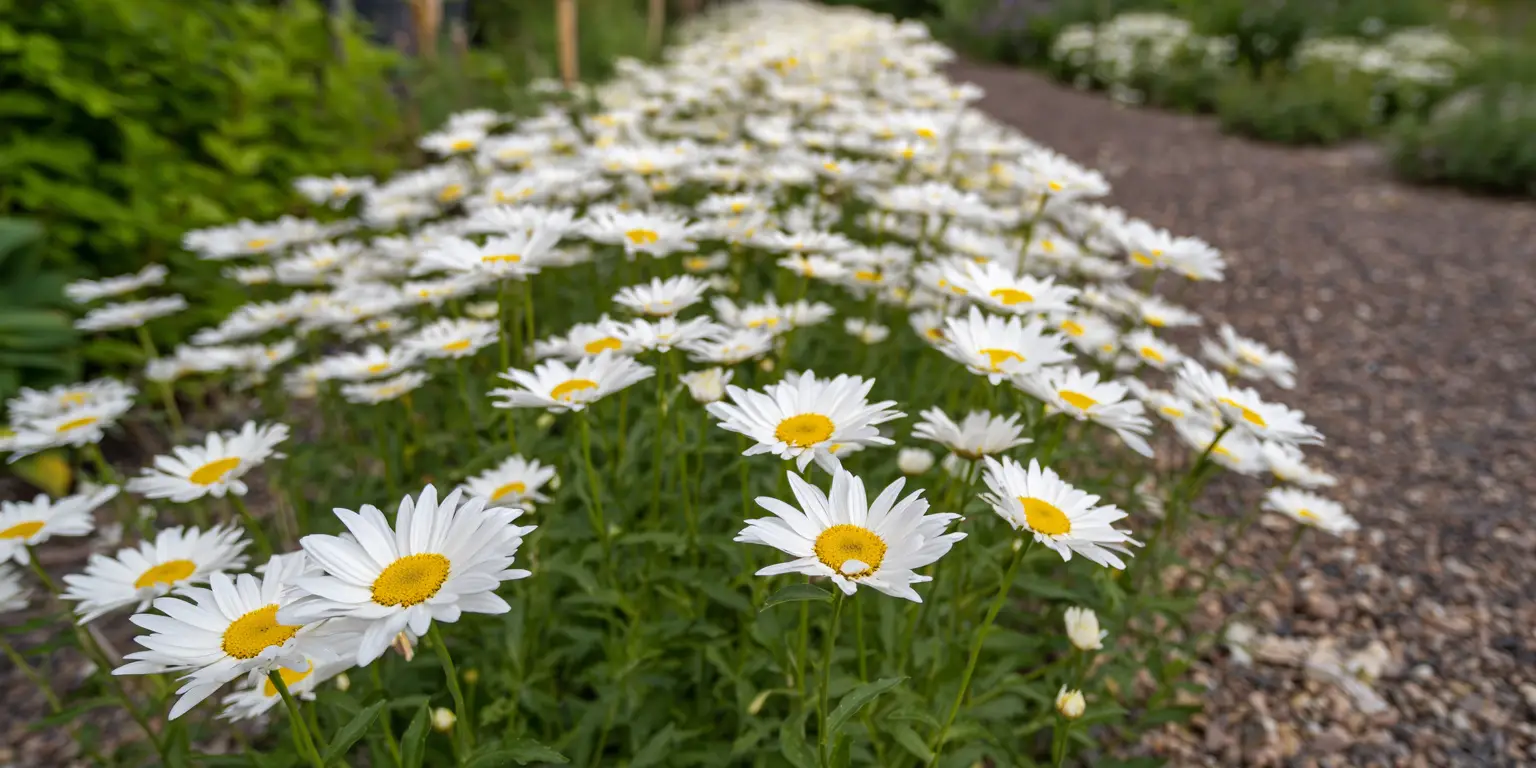
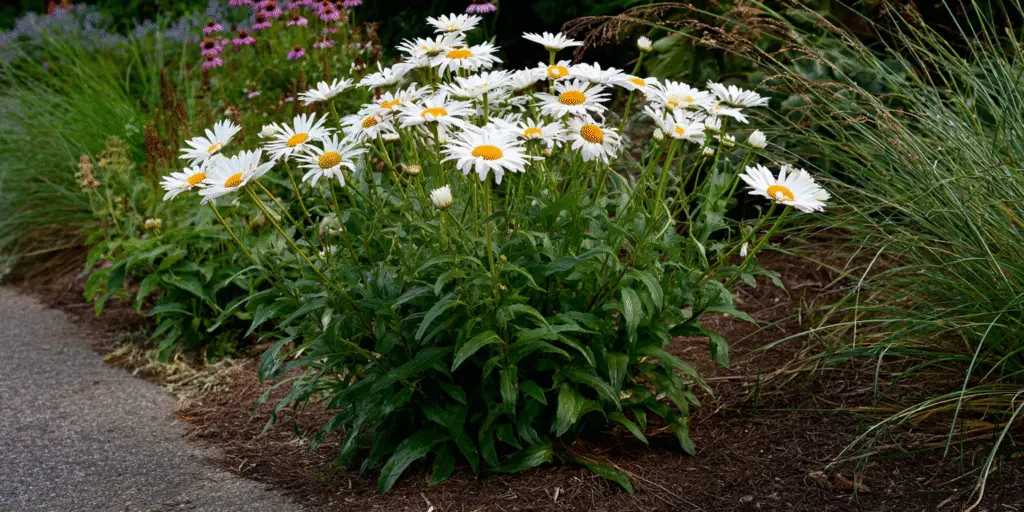
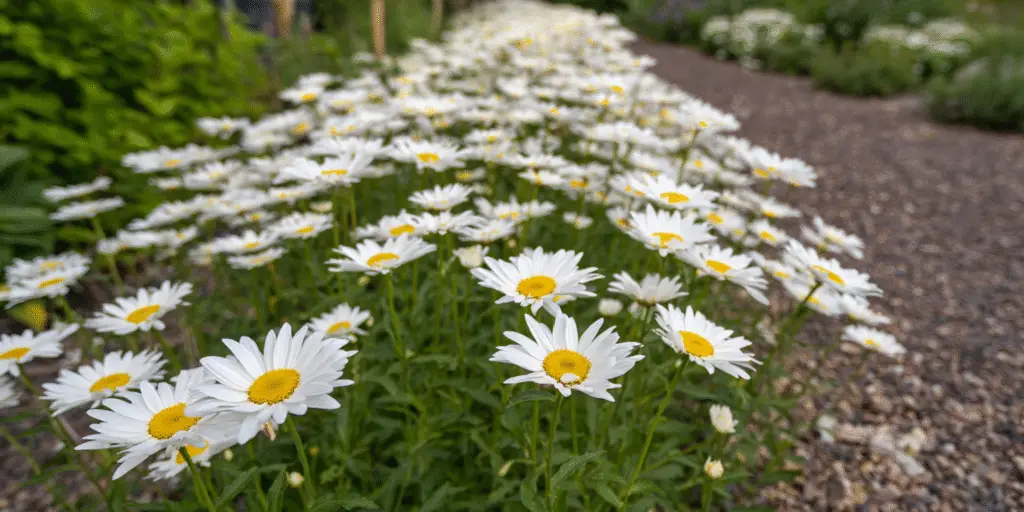
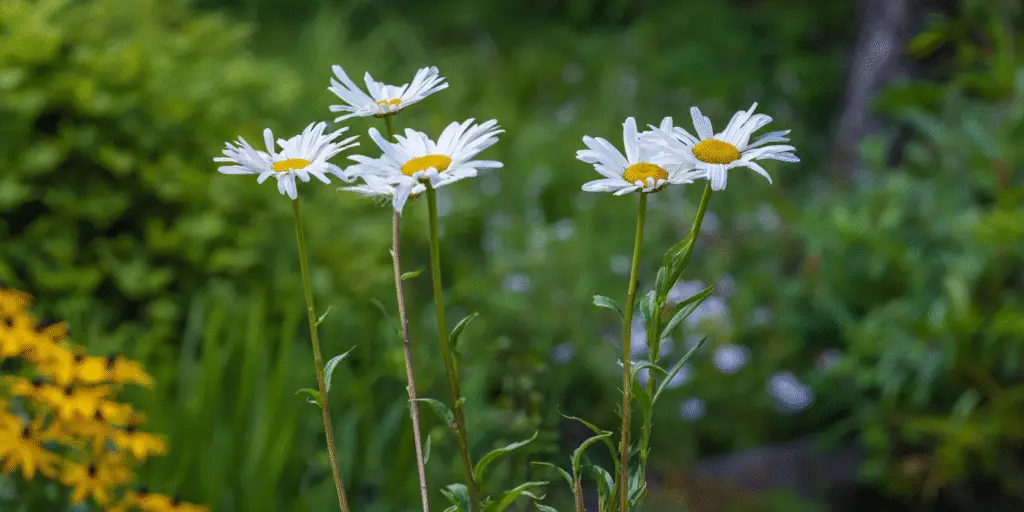
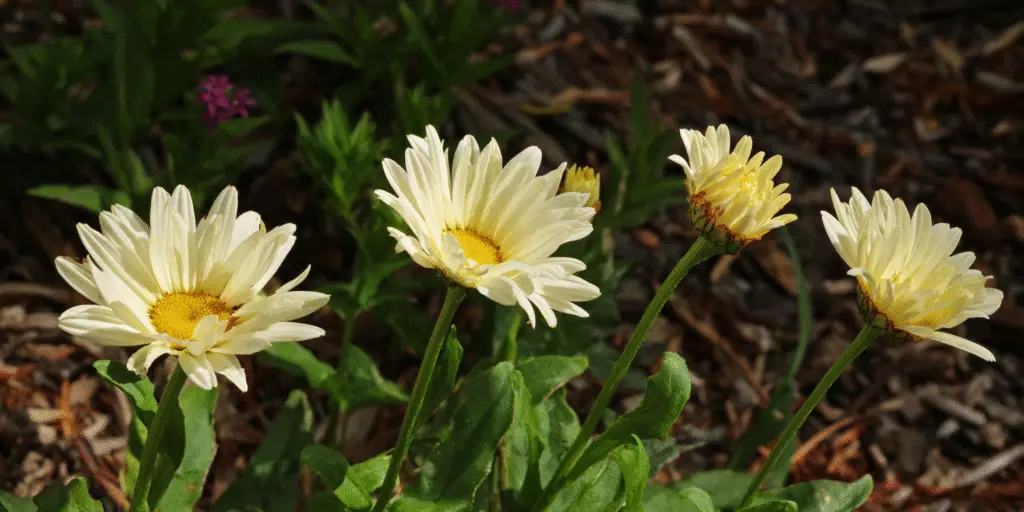
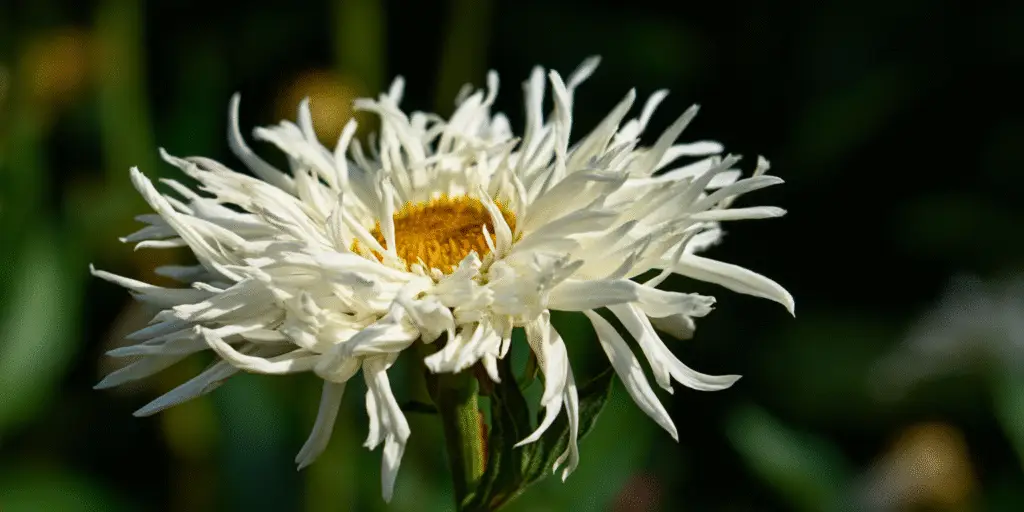
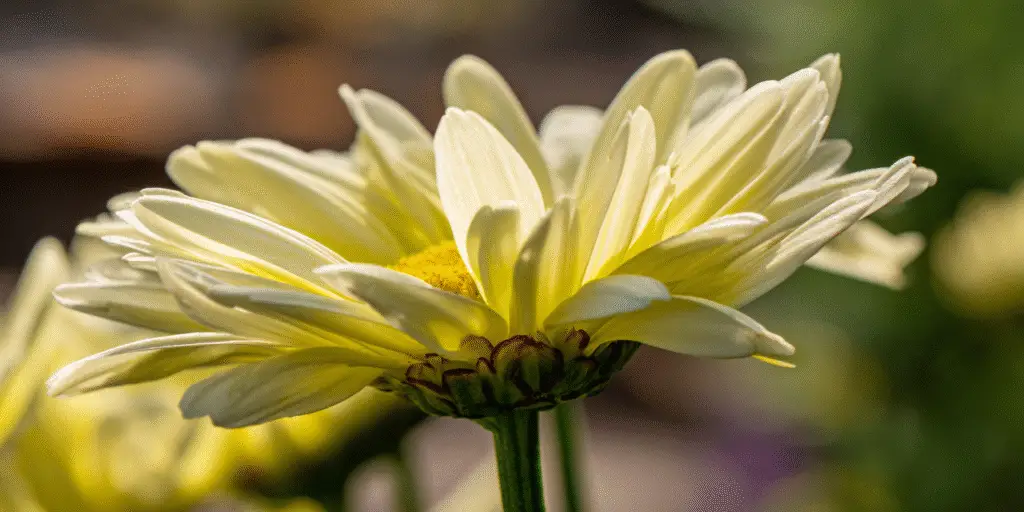
A compact Shasta daisy valued for tidy mounds and abundant summer bloom. Plants usually reach about 12 to 18 inches tall with white single daisies. Its short stature helps flowers stand up to rain and wind better than taller forms. It thrives in full sun and well drained soils across much of North America. Deadheading helps keep new buds coming through summer.
At‑a‑glance
Group/Class: Shasta daisy Height × spread: 12 to 18 in (30 to 45 cm) × 9 to 12 in (23 to 30 cm) Bloom window: July to September Color & flower form: white rays with yellow disk; single; heads to about 4 in (10 cm) Fragrance: 1 trace USDA hardiness: zones 5 to 9 Breeder / Year / Origin: Alan Bloom, unknown, UK Cut‑flower notes: shorter stems than tall cultivars; holds up well in weather Pet safety: unknown
How it differs
more compact habit than a typical Shasta daisy
better weather resistance due to shorter stems
dense bud set with steady bloom in summer
Strengths
neat habit for small spaces
flowers abundantly in mid to late summer
handles wind and rain comparatively well
Care in one minute
Plant in full sun with good air circulation.
Provide moderately fertile, well drained soil; avoid waterlogged sites.
Water to keep soil evenly moist the first season; reduce as plants establish.
Deadhead to maintain bloom and cut stems to the base when flowering finishes.
Divide clumps in early spring or early fall to renew vigor.
Watch‑outs
like other Shastas, dislikes winter wet soils
clumps benefit from division every 2 to 3 years
Best uses (tags)
borders, containers, pollinators
Provenance note
Introduced by Alan Bloom of Blooms of Bressingham in the 1980s. Often listed as a compact selection suited to windy sites.
Written by: Your Flowers Guide editorial team We are a small independent group of flower lovers who research and review each guide using trusted horticultural and educational sources. Learn more about us