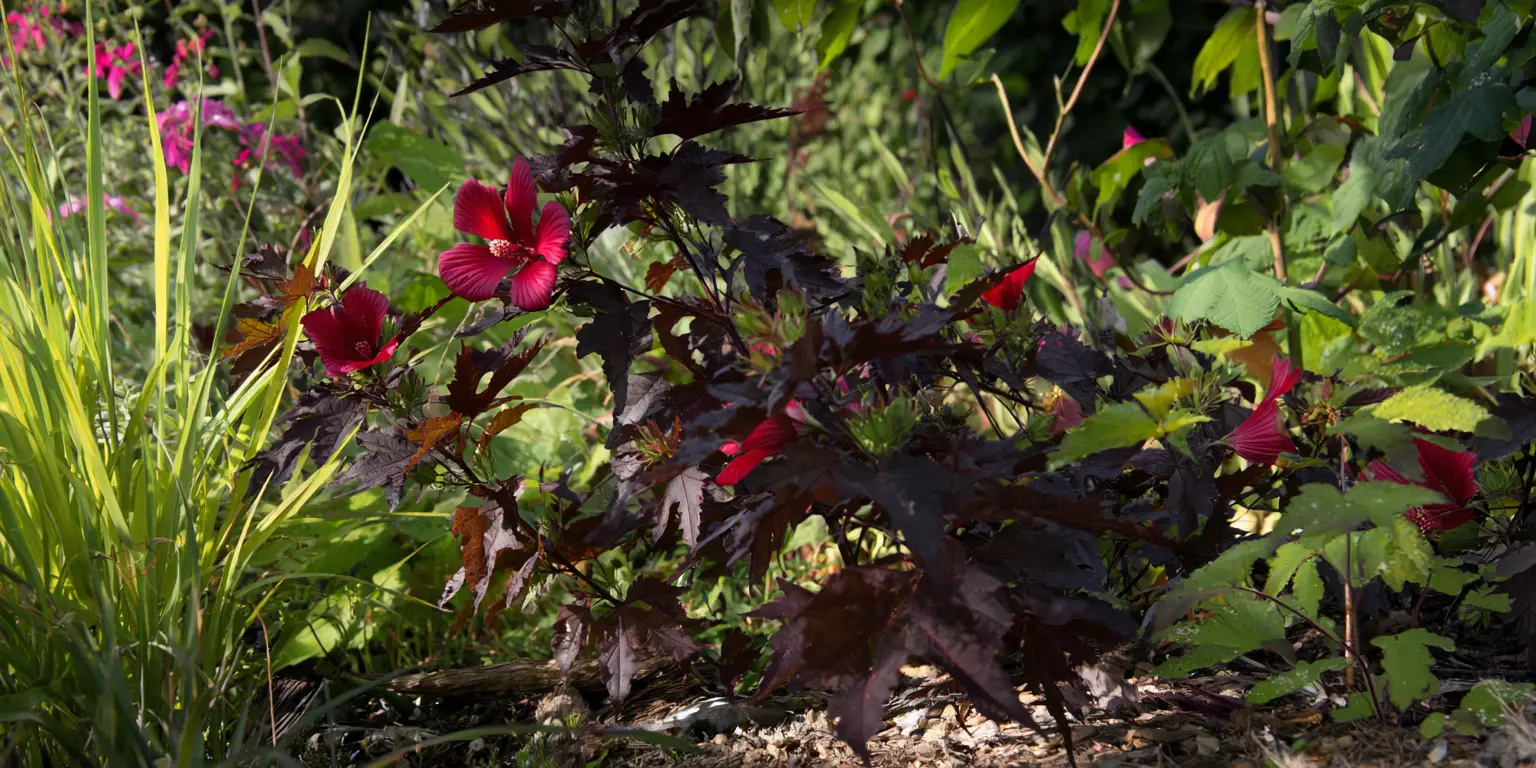
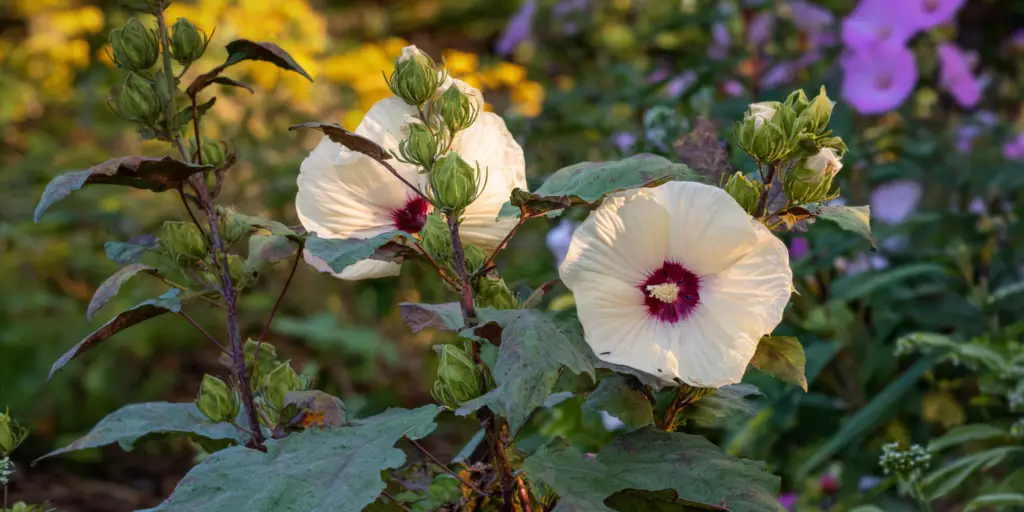
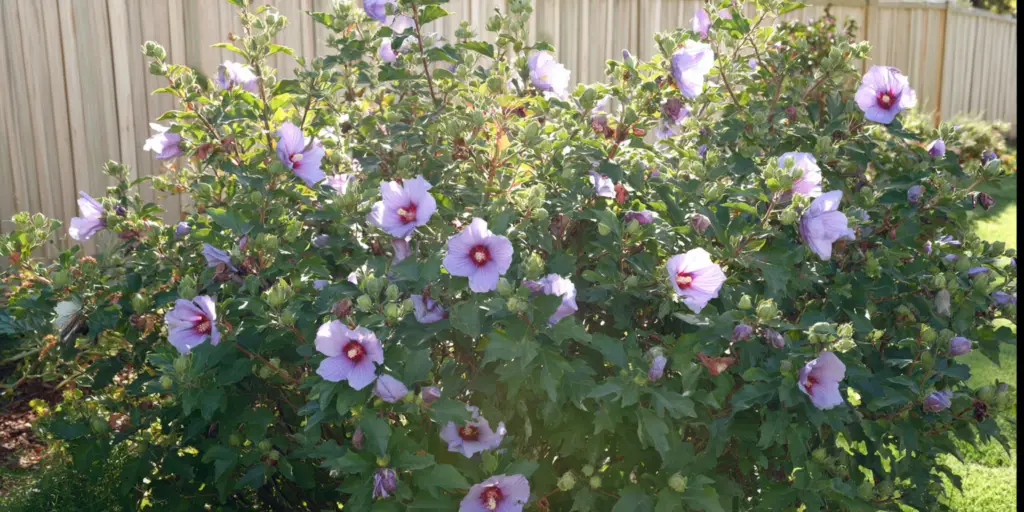
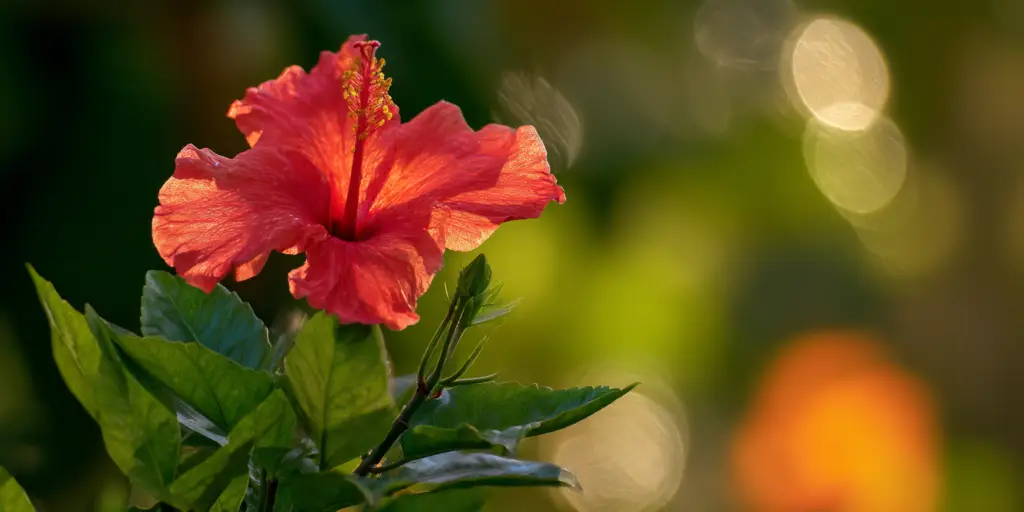
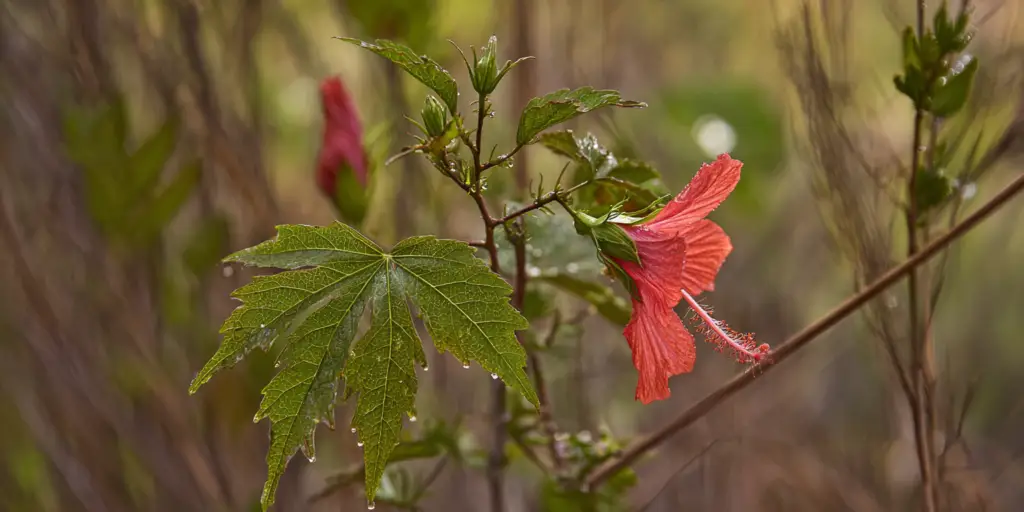
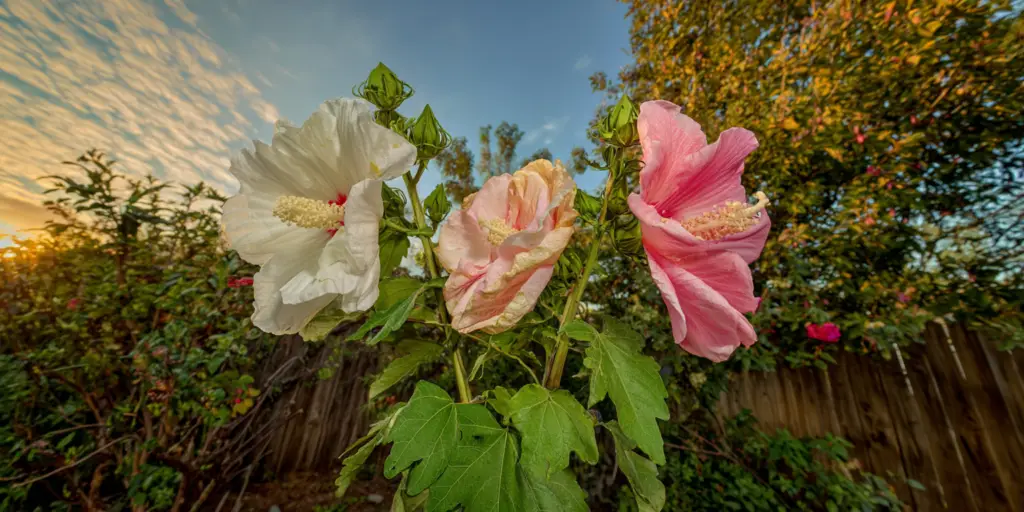
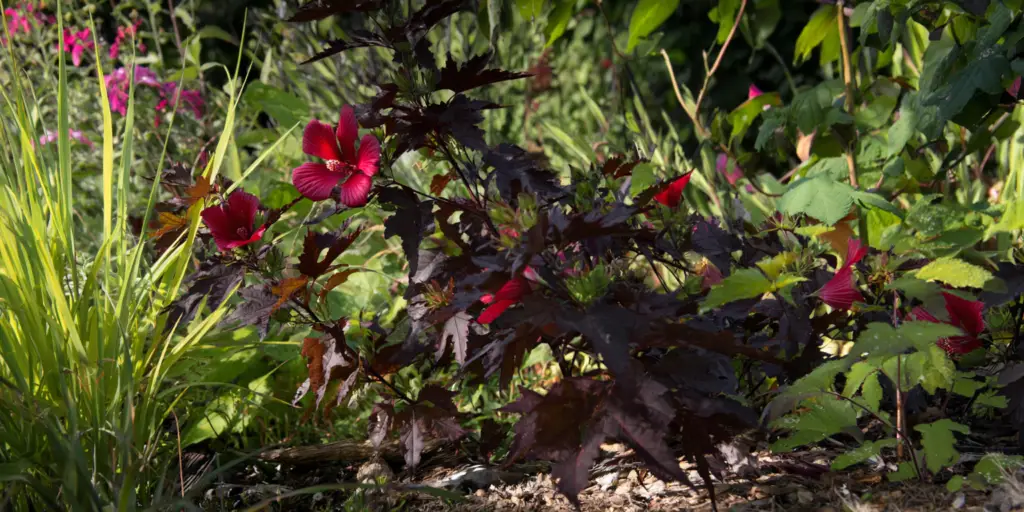
Hibiscus acetosella is a tender perennial grown mainly for burgundy to purple foliage. It forms an upright sub‑shrub in warm climates and is used as an annual elsewhere. Small maroon to pink flowers may appear in late summer but leaves carry the display. Plants grow quickly in full sun and warm weather and color best with bright light. It excels in containers and mixed borders where foliage contrast is needed.
At‑a‑glance
Group/Class: Tender perennial sub‑shrub. often grown as annual
Height × spread: 3-5 ft (0.9-1.5 m) × 1-2.5 ft (0.3-0.8 m)
Bloom window: late summer to fall. sometimes into winter in warm areas
Color & flower form: Small maroon to pink hibiscus flowers. Foliage burgundy to purple
Fragrance: 0 none
USDA hardiness: zones 9 to 11. grown as annual in colder regions
Breeder / Year / Origin: unknown. unknown. tropical eastern Africa
Pet safety: unknown . varies by source
How it differs
Grown primarily for foliage color.
More tender than hardy hibiscus. Best as a warm‑season annual in most regions.
Upright habit benefits from tip‑pinching to reduce legginess.
Strengths
Striking, fast‑growing purple foliage.
Heat tolerant in full sun with regular water.
Useful for high‑contrast containers and borders.
Care in one minute
Grow in full sun for best leaf color. Give light shade in extreme heat.
Use well‑drained soil or potting mix and water regularly.
Feed lightly every 4 to 6 weeks in active growth.
Pinch tips at 8 to 10 inches to encourage branching.
Root cuttings in late summer to overwinter indoors.
Written by: Your Flowers Guide editorial team We are a small independent group of flower lovers who research and review each guide using trusted horticultural and educational sources. Learn more about us