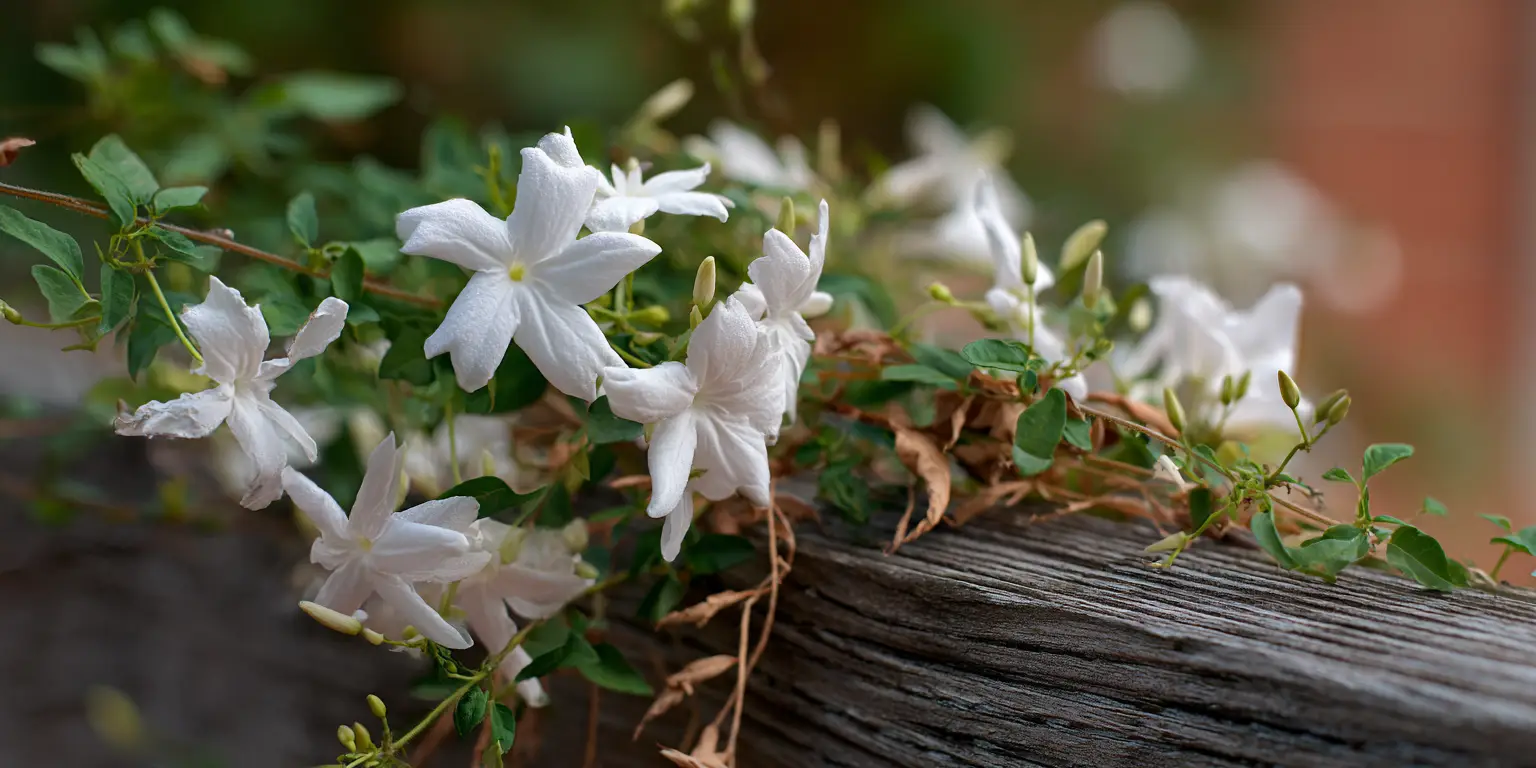
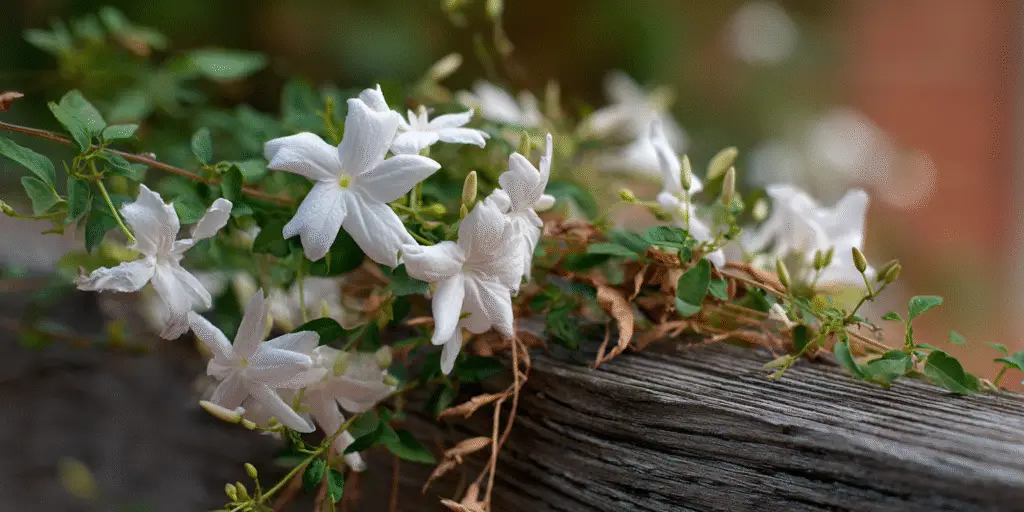
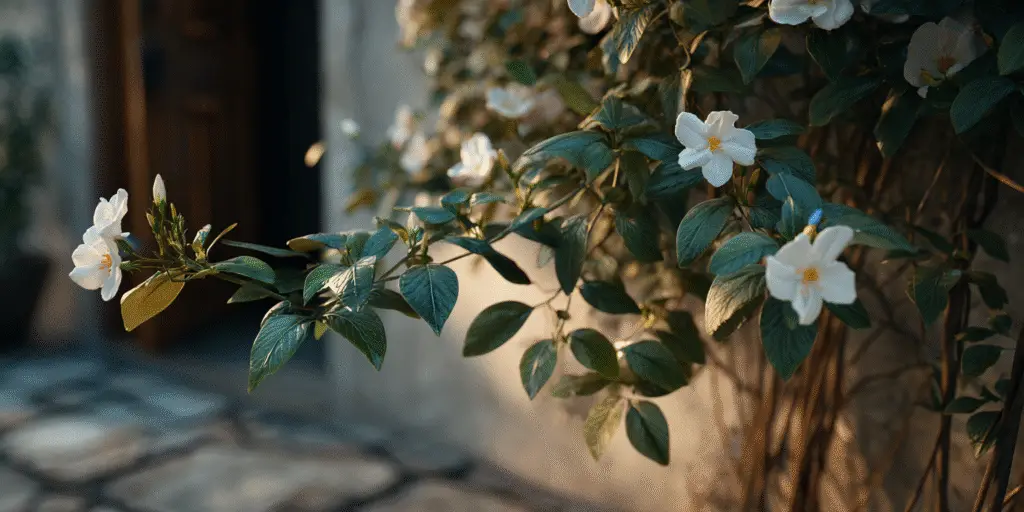
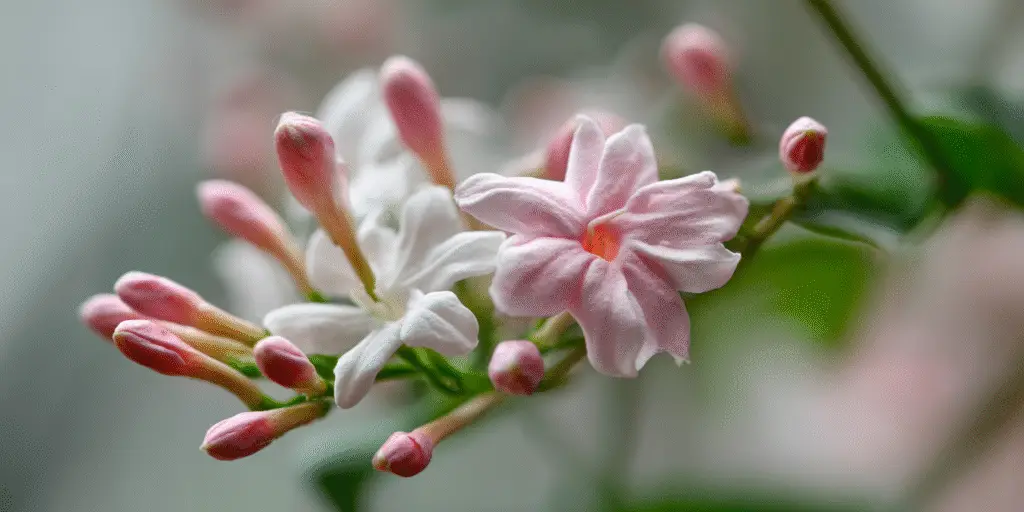
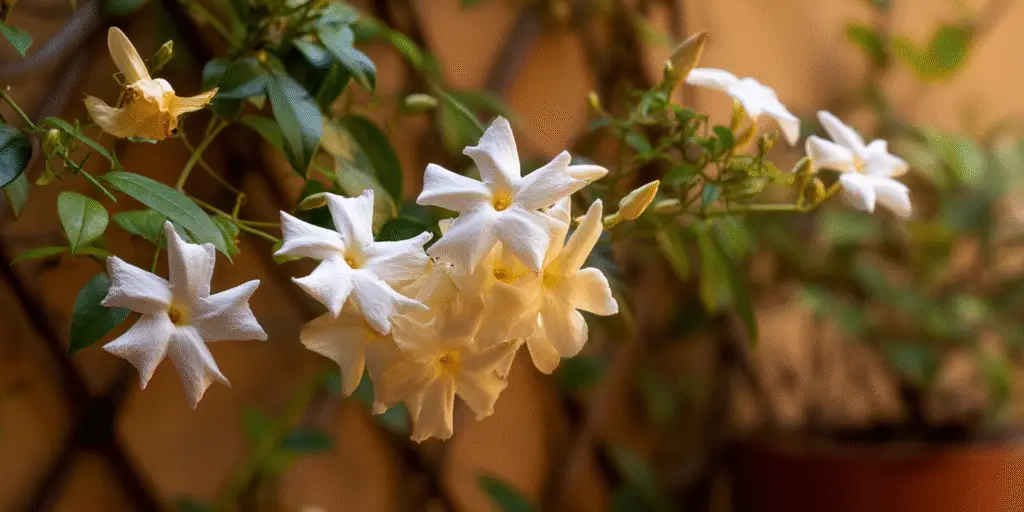
This is the classic summer jasmine grown for intensely scented white flowers. It is a vigorous deciduous climber that twines onto trellises and pergolas. Bloom begins in early summer and often continues into early fall in warm sites. Plants do best in full sun with shelter from cold winds. In much of the northern United States it is container grown and overwintered indoors. Give it a sturdy support and regular pruning to manage length.
At‑a‑glance
Group/Class: deciduous climber
Height × spread: 20–40 ft (6–12 m) × 5–15 ft (1.5–4.5 m)
Bloom window: summer to early fall
Color & flower form: white star‑shaped clusters
Fragrance: 3 strong
USDA hardiness: zones 7–10
Breeder / Year / Origin: unknown, unknown, native to Transcaucasus to South‑Central China
Pet safety: safe
How it differs
More cold tolerant than tropical jasmines such as Jasminum sambac.
Deciduous habit versus evergreen jasmines common in frost‑free climates.
Long, trainable stems for structures rather than a freestanding shrub form.
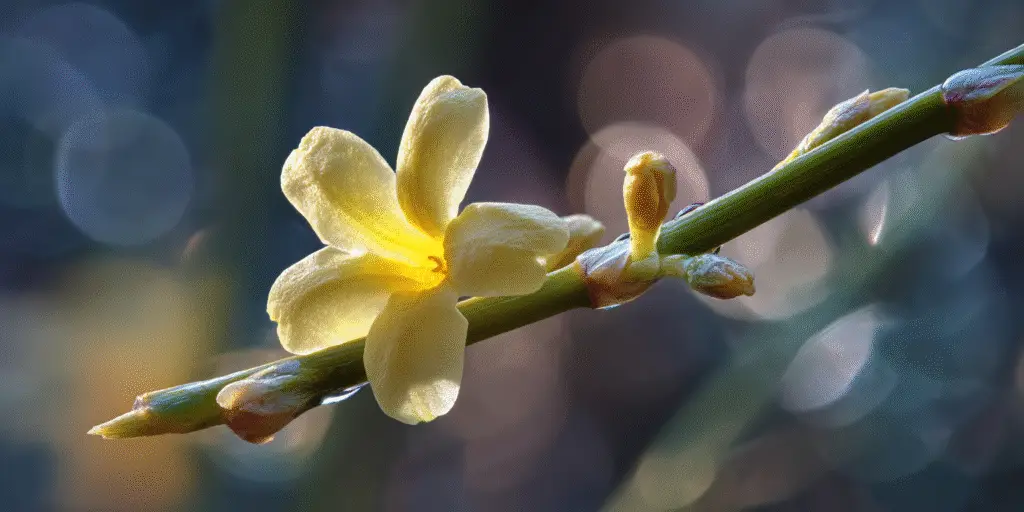
Pure white summer bloom versus yellow winter jasmine that flowers in late winter.
Strengths
Highly fragrant summer display
Adaptable to average garden soils with good drainage
Responds well to pruning and training
Valued by pollinators in warm weather
Care in one minute
Site: full sun to light afternoon shade; sheltered from harsh wind.
Soil: well‑drained loam; moderately fertile; neutral to slightly alkaline.
Water: regular during establishment; then deep soak in dry spells.
Feeding: light spring feed; avoid heavy nitrogen that promotes lank growth.
Prune: after main bloom; remove old thin canes and shorten long whips.
Overwinter: in zones colder than 7, grow in a container and protect indoors.
Watch‑outs
Needs strong support and seasonal pruning to prevent tangles
Aphids and spider mites can appear, especially under glass
Written by: Your Flowers Guide editorial team We are a small independent group of flower lovers who research and review each guide using trusted horticultural and educational sources. Learn more about us