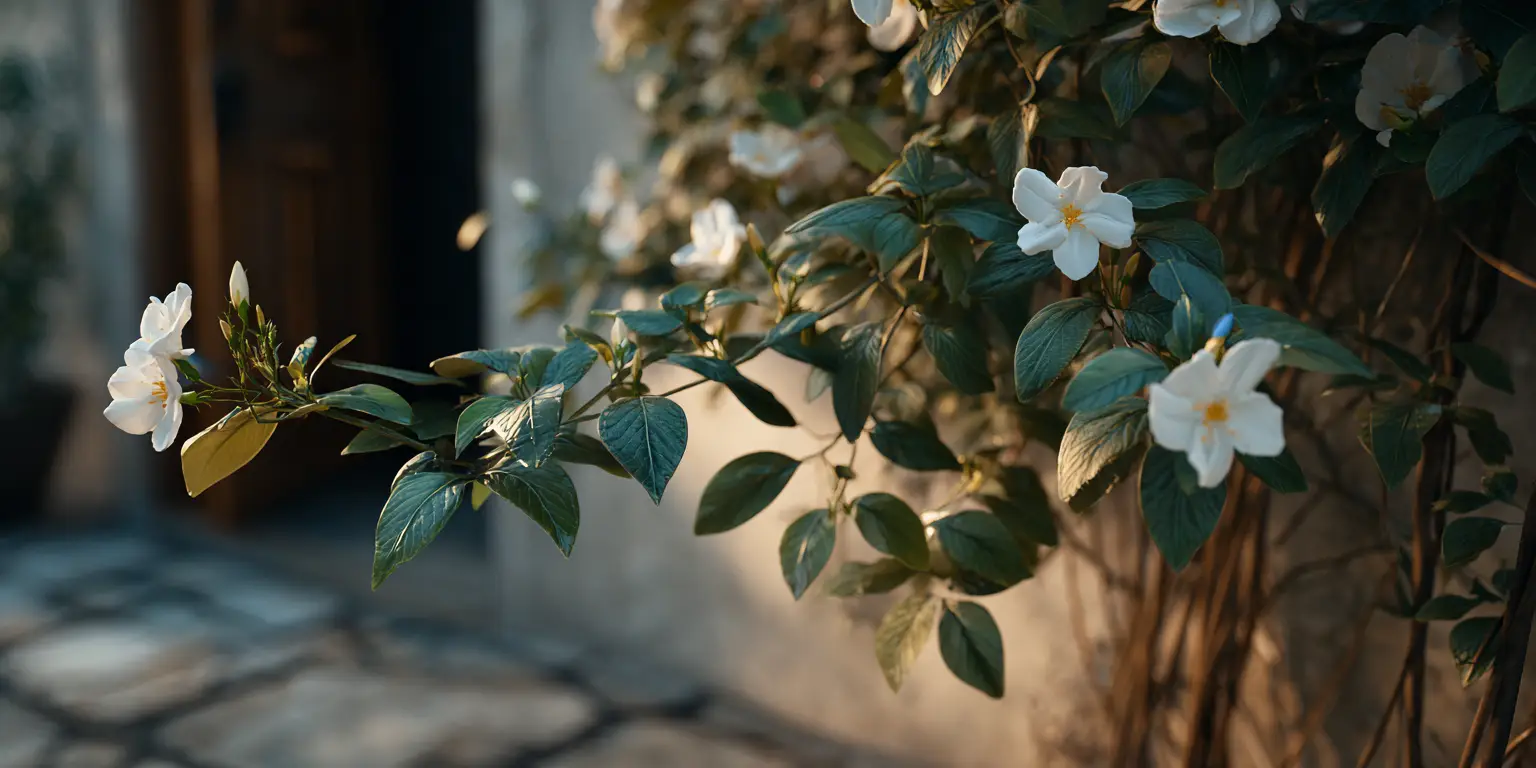
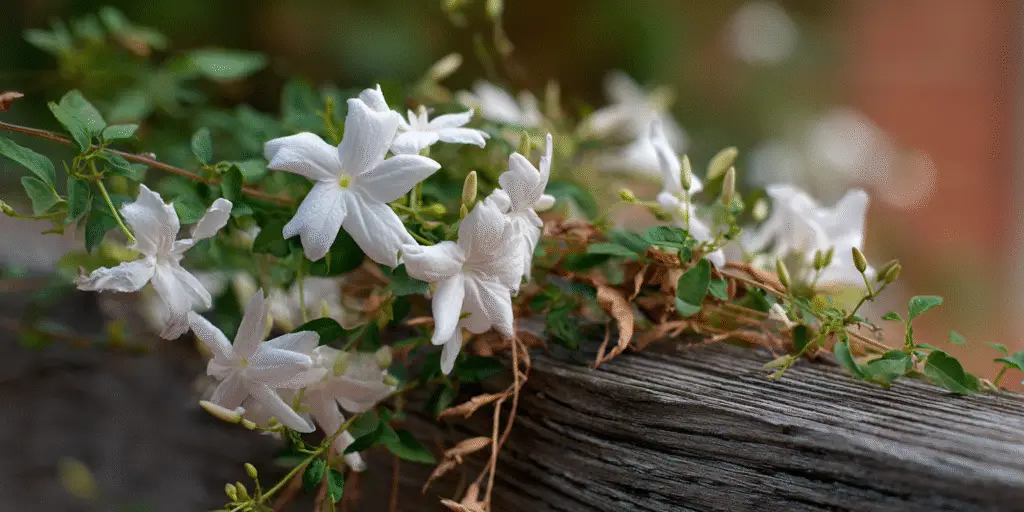
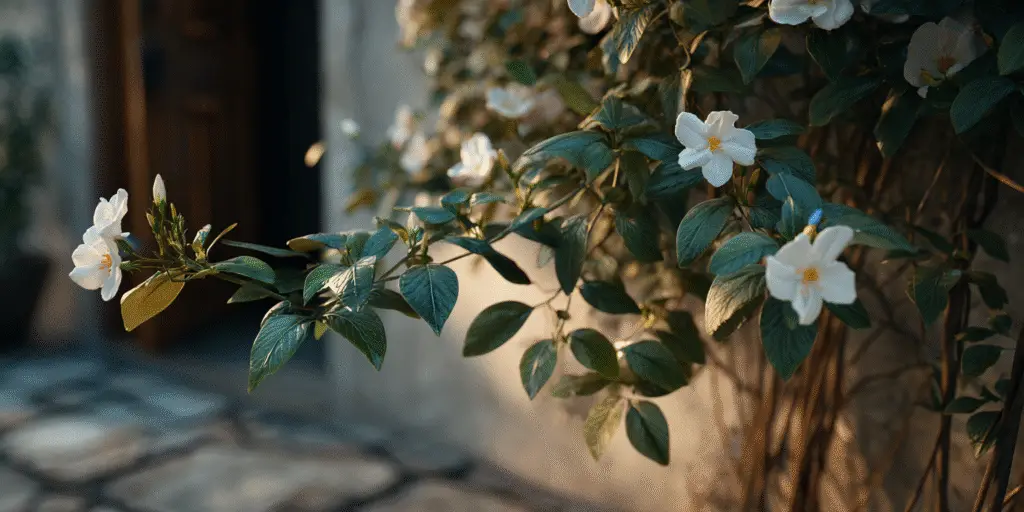
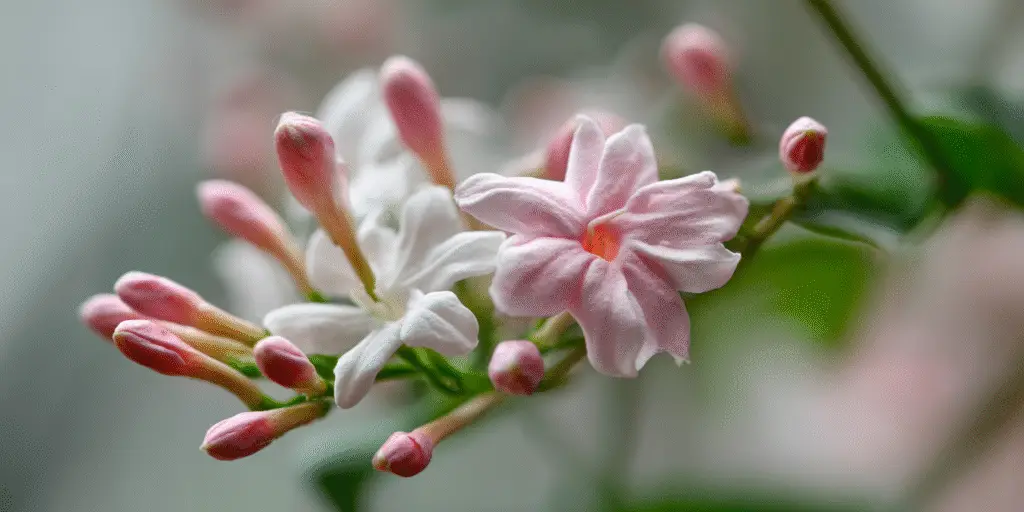
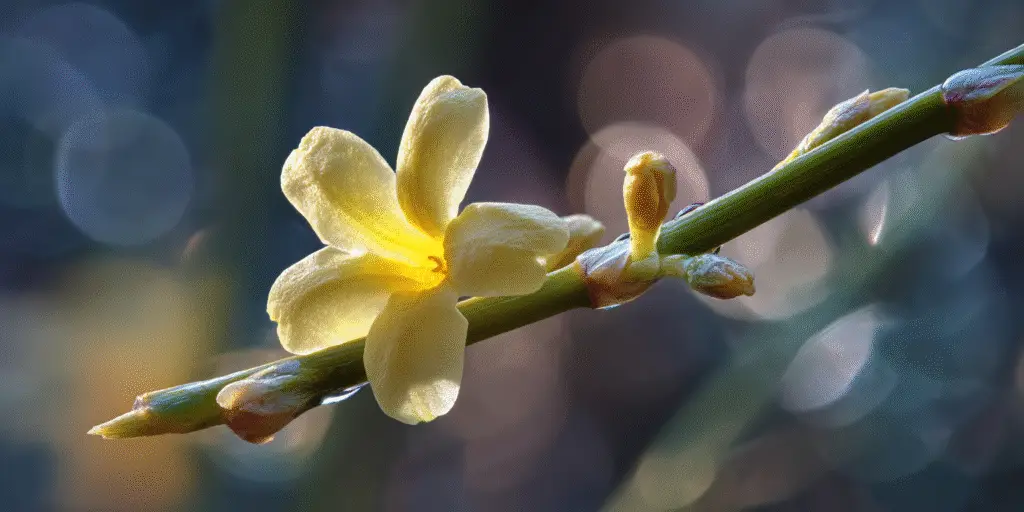
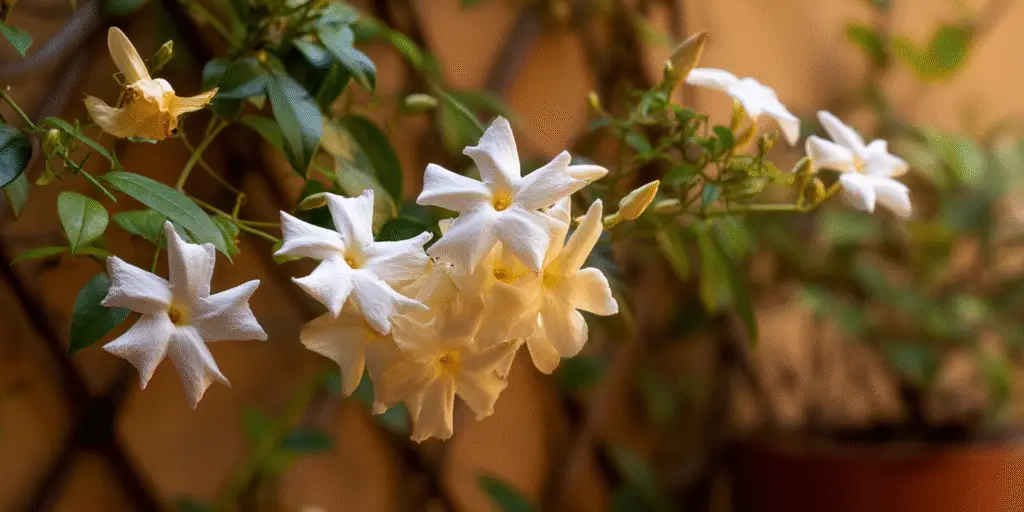
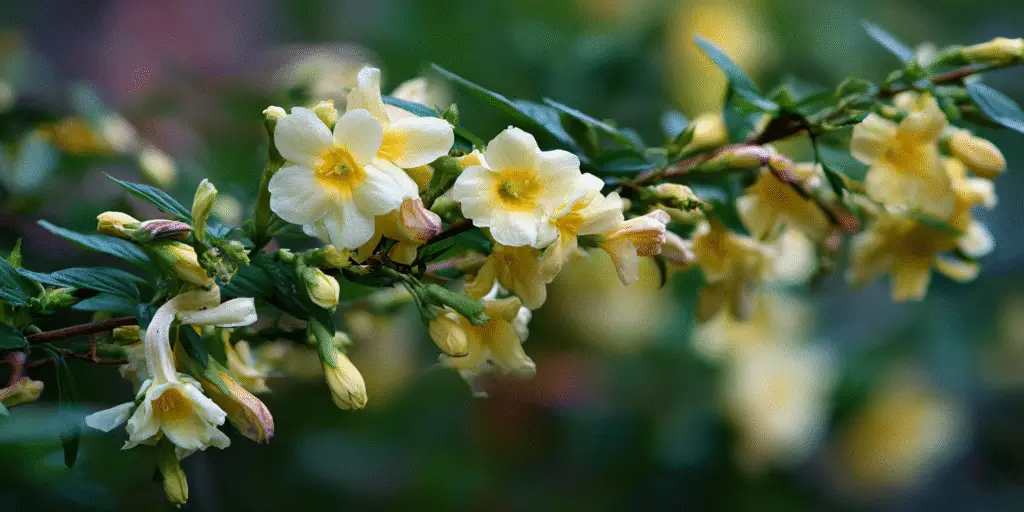
A tropical jasmine valued for intensely perfumed white blooms used in garlands and perfume. It grows as a compact shrub or a twining subshrub if tied to a support. In North America it performs best outdoors in frost‑free areas and as a summer container plant elsewhere. Flowering peaks from late spring through summer and continues longer in warm climates. Provide bright light and even moisture with excellent drainage.
At‑a‑glance
Group/Class: evergreen to semi‑evergreen shrub or twining subshrub
Height × spread: 4–5 ft (1.2–1.5 m) × 4–5 ft (1.2–1.5 m)
Bloom window: late spring to summer; longer in frost‑free regions
Color & flower form: white single to double clusters
Fragrance: 3 strong
USDA hardiness: zones 9–11 outdoors; container elsewhere
Breeder / Year / Origin: unknown, unknown, native to the Indian subcontinent
Pet safety: safe
How it differs
More heat loving and frost tender than common summer jasmine.
Compact habit suited to patio tubs compared with long climbing types.
Can flower intermittently year‑round in tropical conditions.
Strengths
Exceptional fragrance on warm evenings
Good in containers and small spaces
Responds to pruning with dense new growth
Care in one minute
Site: full sun to bright partial sun; a warm, sheltered patio is ideal.
Written by: Your Flowers Guide editorial team We are a small independent group of flower lovers who research and review each guide using trusted horticultural and educational sources. Learn more about us