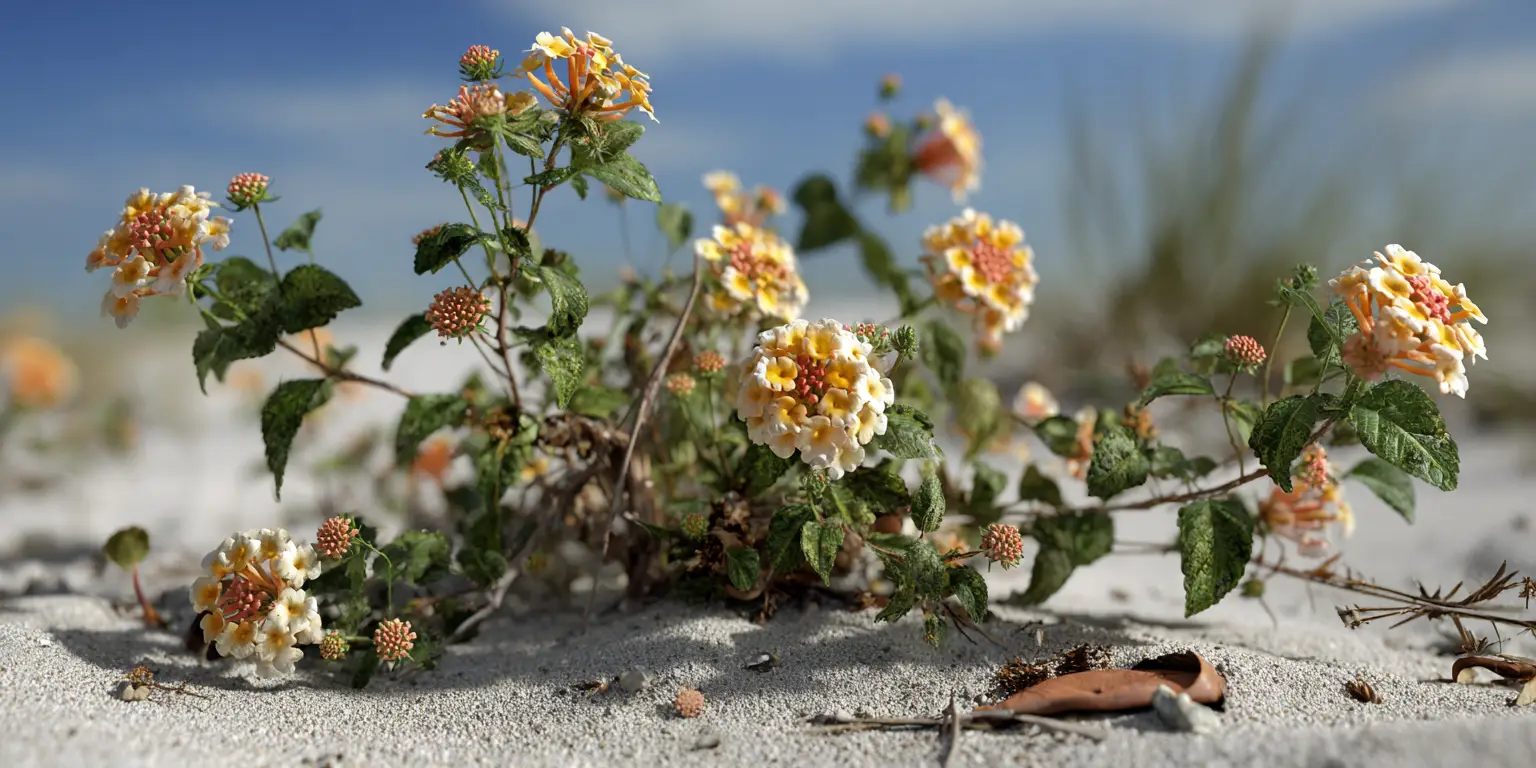
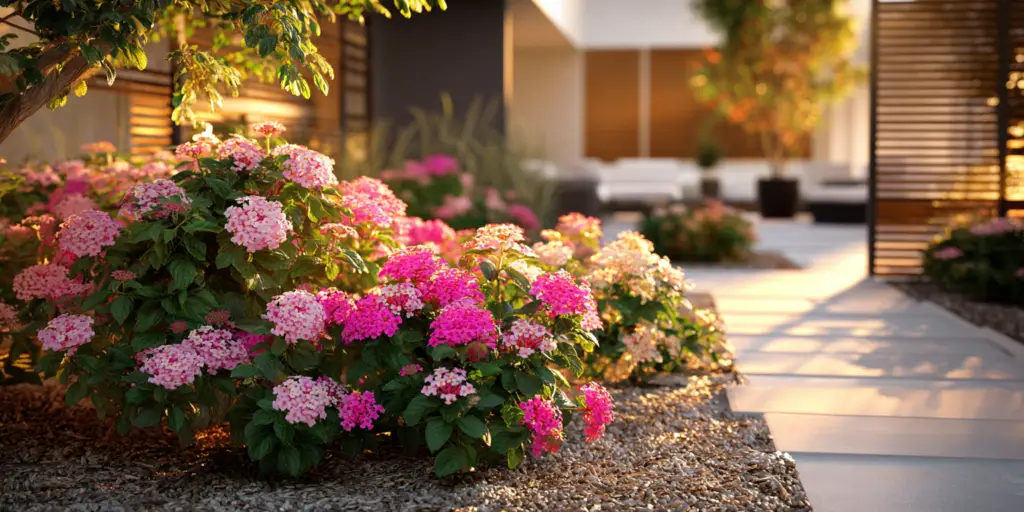
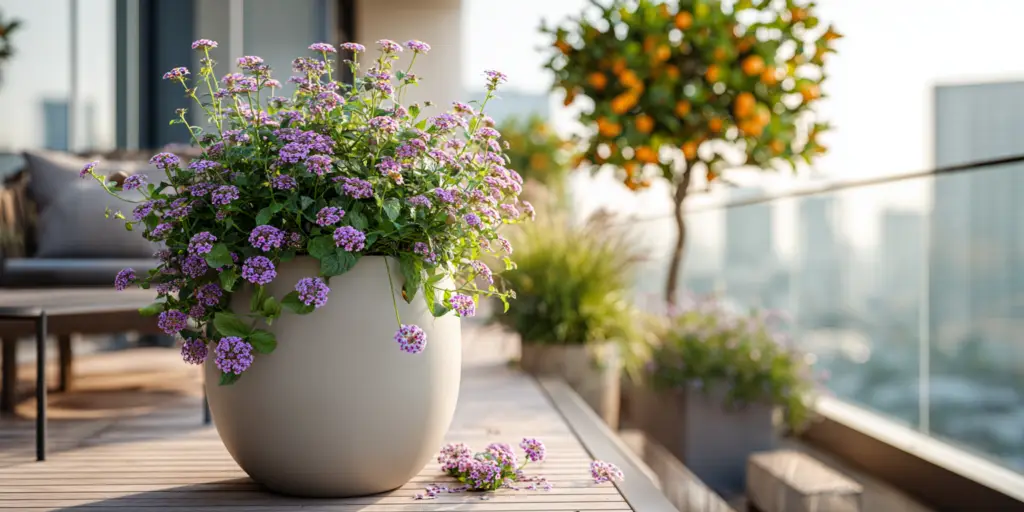
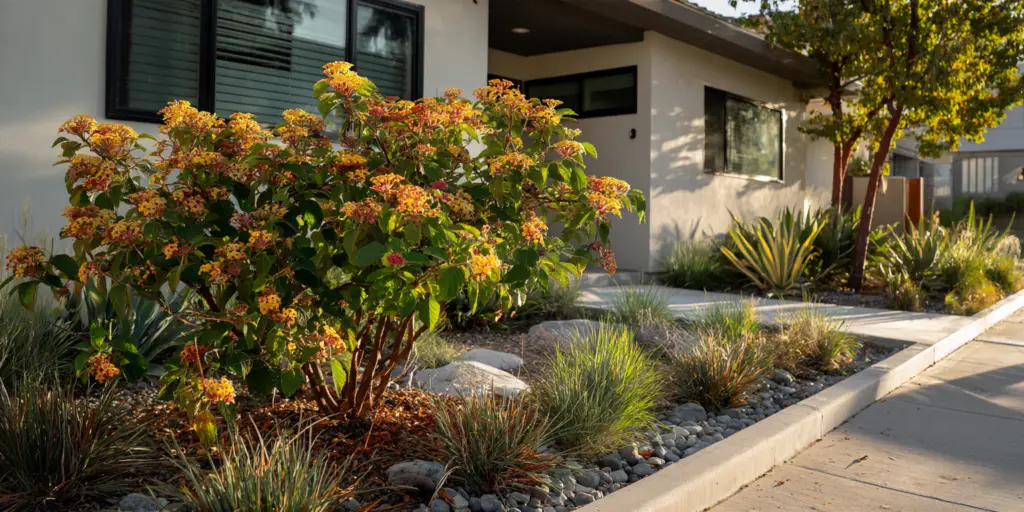
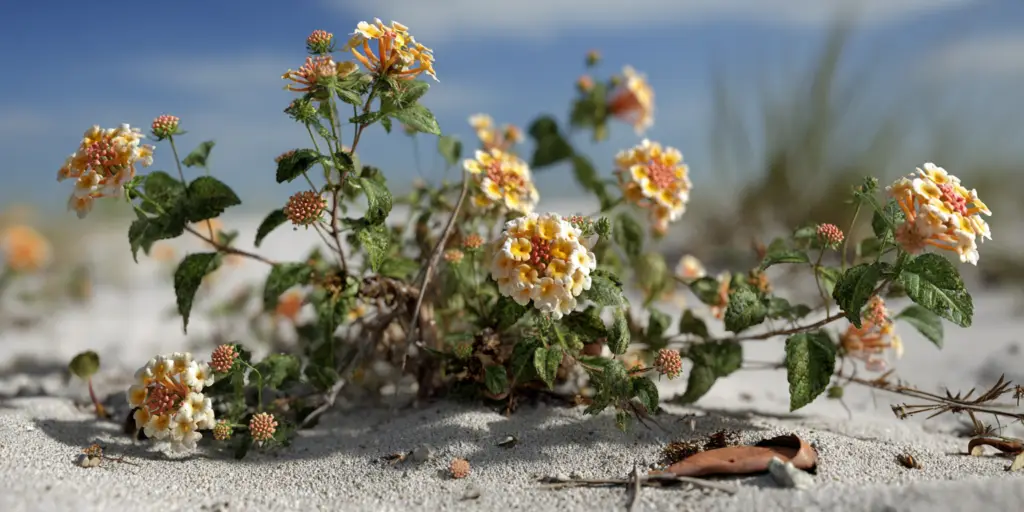
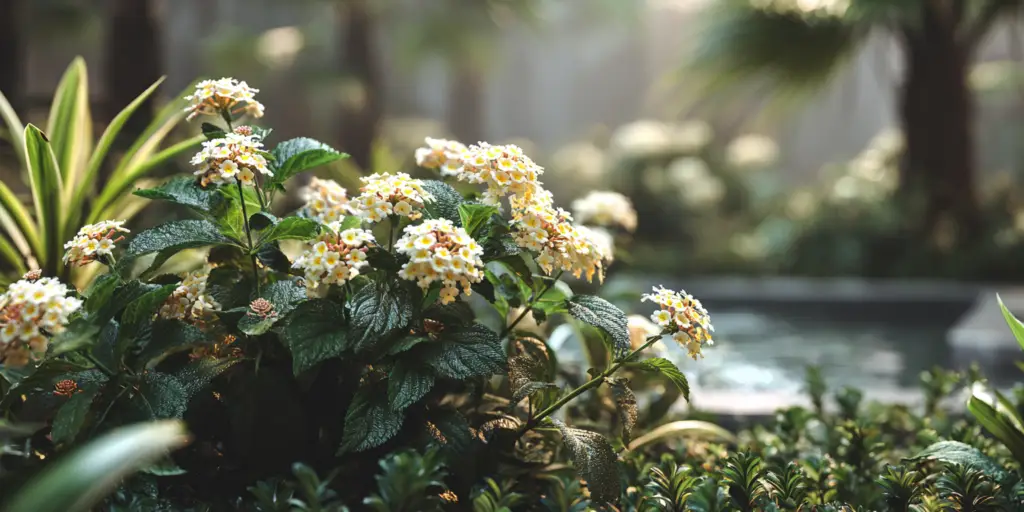
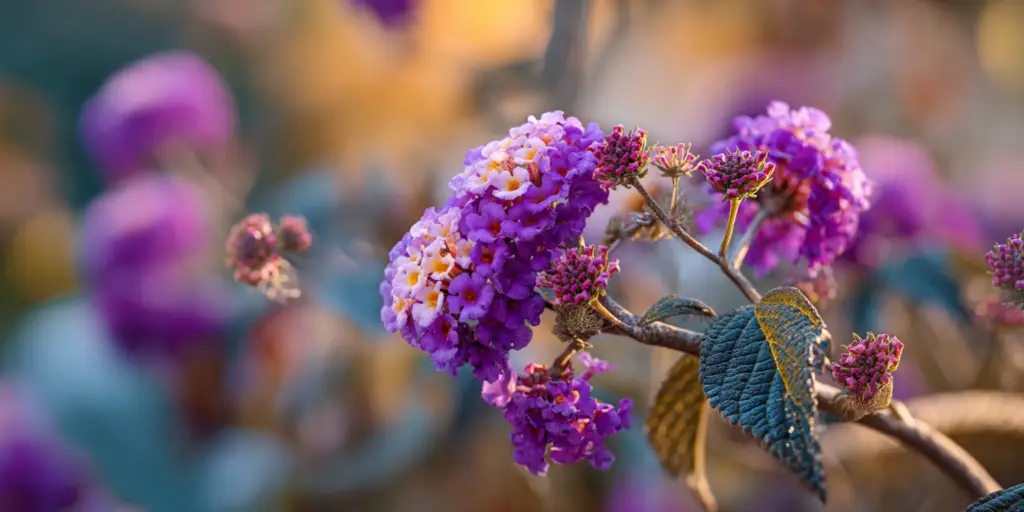
Florida lantana is a state-endangered native with bright yellow flower heads. It stands out for its low, spreading habit on dry coastal sands and pine rocklands. It performs best in full sun with sharply drained sand or limestone. It is suitable only for frost-free parts of South Florida outdoors. In other regions it is best treated as a specialty annual or grown under protection. Use only verified native material to avoid hybrid contamination with non-native lantana.
At‑a‑glance
Group/Class: Species; low shrub or woody groundcover
Height × spread: 1 to 2 ft (0.3 to 0.6 m) × 3 to 5 ft (0.9 to 1.5 m)
Bloom window: spring to fall in South Florida; sporadic year-round where frost free
Color & flower form: dense clusters of small tubular flowers in bright to pale yellow
Fragrance: 0 none
USDA hardiness: grown as annual outside frost-free South Florida and the Keys
Breeder / Year / Origin: unknown; endemic to southern Florida
Pet safety: avoid
How it differs
All-yellow flowers instead of multicolored heads common in garden lantana.
Low, spreading habit that stays near the ground.
Native to coastal South Florida with tolerance for dry, sandy or limestone sites.
Conservation concern with risk of hybridization from non-native lantana nearby.
Strengths
Adapted to sun, heat, and dry sandy or limestone soils.
Supports butterflies and native pollinators.
Compact size for tight coastal spaces.
Care in one minute
Plant in full sun with very sharp drainage on sand or limestone.
Irrigate sparingly after establishment; avoid constant moisture.
Do not overfertilize; growth is best on lean soils.
Trim lightly after flushes to keep edges neat.
Avoid planting near non-native lantana to protect genetics.
Watch‑outs
Not cold hardy outside far South Florida.
Hybridization with non-native lantana is widely reported; source plants carefully.
Endemic to Miami-Dade County and nearby coasts, with three described varieties, this species occupies pine rockland and coastal uplands. Its gene pool is threatened by hybridization with introduced lantana.
Written by: Your Flowers Guide editorial team We are a small independent group of flower lovers who research and review each guide using trusted horticultural and educational sources. Learn more about us