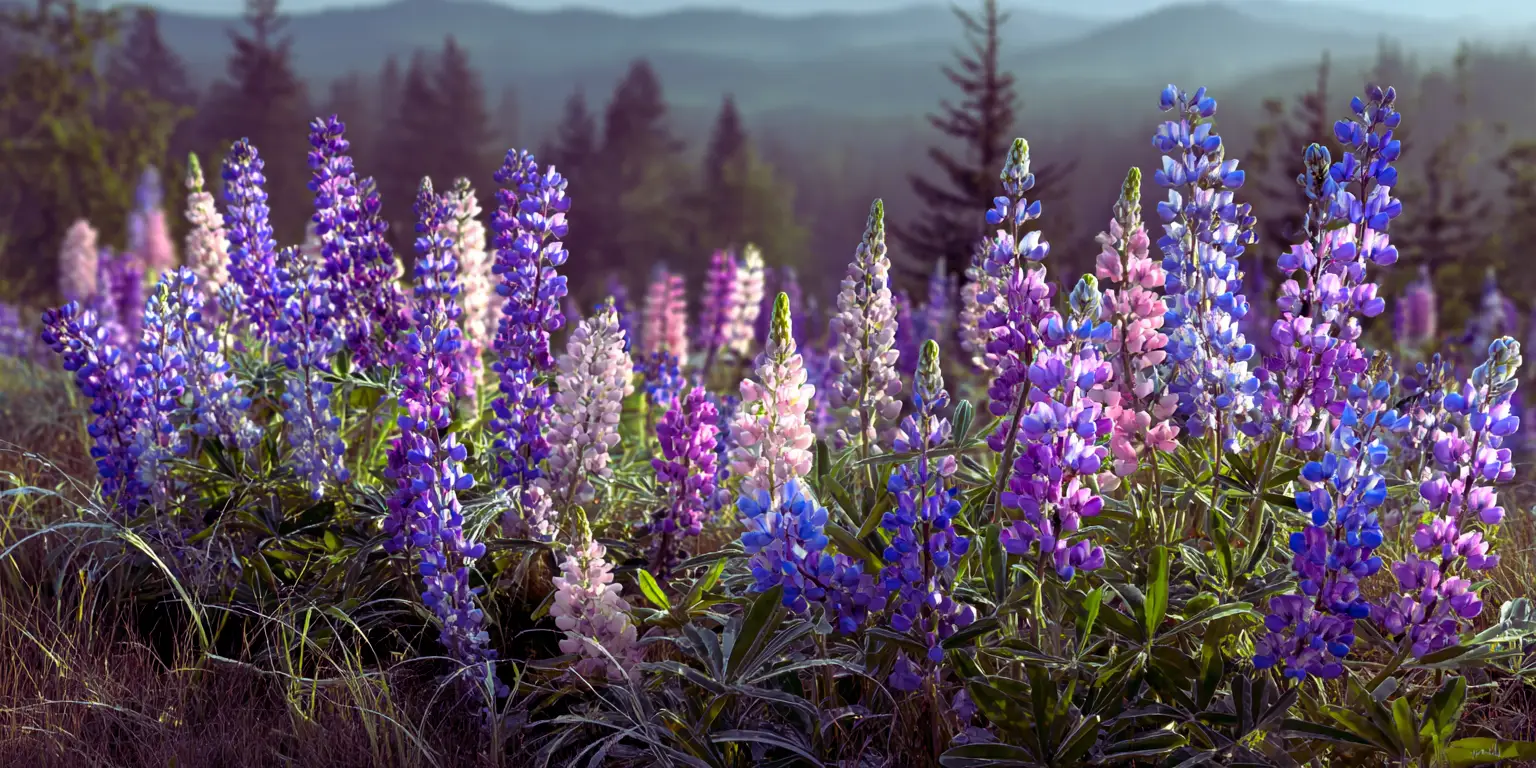
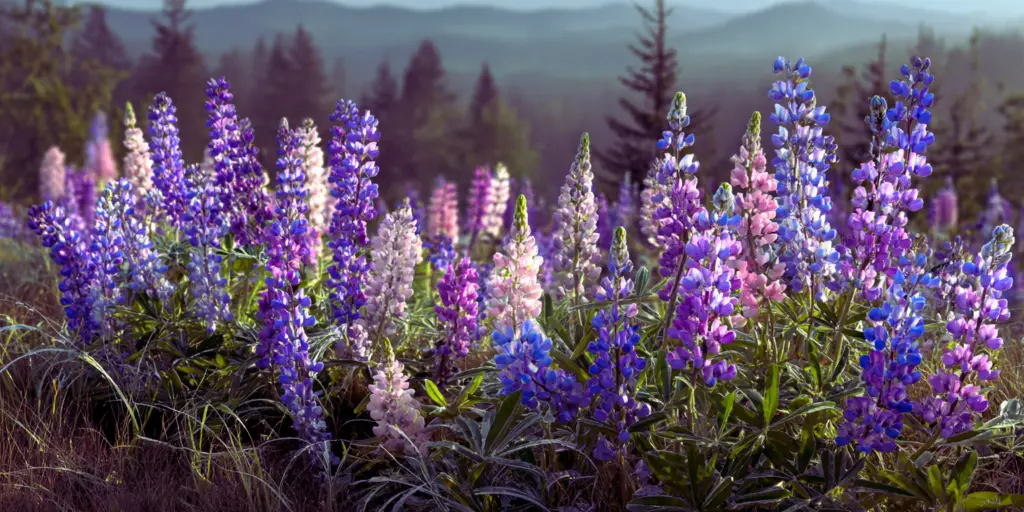
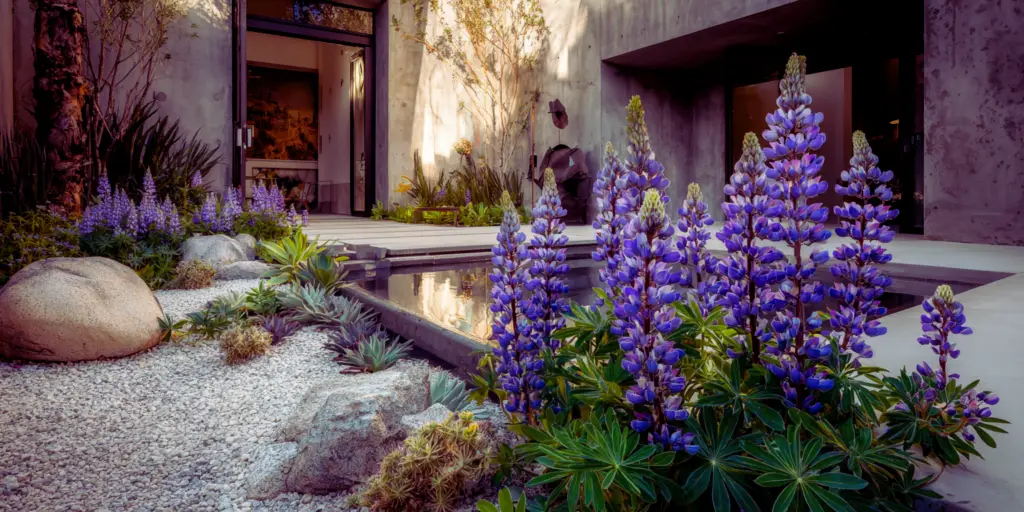
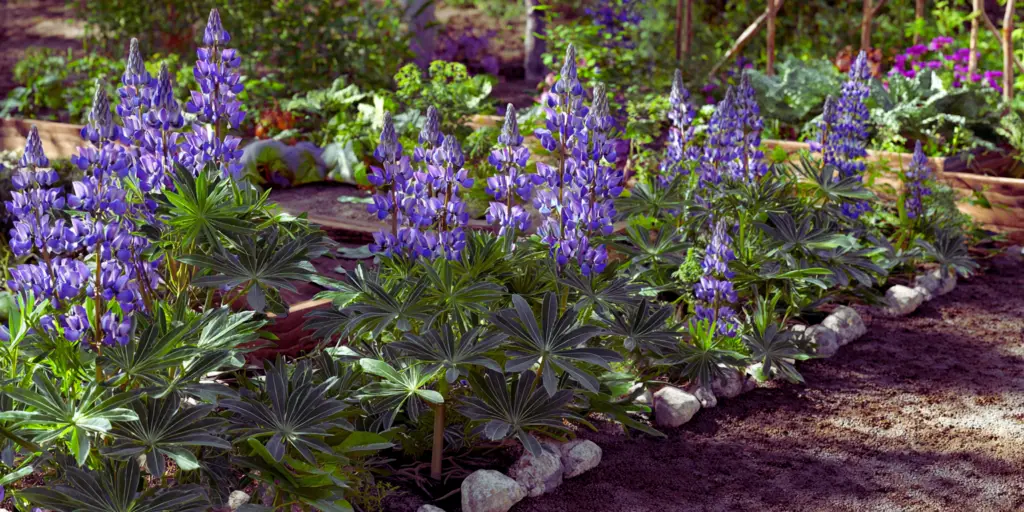
Bigleaf lupine is a cool-summer, herbaceous perennial legume for borders and meadows. It stands out for tall vertical flower spikes in late spring to early summer. It performs best in the northern United States, coastal West, and other regions with cool summers. It prefers slightly acidic, evenly moist, well-drained soil and full sun with light afternoon shade in hot areas. Plants are typically short-lived and often persist two to five years under good conditions.
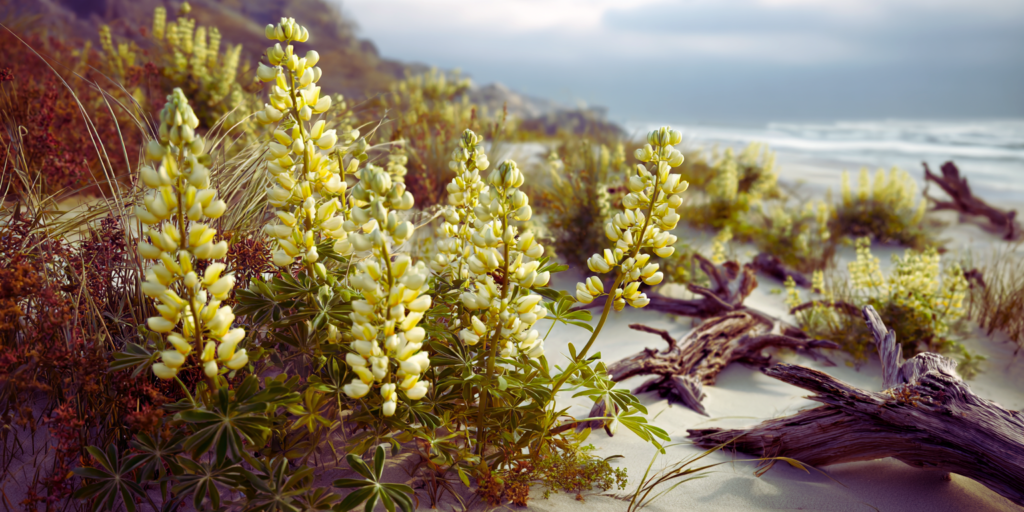
Outside its native range it can self-sow and form dense stands that displace native vegetation.
At‑a‑glance
Group/Class: Herbaceous perennial
Height × spread: 3-5 ft (0.9-1.5 m) × 1-2 ft (0.3-0.6 m)
Bloom window: May to July
Color & flower form: Blue to violet, sometimes white or pink; dense, vertical racemes of pea-like flowers
Fragrance: 1 trace
USDA hardiness: zones 4-8
Breeder / Year / Origin: unknown, unknown, USA (native to western North America)
Cut-flower notes: Hollow stems; trials report about 4 to 9 days of vase life with proper conditioning
Pet safety: avoid
How it differs
Taller and more robust than many native annual lupines
Longer, denser flower spikes than most wild species
Less tolerant of heat and humidity than many annual lupines
Written by: Your Flowers Guide editorial team We are a small independent group of flower lovers who research and review each guide using trusted horticultural and educational sources. Learn more about us