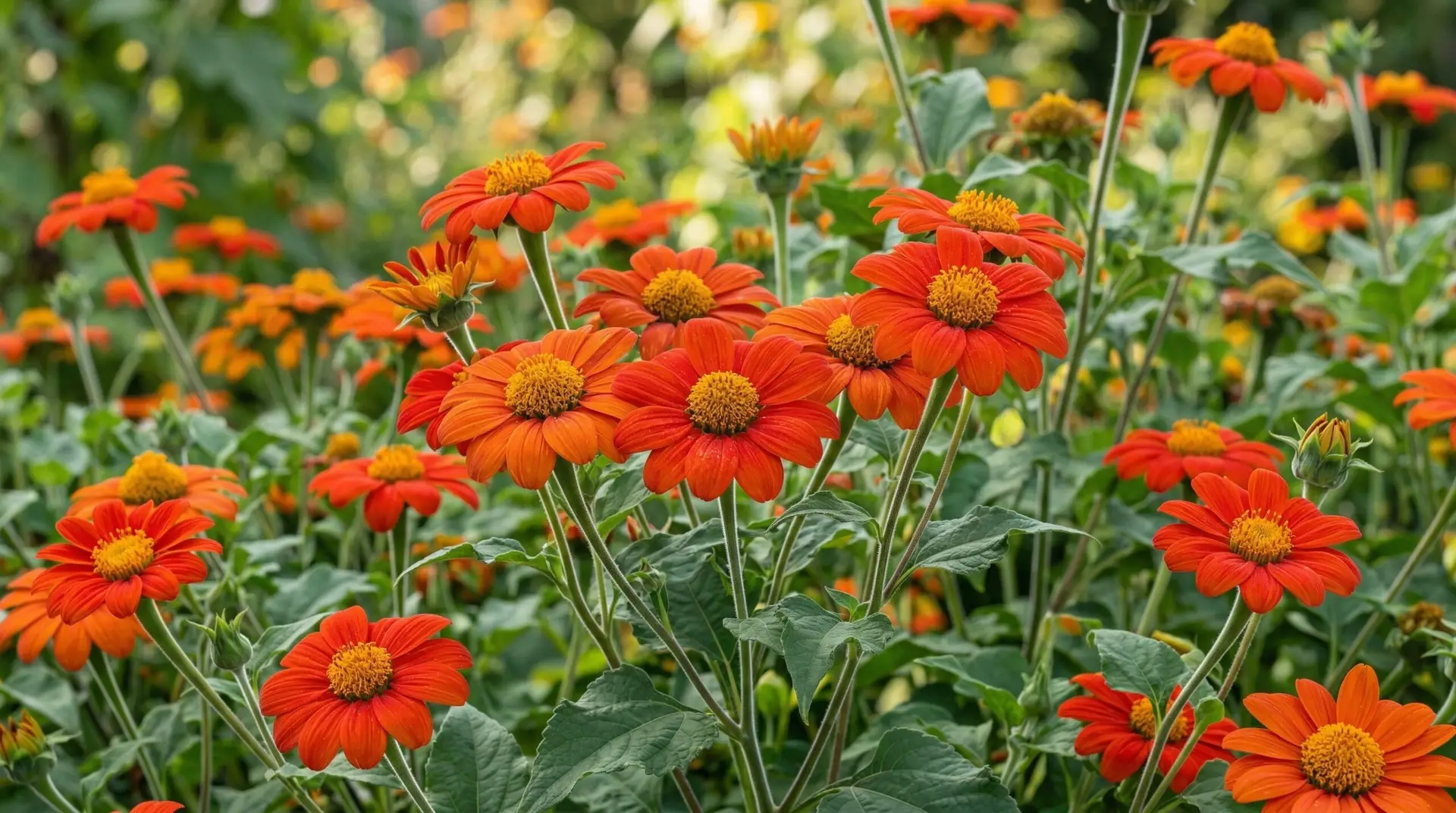
Tithonia rotundifolia has a specific shade of brilliant, fiery orange that nothing else in the late summer garden quite matches. The petals feel like soft suede, and when the sun hits them, they seem to glow from the inside out. I first grew the standard species years ago, watching in awe as monarchs covered the massive, towering plants by late August. The sheer volume of life these plants support is staggering. You step out into the garden on a warm afternoon, and the air around them is literally humming with bees, swallowtails, and migrating monarchs. It is a level of activity that makes the whole garden feel completely alive.
But the standard species comes with a significant spatial cost. Those original plants I grew shot up to seven feet tall, snapping in late summer storms and completely swallowing the plants I had carefully arranged in front of them. For anyone gardening in a typical suburban yard or trying to manage a small urban plot, a plant that wide and tall is often impossible to accommodate. That is exactly why discovering the dwarf Mexican sunflower changed the way I plan my summer beds. These smaller varieties deliver that same intense color and wildlife value without requiring half the garden to do it.
Contents 4 sections
Solving the space problem in mixed borders
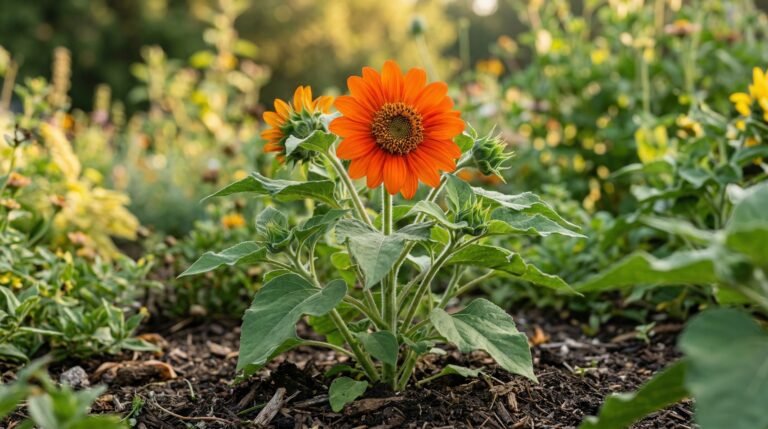
The true appeal of a compact tithonia is how easily it slips into spaces where the standard species would become an absolute nuisance. Instead of relegating them to the back fence line where they can lean and sprawl unseen, you can bring these shorter varieties right into the middle of your flower beds. At a manageable height, they mingle beautifully with other heat-loving summer annuals. I like to plant them alongside a traditional sunflower border, creating a layered effect of gold and bright orange that anchors the late summer garden. Because the dwarf types stay bushy and upright, they do not shade out their neighbors or require the heavy staking that the tall varieties inevitably demand.
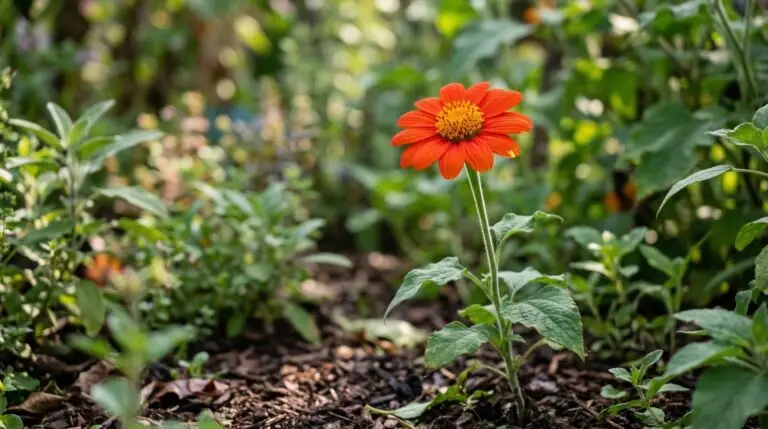
You still get the distinctive, velvety, lobed leaves that make tithonia so recognizable long before the flowers appear. The foliage itself is deeply satisfying to touch and adds a sturdy, coarse texture that contrasts well with finer-leaved plants. When the buds finally open, the scale of the flowers remains impressively large compared to the overall size of the plant. A three-foot plant covered in three-inch, fiery orange discs feels incredibly generous. The proportions look intentional rather than overgrown, making the whole garden feel more cohesive and deliberately designed.
Fiesta del Sol for tight spaces and containers
If I had to pick one variety that completely redefines how we can use this plant, it would be Tithonia Fiesta del Sol. This specific selection tops out right around two to three feet tall, which is remarkably short for a plant whose wild ancestors want to be trees. The compact habit makes it the absolute best choice if you want to grow Mexican sunflowers in pots on a patio or deck. I grow several in large terracotta pots every year, and the satisfaction of having those intense orange blooms right next to my seating area never gets old. You can sit with your morning coffee and watch the pollinators work the flowers from just a few feet away.
Tithonia Fiesta del Sol does require a fairly large container to perform well, as the root system is still vigorous even if the top growth is restrained. I have found that a pot holding at least five gallons of soil gives them the space they need to build a strong framework without drying out too quickly in the August heat. They thrive in baked, hot locations where many other container plants would simply crisp up and die. The plants will wilt dramatically if they go completely dry, but they bounce right back once you soak the soil. You do have to stay on top of the watering when they are confined to pots, but the reward is a continuous flush of blooms from mid-July straight through to the first hard frost.
Evaluating Goldfinger and Sundance
While Fiesta del Sol is my primary choice for containers, I often turn to ‘Goldfinger’ and ‘Sundance’ when planting directly in the garden beds. ‘Goldfinger’ grows slightly taller, usually settling around three to four feet depending on how rich the soil is. The flowers on ‘Goldfinger’ lean slightly more toward a golden-orange rather than the pure red-orange of the species, catching the afternoon light in a really beautiful way. It is a fantastic companion plant for a bright zinnia patch, as the two share a love for intense heat and produce a riot of color that peaks at exactly the same time. The branching on ‘Goldfinger’ is particularly strong, resulting in a dense, shrub-like plant that holds up perfectly to late summer winds.
‘Sundance’ is another excellent option that falls into that mid-sized category, offering a slightly different flower form. The petals on ‘Sundance’ often have a subtle curve or twist to them, giving the flower heads a slightly more relaxed, informal appearance. I have noticed that ‘Sundance’ seems to push out its first blooms a week or two earlier than the other varieties in my garden. That early arrival is always a welcome sight when the rest of the garden is just starting to hit its late summer stride. Getting these plants to flower earlier extends the window for pollinators, providing a reliable nectar source before the heavy autumn migration begins.
The realities of growing compact varieties
My enthusiasm for these plants is deep, but growing them does come with a few quirks that you learn to manage over the seasons. One of the most common mistakes is treating them too well. If you give a dwarf Mexican sunflower highly amended, compost-rich soil and heavy fertilizer, it will respond by growing massive amounts of foliage at the expense of flowers. The stems become weak, the plant loses its tight, compact shape, and you end up with a floppy green bush that rarely blooms. They genuinely prefer lean, average soil and require you to step back and let them bake in the sun without much interference.
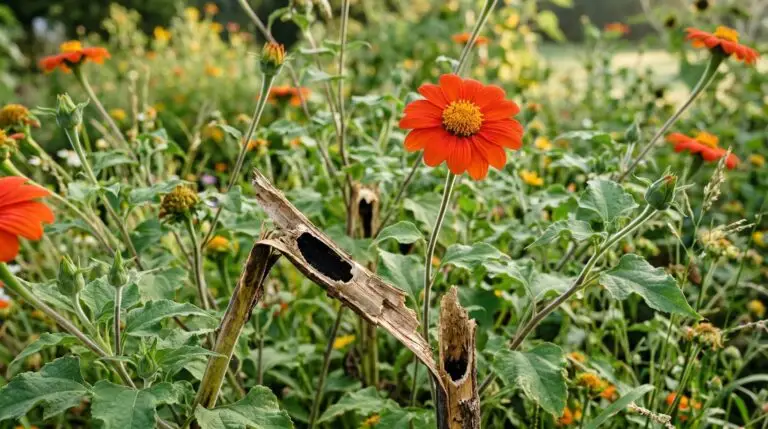
Deadheading is also a necessary chore if you want them to keep producing those brilliant flowers right up until frost. The stems are surprisingly hollow and brittle, and the sap leaves a sticky residue on your fingers and pruners that takes some effort to wash off. You have to snap the spent heads off carefully to avoid breaking the entire brittle branch. Sometimes, despite your best efforts, a heavy rain will cause a branch to split away from the main trunk. I simply cut the broken piece away, and the plant almost always pushes out new lateral growth to fill the gap within a week or two.
The minor sticky chores and the occasional broken branch are entirely forgotten the moment the monarch migration peaks. Standing in the garden in early September, watching dozens of butterflies float from one orange disc to another, is the exact reason I will never skip a year of planting these seeds. The compact varieties give us a way to experience that wild, untamed energy in a package that actually fits into our daily lives and smaller gardens. They ask for so little, just a sunny spot and some average dirt, and they return the favor with a display of color and life that defines the end of the summer season.
More About Mexican Sunflower
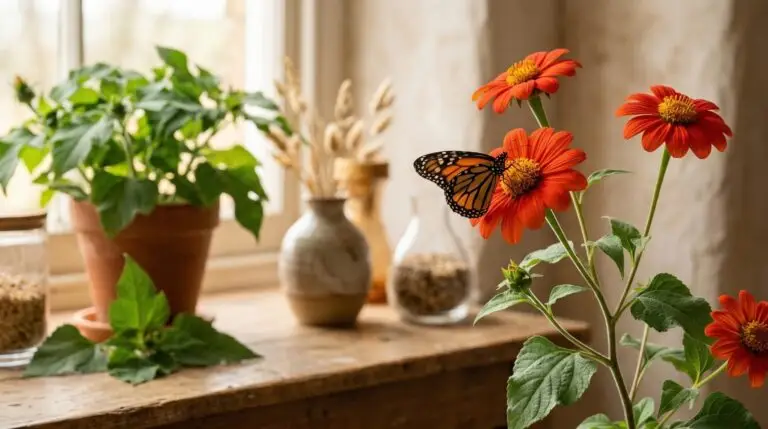
Mexican sunflower as the ultimate butterfly magnet for late season pollinator gardens
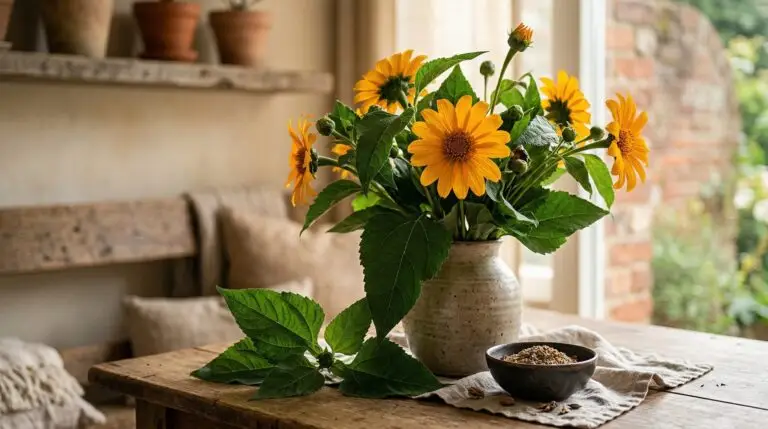
Mexican sunflower leaves as a natural fertilizer and green mulch for vegetable gardens
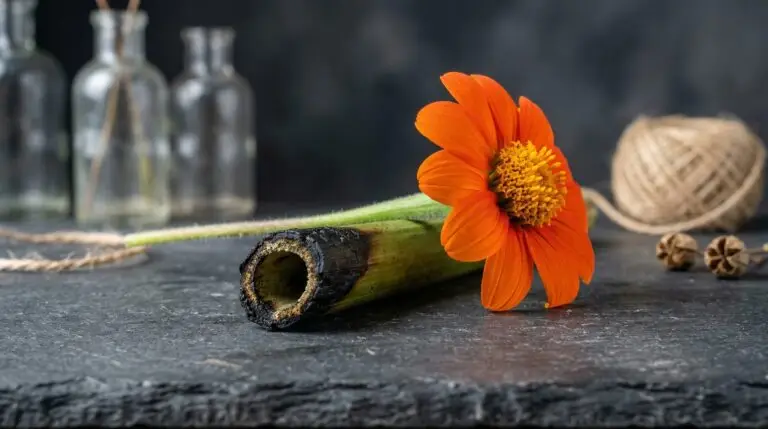
Mexican sunflowers as cut flowers with the trick to prevent hollow stems from wilting
How to grow Mexican sunflowers for towering walls of blazing orange in late summer
Mexican sunflower versus common sunflower and why you should grow both
How to keep Mexican sunflowers from flopping over when they get tall and top-heavy
How to save Mexican sunflower seeds for next year’s free butterfly garden
Growing Mexican sunflowers from seed and the tropical annual that needs no pampering
Companion plants for Mexican sunflower: what to grow, avoid
Enjoying our flower guides? Add YourFlowersGuide as a preferred source on Google. It helps more readers find us.
Add to Preferred Sources