The pairing · pick a flower
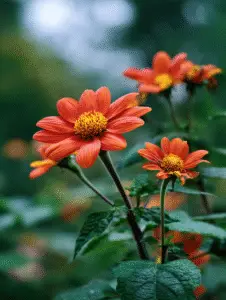 Mexican sunflower+
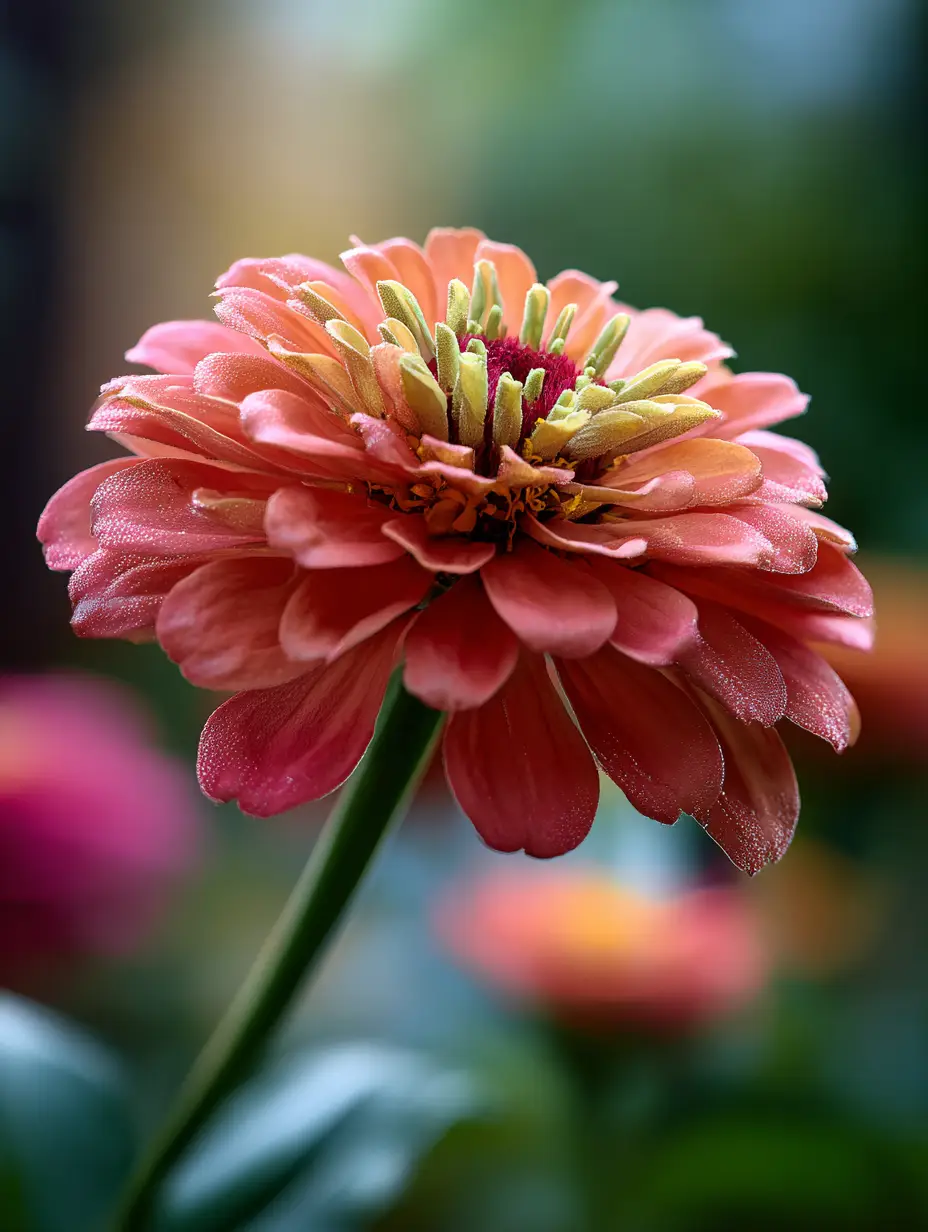 ZinniaProven
Tall zinnias in magenta, cherry-red, or gold pick up Tithonia's heat and form the classic bridge between its towering canopy and the front of the bed.
Mexican sunflower+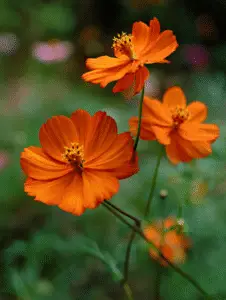 CosmosProven
Cosmos shares the exact fertility lesson Tithonia teaches: both bloom best starved, and cosmos's ferny, airy foliage lightens Tithonia's coarser leaves.
Mexican sunflower+ Black-eyed SusanProven
Genuinely tolerant of the same lean, average soil Tithonia wants, and its gold petals echo the yellow centers of Tithonia's orange-red daisies at a shorter, front-of-mid-border height.
Mexican sunflower+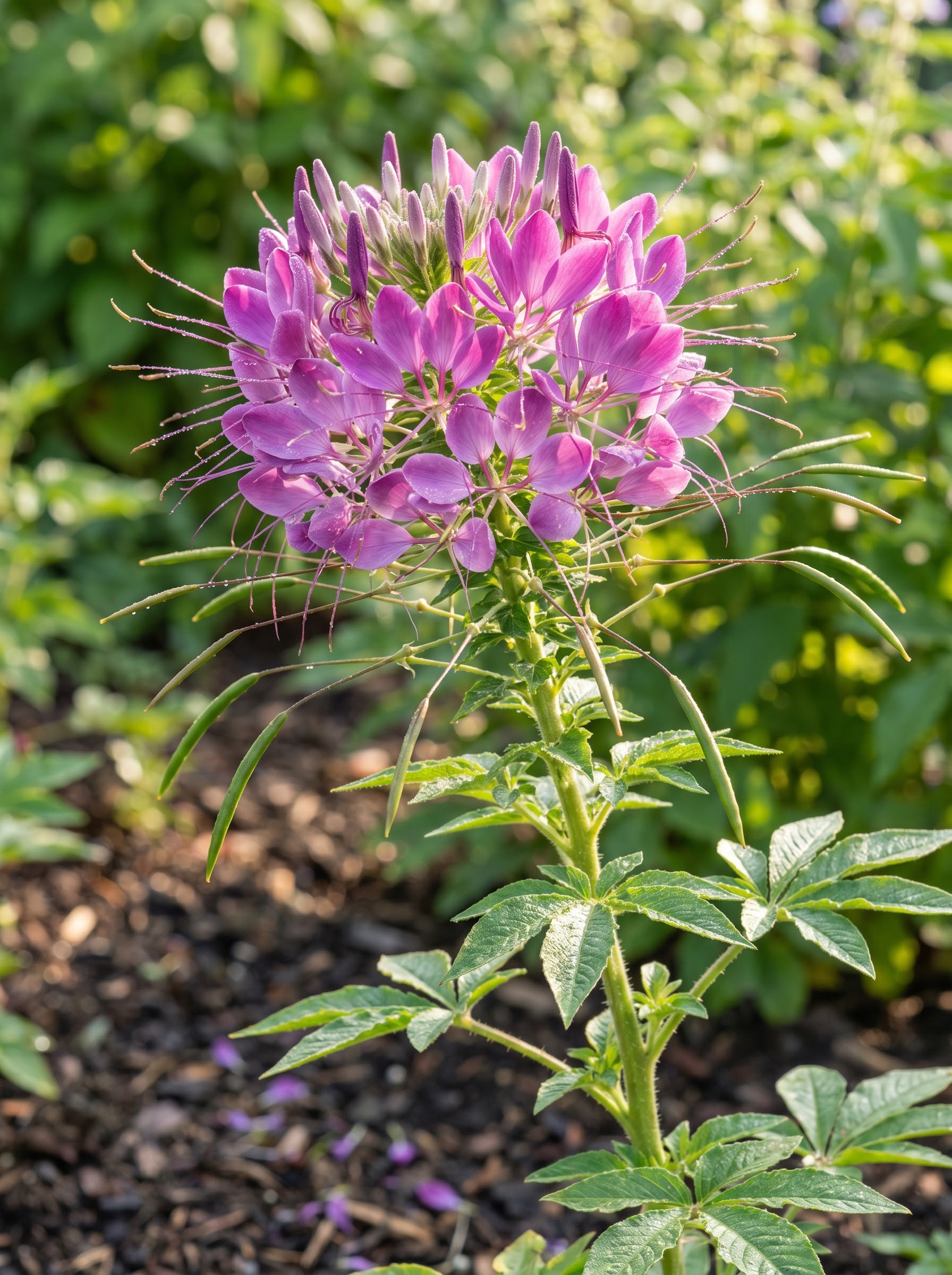 Spider flowerPartial
A heat-loving, drought-tolerant annual that adds a spiky, loose vertical form to break up Tithonia's rounded canopy, and it is named alongside Tithonia in a documented hot-color border.
Mexican sunflower+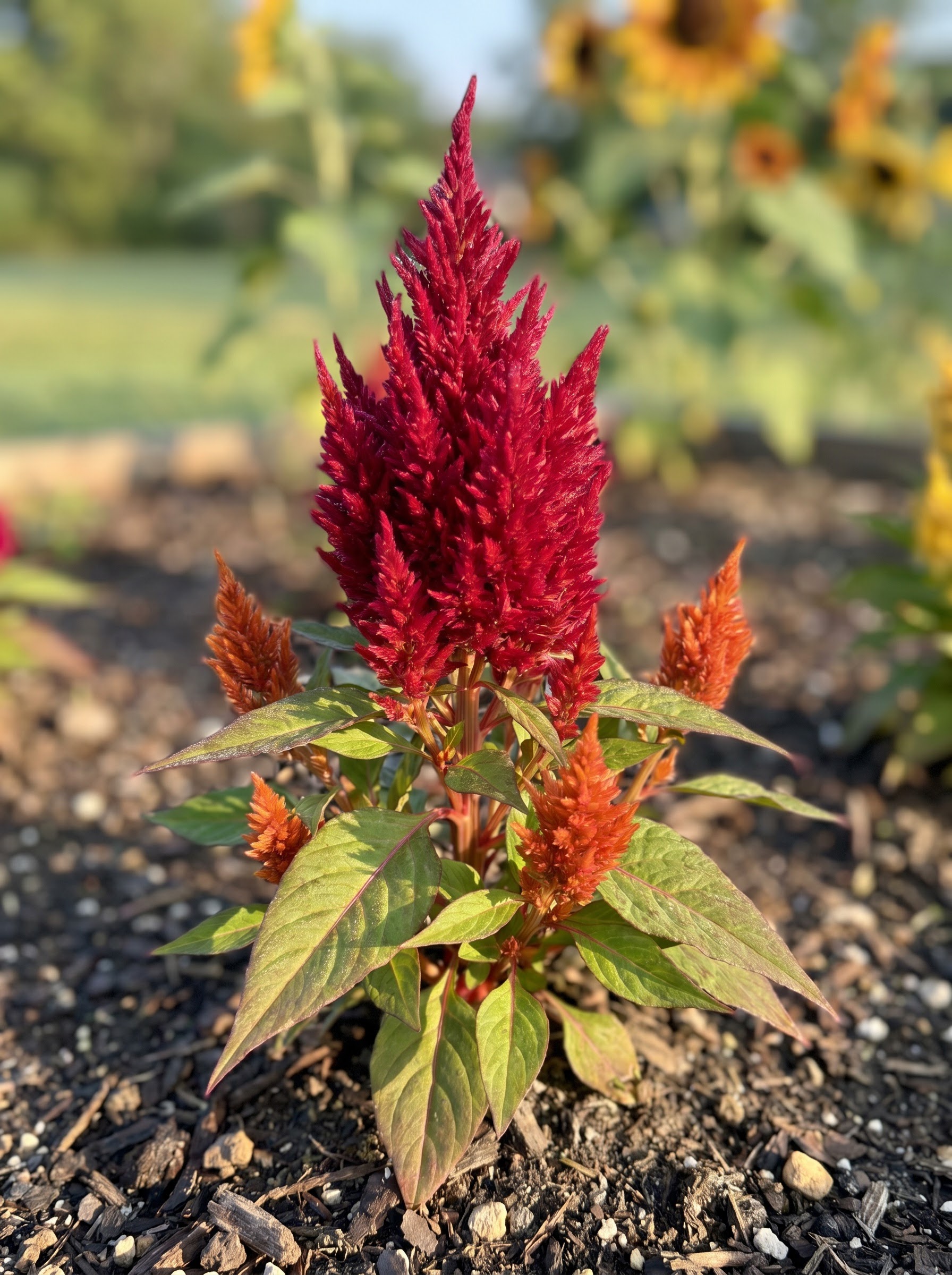 Plume celosiaPartial
Full sun and heat-loving with real drought tolerance once established, and its feathery plume form varies a border otherwise dominated by round daisy flowers.
Mexican sunflower+ Blue salviaPartial
Full sun and well-drained soil match Tithonia's needs cleanly, and its cool blue-violet spikes are the direct color foil to Tithonia's hot orange-red, a pairing named directly in a documented butterfly-border design that plants the two side by side.
Mexican sunflower+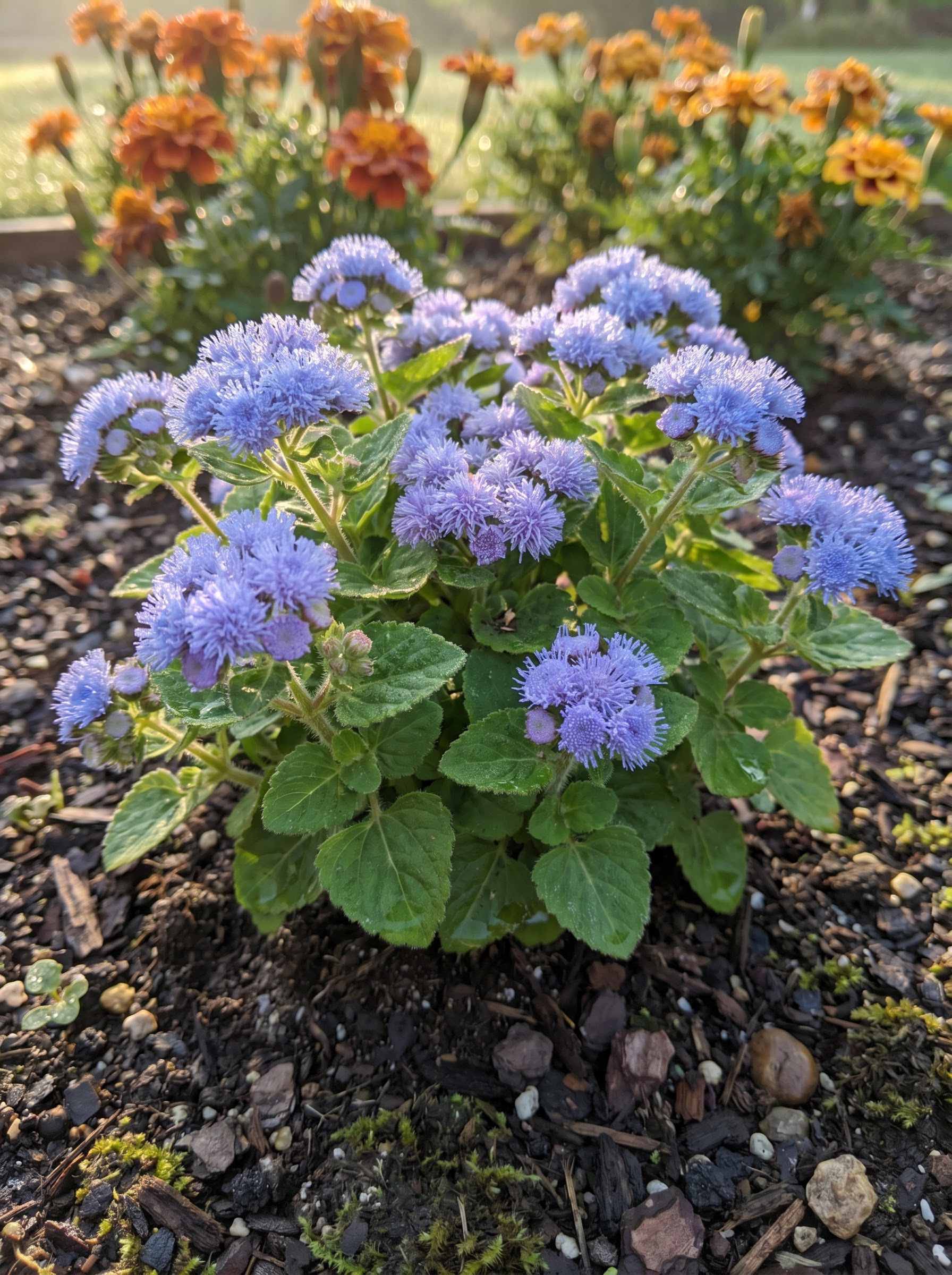 AgeratumPartial
A low, purple-flowered edging annual that softens Tithonia's front and supplies the cool contrast color that hot orange-red lacks; it shares Tithonia's full-sun preference, though ageratum genuinely wants richer, moister soil, so give it its own amended patch rather than Tithonia's lean ground.
Mexican sunflower+ Canna lilyPartial
Bold, broad burgundy or green leaves give Tithonia's daisy flowers the strongest textural backdrop available, but canna genuinely wants richer, moister soil than Tithonia tolerates well, so this pairing carries a real soil trade-off.
Mexican sunflower+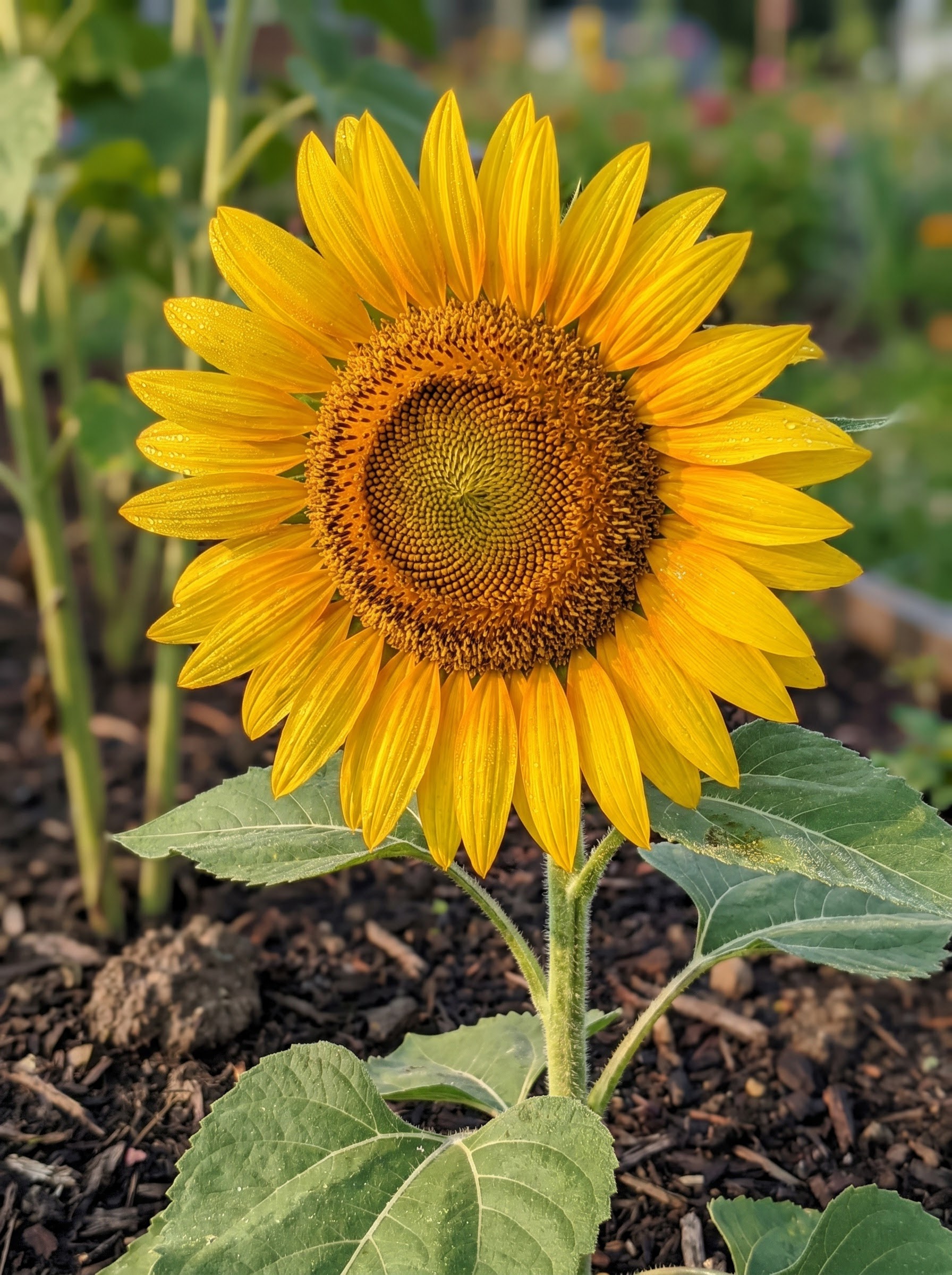 Common sunflowerPartial
A bold daisy-form companion that reinforces rather than competes with Tithonia's own look at a matching backdrop scale, though true sunflower wants steadier moisture and richer soil than Tithonia is happiest in.
All Mexican sunflower companions
9 flower companions, best match first
What not to plant near Mexican sunflower
Most bad neighbours are not evil, they just want the opposite light, water or root run. Here is what to keep away, and what to do instead.
Rich, heavily composted soil or routine nitrogen feeding
This is a soil trap, not a plant, and it is the single most distinctive fact about this flower: excess fertility and nitrogen push Tithonia into lush foliage, weak stems, and lodging (falling over) instead of more blooms.
Shade perennials and moisture-lovers (hosta, astilbe, fern, heuchera, impatiens)
Tithonia's 3 to 6 ft bulk shades out anything planted too close, and shade perennials also want richer, damper soil than a bed built for a lean, full-sun annual can honestly give them.
Soft pastels planted right beside it (pale pink, powder blue, gentle lavender)
This is a color-design clash, not a horticultural one: Tithonia's saturated orange-red visually overwhelms pale flowers nearby and makes them look washed out and sickly rather than complementary.
Small, slow, or short front-of-border plants tucked too close
Once Tithonia reaches its full 3 to 6 ft height and 2 to 3 ft width, anything small planted right against it is physically shaded out or crowded, which is the most common real way this plant harms a neighbor.
The best companions for Mexican sunflower, explained
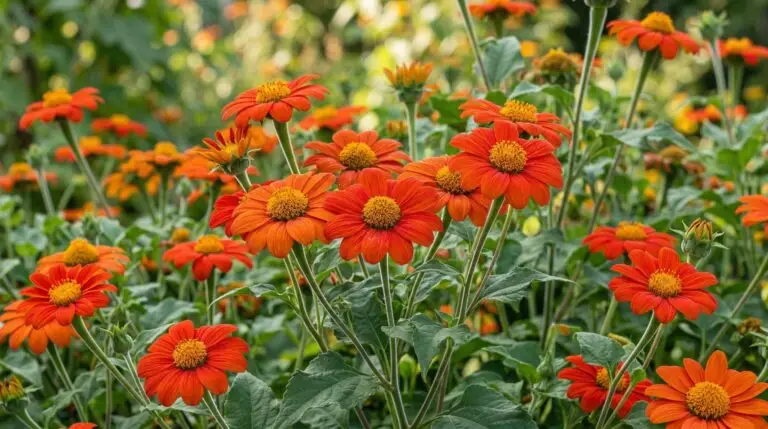
Mexican sunflower, botanically Tithonia rotundifolia, is a tall, branching summer annual that carries saturated orange-red daisies on stems that can reach 6 feet by late summer. Its most workable companions all share two traits: they tolerate full sun and lean soil, and they hold their own visually next to a flower this loud. Tall zinnias in magenta, cherry-red, or gold sit closest to the plant in most gardens, and for good reason. Zinnia shares Tithonia’s exact appetite for heat and average soil, blooms across the same midsummer-to-frost window, and forms what garden designers call the structural bridge between Tithonia’s height and the lower front of the border. Cosmos earns the same top tier for a more specific reason: it is one of the only other flowers that genuinely performs better when you withhold fertilizer, which makes it a true conditions match rather than just a color match, and its ferny, lacy foliage relieves the coarser texture of Tithonia’s own leaves. Black-eyed Susan rounds out the strongest trio, its gold petals echoing the yellow centers of Tithonia’s flowers at a shorter, front-of-mid-border height, and its tolerance for average-to-lean soil holding up under the same research scrutiny as zinnia and cosmos.
A second tier of companions works well without matching quite as cleanly. Spider flower and plume celosia both share Tithonia’s heat tolerance and add flower forms the daisy-heavy border is missing, spider flower’s loose spiky clusters and celosia’s feathery plumes breaking up what would otherwise be a wall of round blooms. Blue salvia and purple ageratum do a different job entirely: rather than matching Tithonia’s hot palette, they supply the one thing it lacks, a cool contrast color, and both tolerate the same sun and drainage. Canna lily and true garden sunflower earn a place too, mostly for what they contribute visually. Canna’s broad burgundy leaves give Tithonia’s daisy flowers the strongest textural backdrop available in this whole list, and true sunflower reinforces rather than competes with Tithonia’s own bold, daisy-form look. Both carry a real caveat worth stating plainly rather than glossing over, which the next section covers. None of this replaces the plant’s own presence. Massed in groups of three or five rather than planted as single specimens, Tithonia becomes the anchor a hot-color border is built around, not an odd one out.
What not to plant near Mexican sunflower
The single most important thing to avoid with this flower is not a plant at all. It is rich soil and routine fertilizing. Tithonia is one of a small handful of garden flowers that genuinely performs worse when you feed it or plant it in fertile, heavily composted ground. Extension research is unambiguous on the mechanism: excess fertility and nitrogen push the plant into producing more leaves than flowers, and the stems that carry all that extra foliage grow weak and eventually lodge, meaning they fall over under their own weight. This inverts the usual companion-planting instinct that richer soil is always the safer bet, and it is worth knowing before you plant Tithonia in a bed built for heavy feeders like most rose beds or vegetable gardens, because that soil will work against it rather than for it. If your Mexican sunflower has flopped over by midsummer despite staking, rich soil or a fertilizing habit carried over from other plants is the most likely cause, not a pest or a weak cultivar.
The second avoid is a straightforward light and moisture mismatch. Shade perennials and moisture-lovers, hosta, astilbe, fern, heuchera, and shade-loving impatiens among them, do not belong near Tithonia for two independent reasons. Tithonia’s height and bulk shade out anything planted close once it reaches its full size, and those same shade plants generally want richer, damper soil than a bed built to keep Tithonia lean and dry can honestly provide. Small or slow-establishing plants of any kind face a related but distinct problem: simple physical crowding once Tithonia reaches its full 3 to 6 foot spread. This is less a bad pairing than a spacing mistake, but it is the most common real-world way this plant harms a neighbor, by shading it out rather than through any chemical or competitive mechanism. The color-clash avoid belongs in a different category entirely. Soft pastels planted right beside Tithonia, pale pink, powder blue, gentle lavender, will visibly wash out next to its saturated orange-red, and that is real, widely repeated design guidance. It is not, however, a horticultural fact backed by a mechanism the way the soil trap or the shade conflict are, so it earns an honest folklore label rather than false scientific weight.
Do they like the same conditions?
Tithonia rotundifolia wants full sun, 6 or more hours of direct light with no meaningful shade tolerance, moderate water with real drought tolerance once established, and poor-to-average, well-drained soil. That last point is the one worth dwelling on, because it runs backward from what most companion-planting logic assumes. For the great majority of garden flowers, richer soil is the safer default and poor soil is the constraint to manage around. Tithonia flips that: richness itself is the risk. Clemson University’s Home and Garden Information Center and North Carolina State Extension both state this directly and independently, which is unusually strong agreement for a single cultural fact. Zinnia, cosmos, black-eyed Susan, spider flower, and celosia all pass this shared-conditions test cleanly, tolerating the same lean, dry-leaning soil without complaint. Canna lily and true sunflower do not pass it cleanly, and it would be dishonest to pretend otherwise. Both genuinely prefer richer, moister soil than Tithonia is happiest in, canna especially, which extension sources describe as wanting organically rich, consistently moist ground with regular feeding. That does not disqualify either as a companion; it means treating them as design partners with their own separate watering and feeding zone rather than assuming shared soil will suit both plants equally.
How to plant them together
Group Tithonia in threes or fives rather than as single specimens, since massed planting is what turns its coarse, somewhat rangy individual habit into the solid block of hot color that reads well from a distance. Place it at the back of the border in nearly every layout; its 3 to 6 foot height and 2 to 3 foot width make it a backdrop plant almost without exception, and every extension source and design reference agrees on this placement. Give companions real spacing rather than crowding them against the base: 18 to 24 inches is typical for mid-height neighbors like zinnia, celosia, or black-eyed Susan, and 24 to 36 inches for larger companions like cleome, canna, or true sunflower that need their own elbow room. Layer by height working forward from Tithonia: tall zinnia, cleome, or true sunflower behind or beside it at similar scale, celosia and blue salvia at mid-height, and black-eyed Susan or ageratum in front to hide the bare lower stems Tithonia develops as it grows. Pinch young plants to encourage bushier, sturdier growth, and stake in windy spots regardless of companions, since the stems are genuinely brittle. Tithonia is not a container plant in most cases; its size and rangy habit suit an open bed far better than a pot, though a large container with matched-scale companions like canna can work in a pinch. Skip fertilizer on the Tithonia itself even if you feed its richer-soil neighbors, and keep any compost or amendment concentrated at those neighbors’ root zones rather than worked into Tithonia’s own patch of ground.
Does companion planting actually work for Mexican sunflower?
Some of it, yes, genuinely, and some of it is closer to design opinion dressed up as horticultural advice. The strongest, most evidence-backed claim about this flower is not really about companions at all: Tithonia is a documented pollinator magnet, arguably one of the best-evidenced claims of its kind in the whole flower catalog. Clemson HGIC, North Carolina State Extension, and University of Florida IFAS Extension all independently confirm heavy, sustained visitation from butterflies, bees, and hummingbirds across its whole bloom season, plus finches feeding on the seed heads later on. That much is proven, not folklore. The soil-fertility trap is equally solid: two independent extension sources state the same mechanism in nearly identical language, which is about as close to settled as garden advice gets. The shared-conditions matches, zinnia, cosmos, and black-eyed Susan sharing Tithonia’s exact sun and soil profile, rest on the same kind of solid ground, backed by extension descriptions of each plant’s own culture that line up with Tithonia’s requirements point for point. Where the evidence thins out is the purely visual advice: the color-contrast pairings with blue salvia or purple ageratum, the textural case for celosia and cleome, and above all the warning against pastels. These are real, repeatedly stated recommendations from credible garden-design sources, but they describe aesthetic judgment, not a tested biological or chemical mechanism, and this page tiers them as such rather than inflating them to match the soil-fertility or pollinator claims. On the invasiveness question specifically, the answer depends on which species and which place you mean. Tithonia rotundifolia, the common annual grown in home gardens under names like Torch and Fiesta del Sol, is not classified invasive on the US mainland and does not appear on the federal noxious weed list; it reseeds readily if you let it go to seed, but it does not spread by rhizomes or naturalize aggressively the way some garden escapees do. Its larger relative, Tithonia diversifolia, is a genuinely documented invasive species across parts of Africa, Southeast Asia, and the Pacific, with real allelopathic chemistry that suppresses other plants’ germination. Confusingly, T. rotundifolia itself does carry a high-risk weed score in Hawaii specifically, a Pacific-island context very different from a mainland garden bed. If you garden in Hawaii, that regional flag is worth taking seriously; everywhere else covered by the extension sources above, it is not.
Frequently asked questions
What can I plant in front of Mexican sunflower?
Black-eyed Susan and ageratum both work well as a lower front layer, hiding the bare stems Tithonia develops low on the plant as it grows taller through the season. Black-eyed Susan matches Tithonia’s lean, full-sun conditions outright; ageratum shares the full sun but genuinely wants richer, moister soil, so give it its own amended patch rather than assuming shared ground will suit both equally.
What should you not plant near Mexican sunflower?
Skip rich, heavily composted soil and routine feeding, which is the biggest real mistake with this flower, along with shade perennials and moisture-lovers that will be shaded out by Tithonia’s bulk and want damper soil than the bed can honestly provide.
Why did my Mexican sunflower fall over?
Lodging, meaning the stems weaken and the plant topples, is most often caused by soil that is too rich or a fertilizing habit meant for other plants, since extra nitrogen produces more leaf growth than the stems can support. Staking helps but does not fix the underlying cause.
Is Mexican sunflower invasive?
Tithonia rotundifolia, the common garden species, is not classified invasive on the US mainland, though it reseeds freely if deadheading lapses. Its relative Tithonia diversifolia is a documented invasive species in parts of Africa, Southeast Asia, and the Pacific, and gardeners in Hawaii specifically should know T. rotundifolia itself carries a high-risk weed score there.
Does Mexican sunflower actually attract pollinators, or is that overstated?
It is genuinely one of the best-evidenced pollinator plants in the garden, with extension sources from Clemson, North Carolina State, and Florida all independently confirming heavy, sustained visits from butterflies, bees, and hummingbirds through its whole bloom season.
Mexican sunflower rewards the same lean, sun-drenched, well-spaced approach whether you are building a hot butterfly border around it or just finding it a spot in an orange flowers bed. Pair it with tall zinnias and cosmos for a clean shared-conditions match, let black-eyed Susan hide its bare legs up front, and reach for canna lily or true sunflower only if you are willing to give them their own richer patch of soil. For a full growing profile, from bloom time to hardiness, see the main Mexican sunflower guide, and if a blue-violet contrast color appeals more than a hot-color match, blue salvia does that job on the same sun and drainage this flower already wants.
Sources
- Clemson HGIC: How to Grow Mexican Sunflowers (Tithonia rotundifolia) for Pollinators & Summer Color
- North Carolina Extension Gardener Plant Toolbox: Tithonia rotundifolia
- Wisconsin Horticulture Extension: Mexican sunflower, Tithonia rotundifolia
- University of Illinois Extension: Brighten up your fall landscape with Tithonia
- Utah State University Extension: Cosmos in the Garden
- University of Minnesota Extension: Calla and canna lilies
- North Carolina Extension Gardener Plant Toolbox: Ageratum houstonianum
- K-State Research and Extension, Shawnee County: Butterfly Garden Design
More About Mexican Sunflower
Mexican sunflower as the ultimate butterfly magnet for late season pollinator gardens
Mexican sunflower leaves as a natural fertilizer and green mulch for vegetable gardens
Mexican sunflowers as cut flowers with the trick to prevent hollow stems from wilting
How to grow Mexican sunflowers for towering walls of blazing orange in late summer
Mexican sunflower versus common sunflower and why you should grow both
How to keep Mexican sunflowers from flopping over when they get tall and top-heavy

How to save Mexican sunflower seeds for next year’s free butterfly garden
Growing Mexican sunflowers from seed and the tropical annual that needs no pampering
Compact Mexican sunflower varieties for smaller gardens that still attract butterflies