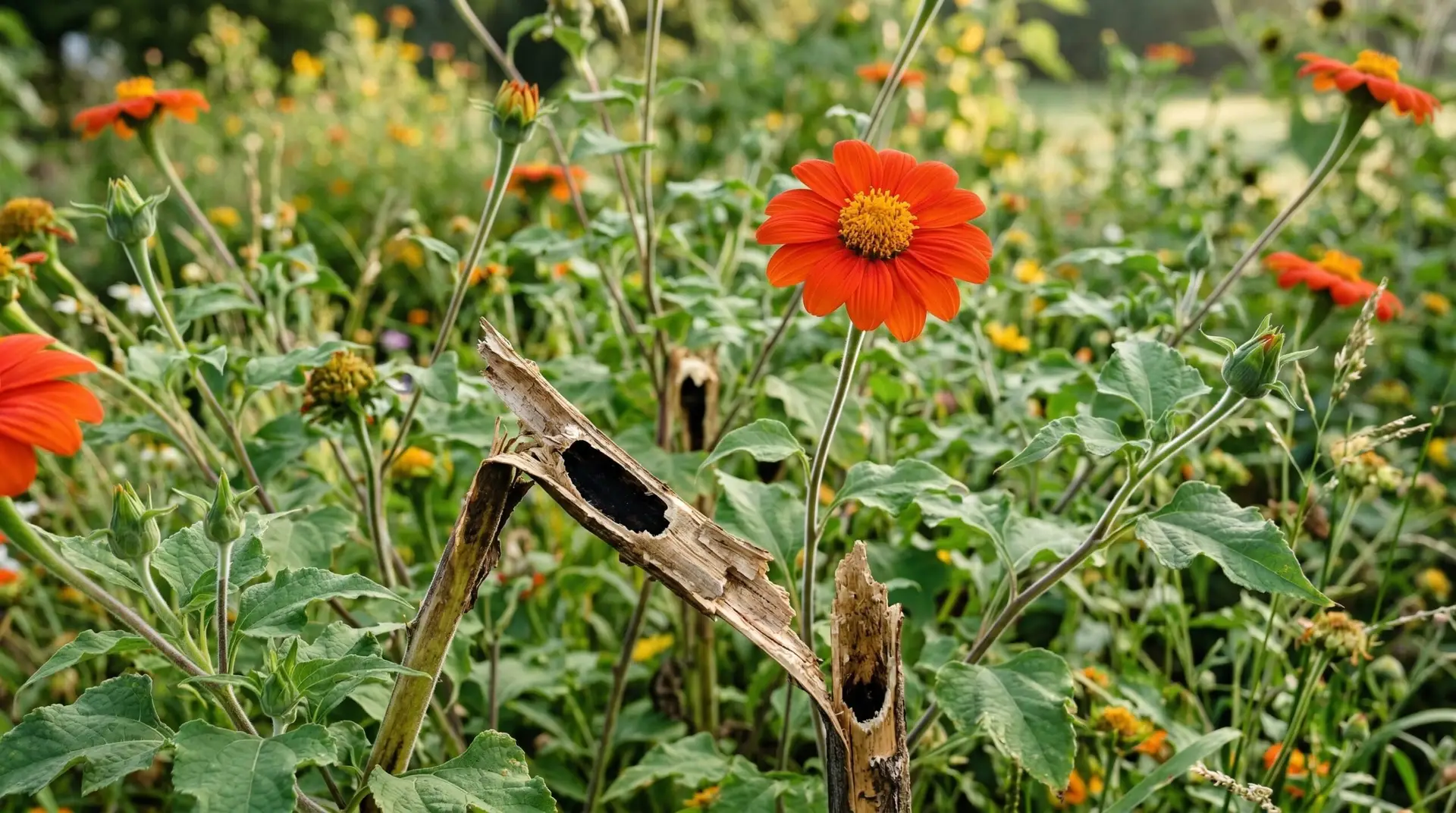
Most people find out the hard way that Mexican sunflowers have a fatal flaw right at the peak of their blooming season. You plant them in spring, watch them shoot up six or seven feet by August, and feel pretty good about your garden until a summer thunderstorm rolls through. The next morning, half of your plants are lying flat across the lawn or snapped completely in half at the base. This happens because Tithonia grows incredibly fast, pushing all its energy into vertical height and heavy clusters of flowers at the very top. When you combine a high center of gravity with stems that are completely hollow, a strong gust of wind or heavy rain is all it takes to bring the whole plant down. I see gardeners scrambling to tie up broken plants every late summer, but once a hollow stem creases, it rarely recovers its structural integrity to move water and nutrients. The secret to keeping Mexican sunflowers upright is managing their height early and putting support systems in place long before the plants actually need them. You have to anticipate the mature size of the plant rather than reacting to the immediate problem.
Contents 4 sections
Why Mexican sunflowers develop weak stems
To solve the flopping problem, you have to understand how this plant is built compared to other tall garden favorites. A standard sunflower builds a thick, woody, solid trunk that can withstand significant wind pressure without bending. Mexican sunflowers build stems that are essentially large green drinking straws filled with air and soft pith. Because they are native to warm climates with long growing seasons, their genetic programming tells them to grow as fast and as tall as possible to outcompete surrounding vegetation for sunlight. This rapid vegetative growth means the plant does not take the time to build dense structural tissue in its main stalk. As the season progresses, the plant produces dozens of heavy, nectar-filled blooms at the very tips of these fragile branches. When rain soaks those flowers, the weight at the top of the plant multiplies, putting immense stress on the hollow base that simply cannot hold the load. Once the weight exceeds the stem’s breaking point, the stalk folds over cleanly, cutting off the vascular system and killing everything above the break.
Pinching early creates a lower center of gravity
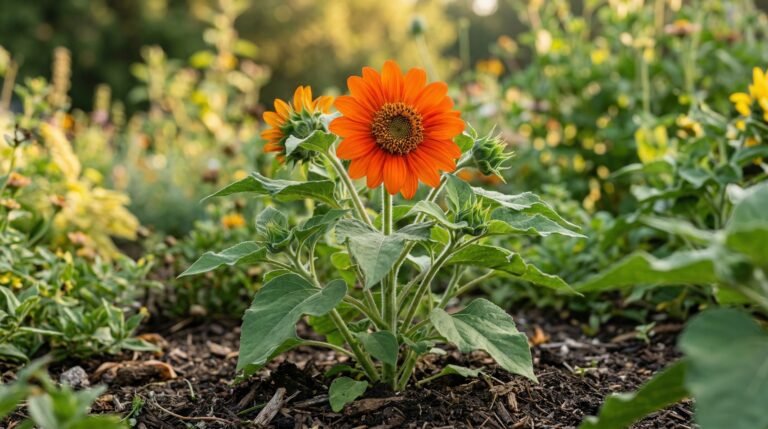
The single most effective way to keep your Mexican sunflowers from falling over is to stop them from getting so tall in the first place. When rapid vertical growth happens early in the season, it usually means weak, top-heavy stems later, and the fix is pinching the plant back. When the young plant is about eighteen to twenty-four inches tall, you need to cut the main center stem off just above a set of leaves. This feels counterproductive because you are removing the primary growing tip, but it forces the plant to send its energy into the side shoots instead. The resulting plant will max out at perhaps four or five feet tall rather than seven feet, and it will develop a wide, bushy base that distributes the weight of the flowers evenly. You will wait a couple of extra weeks for the first blooms to appear, but you will avoid the late-summer heartbreak of a snapped main trunk. A shorter, bushier plant also produces far more individual flowers over the course of the season because you have multiplied the number of growing tips. It is a simple trade-off of early height for long-term stability.
Staking methods for hollow stems
If you choose not to pinch your plants, or if they are growing in a particularly windy spot, you must provide physical support before the plants reach three feet tall. Trying to stake a six-foot Mexican sunflower after it has already started leaning is a recipe for disaster because the brittle stems will snap in your hands as you try to force them upright. The best approach is the corral method, similar to how you might support a heavy dahlia bush in a cutting garden. Drive three or four sturdy wooden or metal stakes into the ground around the perimeter of the plant while it is still small. As the plant grows, tie soft twine around the outside of the stakes to create a supportive ring, adding a new tier of twine every eighteen inches. Do not tie the twine tightly around the stems themselves, as the friction will cut right through the soft green tissue when the wind blows. The goal is to give the plant a flexible cage to lean against rather than rigidly strapping it to a single pole. This method allows the plant to sway naturally in the breeze without bending far enough to break the main stalk.
Strategic planting for wind protection
Where and how you plant your Mexican sunflowers plays a massive role in whether they stay upright through the season. Planting a single, isolated Tithonia in the middle of an open yard leaves it completely exposed to wind from all directions. Instead, plant them in tight blocks or staggered rows so the plants can lean on each other and diffuse the force of the wind. Spacing them about two feet apart allows their side branches to interlock as they grow, creating a self-supporting thicket that is much harder for a storm to knock down. You can also use existing structures or sturdier plants to your advantage by placing your Mexican sunflowers in front of a solid fence or a dense evergreen hedge. The solid barrier will block the prevailing winds, taking the pressure off those fragile hollow stems during severe weather. If you mix them in a border, position them behind sturdy native shrubs that can act as a physical retaining wall for the lower half of the stems. Proper placement eliminates much of the mechanical stress that causes these plants to fail.
If I could give just one piece of advice to a gardener growing Mexican sunflowers for the first time, it is to accept that staking or pinching is a mandatory chore, not an optional one. People always think their plants look thick and sturdy in July, which lulls them into a false sense of security. By the time August arrives and the heavy blooms open, the physics of the plant simply will not support its own weight in a rainstorm. Get your stakes in the ground the day you plant your seedlings, or commit to cutting the top off when the plant is knee-high. Taking ten minutes to manage the plant’s structure early in the season will save you from hauling a massive, broken pile of green stems to the compost bin right when the flowers should be at their best. Treat support as a fundamental part of planting this specific flower, and you will enjoy massive blooms all the way until the first frost.
More About Mexican Sunflower
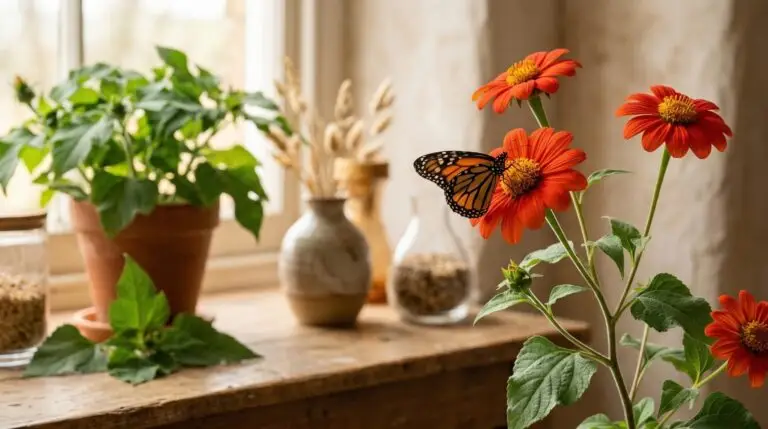
Mexican sunflower as the ultimate butterfly magnet for late season pollinator gardens
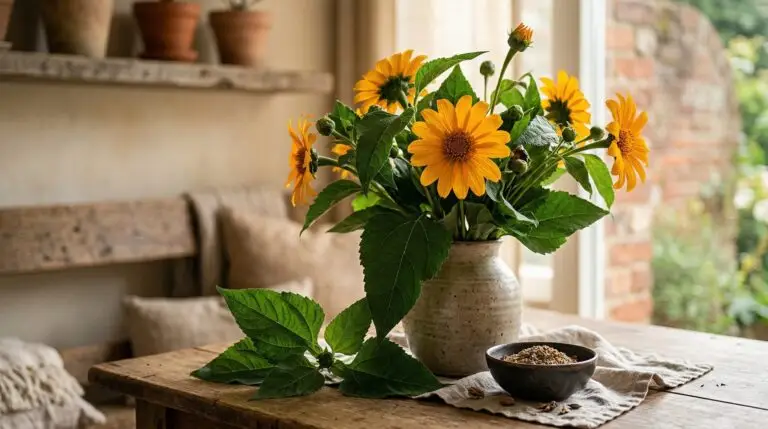
Mexican sunflower leaves as a natural fertilizer and green mulch for vegetable gardens
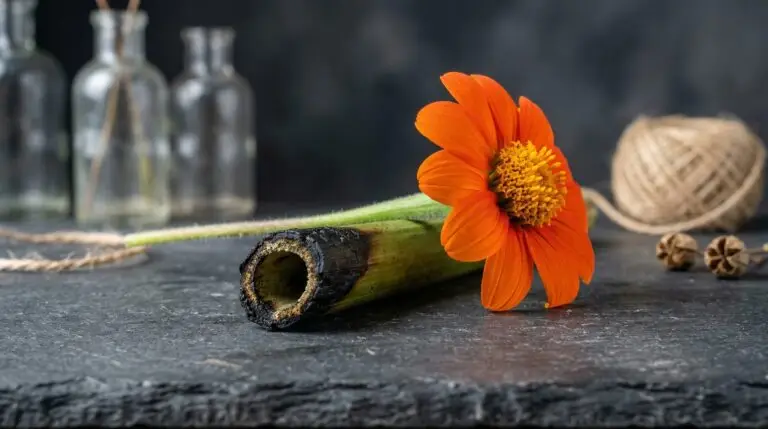
Mexican sunflowers as cut flowers with the trick to prevent hollow stems from wilting
How to grow Mexican sunflowers for towering walls of blazing orange in late summer
Mexican sunflower versus common sunflower and why you should grow both
How to save Mexican sunflower seeds for next year’s free butterfly garden
Growing Mexican sunflowers from seed and the tropical annual that needs no pampering
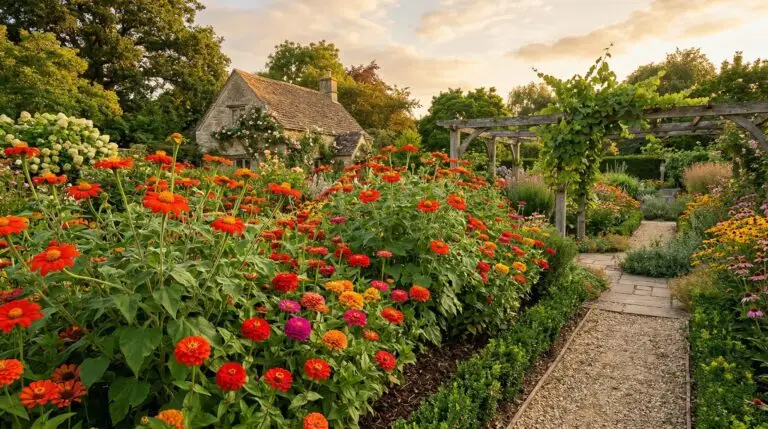
Companion plants for Mexican sunflower: what to grow, avoid
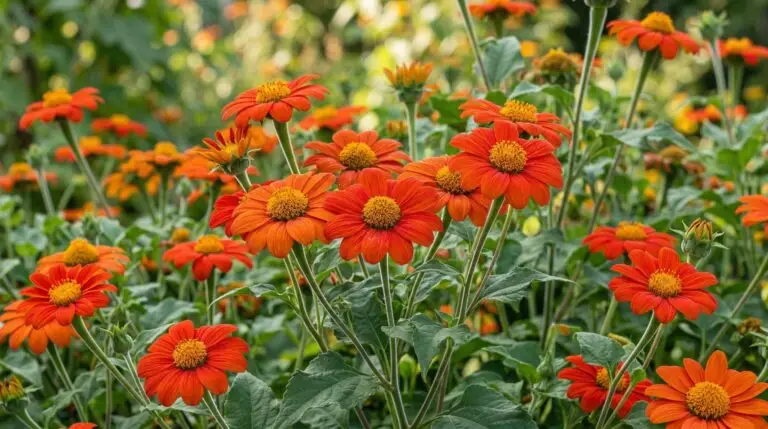
Compact Mexican sunflower varieties for smaller gardens that still attract butterflies
Enjoying our flower guides? Add YourFlowersGuide as a preferred source on Google. It helps more readers find us.
Add to Preferred Sources