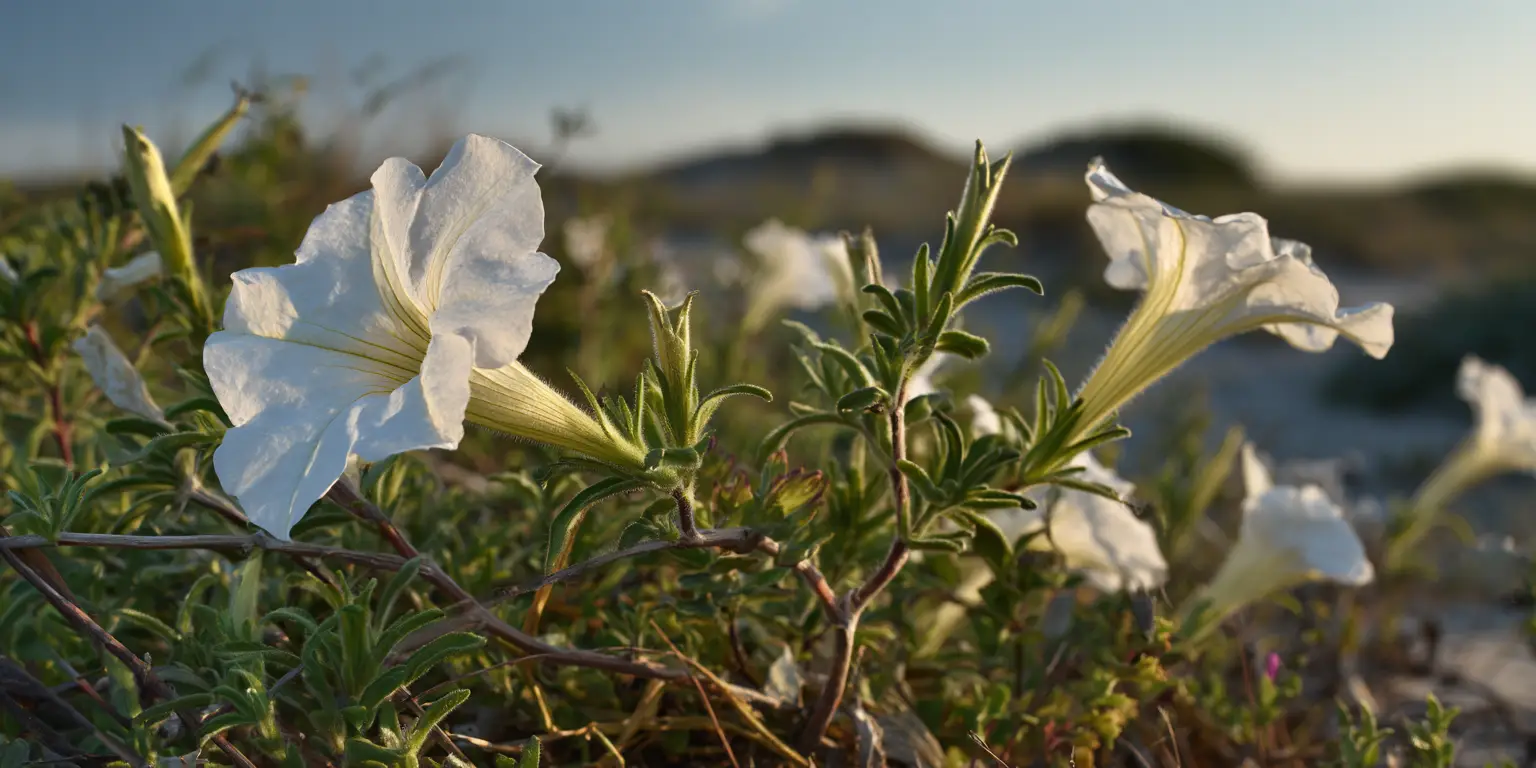
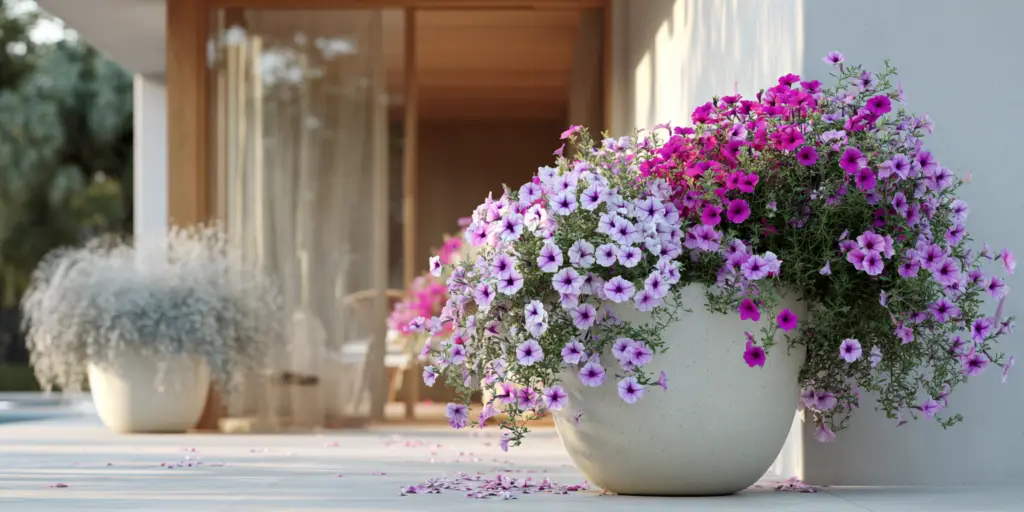
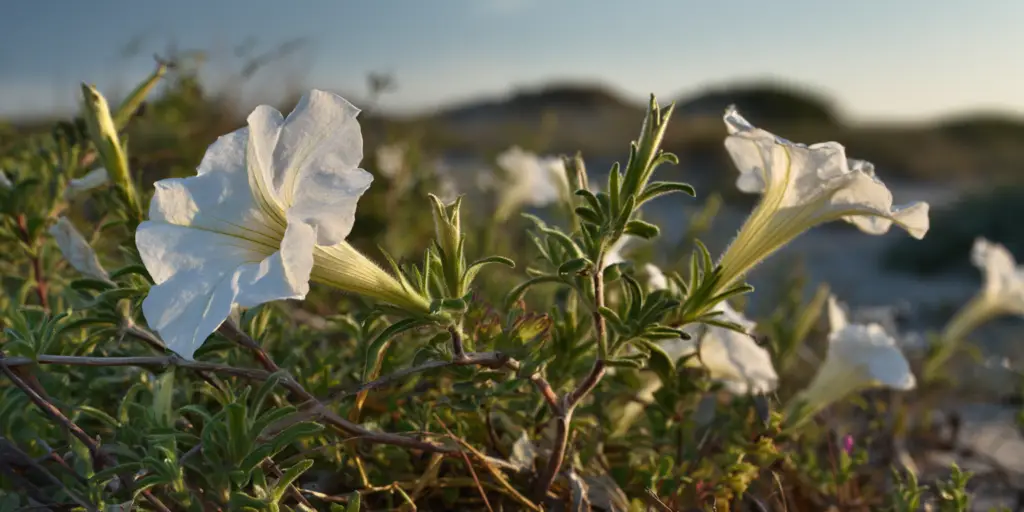
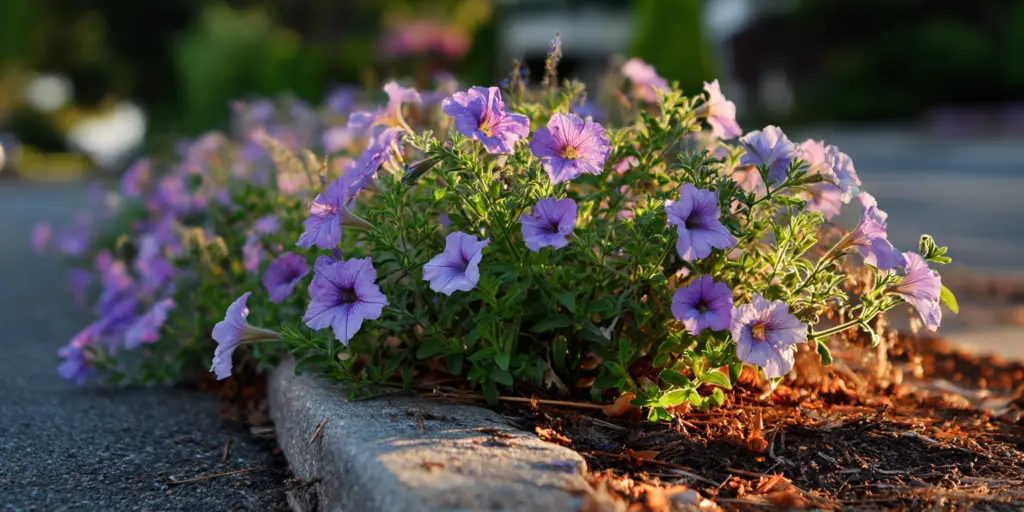
Petunia axillaris is the white, night‑scented species that contributed fragrance and tube length to many garden petunias. It stands out for strong evening perfume and large white trumpets that attract nocturnal moths. Plants are vigorous and flower best in full sun with well‑drained soil. They suit night gardens, patios, and containers where fragrance is valued. Most gardeners grow it as an annual because it is frost tender in North America. Plants may sprawl and benefit from occasional pinching to keep shape.
At‑a‑glance
Group/Class: species
Height × spread: 20 to 39 in (50 to 100 cm) × 4 to 20 in (10 to 50 cm)
Bloom window: late spring to frost in frost‑free areas; summer elsewhere
Color & flower form: pure white, long‑tubed trumpet flowers
Fragrance: 3 strong (especially at night)
USDA hardiness: grown as annual in most regions; tender perennial in zones 10 to 11
Breeder / Year / Origin: wild species, South America
Pet safety: safe
How it differs
• Stronger fragrance than hybrid petunias.
• White only rather than many colors.
• Longer flower tube suited to moth pollinators.
• Taller, gently mounding habit compared with many compact hybrids.
Strengths
• Powerful evening scent for patios and night gardens.
• Prolific bloom in warm weather.
• Works well in containers and near seating where scent can be enjoyed.
Care in one minute
Plant in full sun for best flowering.
Use fertile, well‑drained soil; keep evenly moist but not soggy.
Feed regularly during the season for sustained bloom.
Pinch young tips to encourage branching.
Deadhead spent flowers to reduce seed set and extend display.
Treat as annual unless winters are frost‑free.
Watch‑outs
• Sticky foliage can collect debris.
• Flowers can spot in heavy rain.
• Budworm caterpillars may damage buds in mid to late summer.
• Gray mold can develop in prolonged wet conditions.
Best uses (tags)
containers, borders, night garden, fragrance, pollinators
Provenance note
Native to temperate South America and long used as a breeding parent in garden petunias
Written by: Your Flowers Guide editorial team We are a small independent group of flower lovers who research and review each guide using trusted horticultural and educational sources. Learn more about us