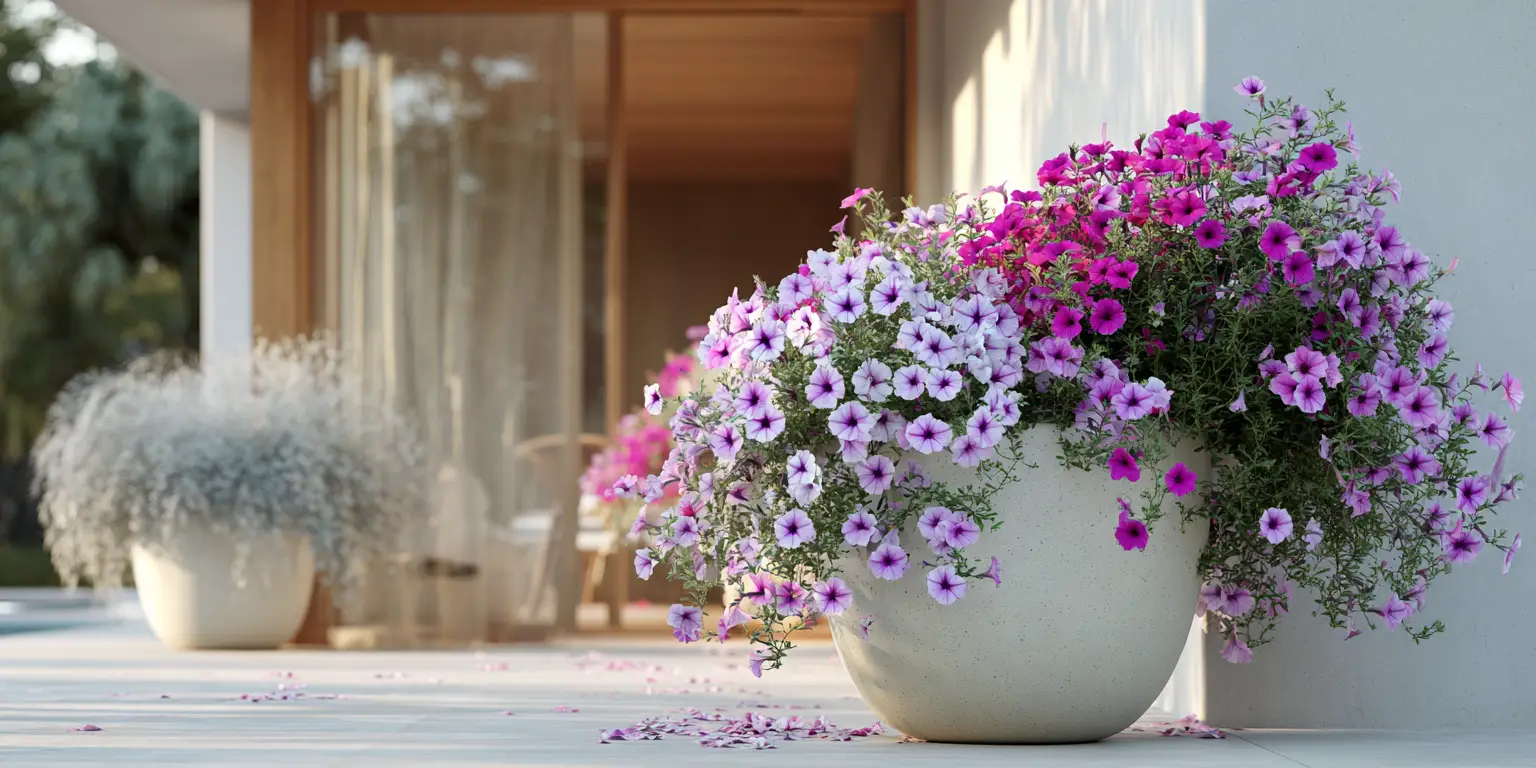
in bloom
now
through Oct
Bloom calendar
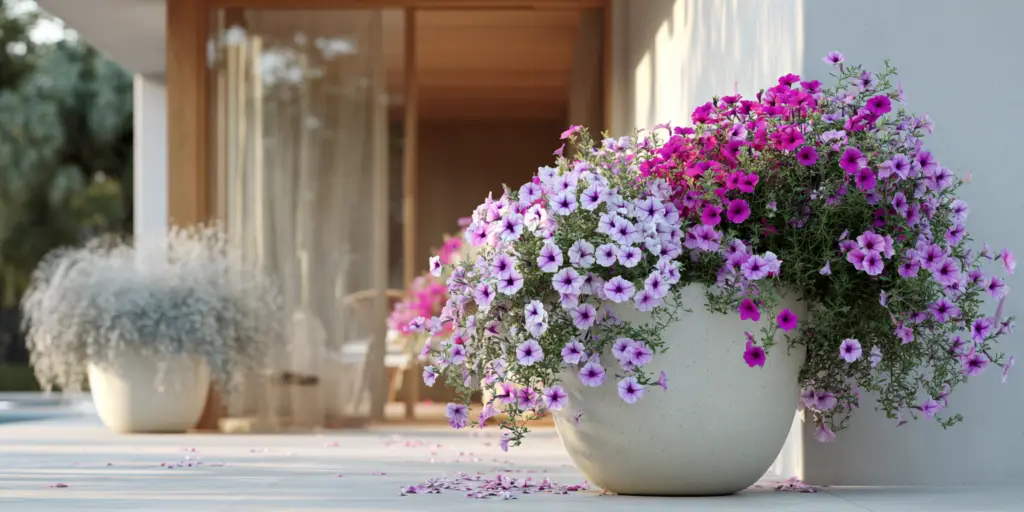
Petunia × hybrida
At‑a‑glance
- Group/Class: Garden petunia groups: grandiflora, multiflora, milliflora, spreading
- Height × spread: 10 to 14 in (25 to 36 cm) × 24 to 36 in (60 to 90 cm)
- Bloom window: late spring to frost
- Color & flower form: wide color range; single or double funnel‑shaped flowers
- Fragrance: 1 trace (varies by cultivar)
- USDA hardiness: grown as annual in most regions; tender perennial in zones 10 to 11
- Breeder / Year / Origin: unknown, 1830s, Europe
- Pet safety: safe
How it differs
- Broader color palette than any single species.
- Many self‑cleaning and spreading series for low maintenance.
- Larger bloom sizes than species petunias.
- Tender to frost so typically used as an annual.
Strengths
- Blooms from late spring to frost with deadheading or self‑cleaning types.
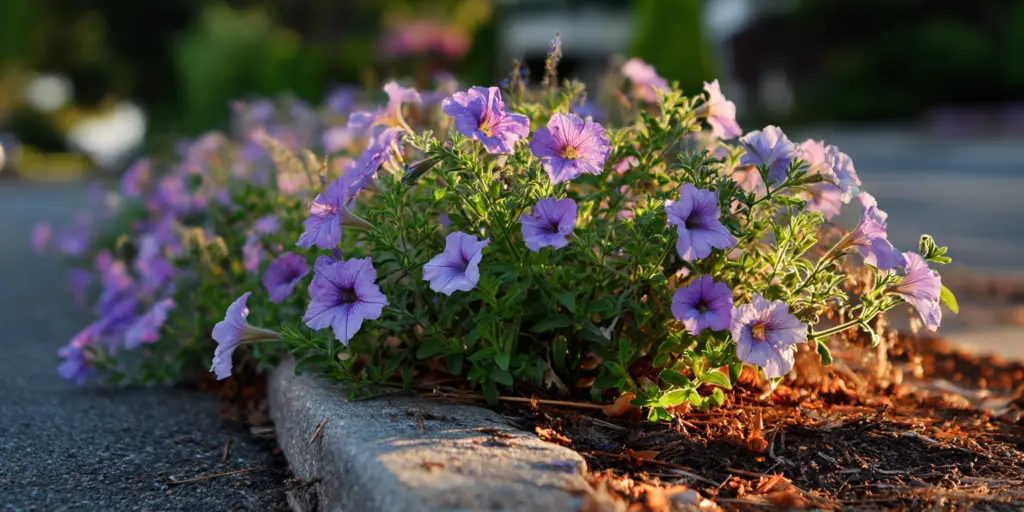
- Adapts to containers, baskets, and mass plantings.
- Reliable in full sun with moderate care.
- Abundant, affordable cultivars for many site needs.
Care in one minute
Choose full sun: 6 or more hours daily.
Provide loose, well‑drained soil that is slightly acidic to neutral.
Water deeply when the top 1 to 2 inches are dry; avoid waterlogging.
Feed every 2 to 3 weeks with a balanced fertilizer or use a slow‑release product.
Deadhead or shear when leggy to renew blooms.
Treat as annual; discard after frost or overwinter only in frost‑free conditions.
Watch‑outs
- Can stall in summer heat if underfed.
- Susceptible to budworm caterpillars in some areas.
- Gray mold can appear in prolonged wet weather.
- Needs well‑drained soil to avoid root issues.
Best uses (tags)
Provenance note
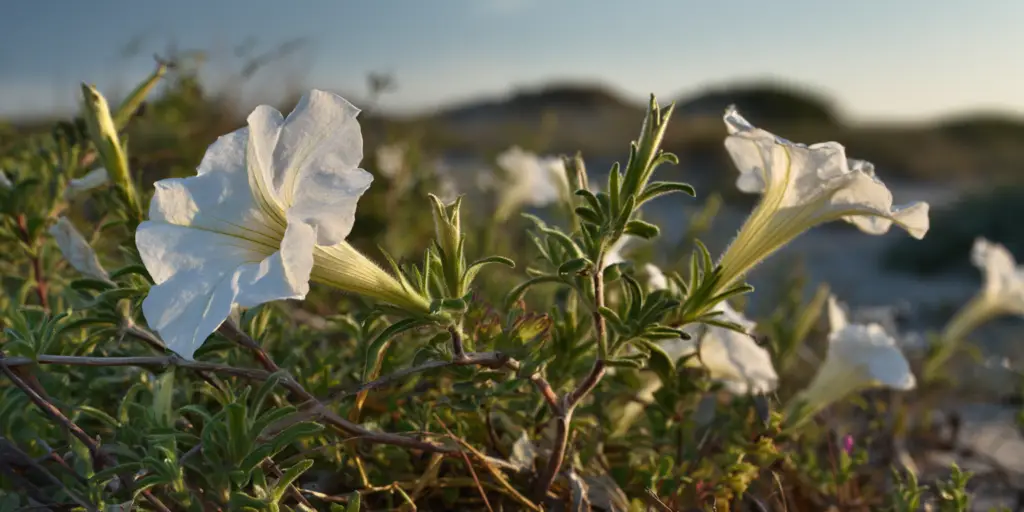
Modern garden petunias arose from interspecific crosses, chiefly Petunia axillaris and Petunia integrifolia, with active breeding since the 19th century.
References
- Missouri Botanical Garden Plant Finder – Petunia (group)
- NC State Extension Plant Toolbox – Petunia × hybrida
- University of Minnesota Extension – Growing petunias
- ASPCA – Petunia (non‑toxic to pets)
Similar Flowers
Enjoying our flower guides? Add YourFlowersGuide as a preferred source on Google. It helps more readers find us.
Add to Preferred Sources