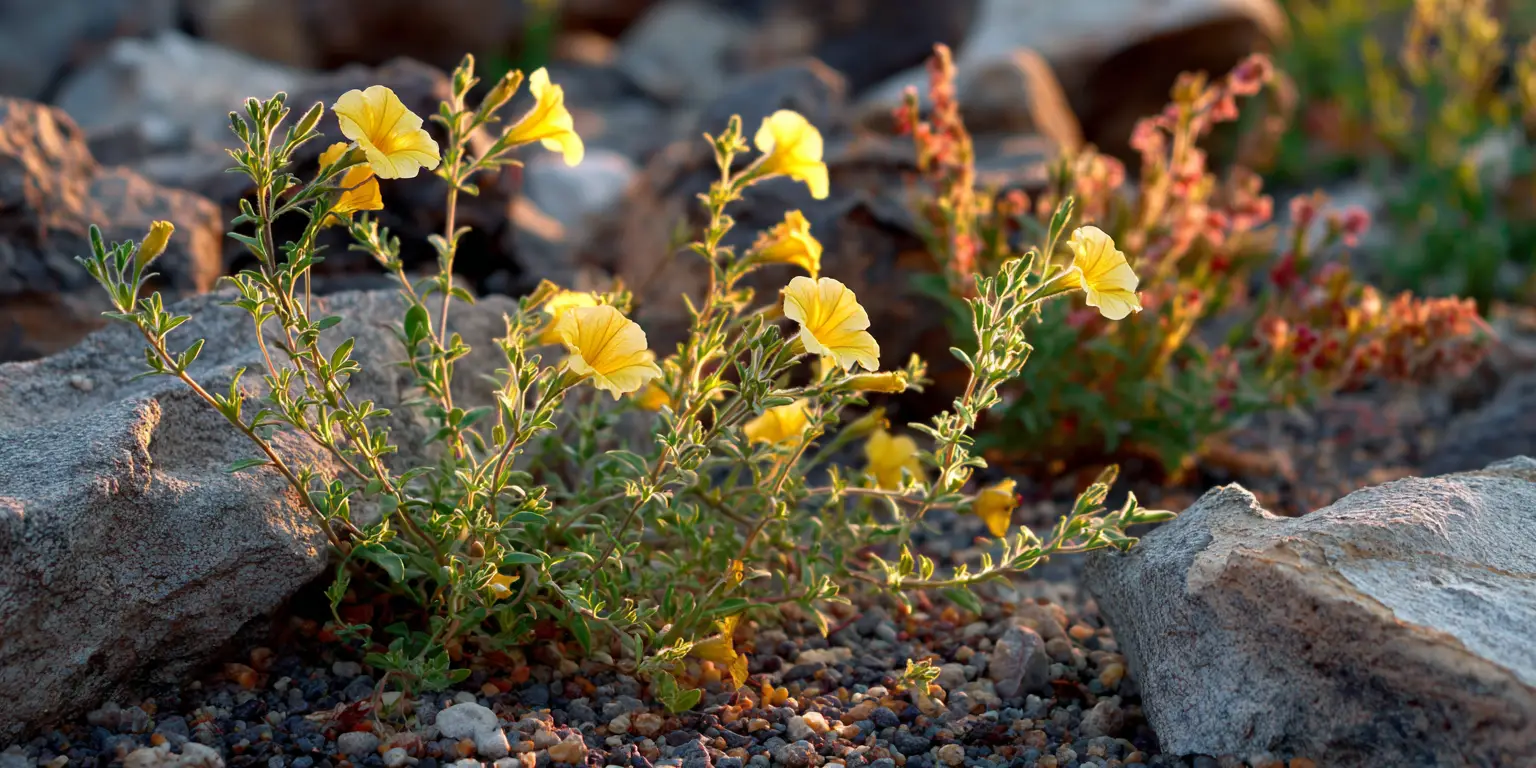
in bloom
now
through Oct
Bloom calendar
Petunia parviflora
species (currently placed in Calibrachoa) · wild species, South America; naturalized in parts of the U.S
At‑a‑glance
- Group/Class: species (currently placed in Calibrachoa)
- Height × spread: 2 to 10 in (5 to 25 cm) × 12 to 24 in (30 to 60 cm)
- Bloom window: spring to early fall, depending on climate
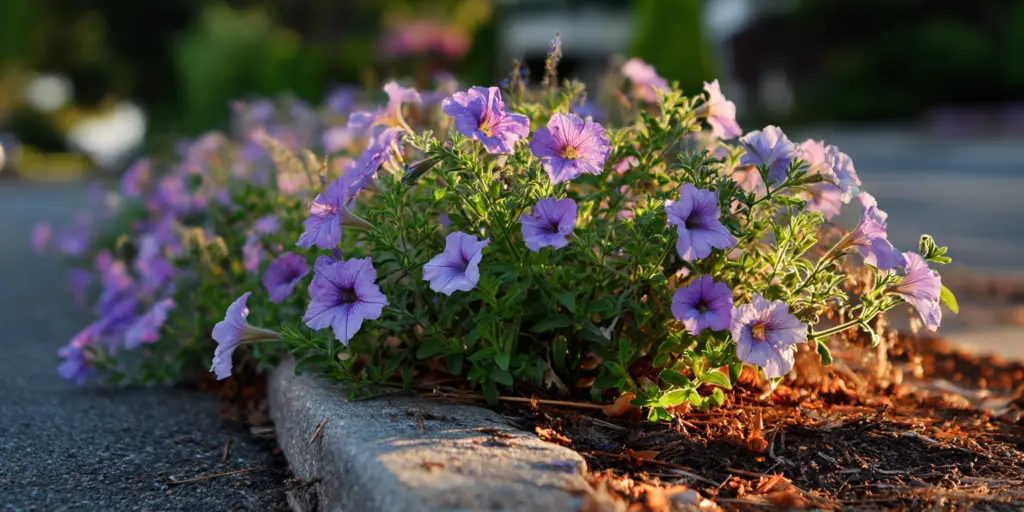
- Color & flower form: very small purple to pink, axillary, funnel‑shaped
- Fragrance: unknown
- USDA hardiness: grown as annual in most regions
- Breeder / Year / Origin: wild species, South America; naturalized in parts of the U.S.
- Pet safety: unknown
How it differs
- Much smaller flowers than garden petunias.
- Creeping, mat‑forming habit with stems that root at nodes.
- Taxonomically treated as Calibrachoa rather than Petunia by Kew.
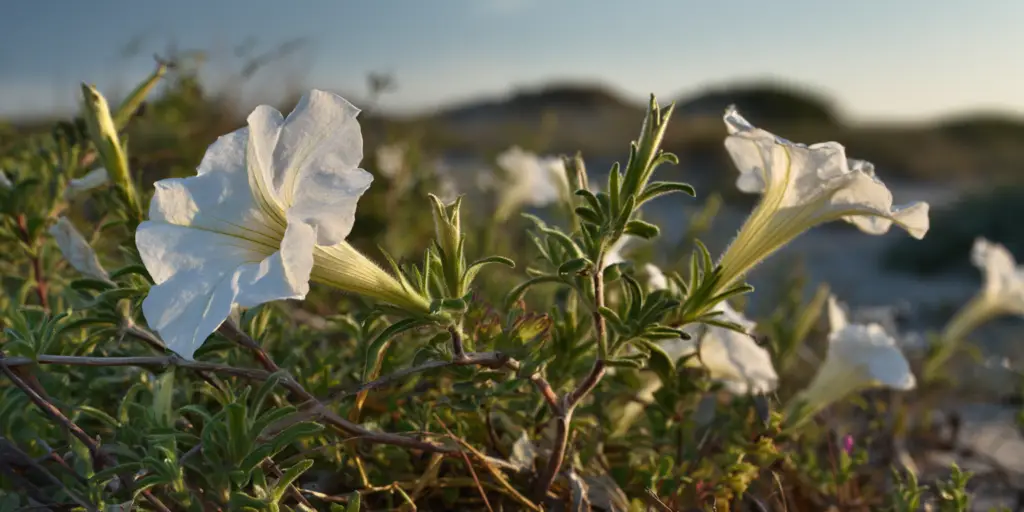
- Often found in sandy or coastal habitats rather than flower beds.
Strengths
- Handles sandy, disturbed soils.
- Low habit suits shallow containers and rock edges.
- Blooms over a long warm season with sun and feed.
Care in one minute
Grow in full sun for best flowering.
Use sharply drained, sandy or soilless mixes; keep evenly moist but not wet.
Maintain slightly acidic pH; avoid alkaline irrigation water.
Fertilize lightly and regularly through the season.
Shear if the mat becomes sparse to prompt new growth.
Watch‑outs
- Can self‑seed and behave weedy in some sites.
- Very sensitive to high pH media; iron chlorosis can develop.
- Not widely available in the trade.
Best uses (tags)
Provenance note
Formerly Petunia parviflora; accepted as Calibrachoa parviflora by Kew. In North America it occurs in sandy and coastal habitats and disturbed sites.
References
- Kew Science POWO – Calibrachoa parviflora (syn. Petunia parviflora)
- Flora of North America – Calibrachoa parviflora
- USDA Plants – Calibrachoa parviflora
- University of Minnesota Extension – Calibrachoa
Similar Flowers
Enjoying our flower guides? Add YourFlowersGuide as a preferred source on Google. It helps more readers find us.
Add to Preferred Sources