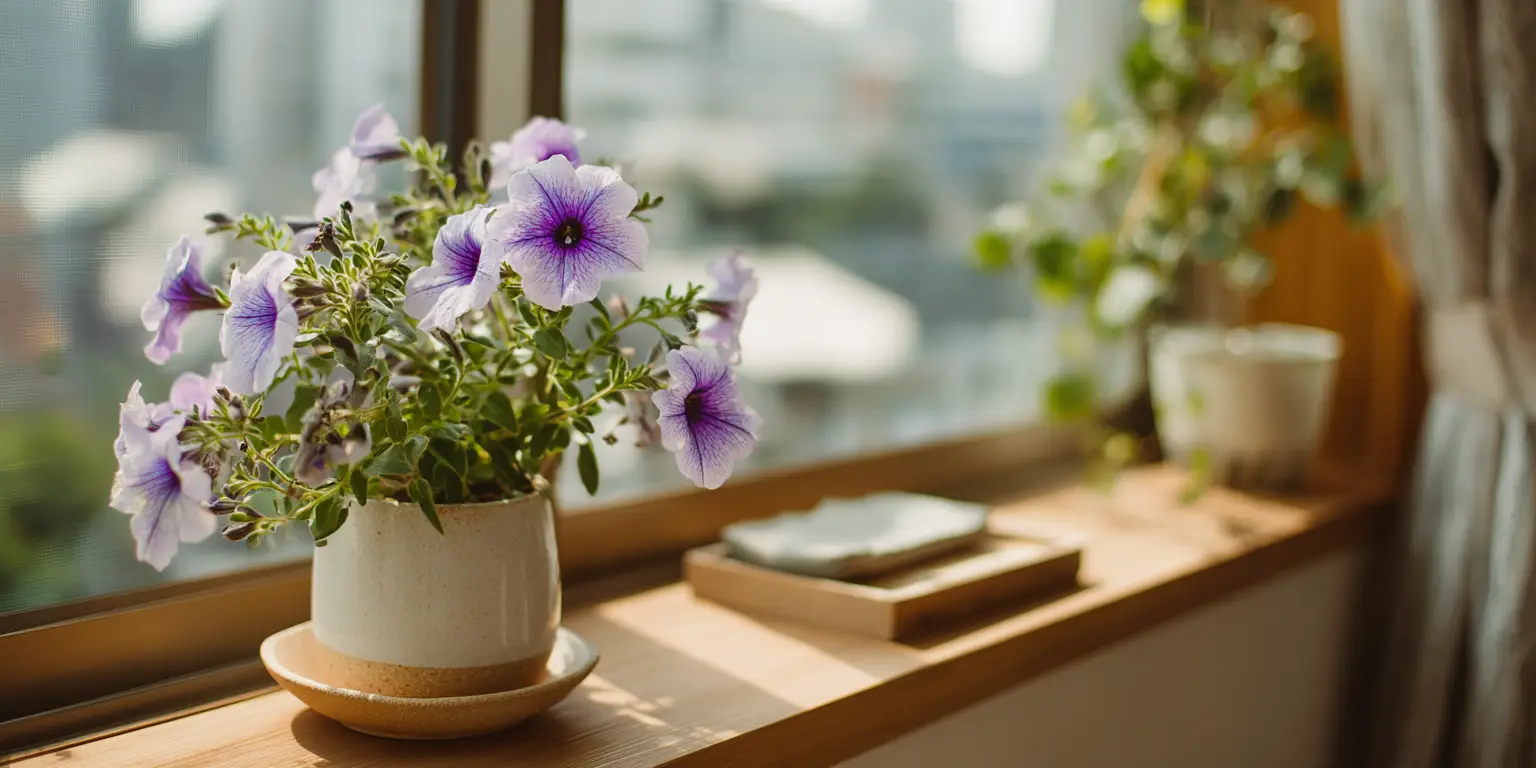
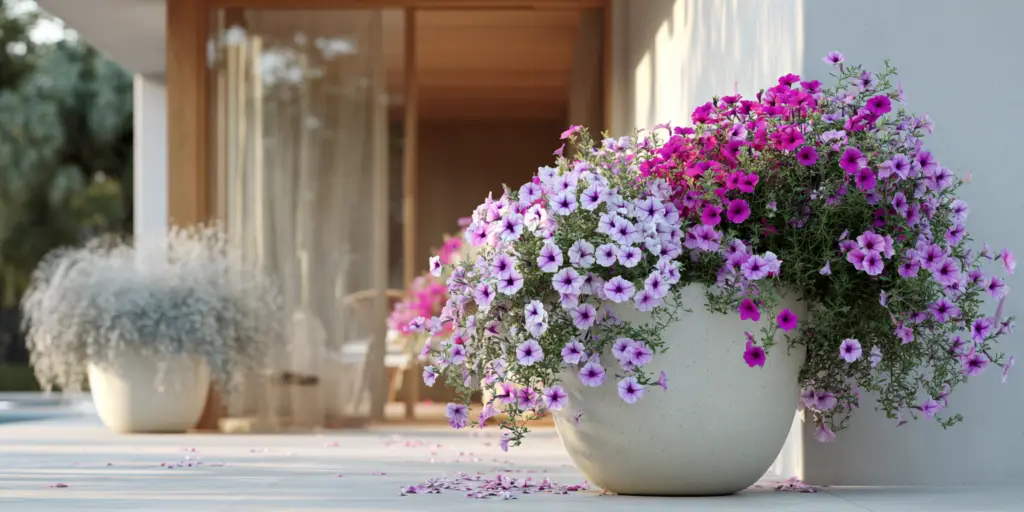
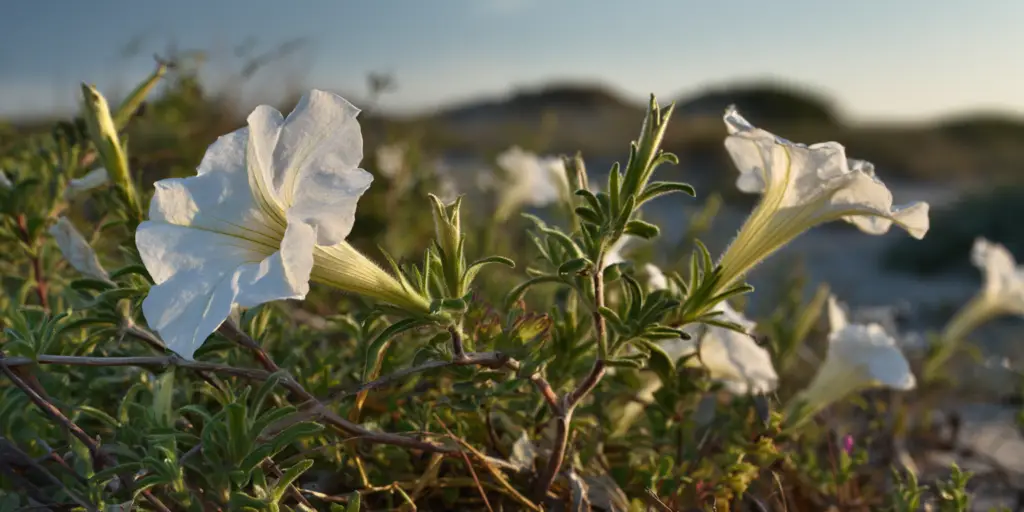
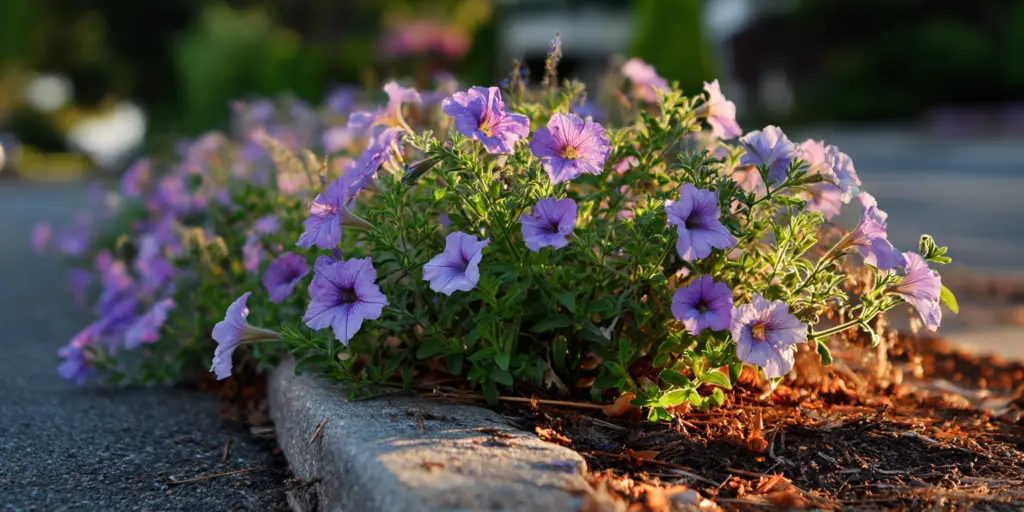
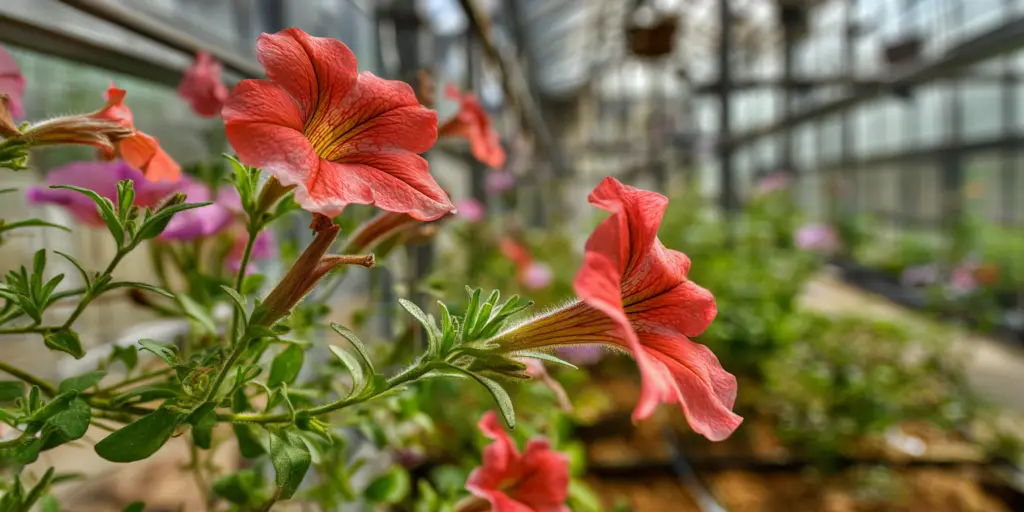
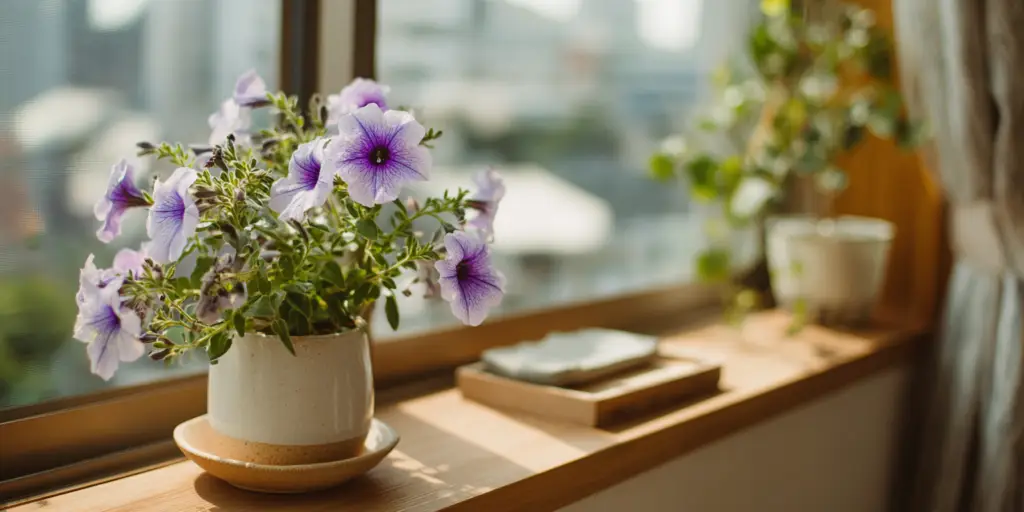
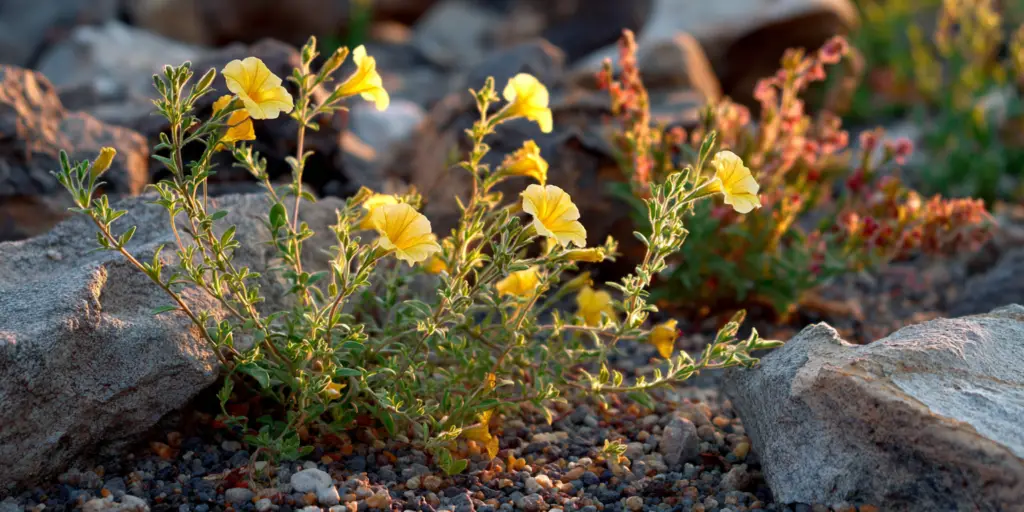
Petunia inflata is a purple‑flowered wild species in the integrifolia clade. It is seldom seen in gardens but is well known in botany and breeding. It stands out for short‑tubed, bee‑visited flowers and the absence of floral scent. Plants grow as warm‑season annuals in North America and prefer full sun and well‑drained soil. Use it in species borders and educational plantings where wild petunia traits are the goal.
At‑a‑glance
Group/Class: species
Height × spread: 8 to 20 in (20 to 50 cm) × 12 to 24 in (30 to 60 cm) – varies by site
Bloom window: summer in warm conditions
Color & flower form: purple, short‑tubed funnel flowers
Fragrance: 0 none
USDA hardiness: grown as annual in most regions
Breeder / Year / Origin: wild species, Paraguay to S Brazil and NE Argentina
Pet safety: safe
How it differs
Shorter corolla tube than night‑scented species.
No floral scent.
More compact flowers than typical garden petunias.
Natural species character rather than showy hybrid traits.
Strengths
Simple culture similar to other petunias.
Useful for teaching and display of wild Petunia traits.
Tolerates heat with regular water.
Care in one minute
Provide full sun and well‑drained soil.
Water when the top inch dries; avoid standing water.
Feed lightly every few weeks to sustain bloom.
Pinch to encourage branching if stems elongate.
Treat as an annual outside frost‑free zones.
Watch‑outs
Seed sources may be limited and variable.
Budworm caterpillars may damage buds in late summer.
Needs sun and drainage to avoid lank growth and rot.
Best uses (tags)
species border, containers, heat‑tolerant, educational
Provenance note
Considered part of the integrifolia clade; widely used in research on self‑incompatibility and floral traits.
Written by: Your Flowers Guide editorial team We are a small independent group of flower lovers who research and review each guide using trusted horticultural and educational sources. Learn more about us