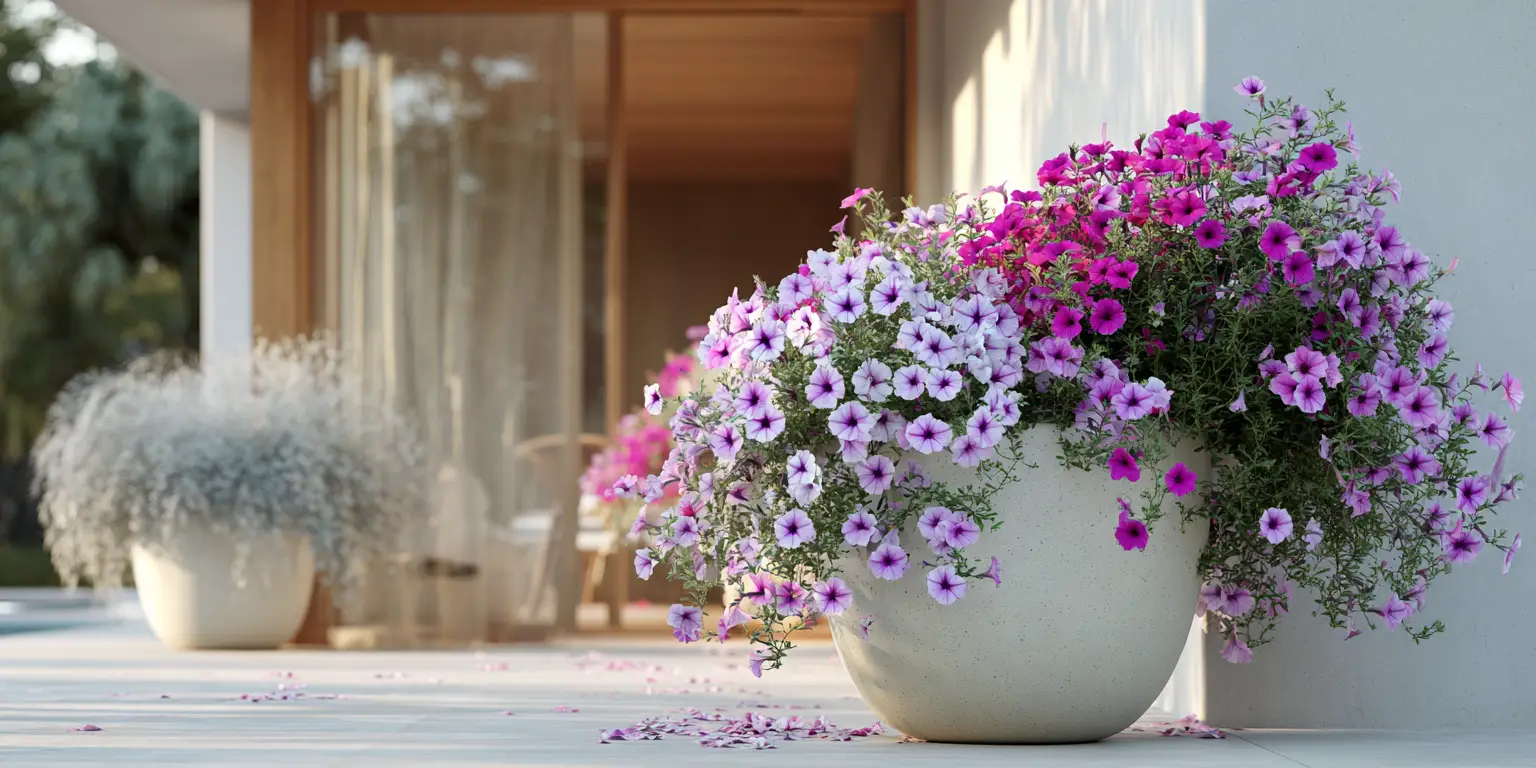
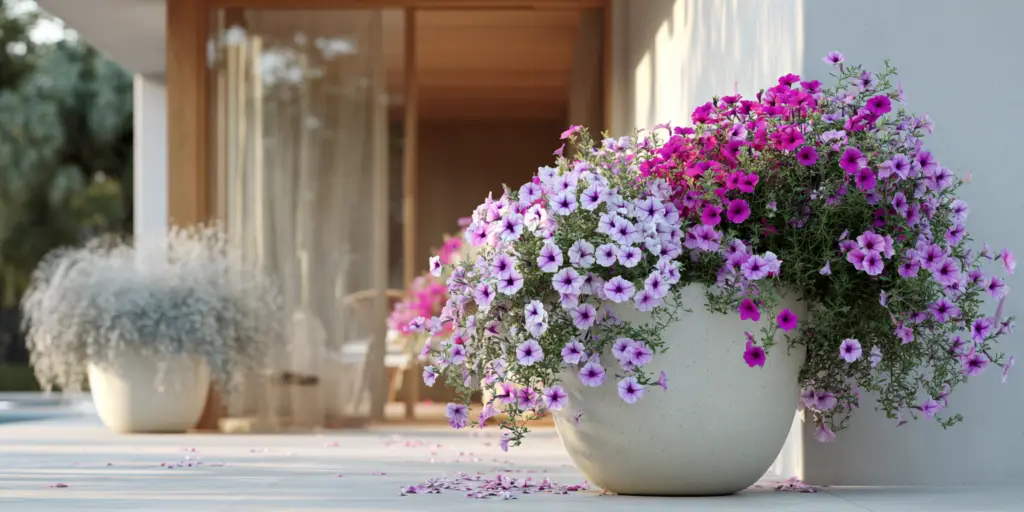
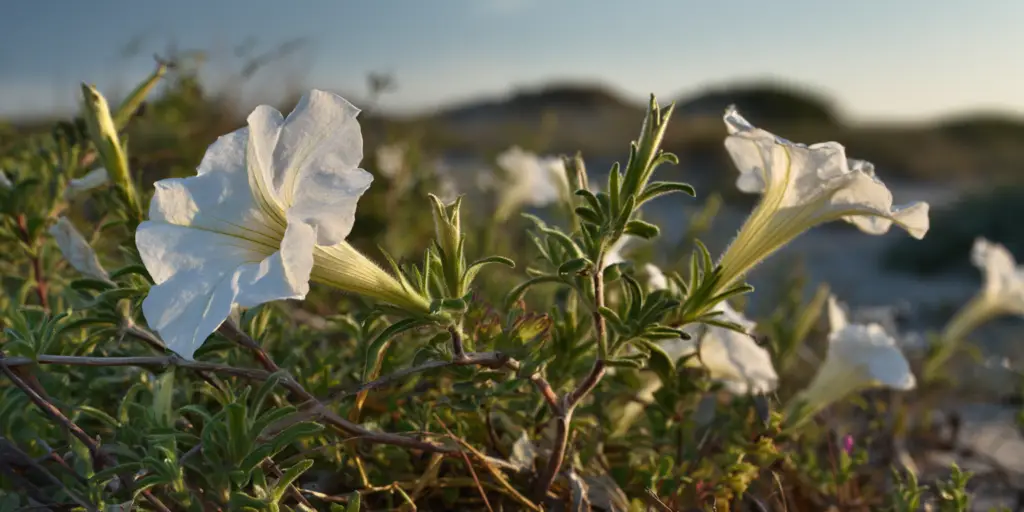
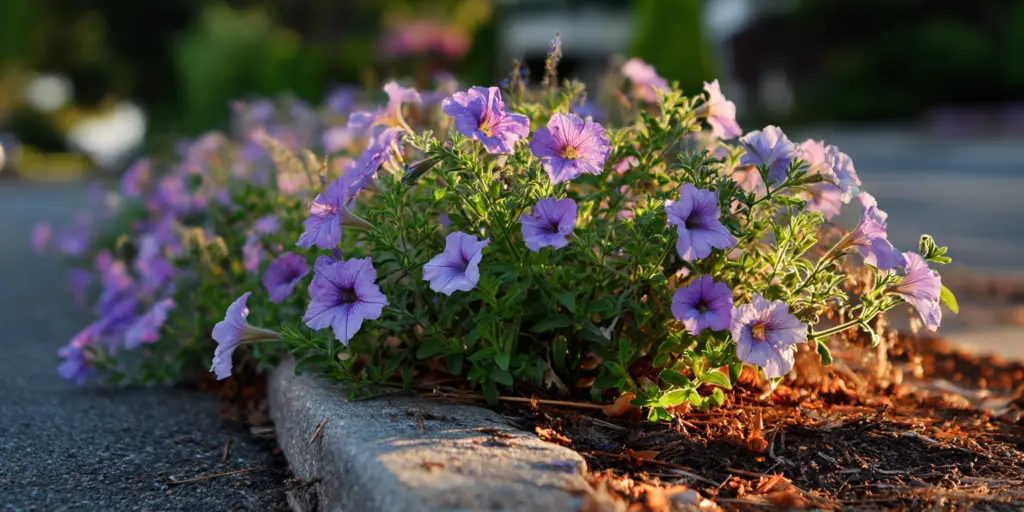
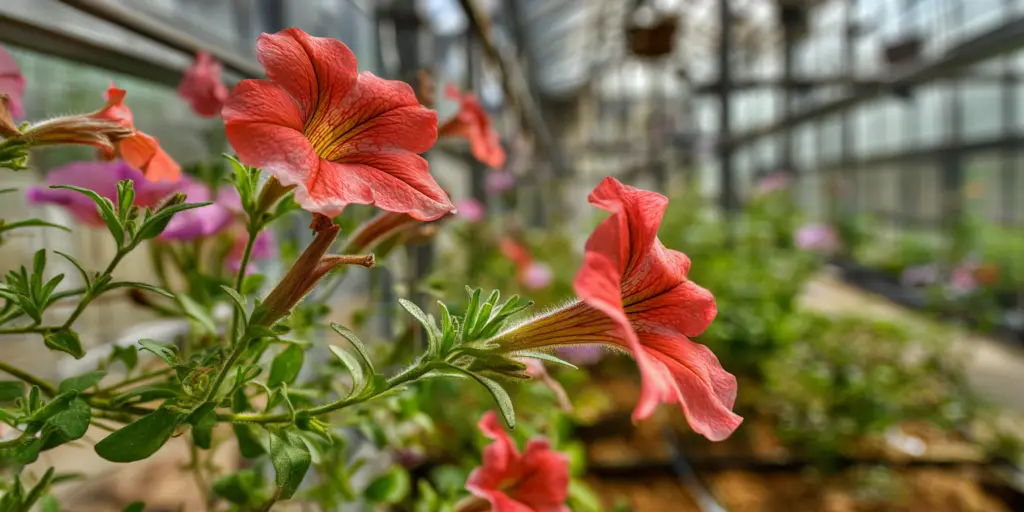
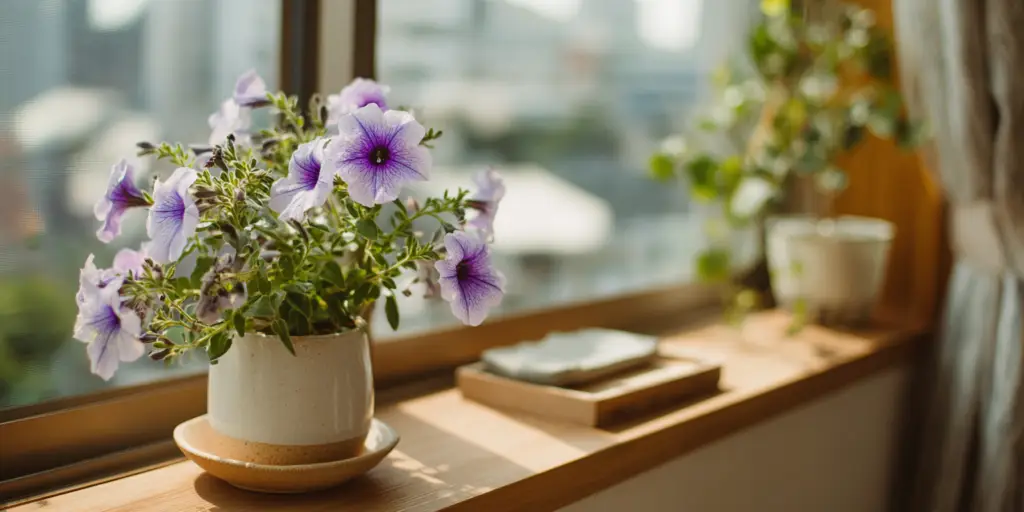
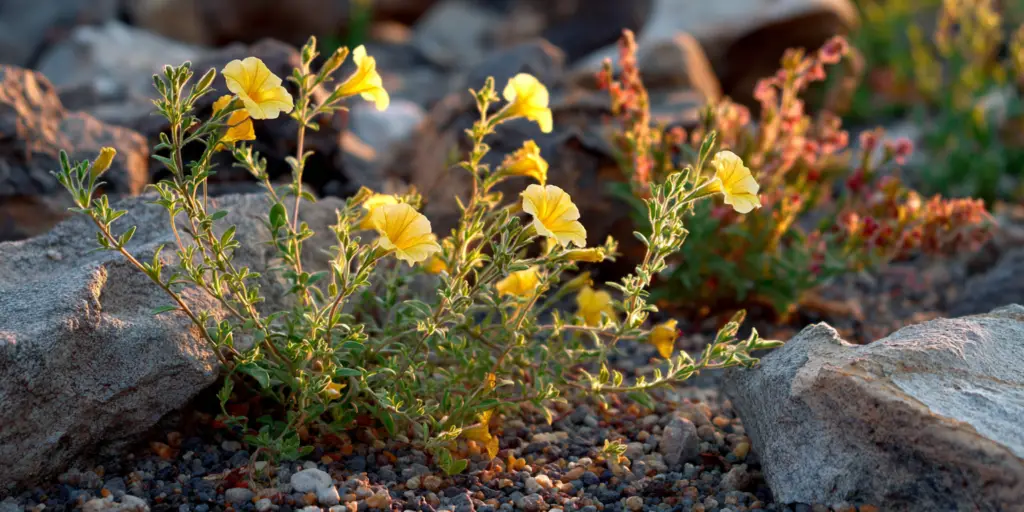
Garden petunias are complex hybrids widely grown as warm‑season bedding and container plants across North America. They descend primarily from crosses of the white night‑scented Petunia axillaris and the violet‑flowered Petunia integrifolia, with other species sometimes involved. They stand out for nonstop bloom from late spring to frost when given sun, water, and fertilizer. They perform best in full sun with well‑drained soil and regular feeding. Most gardeners grow them as annuals because they are frost tender. Forms include large‑flowered grandiflora, durable multiflora, tiny‑flowered milliflora, and spreading types for baskets. Color choices span pure white to near black with solids, bicolors, veins, and picotees. Fragrance varies by cultivar and is usually light.
Height × spread: 10 to 14 in (25 to 36 cm) × 24 to 36 in (60 to 90 cm)
Bloom window: late spring to frost
Color & flower form: wide color range; single or double funnel‑shaped flowers
Fragrance: 1 trace (varies by cultivar)
USDA hardiness: grown as annual in most regions; tender perennial in zones 10 to 11
Breeder / Year / Origin: unknown, 1830s, Europe
Pet safety: safe
How it differs
• Broader color palette than any single species.
• Many self‑cleaning and spreading series for low maintenance.
• Larger bloom sizes than species petunias.
• Tender to frost so typically used as an annual.
Strengths
• Blooms from late spring to frost with deadheading or self‑cleaning types.
• Adapts to containers, baskets, and mass plantings.
• Reliable in full sun with moderate care.
• Abundant, affordable cultivars for many site needs.
Care in one minute
• Choose full sun: 6 or more hours daily.
• Provide loose, well‑drained soil that is slightly acidic to neutral.
• Water deeply when the top 1 to 2 inches are dry; avoid waterlogging.
• Feed every 2 to 3 weeks with a balanced fertilizer or use a slow‑release product.
• Deadhead or shear when leggy to renew blooms.
• Treat as annual; discard after frost or overwinter only in frost‑free conditions.
Watch‑outs
• Can stall in summer heat if underfed.
• Susceptible to budworm caterpillars in some areas.
• Gray mold can appear in prolonged wet weather.
• Needs well‑drained soil to avoid root issues.
Best uses (tags)
containers, borders, hanging baskets, mass plantings, long season
Provenance note
Modern garden petunias arose from interspecific crosses, chiefly Petunia axillaris and Petunia integrifolia, with active breeding since the 19th century.
Written by: Your Flowers Guide editorial team We are a small independent group of flower lovers who research and review each guide using trusted horticultural and educational sources. Learn more about us