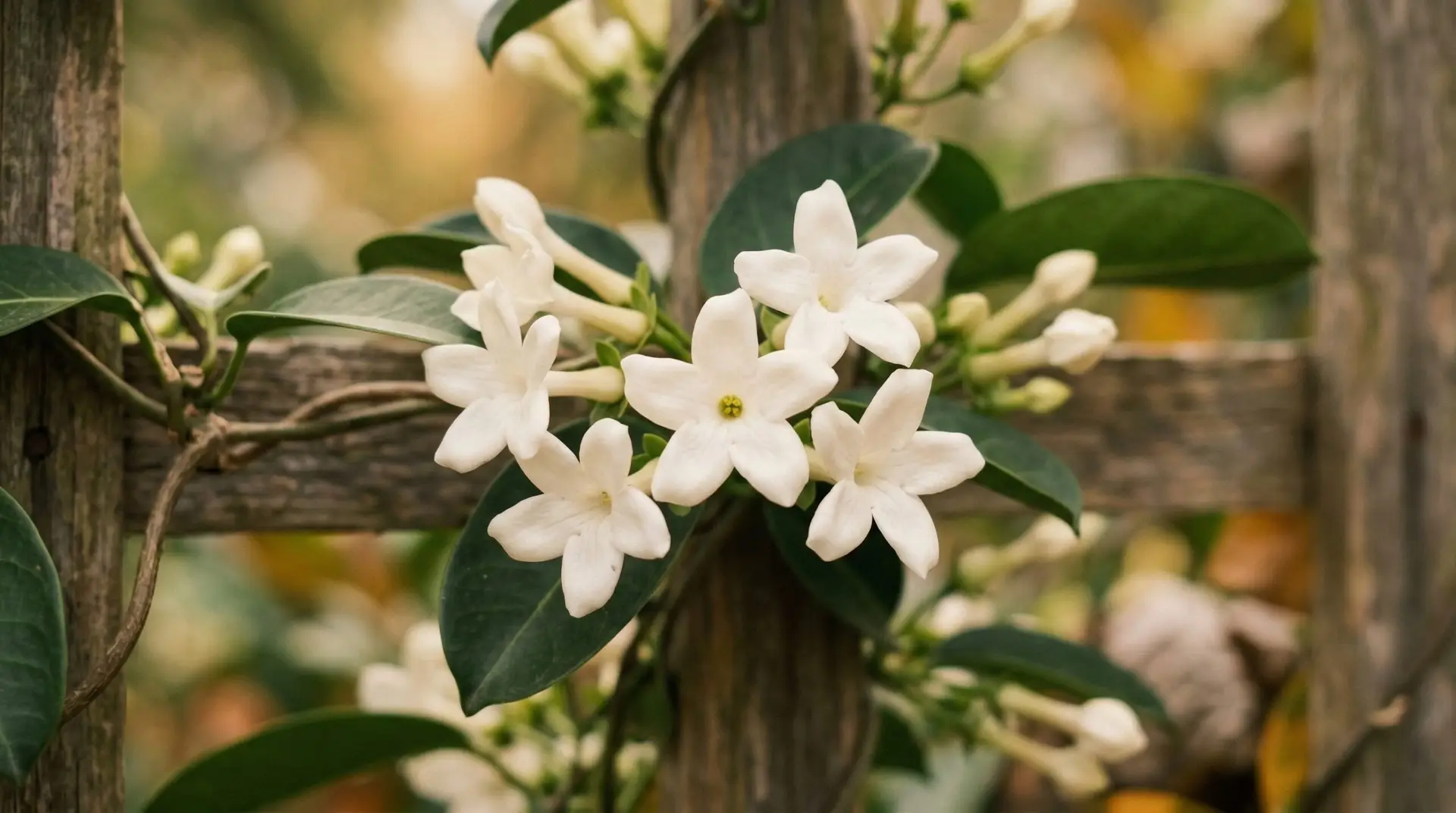
Plant hunters returned to nineteenth-century Europe with holds full of strange seeds, but few captured the romantic imagination quite like a vigorous vine from the African coast. Botanists named it Stephanotis floribunda, drawing on the Greek words ‘stephanos’ for crown and ‘otis’ for ear. This peculiar name describes the five small, ear-like lobes that form a delicate crown at the center of the flower tube. Within a few decades of its arrival in 1839, European gardeners had coaxed the tropical vine to climb the warm, humid walls of their glasshouses. The thick, waxy white stars soon became the ultimate prize for a Victorian bride walking down the aisle. Florists spent hours carefully detaching the individual blossoms from their vines and wiring them onto delicate silver stems to create elaborate, cascading bouquets. These heavy, sweet-smelling arrangements established a tradition that would link the flower to weddings for the next century.
Contents 5 sections
The travels of a restless vine
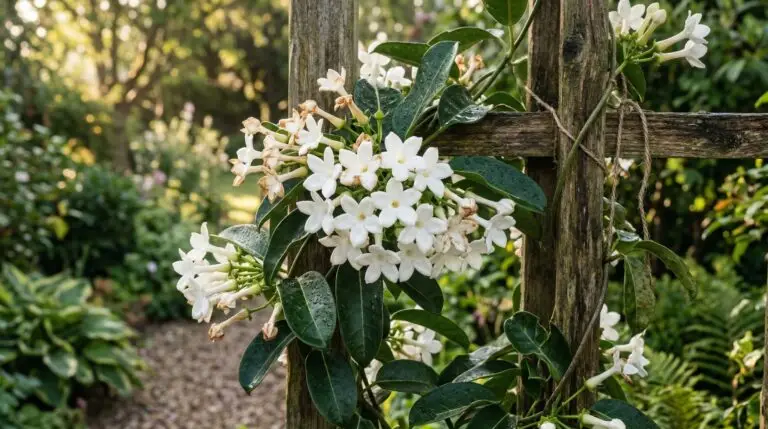
The physical habits of the plant tell their own story about why it carries the meaning of a desire to travel. A healthy Stephanotis is a restless creature that wants to climb, sending out long, twisting tendrils that wrap around any available support in their search for the sun. In its native habitat, it scrambles high into the forest canopy, a trait that required early conservatory gardeners to build tall trellises and wire frames to contain its wandering nature. This vigorous growth habit translated directly into the Madagascar jasmine meaning, as Victorian flower dictionaries assigned it the sentiment of a desire to travel or a wish for an expedition. The association made perfect sense for a plant that had crossed oceans to reach temperate gardens and still refused to stay put in its pot. Giving a potted vine to a friend about to depart on a long sea voyage became a quiet way to wish them safe passage and new discoveries. The deep green, leathery leaves provided a handsome backdrop in the parlor long after the traveler had left port.
Tending a promise of marital happiness
While many flowers find their way into wedding celebrations, the core stephanotis meaning remains strictly bound to marital happiness and good luck for the couple. Other popular bridal blooms carry layers of complicated history, as seen when you explore the deep romantic lore surrounding the classic garden rose or the fleeting perfection associated with the white gardenia. Stephanotis symbolism is entirely straightforward in its promise of lasting joy within a marriage. Brides in the late nineteenth and early twentieth centuries insisted on tucking at least a few of these starry blossoms into their veils or carrying them in their hands to ensure a peaceful, happy union. The thick, waxy texture of the petals meant they could survive a long ceremony without wilting, offering a visual metaphor for a strong and healthy relationship. Even the way the flowers grow in tight, clustered bunches along the vine suggests a closeness and unity that resonated with young couples starting their lives together.
Following the vine through the seasons
The life of a Stephanotis vine moves through a distinct rhythm as the seasons shift from the cold dormancy of winter into the bright warmth of spring. Gardeners watch the woody stems carefully in April, waiting for the first signs of fresh green growth and the swelling of tiny buds at the leaf axils. As the days lengthen and the air grows heavier with humidity, these tight white clusters begin to elongate into elegant, tubular shapes. When the summer heat finally coaxes the five-pointed stars to open, the air fills with a heavy, sweet fragrance that rivals the perfume of true climbing jasmine. The scent is strongest in the evening, drifting through open conservatory windows or across warm southern porches as the sun sets. This reliable summer blooming period made it the perfect companion for June weddings, allowing local florists to harvest fresh clusters straight from the greenhouse on the morning of the ceremony. The vines continue to produce their fragrant white crowns well into the late summer, provided the roots receive enough water and the leaves get plenty of bright, indirect light.
The rare reward of the autumn seed
If the summer blossoms receive a visit from the right pollinator, the vine begins an entirely new chapter as autumn approaches. The faded white stars drop away, and in their place, a large, heavy seed pod begins to swell against the stem. These pods look remarkably like small green mangoes and take nearly a year to fully mature on the vine, demanding an extraordinary amount of patience from the gardener. When the pod finally turns yellow and splits open the following spring, it reveals hundreds of flat seeds equipped with silky white parachutes. Watching these seeds catch the wind provides a perfect visual echo of the plant’s deep association with travel and distant voyages. Collecting and planting these seeds starts the entire cycle over again, though it will take several years of careful tending before the new vines are strong enough to produce their own crown of ears.
A quiet promise on the windowsill
Bringing a Stephanotis into your own home today connects you to this long lineage of hopeful gardeners and happy couples. You might train a young vine around a simple wire hoop on a sunny windowsill, watching it send out those familiar, restless tendrils in search of something new to climb. The plant requires patience and a watchful eye, asking for cool winters and warm, humid summers to produce its famous starry blooms. When those thick white flowers finally open and release their sweet evening perfume, they offer the same quiet reward that nineteenth-century brides prized so highly. Tending this vine becomes a daily practice in nurturing something that grows slowly and steadily over time. It is a living reminder that the best kind of happiness, much like a healthy garden, requires deep roots, a little room to wander, and the patience to wait for the flowers to open.
More About Stephanotis
Propagating stephanotis from cuttings for new plants from your prized vine

How to get stephanotis to bloom indoors with the right winter rest and spring warmth
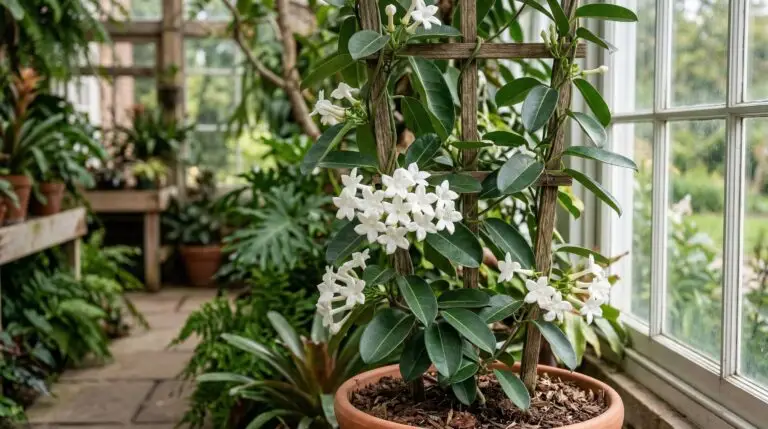
How to grow stephanotis for waxy white stars with an intoxicating jasmine-like fragrance
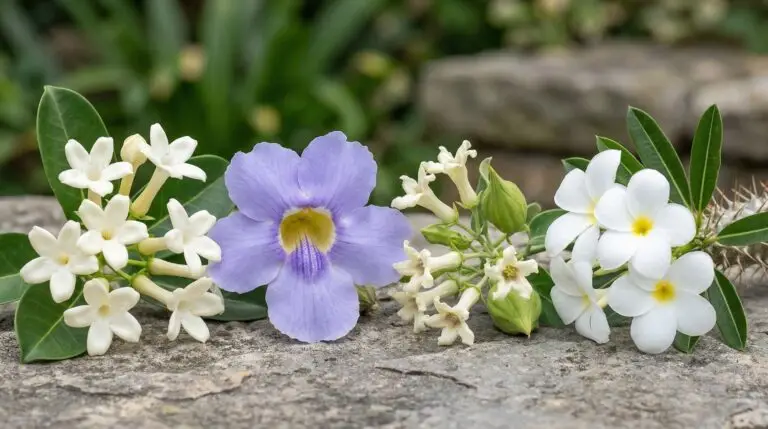
Stephanotis versus jasmine and choosing the right fragrant white vine for your home
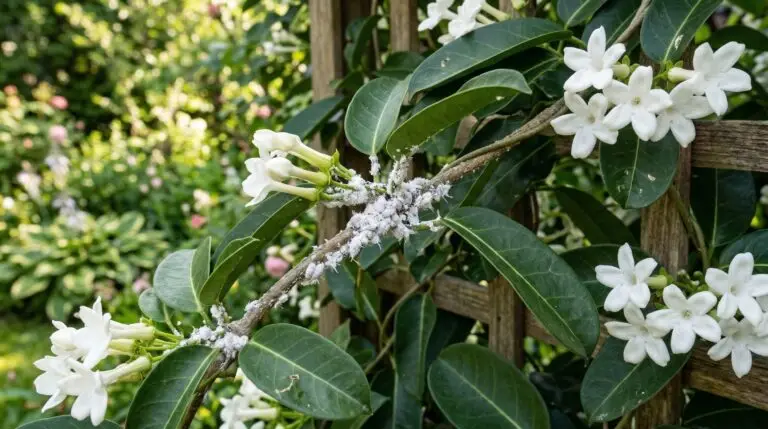
Common stephanotis pests from mealybugs to scale and keeping your vine clean
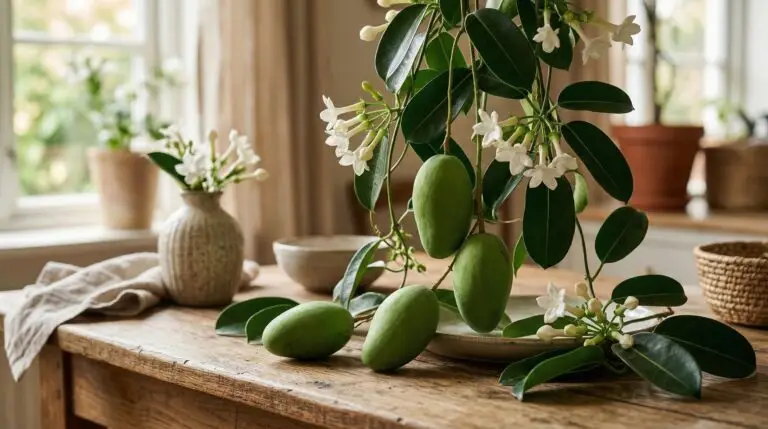
Stephanotis seed pods the giant green fruits that sometimes appear on indoor plants
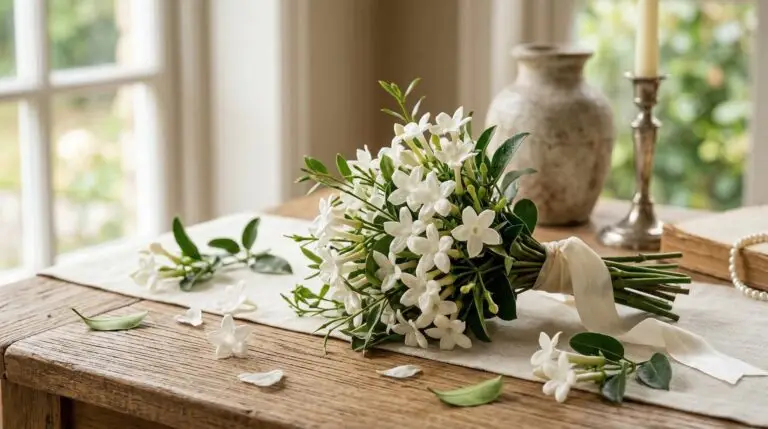
Stephanotis in bridal bouquets and why this is called the wedding flower
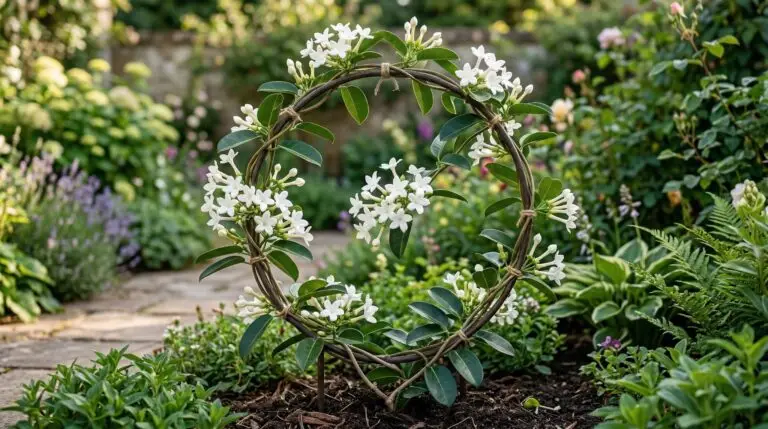
Growing stephanotis on an indoor trellis or hoop for a fragrant living room feature
Why stephanotis drops buds and the temperature and light secrets to keeping flowers
Enjoying our flower guides? Add YourFlowersGuide as a preferred source on Google. It helps more readers find us.
Add to Preferred Sources