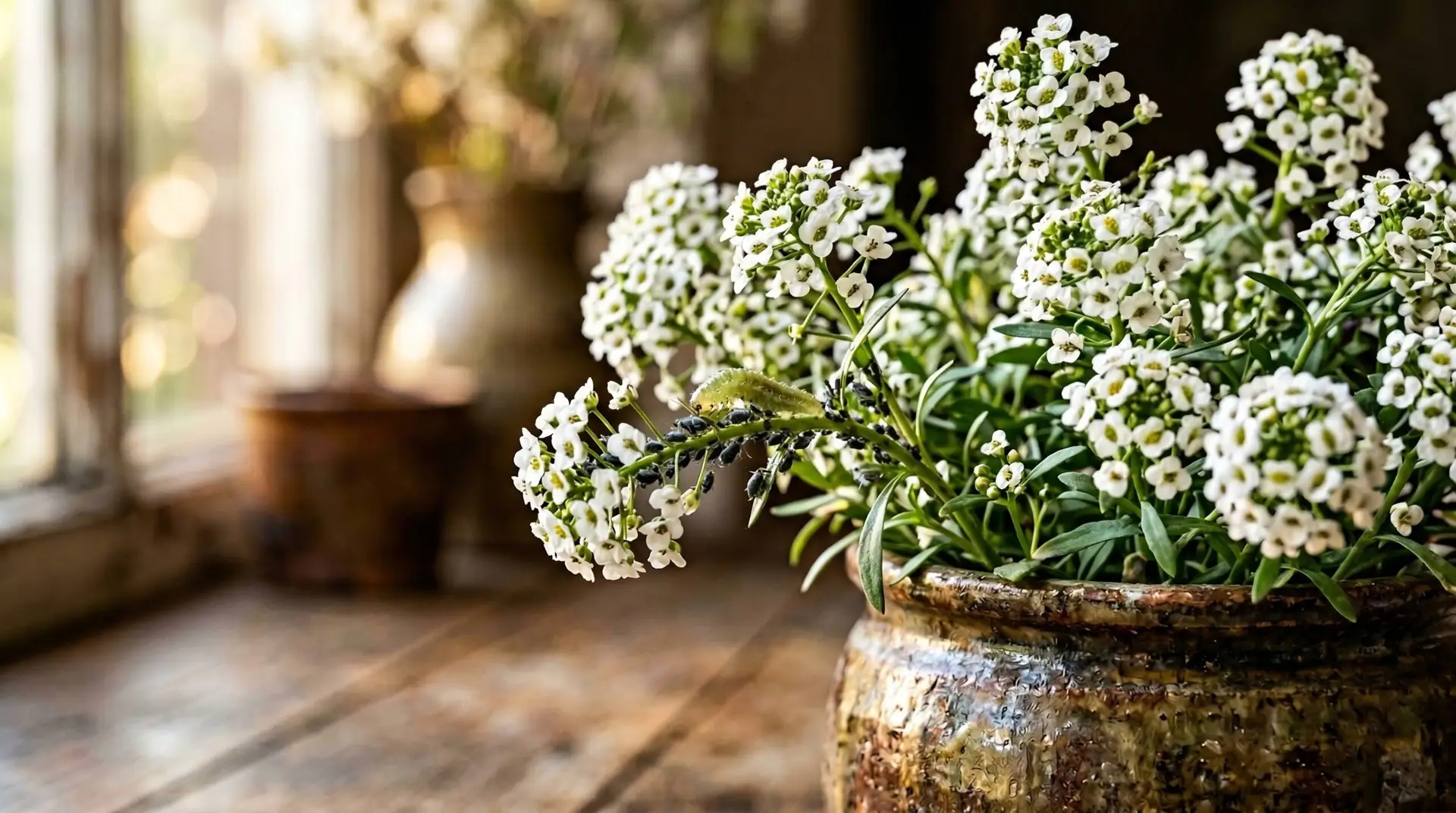
The late August sun clears the eastern tree line just before seven, casting long shadows across the dew-soaked vegetable beds. The light catches the moisture trapped in the dense foliage, turning the garden path into a brief, glittering mosaic. Down at the edge of the brassica patch, a low mound of white flowers begins to catch the early warmth. This is sweet alyssum, a plant many gardeners tuck into borders as a mere afterthought, though it is the organic grower’s secret weapon. If you kneel in the damp grass and lower your face to the blooms, a different reality emerges. The scent rises first, a thick fragrance of warm honey that seems almost too heavy for such delicate petals. Then the movement begins, a subtle vibration in the still morning air as tiny, dark shapes arrive from the surrounding foliage, drawn to the white clusters with absolute purpose. These are the hoverflies, taking their first meal of the day.
Contents 3 sections
The architecture of attraction
When observing the sweet alyssum beneficial insects seek out, you have to look closely at the mechanics of the flower itself. The blooms are arranged in dense clusters, each individual flower opening four microscopic petals around a shallow center. This flat, accessible structure is exactly what certain insects require to survive. While bumblebees possess long tongues capable of reaching deep into tubular blossoms, the tiny syrphid flies and parasitic wasps have short mouthparts that demand exposed nectar. The alyssum provides a perfect landing pad, a wide and stable surface where these fragile creatures can rest and feed without expending precious energy. There is no complex floral trap to navigate, no heavy petals to push aside. Watching them work the flowers is an exercise in patience, as they move methodically from one microscopic well to the next. They are fueling themselves for the tasks ahead, participating in a quiet exchange of sugar for service that will ultimately save the neighboring crops from ruin.
The adult hoverfly, with its yellow and black striped abdomen, mimics the appearance of a stinging bee to ward off predators. Yet it is entirely harmless to humans, possessing no stinger, only a relentless drive to consume nectar and reproduce. Once the female has fed deeply from the flowers, she begins a careful search of the nearby plant leaves. She is looking for colonies of aphids, the soft-bodied sap suckers that cluster on the tender tips of kale and cabbage. When she finds a suitable infestation, she lays her tiny, pale eggs directly among the pests. Within days, the eggs hatch into blind, translucent larvae that look like miniature slugs. They move blindly but with unerring accuracy, guided by chemical signals to the thickest clusters of prey, where they grasp the aphids in their jaws and lift them into the air to consume them. A single hoverfly larva can eat hundreds of aphids before pupating, offering a level of alyssum pest control that no chemical spray could ever match.
Planting for the unseen workers
Integrating these flowers into the food garden requires a shift in how we view the spaces between our crops. Instead of bare earth, which bakes in the summer sun and offers nothing to the local ecology, we can sow living mulches that support the winged hunters. I like to plant continuous ribbons of sweet alyssum along the edges of the raised beds, creating unbroken corridors of habitat. These insectary strips become a highway for sweet alyssum pollinators and predators, drawing them right to the base of the plants that need their protection most. The practice is similar to the traditional method of using marigolds to deter soil nematodes, but the focus here is strictly on the canopy above the soil. The white flowers spill over the wooden borders, softening the harsh lines of the garden architecture while hiding a microscopic army. The soil remains cool beneath their dense canopy, preserving the moisture from the morning dew. Thinning the seedlings in early spring feels like a small act of cruelty, but crowded stems compete for light and water until none of them thrives, so I pull the excess and let the strongest spread wide.
The act of growing sweet alyssum from seed is a lesson in faith and observation. The seeds are dust-fine, easily blown away by a careless breath or washed too deep by a heavy rain. I press them gently into the surface of the soil, leaving them exposed to the light they need to germinate, and wait for the tiny green specks to emerge. Watering them requires a gentle mist, a careful hand to avoid dislodging the future blooms. They grow slowly at first, putting down fibrous roots before sending up their branching stems. By the time the summer heat arrives, they have woven themselves into a dense mat that shades the soil and retains moisture for the neighboring vegetables. When the high summer sun begins to scorch the delicate foliage of cosmos in the adjacent beds, the alyssum simply stops blooming for a brief rest, waiting out the worst of the drought quietly. As soon as the cooler nights of September return, the plant bursts into a second flush of flowers, ready to feed the late-season insects.
A quiet balance of life and death
Watching the parasitic wasps arrive in the late afternoon brings a profound satisfaction. These are not the aggressive yellowjackets that ruin autumn picnics, but tiny, gnat-sized creatures that go entirely unnoticed by most people. They hover like dust motes in the slanting evening light, their wings a blur of iridescent motion. They are drawn to the alyssum for the same easily accessible nectar that feeds the hoverflies, using the energy to hunt down caterpillars, whiteflies, and aphids. The female wasp uses her ovipositor to inject an egg directly into the body of a living pest. The developing wasp larva consumes its host from the inside out, eventually spinning a tiny cocoon on the empty husk. The process is brutal, a miniature horror story playing out beneath the broad green leaves of the broccoli plants. Yet this cycle of predation is the foundation of a healthy ecosystem, with the sweet alyssum sitting at the center of it all as an anchor of life that supports the necessary agents of death.
As the season turns toward winter, the garden begins to slow its frantic pace. The tall stalks of yarrow have gone brown and stiff, their flat umbels turning to dry seed heads rattling in the wind. The tomato vines blacken with the first frost, and the squash leaves collapse into translucent heaps. Yet the sweet alyssum often survives the early freezes, its low profile trapping the residual heat of the earth. The frost coats the tiny white petals, turning them to glass, yet they refuse to shatter. It continues to push out small clusters of white flowers, offering a final meal to the few remaining insects bracing for the cold. To grow this plant is to participate in the ancient, ongoing negotiation between the soil, the plants, and the creatures that bind them together. When the snow finally comes to bury the garden, the scent of honey will be gone, but the sleeping pupae of the hoverflies and wasps will remain in the leaf litter, waiting for the spring sun to wake them and begin the cycle again.
More About Sweet Alyssum
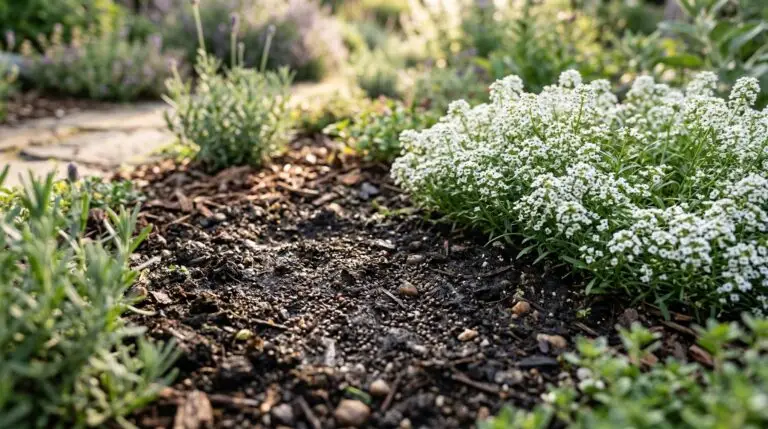
Growing sweet alyssum from seed and the scatter-sow method that could not be simpler
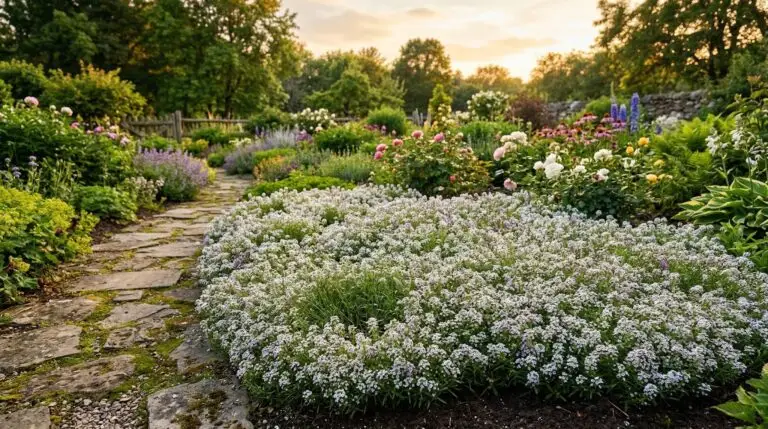
Sweet alyssum as a living mulch and ground cover that suppresses weeds while smelling amazing

Sweet alyssum between pavers and stepping stones for fragrant walkway edges
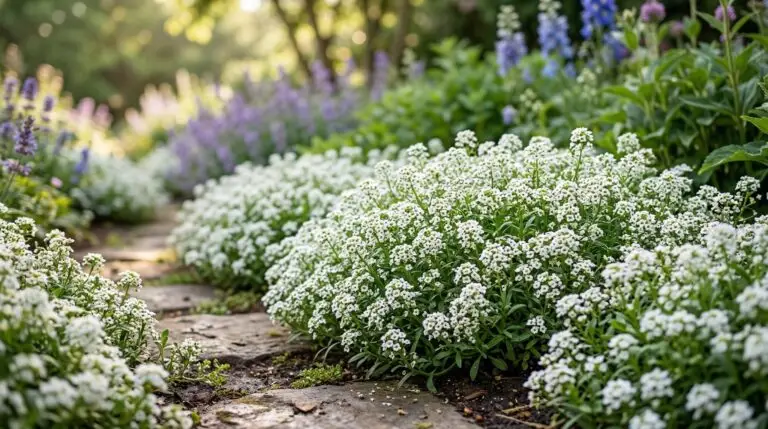
How to grow sweet alyssum for fragrant white carpets that spill over every edge
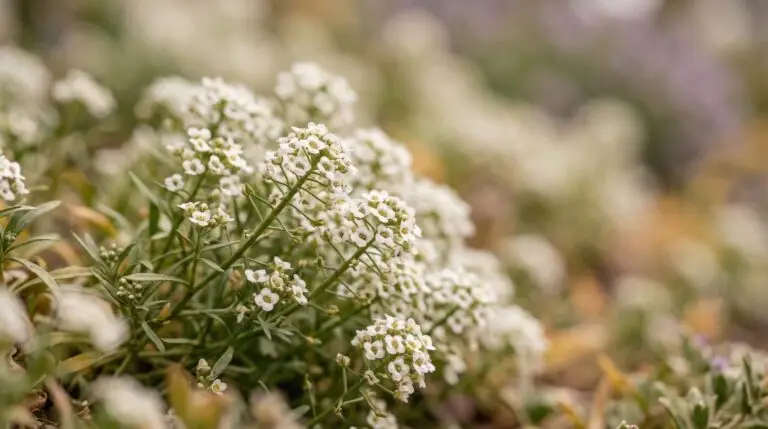
Sweet alyssum flower meaning and the modest charm of this honey-scented ground hugger
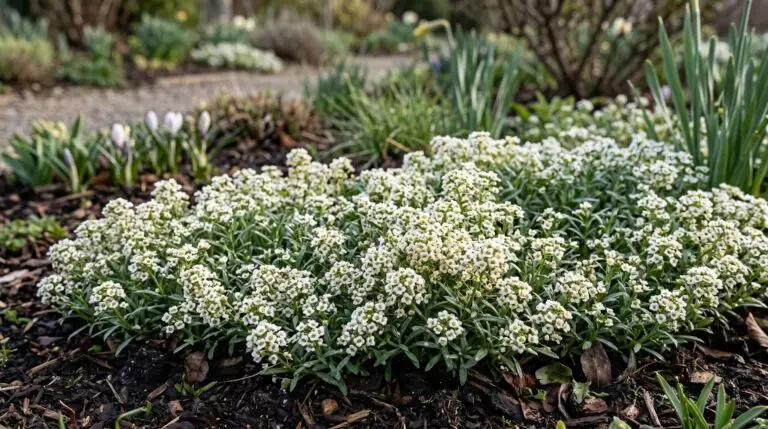
Why sweet alyssum dies in summer heat and the fall comeback you can count on
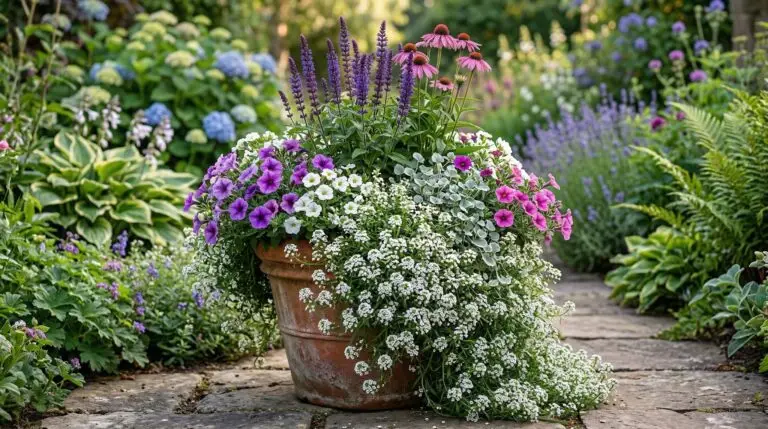
Sweet alyssum in containers and hanging baskets as the perfect fragrant spiller plant
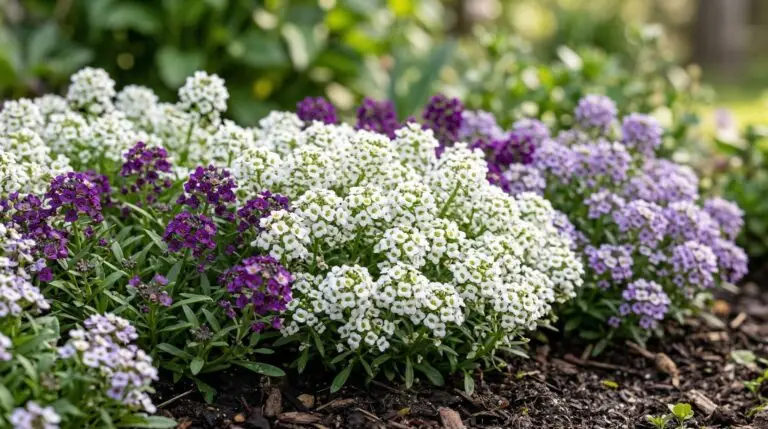
Best sweet alyssum varieties from classic white to purple Stream and apricot Blushing Princess
Enjoying our flower guides? Add YourFlowersGuide as a preferred source on Google. It helps more readers find us.
Add to Preferred Sources