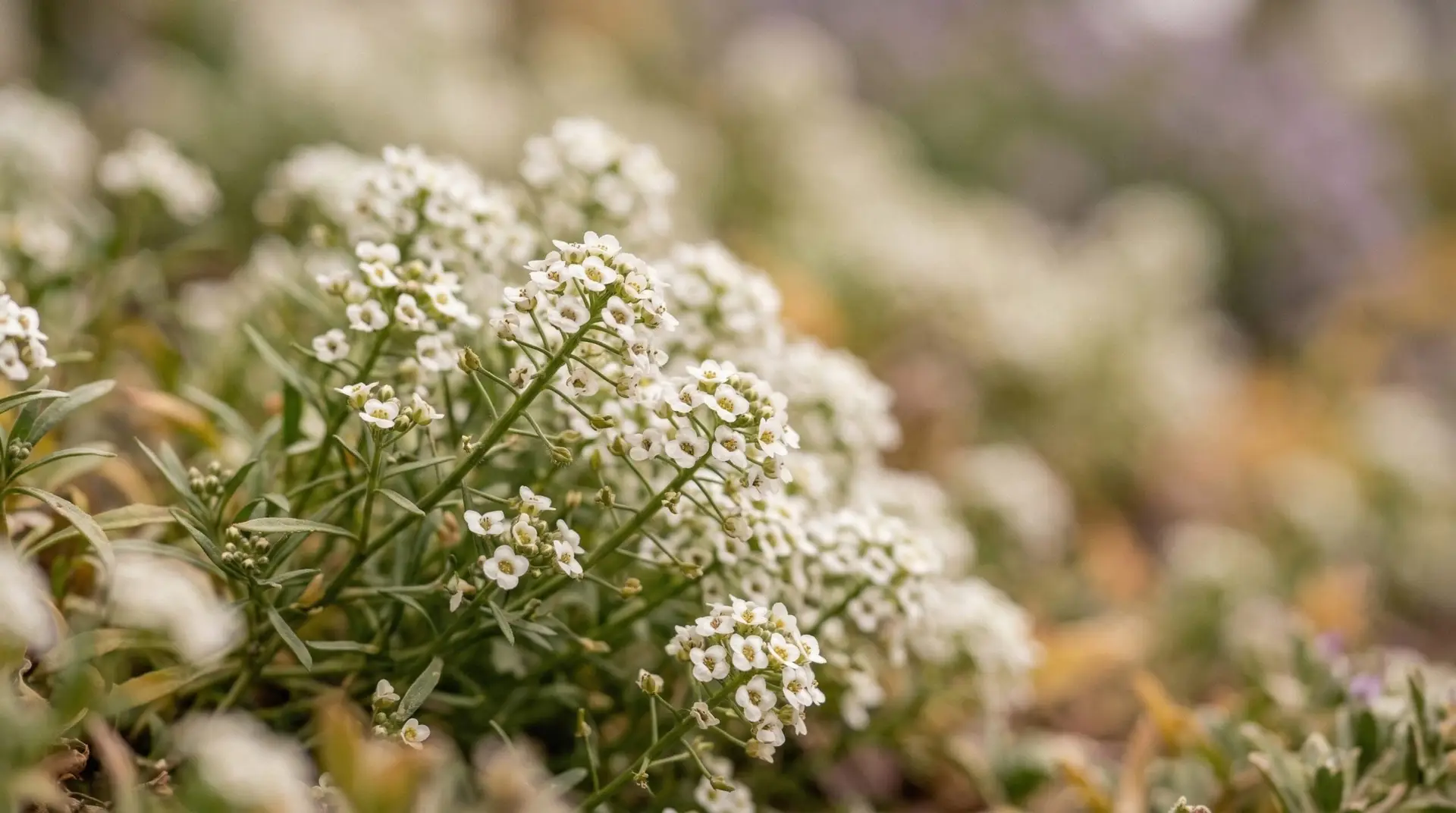
In the sun-baked, rocky coastal regions of the Mediterranean, a low-growing plant with tiny white cross-shaped petals has clung to the limestone cliffs for millennia. Ancient foragers and early botanists walking along the shores of Greece and the Iberian Peninsula would have noticed the plant long before they saw it, guided by a thick, sweet scent resembling freshly harvested honey. This humble ground hugger is sweet alyssum, known botanically today as Lobularia maritima, though its older classification and common name carry a much heavier historical weight. The word alyssum derives directly from the ancient Greek prefix “a” meaning “without” and “lyssa” meaning “madness” or “rabies.” Early Mediterranean civilizations believed the plant held specific neurological and spiritual powers, capable of soothing severe agitation and even curing the bite of a rabid animal. This literal translation of “without madness” established the earliest cultural identity for the flower, framing it as an agent of profound calm in an unpredictable world. The honeyed fragrance and soft, carpet-like growth habit reinforced this reputation, making the plant a staple in the earliest apothecary gardens of southern Europe.
Contents 4 sections
The ancient medicine of emotional balance
The ancient medical application of sweet alyssum eventually bled into its broader cultural symbolism, transforming a literal treatment for rabies into a metaphorical cure for human anger. Greek and Roman herbalists prescribed preparations of the plant to calm manic behavior, soothe heated tempers, and restore rational thought to those overwhelmed by sudden passions. As the Roman Empire expanded, soldiers and settlers carried the seeds of sweet alyssum across Europe, planting it near doorways and along garden paths to ward off chaotic energy. In medieval European folklore, individuals hung dried bundles of the flowers above the thresholds of their homes to deflect malicious spirits and prevent household arguments. The plant became a physical symbol of emotional equilibrium, offering a quiet counterweight to the intense, dramatic events of daily life. Even as modern medicine discarded the notion that a small white flower could cure viral rabies, the cultural memory of the plant remained intact. Sweet alyssum retained its association with mental clarity and spiritual peace, evolving from a literal antidote into a symbol of a calm, measured existence.
Victorian flower language and the virtue of modesty
When the rigid social codes of the nineteenth century gave rise to the Victorian language of flowers, sweet alyssum found a new, highly specific role in the complex floral dictionaries of England and France. Floriography assigned distinct moral virtues to different plants, and sweet alyssum was officially designated to symbolize worth beyond beauty and profound modesty. The logic behind this assignment was rooted in the physical habits of the plant itself, which stays close to the soil and produces individual blossoms so small they are easily overlooked. Unlike the towering lilies or heavily bred roses that demanded immediate attention in formal glasshouses, sweet alyssum offered its intense honey fragrance without requiring any visual dominance. A Victorian gentleman might include a sprig of sweet alyssum in a tussie-mussie to tell a recipient that her internal virtues far outweighed mere physical attractiveness. This message of hidden value resonated deeply in a society that publicly prized female modesty and quiet domesticity above all other traits. The plant became a popular gift among close friends and long-term romantic partners who wanted to express a deep, long-lasting appreciation for character rather than fleeting superficial charm. Much like the forget-me-not, which also carried messages of steadfast loyalty in a small package, sweet alyssum proved that the smallest elements of a bouquet often carried the most significant emotional weight.
From apothecary beds to formal edging
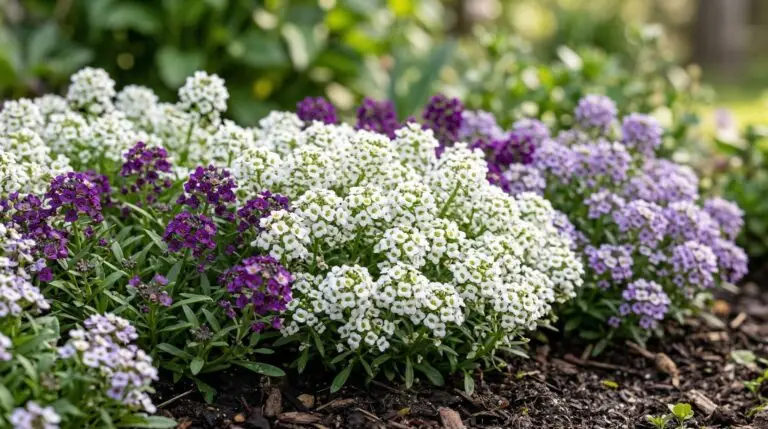
The transition of sweet alyssum from a medicinal herb to a purely ornamental garden staple occurred gradually as European horticultural practices shifted during the Renaissance and into the Enlightenment. Gardeners working in large estates recognized that the low, spreading habit of the plant made it an ideal living border to contain the strict geometric shapes of formal parterres. By the late nineteenth and early twentieth centuries, British and Dutch hybridizers began selecting strains of sweet alyssum for more uniform growth and introduced new shades of pale violet, deep purple, and soft pink. Despite these color innovations, the plant never lost its traditional role as a grounding, unifying element that connected the raw earth to the taller, more ostentatious focal points of the garden bed. Estate managers valued the plant because it suppressed weeds and attracted massive numbers of beneficial pollinating insects, providing a high degree of utility beneath its modest appearance. In many traditional cottage gardens, gardeners planted sweet alyssum alongside herbs like lavender, combining the honey scent of the alyssum with the sharp, clean camphor notes of the taller shrubs to create a deeply relaxing sensory environment. This specific combination of scents and textures reflected a long-standing European tradition of designing gardens that engaged the nose and the mind just as much as the eye.
The quiet persistence of a humble groundcover
Modern horticulturists and home gardeners continue to utilize sweet alyssum in ways that closely mirror its historical applications, proving the lasting utility of this ancient Mediterranean species. The plant is still a preferred edging material along walkways, where the heat of the paving stones helps release the heavy honey fragrance into the air, just as the sun once warmed the wild plants on Greek cliffs. While contemporary gardeners may not plant sweet alyssum to ward off wild dogs or literal madness, they still rely on it to bring a sense of visual and sensory calm to chaotic, overgrown garden spaces. The dense mats of tiny white or purple flowers act as a visual resting place for the eye, softening harsh lines and bridging the gaps between competing colors and textures. The Victorian meaning of worth beyond beauty remains highly relevant today, as the true value of the plant lies in its rugged drought tolerance, its ability to support local bee populations, and its reliable, uncomplaining nature. When a gardener tucks a small plug of sweet alyssum into a rock wall or the edge of a container, they are participating in a horticultural tradition that stretches back thousands of years. The modest charm of the flower continues to offer a quiet, steadying presence, reminding those who take the time to notice it that there is immense value in simply being grounded.
More About Sweet Alyssum
Growing sweet alyssum from seed and the scatter-sow method that could not be simpler
Sweet alyssum as a living mulch and ground cover that suppresses weeds while smelling amazing
Sweet alyssum between pavers and stepping stones for fragrant walkway edges
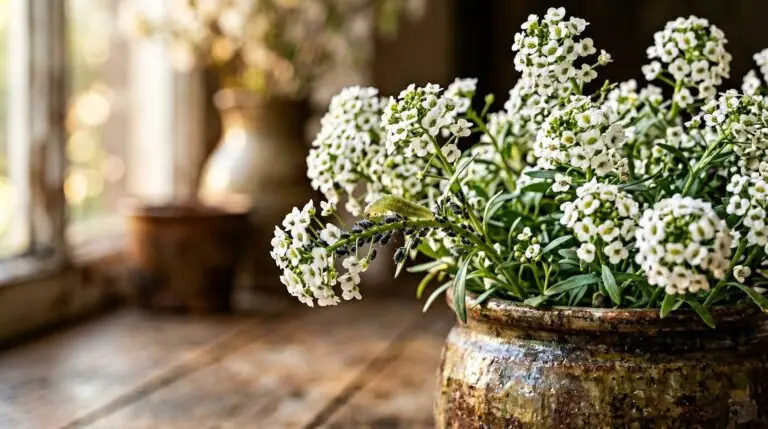
Sweet alyssum as a beneficial insect attractor that brings hoverflies and parasitic wasps
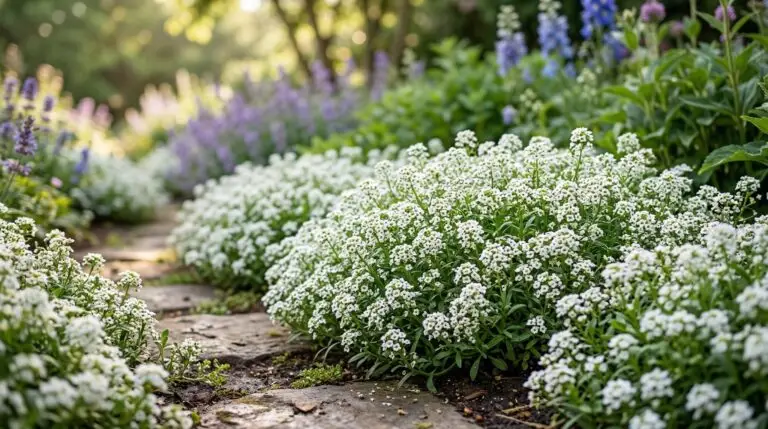
How to grow sweet alyssum for fragrant white carpets that spill over every edge
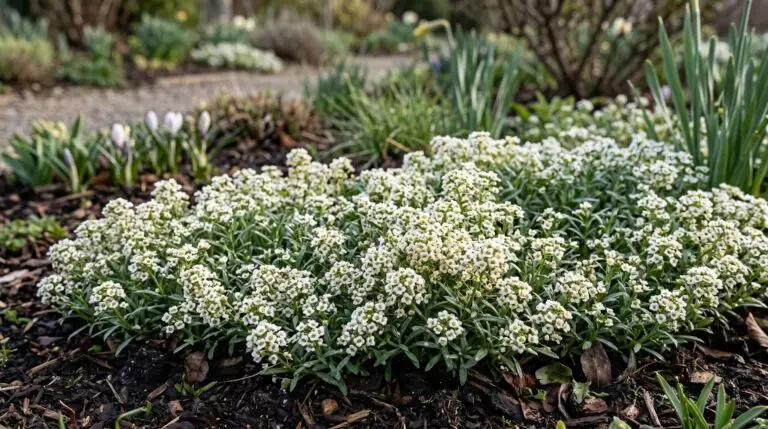
Why sweet alyssum dies in summer heat and the fall comeback you can count on
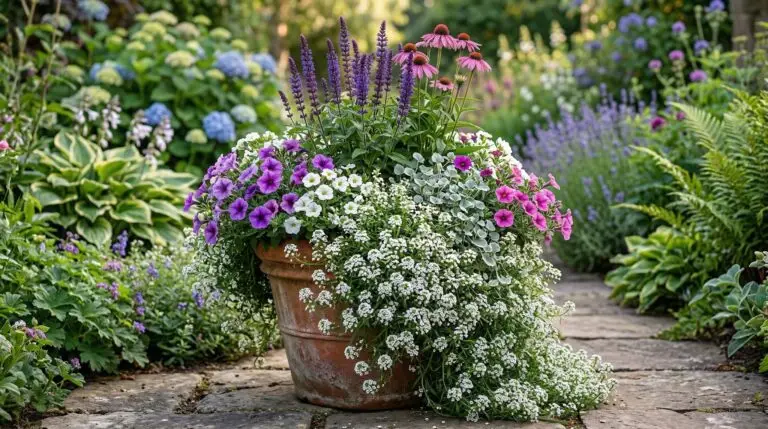
Sweet alyssum in containers and hanging baskets as the perfect fragrant spiller plant
Best sweet alyssum varieties from classic white to purple Stream and apricot Blushing Princess
Enjoying our flower guides? Add YourFlowersGuide as a preferred source on Google. It helps more readers find us.
Add to Preferred Sources