
Contents 5 sections
Planning the path in late winter
The garden in late winter is a place of stark lines and cold surfaces. The stepping stones sit bare against the frozen earth, and the narrow gaps between the pavers hold only the dead remnants of last year’s weeds. This is the time to plan a fragrant path, visualizing how the hard geometry of the masonry will soften when the weather turns. You decide to grow sweet alyssum between pavers, replacing the patchy grass that always struggles in those tight, dry crevices. The soil in these joints is stiff and unyielding now, but the mind is already placing seeds. Preparing for the season requires looking at the bare bones of the yard and imagining the honey scent that will eventually rise from the ground.
As February bleeds into March, the ice begins to recede from the stone edges. You can take a narrow trowel and scrape out the accumulated debris, old roots, and moss from the joints. The gaps need to be clear and filled with a bit of loose, sandy soil to welcome the new roots. Preparing these crevices requires patience, working on your knees while the garden is still mostly asleep. The physical work warms you in the chill air, setting the stage for the tiny seeds that will soon follow.
Sowing seeds as the earth thaws
When you hear the spring peepers at night, it is time to start planting. The soil has warmed just enough to receive the tiny, dust-like seeds of sweet alyssum. You pinch the seeds between your fingers and sprinkle them directly into the prepared cracks between the stepping stones. There is no need to bury them deep, as they need the strengthening spring light to germinate. A gentle misting settles the seeds into the earth without washing them onto the stone surface. The air is still crisp, smelling of wet bark and turning leaves, but the days are growing noticeably longer. You watch the gaps daily, waiting for the first signs of green to break the dark soil.
Within a few weeks, a line of microscopic paired leaves appears exactly where you dropped the seeds. These seedlings are fragile at first, requiring careful watering to ensure their shallow roots do not dry out in the spring wind. They stay low to the ground, gathering strength from the warming sun that heats the adjacent pavers. Slowly, the individual sprouts begin to merge into a continuous ribbon of green. The sweet alyssum walkway is taking its initial form, tracing the outlines of every stone.
The green mats of early summer
By the time late spring transitions into early summer, the stems have thickened and the first buds appear as tight green balls. The plants branch out to form dense, low-growing mats that spill slightly over the edges of the stones. The foliage is a muted gray-green, creating a soft visual transition between the hard masonry and the surrounding garden beds. The plants are establishing their deep taproots, finding moisture in the cool soil trapped beneath the heavy pavers. You might notice early bees starting to investigate the low foliage, anticipating the nectar to come. The path begins to look established, replacing the bare dirt with a living, textural grout. The days stretch out, and the heat begins to build in the stones.
This is also the time when the surrounding borders awaken to frame the walkway. The silvery foliage of lavender starts pushing up new growth right alongside the path, promising a taller layer of scent. Further down the line, the soft mounds of catmint begin to stretch toward the sun, complementing the low profile of the alyssum. These companion plants share a love for the same well-drained soil, making the whole area cohesive. The entire walkway becomes an exercise in anticipation, waiting for the color to break.
Walking the fragrant path in midsummer
Midsummer brings the full reward of your early spring labor. The green mats erupt into solid clouds of tiny white or purple flowers, completely obscuring the foliage beneath. As the sun beats down on the stepping stones, the heat releases the heavy, honey-like scent of the blooms into the still air. Walking down this path becomes a deeply sensory experience, as the fragrance rises to meet you with every step. The plants are remarkably resilient, tolerating the occasional misstep from a passing foot without lasting damage. While they do not survive heavy, constant trampling like turf grass, they bounce back easily from light foot traffic. The sweet alyssum between pavers creates a living cushion that softens the hard edges of the stone and fills the garden with constant perfume.
The heat of August eventually takes a toll on the continuous blooming cycle. The center of the mats may begin to look tired or split open, revealing the woody stems near the base. Taking a pair of shears and giving the plants a sharp haircut removes the spent flowers and encourages a fresh wave of growth. The path looks a bit bare for a week or two, but the roots remain strong in the insulated soil beneath the stones. Watering the newly shorn plants helps them recover quickly in the late summer heat.
Autumn renewal and the winter rest
As the oppressive heat breaks and the cool nights of autumn return, the sweet alyssum experiences a second flush of life. The trimmed plants push out new green shoots and a fresh crop of buds, eager to bloom before the season ends. The honey scent returns to the walkway, mingling now with the smell of fallen leaves and damp autumn earth. The flowers seem to glow in the lower, golden light of October, providing late nectar for the remaining pollinators preparing for winter. The plants continue to spill over the pavers, holding their ground even as the surrounding perennials begin to die back and fade. You can walk the path on a brisk morning and still catch that sweet fragrance rising from the cold stones.
The cycle winds down when the late autumn weather brings the first hard frost. The cold blackens the tiny leaves and the flowers shrivel, turning the lush mats into dry, brown remnants in the cracks. You can leave these dried plants in place through the winter to protect the crowns and hold the soil in the narrow gaps. Before they completely wither, the final flowers drop hundreds of tiny seeds into the crevices between the stepping stones. The snow eventually covers the path, hiding the stones and the sleeping seeds beneath a white blanket. And then, just as the first hard frost blackens the last leaves, the roots below are already storing energy for the next spring.
More About Sweet Alyssum
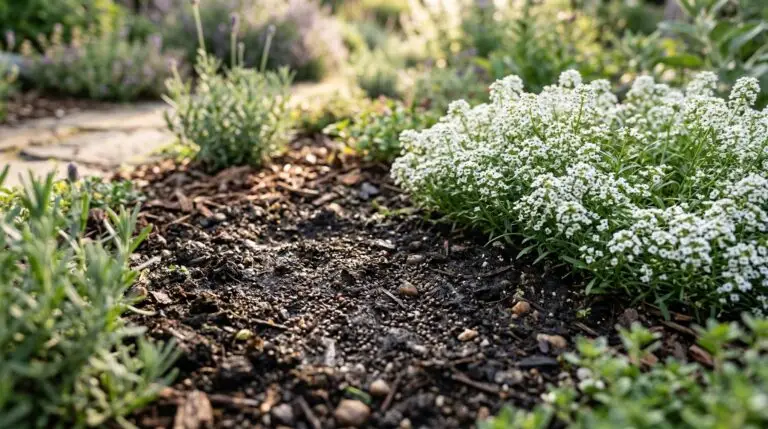
Growing sweet alyssum from seed and the scatter-sow method that could not be simpler
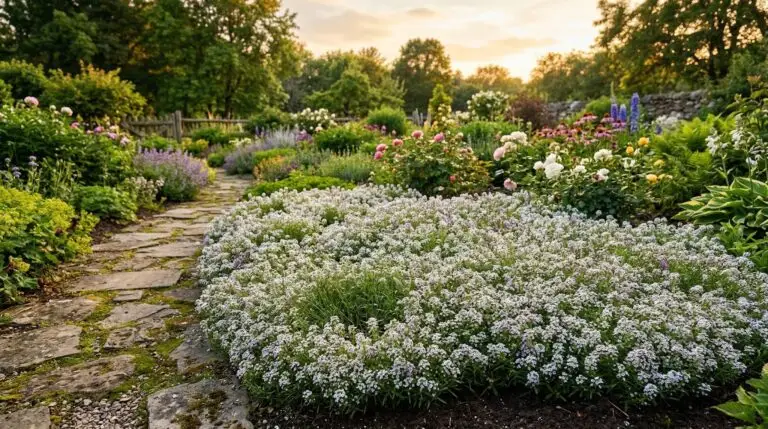
Sweet alyssum as a living mulch and ground cover that suppresses weeds while smelling amazing
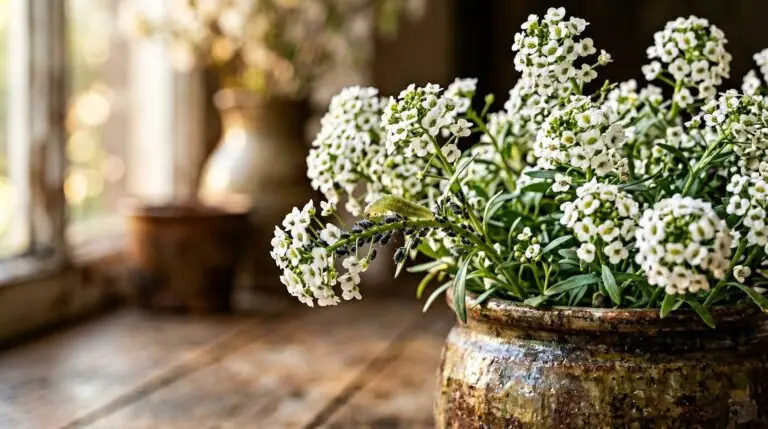
Sweet alyssum as a beneficial insect attractor that brings hoverflies and parasitic wasps
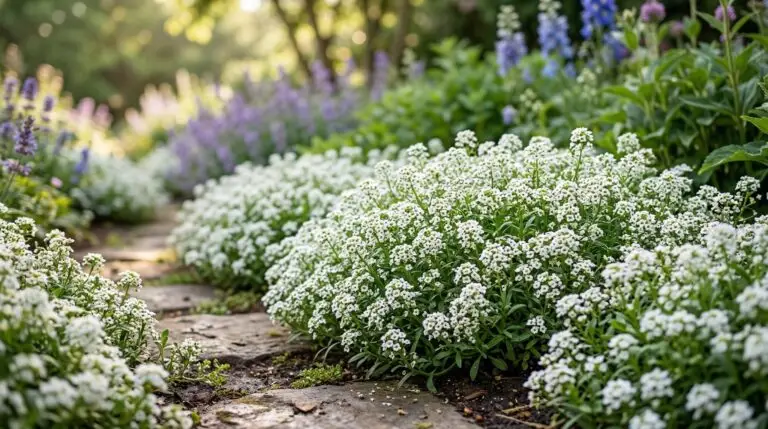
How to grow sweet alyssum for fragrant white carpets that spill over every edge
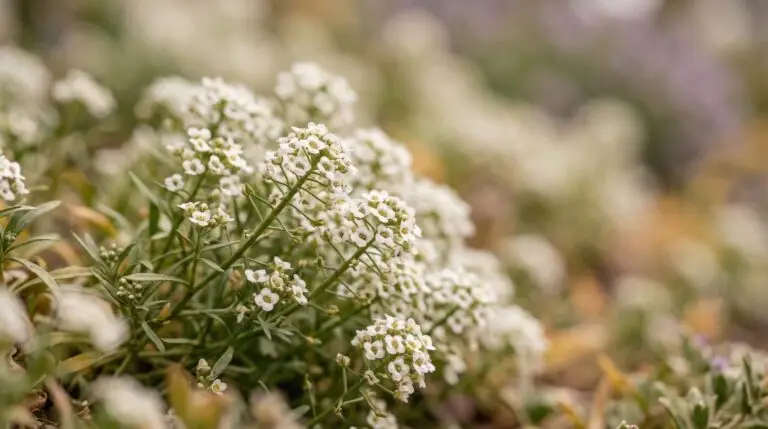
Sweet alyssum flower meaning and the modest charm of this honey-scented ground hugger
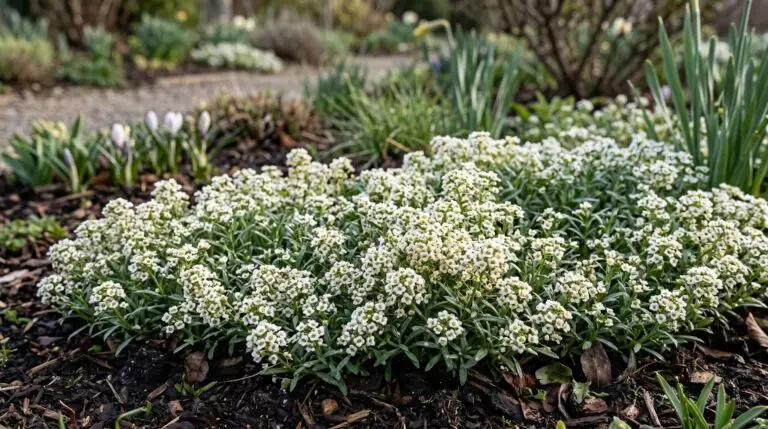
Why sweet alyssum dies in summer heat and the fall comeback you can count on
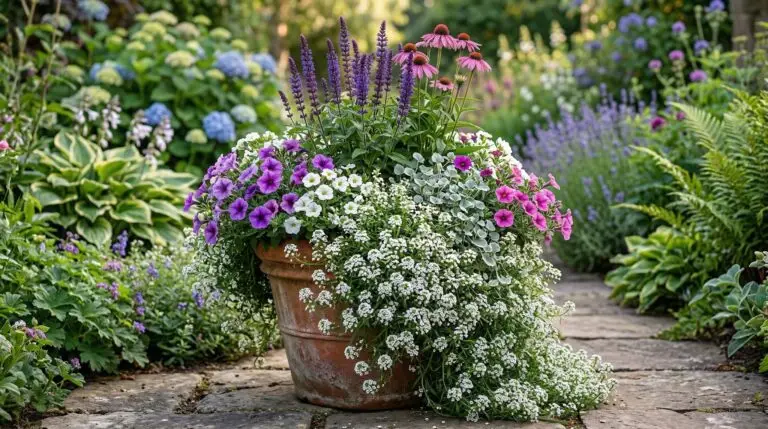
Sweet alyssum in containers and hanging baskets as the perfect fragrant spiller plant
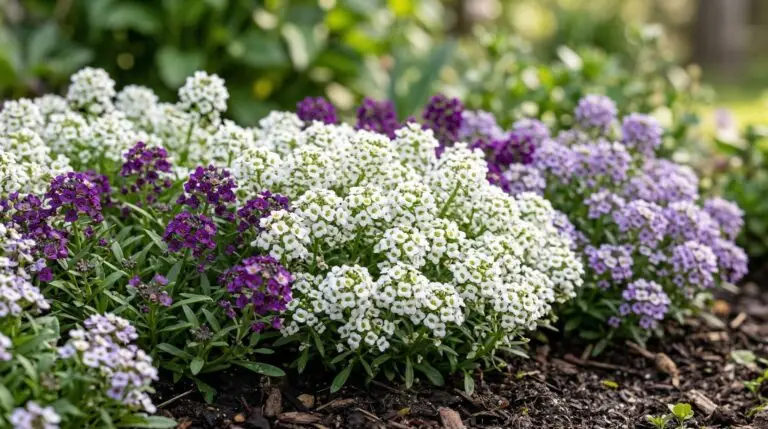
Best sweet alyssum varieties from classic white to purple Stream and apricot Blushing Princess
Enjoying our flower guides? Add YourFlowersGuide as a preferred source on Google. It helps more readers find us.
Add to Preferred Sources