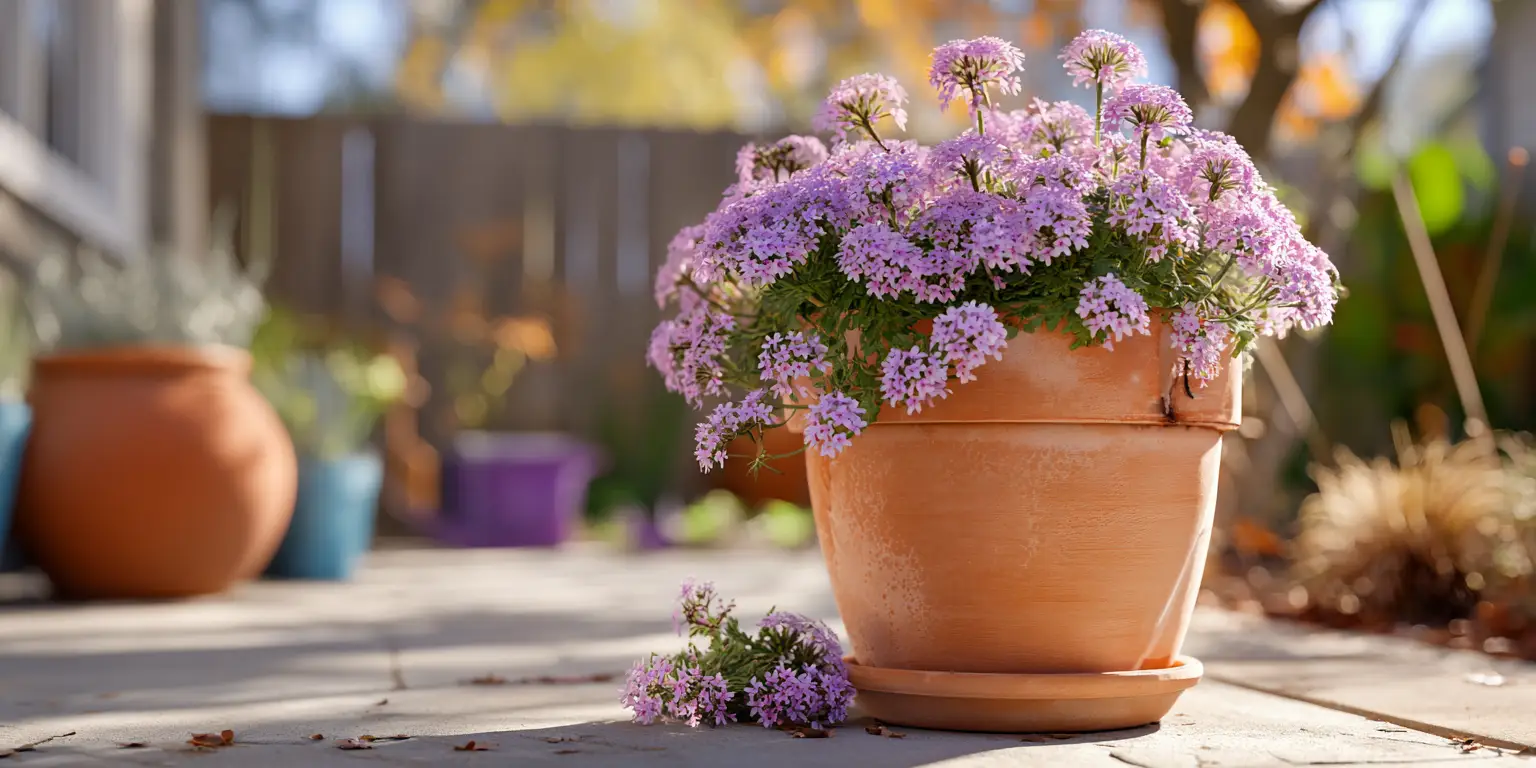
How to Grow and Care for Verbena
Contents
Verbena is a diverse group of flowering plants in the vervain family Verbenaceae. Gardeners most often meet verbena in two forms. The first is the airy, upright Verbena bonariensis known as Brazilian vervain or tall verbena. The second is the bedding and trailing group widely sold as Verbena × hybrida and closely related selections sometimes labeled as Glandularia. Many native North American species are also grown in gardens, including Verbena hastata and Glandularia canadensis. The catchall common name is vervain. Whatever the form, verbena is prized for nonstop color from late spring to frost and strong performance in summer heat.
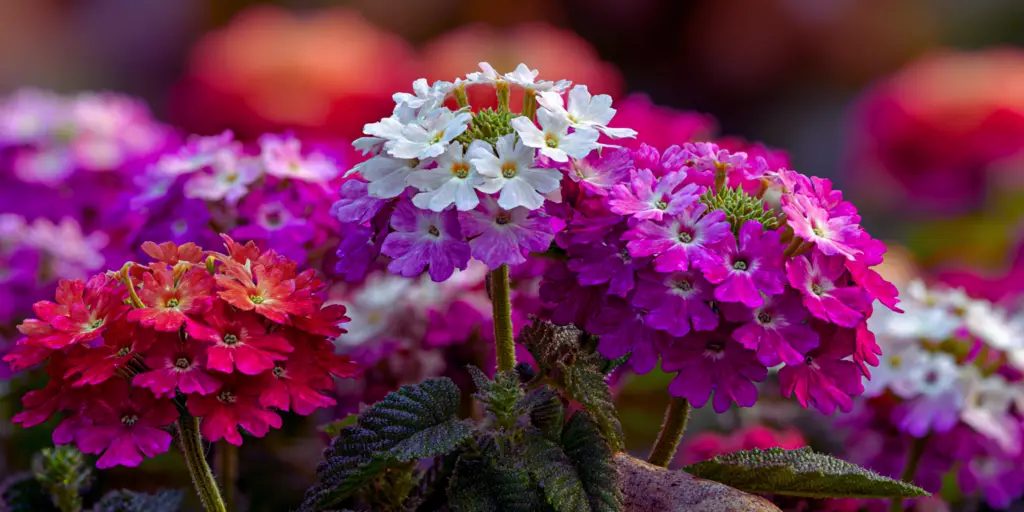
Most garden verbenas behave as tender perennials that overwinter only in mild regions, or as annuals in colder climates. Hardy species such as V. hastata return in many northern gardens. Success with verbena comes down to sunlight and drainage. Provide full sun for a minimum of 6 to 8 hours and soil that drains freely after a soaking. With those two needs met, Verbena care is straightforward. Expect blooms in white, pink, blue, and purple tones that play well with many border favorites and seasonal containers. You can use verbena confidently in mixed borders, pollinator plantings, and patio pots to carry color through long hot spells and bridge gaps between spring and fall displays.
Soil & Bed Preparation
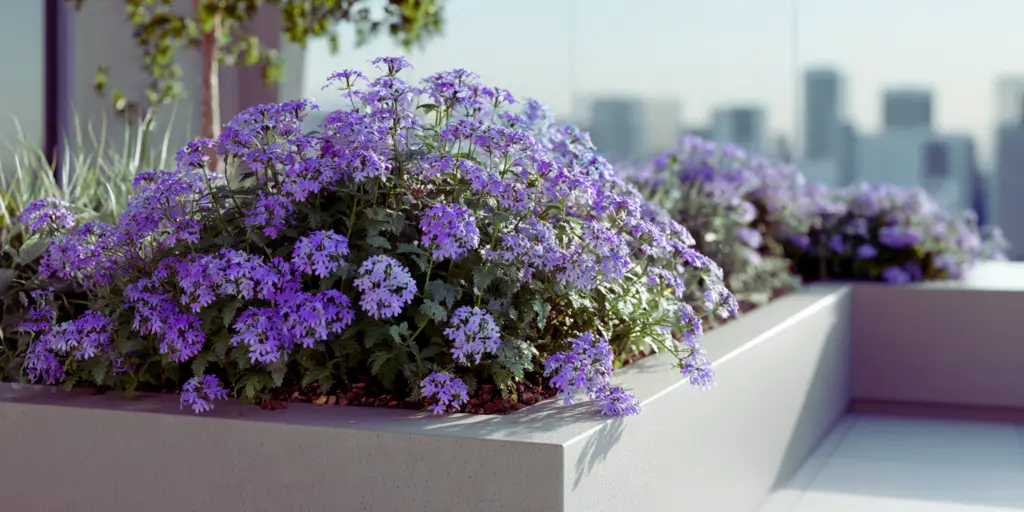
Verbena thrives in loamy or sandy soils that never stay waterlogged. In heavy clay, improve structure by mixing in 2 to 3 inches of composted bark or finished compost into the top 8 to 10 inches of soil. In very sandy ground, add 2 inches of organic matter to improve moisture holding while preserving drainage. The goal is a crumbly soil that drains within a few hours after a deep watering yet does not dry to dust between irrigations. Verbenas are moderate feeders. A soil rich in organic matter supports steady growth and abundant bloom without excessive nitrogen. Work 1 to 2 inches of compost into planting beds before transplanting. On poor, sandy soils a small amount of balanced slow release fertilizer helps plants establish without producing all leaves and few flowers. Dig a hole 12 inches deep and 12 inches wide. Fill with water and allow it to drain completely. Refill and time the second drainage. If water remains after 3 to 4 hours, improve drainage with raised beds or soil amendments. Verbenas tolerate a range of pH from slightly acidic to neutral. Aim for pH 6.0 to 7.2. If your soil tests below 6.0, incorporate finely ground limestone according to a soil test. If pH is above 7.2, add elemental sulfur as directed by your extension lab. Always retest 3 to 6 months after any pH correction. Raised beds are a smart choice where clay soil or seasonal wetness threatens root health. A raised height of 8 to 12 inches filled with a well draining mix greatly reduces crown and root rot risk. In ground beds are fine wherever natural drainage is good. In either case, avoid burying the crown.
Special rooting and medium needs. Verbena does not grow from bulbs, corms, or tubers. Trailing types often root as they sprawl, and some clump forming species spread slowly by short rhizomes. These benefit from aerated soil with consistent pore space. Container mixes should be peat, coir, or bark based with added perlite or pumice for sharp drainage.
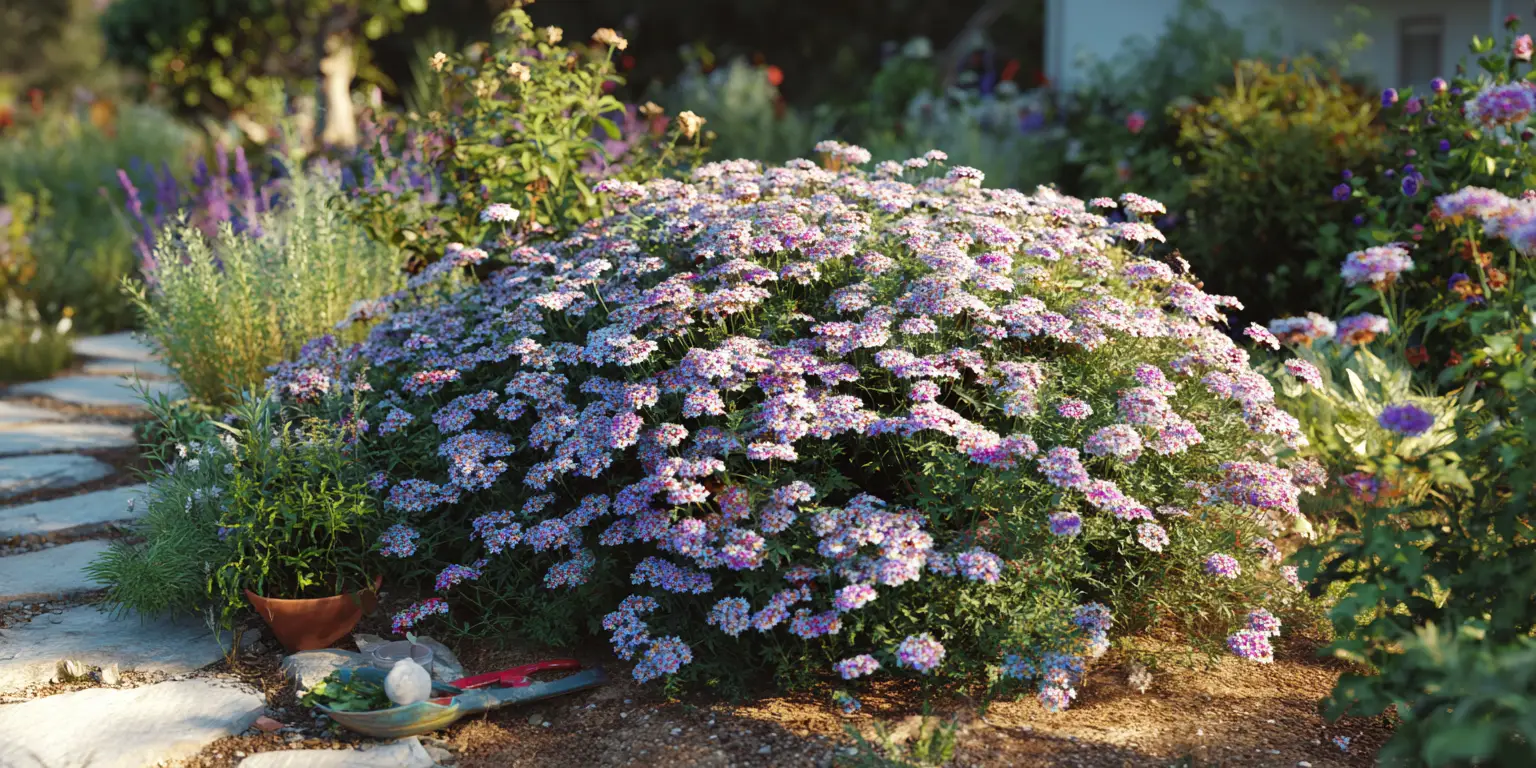
Planting Calendar by USDA Zone
Where verbena grows. Bedding and trailing verbenas are grown across the United States as warm season annuals. Tall verbena, Verbena bonariensis, is a tender perennial typically hardy in USDA Zones 7 to 11, so it winters outdoors in much of the South and West. Native blue vervain, Verbena hastata, is hardy through much colder regions and can persist in Zones 3 to 8. Glandularia canadensis selections such as Homestead Purple behave as short lived perennials in many Mid South gardens and as annuals farther north.
Last frost to first frost timing. In Zones 3 to 5, set out verbena transplants 1 to 2 weeks after your average last spring frost once soil warms to about 60 °F (16 °C). Expect flowering from early summer to your first fall frost. In Zones 6 to 7, plant in mid to late spring as nights consistently rise above 50 °F (10 °C). In Zones 8 to 9, transplant from late winter through early spring for spring to late fall color. In Zones 10 to 11, plant in late fall to winter for winter and spring bloom and refresh as summer extremes arrive.
Regional caveats. In hot humid Gulf and Atlantic coastal climates, seed raised bedding verbenas can flag in midsummer. Favor vegetatively propagated trailing or perennial types selected for humidity tolerance. In the arid Southwest, afternoon heat and wind increase water demand. Mulch and irrigation scheduling are essential. In high elevation regions with cool nights, flowering is excellent although the season may be shorter. Along salt sprayed coasts only a few species such as beach verbena tolerate salt. Most garden verbenas prefer low salinity irrigation and soils.
Bare root versus container windows. Verbenas are rarely sold bare root. Container grown plants are the norm and can be set out any time soil is workable and frost has passed. In the mildest climates fall planting of hardy species builds stronger roots for the next season.
Planting: Depth & Spacing
Start seeds indoors 8 to 12 weeks before your last frost date, or direct sow after danger of frost where the season is long. Sow shallowly. As a general rule, cover seed no more than 1 to 2 times its diameter which is usually only a thin veil of fine mix about 1⁄16 to 1⁄8 inch deep. Keep the medium evenly moist and warm at 65 to 75 °F (18 to 24 °C). Thin or transplant seedlings once they have several true leaves. True bare root verbena is uncommon, but clumps of hardy species such as Verbena rigida or Glandularia canadensis can be divided in early spring as new growth begins. Lift the clump, tease apart rooted pieces with several buds, and replant so the crown sits level with the surrounding soil. Water in thoroughly to settle soil around the roots. Set transplants so the top of the root ball is even with the surrounding soil. Never bury the crown. Backfill, firm gently by hand, and water to remove air pockets. Space trailing and mounding bedding types 12 to 18 inches apart for quick coverage and airflow. Compact selections in window boxes can be 10 to 12 inches apart. Space upright Verbena bonariensis 18 to 24 inches apart since its flowering wands need light and air between plants. Harden off indoor started plants for 7 to 10 days. Set flats outdoors in bright open shade, gradually increasing direct sun time and reducing water a touch so roots search outward. Transplant on a cloudy day or in late afternoon. Water with a gentle shower after planting and again two to three days later if there is no rain.
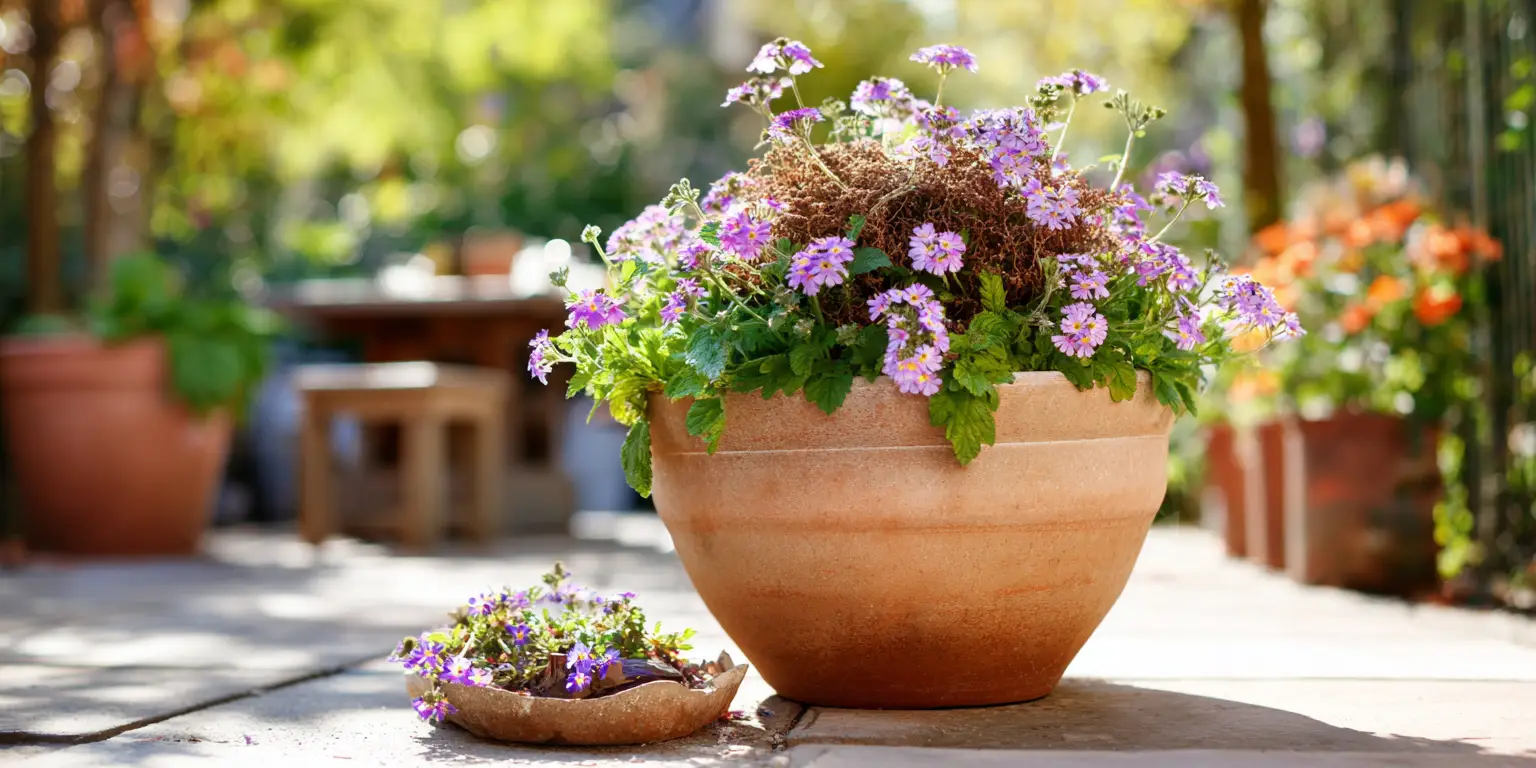
Watering & Mulching
Keep newly planted verbena evenly moist for the first 2 to 3 weeks while roots extend into surrounding soil. Aim for consistent moisture in the top 6 inches of soil. In beds, a simple finger test works. If the top inch dries fully, water deeply. In containers, check daily during the first hot spell and water when the top half inch is dry. Once established, many verbenas are reasonably drought tolerant but will bloom better with steady moisture. In average summer weather, provide roughly 1 inch of water per week if skies are dry. Deep, infrequent irrigation encourages deeper rooting. Avoid light daily sprinkles. Early morning is best so foliage dries quickly. After the soil warms, apply 1 to 2 inches of shredded bark, pine straw, or composted leaves around the plants, keeping mulch pulled back 2 inches from the crown. Mulch stabilizes soil temperature, reduces weeds, and stretches irrigation intervals. Avoid thick mulch layers that stay wet. Excess moisture against the crown invites rot. During extreme heat, increase the depth of each irrigation instead of watering every day. In containers, expect to water once per day in peak summer and possibly twice during heat waves or windy afternoons. If flowering slows, trim plants lightly, water deeply, and resume your routine. Salt tolerance varies widely by species. Beach adapted verbenas tolerate some salt spray and sandy coastal soils, but most bedding and trailing types resent saline irrigation and may show leaf burn if sodium and chloride are high. If you irrigate with reclaimed water or are near the coast, flush containers periodically with fresh water and consider collecting rainwater for sensitive varieties.
Feeding
Verbenas do not need heavy feeding. In beds, apply a light dose of a complete fertilizer in spring once nights are consistently above 50 °F. A modest analysis such as 16 to 4 to 8 or any balanced slow release product applied at label rate is sufficient. Feed again after a midsummer trim to promote fresh growth and renewed bloom. On very sandy soils or in raised beds exposed to heavy rainfall, one additional light feeding may be warranted. Container plants leach nutrients with frequent watering. Mix a slow release fertilizer into the potting mix at planting, then supplement with a half strength liquid feed about once a month during peak growth. In ground plants in rich soil often need no additional fertilizer beyond spring and one midsummer refresh. If plants look lush and leafy but flower lightly, reduce or skip nitrogen for a cycle and increase sunlight if possible. Excess nitrogen favors foliage at the expense of blooms, especially in bedding Verbena × hybrida. Healthy plants in soil with good organic matter can maintain flower production without constant feeding. Aim for 3 to 5 percent organic matter in garden soils. Recheck pH and fertility every one to two seasons, especially when beds are rebuilt or after heavy amendment. Adjust based on a lab soil test rather than guessing.
Pruning & Support
Regular removal of spent clusters encourages new trusses and keeps plants neat. Pinch lightly through early summer to promote branching. If flowering wanes in midsummer, shear plants back by about one fourth of their height, water deeply, and apply a light feeding. Blooms usually resume in two to three weeks. Leave late season seed heads if you want reseeding from tall verbena. If reseeding is not welcome, deadhead before seed set. In fall, tidy plants by removing tattered stems but avoid hard cutting on marginally hardy perennials until spring growth appears. Severe fall pruning can reduce cold tolerance and increase winter losses. In spring, cut out winter burn and thin congested centers to restore airflow and reduce disease pressure. Tall verbena is self supporting in calm gardens, but in windy exposures its slender wands can lean. Use an unobtrusive ring or a short grid support placed when growth is 12 to 18 inches tall. Grouping plants closely by habit while maintaining spacing improves mutual shelter and keeps the planting upright. Clean pruners between plants to limit disease spread. Use a quick dip in 70 percent rubbing alcohol or a 10 percent bleach solution, then dry metal surfaces to prevent corrosion. Wipe blades of dried sap to maintain sharp cuts that heal quickly.
Overwintering
In climates with sustained cold, hardy species benefit from winter mulch. After the ground cools in late fall, apply 2 to 3 inches of loose mulch around crowns to buffer freeze and thaw cycles that can heave shallow roots. Pull mulch back in early spring as growth starts so crowns do not stay wet. Verbena is seldom a primary target of voles, but any thick winter mulch can harbor rodents. Keep mulch airy and avoid piling it against stems. In gardens with heavy vole pressure, consider a gravel collar or sharp stone grit around crowns to discourage tunneling close to stems. In cold regions, lift small clumps of non hardy selections into pots before hard frost. Overwinter in a bright, cool indoor location around 50 to 60 °F (10 to 16 °C). Water sparingly to keep the mix barely moist. In very mild climates where tall verbena is perennial, a light early spring cutback to green growth maintains a tidy clump and renews flowering. Tall verbena often self sows where winters are not severe and soil is not mulched too heavily. Thin volunteers in spring to the desired spacing and remove extras before they crowd neighboring perennials.
Growing Environments
Verbena excels in pots, window boxes, and hanging baskets. Use a 10 to 12 inch diameter container for a single trailing plant or a 14 to 16 inch pot for mixed plantings. For upright tall verbena, choose a container of at least 5 gallons so the root system stays cool and hydrated. Ensure one or more drain holes and a coarse layer of potting mix at the base to prevent clogging. Use a peat, coir, or bark based mix amended with perlite for lasting porosity. Full sun is best, yet in the hottest inland sites a touch of afternoon shade can help flowers last longer. Avoid planting in pockets of stagnant air where humidity lingers. Plant tall verbena so it can sway above neighbors and catch breezes. Along reflective walls or pavements, increase irrigation and mulch to moderate heat. Trailing bedding verbenas handle breezes well, but small pots dry quickly on windy balconies. Choose heavier containers or group pots to shield each other. Where reflected heat is intense, double check watering and consider light colored containers to reduce root zone temperatures.
Companion Planting & Design
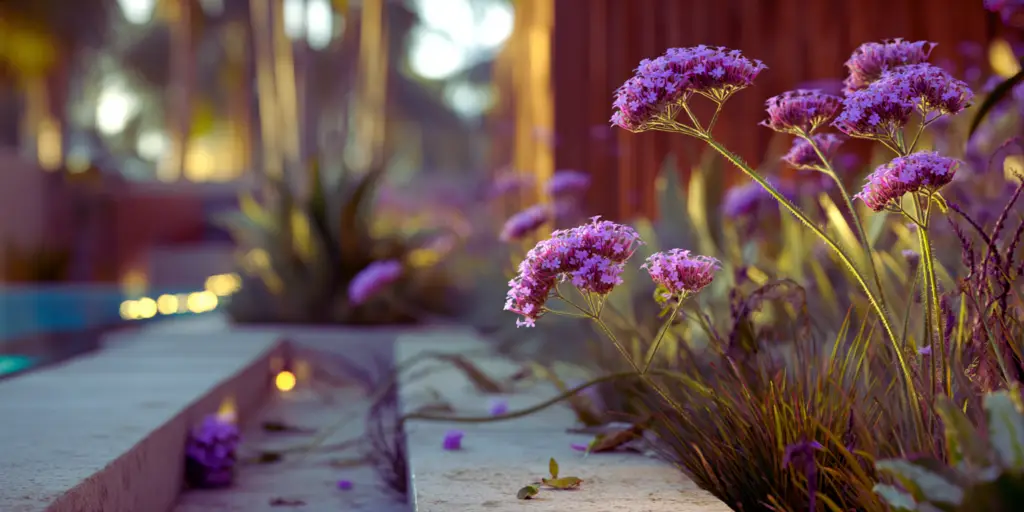
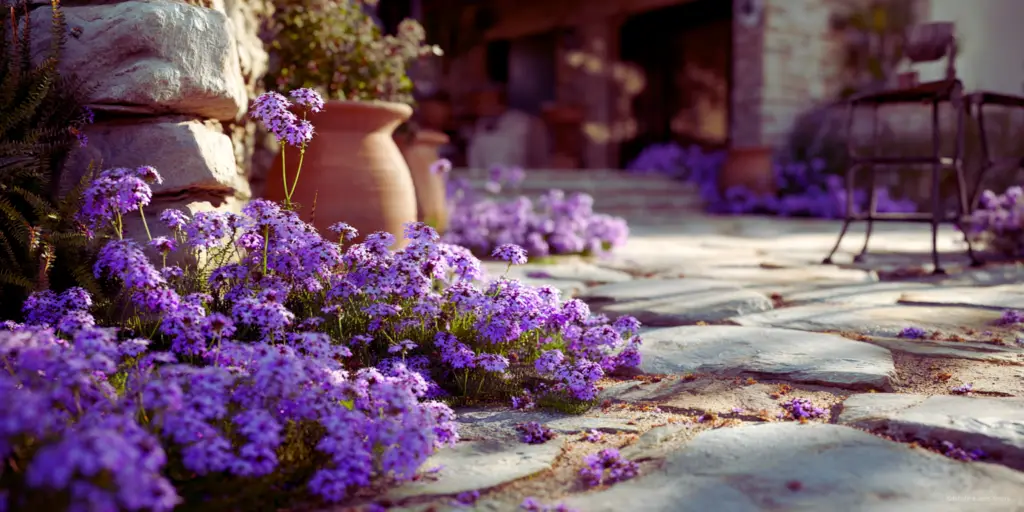
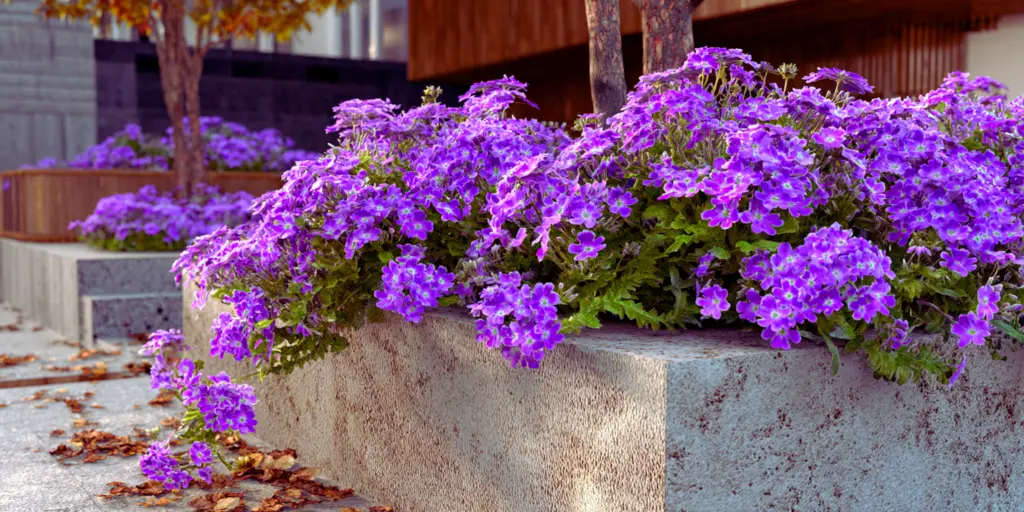
Verbena is a nectar favorite for butterflies, bees, and hummingbirds. Pair upright V. bonariensis with spires of salvia, bee balm, or native grasses to create a living buffet. Trailing forms spill around the feet of taller perennials and annuals. Good companions include zinnias, cosmos, catmint, and mounding salvias that share a love of sun and similar water needs. For color themed borders, browse our guides to roses, lavender, hydrangea macrophylla, and lilacs to mix shrubs and perennials with verbena for season long structure. Trailing verbena makes an excellent front of border plant that shades its own roots and hides fading bulb foliage from spring displays. Allow it to weave among dwarf daylilies, coreopsis, or compact gaura to bridge bloom cycles. Use tall verbena as a see through layer that adds height without heavy mass. Its airy wands let the eye travel to focal points like sunflower, tulips, or daffodils elsewhere in the bed.
Spacing for airflow. Powdery mildew and botrytis thrive in damp, crowded conditions. Maintain the spacing guidelines in the planting section, thin out tangled stems after the first flush, and water early in the day so foliage dries promptly. In mixed containers, avoid cramming too many plants into one pot. Three well chosen companions in a 16 inch bowl outshine an overstuffed mix.
References
- Clemson University Cooperative Extension. “Verbena.” Home & Garden Information Center HGIC 1175.
- North Carolina State Extension. “Verbena bonariensis.” Extension Gardener Plant Toolbox.
- North Carolina State Extension. “Verbena × hybrida.” Extension Gardener Plant Toolbox.
- North Carolina State Extension. “Verbena hastata.” Extension Gardener Plant Toolbox.
- North Carolina State Extension. “Verbena canadensis.” Extension Gardener Plant Toolbox.
- University of Florida IFAS Extension. “Verbena speciosa ‘Imagination’.” EDIS FP600.
- University of Florida IFAS Extension. “Verbena maritima: Beach Verbena.” EDIS FP598.

Written by: Your Flowers Guide editorial team
We are a small independent group of flower lovers who research and review each guide using trusted horticultural and educational sources. Learn more about us