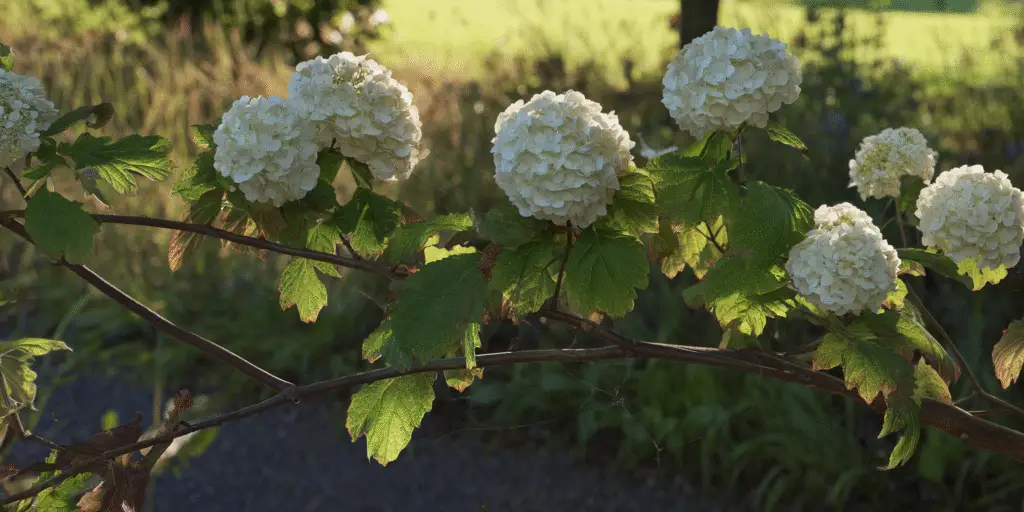
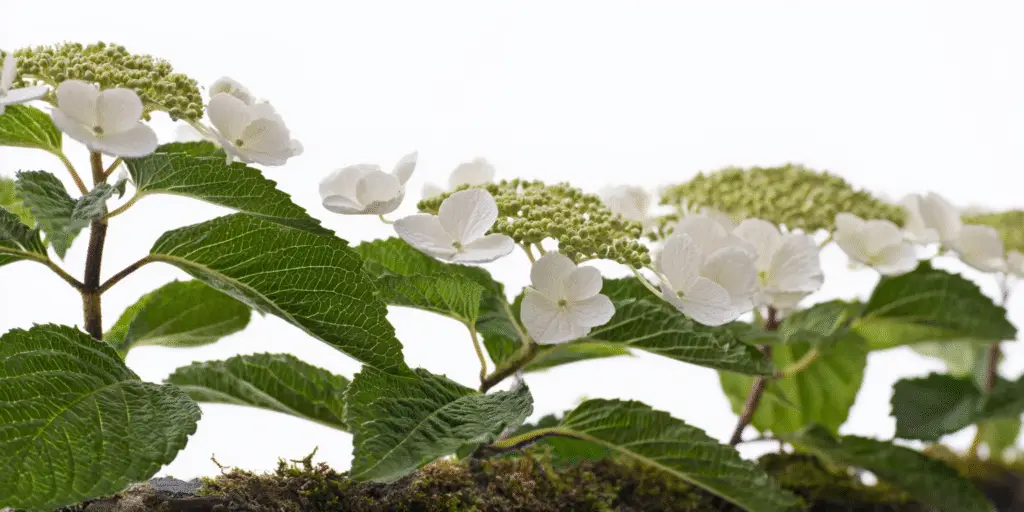
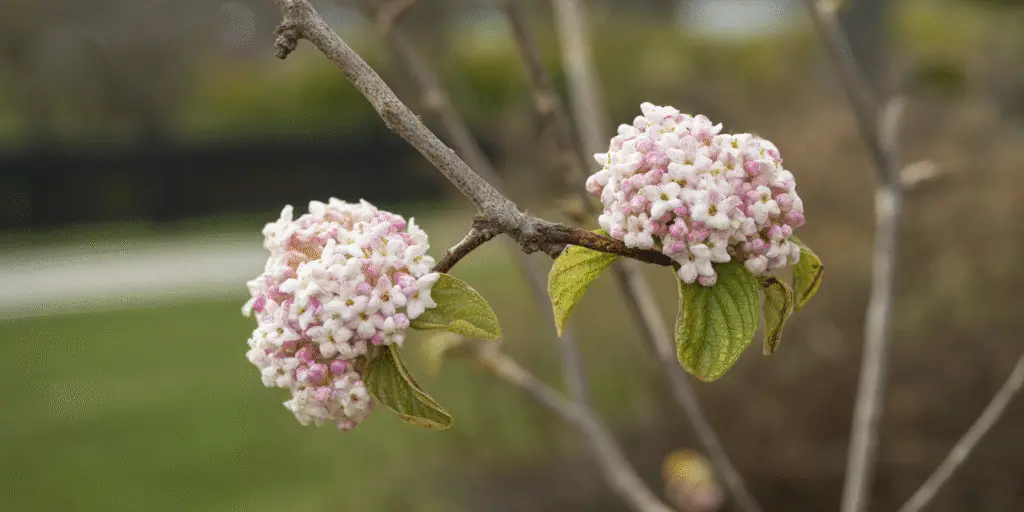
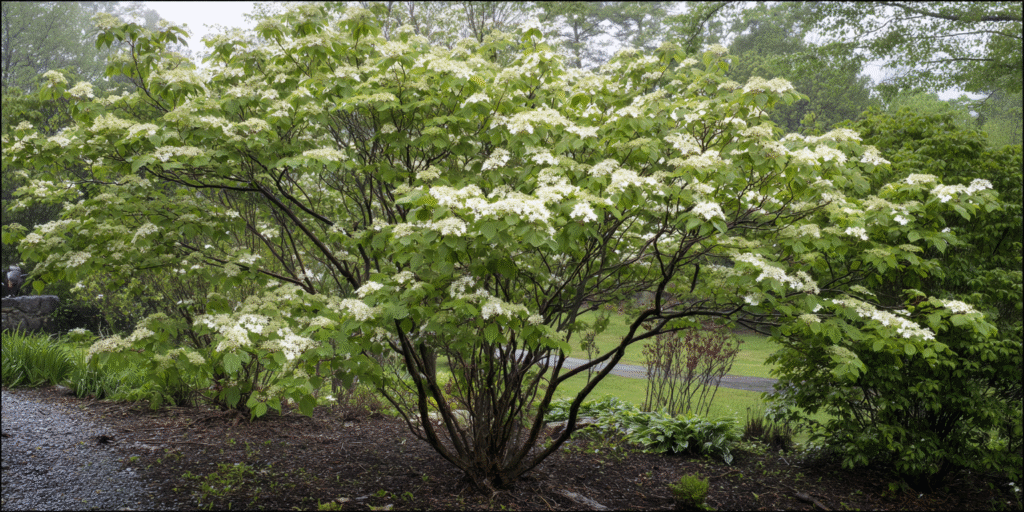
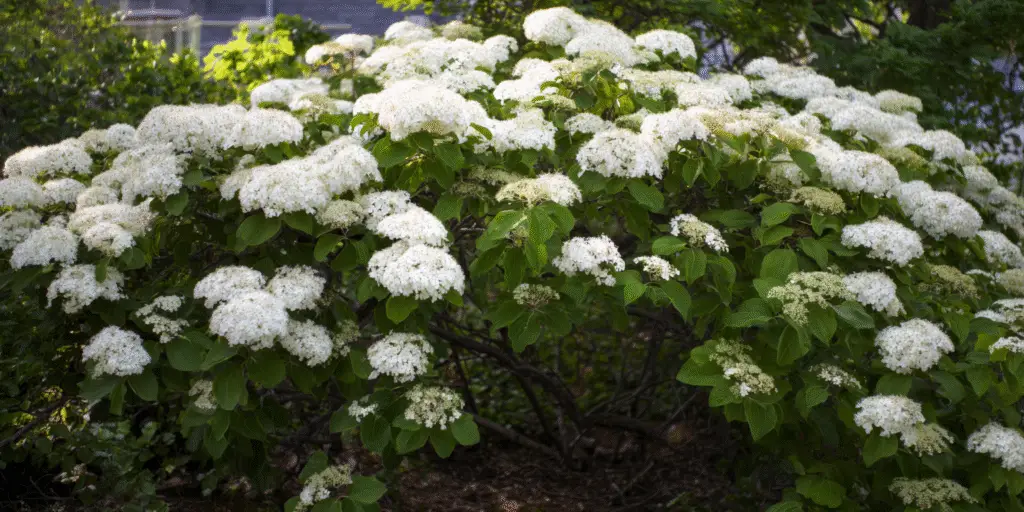
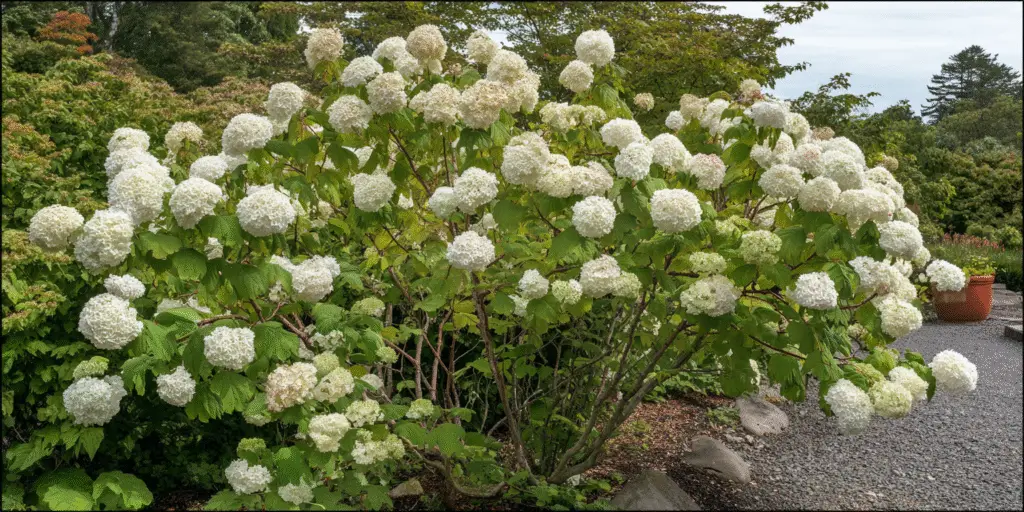
Chinese snowball viburnum is a large shrub known for very large, sterile flower globes. Flower heads open chartreuse and quickly turn white for a dramatic spring show. Plants can reach 12 to 20 ft tall and become architectural in mild regions. Foliage may persist in winter in the warmest zones and the plant tolerates shaping. It thrives in full sun to part shade with moist, well‑drained, slightly acidic soils. In some warm areas it produces a light second flush in fall.
At‑a‑glance
Group/Class: deciduous to semi‑evergreen shrub; Chinese snowball viburnum
Height × spread: 12–20 ft × 10–15 ft (3.7–6.1 m × 3.0–4.6 m)
Bloom window: April to May; occasional fall rebloom in warm zones
Color & flower form: apple‑green to white globes 3–8 in (7.5–20 cm); sterile florets
Fragrance: 0 none
USDA hardiness: zones 6–9
Breeder / Year / Origin: unknown; China
Cut‑flower notes: large heads; woody stems; typical vase life varies by handling
Pet safety: safe
How it differs
Flower heads are larger than those of the European snowball ‘Roseum’.
Plants grow taller than many viburnums on the pillar page.
Flowers are typically sterile and do not fruit.
Semi‑evergreen foliage in the warmest zones extends presence.
Strengths
Spectacular spring display with very large globes.
Heat tolerant within its hardiness range.
Accepts hard pruning and shaping.
Good presence as a specimen or loose screen.
Care in one minute
Plant in full sun to part shade based on heat and bloom goals.
Provide moist, well‑drained, slightly acidic soil; water during dry periods.
Light spring feed if soils are poor; avoid heavy nitrogen.
Prune after bloom to shape; older stems can be thinned to renew.
Mulch 2 to 3 in (5 to 7.5 cm).
Watch‑outs
Not hardy in colder climates north of zone 6.
Heavy heads can weigh on wet wood; prune to a strong framework.
Sterile forms provide no berries for wildlife.
Best uses (tags)
specimen, hedges, cutting, large borders, foundations
Provenance note
Native to China; the species epithet means ‘large head’ and refers to the big inflorescences. Some cultivated forms rebloom lightly in fall in warm areas.
Written by: Your Flowers Guide editorial team We are a small independent group of flower lovers who research and review each guide using trusted horticultural and educational sources. Learn more about us