returns in
212
days
Bloom calendar
Roseum
deciduous shrub; snowball viburnum
At‑a‑glance
- Group/Class: deciduous shrub; snowball viburnum
- Height × spread: 10–12 ft × 12–14 ft (3.0–3.7 m × 3.7–4.3 m)
- Bloom window: May
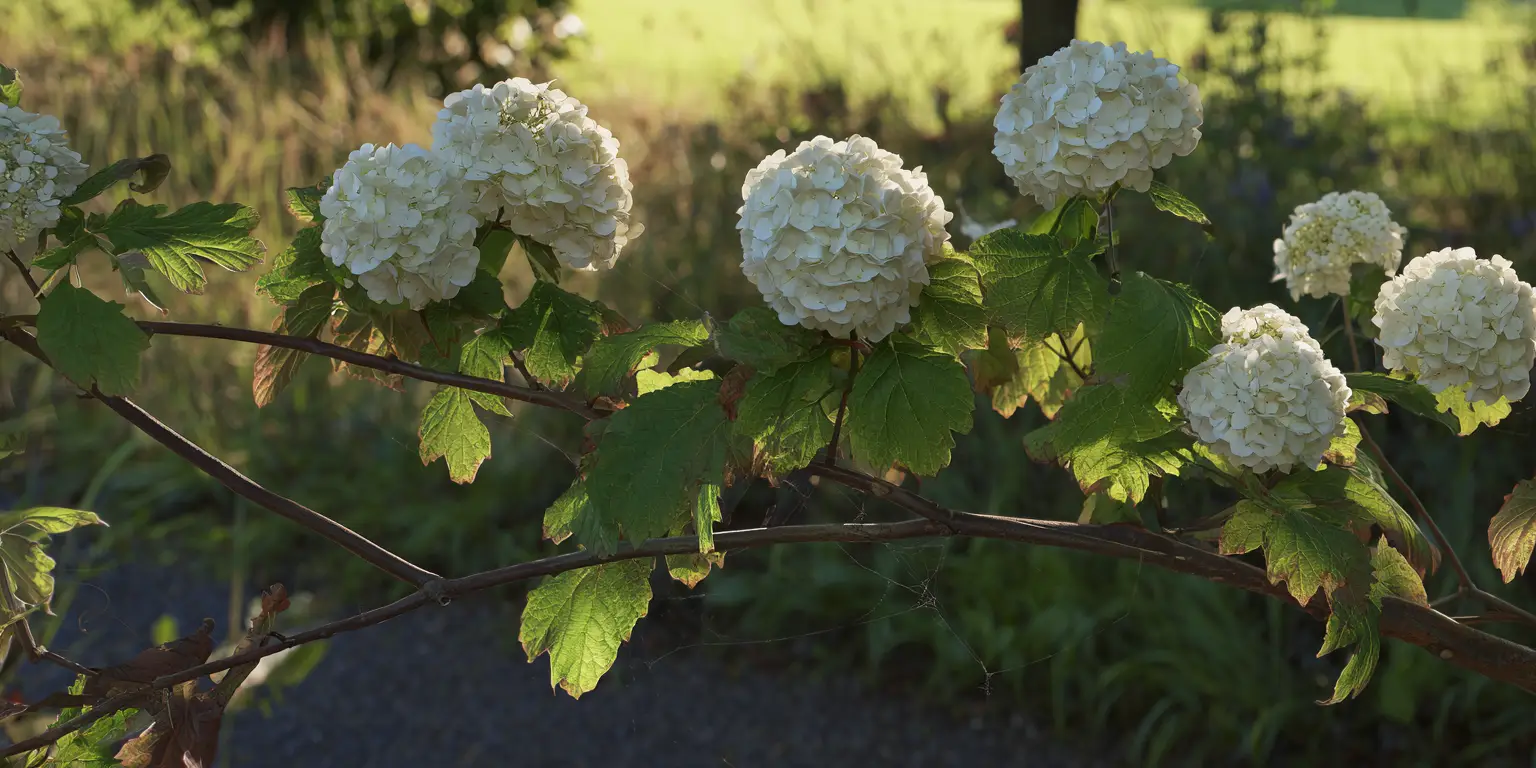
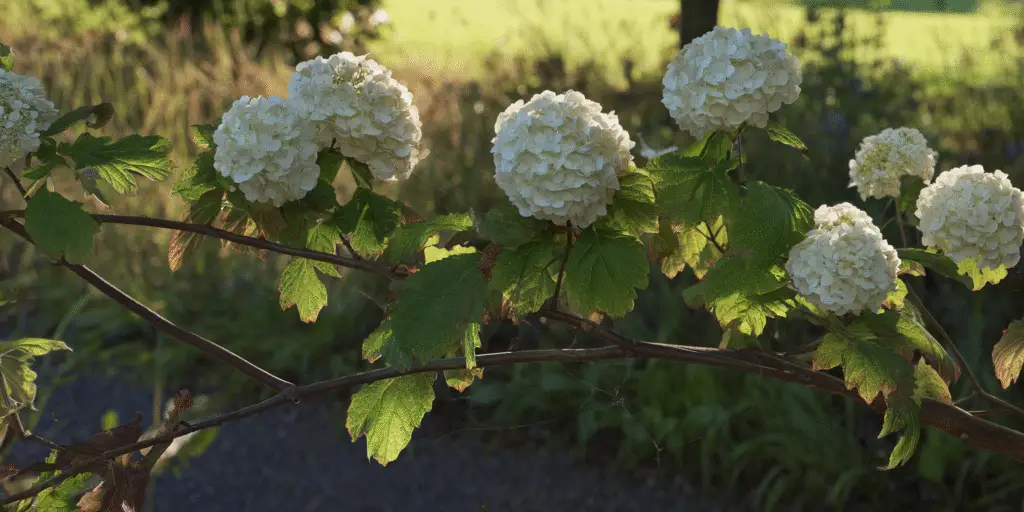
- Color & flower form: 3 in (7.5 cm) globes; white fading to light pink; all sterile florets
- Fragrance: 0 none
- USDA hardiness: zones 3–8
- Breeder / Year / Origin: unknown; Europe
- Awards/registration: RHS Award of Garden Merit
- Cut‑flower notes: woody stems; recut and hydrate; typical vase life varies by handling
- Pet safety: safe
How it differs
- Sterile snowball heads mean no berries or self‑seeding.
- Flower heads are spherical rather than lacecap.
- Displays a stronger spring show than many fruiting viburnums.
- Lacks fragrance.
- Dense rounded habit suits hedging.
Strengths
- Showy spring display.
- Very cold hardy within listed zones.
- Tolerates a range of soils if drainage is good.
- Often shows orange to red fall color.
Care in one minute
Site in full sun to part shade for best bloom.
Plant in average to moist, well‑drained loam; neutral to slightly alkaline soils are acceptable.
Water regularly the first two seasons; then as needed during dry spells.
Feed lightly in early spring only if soil is poor.
Prune immediately after flowering to shape and control size.
Mulch 2 to 3 in (5 to 7.5 cm) to conserve moisture.
Watch‑outs
- Susceptible to viburnum leaf beetle in regions where the pest occurs.
- Aphids and leaf spots may appear after wet springs.
- Needs room to mature to full width.
Best uses (tags)
Provenance note
An old sterile selection of European cranberrybush grown in European gardens since the 16th century.
References
- Missouri Botanical Garden – Viburnum opulus ‘Roseum’ profile
- RHS – Viburnum opulus ‘Roseum’ plant details
- NC State Extension – Viburnum opulus ‘Roseum’
- Cornell – Viburnum leaf beetle host susceptibility list
Similar Flowers
Enjoying our flower guides? Add YourFlowersGuide as a preferred source on Google. It helps more readers find us.
Add to Preferred Sources