
returns in
212
days
Bloom calendar
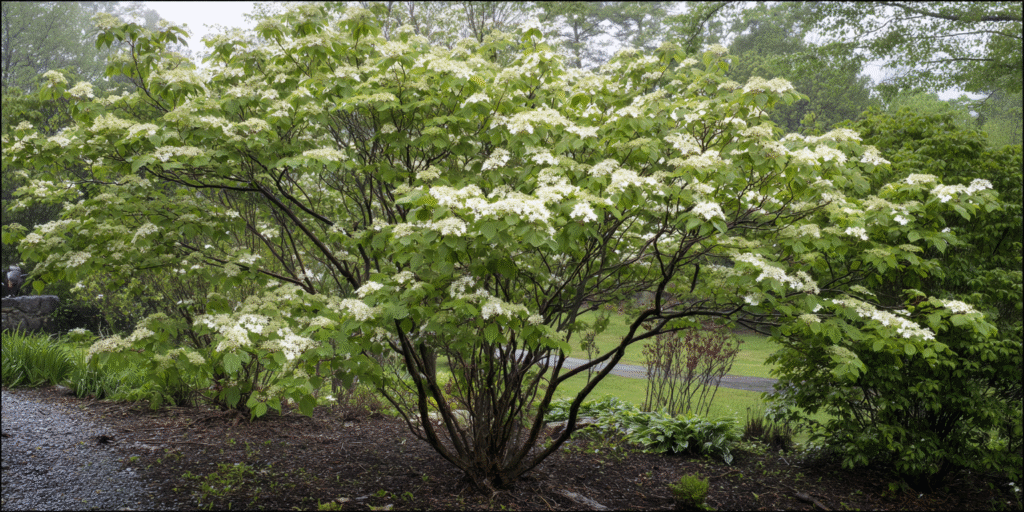
Viburnum dentatum
deciduous shrub; arrowwood viburnum (native)
At‑a‑glance
- Group/Class: deciduous shrub; arrowwood viburnum (native)
- Height × spread: 6–10 ft × 6–10 ft (1.8–3.0 m × 1.8–3.0 m)
- Bloom window: May to June
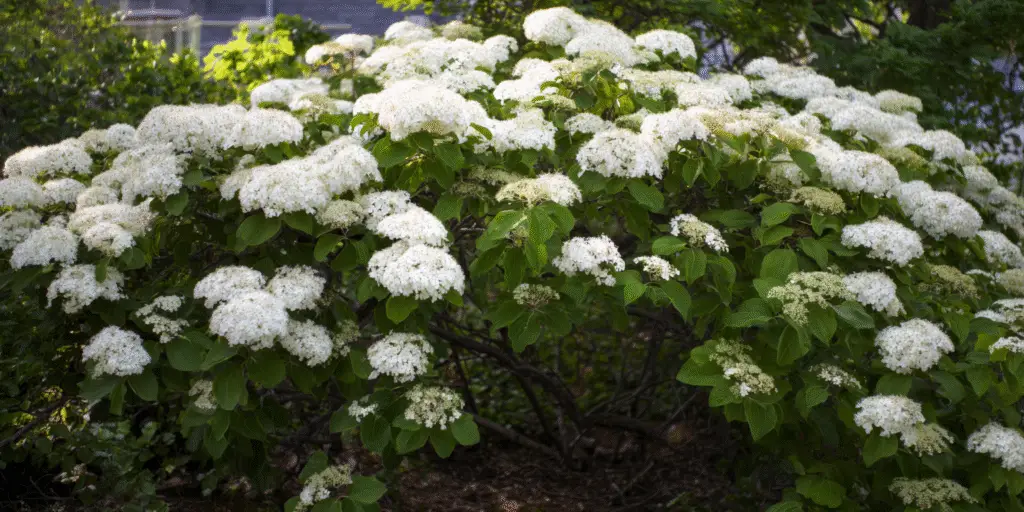
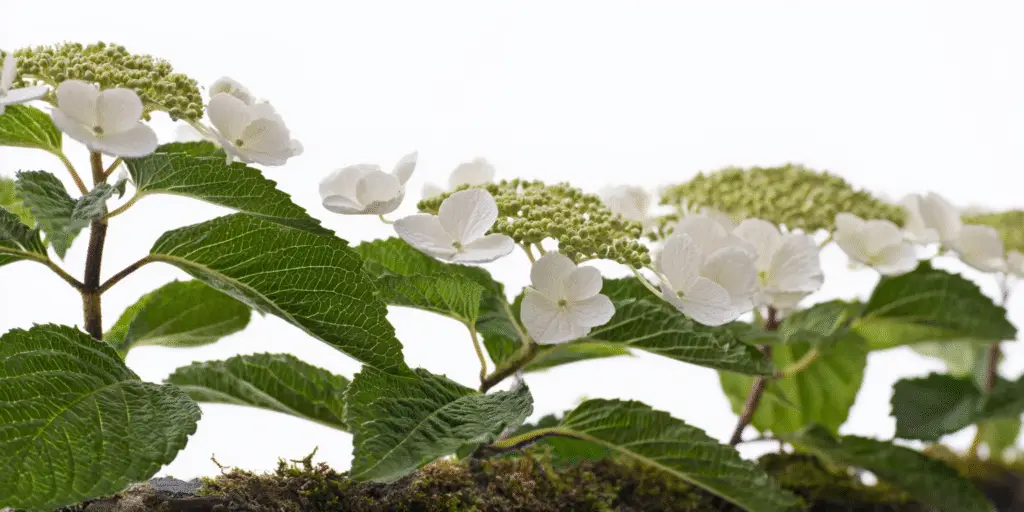
- Color & flower form: white, flat corymbs to 4 in (10 cm); blue‑black fruit
- Fragrance: 0 none
- USDA hardiness: zones 2–8
- Breeder / Year / Origin: unknown; native to eastern North America
- Pet safety: safe
How it differs
- Native origin and high wildlife value set it apart from many ornamental viburnums.
- Later bloom time extends the viburnum season.
- Tough, soil‑adaptable roots suit streets and screens.
- Suckering habit can fill space quickly.
Strengths
- Extremely cold hardy and durable.
- Tolerates clay soils and occasional wetness.
- Blue‑black drupes feed birds.
- Handles sites with black walnut nearby.
Care in one minute
Plant in full sun to part shade based on screening needs.
Soil can be clay, loam, or sandy if drainage is acceptable.
Water to establish in year one; thereafter water during drought.
Prune right after bloom; remove oldest stems at ground to manage suckering.
Mulch 2 to 3 in (5 to 7.5 cm) to suppress weeds.
Watch‑outs
- Highly susceptible to viburnum leaf beetle in areas where the pest is established.
- Unmanaged suckers can spread beyond intended bounds.
- Fall color is variable.
Best uses (tags)
Provenance note
The common name arrowwood refers to the straight stems reportedly used by Native Americans for arrows. The species name means toothed and describes the leaf margins.
References
- Missouri Botanical Garden – Viburnum dentatum
- Oregon State – Landscape Plants: Viburnum dentatum
Similar Flowers
Enjoying our flower guides? Add YourFlowersGuide as a preferred source on Google. It helps more readers find us.
Add to Preferred Sources