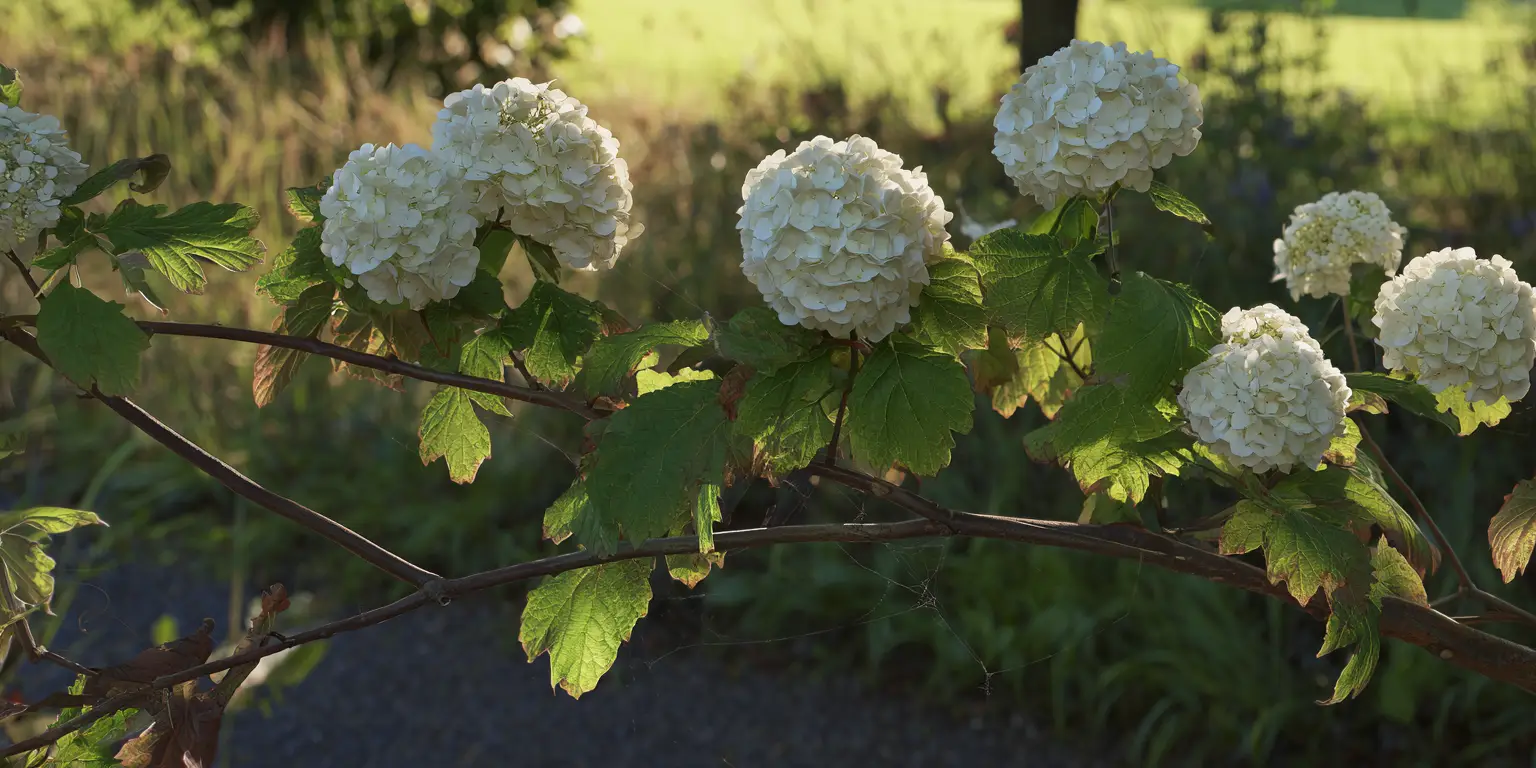
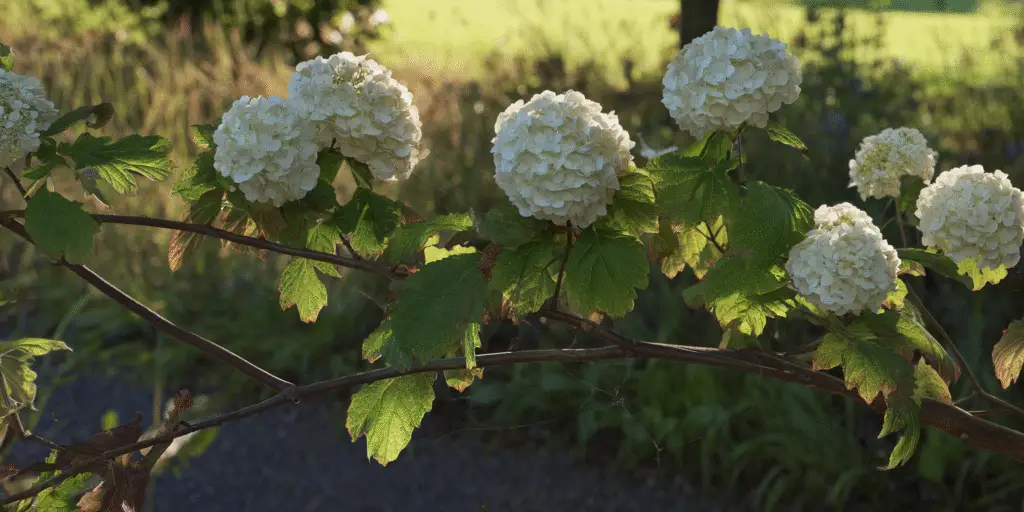
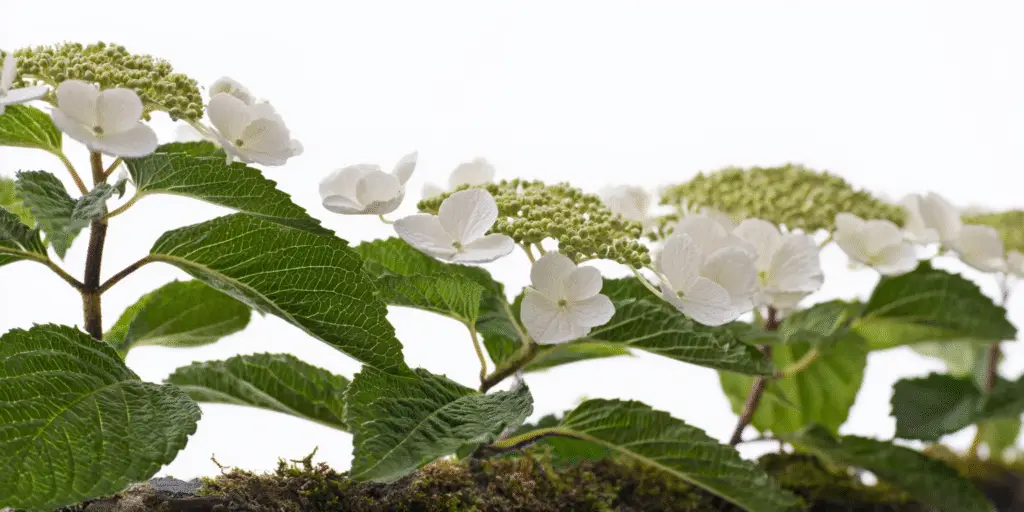
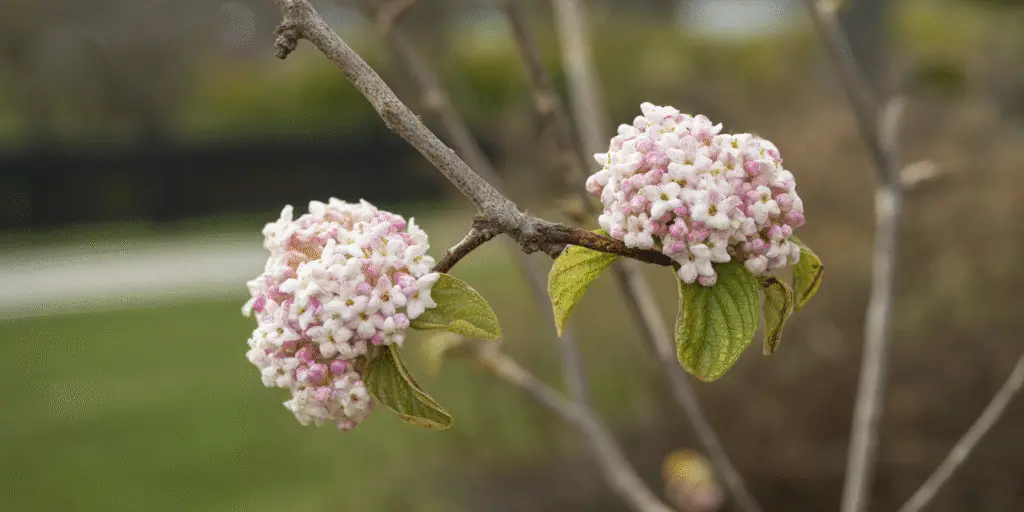
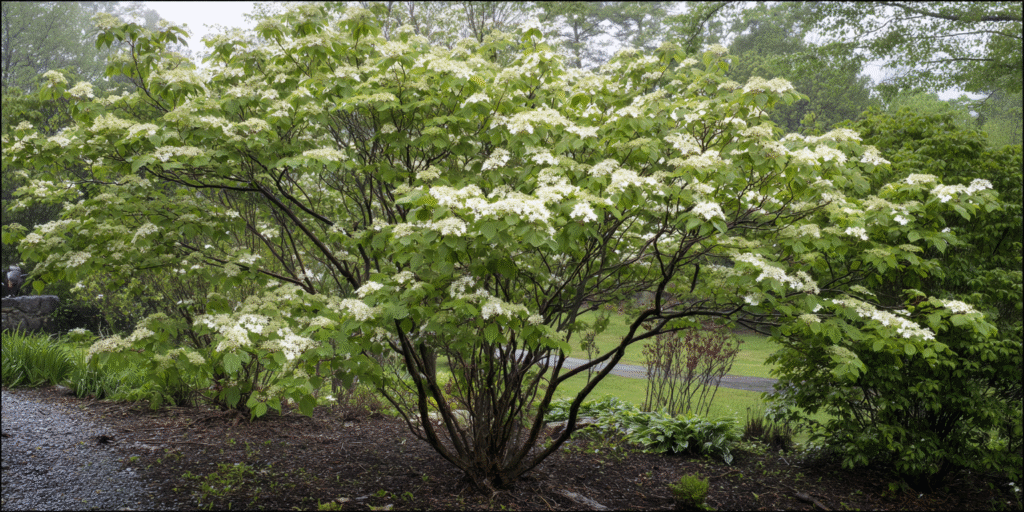
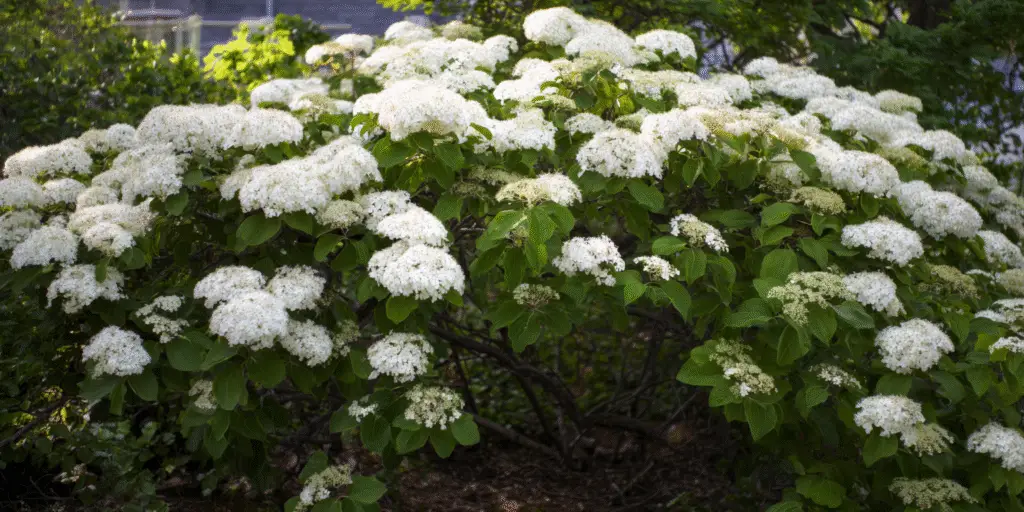
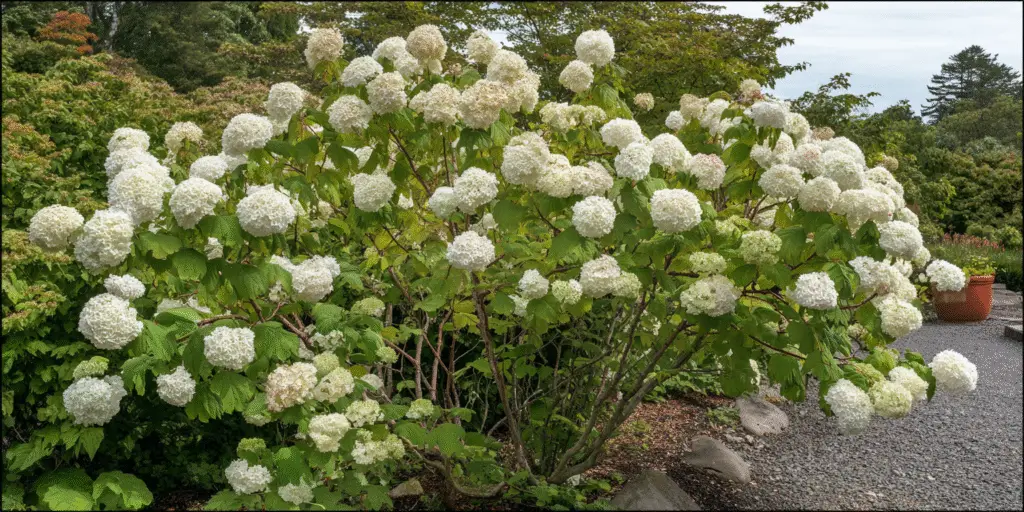
This is the classic European snowball viburnum cultivar grown for large, sterile flower clusters. The heads open green, turn white, and often blush pink as they age. Plants form a dense, rounded deciduous shrub that suits hedges and specimens. It performs best in full sun to part shade with evenly moist, well‑drained soil. It is cold hardy across much of North America. This selection does not fruit, so it is tidy around walks and patios.
At‑a‑glance
Group/Class: deciduous shrub; snowball viburnum
Height × spread: 10–12 ft × 12–14 ft (3.0–3.7 m × 3.7–4.3 m)
Bloom window: May
Color & flower form: 3 in (7.5 cm) globes; white fading to light pink; all sterile florets
Fragrance: 0 none
USDA hardiness: zones 3–8
Breeder / Year / Origin: unknown; Europe
Awards/registration: RHS Award of Garden Merit
Cut‑flower notes: woody stems; recut and hydrate; typical vase life varies by handling
Pet safety: safe
How it differs
Sterile snowball heads mean no berries or self‑seeding.
Flower heads are spherical rather than lacecap.
Displays a stronger spring show than many fruiting viburnums.
Lacks fragrance.
Dense rounded habit suits hedging.
Strengths
Showy spring display.
Very cold hardy within listed zones.
Tolerates a range of soils if drainage is good.
Often shows orange to red fall color.
Care in one minute
Site in full sun to part shade for best bloom.
Plant in average to moist, well‑drained loam; neutral to slightly alkaline soils are acceptable.
Water regularly the first two seasons; then as needed during dry spells.
Feed lightly in early spring only if soil is poor.
Prune immediately after flowering to shape and control size.
Mulch 2 to 3 in (5 to 7.5 cm) to conserve moisture.
Watch‑outs
Susceptible to viburnum leaf beetle in regions where the pest occurs.
Aphids and leaf spots may appear after wet springs.
Needs room to mature to full width.
Best uses (tags)
cutting, borders, hedges, specimen
Provenance note
An old sterile selection of European cranberrybush grown in European gardens since the 16th century.
Written by: Your Flowers Guide editorial team We are a small independent group of flower lovers who research and review each guide using trusted horticultural and educational sources. Learn more about us