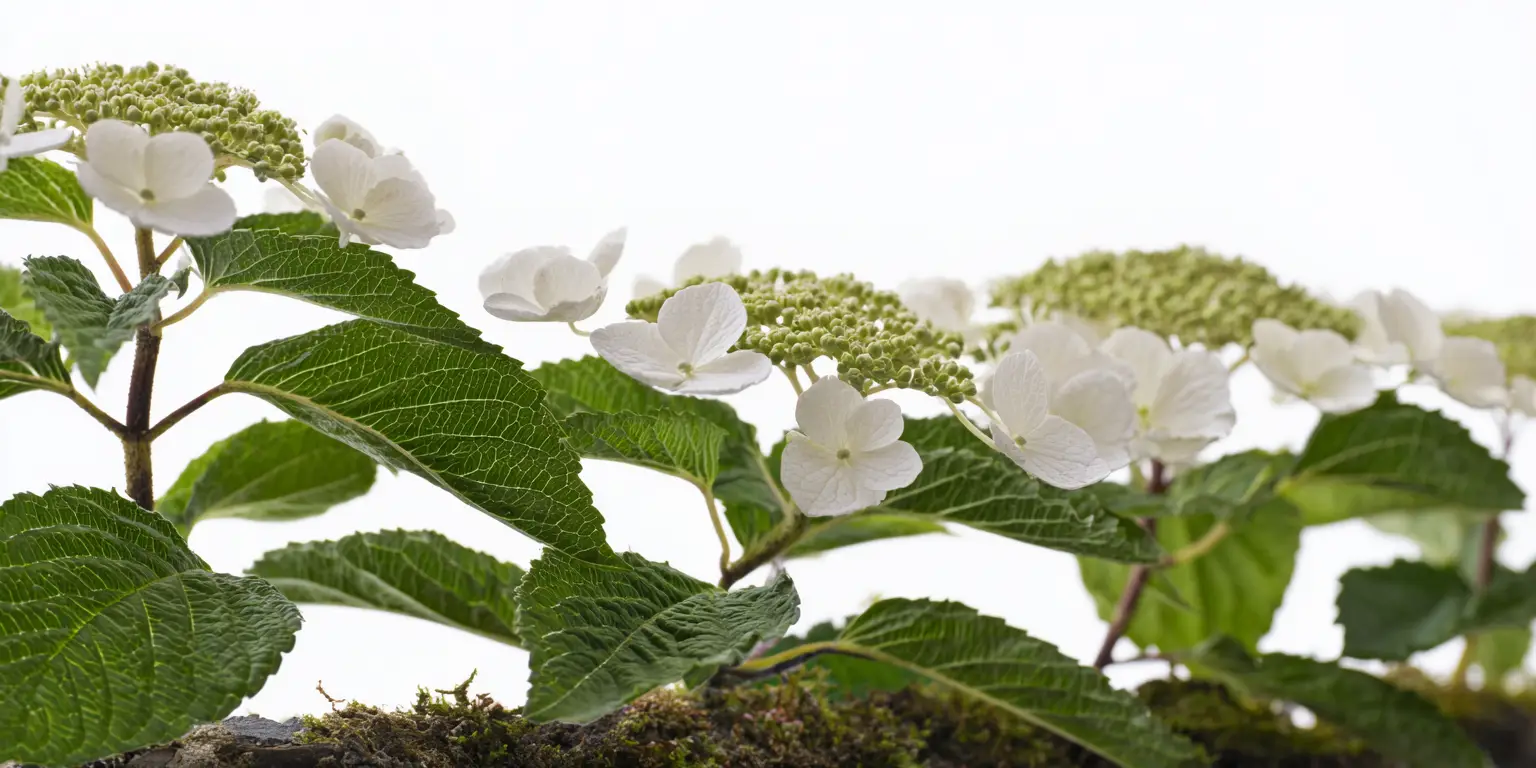
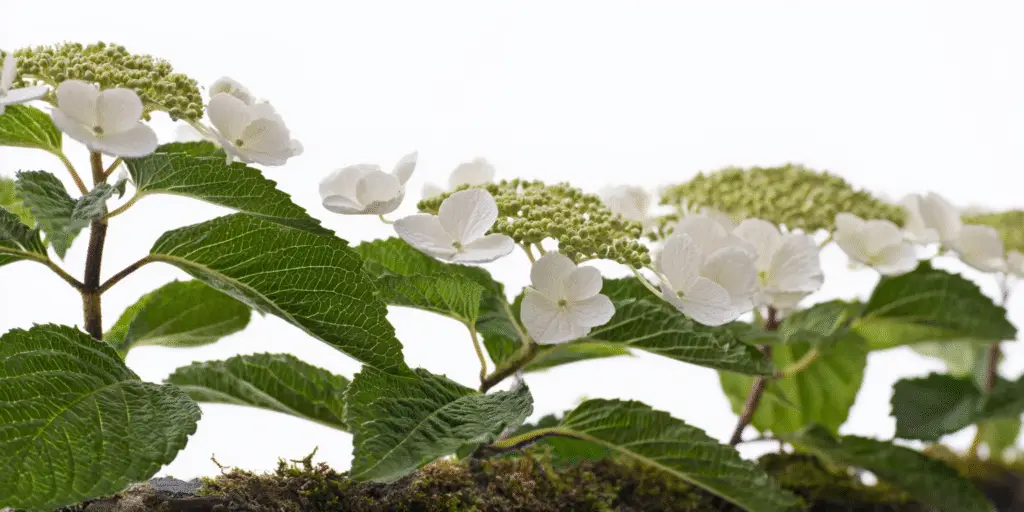
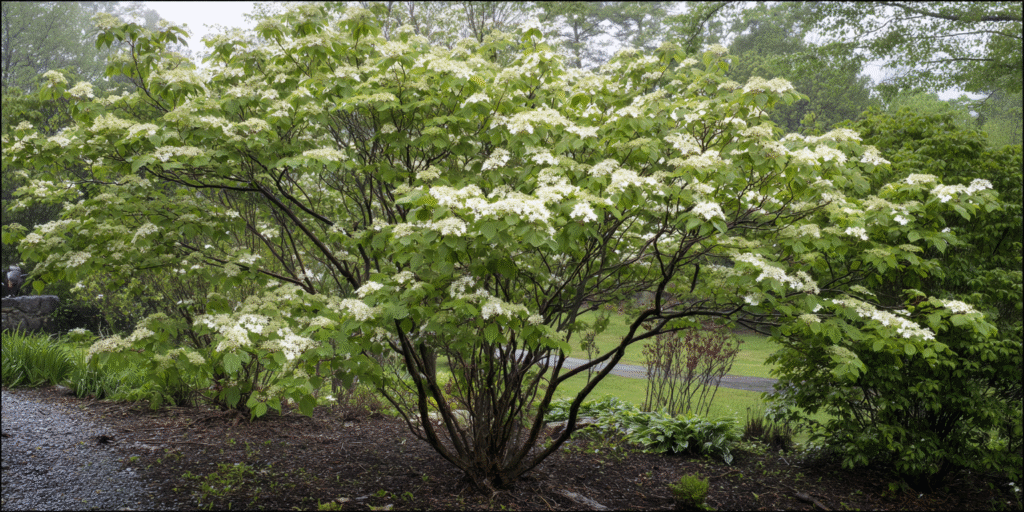
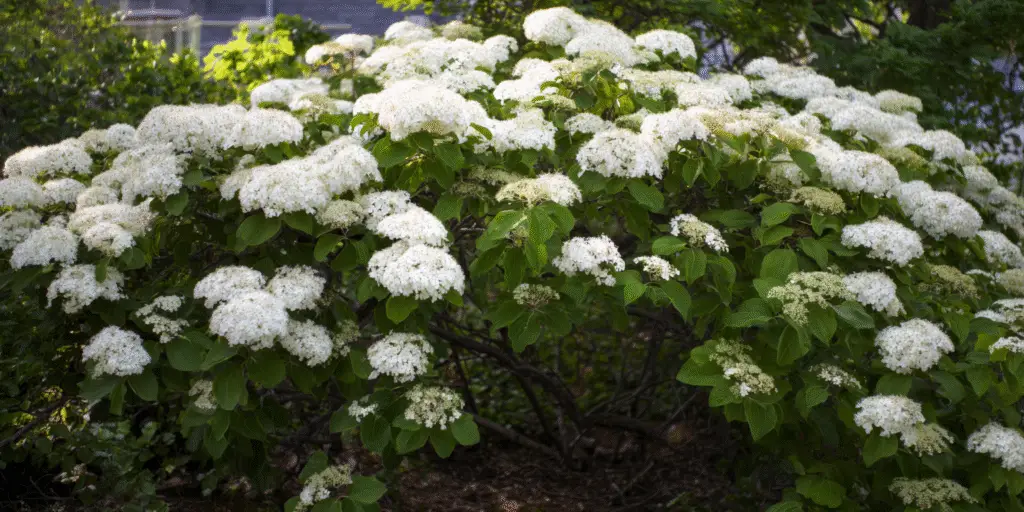
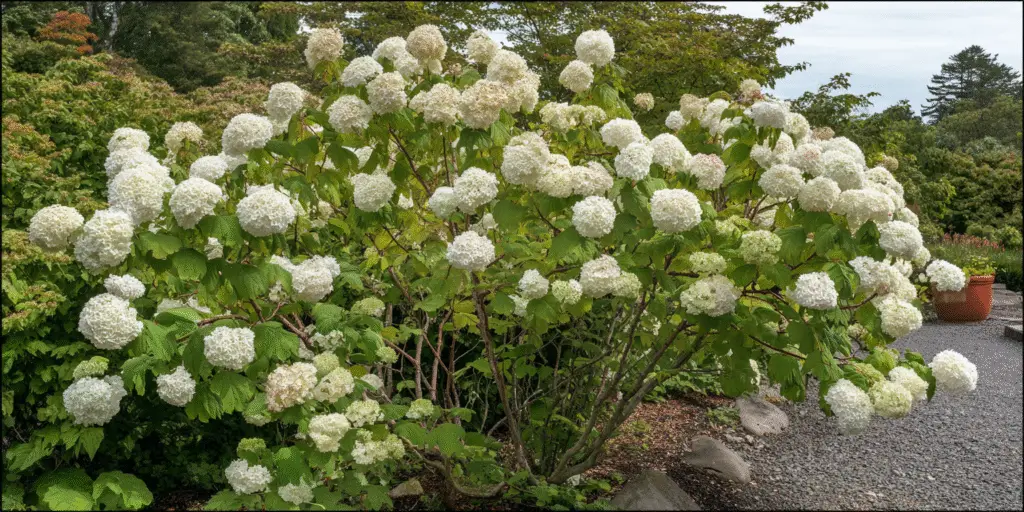
This is a doublefile viburnum with distinct horizontal tiers of branching. White lacecap clusters line the branches in mid to late spring. The display reads as layered rows of bloom from trunk to tip. Plants develop red fruit that mature to black where pollination occurs. Foliage often turns burgundy to purple in fall. It grows well in full sun to part shade in evenly moist, well‑drained soil in zones 5 to 8.
At‑a‑glance
Group/Class: deciduous shrub; doublefile viburnum
Height × spread: 10–12 ft × 12–15 ft (3.0–3.7 m × 3.7–4.6 m)
Bloom window: April to May
Color & flower form: flat lacecap clusters 4–6 in (10–15 cm) across; outer sterile rim with fertile centers
Fragrance: 0 none
USDA hardiness: zones 5–8
Breeder / Year / Origin: unknown
Pet safety: safe
How it differs
Branches form layered tiers that read as ‘double files’ of flowers.
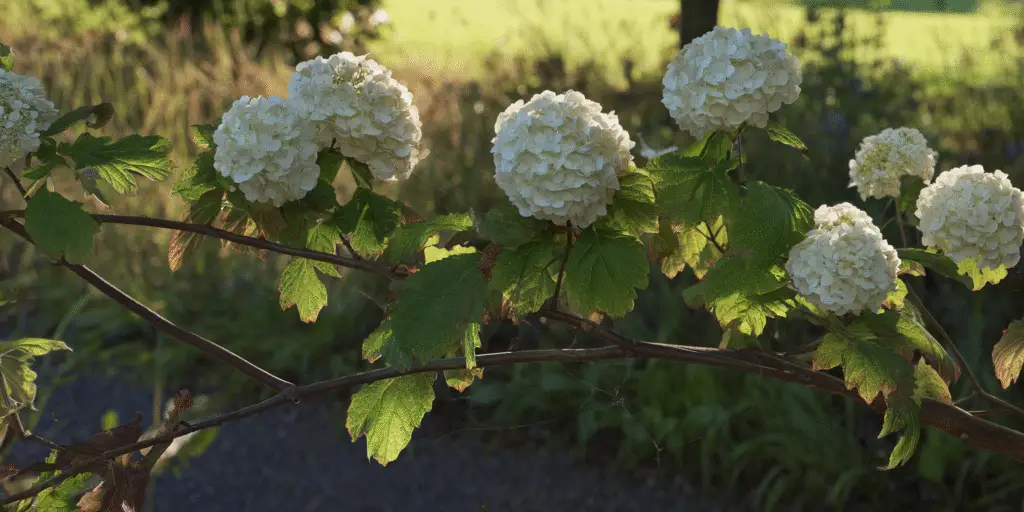
Lacecap structure provides pollen and fruit, unlike sterile snowball forms.
Habit is wider than tall at maturity.
Fall color is typically burgundy to reddish purple.
Blooms earlier than snowball‑type doublefile forms.
Strengths
Signature tiered silhouette for structure in borders.
Heavy spring bloom along the full branch length.
Fruit supports birds where cross‑pollination occurs.
Tolerates brief dry periods once established.
Reliable fall color.
Care in one minute
Site in full sun to part shade for the strongest flowering layers.
Plant in moist, well‑drained loam; keep soil evenly moist in the first two years.
Avoid heavy nitrogen that forces lanky growth.
Prune just after bloom; remove one or two oldest stems at the base to preserve the tiered shape.
Mulch root zone 2 to 3 in (5 to 7.5 cm).
Watch‑outs
Squirrels may eat overwintering flower buds and reduce bloom.
May be attacked by viburnum leaf beetle in affected regions.
Spreading habit needs space to develop.
Best uses (tags)
specimen, borders, hedges, pollinators, wildlife
Provenance note
The name honors British plantsman Charles Maries, a late 19th‑century collector.
Written by: Your Flowers Guide editorial team We are a small independent group of flower lovers who research and review each guide using trusted horticultural and educational sources. Learn more about us