Contents
Virginia Bluebells
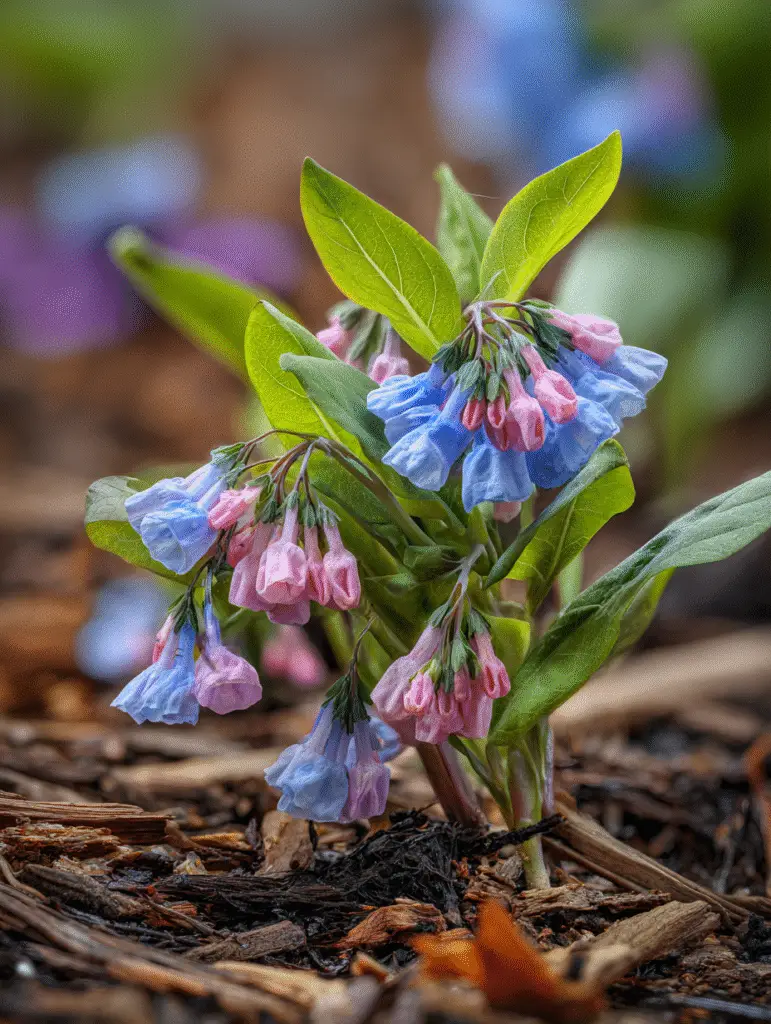
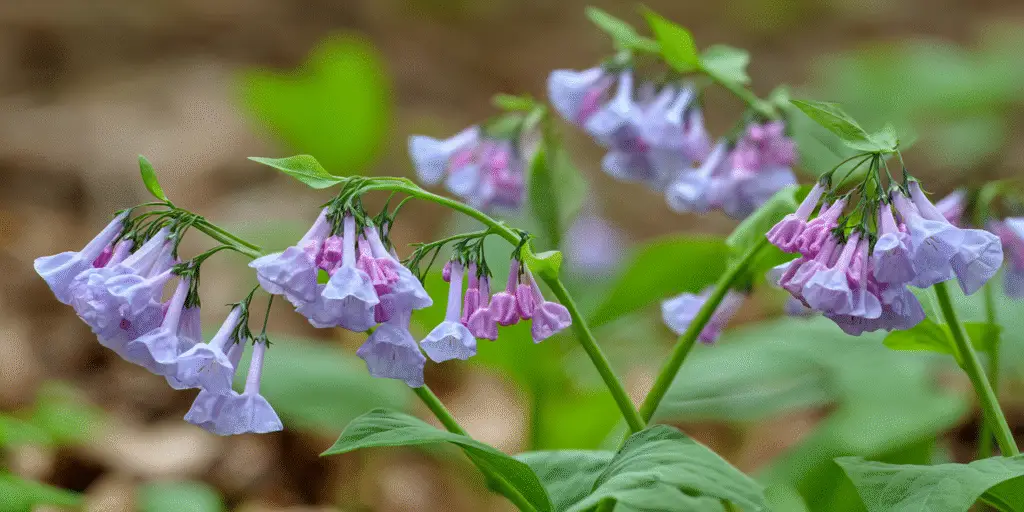
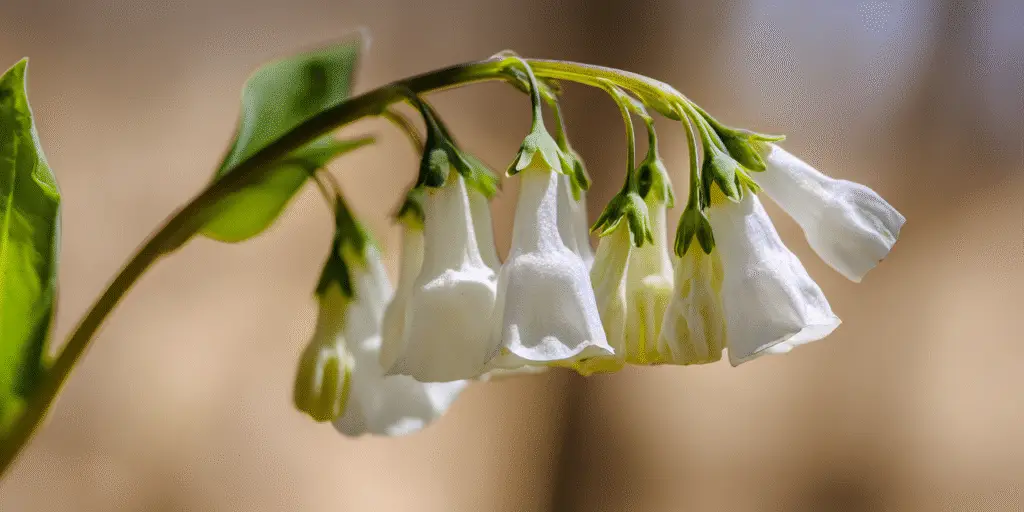
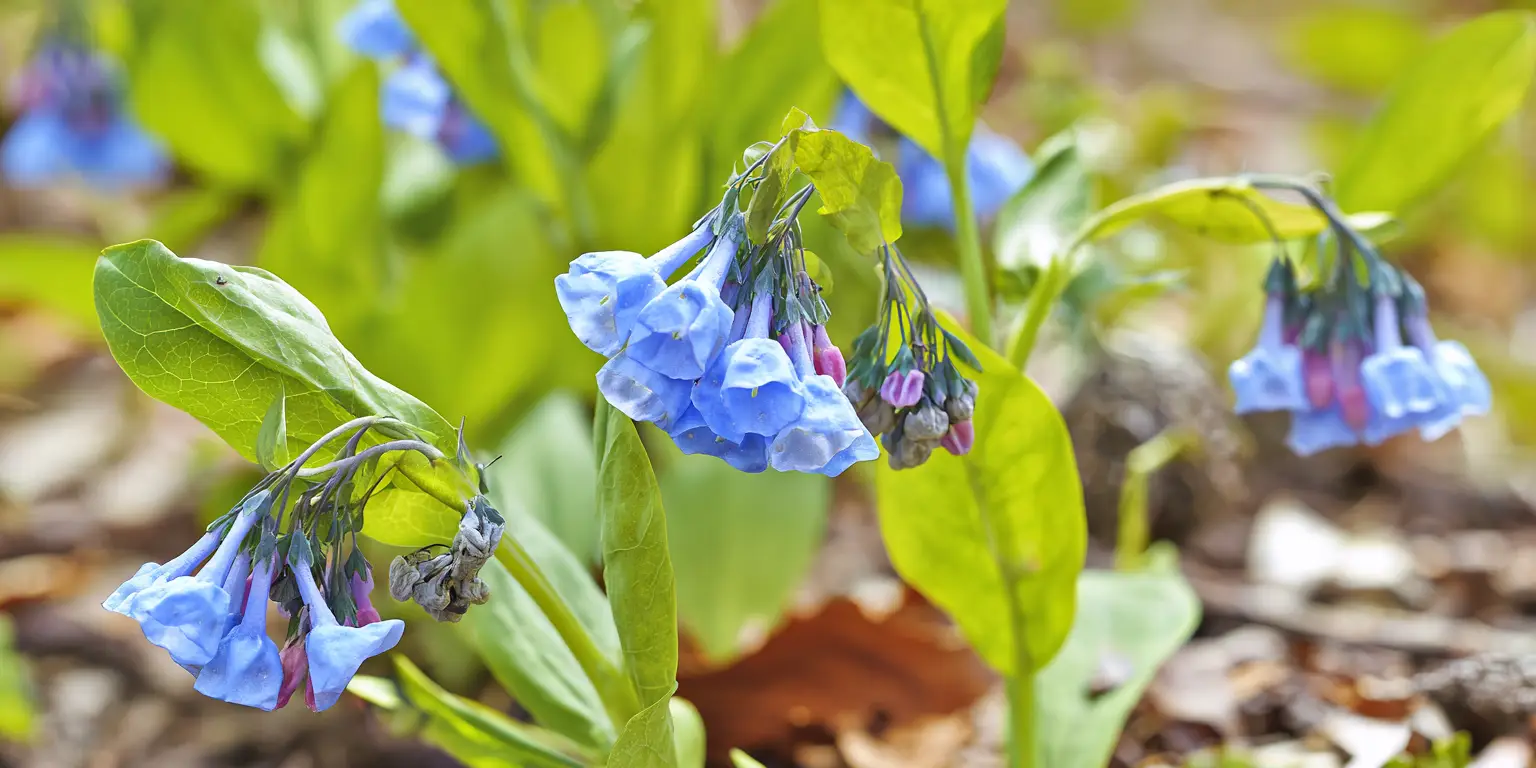
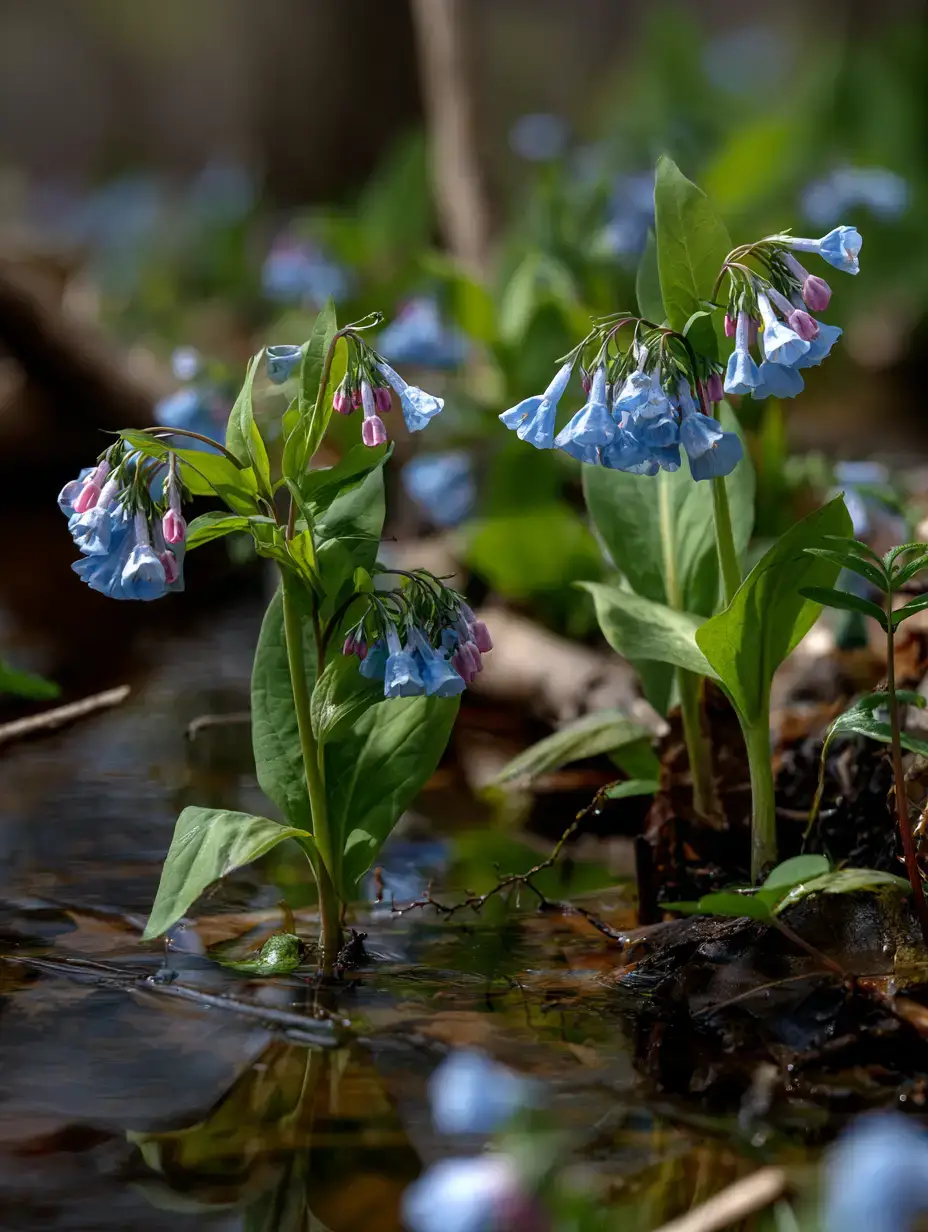
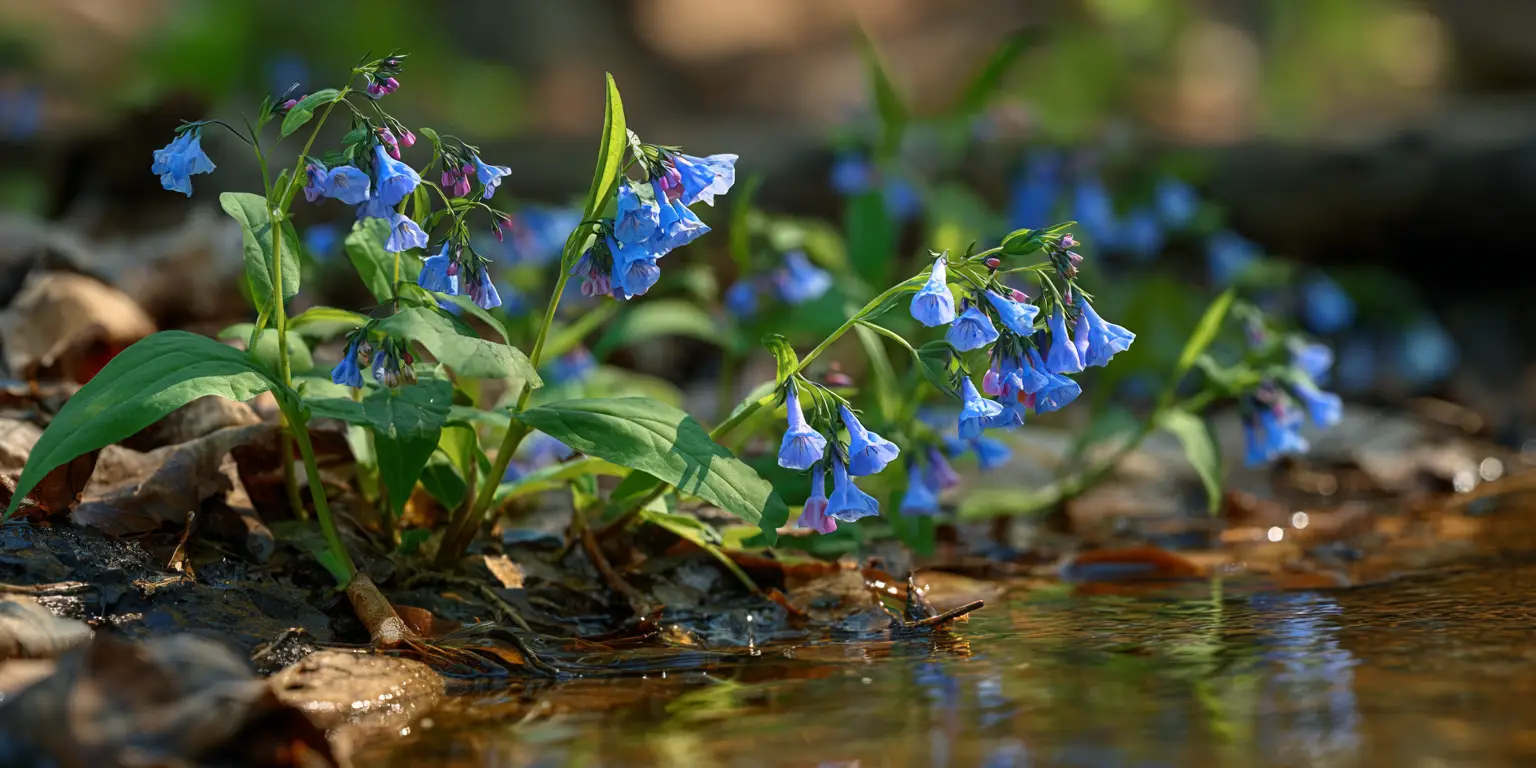
Virginia Bluebells are beloved spring bloomers native to the woodlands of eastern North America. They emerge in early spring with nodding clusters of pink buds that open into true blue flowers, creating a carpet of delicate color before the forest canopy leafs out. Each bloom is a tubular, bell-shaped flower about one inch long, dangling in graceful clusters. The plants have smooth gray-green leaves and a clumping habit that lends itself to naturalistic plantings. As ephemeral woodland garden plants, Virginia Bluebells grow quickly during the cool, moist spring, then go dormant by early summer. This fleeting life cycle allows them to coexist with later-emerging perennials. Gardeners prize Mertensia virginica for its low-maintenance nature and its adaptability in shade gardens and native plant landscapes. It brings a touch of wildflower charm to shade borders, cottage gardens, and naturalized areas, especially when massed in drifts. When provided with rich soil and adequate moisture, these shade perennials practically take care of themselves, reappearing each year to announce the arrival of spring. Their gentle beauty, combined with a lack of serious pests or diseases, makes Virginia Bluebells a cherished addition to any garden looking for early-season interest and ecological value.
A clear, step-by-step guide to soil, planting, watering, feeding, pruning, and winter care. Includes zone timing, container tips, companions, and quick fixes for common problems.

Bouquet Ideas
Explore simple, beautiful bouquet ideas for the home, gifts, and special occasions from romantic mixes to clean, minimal styles. Each idea includes suggested flower combinations, color palettes, and sizes, with photos for quick inspiration.
🌱 Taxonomy and origin
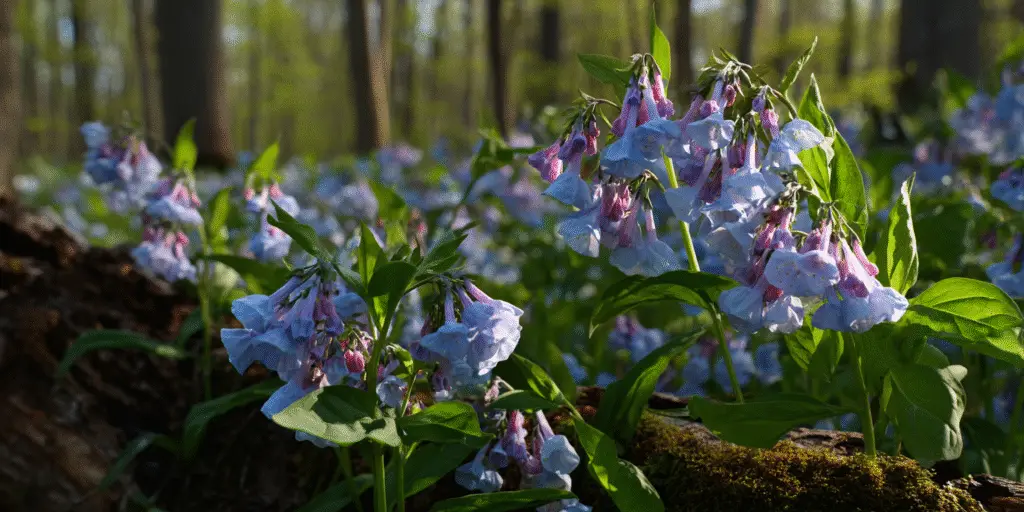
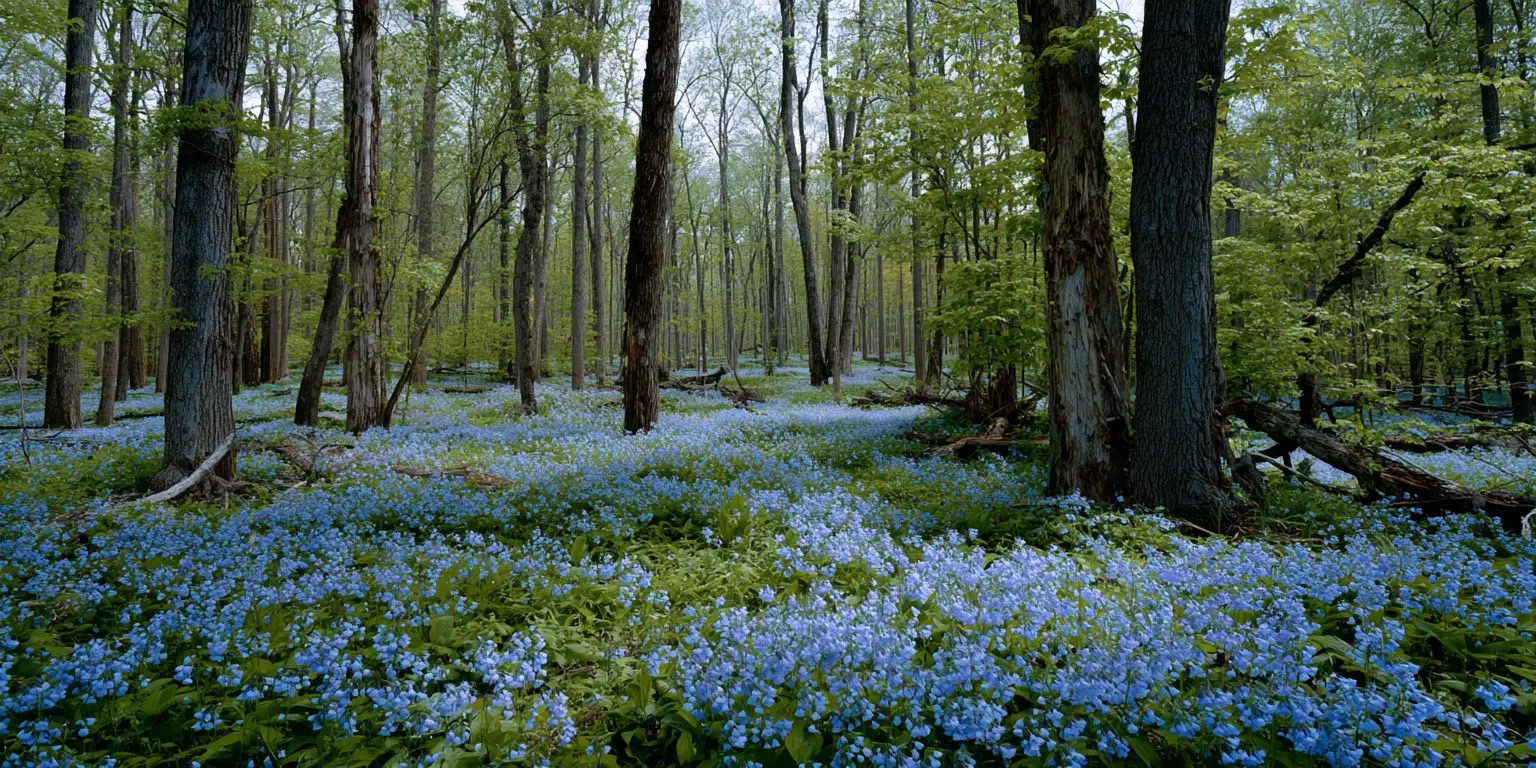
Botanically, Virginia Bluebells are classified as Mertensia virginica, a member of the borage family (Boraginaceae). This places them in the same family as forget-me-nots, lungwort (Pulmonaria), and comfrey, which likewise often feature pink-to-blue flowers and prefer woodland conditions. The genus Mertensia was named in honor of the German botanist Franz Karl Mertens, reflecting the plant’s documented history in botanical literature. Native wildflowers by nature, Virginia Bluebells originate from the rich deciduous forests and floodplain woodlands of North America. Their natural range extends from the Midwest (as far west as Minnesota and Kansas) through the Mid-Atlantic and into the Northeast United States, with concentrations in states like Virginia (for which they are named), Kentucky, Ohio, and Pennsylvania. They thrive in low-lying, moist woodlands and along streams and rivers where spring flooding enriches the soil. In these habitats, they form colonies on forest floors, taking advantage of the abundant spring sunlight before the overhead tree canopy fully develops. The species also goes by common names such as Virginia cowslip and lungwort oysterleaf, the latter hinting at historical medicinal associations (though the plant is not a true cowslip or lungwort). Introduced to horticulture in the 1700s and 1800s, Virginia Bluebells quickly became popular in shade gardens for their unique color and ephemeral grace. Today they remain emblematic woodland garden plants for spring, often featured in wildflower reserves and native plant gardens. Gardeners value them not only for their beauty but also for the connection they provide to Eastern North America’s springtime woodlands.
🌸 Bloom time
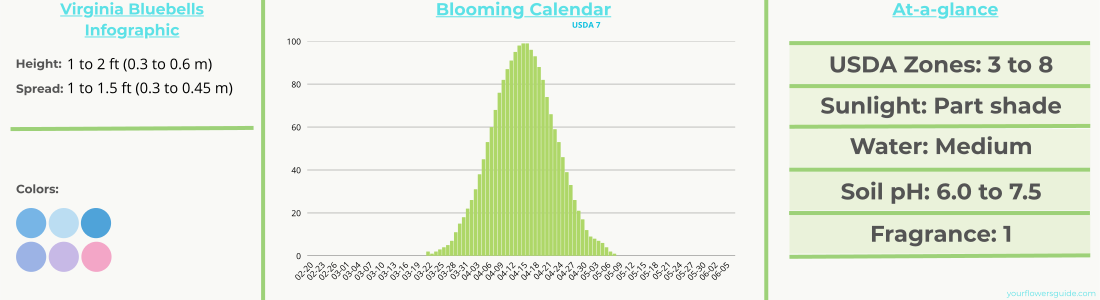
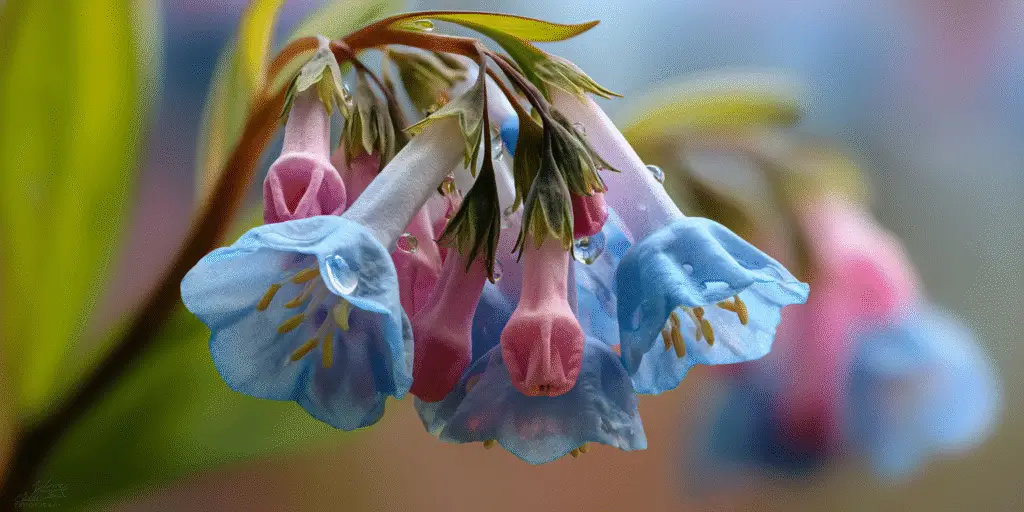
Virginia Bluebells bloom in early to mid-spring, putting on their show typically from March to May, depending on the local climate. In warmer regions (zones 7 to 8), flower buds may start peeking up as early as late March, whereas in cooler northern zones they often bloom in April and into May. The bloom period lasts for several weeks on each plant. The timing is synchronized with the spring season’s transient conditions: cool temperatures and ample soil moisture. The flowers begin as tight pinkish-lavender buds that gradually swell and change hue as they mature. By the time they open fully, the blossoms turn a clear sky blue, giving the plant its common name. In some cases, a hint of soft pink may remain on newly opened blooms alongside the blue, creating a two-tone effect on the same cluster. This color change is a trait shared with many borage family members and is due to shifts in pigment chemistry as the flowers age. The overall display is often at its peak for about 10 to 14 days when the plants are in full bloom. Cooler weather can prolong the flowering period, while an early heat wave might shorten it. During bloom time, Virginia Bluebells are a focal point of the spring garden, attracting the first pollinators of the year with their gentle fragrance and vivid color. By late spring (around May or early June), the flowering concludes. Seed capsules then develop where the blooms were, and the plant begins to prepare for dormancy. This early blooming habit makes Virginia Bluebells excellent spring bloomers to interplant with later-emerging species, ensuring continuous visual interest in a shaded garden from spring to summer.
📏 Height and spread
At maturity, a Virginia Bluebell plant forms a tidy clump roughly 12 to 24 inches tall (about 30 to 60 cm) when in bloom. The height can vary with growing conditions: richer soil and adequate moisture often encourage taller, more vigorous growth up to the 2-foot mark, whereas drier or poorer sites might result in shorter plants closer to one foot tall. The height and spread are moderate, making it an unobtrusive neighbor in mixed plantings. Each plant tends to spread about 12 to 18 inches (30 to 45 cm) wide. The growth habit is upright at first, with stout, succulent stems rising from the crown. As the stems lengthen, they may arch outward under the weight of the flower clusters, giving an elegant, cascading effect especially when in full bloom. The leaves are oval to oblong, smooth-edged, and can reach 3 to 8 inches long (7 to 20 cm), emerging with a soft purple tint that turns deep green. These leaves are arranged alternately on the stems and form a lush, almost tropical-looking foliage mound in spring. Over time, a well-sited Virginia Bluebell can slowly increase its footprint. While the plant itself does not aggressively send out runners, it can expand by producing new offsets around the original crown and by self-seeding. In optimal conditions, a small group of plants will naturalize into a wider colony as seedlings sprout and mature over successive seasons. However, this spread is usually gradual and well-behaved, not invasive or rampant. In a garden setting, you can expect a clump to become fuller each year, possibly doubling in width over several years if left undisturbed. The relatively compact spread means Virginia Bluebells fit nicely beneath deciduous trees, between larger shrubs, or among other perennials without overcrowding their neighbors. This makes them easy to site in both large woodland plantings and smaller shaded borders where a gentle pop of spring color is desired.
☀️ Light
In terms of light requirements, Virginia Bluebells perform best in partial to full shade, mimicking the dappled sunlight of their native woodland habitat. Light that is filtered through tree canopies or only present for part of the day suits them perfectly. In early spring, before deciduous trees fully leaf out, Virginia Bluebells can tolerate more sun because the sunlight is still relatively weak and air temperatures are cool. Many gardeners successfully grow them under high deciduous canopies where the plants receive bright morning sun or indirect light in spring, followed by deep shade in summer once the trees are in full leaf. Full sun exposure is acceptable in spring if soil moisture is ample, but open exposure becomes less ideal as the seasons progress. In a completely treeless location, Virginia Bluebells will flower and grow in spring sun, however, if the same area becomes hot and sunny in summer, the dormant roots may experience stress. Thus, if planting in a sunnier spot, ensure it is a place that stays cool and moist, or combine them with taller perennials that provide shade by early summer. Conversely, very dense full shade (such as on the north side of a building or under evergreen trees) may reduce flowering, as the plants do benefit from some light during their growing period. A good rule is to provide at least a few hours of gentle morning or late afternoon sun, or bright filtered light all day, during spring. This balances the plants’ need for energy production with their preference for cool conditions. Under ideal partial shade, Virginia Bluebells will reward you with robust growth and bountiful blooms. They are quintessential shade perennials, thriving in conditions where many sun-loving flowers would falter. Planting them in the company of other shade-tolerant, spring-emerging plants can create a beautiful woodland tableau. Remember that while light conditions are important, they go hand-in-hand with moisture: in higher light exposures, keep the soil consistently damp (but not waterlogged) to prevent the delicate foliage from wilting during the active growing season.
💧 Water
Virginia Bluebells prefer evenly moist soil and will benefit from consistent watering during their active growing and blooming period in spring. In their native habitats, they often grow in floodplain woods and bottomlands that stay damp from winter snowmelt and spring rain. Water availability is thus a key factor for lush growth and abundant flowering. Provide these plants with moderate, regular moisture so that the soil never dries out completely while they are in leaf and flower. In practical terms, this means watering deeply once or twice a week if rainfall is insufficient, especially during any warm or windy spring spells that can dry the soil. The soil should be kept moist like a wrung-out sponge – consistently damp but not standing in water. Good drainage is also important: while Virginia Bluebells can handle brief periods of soil saturation (they tolerate seasonal flooding in the wild), they do not thrive in permanently waterlogged or swampy conditions where the roots could rot. Striking a balance between moisture and drainage is easiest in loamy, humus-rich soils. Mulching around the plants with leaf mold or compost can help retain soil moisture and keep the ground cool, replicating the natural leaf litter of woodlands. Once the plants go dormant in early summer, their water needs drop significantly. After flowering and seed set, the foliage will yellow and the plant essentially “disappears” until the next spring. During this dormant phase, it’s generally fine for the soil to dry out more between infrequent waterings, and in fact overly wet summer soil can be detrimental since the roots aren’t actively growing. However, do ensure that the area does not become bone dry or experience drought conditions that could desiccate the resting root system. If your region has very hot, dry summers, occasional watering of the area (even when the bluebells are not visible) can ensure the roots remain viable. In summary, give Virginia Bluebells ample moisture in spring – they appreciate a good drink and respond with lush growth – but allow the site to be on the drier side once they have gone dormant. This pattern usually aligns well with their companions in a woodland garden, as spring ephemerals commonly enjoy moist springs and tolerate the drier late summer when they are sleeping.
🌍 Soil and pH
Rich, organic soil is the ideal medium for Virginia Bluebells. In a garden setting, they thrive in loamy, humus-rich earth that mimics the leaf-litter-laden soils of a forest floor. Soil and pH conditions should aim for moisture retention combined with good drainage. A fertile loam or sandy loam amended with plenty of compost or well-decomposed leaf mulch will support the healthiest plants. High organic matter content ensures both nutrient availability and the slight acidity that these wildflowers favor. A pH in the range of about 6.0 to 7.0 is generally suitable. Slightly acidic soil (around 6.5) is often cited as optimal, as this is what one would find in woodlands with lots of decaying leaves. That said, Virginia Bluebells are fairly adaptable on the pH spectrum, they can tolerate neutral to slightly alkaline soils as long as those soils are rich in humus and not compacted. In fact, they have been observed growing under black walnut trees and in calcareous forests, indicating some flexibility. The key is that the soil should be friable (crumbly) and well-drained, yet consistently moist in spring. Avoid heavy clay that stays waterlogged, as this can cause root rot, especially during the winter and early spring thaw. If your garden soil is heavy, consider working in coarse sand or fine grit along with organic matter to improve percolation, or plant in a raised bed to facilitate better drainage. Conversely, very sandy soils that drain too quickly will need extra organic matter and mulch to help retain moisture around the roots. Nutrient-wise, Virginia Bluebells do not typically require high fertilization if the soil is rich. The decomposing leaf matter and humus provide a slow-release source of nutrients like nitrogen and phosphorus which these plants readily utilize. If soil tests or plant performance indicate a deficiency, a light topdressing of balanced organic fertilizer or additional compost in late fall or very early spring can be beneficial. Avoid heavy synthetic fertilization, as an excess of nutrients (particularly nitrogen) can lead to lush foliage with fewer blooms, or may encourage competition from weeds. In summary, prepare a woodland-like soil environment: deep, soft, slightly acidic, and full of organic goodness. Under these conditions, Virginia Bluebells will establish strongly, forming expansive clumps and producing their charming blooms in profusion.
❄️ USDA hardiness
Mertensia virginica is hardy in USDA zones 3 to 8, making it suitable for a wide swath of climates across the United States. This range covers areas with cold winters and temperate springs, which align with the plant’s need for a winter chill and a cool, moist spring growing season. USDA hardiness is important for Virginia Bluebells because they rely on seasonal cues: cold stratification in winter aids their seed germination and the dormancy break of mature plants. In zones 3 and 4 (parts of the upper Midwest and New England), Virginia Bluebells handle harsh winters easily under snow cover and will emerge once the ground thaws, typically blooming a bit later in spring (often late April or May). In these colder zones, ensure they are mulched in fall, though hardy to extreme cold, mulching helps moderate soil temperature fluctuations and protects any shallow crowns from heaving. In the middle of their range, zones 5 to 7 (which include much of the Eastern U.S. and Midwest), they flourish in spring and are very reliable perennials. Gardeners in these zones will find Virginia Bluebells among the first perennials to poke up when days start to warm. As long as the site remains cool and moist through spring, they will naturalize readily. In the warmer end of its range, zone 8 (parts of the South and Pacific Northwest), Virginia Bluebells can grow but may require a bit more care to mimic their favored conditions. In zone 8 areas with hot summers, the plants will likely go dormant earlier, and they benefit from deep shade and perhaps an extra watering regimen in late spring to avoid heat stress before dormancy. They also prefer the milder zone 8 regions (for example, the Pacific Northwest or higher elevations in the South) over areas with prolonged high heat. Generally, Virginia Bluebells do not thrive in climates warmer than zone 8, gardeners in zone 9 or above will have difficulty providing the prolonged winter chill and cool spring the plants need. Some enthusiasts in marginal climates attempt to grow them in containers kept in cold garages over winter or to simulate winter by refrigeration of seeds/rhizomes, but success varies. In summary, for gardeners in the appropriate zones, Virginia Bluebells are reliable perennials that will survive winter freezes and return each spring. They require winter dormancy and cold to reset their growth cycle, so they are not suited to truly frost-free climates. Within their hardiness range, they integrate seamlessly into spring landscapes, from chilly northern woods to moderate southern shade gardens, as long as their microclimate remains cool and moist in the growing season.
🌼 Propagation and longevity
Virginia Bluebells are long-lived perennials when left undisturbed, and they have a couple of natural methods of propagation: by seed and by gradual expansion of their root crown. In cultivation, propagation can be done through sowing seeds or by division of established clumps, though seeds are the more common route. The plants produce small, hard seeds after flowering, typically dropping them to the ground by early summer. These seeds have an innate dormancy and require a cold, moist stratification period over winter to germinate. Propagation and longevity are thus closely tied to the plant’s seasonal cycle. The simplest way to propagate is to allow the plant to self-sow in place. In a suitable site (moist soil, undisturbed leaf litter), you’ll often find volunteer seedlings near the mother plants the following spring. If collecting seeds, do so when the seed capsules turn brown and papery, usually in late spring. Sow the seeds in fall or winter directly in the garden where you want new plants, pressing them into the soil surface or just barely covering them with a thin layer of leaf mold. Nature will take care of the cold-treatment over winter, and germination will occur in spring once conditions are favorable. Be patient: even with proper stratification, Virginia Bluebell seedlings can be slow to establish. It may take two to three years from seedling stage to reach flowering maturity. Gardeners who prefer a more controlled method can stratify seeds in a refrigerator for 8-12 weeks in moist sand or peat, then sow in pots in spring. Alternatively, many nurseries offer bare-root or potted plants, which can be planted in spring or fall for quicker results.
Division is another method, though it should be approached cautiously. The plants have fleshy, brittle roots and do not appreciate being moved frequently. If you wish to divide or transplant, the best time is in the fall when the plants are fully dormant (no visible growth above ground). At that time, carefully dig up a clump, taking care not to break the delicate roots more than necessary. You’ll find a central crown that can sometimes be split into sections, or offset tuber-like roots that can be separated. Ensure each division has at least one growth node or bud. Some growers recommend letting cut surfaces dry for a day or two (in a shaded, cool place) to callus over before replanting, which can help prevent rot. Replant the divisions at the same depth they were growing, water them in, and mulch lightly. Keep in mind that divided plants might take a year to re-establish before blooming again.
Once established in a favorable spot, individual Virginia Bluebell plants can live for many years, often a decade or more, especially if they continually self-seed new generations around them. They do not have a fixed lifespan and can be considered essentially permanent members of a perennial garden, with the colony renewing itself over time. Their longevity also benefits from minimal disturbance – because they go dormant, it’s easy to forget their location and accidentally dig into them when planting something else. A tip for longevity is to mark where clumps are located or interplant with late-emerging companions, so the area isn’t accidentally cultivated in summer. With a bit of care in placement and understanding of their life cycle, Virginia Bluebells will reward gardeners for many seasons, gradually increasing their presence and creating a timeless spring display.
👃 Fragrance
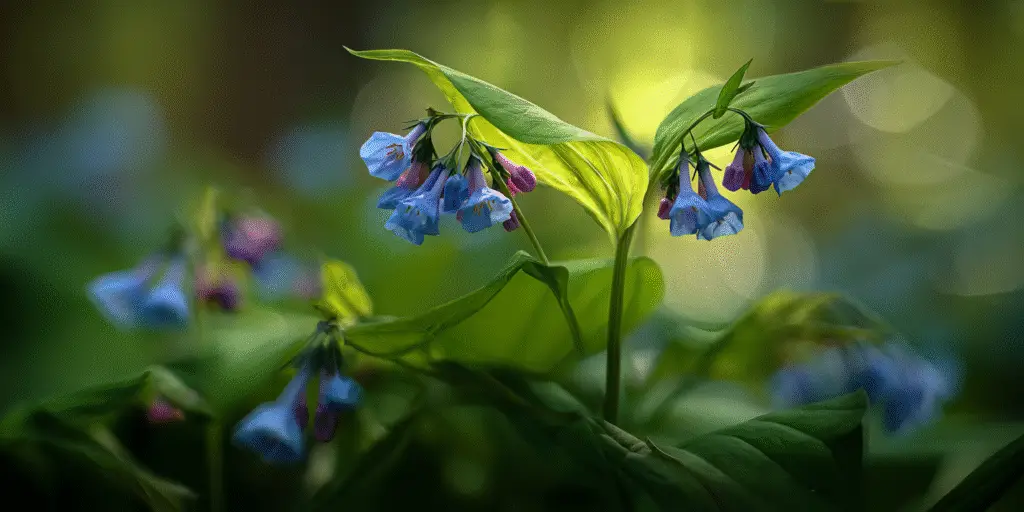
The blossoms of Virginia Bluebells carry a light and delicate fragrance, though it is not strong or overpowering. Many people describe the scent as a mild sweet perfume with a hint of honey or floral nectar, noticeable when you are close to the flowers on a calm day. This subtle fragrance is easily overlooked since it doesn’t radiate across the garden like some heavily scented flowers do, you typically have to get down near the blooms or pick a stem to detect it. The aroma’s primary purpose is to attract pollinators such as bees and butterflies, and it complements the visual allure of the blossoms. In early spring when Virginia Bluebells bloom, the air can be cool, so the release of scent may be slower and gently diffused. On a mild, sunny spring afternoon, however, a patch of bluebells can give off a faintly sweet smell that adds to the enchantment of a woodland walk or a shaded border. Some gardeners report the fragrance is more noticeable if the flowers are cut and brought indoors into a warmer room – a small bouquet can lightly scent a corner of a room with its spring-like sweetness. The scent does not carry far outdoors, so Virginia Bluebells are not typically grown for their smell alone (unlike strongly fragrant blooms such as hyacinths or lilies). Instead, consider their fragrance an added bonus: a little reward for those who take a moment to observe the blooms up close. The light scent pairs with the flowers’ nectar to draw early pollinators. Bumblebees, in particular, are frequent visitors and will sometimes burrow deep into the tubular blooms, guided in part by the promise of nectar signaled by the flower’s color and mild scent. In summary, while not a standout perfumed plant, Virginia Bluebells do offer a gentle, pleasing fragrance that enhances their charm. Gardeners can enjoy this subtlety by planting them near walkways or seating areas in the shade where one might pause to appreciate the details of these pollinator plants in spring.
⚠️ Toxicity and pet safety
One of the appealing aspects of Virginia Bluebells is that they are generally regarded as non-toxic flowers. Unlike some popular garden bulbs and wildflowers that contain harmful compounds, Mertensia virginica is not known to be poisonous to humans or common household pets. This makes them pet safe perennials to include in gardens where cats, dogs, or children may play. Official plant toxicology databases (such as those maintained by veterinary schools or the ASPCA) do not list Virginia Bluebells as a toxic plant. This suggests that incidental contact or ingestion of small amounts would not cause serious issues. In fact, historical records indicate that some Native American tribes and early herbalists considered related Mertensia species to have medicinal or edible uses (for example, the leaves of a related species were nicknamed “oysterleaf” for a taste resemblance and used as a pot herb). While Virginia Bluebells themselves weren’t a common edible, these anecdotes support the view that the plant is not acutely toxic. Of course, as with any garden plant, it’s wise to discourage intentional consuming of large quantities of leaves or flowers – even non-poisonous plants can cause mild stomach upset or discomfort if eaten in excess simply because plant fibers can be hard to digest.
For pet owners, it’s reassuring that if a dog or cat were to nibble on a Virginia Bluebell leaf or bloom, it should not result in poisoning. Gardeners often report that their pets pay little attention to these plants, which may be due to the lack of any enticing taste or scent from the foliage. Additionally, Virginia Bluebells contain no thorns or irritants, so even skin contact or brushing against the plant is harmless. There are mixed anecdotal reports about whether the plant might cause mild discomfort if a large amount is eaten, but such cases are rare to non-existent in literature. The lack of bitterness or strong odor in the leaves could mean animals simply find them uninteresting as a food source. In fact, the foliage tends to melt away quickly after bloom, leaving little opportunity for animals to graze on it later in the season. In summary, you can consider Virginia Bluebells to be safe and family-friendly in the landscape. They are pet safe perennials that won’t cause you worry if your curious puppy sniffs around or even chew a bit on a leaf. As always, if you have livestock or exotic pets, exercise general caution and introduce any new plant to your garden with awareness, but Virginia Bluebells rank very low on any list of garden hazards. This makes them an excellent choice for gardeners seeking beautiful, non-toxic flowers to brighten up a shady nook.
🌿 Vase life
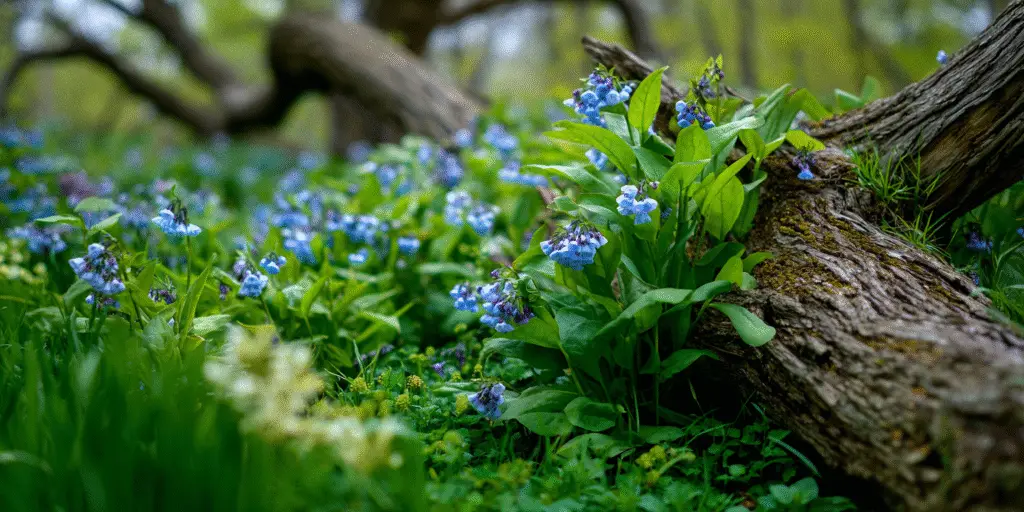
When it comes to using Virginia Bluebells as cut flowers, their ephemeral nature carries over into the vase. These delicate blooms can certainly be cut and enjoyed in spring arrangements, but their vase life is relatively short. Typically, fresh-cut Virginia Bluebells will last around 3 to 5 days in water. By comparison to robust cut flowers like roses or chrysanthemums, this is brief – a reflection of the plant’s transient life cycle in the wild. The bell-shaped blossoms have thin, tender petals that are prone to wilting once removed from the plant and exposed to room temperature conditions. To maximize their vase life, it’s best to cut Virginia Bluebell stems early in the morning when they are well-hydrated and to place them in water immediately after cutting. Choose stems that have some buds just about to open (showing color but not fully expanded), these buds may continue to open in the vase, extending the display for a day or two. Ensure that the vase is filled with cool, clean water, and adding a floral preservative can help a bit by providing sugars and reducing bacterial growth in the water. Removing any leaves that would sit below the waterline is important, as the foliage is quick to decay and can foul the water. Keep the arrangement in a cool spot away from direct sunlight or heat sources to prolong freshness.
In an arrangement, Virginia Bluebells bring a lovely woodland whimsy, with their draping blue bells complementing other spring flowers such as daffodils, tulips, or hellebores. They can be a beautiful accent in a small posy or table bouquet for a special spring occasion. However, due to their short-lived nature, they are not typically used in commercial floristry except perhaps for seasonal specialty displays. If you cut them in bud, you might get close to a week of enjoyment as a few buds open each day, but once the blooms start to fade, they will collapse swiftly. The leaves usually wilt soon after cutting, so some floral designers prefer to strip most leaves and let the flowers themselves shine among sturdier foliage from other plants. It’s also worth noting that the hollow stems of Virginia Bluebells can benefit from a fresh cut underwater and a quick dip in boiling water for 5 seconds (an old florist trick for some soft-stemmed wildflowers) to seal and firm them up – though results vary and one must be careful with such techniques. In essence, consider Virginia Bluebells a short-term delight in the vase, best enjoyed for their graceful form and unique color while they last. They capture a moment of spring indoors, if only for a few days, giving a fleeting reminder of the woodland glade.
🐛 Pests and diseases
Gardeners cultivating Virginia Bluebells will be pleased to know that these plants are largely trouble-free. In appropriate conditions, they suffer from very few pest or disease issues, which adds to their appeal as low-care perennials. They are generally not bothered by serious foliar diseases, issues like powdery mildew or leaf spot are uncommon, partly because the foliage is present only in the cool, moist part of the year and then disappears before the warm, disease-prone season. Likewise, root diseases are rare if the soil is well-drained and the site is not waterlogged. The most commonly noted pests are slugs and snails, which may nibble on the tender leaves in early spring. Young emerging shoots can occasionally get minor damage from these mollusks, especially in damp, mulchy beds. However, because Virginia Bluebells grow relatively quickly, a bit of slug damage usually does not stunt the plant significantly – once the leaves toughen up and the plant gains size, it’s less appealing to slugs. If slugs are a known problem in your garden, applying some pet-safe slug bait or setting traps in early spring around the plants can preempt any substantial feeding.
Regarding mammalian browsers, Virginia Bluebells have a reputation as deer resistant plants. Deer, which often ravage hostas and daylilies, tend to leave bluebells alone. The foliage of Mertensia virginica contains alkaloids and has a slightly rubbery texture that deer find unpalatable compared to other greens. This makes Virginia Bluebells valuable in regions with high deer pressure – they are often listed among recommended spring deer resistant plants. It’s worth noting, as always, that “deer resistant” does not mean “deer proof.” In times of scarce food or with inexperienced deer, any plant could be sampled. But generally, you can expect these to be safe from browsing, many gardeners report their bluebells remain untouched even when other plants are nibbled. Similarly, rabbits usually ignore Virginia Bluebells, likely for the same reasons. There are some accounts of rabbits eating very young plants or seedlings, but mature bluebells are not a preferred menu item. If you are establishing new plants and have a lot of rabbits, you might protect the babies with a temporary mesh, but once the plants size up, rabbit damage is infrequent.
Another noteworthy advantage: Virginia Bluebells are tolerant of the chemical juglone produced by black walnut trees. Many plants cannot grow near walnut roots due to this natural toxin, but bluebells have been observed to do fine under walnuts, making them excellent companions in walnut-affected areas. They can solve a tricky garden problem by filling in under these otherwise allelopathic trees. As for insects, there are no major insect pests that target Virginia Bluebells. They might occasionally get some leaf-chewing by generalist caterpillars or beetles, but such instances are sporadic and not threatening to the plant’s health. Because the plant’s life above ground is brief, any minor pest outbreak is usually curtailed naturally as the foliage dies back for summer. In summary, Virginia Bluebells are about as easy-going and resilient as a plant can be. Provide the right habitat and they essentially fend for themselves. With slug control as the only potential task and the bonus of being naturally unappealing to deer and rabbits, they are ideal pollinator plants for gardeners seeking beauty without pest-related headaches.
FAQ
Are Virginia Bluebells invasive?
No, Virginia Bluebells (Mertensia virginica) are not considered invasive. They are well-behaved native perennials that spread gradually but stay where they are planted. In a garden, they will slowly form larger clumps and may self-seed in the immediate area, creating more plants over time. However, they do not have aggressive running roots or rampant seeding that would cause them to overrun other plants or wild areas. In fact, outside of their native range, they tend to be rather delicate. Gardeners can confidently plant Virginia Bluebells without fear that they will take over beds or escape cultivation. Their spread is usually welcome, as a small patch can naturalize into a beautiful colony over many years. If you ever need to control their expansion, seedlings are easy to recognize and can be transplanted or removed, but such measures are rarely necessary.
Can Virginia Bluebells grow in full sun?
Virginia Bluebells prefer partial to full shade, as they are woodland wildflowers adapted to dappled forest light. They can tolerate full sun only during their early spring growing season, when temperatures are cool and the sun is not as intense. In practical terms, if planted in an open area, they might do fine in March or April but could suffer once the weather warms. By the time summer arrives, the plants would be dormant, but full sun on the soil could overheat or dry out the roots. In regions with mild spring weather, some people have grown Virginia Bluebells in a spot that gets morning sun and afternoon shade, or even full sun for a short spring window before deciduous trees leaf out. The key is that the soil must remain moist and cool for the plant to thrive in stronger light. In hot or southern climates, trying to grow them in full sun will likely result in scorched leaves or the plants checking out (going dormant) much earlier than normal. For best results, give them a site under high tree canopy, on the north or east side of a building, or in any area that simulates open shade. This will ensure they bloom beautifully and don’t get stressed. If full sun exposure is unavoidable, heavy mulch and diligent watering can mitigate the stress to some extent, but partial shade is truly optimal.
How do you propagate Virginia Bluebells?
Virginia Bluebells can be propagated by seeds or by division. Propagating from seed is the most common method. The plants will often self-seed in the garden: after flowering in spring, they drop seeds that will lie dormant until the following spring (the seeds require a winter chilling period to germinate). To propagate intentionally, you can collect seeds in late spring when the seed pods turn dry and brown. Sow the seeds outdoors in the fall in a prepared shady bed – simply press them into the surface or cover with a thin layer of leaf mulch. They will sprout in spring after the cold stratification of winter. If starting seeds indoors, mimic winter by cold-stratifying the seeds in a refrigerator for about 2 to 3 months in moist medium, then sow in pots in early spring and keep them in a cool environment. Be aware that seedlings grow slowly, it may take a couple of years for seed-grown plants to bloom. The second method, division, involves separating an established clump. This should be done when the plant is dormant (in fall, after leaves have died back). Carefully dig up the clump and split off sections of the root crown, making sure each piece has at least one growing bud. Replant the divisions promptly at the same depth and water them in. Dividing can help propagate the plant, but Virginia Bluebells don’t need regular division for health, and they can be sensitive to disturbance. Many gardeners actually prefer to buy Virginia Bluebells as bare-root stock from nurseries and plant those, which is an efficient way to propagate them in a controlled manner. In summary, letting them self-seed is easiest, but you can also sow stored seeds or divide clumps in fall to get new plants.
Do Virginia Bluebells come back every year?
Yes, Virginia Bluebells are perennial plants that come back each year in the spring. They are herbaceous perennials, meaning their above-ground growth dies back after the growing season, but the roots persist alive underground. Each year, usually in early to mid-spring, the roots send up new shoots and the plant re-emerges, growing and blooming again as long as conditions are suitable. This cycle can continue for many years – Virginia Bluebells are known for their longevity when well cared for. It’s important to recognize that they have a dormant period: after flowering and setting seed in spring, the leaves will start to yellow and the plant will fade away by early summer (often by June). Gardeners unfamiliar with their life cycle might be surprised to see empty spots where the bluebells were, but this is normal. The plant is still very much alive, just sleeping until the next spring. Marking where they are or interplanting with late-emerging perennials helps ensure you don’t accidentally dig in that spot during summer. Come the next spring, you’ll see them pop up again, often a bit larger in clump size than the previous year. In a suitable habitat, not only will the original plants return, but you may also notice new baby plants that have self-seeded, which means your colony can slowly expand. So, in essence, once you plant Virginia Bluebells and they establish, you can expect them to be a recurring highlight of your spring garden each year.
When is the best time to plant Virginia Bluebells?
The ideal times to plant Virginia Bluebells are in the fall or in early spring. Planting in the fall (around late September through October, depending on your region) is often recommended for bareroot or potted plants, because it allows the roots to settle in over winter. In fall, the plants are usually dormant (if you receive bareroot rhizomes, they will have no foliage at that time). You can plant the rhizomes about an inch or two below the soil surface, water them, and then let nature take its course. Over winter, the natural cold will satisfy dormancy requirements, and the plants will emerge on cue in spring with strong growth. Early spring is the second-best option: as soon as the ground is workable and before or just as new growth begins. Spring planting is common if you buy actively growing plants in containers. Be gentle when transplanting, since they dislike root disturbance, and keep them well-watered to establish in the cool spring weather. Avoid planting in late spring or summer because Virginia Bluebells will be heading toward dormancy and high heat or dry conditions could stress them before they have established roots. Also, when they are not in active growth, it’s easy to lose track of their location. For seeds, the best time to sow is fall to early winter outdoors (for natural stratification), or late winter if doing an artificial stratification and indoor sowing regime. In summary, aim for fall planting of dormant roots for the least shock and best performance, or very early spring planting of growing plants. Both timings tap into the plant’s natural rhythm, ensuring it wakes up in its new home at the right time.
Are Virginia Bluebells toxic to pets or people?
Virginia Bluebells are not known to be toxic to pets or humans. They are generally regarded as safe non-toxic flowers, which means you can plant them in your garden without special worry about poisoning. No parts of the plant (leaves, flowers, or roots) are listed as poisonous in major plant toxicity databases. If a curious cat, dog, or child were to chew on or ingest a small piece of the plant, it’s very unlikely to cause anything beyond perhaps mild stomach upset, if even that. The plant doesn’t contain the typical irritants or cardiac glycosides found in truly poisonous ornamentals like foxglove, lilies, or daffodils. Many gardeners with pets report that their animals ignore Virginia Bluebells altogether, possibly because the foliage isn’t particularly tasty or aromatic. As with any garden plant, it’s still wise to discourage pets from grazing on them – while not poisonous, eating large amounts of any non-food plant can cause vomiting or digestive discomfort simply by mechanical irritation. But compared to many common garden flowers, Virginia Bluebells are very safe. In fact, they are often recommended as pet safe perennials for shade gardens, alongside others like coral bells or astilbe. For absolute peace of mind, you can consult your veterinarian or local extension office, but you will find Virginia Bluebells absent from toxicity lists. So, you can enjoy their beautiful blooms knowing they won’t harm your furry friends or family.
How long do Virginia Bluebells bloom?
The bloom period of Virginia Bluebells typically lasts for several weeks in the spring, generally around 2 to 3 weeks for an individual plant’s flowering cycle. From the time the first buds open until the last blossom fades is usually in the range of 14 to 21 days under average conditions. Several factors can influence this duration: weather is a big one. In a cool spring with moderate temperatures, the flowers tend to last longer, sometimes stretching close to a month in display. If the spring season is abruptly hot or windy, the flowers might wither more quickly, shortening the bloom time to maybe just under two weeks. Additionally, plants in ideal conditions (partial shade and consistent moisture) often hold their blooms a bit longer than those in less optimal spots. Another aspect is that not all buds open simultaneously, a clump of Virginia Bluebells will have buds that open in succession, so the visual display is extended as new flowers come into bloom while older ones drop. In a clustered colony, you may notice some plants starting to bloom a few days earlier than others, further spreading out the overall show. Generally, peak bloom – when the majority of flowers are open and at full blue coloration – lasts about 1 week in the middle of that span. After flowering, the blossoms will drop off, and you’ll see little green seed pods where they were. It’s at this point the plant starts to shift energy to seed production and then to dormancy. While the vivid blue spectacle is relatively brief, that’s part of its charm: it’s a highlight of the spring garden that comes and goes, much like cherry blossoms or tulip displays, leaving gardeners eager for its return next year. Planting Virginia Bluebells in mass or with companions that bloom around the same time (such as trilliums, bloodroot, or later daffodils) can create a longer season of interest in that part of your garden, but for the bluebells themselves, expect roughly three glorious weeks of bloom.
Interesting tips
- Companion Planting: Because Virginia Bluebells go dormant by early summer, pair them with later-emerging or taller plants that can fill the gap. Good companions include ferns, hostas, astilbes, or late-blooming shade perennials. These neighbors will take over the space once the bluebells’ foliage dies back, ensuring your garden bed doesn’t look empty. For a natural woodland look, you can also mix Virginia Bluebells with other spring ephemerals like trilliums, bloodroot, or Jack-in-the-pulpit – they will all coexist and sequence through the season without crowding each other.
- Naturalizing Strategy: To create a stunning drift of Virginia Bluebells, plant them in irregular clusters rather than straight lines. For example, instead of a rigid row, group 5 to 7 plants in a loose cluster, then another cluster a few feet away, and so on. Over time, these clusters will expand and might even merge. Spacing plants about 12 to 18 inches apart within a cluster gives a lush, carpet-like effect when they bloom. If you’re starting with bare root rhizomes, you can even toss them gently onto the planting area and plant them where they land – this randomness often yields a more natural look reminiscent of how they’d self-seed in the wild.
- Mark Their Location: It’s easy to lose track of where your Virginia Bluebells are planted because they vanish after spring. Use small garden markers or keep a planting map so you remember not to dig in those spots. Alternatively, interplant a few annuals or late-rising perennials in the same area, for instance, plant some caladiums, coleus, or impatiens among them. By the time the bluebells go dormant, those annuals can take over and indicate the spot. This way you get continuous foliage cover and avoid accidental disturbance of the bluebell roots.
- Black Walnut Tolerance: If you have a black walnut tree (or other juglone-producing trees like butternut) in your yard, you know many plants struggle under or near them. Virginia Bluebells are one of the rare flowers that tolerate the juglone toxicity emanating from walnut roots. This makes them a smart choice for planting under such trees, where they can create a spring oasis. They will bloom and go dormant before the walnut fully leafs out, effectively dodging the period when competition for water might be highest.
- Encouraging Self-Seeding: To help your bluebell patch expand, allow the seed pods to ripen and release seeds naturally. Resist the urge to deadhead all the flowers, instead, leave some spent blooms in place so they can drop seed. You can lightly rake the soil or leaf litter beneath the plants after seed drop to help work seeds into contact with the soil. Keep the area undisturbed and moist through early summer. With luck, you’ll spot baby seedlings the next spring. They look like small pairs of smooth oval leaves. These seedlings might take a couple of years to bloom, but they will gradually increase your display. If you need to move any self-sown seedlings, do so when they are very small or wait until fall dormancy – tiny seedlings transplant with less shock than larger young plants.
- Cutting and Arrangements: If you have a generous patch, try cutting a few stems of Virginia Bluebells for a petite spring bouquet. Immediately plunge the cut stems into cool water to prevent wilting. They go nicely with other spring cuts like daffodils (just keep daffodil stems in a separate vase for a few hours first, as they exude sap that can shorten other flowers’ vase life). Use Virginia Bluebells as a soft filler flower in arrangements, knowing they’ll likely last only 3 to 5 days. Their periwinkle-blue color and nodding form add a romantic woodland touch to indoor displays. For a longer-lasting arrangement, replace the bluebell stems after a few days with fresh ones from the garden if available.
- No-Fuss Fall Cleanup: There’s really no need for heavy maintenance with Virginia Bluebells. By mid-summer, the foliage will have withered away completely. At that point, you can clean up by gently removing the dried leaves, but often they just disintegrate into the soil, essentially self-mulching. It’s perfectly fine to leave the area alone, the remaining roots underground don’t want to be disturbed. If you’ve used mulch or leaf litter, just refresh it in fall to keep the soil enriched. You’ll find that year after year, these plants handle their own “retirement” each season with no intervention required – one of the reasons they’re so suited to naturalistic and low-maintenance garden styles.
Related Guides & Flowers
- Great Blue Lobelia (Lobelia siphilitica) – Native, true-blue spikes for late summer shade edges; loves moisture.
- Gentian (Gentiana) – Iconic deep-blue, tubular blooms; a natural color cousin to bluebells in cool gardens.
- Bellflower (Campanula) – Bell-shaped blossoms in blue and lavender tones; sunny to part-shade borders.
- Forget-Me-Nots (Myosotis) – Low spring carpets of soft blue that pair well with ephemerals.
- Blue Flax (Linum lewisii) – Airy, sky-blue saucers that flutter above fine foliage; light, naturalistic look.
- Blue Salvia (Salvia farinacea) – Reliable blue spires for pollinators; holds color after spring ephemerals go dormant.
- Globe Thistle (Echinops) – Architectural steel-blue spheres for sunny, dry spots; striking texture contrast.
- Love-in-a-Mist (Nigella damascena) – Airy, cornflower-blue blooms with lacy bracts; great after spring shade shows fade.
References
- University of Wisconsin Extension – “Virginia Bluebells, Mertensia virginica.”
Clear overview: native habitat, mid-spring bloom window, fragrance, and dormancy after flowering. - NC State Extension Plant Toolbox – “Mertensia virginica.”
Detailed plant profile: bloom period about three weeks (spring), shade and moist humus preference, height and spread, and notes on dormancy. - Michigan State University – Michigan Natural Features Inventory (PDF).
Range and status notes; early-spring survey window and natural history context. - Missouri Botanical Garden Plant Finder – “Mertensia virginica.”
Non-commercial botanic source on habitat, form, and flower details; widely cited by gardeners.
Written by: Your Flowers Guide editorial team
We are a small independent group of flower lovers who research and review each guide using trusted horticultural and educational sources. Learn more about us