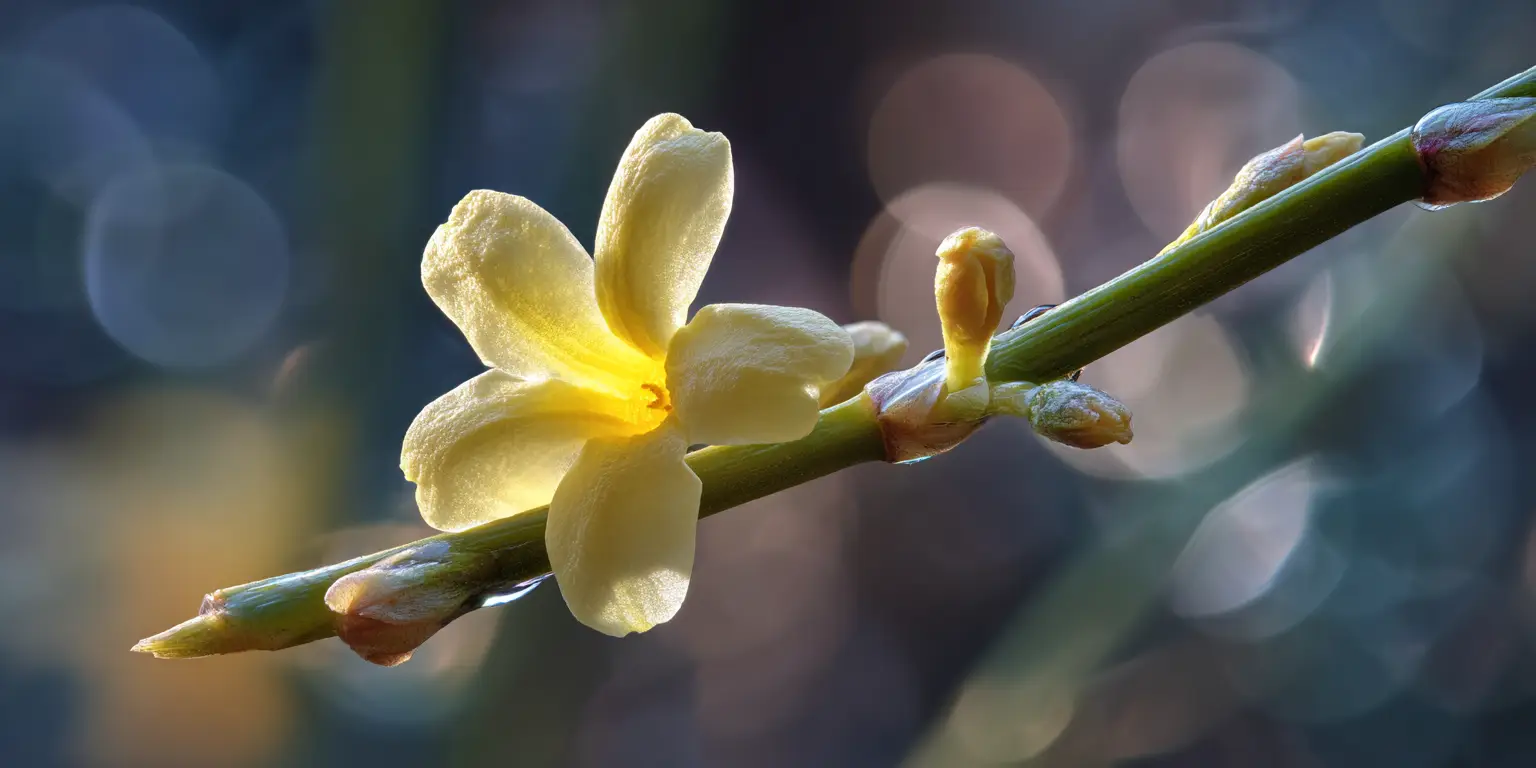
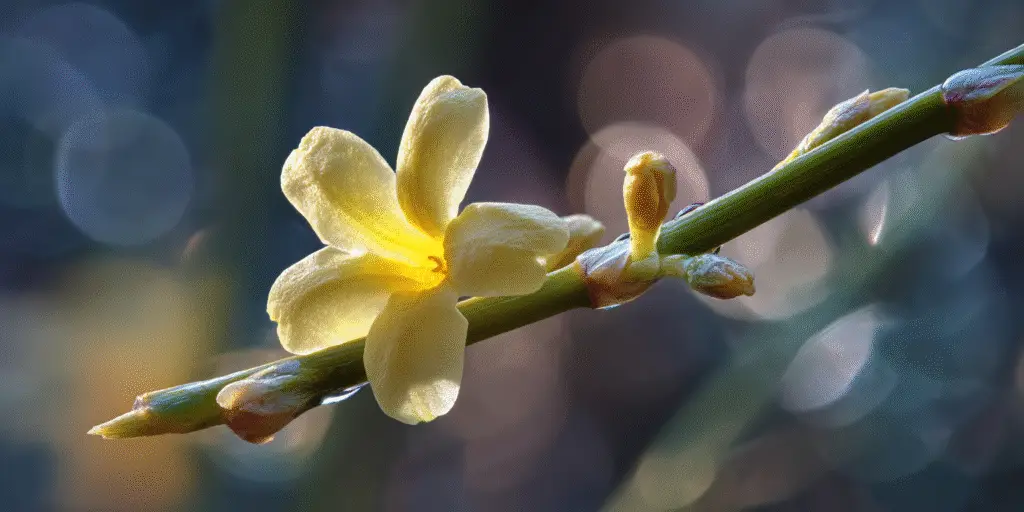
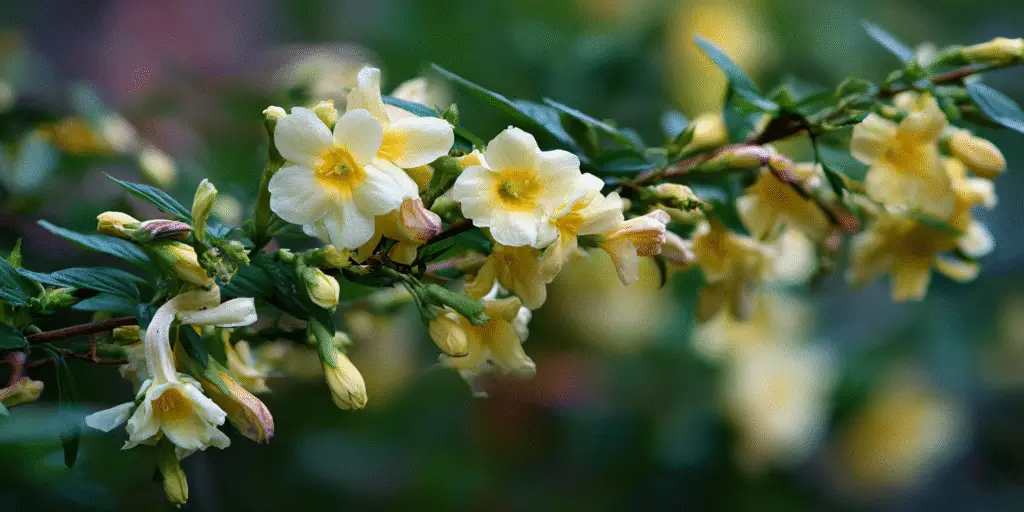
Winter jasmine is a hardy, arching shrub that flowers on bare green stems in late winter. Bright yellow blooms appear before leaves and have little to no scent. It tolerates cold better than most jasmines and can be trained on walls or let spill over banks. Choose it to bridge the color gap from midwinter into early spring.
At‑a‑glance
Group/Class: deciduous arching shrub; can be trained as a scrambling vine
Height × spread: 3–4 ft (0.9–1.2 m) × 6–10 ft (1.8–3 m); to 10–15 ft (3–4.5 m) if trained
Bloom window: late winter to early spring
Color & flower form: bright yellow, tubular‑star single flowers on bare stems
Fragrance: 0 none
USDA hardiness: zones 6–10
Breeder / Year / Origin: unknown, unknown, native to Tibet and Central China
Awards/registration: RHS Award of Garden Merit
Pet safety: safe
How it differs
Earliest bloom among common jasmines in cultivation.
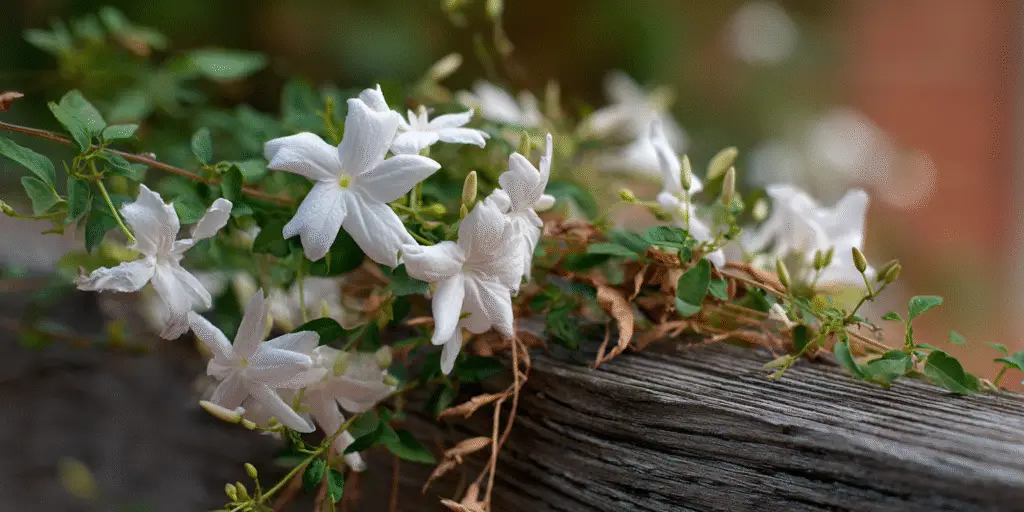
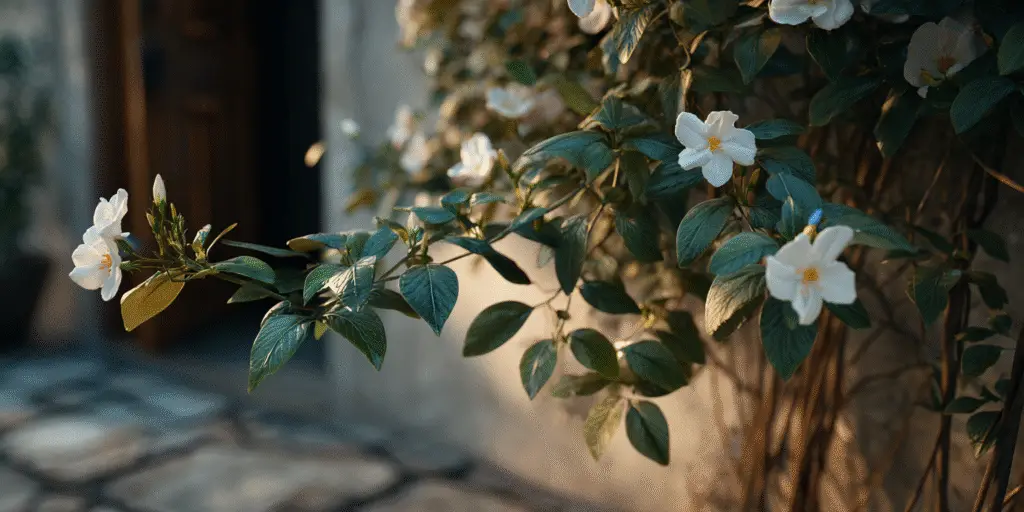
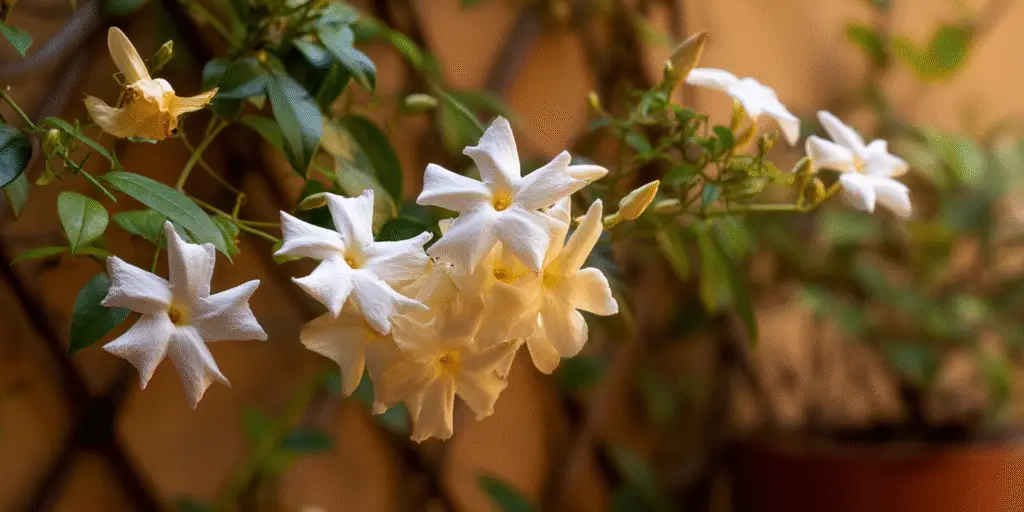
Yellow, scentless flowers versus the white, fragrant summer jasmines.
Shrubby, self‑layering habit suitable for slopes rather than tall pergolas.
Strengths
Cold tolerant and reliable winter color
Takes training or cascading uses
Low pest pressure in the landscape
Care in one minute
Site: full sun for heaviest bloom; light shade reduces flowers.
Soil: adaptable but best in well‑drained loam; neutral to slightly alkaline.
Water: moderate; drought tolerant once established.
Prune: trim after flowering; remove older stems to maintain arching habit.
Overwinter: generally hardy; mulch roots in colder parts of zone 6.
Watch‑outs
Can spread by layering if not managed
Needs sun for best flowering
Non‑fragrant; plant near other winter interest if scent is desired
Best uses (tags)
slopes, walls, early‑season, low‑maintenance
Provenance note
Native to Tibet and central China; introduced to Western gardens in the 19th century and valued for winter bloom.
Written by: Your Flowers Guide editorial team We are a small independent group of flower lovers who research and review each guide using trusted horticultural and educational sources. Learn more about us