How to Grow and Care for
Contents
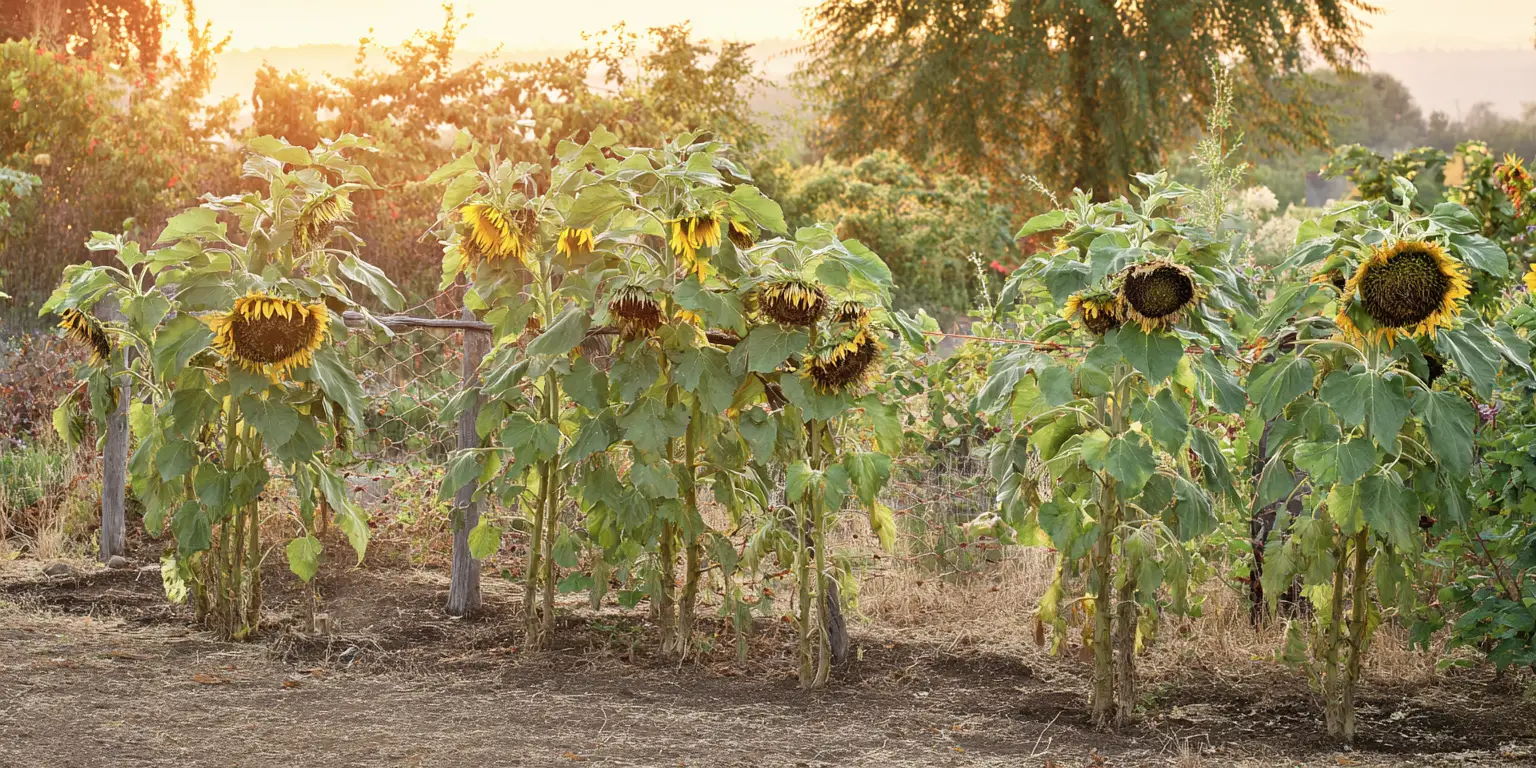
Sunflower care starts with understanding the plant itself. Sunflower refers here to the common garden sunflower, Helianthus annuus, a warm season annual in the aster family grown for cheerful composite flower heads and seed. In most of the United States it behaves as a fast growing annual from spring to frost, while several perennial Helianthus species exist for naturalistic plantings. For reliable results, give sunflowers full sun with a minimum of 6 to 8 hours daily and ideally more, plant in well drained soil, and start with varieties sized to your space. A simple recipe for success is this: sow after frost when soil is warm, water deeply but not constantly, avoid excess nitrogen, and stake the very tall cultivars early. With that routine, sunflower care is straightforward and beginner friendly, and blooms arrive in just 60 to 100 days depending on variety and heat.
Sunflowers thrive in heat and light, and the more direct sun they receive the thicker their stems and the sturdier their blooms. The plant forms a deep taproot with a web of lateral roots that anchor it and help it mine moisture from deeper layers, which is why well drained, friable soil pays off. Heights range widely from foot tall dwarfs to giants over 12 feet, and forms include single stem types prized for cutting and branching types that give a long parade of blooms. Choose dwarf and semi dwarf cultivars for containers and tight beds, and reserve giants for open spots where wind is not funneled between buildings. For design continuity across your landscape, sunflowers pair easily with other seasonal stars covered on this site such as yellow flowers, roses, tulips, lavender, and even shrubs like hydrangea macrophylla when you want foliage mass behind tall stems.
Soil & Bed Preparation
Sunflowers prefer moderately fertile, well‑drained soils that do not stay soggy after rain or irrigation. They are adaptable to sandy loam and loam, and can tolerate heavier soils if you correct compaction and avoid standing water. Think in terms of texture that lets the taproot go straight down. Prepare beds by loosening the top 8 to 12 inches and blending in 1 to 2 inches of finished compost to improve tilth. Avoid fresh manure and heavy, undecomposed materials that rob nitrogen as they break down. In very tight clay, aim to build better soil structure over time with organic matter and cover crops, or plant in raised beds where you control the mix. Raised beds drain faster and warm earlier in spring, which is useful for a crop that loves heat. In open ground, keep foot traffic off new beds to prevent re‑compaction and level the surface so irrigation distributes evenly.
Drainage Test and pH Targets
Before planting, run a 12‑inch deep percolation test to confirm drainage. Dig a hole about 12 inches deep and 12 inches across, fill it with water, let it drain, then fill it again and measure how many inches of water drop in one hour. A rate of about 1 to 3 inches per hour is ideal for most ornamentals. Less than 1 inch per hour points to poor drainage and a need for raised beds or soil improvement. More than 4 inches per hour indicates very coarse soil where moisture escapes too quickly, so plan to mulch and water more consistently. For pH, sunflowers perform best in slightly acidic to neutral soil, about 6.0 to 7.0 for general success and 6.0 to 6.8 as a fine target. If a soil test shows pH below target, apply garden lime according to lab recommendations well before planting. If pH is high, elemental sulfur can shift it downward, again following lab rates. Re‑test soil every few seasons or after major amendments so fertilizer decisions match actual needs rather than guesswork.
Raised beds versus in‑ground
In‑ground beds are fine where soils drain well and you have room for deep rooting. Raised beds are smart in heavy clay, low spots, or where spring warming is slow. Fill raised beds with a blend that drains freely yet retains moisture, such as high‑quality compost with mineral topsoil and a modest portion of coarse material for aeration. Avoid pure bagged compost or topsoil alone. Line up beds so tall sunflowers do not shade shorter companions and so prevailing winds hit stems at a forgiving angle. In either setting, clear perennial weeds before planting because sunflowers are vigorous but not weed suppressors during their early weeks.
Planting Calendar by USDA Zone
Frost and soil temperature basics
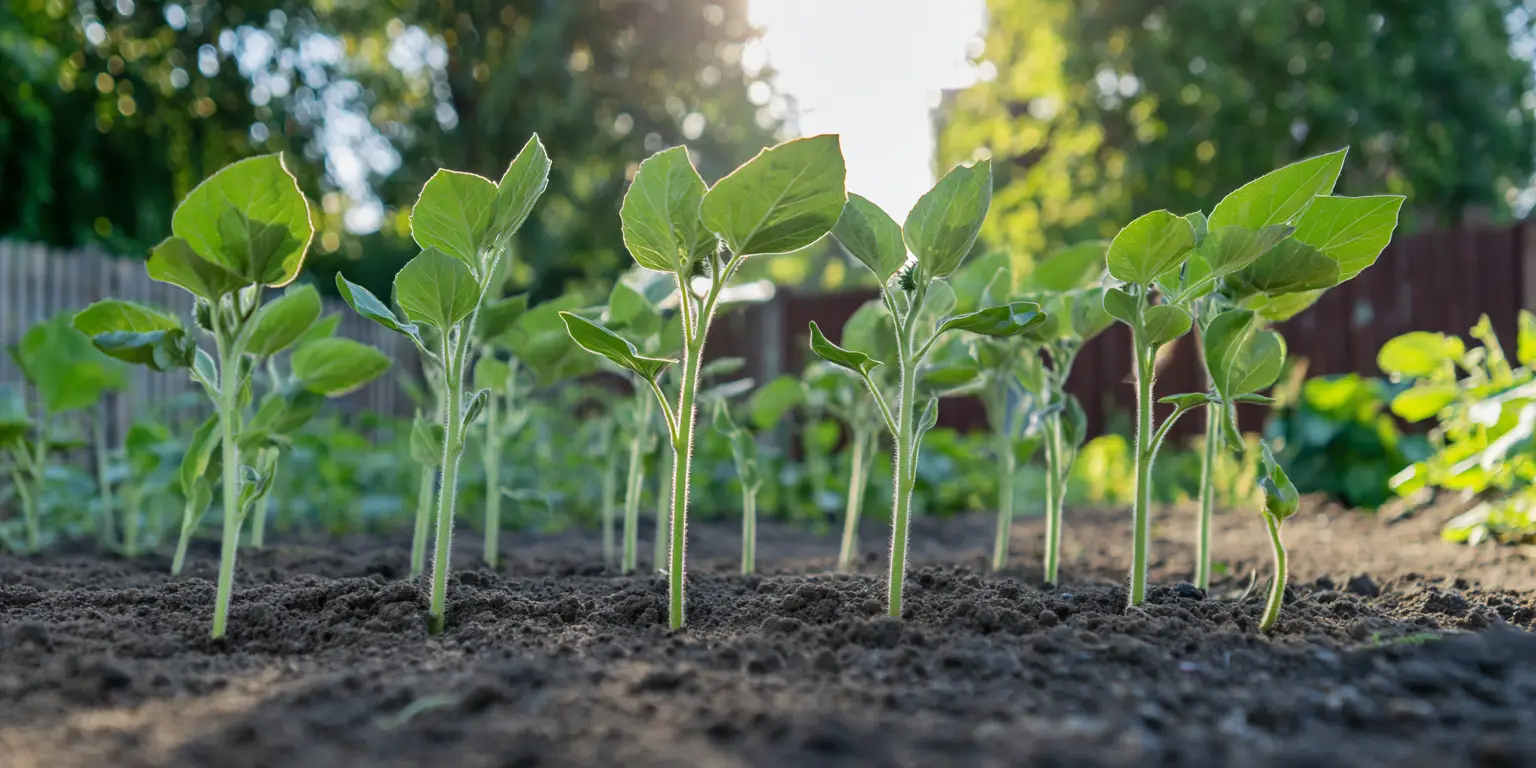
Because Helianthus annuus is a warm‑season annual, time planting by frost and soil warmth rather than calendar date. Direct sow 1 to 2 weeks after your average last spring frost when soil reaches at least 60°F (16°C). In colder pockets or very wet springs, wait until the soil is dry enough to crumble and you can plant without clods. For a longer bloom window, practice succession sowing every 2 to 3 weeks until midsummer, choosing earlier maturing cultivars as summer advances.
Zones 3 to 5
In the Upper Midwest, Northern Plains, and mountain zones 3 to 5, direct sow from late May to mid June once soil is reliably warm. Seed started too early in cold, saturated soil stalls. Use dwarf and mid‑sized cultivars if your season is short, and favor succession plantings through late June for bouquets into September. At higher elevations, winds can be persistent, so avoid ridge tops and give tall varieties support from the start.
Zones 6 to 7
In much of the Lower Midwest, Mid‑Atlantic, and inland Northwest, plant from mid April to late May after frost. A second sowing in late June can carry color into early fall. In humid coastal areas, build in extra spacing for airflow and watch foliage for mildew late in the season. In hot urban heat islands, push the first sowing earlier once soil is ready so flowering occurs before the most intense late summer heat.
Zones 8 to 10
In the South and much of the West Coast, sow from March to May. Where summers are very hot and nights stay warm, the best blooms often come from early plantings that flower before heat peaks. Many gardeners also sow a late summer round in August to September for fall display when nights cool. In arid regions, mulch immediately and schedule deeper but less frequent irrigation to encourage deep rooting. Near salt air or on sandy coasts, anchor tall stems from gusts and plan for additional water as winds dry leaves and topsoil quickly.
Zone 11
In frost‑free parts of South Florida, the Gulf, and Hawaii, treat sunflowers like a cool‑season warm‑weather crop. Plant in late winter to spring for late spring to early summer bloom, and again in early fall if summer is too hot for quality flowers. Use morning sun with some afternoon shade in the hottest exposures so petals do not scorch or bleach.
Planting: Depth & Spacing
Seeds: direct sowing
Direct seeding is the simplest method and avoids root disturbance. Plant standard sunflower seeds 1 to 1.5 inches deep (2.5 to 4 cm). In lighter, sandy soil, go to 2 inches to maintain even moisture; in heavier soil, 1 inch is enough. For single‑stem cutting types, space seeds or thin seedlings to 6 to 12 inches apart depending on bloom size desired. For branching garden types, allow 18 to 24 inches between plants so side shoots receive light. When growing in rows, keep 2 to 3 feet between rows for airflow and easy access. Sow two seeds per station and thin to the strongest seedling when they reach 3 to 4 inches tall. Press soil gently to make firm seed‑to‑soil contact, water to settle, and protect newly sown areas from birds with floating row cover until germination.
Indoor‑started transplants
If you start seeds indoors, use biodegradable pots or roomy cells and plan to transplant while seedlings are small, at 2 to 3 true leaves. Sunflowers dislike root disturbance, so avoid pot‑bound starts and do not tease roots. Harden off for 7 to 10 days by gradually increasing outdoor exposure, then transplant on an overcast afternoon into soil at the same level as the plug, keeping the crown at or just above the surrounding soil. Water to settle and shade with row cover for several days in windy or very bright sites. Space as you would direct‑sown plants. If a cold snap threatens soon after transplanting, cover with row cover or a light frost blanket to prevent set‑back.
Container‑grown starts
Garden centers often sell small sunflower starts. Choose compact cultivars for pots and mid‑sized branching cultivars for large planters. For dwarfs that finish under about 3 feet, a 3 to 5 gallon container per plant works well. For medium or tall types, aim for 7 to 15 gallons per plant so the taproot has depth and the pot has ballast against wind. Use a peat‑free or peat‑reduced, high‑quality potting mix that drains quickly yet holds moisture, and ensure generous drainage holes. Plant at the same depth as in the nursery pot and water to settle. Grouping several pots shoulder to shoulder reduces tipping. Add a stake at planting for any variety expected to top 5 feet or carry a heavy seed head, and tie stems with soft ties in a figure‑eight so they can flex without scuffing.
Transplant shock minimization
Whether seedlings come from your light rack or a nursery, the key to avoiding shock is gentle handling and steady water for the first two weeks. Keep soil evenly moist but not sodden while new roots take. Shield from abrasive wind and midday glare for several days. Do not fertilize immediately after transplant; wait until you see new growth. If plants flag mid‑day in bright sun during the first week, water early the next morning to pre‑hydrate rather than chasing wilt in the afternoon heat.
Watering & Mulching
Establishment versus mature schedules
Watering is simple when you think in depth rather than frequency. For the first three to four weeks after emergence or transplanting, water whenever the top 1 to 2 inches of soil are dry, which in spring may mean every two to three days and more often in heat or wind. Deliver water slowly at the root zone so it sinks well below the seedling’s crown. As roots reach down, shift to fewer, deeper soakings to train drought resilience. In average garden soils, a thorough weekly watering keeps growth steady, but in sandy or raised beds, you may water twice weekly during stretches of hot, dry weather. Drip lines or soaker hoses are efficient because they wet the root zone and keep foliage dry, which reduces disease pressure. If you use overhead irrigation, water early in the morning so leaves dry quickly.
Mulch management and heat spikes
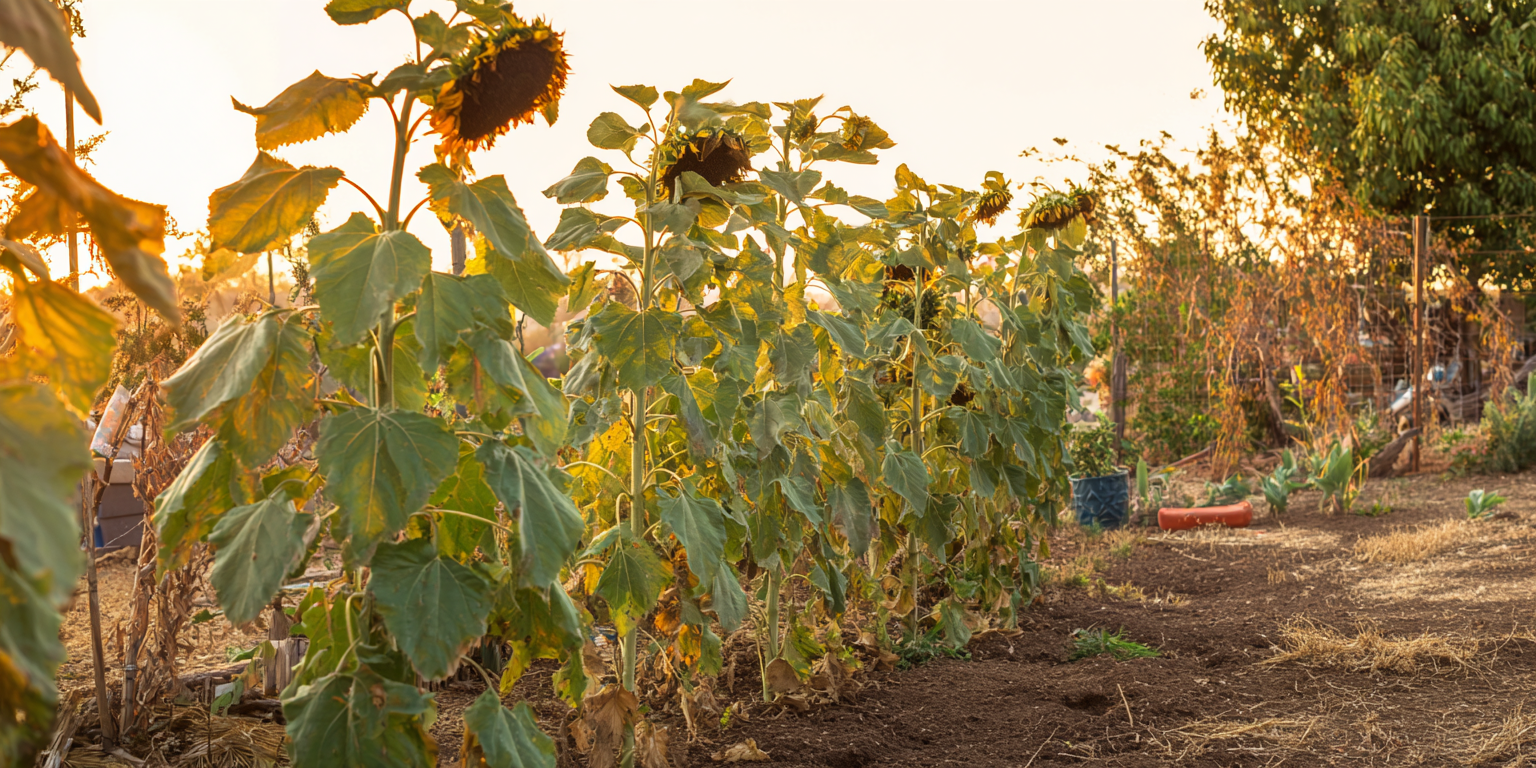
Lay down 2 to 3 inches of organic mulch such as shredded leaves, straw that is seed‑free, or chipped ramial wood once seedlings are well rooted. Keep mulch pulled back 2 inches from stems to prevent crown rot. Mulch slows surface evaporation, buffers soil temperature, and reduces weed pressure. During extreme heat, water early in the day and again check soil the next morning so you can top up before plants wilt. In prolonged drought, prioritize deep soakings over frequent light sprinkles so moisture reaches the lower root zone. Container sunflowers dry faster than in‑ground plants, so in hot spells expect to water daily, and sometimes twice daily in very small pots. Empty saucers after watering to avoid root rot and mosquito breeding.
Feeding
Fertilizer timing and N‑P‑K
Sunflowers are moderate feeders. Overdoing nitrogen produces tall plants with lush leaves and fewer flowers, so your goal is balanced nutrition rather than leaf push. If you have a recent soil test, follow its recommendations. Without a test, work 1 to 2 inches of compost into the topsoil before planting, then side‑dress with a low‑nitrogen, higher‑phosphorus formulation such as 5‑10‑10 at light rates once stems reach 12 to 18 inches tall. Slow‑release granules or organic blends are handy because they meter nutrients with less risk of burn. In fertile garden soil, a single light feeding is sufficient. In containers, nutrients leach with frequent watering, so mix a slow‑release fertilizer into the potting mix at planting and supplement with a half‑strength, balanced liquid feed every 3 to 4 weeks if growth pales.
Soil biology and when to retest
Healthy soil biology does much of the feeding for you. Aim for steady additions of organic matter through compost, leaf mold, or cover crops in the off season to support microbial life. Where you garden intensively, retest soil every two to three years to track pH drift and macronutrients, especially phosphorus and potassium, which can build up in closed systems. If a midseason plant looks stunted and pale despite adequate water, check for compaction, root damage, or pests before reaching for more fertilizer. Sunflowers respond better to improved rooting conditions than to heavy feeding.
Pruning & Support
Deadheading and clean‑up
Sunflowers do not require classic pruning, but a little attention extends the show. For branching types, remove spent blooms down to a strong side shoot to keep new buds coming. For single‑stem cutting types, harvest when ray florets are just lifting from the disk for the longest vase life. If you want to feed birds and save seed, let selected heads mature fully on the plant until back sides of heads turn yellow to brown, then cut and dry in a protected spot. At season’s end, remove and dispose of diseased foliage rather than composting it, and rotate planting spots each year to reduce disease carryover. Keep hand pruners clean between plants by wiping blades with 70 percent isopropyl alcohol to limit spread of fungal and bacterial issues.
Staking tall or top‑heavy plants
Very tall cultivars and any plant exposed to channeling winds benefit from early staking. Insert a sturdy bamboo or metal stake 6 to 12 inches from the stem at planting and add loose ties at one‑third and two‑thirds of the stem height as plants elongate. In sites with strong prevailing winds, a low, soft twine grid between stakes across a row can share the load among stems. Avoid tying tight loops that girdle stems, and never cinch ties at the crown where water collects. Pinching is optional. If you want more branching on mid‑height types, pinch out the growing tip at 12 to 18 inches. Do not pinch single‑stem florist types or giants you are growing for one large head.
Overwintering
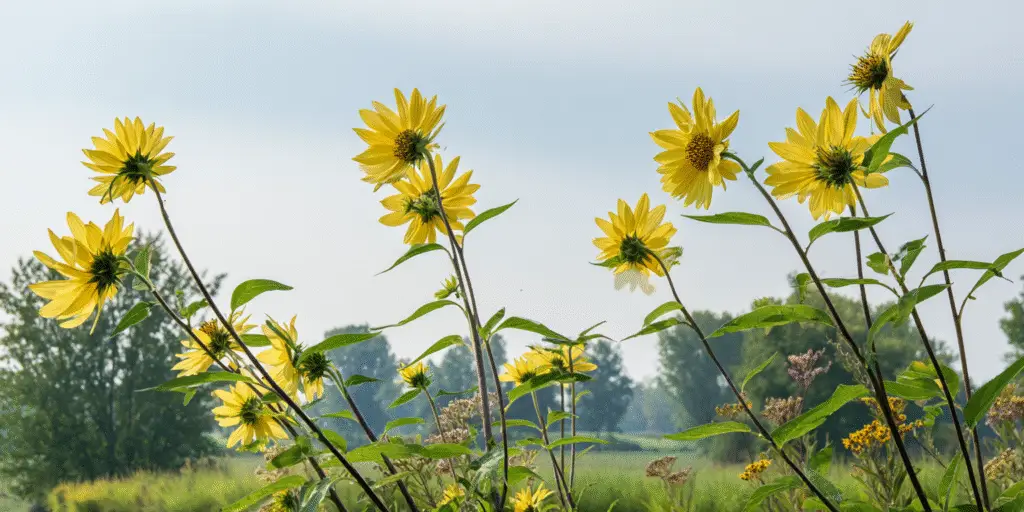
Common sunflower is an annual, so there is no true overwintering outdoors. After frost blackens foliage, cut stems to ground level and remove plant debris, or leave a few mature heads for birds through early winter and clean up later. If you grow perennial species such as Maximilian sunflower in a native border, cut stems back to several inches after hard freeze and mulch lightly in colder zones to moderate freeze thaw of the crown. Where rodents clip stems or chew crowns in winter, use wire cloches or hardware cloth collars set a few inches into the soil to discourage tunneling. Container sunflowers are seasonal plantings; empty pots after frost, brush out roots, and store containers out of sun and weather to extend their life.
Growing Environments
Containers: volume, mix, and drainage
Sunflowers are very feasible in containers as long as you size the pot to the plant. Dwarf forms under about 3 feet do well in 3 to 5 gallon pots, while mid‑sized or tall forms are happier in 7 to 15 gallon containers that offer depth for the taproot and weight against tipping. Choose pots with large drainage holes, and use a high‑quality potting mix rather than garden soil to avoid compaction. Fabric pots breathe well and reduce waterlogging but dry sooner. Plastic and glazed ceramic retain moisture longer. Top‑dress with 1 inch of compost midseason and refresh the mulch layer to regulate temperature. Place containers where they receive all‑day sun and where wind is not funneled between buildings. Turn pots a quarter‑turn weekly if plants lean.
Microclimate tips for shade, wind, and reflected heat
If your site has afternoon shade from a neighbor’s tree, choose mid‑height branching varieties that bloom well in 6 hours of sun. In constant wind, stagger planting in small groups so plants shield one another and set stakes early. Along light‑colored walls or on rooftops with reflected heat, mulch promptly and water in the morning so plants begin the day fully hydrated. In very hot inland valleys, a touch of late‑day high shade keeps colors richer and petals from sizzling. Where deer browse is common, protect young plants with cages or low fencing until stems toughen.
Companion Planting & Design
Companions for color and ecology
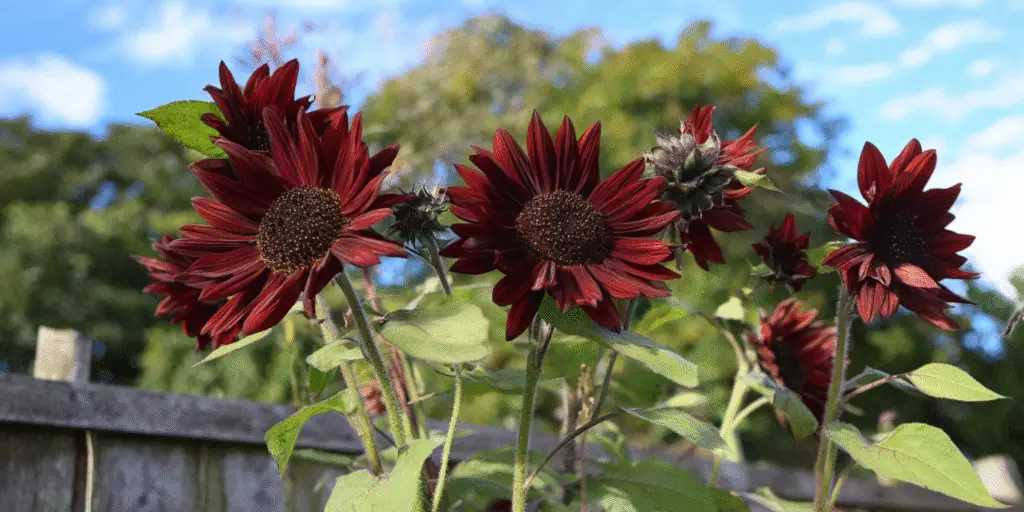
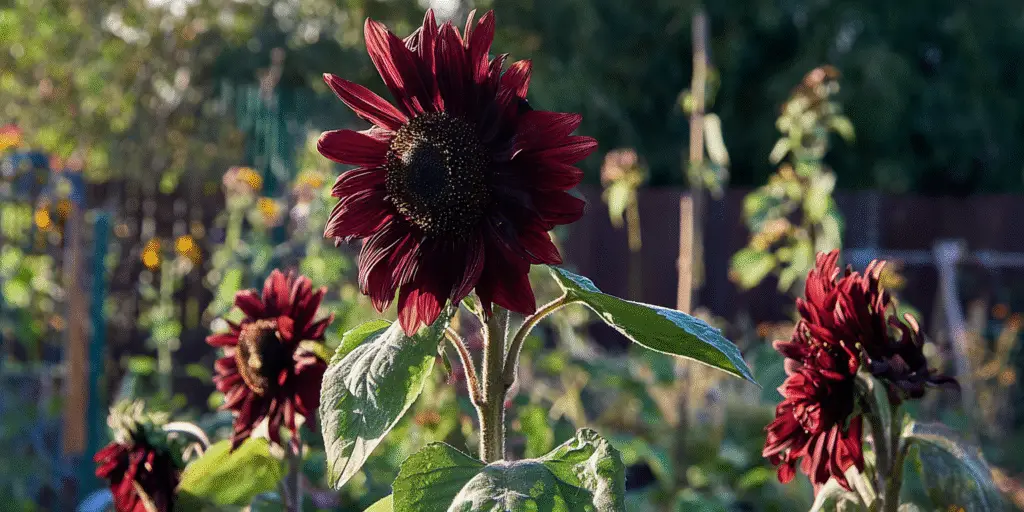
Sunflowers are natural focal points that also power pollinator traffic. Companion them with warm‑season annuals such as zinnias and cosmos for a long season of nectar and color. Low mounding marigolds or dwarf lavender can edge a sunflower row to cover bare ankles and help dry the soil surface faster after irrigation. In cutting gardens, mix single‑stem florist types among branching filler plants so you can harvest without leaving gaps. For borders built around color families, sunflowers with lemon or gold tones fit any yellow flowers plan, while the bronze and ruby cultivars mesh with burgundy foliage and dusky dahlias. If seed harvest is a goal, avoid pairing with aggressive vines that climb stems and shade heads.
Airflow, spacing, and design links across your site
Give each plant the breathing room its type needs so leaves dry quickly after rain. That spacing also keeps row access easy for tying and cutting. Use taller sunflowers as a living screen behind seating, and alternate flower colors down a path for rhythm. When planning a seasonal display, open with shorter spring bulbs and early perennials, then let sunflowers rise as those fade. For further ideas that connect categories on this site, browse hubs such as types of flowers, the topical hub for sunflower, and design guides like the wedding flowers guide when you want to time blooms and colors for events. Shrubs and perennials featured on this site including roses and hydrangea macrophylla provide long‑season structure behind summer sunflowers, while spring displays of tulips and lilacs transition the same beds into warm‑season height.
References
- University of Minnesota Extension. “Sunflowers.”
- North Carolina State University Extension Gardener Plant Toolbox. “Helianthus annuus.”
- University of Georgia College of Agricultural and Environmental Sciences. “Growing Sunflowers in the Home Garden (C1121).”
- West Virginia University Extension. “Growing Sunflowers for Beginners.”
- Lady Bird Johnson Wildflower Center. “Helianthus annuus (Common Sunflower).”
- Iowa State University Extension and Outreach. “Testing and Improving Soil Drainage.”
- University of Maryland Extension. “Soil Health, Drainage, and Improving Soil.”
- North Dakota State University Extension. “Fertilizing Sunflower.”
- ASPCA. “Plants That Support Your Local Wildlife” including common sunflower (Helianthus annuus) listed as non‑toxic to pets.
- ASPCA. “Sunflower.” Plant database entry listing sunflower species as non‑toxic to dogs and cats.


Written by: Your Flowers Guide editorial team
We are a small independent group of flower lovers who research and review each guide using trusted horticultural and educational sources. Learn more about us