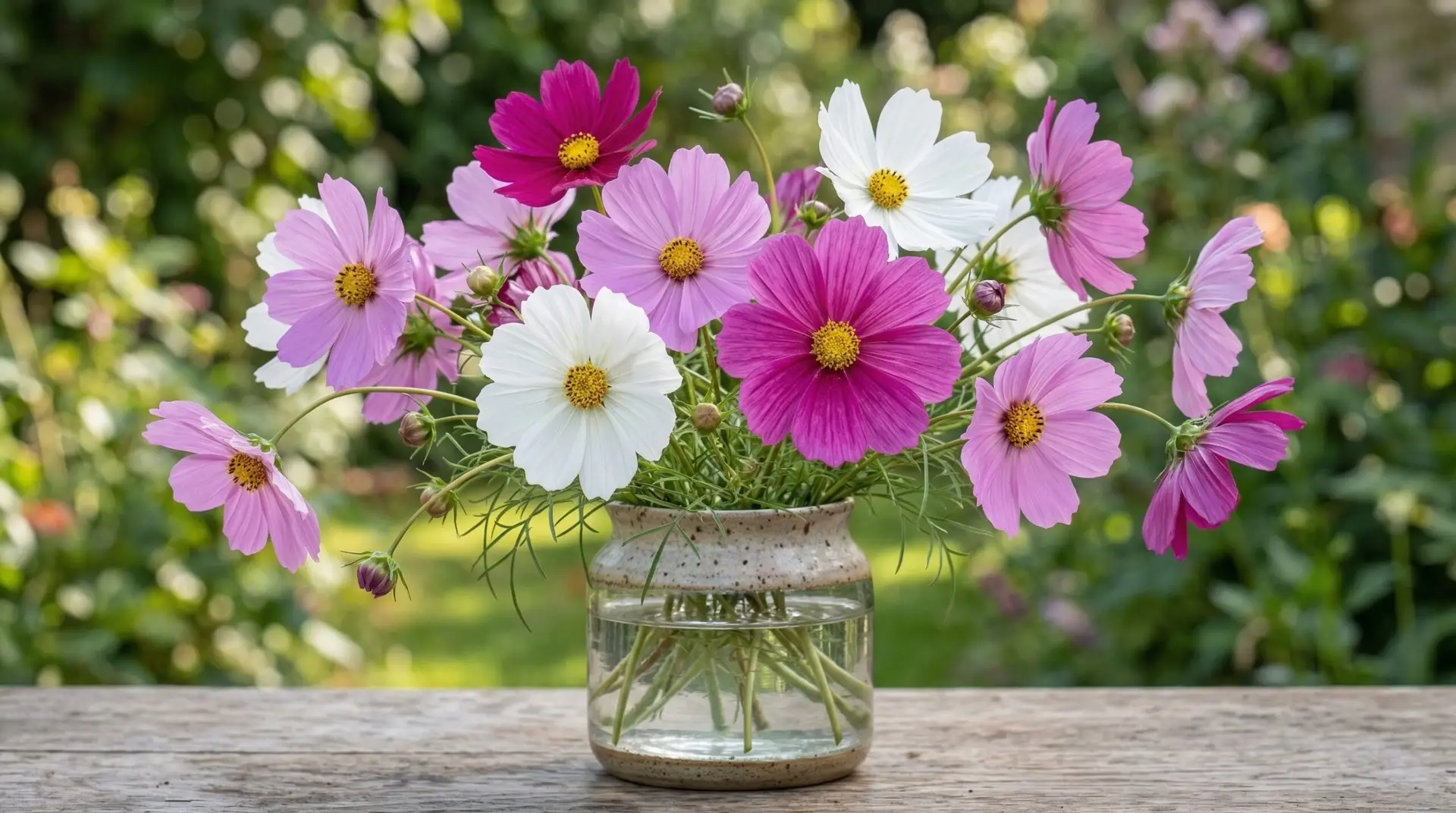
There is a specific moment in early summer when the first cosmos bud finally cracks open, and it never fails to make me pause. You spend weeks watching those thread-like, feathery leaves build a dense green cloud, wondering if the plant is ever going to stop growing foliage and actually produce a flower. Then, almost overnight, thin stems shoot up above the canopy carrying tightly pleated buds that unfurl into wide, simple, perfect blossoms. The appeal of cosmos lies in this exact contrast between their seemingly fragile, papery petals and their incredibly tough, drought-tolerant nature. They look like they belong in a delicate watercolor painting, yet they will happily bake in the hottest, driest corner of the yard where other plants quickly surrender. I always find myself drawn to that resilience, planting them year after year just to watch them sway in the afternoon breeze.
Growing cosmos from seed is one of the most reliable pleasures in gardening. You can direct sow them straight into the garden after the last frost, and within days, sturdy little seedlings push through the soil. They actually prefer poor, unamended dirt, actively punishing you with all leaves and no flowers if you try to pamper them with rich compost or heavy fertilizer. This makes them the perfect candidate for those awkward, neglected patches of the yard that need a bit of life. There is a deep satisfaction in taking a cheap packet of seeds, scattering them in mediocre soil, and being rewarded with an absolute jungle of blooms by August. They ask for so little and give so much in return, making them an essential staple for anyone who loves having armloads of cut flowers.
Classic annual cosmos bipinnatus varieties
The Sensation mix is the standard bearer for the species, and it is entirely responsible for my early obsession with these plants. These are the tall, sprawling giants that easily reach four or five feet by late summer, producing endless single blooms in pure white, soft pink, and deep magenta. I love the way they weave through other plants in the border, leaning casually on sturdier neighbors when the wind picks up. Because they grow so tall, they do have a tendency to flop over if a heavy rainstorm rolls through in September. I simply let them lie where they fall, as the stems quickly bend and start growing upward again, creating a fascinating, twisting architecture in the garden bed. Sensation remains a favorite because the flowers are large, the stems are long enough for tall vases, and the plants possess a wild, untamed energy that feels completely natural.
If you do not have the space for a massive, sprawling plant, the Sonata series offers a completely different experience. Breeders developed these to stay compact, usually topping out around two feet tall, which makes them highly manageable for front borders or large terracotta pots. I have grown Sonata in windy, exposed locations where the taller Sensation varieties would have snapped in half, and they held up beautifully. The trade-off is that the stems are much shorter, making them slightly frustrating if you want to arrange tall bouquets for the kitchen table. However, they produce flowers much earlier in the season than their taller cousins, giving you a steady supply of color while the giant varieties are still busy growing leaves. They are a practical, reliable choice that still delivers the classic daisy-like flower shape without the structural chaos.
Once you master the basic single varieties, it is hard to resist experimenting with the novelty types that breeders have introduced over the years. The Seashells variety is particularly fascinating because each petal rolls into a hollow tube, creating a fluted, star-like appearance that completely changes the texture of the bloom. I also frequently grow the Cupcakes variety, where the petals are fused together into a single, continuous bowl shape resembling a delicate paper baking cup. You do have to approach these novelties with a bit of patience, as the seed strains are not always perfectly stable. You might plant a whole row of Cupcakes and find that a quarter of the plants revert to producing standard, separate petals. I actually enjoy this unpredictability, treating each opening bud as a small surprise to see exactly what shape and form the plant has decided to produce.
For pure floral weight, the Double Click series is entirely in a class of its own. These varieties produce fully double, heavily ruffled flowers that look remarkably like miniature dahlia blooms perched on thin, wiry stems. They come in gorgeous shades of cranberry, soft rose, and pure white, adding a dense, luxurious texture to garden beds and floral arrangements. Because the flower heads are so heavy with extra petals, they are notoriously prone to nodding or snapping in heavy rain, requiring a bit more staking or support than the single types. They also take significantly longer to reach the flowering stage, testing your patience through the early summer months. When those fluffy, complex blooms finally open in late August, the wait feels entirely justified, and they make some of the longest-lasting cut flowers in the entire cosmos family.
Exploring the warm tones of cosmos sulphureus
While the classic Cosmos bipinnatus varieties provide cool pinks and whites, Cosmos sulphureus brings intense, fiery warmth to the garden. These plants look distinctly different, featuring broader, slightly more jagged foliage rather than the delicate, thread-like leaves of the pink types. They bloom in saturated shades of lemon yellow, bright tangerine, and deep fiery orange, colors that seem to absorb and radiate the late summer sunlight. I find that they handle extreme heat and humidity even better than the bipinnatus types, shrugging off the worst August weather without wilting or dropping their buds. The Bright Lights and Cosmic series are my absolute favorites in this category, producing masses of semi-double blooms on bushy, branching plants. They require virtually no deadheading to keep producing, making them one of the lowest maintenance annuals you can possibly grow.
The real magic of the sulphureus varieties becomes apparent when you watch how the local wildlife interacts with them. Pollinators absolutely flock to these bright orange and yellow flowers, turning the plants into a busy hub of bees, small butterflies, and beneficial wasps. I always plant a wide patch of them right next to my tall zinnias, creating a dense thicket of warm colors that feeds the insects straight through to the first frost. The goldfinches eventually figure out when the seeds begin to ripen, landing clumsily on the thin stems to pick at the drying flower heads. You will lose some seeds to the birds, but the plants are so prolific that there are always plenty left to fall to the ground. These fallen seeds reliably sprout the following spring, creating a self-sustaining colony of bright orange blooms that requires zero effort on my part.
The elusive chocolate cosmos
Moving away from the easy-going annuals, we have the fascinating and slightly demanding Cosmos atrosanguineus, commonly known as the chocolate cosmos. This plant is a tuberous perennial native to Mexico, and it produces small, velvety, deep maroon flowers that look almost black in certain lighting. The main reason people seek this plant out is the scent, which genuinely smells like dark cocoa powder and vanilla, especially on warm, sunny afternoons. It is entirely different from the light, grassy scent of the annual varieties, offering a rich, gourmand fragrance that makes you want to kneel down in the dirt just to get closer. I keep a pot of it on my patio specifically so I can brush past it and catch that remarkable chocolate aroma on hot days. It is a collector’s plant, offering a completely unique sensory experience that you simply cannot get from standard garden center annuals.
Growing the chocolate cosmos does come with a specific set of challenges that you have to accept right from the start. Because it is a sterile clone, it does not produce viable seed, meaning you have to purchase rooted plants or dormant tubers to get started. It is only hardy in very warm climates, so those of us in colder zones have to dig up the fleshy tubers in the fall and store them in a cool, dry place over the winter, much like we do with other tender perennials. There are also days when the weather is cool or cloudy, and the famous chocolate scent completely disappears, leaving you sniffing a pretty but odorless dark red flower. Despite these minor frustrations, successfully overwintering a tuber and watching it push up fresh burgundy shoots the following spring is incredibly rewarding. It is a plant that asks for a little extra effort, but repays you with a deep, velvety elegance that grounds the brighter colors in the garden.
Why we keep making room for cosmos
As the growing season pushes into September, many garden plants begin to look exhausted, covered in powdery mildew or simply giving up on producing new growth. This is exactly the moment when cosmos hit their absolute peak, exploding into a massive flush of late-season blooms just when you need them most. The cooler autumn nights seem to intensify their colors, turning the pale pinks richer and making the white varieties glow sharply in the fading evening light. I love walking through the garden in the early morning, seeing the dew caught in their feathery foliage and knowing that they will keep pushing out new buds until a hard freeze finally stops them. They provide a critical bridge of color between the summer annuals and the late autumn perennials, carrying the garden through a difficult transitional phase. It is this late-season reliability that cements their status as an essential planting.
Ultimately, the greatest joy of growing cosmos is the sheer abundance they bring to both the garden and the home. They are the ultimate cut-and-come-again flower, actively rewarding you for taking scissors to them by branching out and producing twice as many stems. Bringing a loose, airy bunch of them into the kitchen instantly softens the room, their thin stems leaning gracefully over the edge of a simple glass pitcher. You do not need to arrange them carefully; their wild, meadow-like habit does all the work for you. Year after year, I find myself carving out more space in the dirt for these seeds, knowing that such a small investment will yield months of continuous, effortless beauty. They are the quiet workhorses of the flower bed, offering consistent, simple perfection that never goes out of style.
More About Cosmos

Cosmos for pollinators and why butterflies and bees cannot resist these flowers
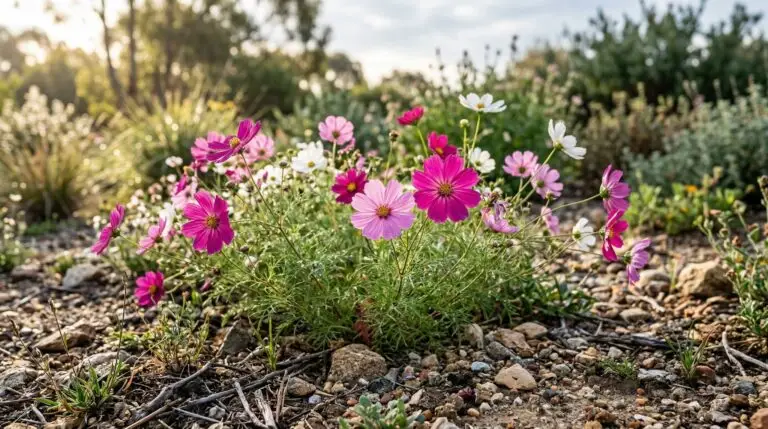
Why cosmos grows tall and leggy and how to get compact bushy plants instead

How to save cosmos seeds at the end of the season for free flowers next year
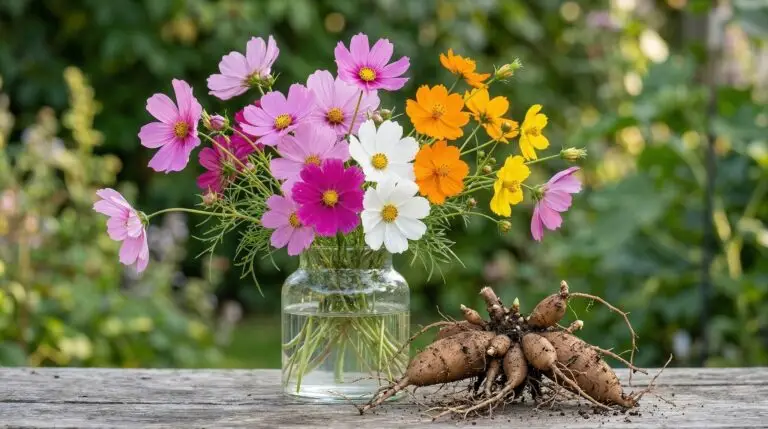
Chocolate cosmos the rare perennial with flowers that smell like dark chocolate

Cosmos as the perfect cut flower for beginners who want armloads of bouquets

Creating a cosmos flower field effect in your backyard for photogenic garden magic
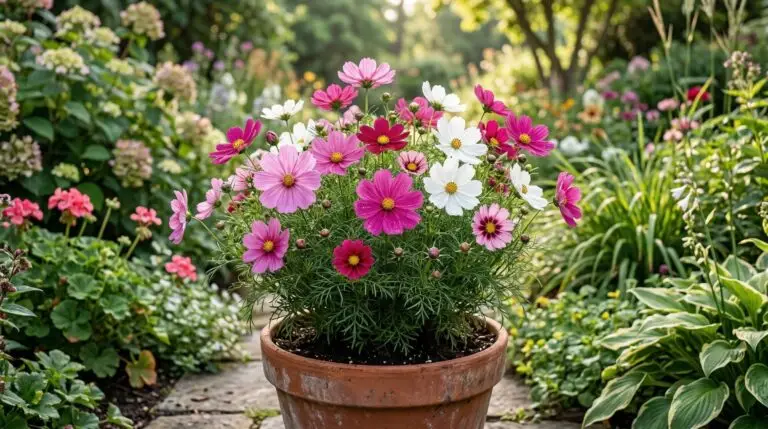
Growing cosmos in containers and hanging baskets for balcony flower gardens