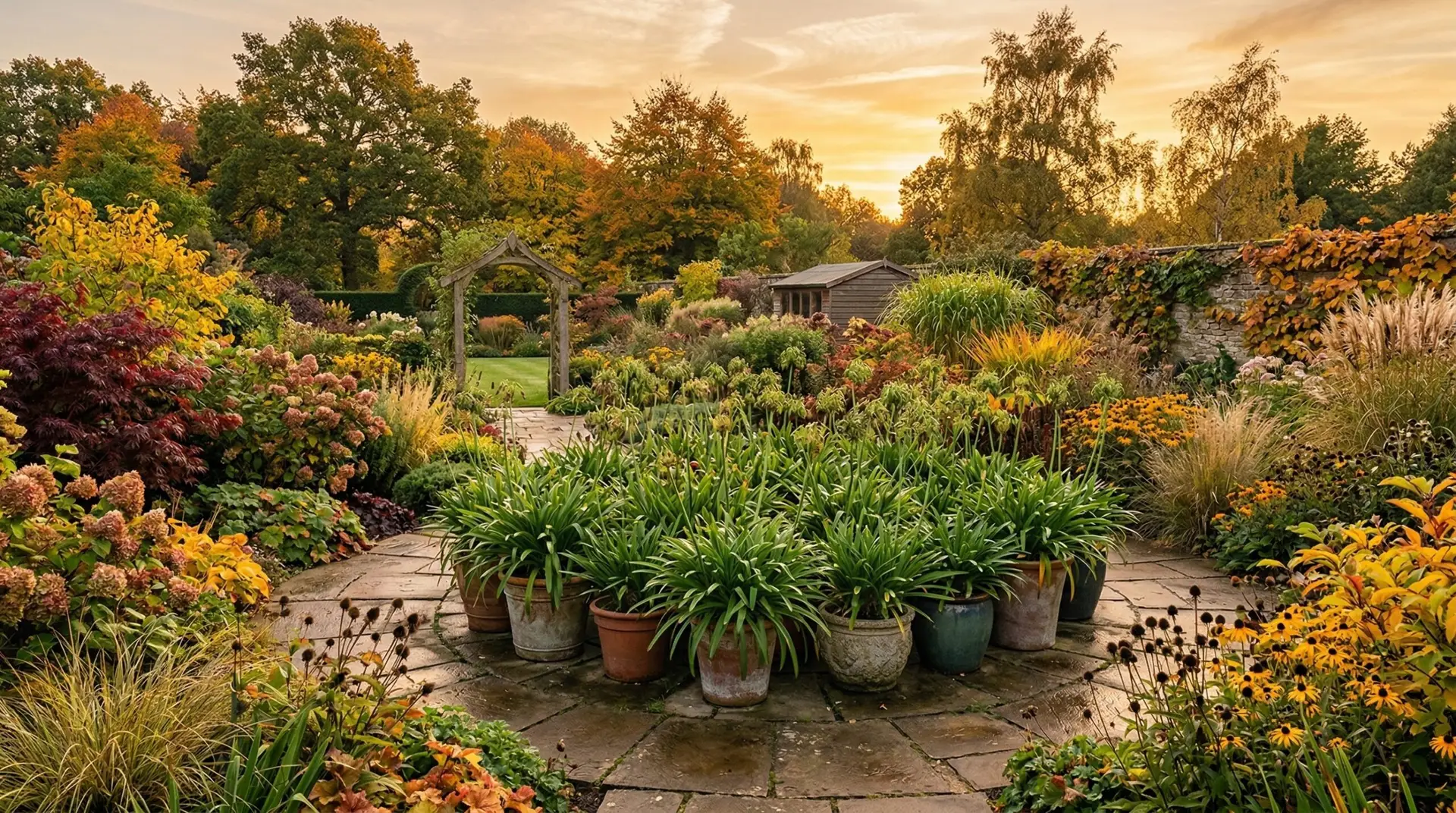
Growing conditions dictate everything in the garden, and taking a one-size-fits-all approach to plant care usually leads to disappointment. A gardener tending agapanthus in the mild, dry climate of coastal California experiences an entirely different plant than someone trying to keep the same species alive through a brutal Minnesota winter. Understanding your local context, including your specific USDA hardiness zone, winter moisture levels, and soil type, forms the absolute foundation of success with these South African natives. The evergreen varieties that perform reliably as permanent garden fixtures in Zone 9 will turn to complete mush after a single hard freeze in Zone 5. Deciduous varieties offer slightly more resilience, dying back to the ground naturally, but they still require careful intervention when planted outside their native temperature range. True success comes from evaluating exactly what your winter environment throws at your garden and adapting your approach to protect the fleshy root systems from freezing solid. Gardeners who ignore their local climate realities will inevitably lose their plants to the deep winter chill.
Understanding regional hardiness limits for agapanthus
Evaluating agapanthus cold hardiness requires looking closely at both the specific variety you are growing and the exact nature of your regional winters. In the warm climates of Zones 9 and 10, such as the Gulf Coast or Southern California, these plants remain in the ground year-round with virtually no winter protection required. Gardeners in the transitional areas of Zones 7 and 8 face a much trickier situation where the plants might survive a mild winter but perish during an unusual polar vortex. In these middle zones, the difference between an evergreen variety and a deciduous variety becomes a matter of life and death for the plant. Deciduous types retreat underground and can survive temperatures down to roughly fifteen degrees Fahrenheit if the soil remains relatively dry. Evergreen types keep their foliage all winter and suffer severe damage if temperatures drop below freezing for more than a few hours. When you garden in Zones 3 through 6, the ambient winter temperatures fall far below the survival threshold for any agapanthus root system, meaning you must pull the plants from the elements entirely.
In-ground winter protection for transitional zones
Gardeners in Zones 7 and 8 who choose to leave their deciduous agapanthus in the ground must manage soil moisture just as carefully as soil temperature. In the Pacific Northwest, where winters bring relentless cold rain rather than deep snow, the primary threat to dormant agapanthus roots is rot rather than freezing. Planting in raised beds filled with coarse sand and gravel helps ensure the rapid drainage necessary to keep the fleshy rhizomes from decaying in waterlogged winter soil. Conversely, gardeners in the arid Southwest might actually need to provide occasional winter water to keep the dormant roots from desiccating completely in the dry winter air. For temperature protection across these transitional regions, applying a thick layer of coarse mulch becomes mandatory right after the first light frost. Spread six to eight inches of pine straw, oak leaves, or coarse bark over the crowns to insulate the soil and prevent the destructive freeze-and-thaw cycles that heave roots out of the ground. You must pull this heavy mulch layer back promptly in early spring before the new shoots begin trying to push their way through the dense, wet material.
Container storage strategies for deep winter regions
When growing in the freezing climates of the Midwest or Northeast, the most reliable method for overwintering agapanthus involves growing the plants in large containers that can be moved indoors. Before the first hard frost hits your region, you must relocate the pots to a cool, dark location that stays consistently between forty and fifty degrees Fahrenheit. An unheated attached garage, a cool basement, or a heavily insulated shed provides the perfect environment to induce the deep dormancy these plants need to rest. The process is quite similar to the way northern gardeners handle other tender bulbs, where you might dig and store a canna lily rhizome in peat moss for the winter months. If you do not have space for heavy pots, you can carefully unearth the agapanthus root balls, shake off the excess garden soil, and store the bare fleshy roots in boxes of dry sand or vermiculite. This bare-root storage method mimics the resting period required by an amaryllis bulb before it begins a new growth cycle. Whichever storage method you choose for deep winter climates, the goal is to keep the roots completely dormant until the threat of spring frost passes.
Managing indoor light and moisture during dormancy
The specific environment of your winter storage area dictates how you manage moisture during the dormancy period. Proper agapanthus winter care in a dry, heated basement in Colorado requires a completely different watering schedule than storing the same plant in a damp, unheated Michigan garage. In highly arid indoor environments, you must check the soil in the containers once a month and provide just enough water to keep the root ball from pulling away from the sides of the pot. Giving the dormant plants too much water in a cool environment immediately encourages fungal diseases and root rot, which will destroy the plant long before spring arrives. Evergreen varieties stored indoors present an additional challenge because they retain their leaves and therefore require a source of bright, indirect light throughout the winter. Placing an evergreen agapanthus in a dark basement will cause the foliage to yellow and drop, severely weakening the plant and reducing its ability to bloom the following summer. Deciduous varieties stored in pots need absolutely no light during their winter dormancy and actually prefer complete darkness to prevent them from breaking dormancy prematurely.
Spring transition and utilizing microclimates
Moving your agapanthus back into the garden requires careful timing and an understanding of your property’s specific microclimates. Northern gardeners should wait until the soil warms completely and all danger of late spring frost has passed before bringing pots out of storage or planting bare roots back into the garden beds. You can give your plants a significant head start by utilizing the warmest microclimates in your yard, such as a protected south-facing brick wall that absorbs solar radiation and warms the surrounding soil. Planting near a solid windbreak or a dense hedge helps protect the emerging foliage from the harsh, drying spring winds common across the Great Plains. Gradually acclimating the plants to outdoor sunlight over a period of two weeks prevents the tender, shade-grown winter foliage from suffering severe sunburn. The ultimate lesson of overwintering tender perennials is that observing and manipulating your immediate local environment yields far better results than fighting against your regional climate. Learning to read your specific soil drainage, winter temperatures, and seasonal moisture patterns allows you to successfully grow plants that technically belong in a completely different part of the world.
More About Agapanthus
The meaning and symbolism of agapanthus flowers across cultures
Why your agapanthus is not blooming and how to fix it
Evergreen versus deciduous agapanthus and which type suits your garden
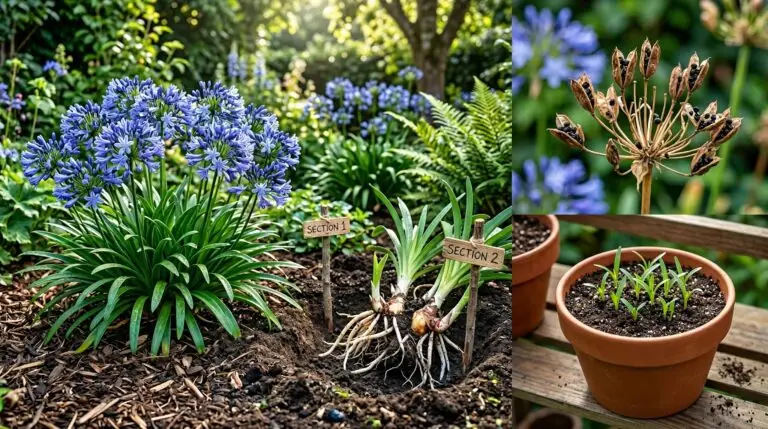
How to divide and propagate agapanthus for more plants every season
Growing agapanthus indoors as a striking houseplant that actually blooms
Companion plants for agapanthus: what to grow, avoid
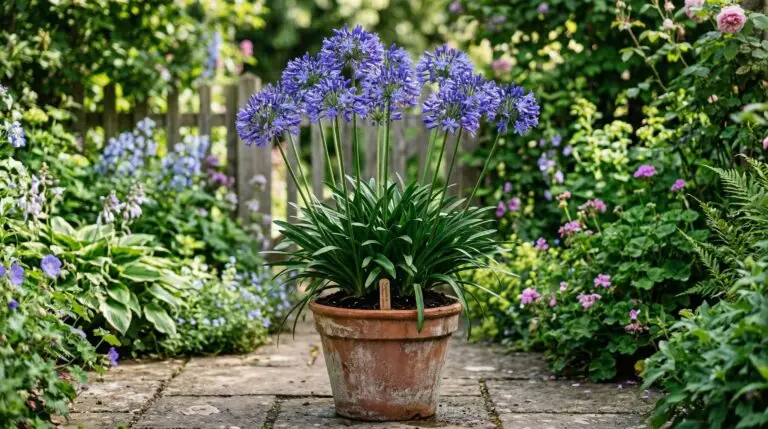
How to grow agapanthus in pots and containers for a spectacular patio display