The pairing · pick a flower
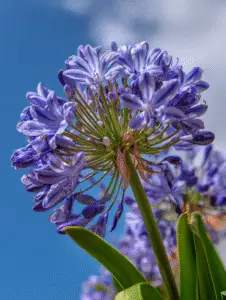 Agapanthus+
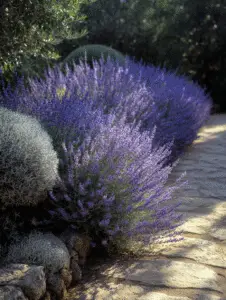 LavenderProven
Same full sun, same lean fast-draining soil, same dry-between-waterings rhythm; silvery spikes echo agapanthus's blue-purple umbels without asking for a different watering can.
Agapanthus+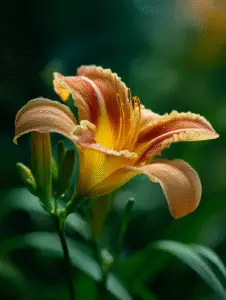 DaylilyProven
Named directly by university extension as a classic partner: lemon-yellow flowers sit as a complementary color against agapanthus's blue, and both plants take full sun and ordinary garden soil in stride.
Agapanthus+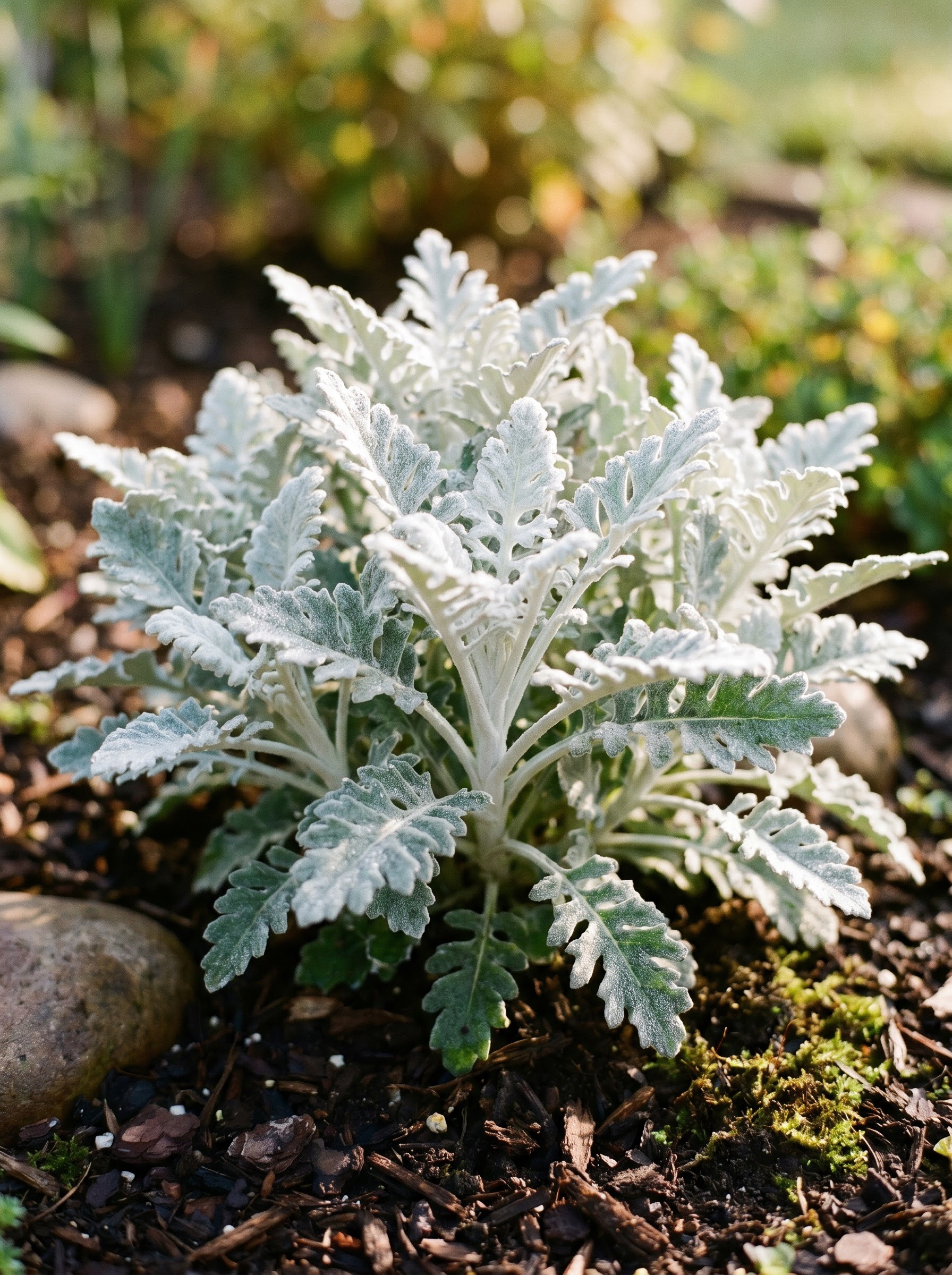 Dusty millerProven
Directly recommended by university extension for a subtle silver-and-blue echo; drought-tolerant, full-sun foliage that never competes for water the way a lush groundcover would.
Agapanthus+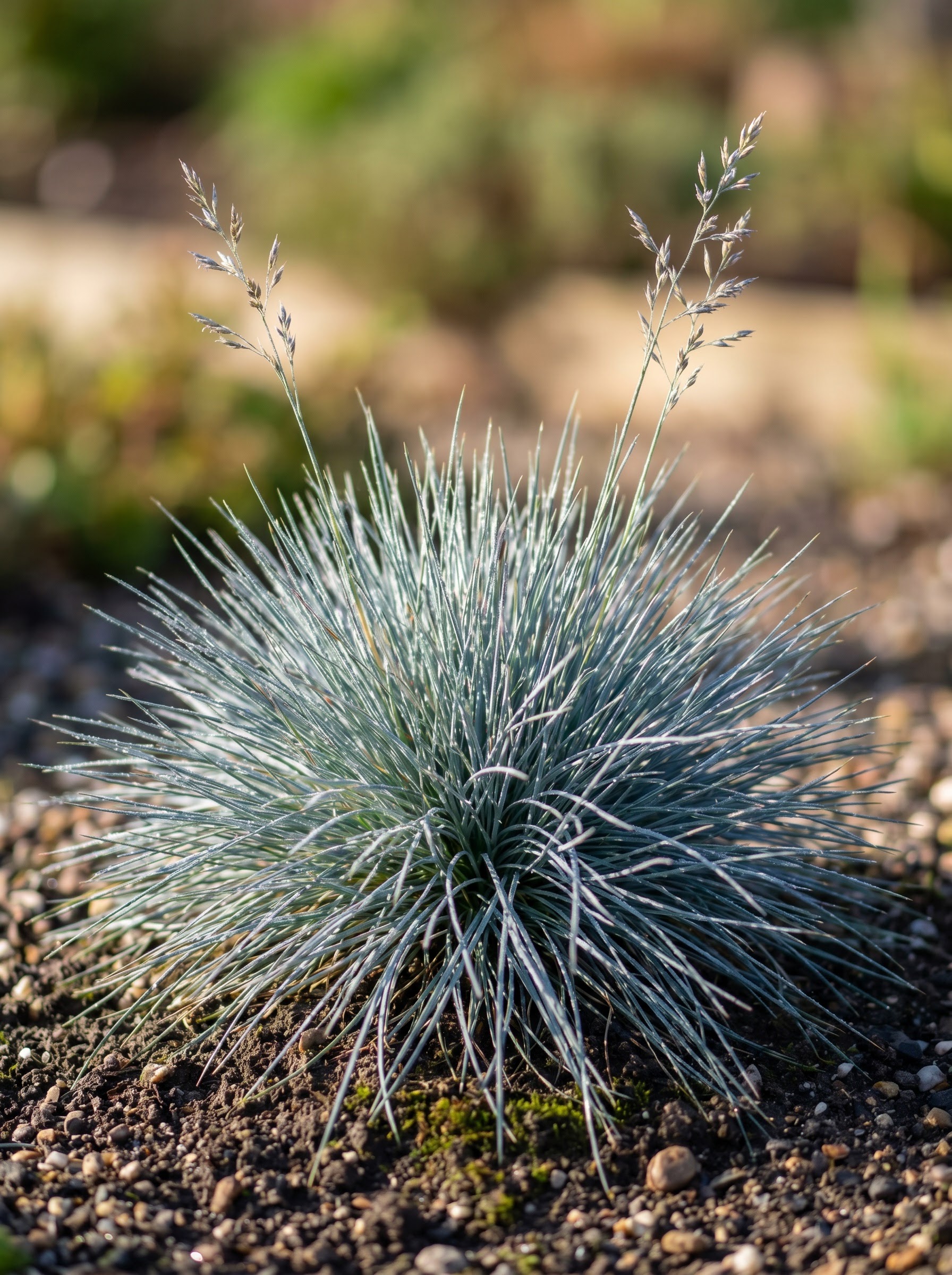 Ornamental grassesPartial
Fine, airy, drought-tolerant grasses share agapanthus's sun and drainage needs exactly and give the strongest available textural foil to its coarse, rigid straps.
Agapanthus+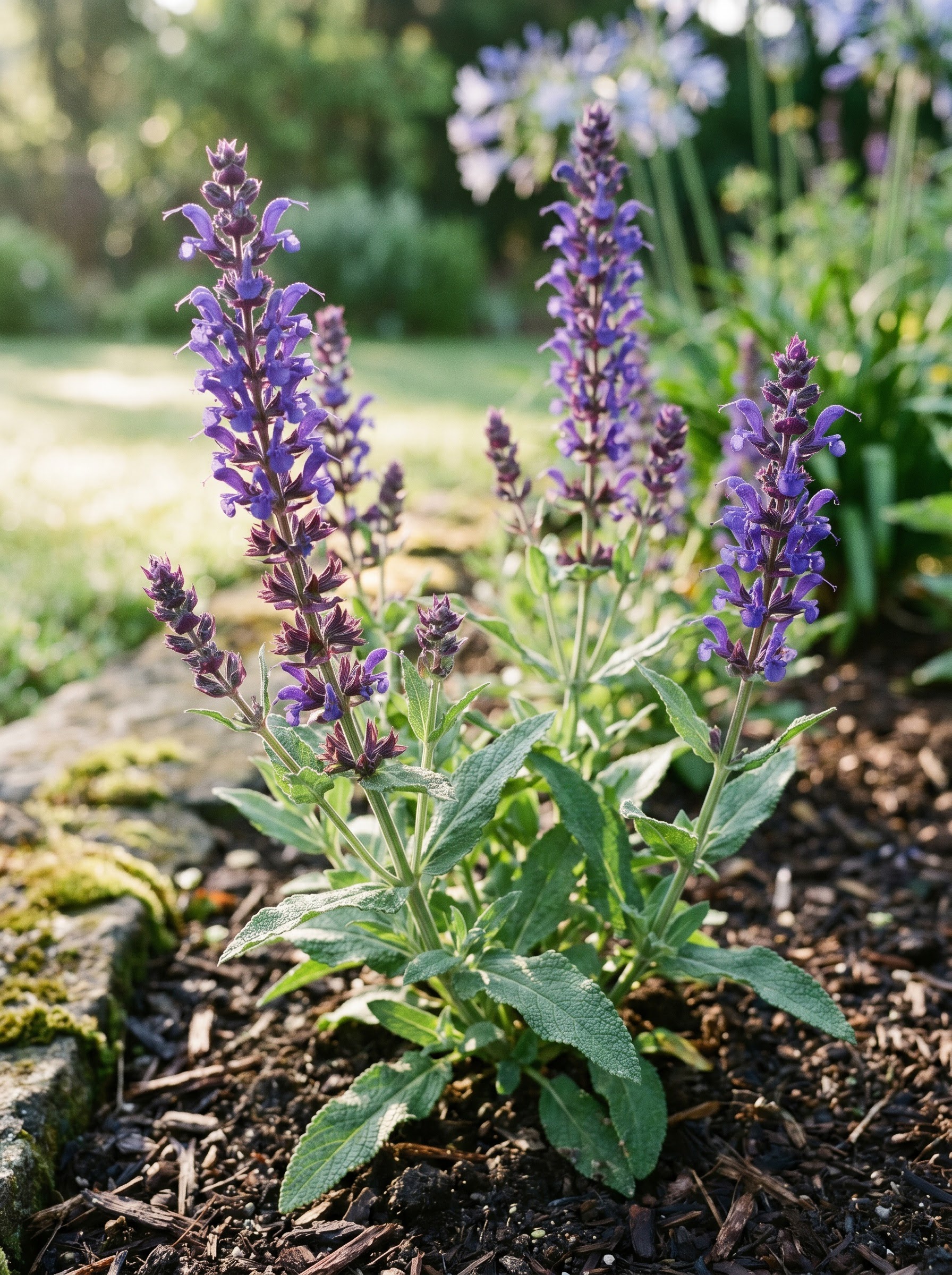 Ornamental salviaFolklore
Shares the same full sun and sharp drainage, and its upright flower spikes give the vertical-versus-globe contrast that makes agapanthus's round umbels read more clearly in a bed.
Agapanthus+RosemaryPartialClassic Mediterranean-garden logic: the same full sun, the same excellent drainage, and the same drought tolerance once established, so a shared pot or bed edge never forces a watering compromise.
Agapanthus+ MarigoldProven
Named directly by university extension as a companion whose warm yellow and orange tones read as a complementary contrast against agapanthus's blue, and it takes the same full sun without fuss.
Agapanthus+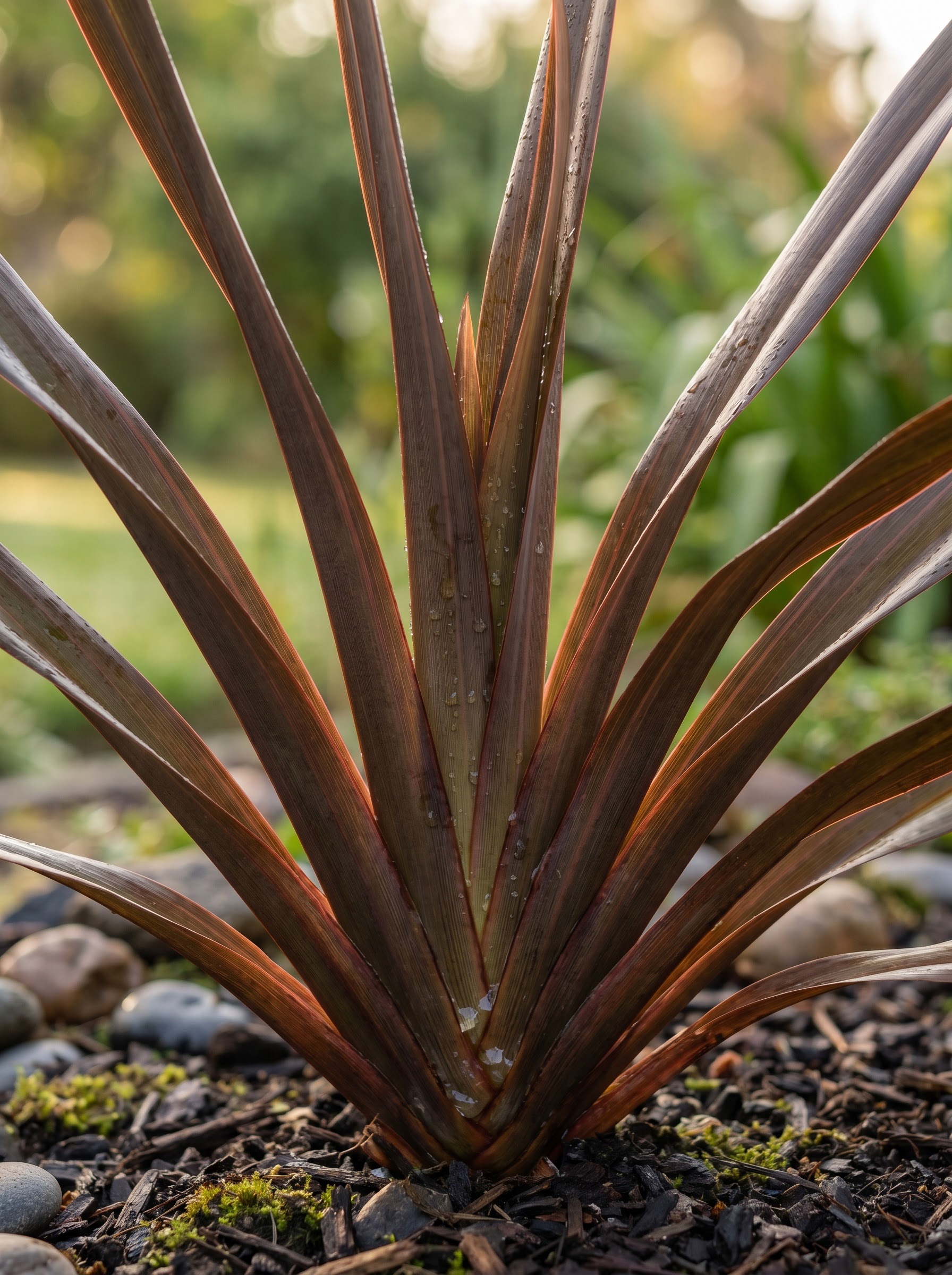 PhormiumFolklore
Architectural, sword-shaped evergreen foliage gives strong year-round contrast to agapanthus's own strappy leaves and shares its preference for full sun and sharp drainage, though it wants real room to reach full size.
Agapanthus+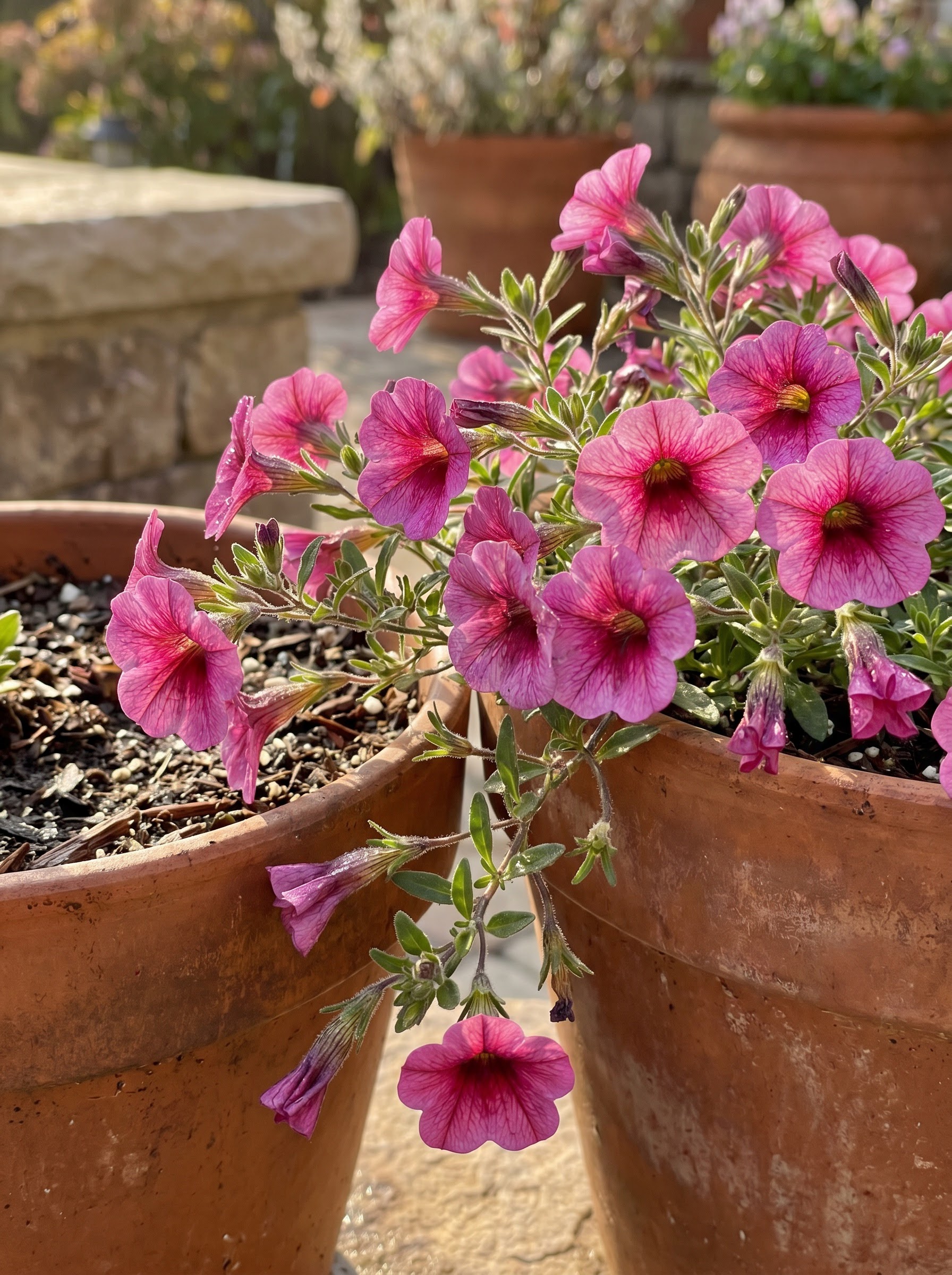 Trailing calibrachoaFolklore
A shallow-rooted annual spiller that shares the same free-draining container mix without competing for the agapanthus's own root run, softening the pot's rim while the strappy foliage does the structural work.
Agapanthus+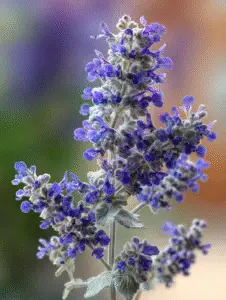 CatmintFolklore
A compact, drought-tolerant mound that fills a pot's edge or bed front without hogging water, and its haze of small blue flowers keeps a low, informal counterpoint under the taller agapanthus stems.
All agapanthus companions
10 flower companions, best match first
What not to plant near agapanthus
Most bad neighbours are not evil, they just want the opposite light, water or root run. Here is what to keep away, and what to do instead.
Regularly watered, moisture-loving bedding plants (pansies, violas, astilbe, or hydrangea sharing a pot)
Agapanthus's thick, fleshy, water-storing roots do not tolerate waterlogged soil, while these companions want consistent moisture; satisfying one starves or drowns the other, and there is no watering schedule that keeps both happy in the same root zone.
Vegetables in a mixed edible bed, tomatoes especially
Most vegetables want frequent, even watering to keep producing, which is the same water-schedule conflict that rules out pansies and astilbe; tucking agapanthus into a vegetable bed forces the same lose-lose choice on a larger scale.
Large, thirsty surface-rooted trees (willow, poplar, maple)
Big water-hungry trees out-compete agapanthus's shallower root run for water and nutrients, and their canopy shade cuts into the full sun agapanthus needs for good flowering; this is a siting problem more than a pairing problem, but it matters near an established tree line.
Dense shade-casting shrubs or perennials crowded in close
Bloom quantity drops when agapanthus does not get at least 6 to 8 hours of direct sun daily, so any neighbor tall or dense enough to cast real shade over the clump quietly cuts flowering the following season.
Strongly acid-soil shrubs (azalea, rhododendron, camellia)
This one is softer than it sounds: azalea and rhododendron genuinely need strongly acidic soil, pH 4.0 to 5.5, to take up nutrients at all, but agapanthus itself is not documented as pH-sensitive and grows fine in ordinary garden soil, so the real conflict is usually the shade these shrubs cast, not the soil chemistry.
The best companions for agapanthus, explained
Agapanthus is not a shade plant looking for cover or a hungry feeder looking for support. It is a sun-loving, drought-adapted perennial with thick, fleshy, water-storing roots, closer in temperament to a Mediterranean herb than to the moisture-hungry border perennials it often gets photographed beside. That single fact should drive every companion decision here. The plants that actually thrive alongside agapanthus are the ones that want the same thing it does: full sun, sharp drainage, and a chance to dry out between waterings. Lavender is the standout match for exactly this reason. Both plants want the same lean, fast-draining soil and the same six-plus hours of direct light, and lavender’s silvery spikes echo agapanthus’s blue-purple umbels without asking for a different watering can. University extension guidance backs this pairing about as solidly as this category gets.
Two more pairings carry direct extension endorsement, which is rare in companion planting and worth leaning on. Daylily is named specifically by Wisconsin Horticulture Extension as a classic partner: its lemon-yellow trumpets sit as a true complementary color against agapanthus’s blue, and both plants shrug off full sun and ordinary garden soil. Dusty miller gets the same direct nod, its felted silver foliage supplying a quieter, more subtle echo of agapanthus’s cool tones. Beyond those two, the strongest design logic points toward shape and texture contrast rather than color alone. Ornamental grasses, upright salvia, and rosemary all share the same sun and drainage requirements and all bring something agapanthus’s own strappy leaves and globe-shaped flower heads cannot: grasses add fine, airy movement against agapanthus’s rigid coarseness, while salvia’s vertical spikes give the bed a shape agapanthus, with its round umbels on bare stems, simply does not have on its own. None of this is exotic advice. It is the same sun-and-drainage logic that makes any xeric or Mediterranean-style planting scheme work, applied honestly to one specific flower instead of dressed up as something more mysterious.
Container growing deserves its own mention here, because for a meaningful share of agapanthus growers it is not a side note but the main event. North of USDA zone 8, agapanthus is commonly grown in a pot and moved indoors or into a garage for winter, and the plant actually blooms better when its roots are somewhat restricted rather than given a large bed to spread through. That changes which companions make sense. A shallow-rooted, trailing annual like calibrachoa can soften the rim of a mixed patio pot without competing for the agapanthus’s own root run, and a compact herb like rosemary or a low mound of catmint fills a pot’s edge on the same free-draining mix. The rule does not change in a container: whatever shares the pot needs to tolerate the same dry-down between waterings, or one of the two plants loses.
What not to plant near agapanthus
Here is the honest core of this page, and it is a genuinely different mechanism than most flowers’ avoid lists. Agapanthus is not vulnerable to shading or to aggressive pest transfer the way many companion-planting guides imply. Its real weakness is water-schedule mismatch, and it comes directly from the plant’s anatomy: those thick, fleshy roots are built to store water like a succulent, and university extension guidance states plainly that agapanthus does not tolerate waterlogged soil. Plant it next to something that wants consistent moisture, like pansies, violas, astilbe, or a hydrangea sharing the same pot, and there is no watering schedule that satisfies both. Water often enough to keep the moisture-lover happy and you rot the agapanthus’s roots. Let the soil dry the way agapanthus needs and the thirstier neighbor struggles or dies. This is not a minor caveat; it is the single most common way agapanthus fails, and it applies just as directly to a mixed vegetable bed, since most vegetables want the same frequent, even watering.
Two more avoid mechanisms are real but secondary. Large, thirsty, surface-rooted trees, willow, poplar, and maple among the usual offenders, will out-compete agapanthus’s shallower root system for water and nutrients while their canopy shade cuts into the sun it needs for good bloom. This is more a siting problem than a true companion conflict, the same pattern that shows up for almost any perennial planted too close to an established tree line, but it is worth a line since gardens with mature trees run into it constantly. Dense, shade-casting shrubs or perennials crowded in close cause the same reduction in flowering through a simpler mechanism: agapanthus needs at least six to eight hours of direct sun to bloom well, and anything tall or bushy enough to block that light will quietly thin out next season’s flower stalks even if nothing else about the pairing is wrong.
One more claim shows up constantly in consumer companion-planting lists, and it deserves to be named and set aside rather than quietly dropped. Several sources warn that acid-loving shrubs like azalea, rhododendron, and camellia clash with agapanthus over soil pH. It is true that those shrubs genuinely need strongly acidic soil, pH 4.0 to 5.5, to take up nutrients at all. But agapanthus itself is not documented by any extension source as pH-sensitive; it grows fine in ordinary garden soil across a wide range. The real friction, where it exists, is almost always the shade these shrubs cast rather than any chemistry in the ground, so this belongs on the page as a soft caveat, not a hard rule. A few claims that circulate widely online do not belong on this page at all. Fennel, eucalyptus, and Russian sage or salvia are sometimes called allelopathic threats to agapanthus, and garlic and potatoes are sometimes blamed for attracting shared pests. None of it holds up against extension sourcing, and the salvia claim in particular contradicts itself, since salvia is simultaneously recommended by the same genre of source as a top companion. Listicle padding, not horticulture. One more honest note belongs here for the same reason: agapanthus is documented as an environmental weed across every state in Australia, where older self-seeding varieties escape cultivated beds and outcompete native bushland, and it is increasingly showing up naturalized along the California coast too. That is not a reason to avoid growing it, only a reason to check the cultivar first, since many newer varieties are bred sterile or seedless and solve the problem while keeping the same flower.
Do they like the same conditions?
State the ruler plainly, because it is what separates an honest match from a decorative one. Agapanthus wants full sun, six to eight hours of direct light for its best bloom, tolerating partial shade but flowering visibly less in it. It wants regular water while actively growing, but the soil has to dry between waterings, and it will not forgive being kept consistently damp. Soil should be well-drained and reasonably fertile; drainage is the part that cannot be compromised. And here is the honest myth-buster worth stating directly: unlike hydrangea, where soil pH genuinely controls flower color, agapanthus is not documented as pH-sensitive at all. You do not need to chase a specific pH range for this plant the way you might for a blueberry or an azalea. Ordinary garden soil, kept on the drier side and given good drainage, is enough.
That ruler is why lavender, salvia, rosemary, ornamental grasses, and daylily all appear on the companion list above and why pansies, astilbe, and shade-loving shrubs do not. Every genuine match on this page shares at least the sun and drainage half of that profile, and the best matches share the water-schedule half too. USDA hardiness sits at roughly zone 7a to 11b outdoors for most cultivars, with newer series like Galaxy hardy to zone 6a, and north of zone 8 agapanthus is routinely grown as a container plant rather than left in the ground over winter. That single zone fact reframes the whole companion question for a large share of readers: the real design decision is not just what shares a bed, but what shares a pot on a patio for six months of the year, brought in before frost and set back out once it passes.
How to plant them together
Space most in-ground companions 12 to 24 inches from the agapanthus clump, adjusting for how large each one gets at maturity. Lavender, rosemary, and salvia all want 18 to 24 inches to give both plants room to breathe and to dry out independently at the soil surface. Lower, more compact partners like dusty miller or catmint can sit closer, 8 to 14 inches, since they stay shallow-rooted and don’t compete hard for water. Daylily and marigold are forgiving on spacing but daylily clumps widen over a few seasons, so leave it room to expand rather than crowding the agapanthus base from the start. Ornamental grasses do best 18 to 24 inches out, and it pays to choose restrained, clumping species like Festuca or Stipa over larger spreading types, since a big Miscanthus can eventually crowd a mature agapanthus clump over several years even though nothing about the initial pairing was wrong.
In a container, the calculus shifts. Because agapanthus actually blooms better when its roots are somewhat restricted, resist the urge to give it a huge pot just to fit more companions in. A single agapanthus with a ring of trailing calibrachoa or a low mound of catmint at the rim works better than trying to fit several thirsty plants into the same root zone. Water for the agapanthus’s schedule, letting the mix dry noticeably between waterings, and choose spillers and edging plants that tolerate that same rhythm rather than ones that wilt the moment the soil isn’t damp. Timing bloom overlap is straightforward since most of these companions peak in the same early-to-late summer window agapanthus does: lavender and salvia often lead slightly, daylily and marigold run alongside, and ornamental grasses simply hold their foliage interest well past agapanthus’s own bloom, giving the bed something to look at once the flower stalks fade.
Does companion planting actually work for agapanthus?
Some of it, yes, honestly and provably. The daylily and dusty miller pairings are not folklore dressed up as fact; they come directly from university extension guidance recommending those specific combinations for their color logic. The underlying mechanism behind the whole avoid list, that agapanthus’s fleshy roots rot in waterlogged soil, is stated plainly by extension sources rather than inferred from a listicle. Full sun as a requirement for good bloom is equally well documented. Those are not judgment calls; they are closer to settled fact.
Other parts of this page are honest design reasoning rather than proven horticultural science, and they are labeled that way rather than dressed up. Salvia’s shape contrast, Phormium’s textural contrast, catmint’s compact pot-edge habit, and calibrachoa’s role as a container spiller are all genuinely sound design logic and genuinely popular pairings, but none of them carry a specific research citation tying the pairing itself to a documented benefit; they earn a Folklore tier honestly rather than a false Proven label. The acid-soil-shrub caveat sits in between: the shrubs’ pH needs are well documented, agapanthus’s indifference to pH is not equally well documented, so it survives on this page as a soft caveat rather than a confident avoid rule. That is the actual, unglamorous verdict: real, extension-backed matches exist for this flower, real avoid mechanisms exist and are worth respecting, and a meaningful chunk of what circulates online about agapanthus companions is popular but unproven, which is a very different thing from false.
Frequently asked questions
What can I plant in front of agapanthus?
Low, drought-tolerant fillers that won’t compete for water work best: dusty miller, catmint, or a low salvia all sit comfortably at the front of an agapanthus clump without crowding its roots.
What should you not plant near agapanthus?
Avoid anything that needs consistently moist soil, like pansies, violas, or astilbe, since satisfying their water needs will rot agapanthus’s fleshy roots. Dense shade-casting shrubs and large thirsty trees are the other main avoids.
Can you plant agapanthus and lavender together?
Yes, and it is close to the safest pairing on this page. Both want full sun, lean well-drained soil, and a dry-down between waterings, so there is no real conflict to manage.
Does agapanthus need acidic soil?
No. Unlike azalea or blueberry, agapanthus is not documented as pH-sensitive and grows well in ordinary garden soil. Drainage matters far more than pH for this plant.
What grows well with agapanthus in a pot?
Shallow-rooted trailing annuals like calibrachoa or petunia, and compact Mediterranean herbs like rosemary, both share the same free-draining container mix without competing for the agapanthus’s own restricted root run, which the plant actually prefers.
Sources
- Agapanthus, Wisconsin Horticulture (University of Wisconsin-Madison Extension)
- Agapanthus praecox, North Carolina Extension Gardener Plant Toolbox
- Agapanthus spp. and hybrids (FP018), UF/IFAS Extension
- How to Grow English Lavender in Your Garden, Utah State University Extension
- What are suitable planting sites for azaleas and rhododendrons?, Iowa State University Extension
More About Agapanthus
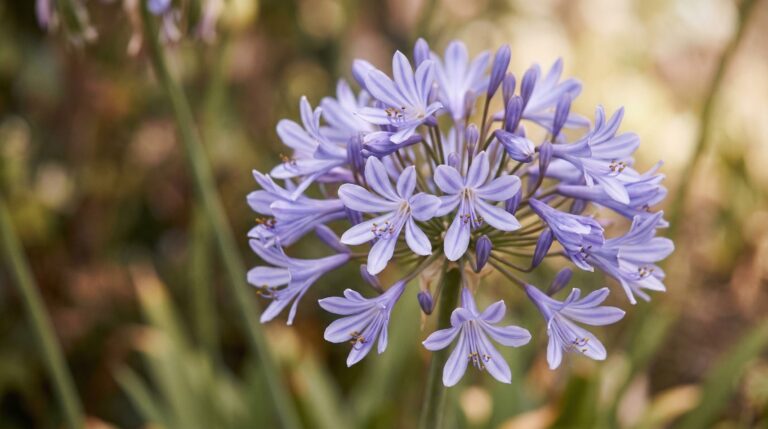
The meaning and symbolism of agapanthus flowers across cultures
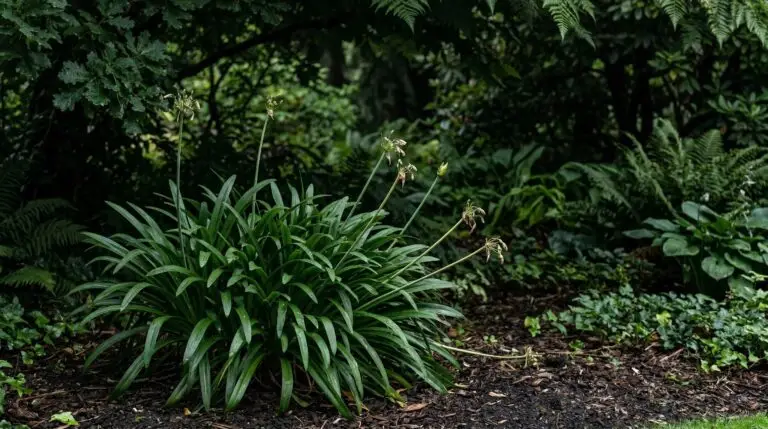
Why your agapanthus is not blooming and how to fix it
Evergreen versus deciduous agapanthus and which type suits your garden
How to divide and propagate agapanthus for more plants every season
Growing agapanthus indoors as a striking houseplant that actually blooms
How to grow agapanthus in pots and containers for a spectacular patio display
Agapanthus wedding bouquets and floral arrangements that feel effortlessly elegant
Overwintering agapanthus in cold climates without losing your plants