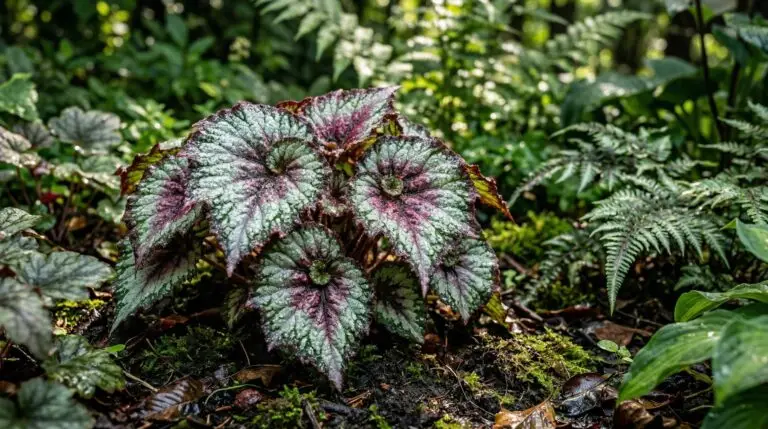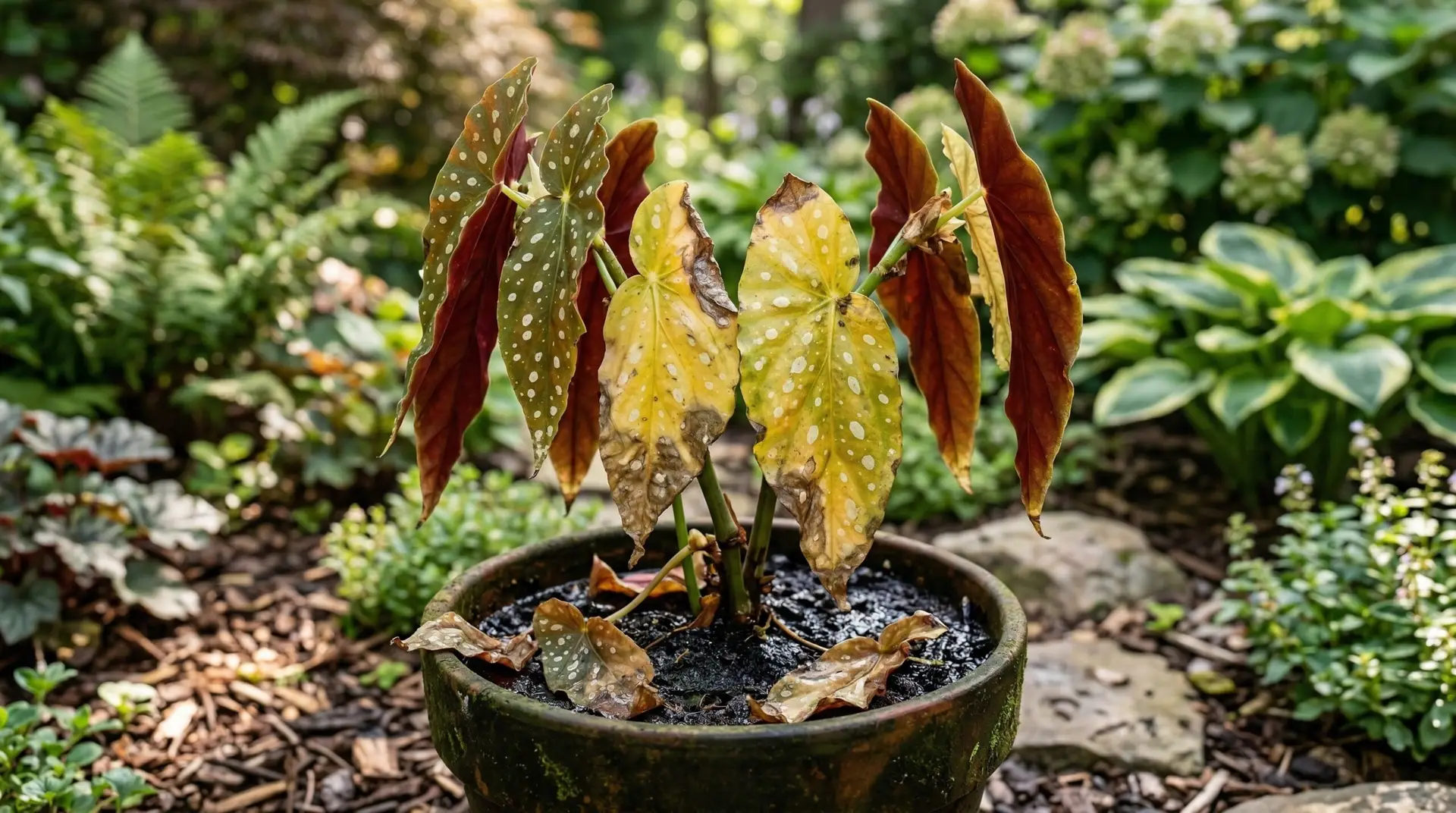
You bring a healthy begonia home, set it on a table, and within a week the leaves are curling, spotting, or hitting the floor. People get frustrated quickly and assume they lack the necessary skills to handle begonia problems indoors. The truth is that these plants are incredibly communicative and will show you exactly what is wrong if you know how to read their physical symptoms. Whether you are growing a flashy Rex begonia or a tall cane variety, the plant reacts to environmental stress rapidly through its foliage. The key to saving your plant is looking closely at the specific type of damage occurring. Once you match the symptom to the underlying stressor, you can reverse the decline and get the plant back on track.
Diagnosing and fixing dropping leaves
When a begonia begins dropping leaves that still look relatively healthy or slightly yellowed, it almost always means the soil is staying too wet. Begonias have delicate, fine root systems that rot very easily when suffocated by heavy, waterlogged potting mix. If you suspect overwatering is causing your begonia dropping leaves, pull the plant out of its pot and inspect the root ball. Healthy roots should be firm and pale, whereas rotting roots will look dark, feel slimy, and often emit a sour, swampy smell. The immediate fix is to let the top few inches of soil dry out completely before you water again. You will likely need to repot the plant into a lighter soil mixture heavily amended with perlite to ensure excess water drains away instantly. Temperature stress from nearby drafty windows or heating vents will also cause sudden leaf drop, so ensure your plant sits in a stable environment away from direct air currents.
Why begonia leaves curl and crisp at the edges
When you see the edges of the foliage turning crispy and curling inward, the plant is usually suffering from low humidity or chronic underwatering. Many popular indoor varieties originate in tropical environments where the air remains consistently thick with moisture. Indoor heating and cooling systems strip moisture from the air, causing the broad, textured leaves to lose water faster than the roots can pull it up. To resolve begonia curling leaves, you must increase the ambient humidity around the plant without keeping the soil constantly wet. You can group your begonia closely with other moisture-loving tropicals like an anthurium to create a localized microclimate of higher humidity. Placing the pot on a wide tray filled with pebbles and water is another effective way to provide consistent moisture to the air as the water evaporates. You should never mist the leaves directly with a spray bottle, because standing water on the foliage invites severe fungal diseases.
Identifying brown spots and powdery mildew
Begonia brown spots can indicate several different issues depending on where they appear and what texture they have. If you see large, dry, bleached patches right in the middle of the leaves, the plant is likely suffering from sunburn due to harsh, direct sunlight. Moving the plant a few feet back from the window into bright, indirect light will stop new sunburn patches from forming. If the spots are small, dark, water-soaked, and surrounded by a yellow halo, you are dealing with a bacterial leaf spot infection. This bacterial issue happens when water splashes onto the leaves during watering and sits there, creating a perfect breeding ground for disease. You must use sterilized scissors to remove the heavily infected leaves immediately and commit to watering only the soil at the base of the plant. Another frequent foliage issue is powdery mildew, which manifests as white, dusty circular patches that eventually cause the leaves to deform, requiring a commercial houseplant fungicide and better air circulation to cure.
Establishing a reliable care routine
The best way to avoid all these foliage issues is to establish a proactive care routine that respects the natural preferences of the plant. Start by selecting a pot with multiple drainage holes and using a porous soil mix that prevents water from pooling around the fragile roots. When you water the plant, soak the soil thoroughly until water runs out the bottom, and then empty the saucer completely so the pot never sits in a puddle. Wait until the top half of the soil feels completely dry to the touch before you water again, which forces the roots to seek out moisture and grow stronger. You should also pay close attention to air circulation, ensuring your plants are not crowded too tightly together on a shelf or windowsill. Much like growing impatiens indoors or in a shaded outdoor container, begonias need enough physical space for air to flow freely around their stems to prevent stagnant, damp conditions. By controlling your watering frequency, providing bright indirect light, and keeping the foliage totally dry, you eliminate the root causes of most common ailments.
Gardeners often panic when a plant starts looking rough and try to fix the problem by doing too much at once. They will flood the soil with water, move the pot to a brighter window, and pour liquid fertilizer into the soil all on the same afternoon. This sudden barrage of environmental changes shocks the plant further and usually accelerates its physical decline. The most useful piece of advice for dealing with a struggling begonia is to change only one variable at a time and wait a full week to observe the results. If you suspect overwatering, let the soil dry out and watch how the new growth responds before you start adjusting the light levels or humidity. Begonias are remarkably resilient plants that can bounce back from near total defoliation as long as the root system remains intact. Be patient, read the physical symptoms carefully, and give the plant the uninterrupted time it needs to recover in a stable environment.
More About Begonia
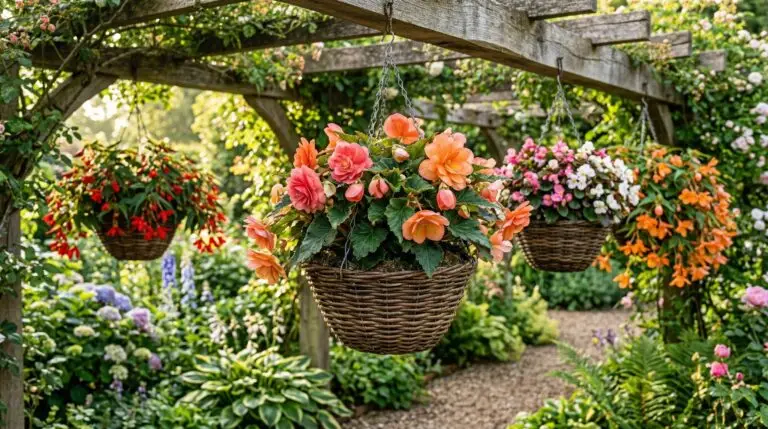
Growing tuberous begonias in hanging baskets for cascading summer color
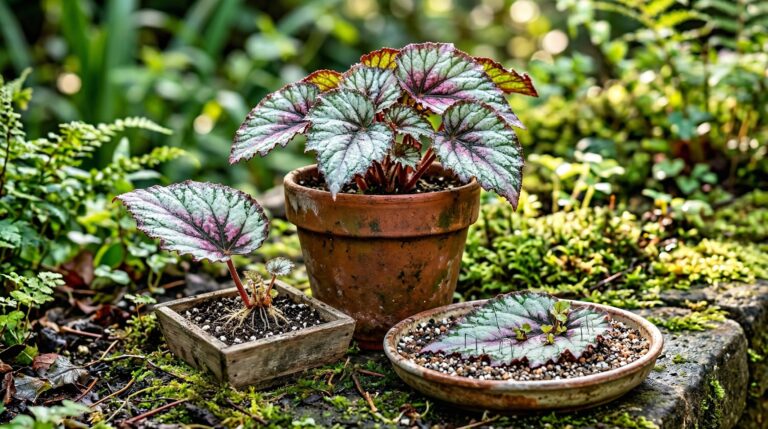
How to propagate begonias from leaf cuttings and stem cuttings step by step
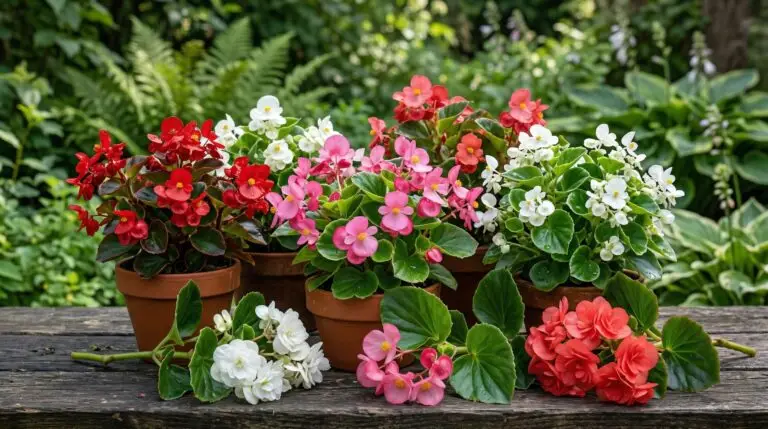
Best begonia varieties for shade gardens that add color where sun rarely reaches
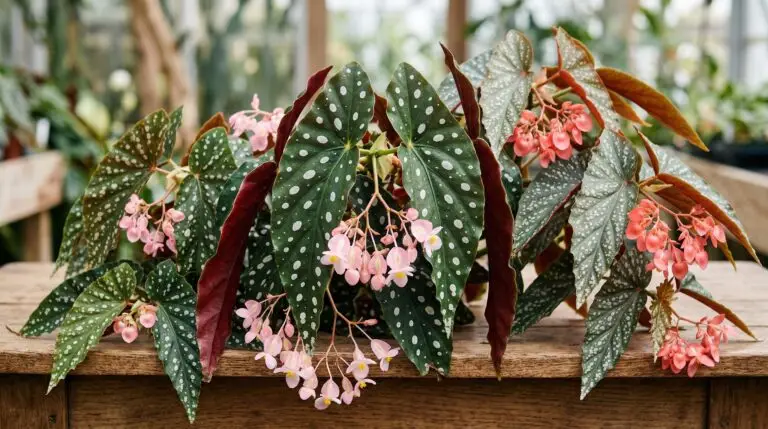
Angel wing begonias as statement houseplants with polka dot leaves and hanging clusters
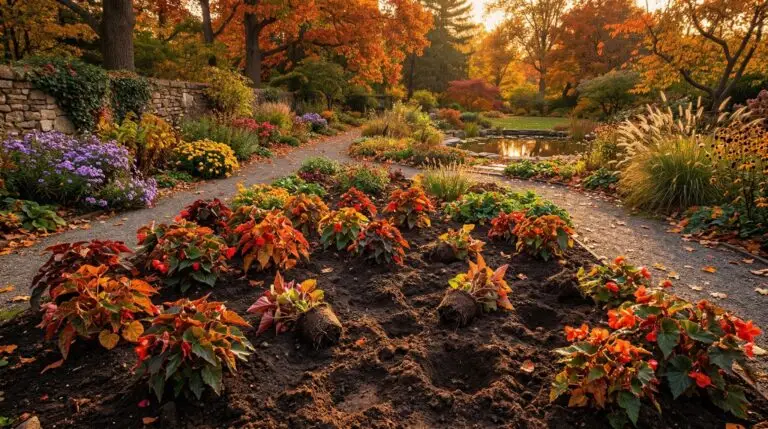
How to overwinter begonia tubers and bring them back bigger next summer
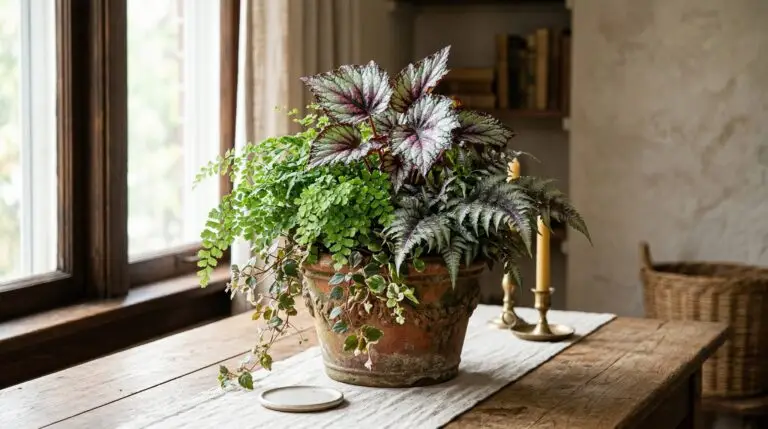
Begonia container combinations that look gorgeous on a shaded front porch
Begonia flower meaning and the Victorian message of caution and gratitude