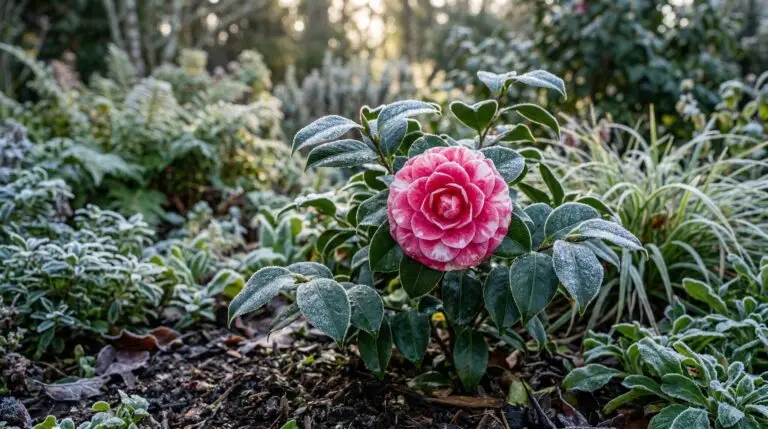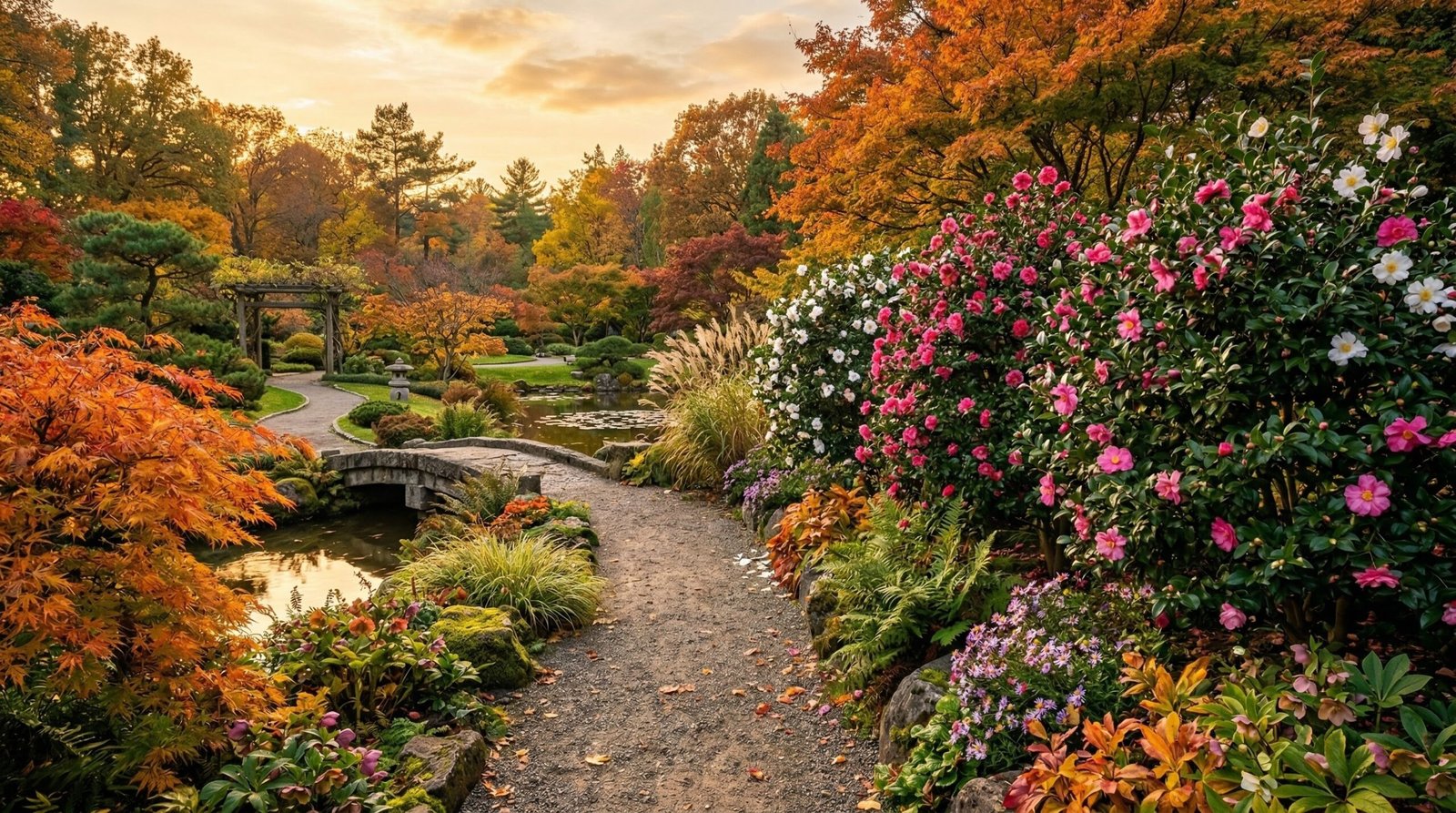
A camellia is the undisputed anchor of the cool-season garden. When most woody plants drop their leaves and retreat for winter, this evergreen shrub steps forward to define the spatial boundaries of a property. Designing a dedicated camellia walk allows you to orchestrate a long, deliberate sequence of blooms from October straight through April. The deep green, glossy foliage provides a permanent architectural structure that grounds the entire composition. You can treat these shrubs as the walls of an outdoor corridor, guiding visitors along a path while revealing different flower forms at each turn. The sheer mass of a mature camellia demands respect, requiring you to think carefully about how it interacts with the surrounding space and overhead tree canopies. Dappled shade from high-canopy trees offers the ideal lighting while protecting the delicate winter blooms from the harsh morning sun.
Structuring a continuous winter bloom
Achieving a six-month flower sequence relies on the careful pairing of two distinct species. You begin the progression with Camellia sasanqua, which opens its delicate, single or semi-double flowers in early autumn. These fall bloomers have a slightly looser, more graceful habit and smaller leaves, making them visually lighter and more adaptable to sunnier exposures. As the sasanquas fade in late December, the heavier Camellia japonica varieties take over the visual weight of the garden. Japonicas bring dense, formal structures and larger, coarser leaves that read as solid masses in the garden beds. By alternating these two types along a winding path, you create a seamless handoff of color that carries the garden through the bleakest months of the year. The contrast between the shattered, carpet-like petal drop of the sasanqua and the intact, heavy fallen blooms of the japonica adds another layer of seasonal interest to the ground plane.
Placing these shrubs along a pathway requires a strict evaluation of scale and proportion. You must account for the mature width of each plant so they do not swallow the walkway or force visitors to brush past wet foliage. Position the tall, upright japonica varieties at the back of the border or at the outside curves of the path to act as visual stops. These larger anchors draw the eye forward and give the viewer a distinct destination at the end of a sightline. Plant the more pliable, spreading sasanquas closer to the front edge, where their arching branches can soften the hard lines of the paving material. This stepped arrangement builds a layered wall of greenery that feels intentional and enclosed without becoming claustrophobic. Leaving adequate breathing room between the path and the base of the shrubs also prevents the space from feeling overgrown.
Color relationships in the cool season
Winter light is inherently cool and weak, which changes how we perceive color in the garden. Pure white and pale shell-pink blooms act as reflectors, illuminating shadowed corners and creating a serene, unified atmosphere under tall tree canopies. If you want to create drama, introduce deep crimson or saturated rose varieties as occasional punctuation marks. A dark red flower absorbs light, so it needs to be placed closer to the viewer or framed by lighter companion plants to be fully appreciated. Grouping similar colors together in drifts of three or five creates a much stronger impact than a chaotic mix of unrelated hues. A monochromatic scheme of white camellias against dark green leaves offers a highly sophisticated, classic composition that rests the eye. Mixing too many disparate colors in a single sightline dilutes the visual power of the individual blooms.
The heavy, leathery texture of camellia foliage requires immediate contrast at the ground level to prevent the planting bed from looking stagnant. The coarse leaves need the companionship of fine, dissected textures to create a balanced visual equation. Drifts of evergreen ferns planted at the base of the shrubs break up the solid wall of dark green with their airy, delicate fronds. You can also integrate hellebores beneath the canopy to echo the cup-shaped blooms of the shrubs above. The matte, palmate leaves of the hellebore provide a distinct textural shift from the glossy camellia leaves above them. This ground-level activity ensures the eye has something to explore while moving between the large focal points of the shrub layer. Carefully chosen underplantings also hide the bare lower trunks that sometimes develop on mature camellias.
Designing for year-round architectural presence
A successful camellia garden design must account for the six months when the plants are entirely green. During the summer, these shrubs recede into the background to serve as a solid, dark backdrop for other flowering plants. Their dense habit makes them perfect foils for white summer-blooming shrubs like gardenias, which benefit from the deep contrast behind their flowers. The dark green wall absorbs the bright summer sunlight, creating a feeling of coolness and depth in the garden bed. You can use this solid green mass to hide utility areas, block unwanted views, or define the edge of a formal lawn. Evaluating the plant purely for its foliage and form ensures the garden walk remains architecturally sound even in July. The strong silhouette of an unblooming camellia provides the necessary structure to keep looser summer perennials from looking messy.
As the final japonicas drop their petals in April, the garden requires a transitional element to bridge the gap into the warm season. Introducing azaleas at the terminus of the camellia walk or woven into the foreground creates a smooth handoff of blooming duties. The smaller, matte leaves of the azalea contrast sharply with the heavy camellia foliage, adding another layer of textural interest. This pairing maintains the structural integrity of the shrub border while shifting the color palette into the brighter tones of spring. When designing this transition, match the late-blooming camellias with early-blooming companions in complementary colors to create a brief, unified overlapping display. A late pink japonica paired with an early white azalea creates a highly intentional, elegant composition. The varying heights of these two spring bloomers allow you to build a tiered effect that slopes naturally toward the pathway.
The most effective way to unify a long garden walk is through the strict application of repetition. Selecting one specific camellia cultivar and planting it at regular intervals establishes a visual rhythm that pulls a visitor down the path. You might place a single, striking white japonica at every curve of a meandering trail to act as a recurring motif. This repetition gives the eye a recognizable pattern to follow, turning a random collection of shrubs into a cohesive, deliberate design. Treat the camellia not just as an individual specimen to be admired, but as a structural building block that organizes the entire garden space. By repeating forms, colors, and textures, you create a garden walk that feels like a singular, unified experience rather than a mere plant collection.
More About Camellia
Common camellia diseases including petal blight and scale and how to treat them
How to prune camellias for shape and size without sacrificing next season’s flowers
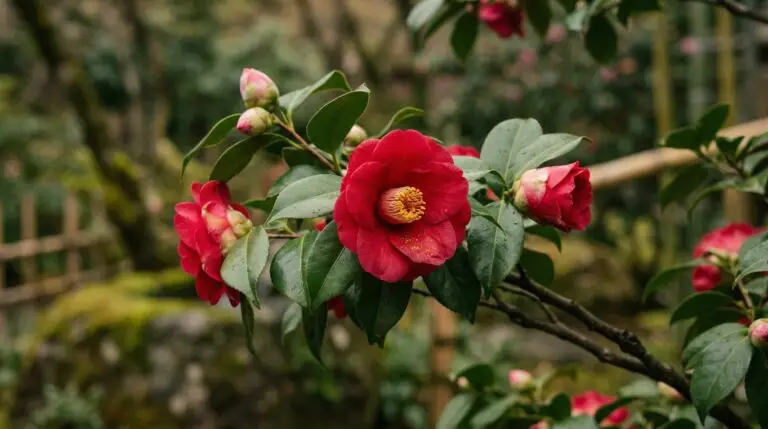
Camellia flower meaning in Japanese tea ceremony culture and garden traditions
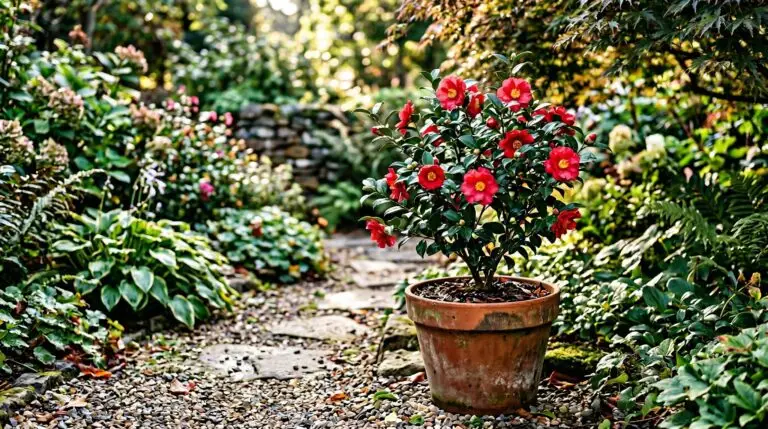
Growing camellias in containers for patios and northern gardeners who want blooms
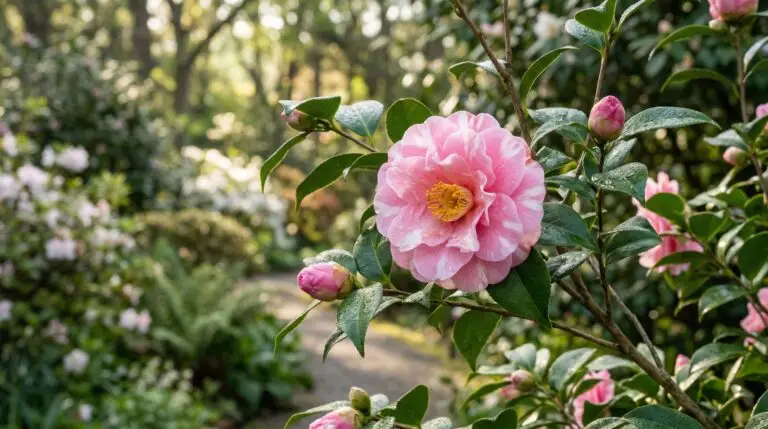
How to grow camellias in cold climates with the right varieties and winter protection
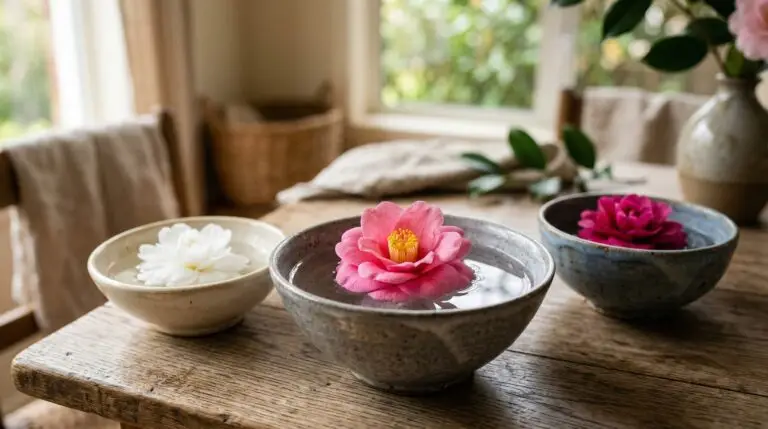
Using camellia flowers for floating arrangements and simple winter table decor