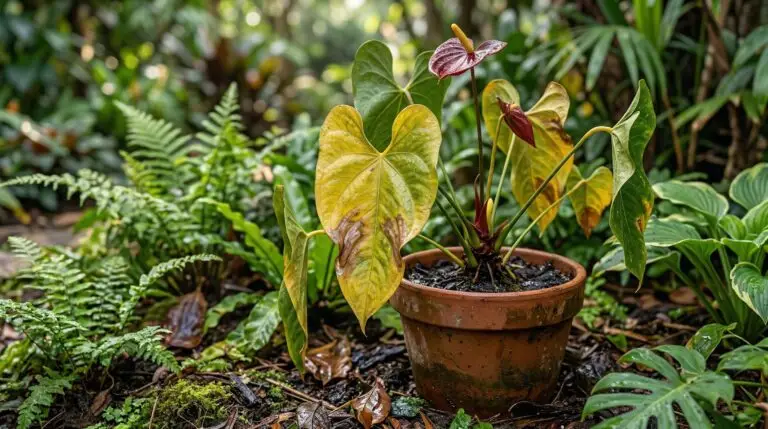
One of the first things gardeners ask when they start growing anthurium plants is why the leaves start looking sad and crispy around the edges after a few weeks indoors. People bring these plants home because of their bright spathes and glossy green foliage, expecting them to behave like standard houseplants. The reality is that anthuriums are native to tropical rainforests where the air is thick with moisture. This natural environment is vastly different from the dry, climate-controlled air inside most modern homes. The immediate thought is usually that the plant needs more water in its soil, but the actual problem is a lack of moisture in the air. This leads to the real question of how to replicate that jungle environment without actually turning your living room into a commercial greenhouse.
Why anthuriums struggle in normal home air
The natural follow-up question is whether regular room humidity is ever enough for these plants to thrive. Most homes sit at around thirty to forty percent humidity, which drops even lower when winter heating systems or summer air conditioners are running constantly. Anthuriums prefer their humidity levels to be closer to sixty or seventy percent to keep their leaves supple and their aerial roots healthy. When the air is too dry, the plant loses moisture through its leaves faster than its roots can pull water up from the soil. This rapid moisture loss results in brown, brittle leaf tips and flowers that fail to open fully or dry out prematurely. You might wonder if you should just water the plant more frequently to compensate for the dry air. Doing that usually just leads to root rot, because the soil becomes waterlogged while the leaves remain desperate for atmospheric moisture.
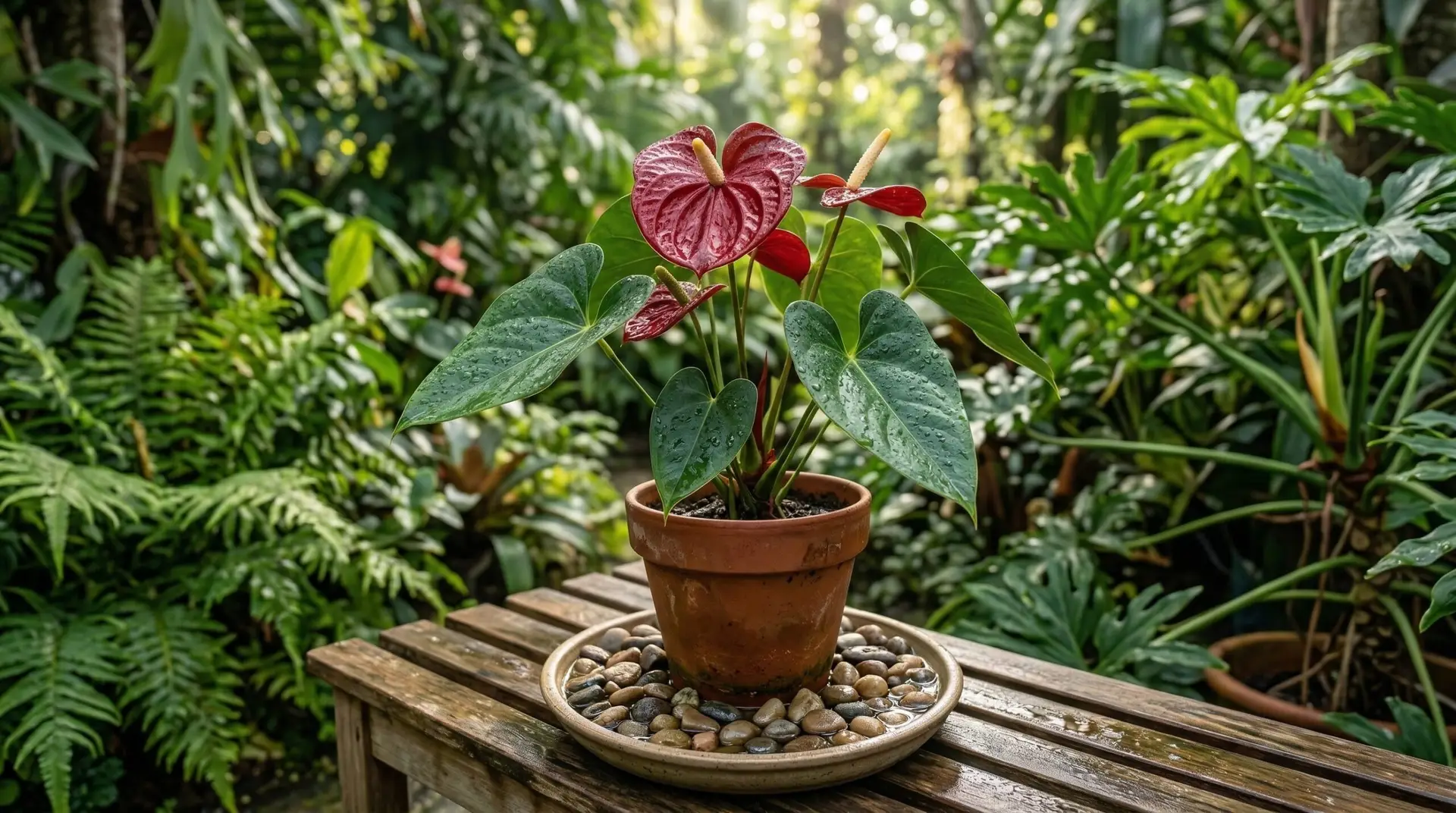
This leads to something many growers wonder about, which is the popular advice to just mist the plant with a spray bottle every day. Misting feels like you are actively helping the plant, and it does provide a very brief spike in local humidity. The problem is that the water droplets evaporate completely within ten or fifteen minutes, leaving the plant exactly where it started for the remaining twenty-three hours of the day. Consistent anthurium humidity requires solutions that provide a steady, ongoing source of moisture in the air directly surrounding the foliage. A much better passive method is to set up a pebble tray beneath the plant pot. You fill a shallow tray with small stones and pour water in until it sits just below the top of the pebbles. As the water slowly evaporates throughout the day, it creates a small, continuous column of humid air that rises right up through the leaves of your plant.
Creating a localized tropical microclimate
People often ask if one pebble tray is really enough to make a difference in a large, drafty room. A single tray helps, but you get much better results when you combine it with the strategy of grouping your plants together. Plants naturally release moisture into the air through a process called transpiration, essentially sweating out small amounts of water vapor from their leaves. When you place several tropical plants in a tight cluster, they share this transpired moisture and create a small, humid microclimate that benefits the whole group. You can place your anthurium next to a Moth Orchid or a fern, as they all enjoy similar atmospheric conditions. Even a large Bird of Paradise can act as a great companion plant because its massive leaves release a significant amount of moisture into the surrounding air. By the way, if you group plants this way, make sure their leaves are not physically touching, as some space is still needed to prevent pests from walking easily from one plant to another.
If passive methods are not quite enough, the next logical question is whether you need to invest in a dedicated room humidifier. For people living in very dry climates or homes with aggressive forced-air heating, a small evaporative or ultrasonic humidifier is often the most reliable way to provide proper anthurium tropical care. You do not need a massive unit designed for a whole house, as a small desktop model placed a few feet away from your plant shelf will do the job perfectly. You just want to ensure the mist is not blowing directly onto the leaves, which can cause water to pool and invite fungal issues. Many plant owners wonder if they can just move the plant to the bathroom instead of buying a machine. Bathrooms are naturally the most humid rooms in a house due to daily showers, making them an excellent environment for tropical plants. The catch is that anthuriums still need bright, indirect light to produce their colorful spathes, and many bathrooms only have small, frosted windows that do not let in enough sun.
Terrariums and enclosed growing spaces
When dealing with exceptionally dry conditions, growers sometimes ask if they can grow anthuriums inside a terrarium or under a glass cloche. This is actually a highly effective method for smaller anthurium varieties, as the enclosed glass traps the evaporating moisture and creates a near-perfect miniature rainforest. The glass walls hold the humidity at a constant high level, meaning you rarely have to water the soil and never have to worry about dry room air. You just need to monitor the condensation on the glass to ensure the environment does not become completely saturated. If the glass is entirely fogged over all day, you simply prop the lid open for an hour to let some excess moisture escape. This enclosed method is ideal for young plants or miniature species, though larger anthuriums will eventually outgrow a standard cloche and need to transition to a pebble tray or humidifier setup.
A question that rarely comes up until there is a problem is whether a plant can actually have too much humidity. People get so focused on raising the moisture levels for their houseplants that they forget about the relationship between wet air and air circulation. In the wild, anthuriums live in highly humid environments, but they also experience constant breezes that keep the air moving over their leaves. If you provide eighty percent humidity in a stagnant corner of your living room, the plant is highly likely to develop bacterial leaf spots or fungal infections. High humidity must always be paired with adequate airflow to keep the plant healthy and prevent the moisture from becoming stale. You can easily solve this by keeping a small fan running on low in the same room, pointing it away from the plant to keep the air circulating without creating a harsh draft. Understanding this balance of moisture and movement is the real secret to keeping anthuriums happy outside of a greenhouse.
More About Anthurium
Anthurium versus peace lily and which tropical houseplant suits your home better
Anthurium flower meaning and why it is the perfect gift for lasting love
How to repot anthurium plants and when to know it is time for a bigger pot
Best soil mix for anthurium plants that prevents root rot and promotes growth
Using anthurium flowers in modern minimalist home decor and arrangements
How to care for anthurium houseplants so they bloom all year long
Why your anthurium leaves are turning yellow and brown and what to do about it