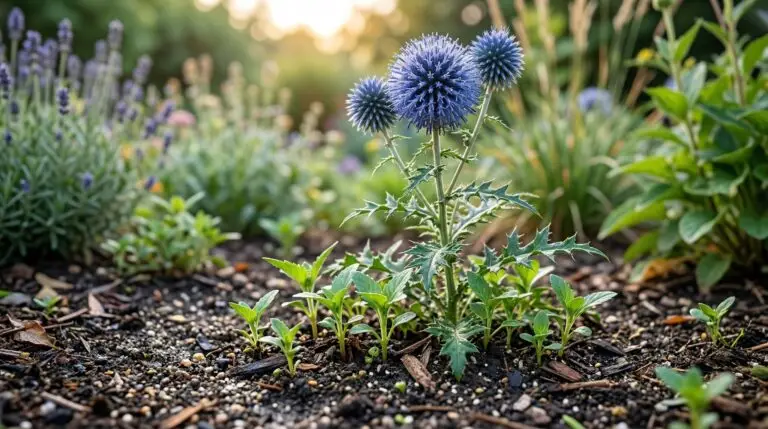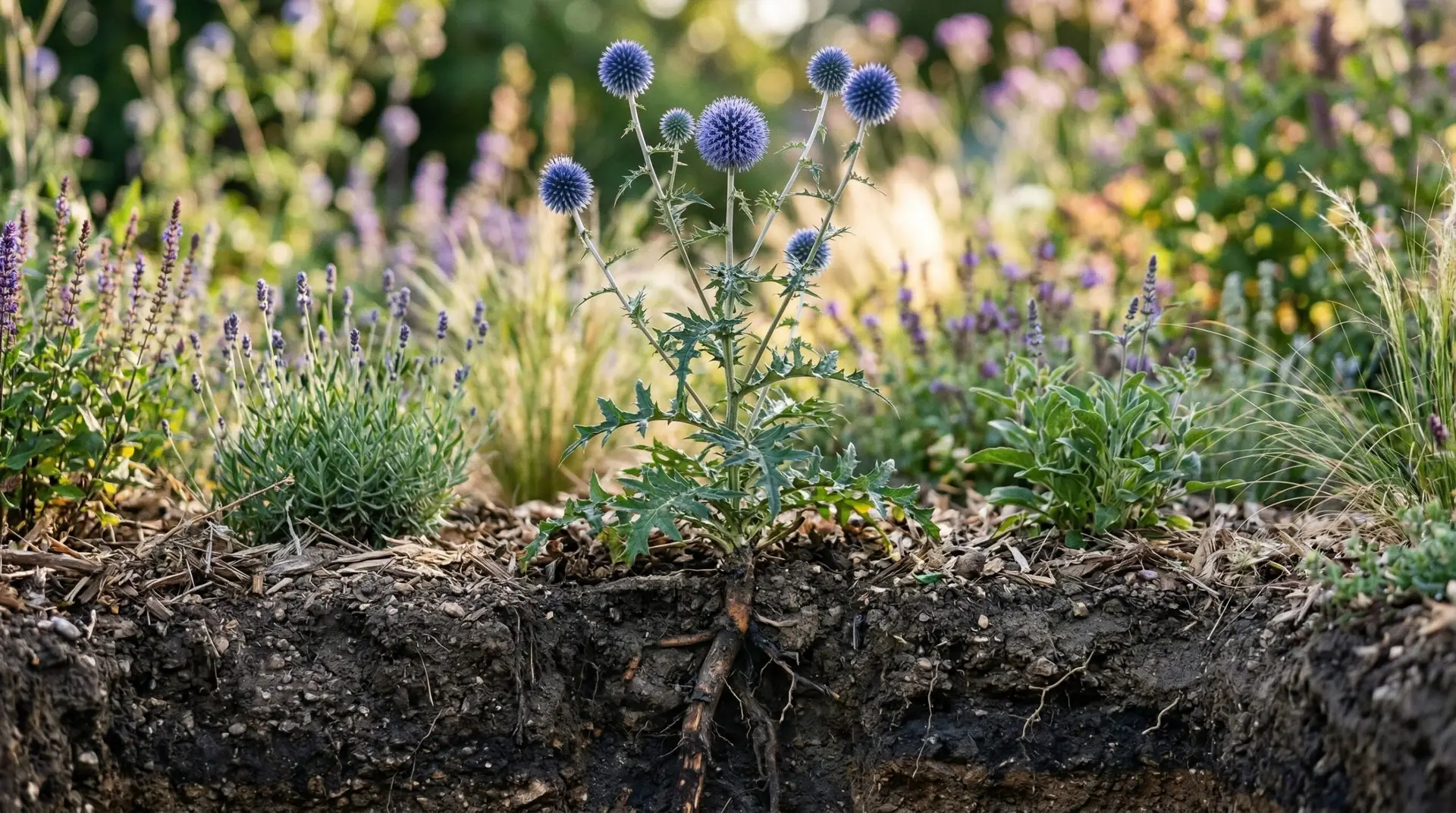
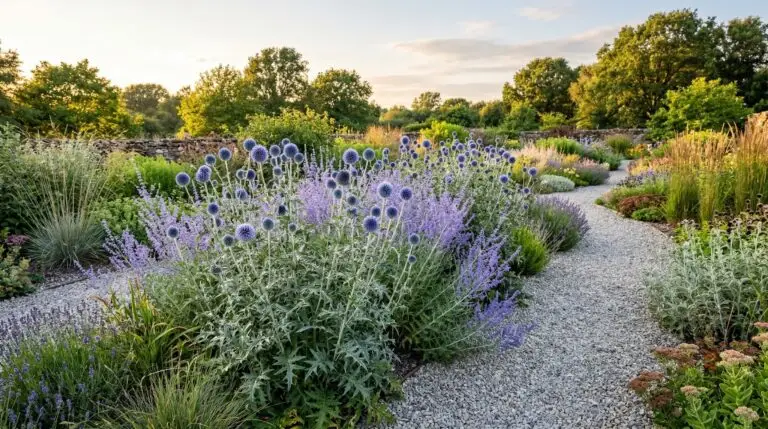
Start with the hardest parts of your yard. A south-facing slope or a patch of rocky ground often frustrates gardeners who try to force water-loving plants into hostile territory. The planning process for these difficult zones requires a shift in strategy away from soil improvement and toward careful plant selection. Before choosing varieties, evaluate your site to determine if you are fighting the natural conditions or working with them. If you have a spot that bakes in the afternoon sun and dries out rapidly, a globe thistle drought tolerant strategy makes more sense than installing an expensive irrigation system. Echinops grows well exactly where delicate perennials give up, using a deep taproot to find moisture far below the surface. Understanding how this plant operates underground changes how you plan your entire dry garden approach. You will spend less money on soil amendments and water, but you must commit to its permanent placement because that same taproot makes the mature plant incredibly difficult to move.
Assessing your site for globe thistle
To succeed with an echinops xeriscape project, you need to match the plant to a specific set of harsh conditions. Take a walk around your property during the hottest part of the day and look for areas that receive a minimum of six to eight hours of direct, unfiltered sunlight. Globe thistle requires intense light to develop strong stems that will not flop over under the weight of their own flower heads. You also need to examine the soil structure in these potential planting zones. Dig a test hole about twelve inches deep and fill it with water to see how quickly it drains away. If the water sits in the hole for more than an hour, the site is too wet and the taproot will rot during the winter months. Poor, rocky, or sandy soils are actually the ideal environment for this plant, as rich loam encourages weak, leggy growth that eventually collapses. You should also consider the mature size of the plant during your assessment phase, as these perennials easily reach three to four feet tall and nearly as wide.
Preparing the planting area and budgeting
Preparing a bed for globe thistle goes against most traditional gardening advice because you actively want to avoid enriching the soil. You do not need to buy bags of compost, manure, or synthetic fertilizers for this project. Your preparation budget will primarily go toward the plants themselves and perhaps some inorganic mulch like gravel or crushed stone to keep the crowns dry. When deciding what to buy, you have three options that dictate both your budget and your timeline. Seeds are the most economical choice but require patience, as seed-grown plants take two full years to reach flowering size. Bare root plants or small nursery starts in four-inch pots offer a practical middle ground, usually costing between ten and fifteen dollars each while establishing much faster than seeds. Larger gallon-sized plants give immediate visual impact but cost significantly more and sometimes struggle to adapt their already-developed taproots to your native soil. Clear the chosen area completely of weeds before planting, as you want the young thistle to establish its root system without competition for the limited surface moisture.
Execution and planting timelines
The best time to plant your globe thistle is early spring or early autumn, giving the root system several weeks to settle in before extreme temperatures arrive. Dig a hole twice as wide as the root ball but exactly the same depth, making sure the crown of the plant sits perfectly level with the surrounding soil. Space multiple plants at least two to three feet apart to allow for adequate air circulation, which prevents mildew during unusually humid spells. Expect the first year to be entirely about root establishment rather than above-ground growth or prolific flowering. The plant is busy sending its taproot deep into the earth to secure its future drought survival. You will need to water the new transplants deeply once a week during their first summer to help them bridge the gap between the nursery pot and self-sufficiency. By the second year, the plant will require almost zero supplemental water and will begin producing its signature spherical blooms.
Long term maintenance and drought survival
Once established, a globe thistle dry garden requires very little ongoing maintenance, making it a highly efficient use of your gardening time. You can entirely disconnect this section of your yard from your regular irrigation schedule, and the thick, prickly foliage deters deer and rabbits, saving you the expense of animal repellents. Your main physical task involves cutting the stems back to the basal foliage after the blooms fade in late summer to prevent aggressive self-seeding. If you want to leave the seed heads for winter interest and bird food, you must accept that you will be pulling small thistle seedlings from the surrounding area the following spring. Because of the deep taproot, you cannot easily divide mature plants to control their size or share them with neighbors. Plan your surrounding plant community carefully, pairing the thistle with other taprooted, low-water companions. A classic combination involves planting yarrow nearby for a contrast in flower shape, or placing Russian sage behind it to echo the silvery-blue tones. You might also use coreopsis in the foreground to provide a bright yellow counterpoint to the blue spheres that requires the exact same harsh, dry conditions.
Your immediate action plan
You can start planning your dry garden transformation this weekend by identifying the most difficult, sun-baked spot in your yard. Measure the dimensions of the space to calculate exactly how many plants you can fit using a strict three-foot spacing rule. Dig one test hole in that area to confirm the soil drains rapidly and contains no hidden clay pans that trap water. Once you verify the drainage, check the inventory of three local nurseries or online bare-root suppliers to compare prices and availability. Create a firm budget based on whether you choose seeds, bare roots, or potted starts, and schedule a planting weekend for the upcoming spring or fall season.
More About Globe Thistle
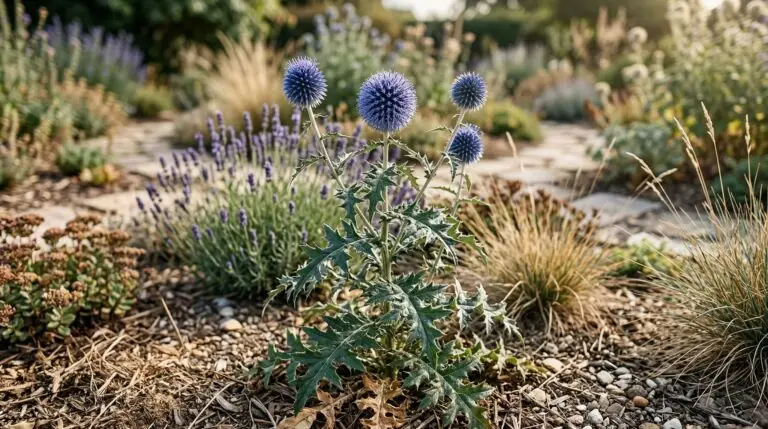
How to grow globe thistle for perfectly round steel-blue flower heads that bees adore
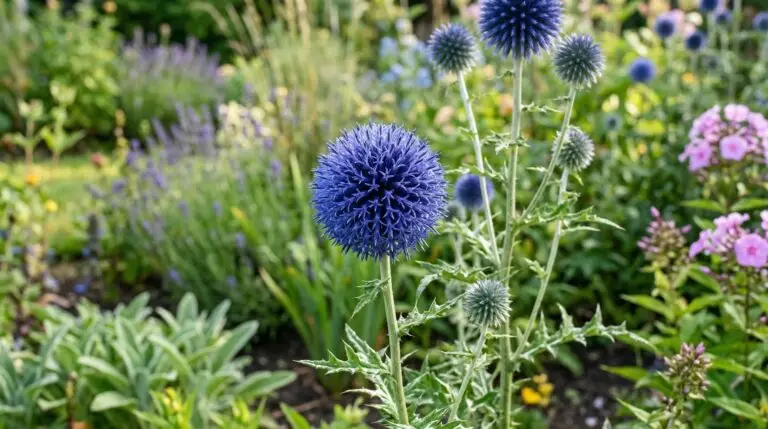
Dried globe thistle flower heads for everlasting arrangements that last for years
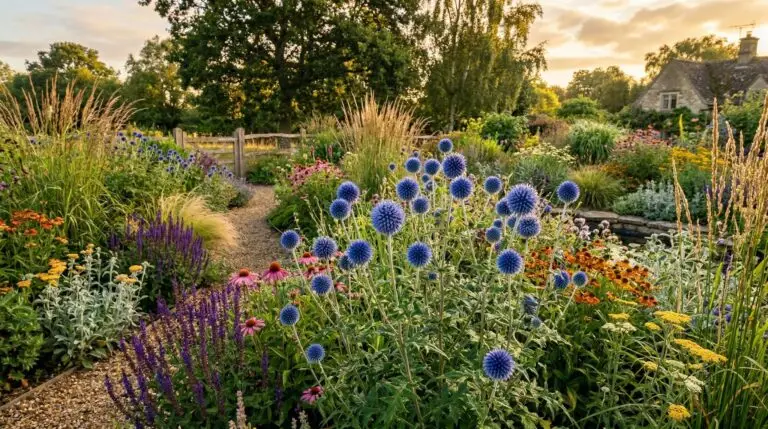
Globe thistle in modern garden design and the trend toward architectural perennials
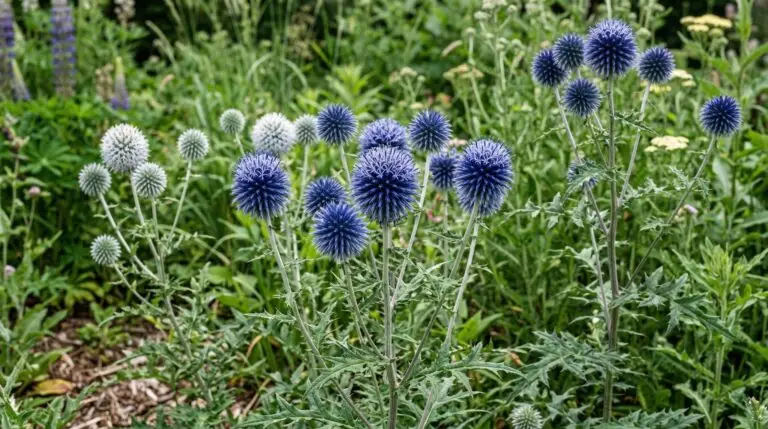
Best globe thistle varieties from compact Veitch’s Blue to towering Taplow Blue
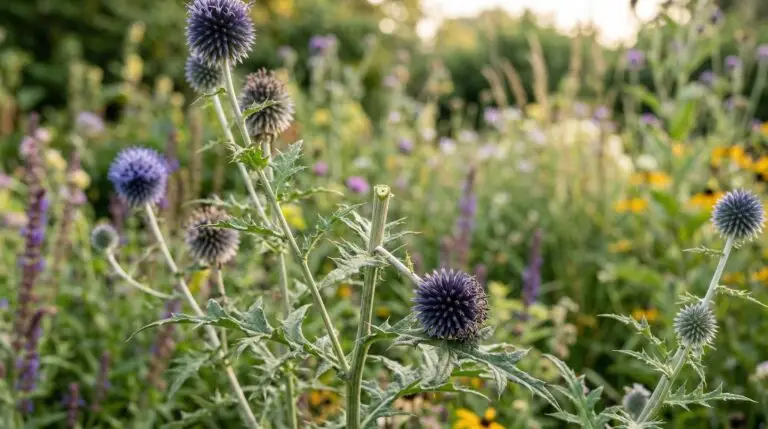
How to control globe thistle self-seeding and prevent unwanted spread in borders
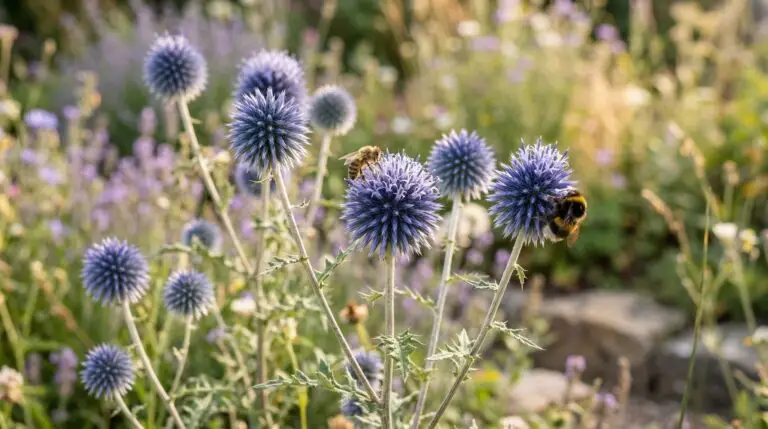
Globe thistle as a pollinator powerhouse attracting more bees than almost any perennial

Globe thistle flower meaning and the quiet strength of this spiny blue sphere
Globe thistle companions: what to grow and what to avoid