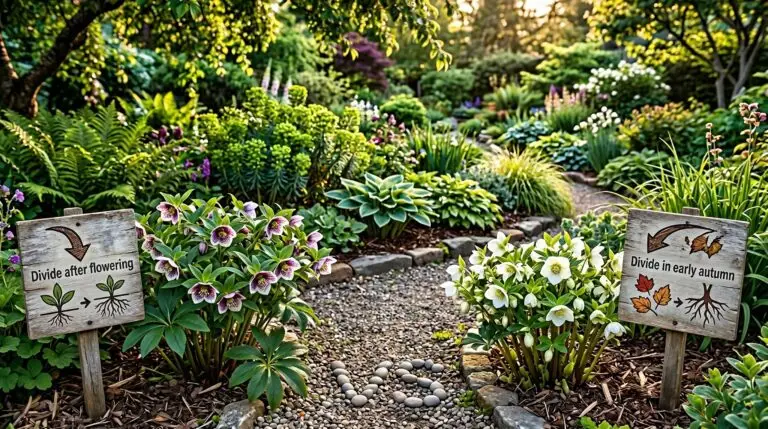
Hellebores are the absolute anchor of the late winter shade garden. When designing a woodland space, I treat them as foundational evergreens that define the ground plane while the overhead canopy is completely bare. Their thick, leathery leaves form substantial mounds that give the eye a place to rest during the sparsest months of the year. Because their foliage is so coarse and dark, they require deliberate companion planting to keep the garden composition from feeling heavy or static. Deciding what to plant with hellebores requires looking beyond just the bloom time and considering how their palmate leaves interact with the textures emerging around them. You want to build a succession of plants that weave through these evergreen mounds, creating a continuous sequence of color from January right through to May.
Early winter awakening and ground level contrasts
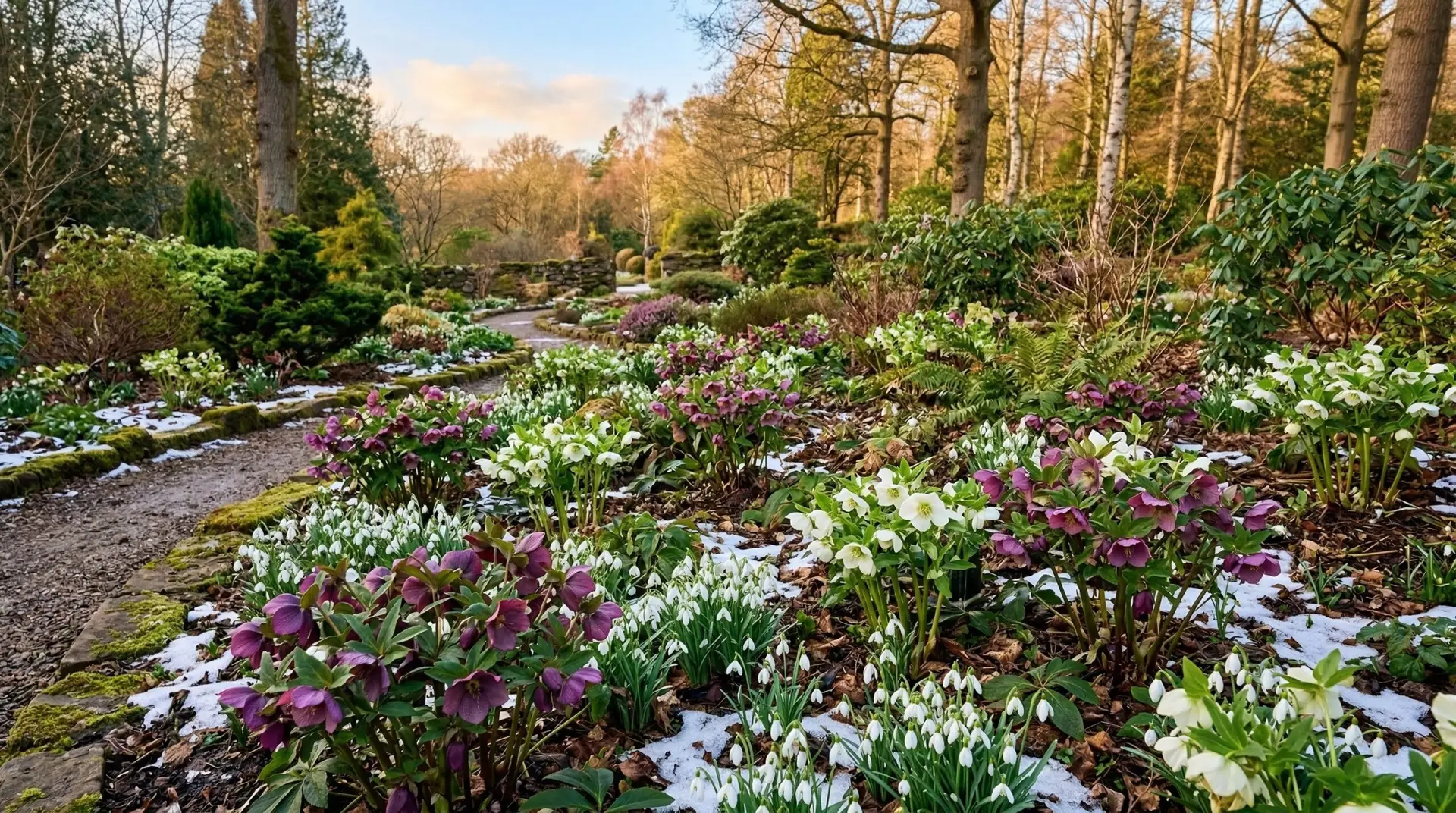
In the deepest part of winter, the garden relies heavily on stark contrasts in scale and brightness. Hellebores often bloom in moody shades of plum, slate, and muted rose, which can easily get lost against bare soil and dark leaf mulch. To bring light to the composition, I always interplant them with small bulbs that bring immediate, crisp contrast. A generous drift of early blooming snowdrops planted directly at the base of a dark hellebore creates a highly effective visual relationship. The tiny, pure white bells of the snowdrops draw attention to the subtle veining in the hellebore petals, while their fine, grassy foliage breaks up the visual weight of the hellebore’s broad leaves. Adding hardy cyclamen to this low layer introduces a different kind of texture, with their silver-mottled, heart-shaped leaves hugging the ground and framing the taller hellebore stems.
Mid spring color relationships and textural shifts
As the season shifts into March and April, the spatial relationships in the garden begin to change rapidly. The hellebores are now at their peak, holding their cup-shaped flowers high above their new spring foliage. This is the moment to introduce mid-level perennials that share the same light requirements but bring entirely different color profiles. Pulmonaria is an exceptional companion here, bringing rough, hairy leaves heavily splashed with silver that catch the low spring sun. The bright pink and sapphire blue flowers of the pulmonaria create a classic color harmony with pink or purple hellebores, cooling down the composition and adding a softer, looser form to the border. To break up these spreading, mounding shapes, you need strong vertical elements to push through the foliage layer. Integrating early shade tolerant daffodils creates exactly this upright architecture, with their rigid stems and bright yellow or white trumpets drawing the eye upward and establishing a second tier of bloom.
Color theory in the spring shade garden often revolves around balancing warm and cool tones under the filtered light of bare trees. Hellebores tend to lean toward complex, dusty colors that benefit from the presence of clear, unambiguous hues nearby. Planting Virginia bluebells slightly behind your hellebore groupings creates a beautiful depth of field. The bluebells emerge with purple-tinted foliage that echoes the dark stems of many hellebore varieties before opening into clusters of sky-blue flowers. Because the bluebells have a somewhat relaxed, upright habit, they fill the empty vertical space between the low hellebore mounds and the bare branches of deciduous shrubs above. When the bluebells eventually go dormant and disappear by early summer, the evergreen hellebore foliage remains to cover the bare soil left behind, demonstrating perfectly how plants can support each other through spatial sharing.
Late spring foliage transitions and structural cover
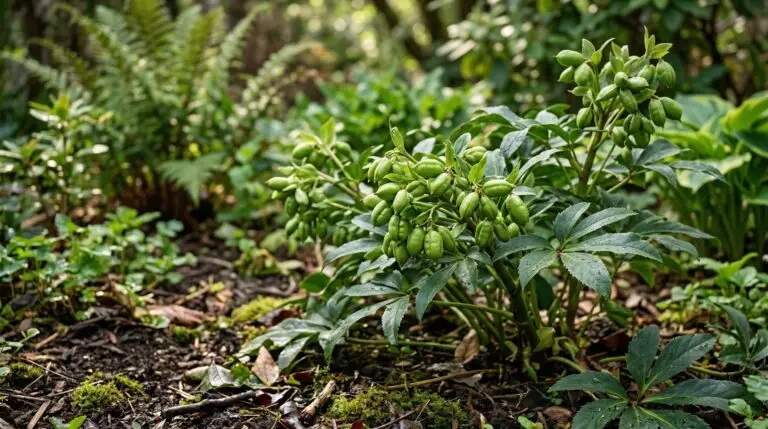
By May, the hellebore flowers have dropped their stamens and the remaining sepals take on a papery, pale green appearance. At this stage, the plant transitions from a floral focal point into a purely textural backdrop for the late spring garden. This is when the broad, dramatic foliage of hostas should begin unfurling to take over the visual weight of the bed. Placing a large, blue-leaved hosta next to a dark green hellebore creates a bold, architectural statement based entirely on contrasting leaf shapes. The hellebore’s deeply cut, finger-like leaves look incredibly sharp and defined against the solid, smooth surface of the hosta. This pairing anchors the corners of a garden path or the edge of a woodland border, giving the space structure as the spring flowers fade away.
To balance the heavy, coarse foliage of both the hellebores and the hostas, the composition requires the introduction of very fine, delicate textures. Ferns are the natural choice for this role, offering a lacy, fragmented form that softens the entire planting scheme. As the tightly coiled fiddleheads expand into wide fronds, they can be allowed to gently overlap the edges of the hellebore mounds. A Japanese painted fern, with its silvery fronds and burgundy stems, picks up the fading purple tones of the hellebore seed heads and ties the late spring garden back to its early winter color palette. This textural contrast between the tough, leathery hellebore and the fragile, translucent fern fronds is a fundamental technique for keeping shade gardens interesting without relying on flowers.
The most successful shade gardens treat time as a distinct design element, using the persistent form of the hellebore as a baseline to measure the changing seasons against. When planning your hellebore garden design, think of these plants as the permanent framework of your composition. You build around them by layering early bulbs for bright winter contrast, adding spring perennials for vertical interest and clear color, and finishing with broad-leaved plants and delicate ferns to carry the visual weight into summer. By overlapping these bloom times and contrasting their distinct foliage types, you create a garden space that feels entirely intentional and holds the viewer’s attention from the very first freeze to the warming days of May.
More About Hellebore
Why hellebore flowers face downward and how to display their hidden beauty
Best hellebore varieties from single-color classics to double-flowered showstoppers
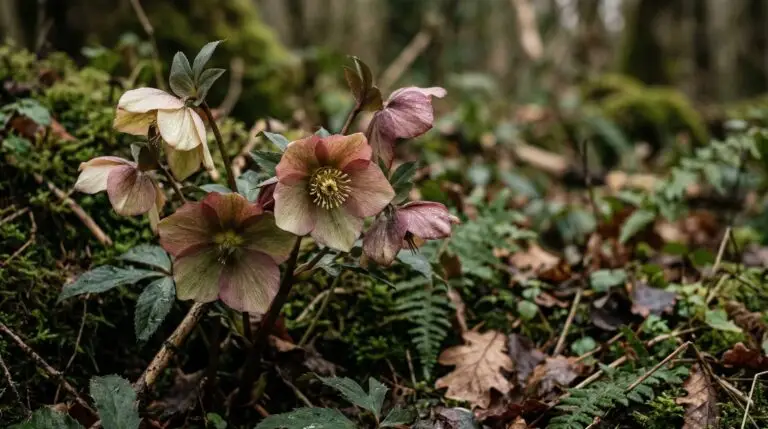
Hellebore flower meaning and the dark legends surrounding the Christmas rose
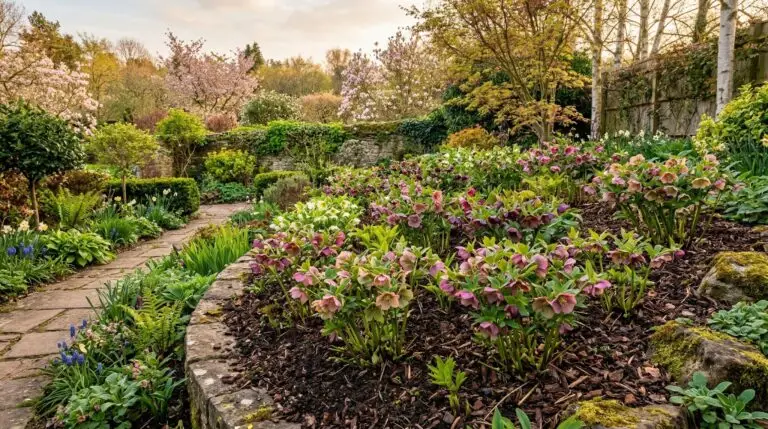
How to clean up hellebore foliage in late winter for the best flower display
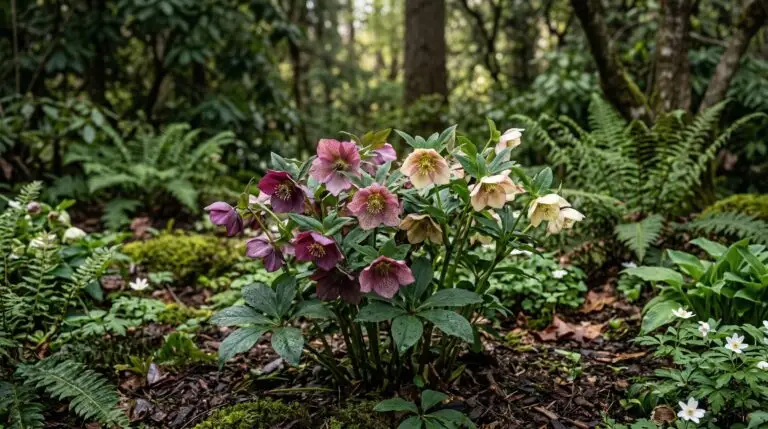
How to grow hellebores for elegant flowers that bloom in the dead of winter
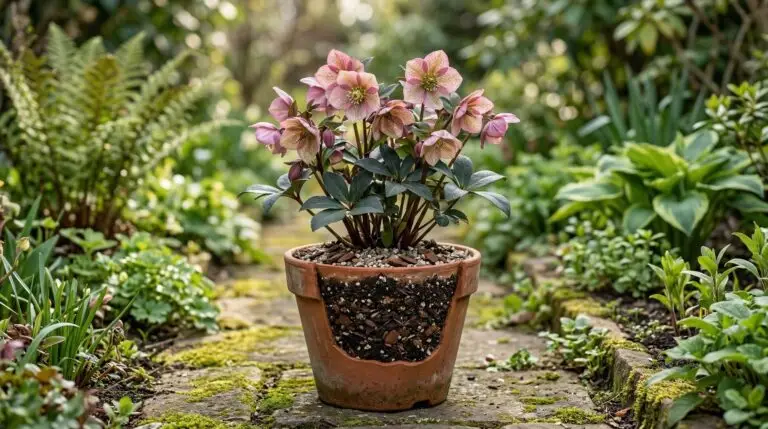
Hellebores in containers for winter interest on patios and doorsteps
Dividing hellebores and the right time to split mature clumps without killing them