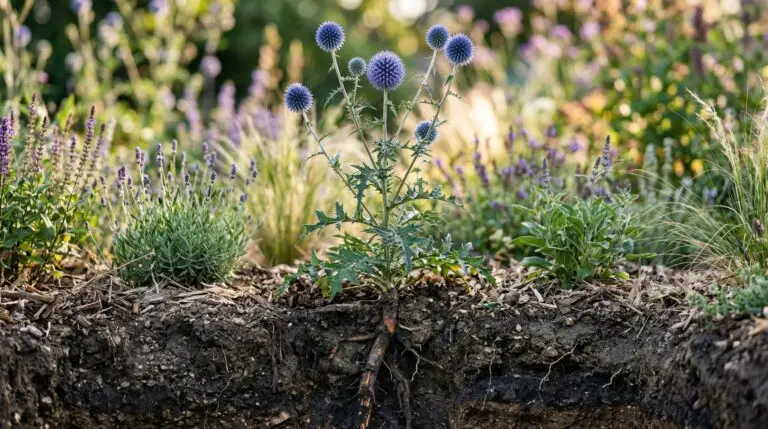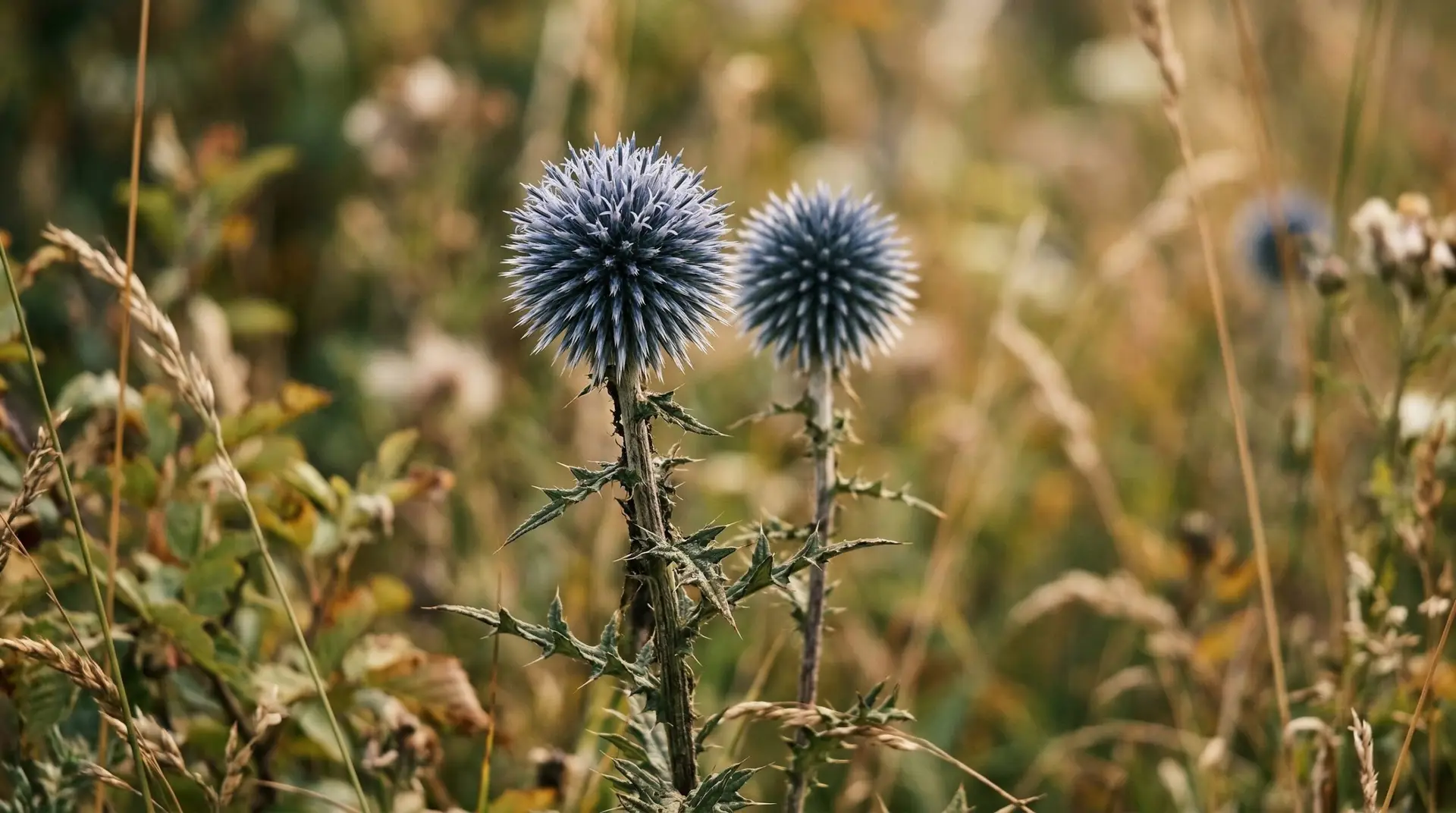
In the dry, sun-baked hills of the ancient Mediterranean, early botanists encountered a plant that looked more like a defensive creature than a delicate flower. The Greek physician Dioscorides, compiling his influential pharmacopeia in the first century, recognized the distinct visual character of this spiny blue sphere. He recorded the name Echinops for the plant, drawing directly from the Greek word “echinos,” which translates to hedgehog, and “ops,” meaning appearance. This ancient classification captured the exact physical essence of the globe thistle, a plant armored in prickly foliage and topped with a perfectly round, bristling flower head. The name stuck through millennia of botanical history, perfectly preserving the moment an ancient observer looked at a flower and saw a curled-up animal. Today, globe thistle meaning remains rooted in this original observation of defensive architecture. The plant communicates a clear message of independence and resilience, standing tall and guarded in environments where softer plants would quickly wither.
The hedgehog of the botanical world
The hedgehog moniker reveals much about how early cultures interacted with the natural world, relying on visual metaphors to understand and categorize wild flora. For the globe thistle, this defensive posture is a highly evolved survival strategy rather than a mere aesthetic quirk. The sharp, deeply lobed leaves prevent grazing animals from consuming the foliage, while the rigid stems hold the heavy metallic blue spheres high above the competing scrub. This formidable physical structure birthed the core echinops symbolism that persists in modern floral dictionaries, where the plant signifies self-reliance and the ability to protect oneself. Cultures surrounding the Mediterranean basin respected plants that could thrive in poor, rocky soil without human intervention or abundant rainfall. The globe thistle asked for nothing and defended its own territory, making it an emblem of quiet strength. When people gifted or cultivated this plant, they acknowledged a beauty that did not need to be fragile to be worthy of admiration.
Thistle symbolism and the Scottish connection
To understand the broader thistle flower meaning, one must look north to the damp, misty hills of Scotland, where a related prickly plant changed the course of a nation. According to persistent historical legend, a stealthy party of Norse invaders attempted a night attack on a sleeping Scottish encampment during the thirteenth century. The attackers removed their footwear to move quietly, but one unfortunate soldier stepped barefoot onto a native thistle, crying out in pain and alerting the Scots to the ambush. The grateful Scots adopted the thistle as their national emblem, cementing the plant family’s association with protection, bravery, and fierce independence. While the globe thistle belongs to the Echinops genus rather than the Onopordum genus of the traditional Scottish thistle, it inherits this rich cultural legacy. Throughout Europe, the distinct silhouette of a thistle became a universal shorthand for a defensive perimeter and unyielding survival. Botanists and gardeners alike group these spiny plants together in their cultural imagination, recognizing that they all share the same architectural language of warning and reward.
Traditional medicine and the apothecary garden
Beyond their defensive symbolism, globe thistles held practical value in the apothecary gardens of the Middle Ages and the Renaissance. Healers and herbalists across Europe and Asia harvested the thick, fleshy roots of various Echinops species to treat a wide range of physical ailments. Traditional Chinese medicine utilized the roots of specific regional globe thistles, known as Lou Lu, to clear heat, reduce inflammation, and encourage milk production in nursing mothers. European herbalists similarly experimented with the plant, crushing the roots and leaves to create poultices for skin conditions and joint pain. These medicinal applications created a fascinating duality in the plant’s cultural identity, contrasting its hostile, untouchable exterior with its internal capacity to heal. The globe thistle occupied a respected place in the medicinal borders of monasteries, growing alongside other potent healing plants like the coneflower, which was also valued for its medicinal properties. This history reminds us that early societies judged plants by their utility and hidden virtues rather than just their visual appeal.
A shift to ornamental cultivation
The transition of the globe thistle from a wild medicinal herb to a celebrated ornamental garden plant occurred gradually, reaching its peak during the Victorian era and the subsequent Arts and Crafts movement. Garden designers like Gertrude Jekyll began to rebel against the highly manicured, unnatural bedding schemes of the mid-nineteenth century, looking instead for plants with strong architectural forms. The globe thistle offered a distinctive vertical element and a unique geometric shape that contrasted beautifully with the loose, romantic forms of traditional cottage garden flowers. Its steely, metallic blue color provided a cool, sophisticated tone that was rare in the late summer garden, distinct from the softer blues found in cornflowers or delphiniums. English estate gardeners learned to propagate and breed these robust plants, selecting for larger flower heads and deeper blue hues. This period of horticultural history shifted the cultural perception of the thistle from a stubborn agricultural weed to a sophisticated design element. The plant’s inherent toughness became a celebrated asset, proving that elegance and hardiness could exist in the exact same botanical package.
Modern gardens and quiet survival
The historical progression of the globe thistle through ancient Greek scrublands and modern garden borders reflects a changing human relationship with the natural world. Modern gardeners value the plant for the exact same reasons the ancients respected it, praising its drought tolerance and its ability to thrive in poor, rocky soils. As climate patterns shift and gardeners increasingly seek out resilient, low-water plants, the globe thistle has found renewed importance in ecological landscaping. The perfectly round flower heads are also recognized as magnets for pollinators, drawing bees and butterflies to their tiny, densely packed individual blooms. The quiet strength that defined echinops symbolism centuries ago translates perfectly to the modern demand for sustainable, self-sufficient gardens. When we plant a globe thistle today, we participate in a continuous horticultural tradition that spans thousands of years. We are still cultivating the hedgehog of the botanical world, admiring a plant that protects itself, asks for little, and offers a fiercely independent beauty.
More About Globe Thistle
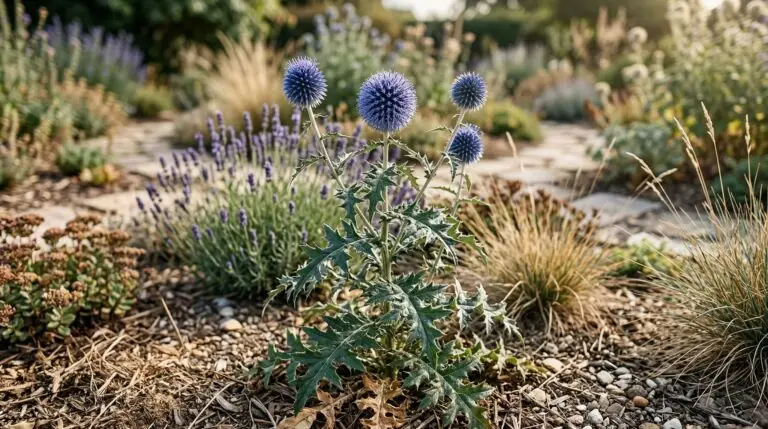
How to grow globe thistle for perfectly round steel-blue flower heads that bees adore
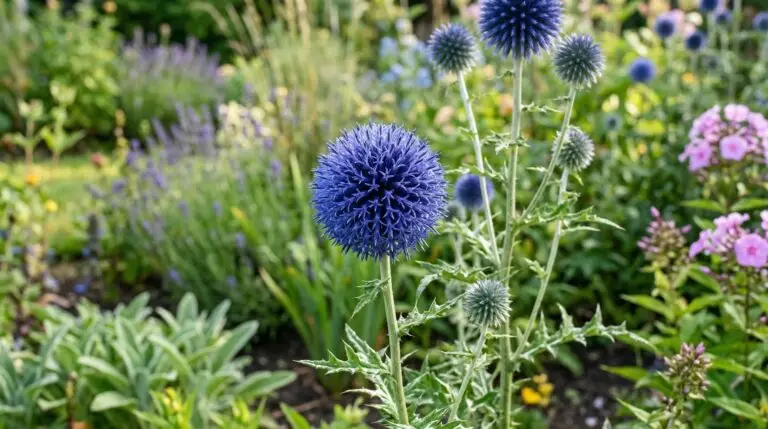
Dried globe thistle flower heads for everlasting arrangements that last for years
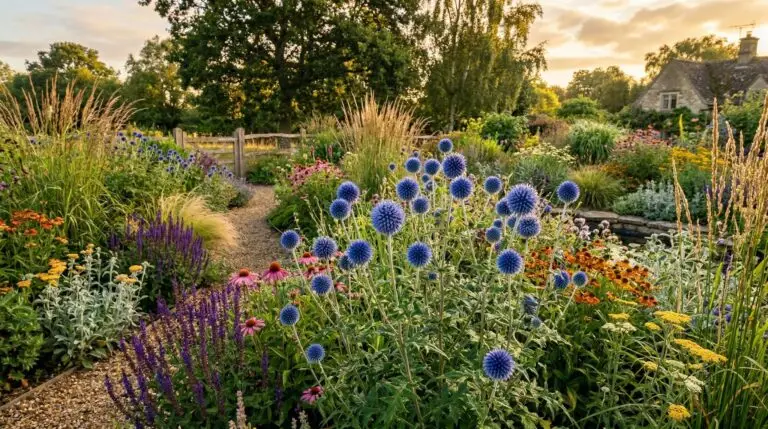
Globe thistle in modern garden design and the trend toward architectural perennials
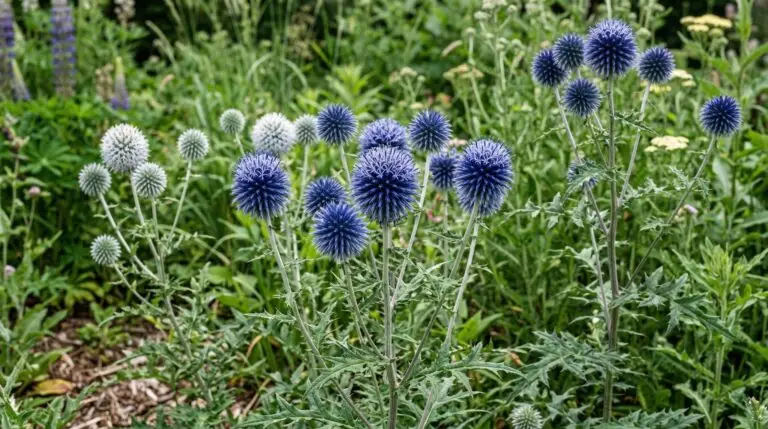
Best globe thistle varieties from compact Veitch’s Blue to towering Taplow Blue
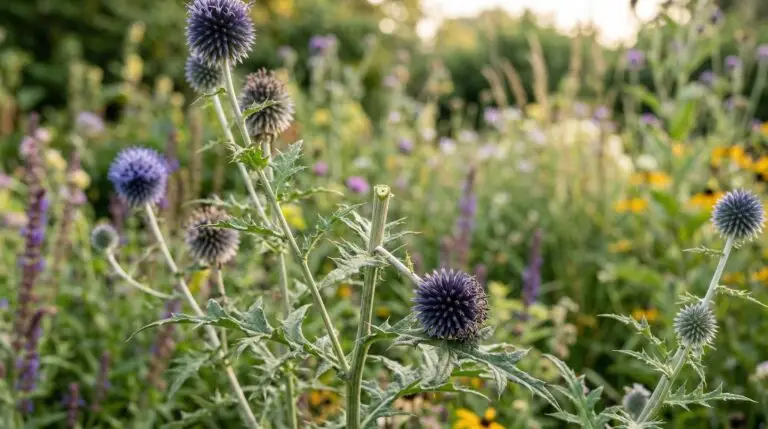
How to control globe thistle self-seeding and prevent unwanted spread in borders
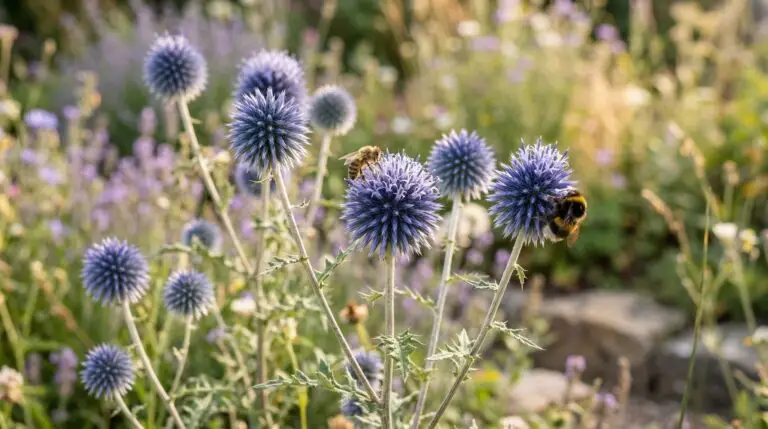
Globe thistle as a pollinator powerhouse attracting more bees than almost any perennial
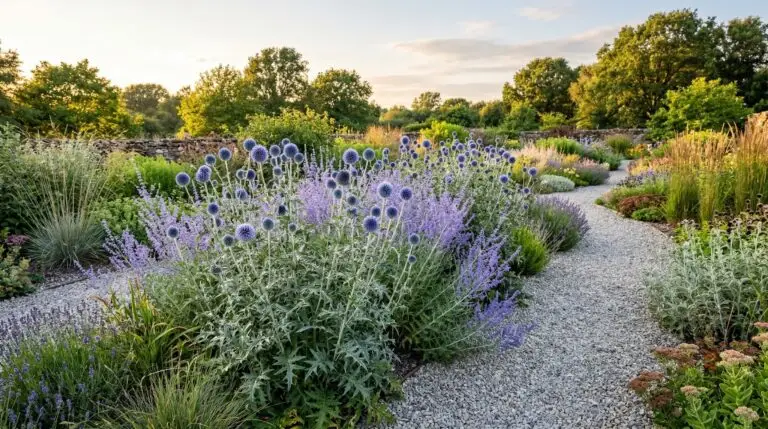
Globe thistle companions: what to grow and what to avoid
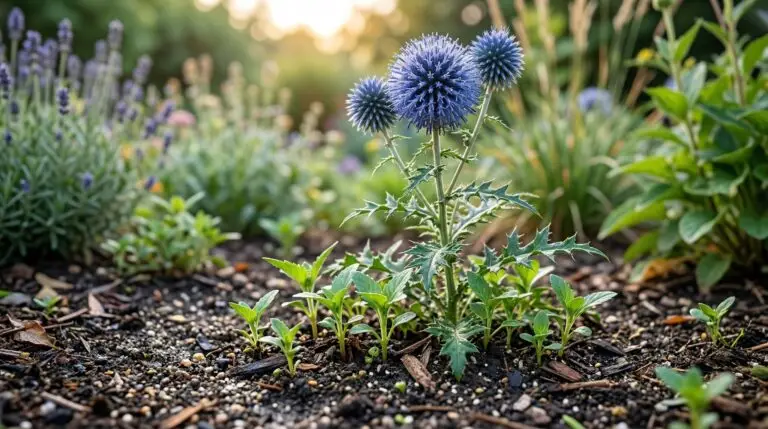
Growing globe thistle from seed for the most budget-friendly perennial border