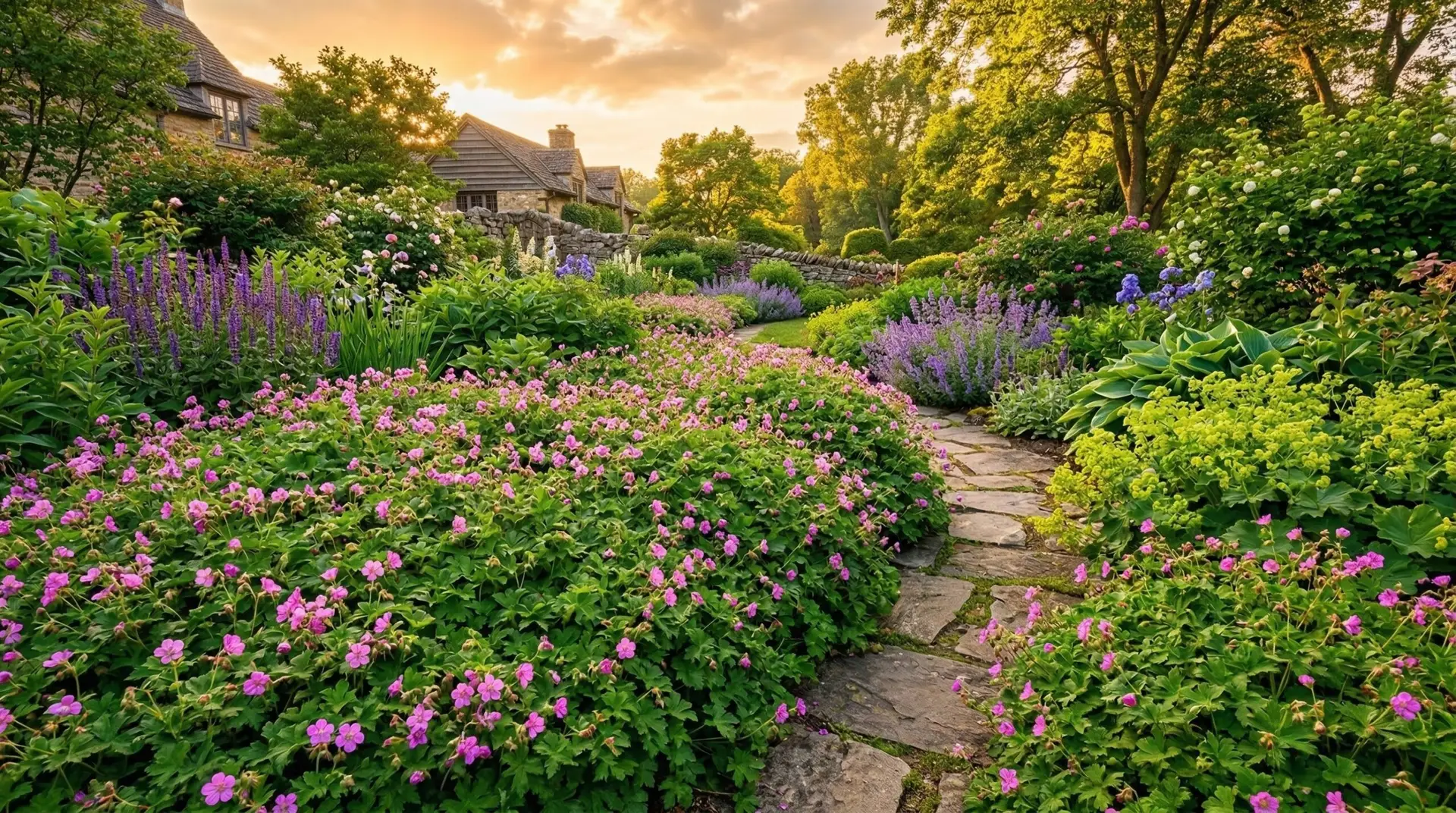
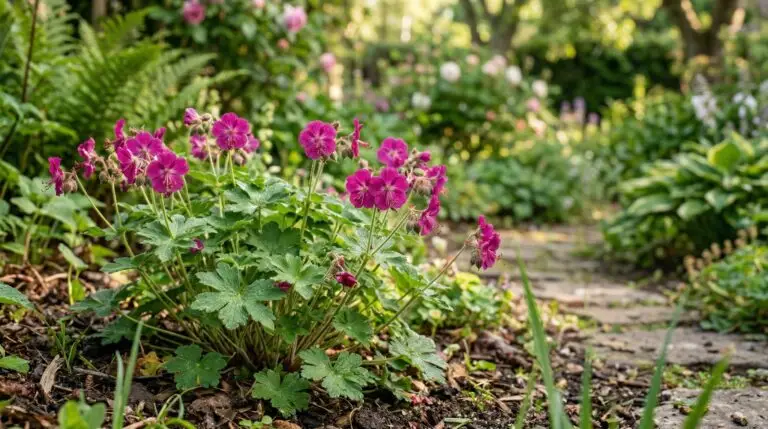
Bare soil under established shrubs and roses is an invitation for weeds, requiring constant vigilance and labor. Many gardeners try to solve this with thick layers of bark mulch that must be replenished annually at significant cost and effort. A more permanent, efficient solution is establishing a living mulch of hardy geraniums. Before you purchase any plants, you need to evaluate the space beneath your existing shrubs to determine if it can support a dense ground cover. The goal is to create a self-sustaining carpet of foliage that shades out weed seeds while coexisting peacefully with the root systems of your larger plants. Hardy geraniums excel at this task because they spread steadily without becoming invasive, and their shallow root systems do not compete aggressively with deep-rooted shrubs. Planning this project requires looking at your existing garden beds, calculating the square footage you need to cover, and understanding the timeline for establishment.
Site assessment and plant selection
The first step in your project timeline is evaluating the specific conditions under your shrubs. You need to determine how much light reaches the ground beneath your plants, as this dictates which geranium ground cover variety will succeed. Measure the area you intend to plant to calculate how many starter plants you need to buy. For a fast fill, you will space plants about fifteen to eighteen inches apart, meaning you need roughly one plant for every two square feet. When planting a rose skirt, you must account for the thorny lower canes and leave at least a twelve-inch buffer zone around the main crown to ensure good air circulation. You should also check the soil moisture levels, as areas directly under dense evergreen shrubs often suffer from dry shade due to the rain shadow effect of the canopy. Hardy geraniums handle varying light levels well, but they still need consistent moisture during their first year. If your site is extremely dry, you might need to plan for supplemental irrigation or consider pairing them with drought-tolerant catmint near the sunnier edges.
Soil preparation and planting timeline
Proper soil preparation is the most critical phase of this project, and it must happen before any plants arrive on site. Because you are planting around established shrubs, you cannot use a rototiller or dig deeply without damaging existing feeder roots. Your preparation must rely on careful hand weeding and gentle surface cultivation. Plan to spend a weekend thoroughly clearing the area of all existing weeds, removing them by the roots so they do not grow up through your new ground cover. You will need to budget for compost to top-dress the planting area, spreading a one-inch layer over the soil surface to provide gentle, slow-release nutrition. The best time to execute this planting is early spring or early fall when temperatures are mild and natural rainfall is more frequent. If you plant in spring, allow four to six weeks for the roots to anchor before the high heat of summer sets in. Fall planting often yields better results for dry shade areas, giving the plants several months to develop robust root systems before they have to support a full canopy of leaves.
Execution and establishment phase
When planting day arrives, you need a clear strategy to work efficiently around your existing garden plants. Start from the center near the shrub base and work your way outward to avoid stepping on your newly installed geraniums. Dig small, shallow holes just large enough to accommodate the root balls of your starter plants, being careful to slip your trowel between the thick roots of your established shrubs. Once the plants are in the ground, water them immediately and deeply to settle the soil and eliminate air pockets. You must commit to a strict watering schedule for the first three months, providing at least one inch of water per week if rain falls short. During this first growing season, you will still need to weed the gaps between the young geraniums manually. Expect the first year to be entirely about root establishment and modest foliage growth, with the plants finally knitting together into a solid, weed-suppressing carpet by the middle of year two. Some gardeners interplant a few bulbs or a daylily or two in the gaps, but keeping the space dedicated to the geraniums ensures they fill in faster and create an unbroken mat.
Ongoing maintenance and resource planning
Once established, a hardy geranium underplanting drastically reduces your overall garden workload, but it is not entirely maintenance-free. You need to plan for a brief cleanup session in early spring before the new growth emerges. This involves shearing back the dead foliage from the previous year, a task that takes about ten minutes per hundred square feet using sharp hedge clippers. Because the geraniums act as a living mulch, you will no longer need to buy or spread wood chips in these beds, saving both money and heavy labor. The dense foliage will effectively shade the soil, reducing water evaporation and lowering your summer irrigation requirements. Some varieties look untidy by late summer, requiring a quick mid-season haircut to encourage a fresh flush of neat foliage. By year three or four, the plants may spread beyond your desired boundaries, meaning you will need to spend a few hours in spring digging up the edges and dividing the clumps. You can use these divisions to start new weed-suppressing mats under other shrubs in your yard, making your initial investment stretch even further.
Your immediate action plan
Moving from the planning phase to action requires taking a few concrete steps this week. Go out to your garden and identify one specific shrub border or rose bed that currently requires too much weeding and mulching. Measure the length and width of the bare soil area to calculate the total square footage you need to cover. Use a trowel to dig a small test hole in that area to check the soil moisture and see how dense the existing shrub roots are. Write down the sunlight conditions, noting exactly how many hours of direct sun hit the ground beneath the canopy. With these measurements and observations in hand, you can accurately budget for the number of starter plants and the volume of compost you will need to purchase for the project.
More About Geranium
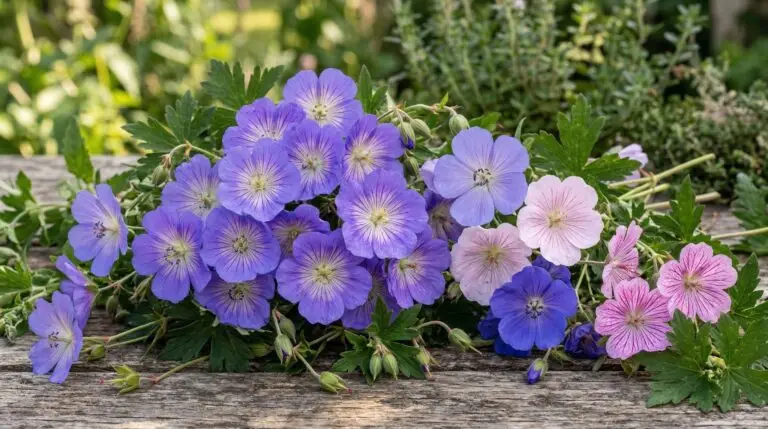
Best hardy geranium varieties from the legendary Rozanne to shade-loving types
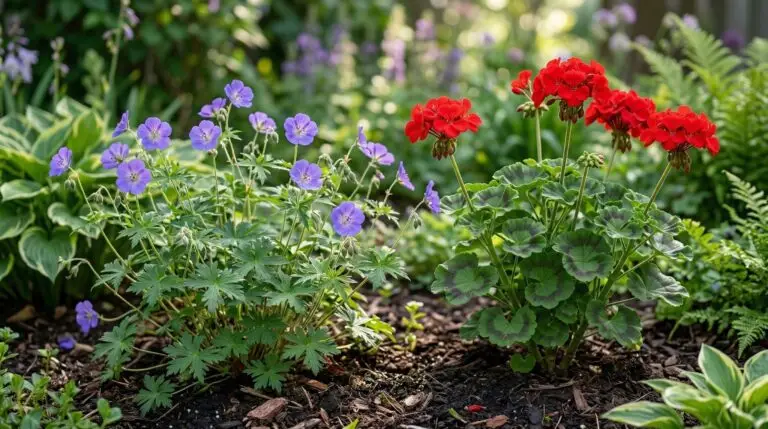
How to grow hardy geraniums for carefree ground cover that blooms for months
Geranium Rozanne and why one plant became the most popular perennial in the world
How to cut back hardy geraniums in midsummer for fresh foliage and a second flush
Geranium flower meaning and the Victorian message of comfort and true friendship
Hardy geraniums versus pelargoniums and why the garden world confuses them
Hardy geraniums for deep shade that bring flowers to the darkest garden corners
Companion plants for geraniums: what to grow and avoid