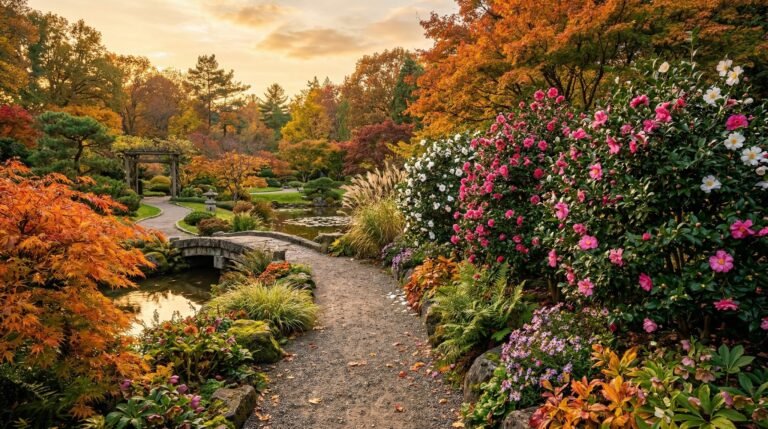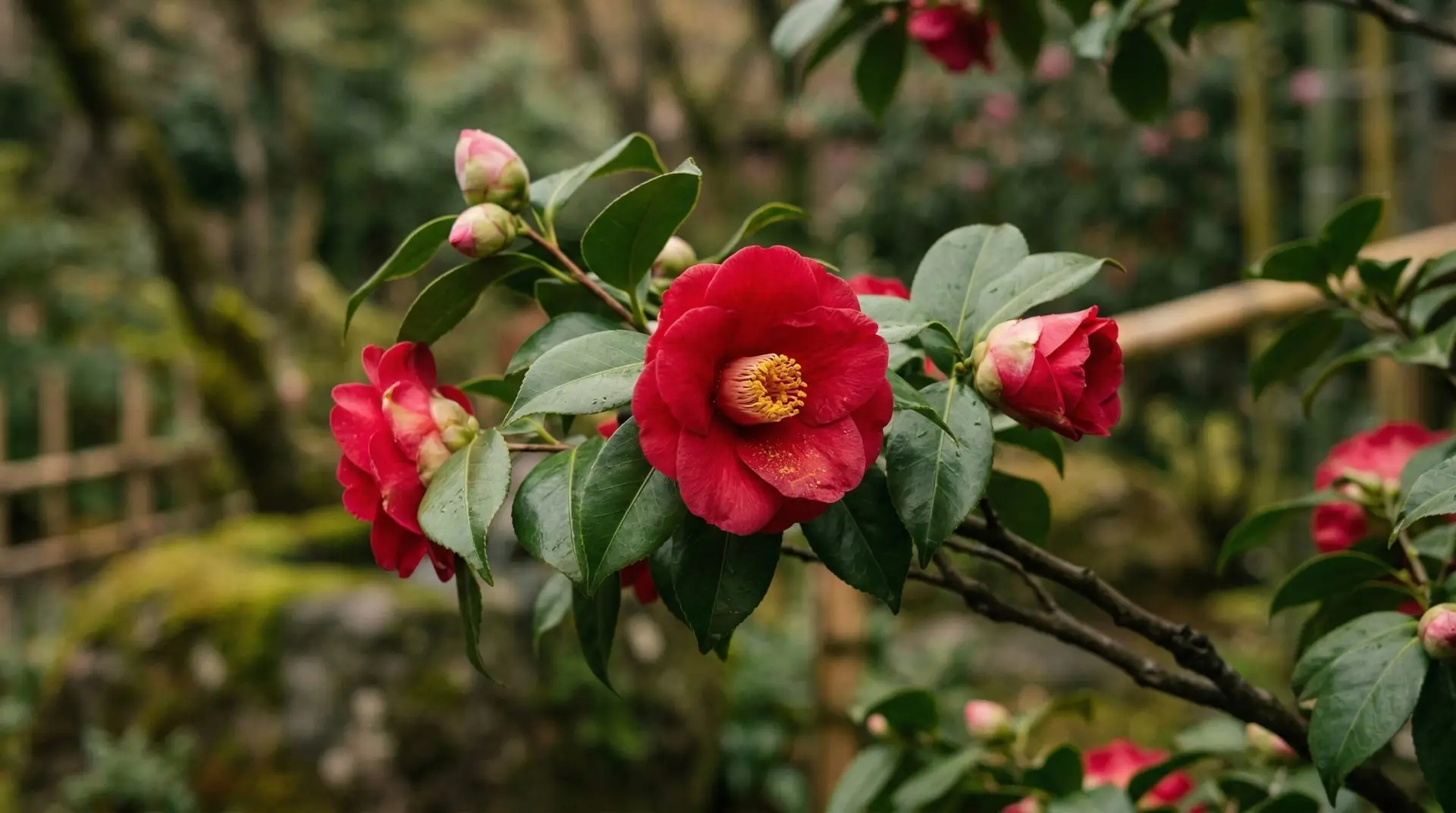
In the quiet cold of a sixteenth-century Japanese winter, a single red flower rests in a simple bamboo vase inside a darkened tea house. Outside, snow covers the dormant garden, but inside, the tsubaki flower commands the attention of the gathered guests. The tsubaki, known to Western gardeners as the camellia, holds a position of profound respect in Japanese culture that stretches back well over a millennium. Long before it became a fixture of Southern gardens in the United States or a motif in European high fashion, this winter-blooming evergreen was cultivated by monks, samurai, and tea masters. The story of camellia meaning begins with its botanical lineage, as the ornamental garden camellia shares its genus with the very plant that provides the leaves for tea. This close kinship between the decorative flower and the functional tea plant cemented its place at the heart of Japanese aesthetic and spiritual life. Understanding camellia symbolism requires looking past its glossy leaves and perfect symmetry to see how different civilizations have projected their deepest values onto its heavy, waxen petals. The flower tells a complex story of religious devotion, martial honor, and botanical commerce.
The tea ceremony and the noble winter flower
During the Muromachi and Momoyama periods, the Japanese tea ceremony evolved into a highly ritualized practice that governed art, architecture, and social interaction. Sen no Rikyu, the most famous tea master of the sixteenth century, established the principles of chabana, the specific style of flower arrangement used in the tea room. Rikyu favored simple, seasonal flowers that reflected the transient nature of life, and the winter-blooming tsubaki became the ultimate expression of this philosophy. A single, half-open camellia bud placed in an unglazed clay or bamboo vessel demonstrated the concept of wabi-sabi, finding beauty in imperfection and impermanence. The white camellia became a staple of winter tea gatherings because its pure color stood out clearly against the dark, earth-toned walls of the traditional tea house. Tea masters appreciated the flower because it bloomed when most other plants were dormant, offering a quiet reminder of life persisting through the harshest season. The botanical reality that the ornamental Camellia japonica is a direct cousin of Camellia sinensis, the plant harvested for green tea, made its presence in the tea room both a physical and spiritual completion of the ceremony. To place a camellia in the alcove of a tea room was to honor the very essence of the tea tradition itself.
Samurai culture and the sudden fall
While tea masters revered the camellia for its quiet endurance, the samurai class developed a much more complicated relationship with the flower. Unlike most blossoms that wither and drop their petals one by one in the wind, the tsubaki flower falls from the branch entirely intact. The heavy bloom lands squarely on the ground while still in full color, never losing its shape. For the warrior class of feudal Japan, this sudden, whole decapitation of the flower looked uncomfortably like a human head falling to the sword. Because of this visual association, some samurai considered the red camellia an unlucky omen and strictly avoided planting it within the walls of their private estates. However, this same characteristic also made the flower a potent symbol of a noble death, honoring a warrior who falls in his prime rather than fading away slowly with age. This duality meant that while the chrysanthemum maintained a steady, universally positive association with the imperial family and long life, the camellia carried a heavier, more dramatic weight in Japanese culture. Different domains and clans held conflicting views on the flower, with some entirely banning it from their gardens and others breeding specific varieties to commemorate fallen comrades.
Diverging meanings in eastern and western traditions
When European traders working for the East India Company began bringing camellias to the West in the eighteenth century, they stripped the flower of its samurai history and tea room philosophy. In the glasshouses of Victorian England and France, camellia meaning shifted to indicate aristocratic wealth, refined elegance, and exotic luxury. European breeders focused heavily on creating perfectly symmetrical, fully double blooms that looked almost artificial in their precision, moving away from the simple, single-petaled flowers favored in Japanese chabana. The color meanings also diverged sharply between the two hemispheres during this era of botanical exchange. In Japanese culture, a red camellia meant deep, unpretentious love or a noble sacrifice, while white indicated purity and the divine. In nineteenth-century Europe, the white camellia became associated with high society evening wear and untouchable beauty, a connection famously immortalized in Alexandre Dumas fils’ novel about a Parisian courtesan. Western gardeners treated the plant as a prized specimen for heated conservatories, completely separating it from the naturalistic garden traditions that governed the placement of spring-blooming shrubs like the azalea in East Asian courtyards. The flower had effectively split into two distinct cultural identities based on geography.
The modern legacy of a historical bloom
The European obsession with the camellia eventually caught the attention of Gabrielle Chanel, who adopted the white camellia as her personal emblem and the signature motif of her fashion house in the twenties. Chanel was drawn to the flower precisely because it lacks a fragrance, meaning it would not compete with her perfumes, and because its geometric perfection appealed to her modernist design sensibilities. This twentieth-century fashion connection layered another meaning onto the plant, turning it into a global symbol of luxury and minimalist chic. Today, modern hybridizers still use breeding techniques developed by Japanese nurserymen in the Edo period, working to expand the cold hardiness and color palette of these winter-blooming shrubs. When modern gardeners plant a camellia, they are participating in a horticultural tradition that bridges the gap between ancient Eastern philosophy and Western botanical ambition. The heavy blooms that drop intact onto the winter snow still carry the memory of the samurai, the quiet discipline of the tea master, and the careful cultivation of generations of gardeners. The history of the camellia proves that a garden plant is never just a collection of leaves and petals. It is a living record of human culture that continues to grow and change with each passing season.
More About Camellia
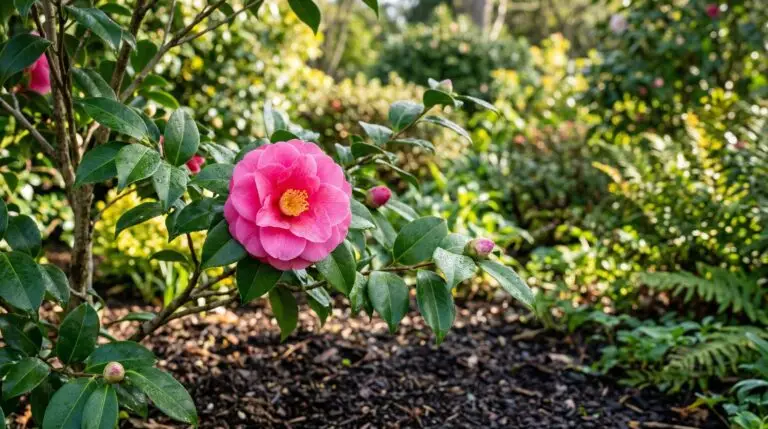
Common camellia diseases including petal blight and scale and how to treat them

How to prune camellias for shape and size without sacrificing next season’s flowers
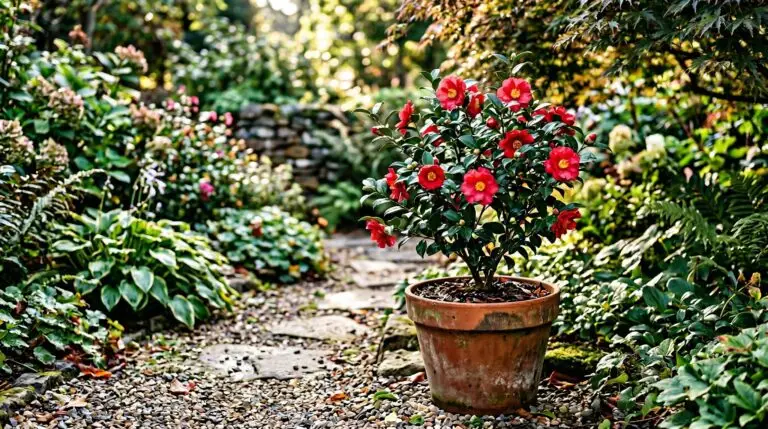
Growing camellias in containers for patios and northern gardeners who want blooms
How to grow camellias in cold climates with the right varieties and winter protection
Using camellia flowers for floating arrangements and simple winter table decor
Why camellia buds drop before opening and how to prevent bud blast