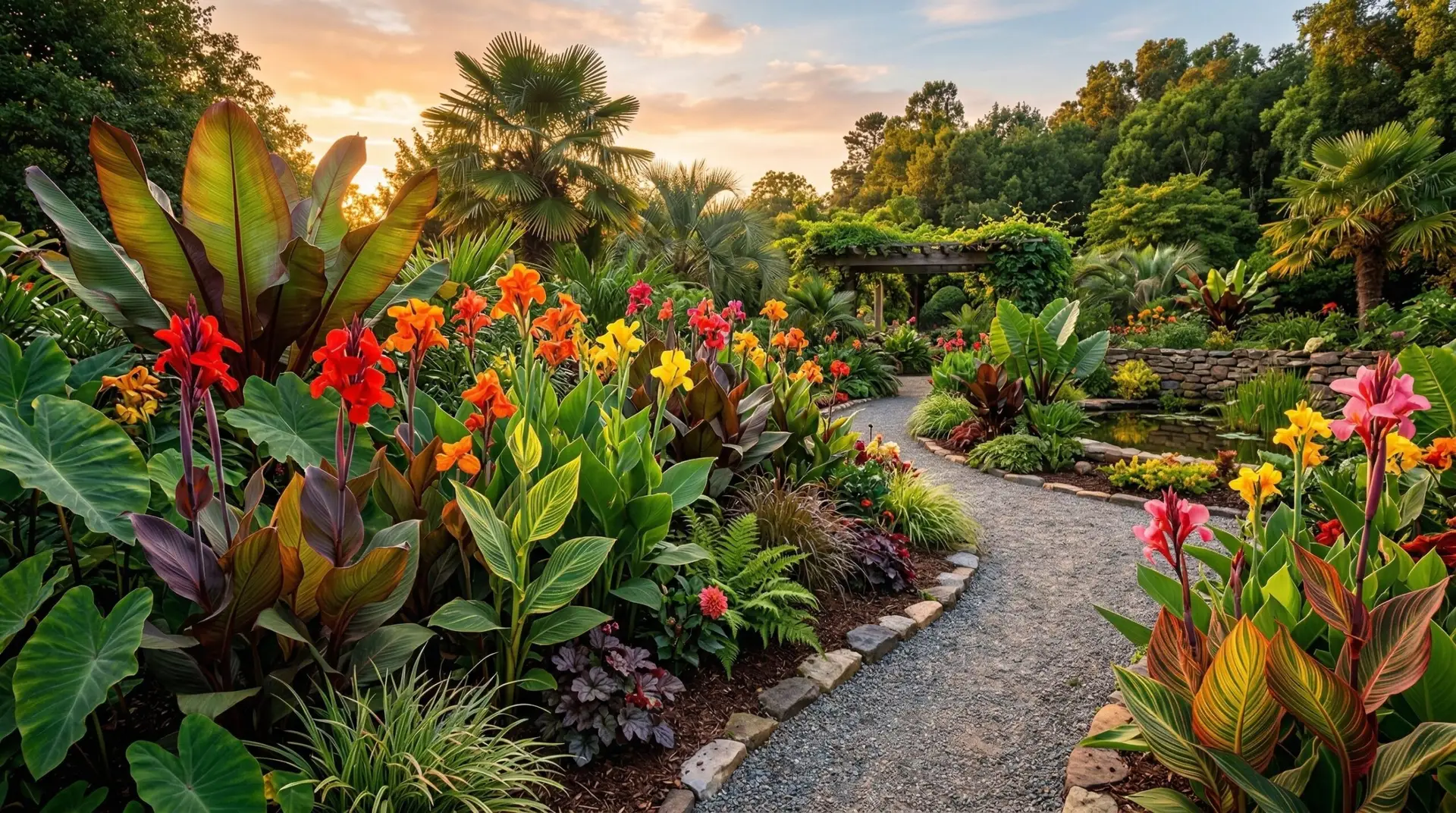
When approaching a tropical garden design, the immediate challenge is establishing a sense of scale and visual weight. The canna lily answers this need perfectly by acting as a structural anchor in the ground. These plants possess a strong, upright architecture that immediately draws the eye and establishes a dominant vertical axis. Their massive, paddle-shaped leaves introduce a coarse texture that defines the tropical aesthetic better than almost any other herbaceous plant. By placing a group of tall cannas at the back of a border or near a prominent curve in a pathway, you create a solid visual mass that grounds the entire composition. They function as the heavy furniture of the garden room, dictating how the rest of the space will be arranged around them.
Understanding scale and proportion is essential when incorporating these large plants into your garden. Cannas can easily reach heights of six to eight feet, making them ideal for manipulating sightlines and creating a sense of enclosure. If you position them along a property line or behind a seating area, their dense foliage forms a highly effective living wall. This verticality allows you to build a tiered composition, stepping down in height toward the front of the border with medium and low-growing companions. You should always consider the viewing angle, ensuring the canna does not obscure smaller, delicate specimens behind it. The goal is to use their imposing height to pull the viewer’s gaze upward, making the garden feel larger and more immersive.
Building color relationships in the border
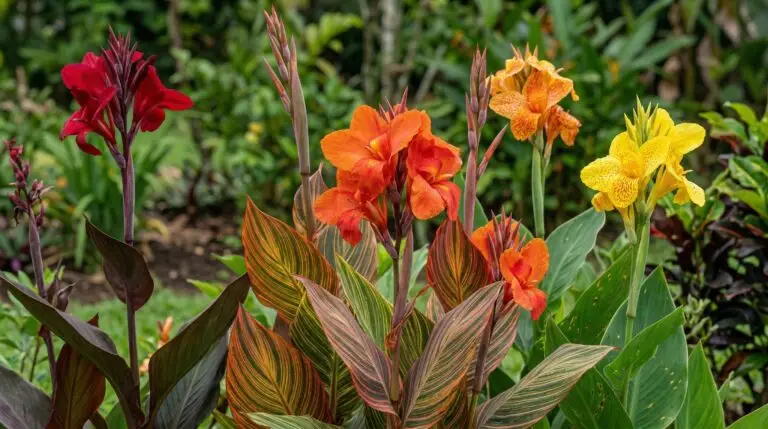
A successful canna tropical garden relies heavily on the color of the foliage rather than just the flowers. Many varieties offer deep burgundy, bronze, or heavily variegated leaves with yellow and green stripes. Dark-leaved cannas are particularly useful for creating depth, as dark colors recede visually and make the space feel deeper than it actually is. You can use these dark forms as a moody backdrop for brighter, warmer colors in the foreground. Conversely, the bright green or yellow-striped varieties act as spotlights in the garden, bringing light to shaded or muted corners. Treating the foliage as a primary color block allows you to design a border that looks complete even before a single flower opens.
When the flowers do appear, they introduce intense, saturated hues that demand careful color pairing. Cannas typically bloom in aggressive shades of scarlet, orange, coral, and bright yellow. You can build an analogous color scheme by surrounding them with other warm-toned flowers. For example, pairing an orange canna with a deep red dahlia creates a rich, fiery combination that feels inherently tropical. If you prefer high contrast, you can place these warm orange or yellow blooms against cool purple or deep blue companion plants. The tension between the hot canna flowers and the cool adjacent blooms creates an active visual pull that commands attention from across the yard.
Textural contrasts and companion plantings
Texture is the true currency of garden design, and the canna provides a massive, unbroken surface area that needs specific companions to look its best. If you plant too many coarse-leaved plants together without variation, the garden becomes visually heavy and exhausting to look at. You need to contrast the wide canna leaves with deeply cut, feathery, or grassy textures to create balance. At the same time, building a convincing tropical canopy requires layering different large-scale forms. Placing cannas alongside the massive, heart-shaped leaves of elephant ears or the arching fronds of a hardy banana creates a tiered jungle effect. The canna sits comfortably in the middle or upper-middle layer of this composition, bridging the gap between the towering bananas and the lower, spreading elephant ears.
To complete the tropical illusion, you need to interplant the cannas with companions that share their affinity for heat and moisture. A well-placed hibiscus shrub works beautifully near the base of a tall canna, offering large, disc-shaped flowers that echo the bold tropical theme. You can also introduce plants with highly distinctive floral shapes to contrast with the more traditional ruffled blooms of the canna. For instance, the sharp, angular profile of a bird of paradise provides a striking geometric contrast against the soft, broad canna leaves. These combinations work because they share a similar visual weight, ensuring that no single plant looks out of place or overpowered by its neighbors. By grouping these heavy hitters together, you build a cohesive planting pocket that reads clearly as a tropical environment.
Sustaining visual interest through the seasons
Good landscape design requires plants to earn their keep for more than just a few weeks of bloom. Cannas excel in this regard because their architectural form remains intact from late spring until the first frost. Even when the primary flowering stems finish their display, the overlapping leaf sheaths maintain a strong vertical presence that continues to anchor the border. As the season progresses, the spent flowers often give way to interesting, spiky seed pods that add a new, rough texture to the top of the plant. You can choose to leave these pods in place for late-season interest or remove them to encourage another flush of foliage and flowers. This long season of structural contribution makes the plant a highly reliable tool for maintaining the bones of your garden design through the hottest months of the year.
The most effective way to implement your canna landscape ideas is through the principle of repetition. Planting a single canna often results in a disconnected, lonely focal point that looks out of scale with the rest of the garden. Instead, you should plant them in groups of three, five, or seven to create a substantial mass of foliage and color. You can then repeat this grouping at irregular intervals along the length of a border to establish a rhythmic pulse that guides the eye through the space. This repetition of bold, architectural forms unifies a diverse collection of tropical plants and brings order to an otherwise chaotic jungle aesthetic. By treating the canna as a repeating structural motif, you transform a simple collection of plants into a highly intentional, composed garden space.
More About Canna Lily
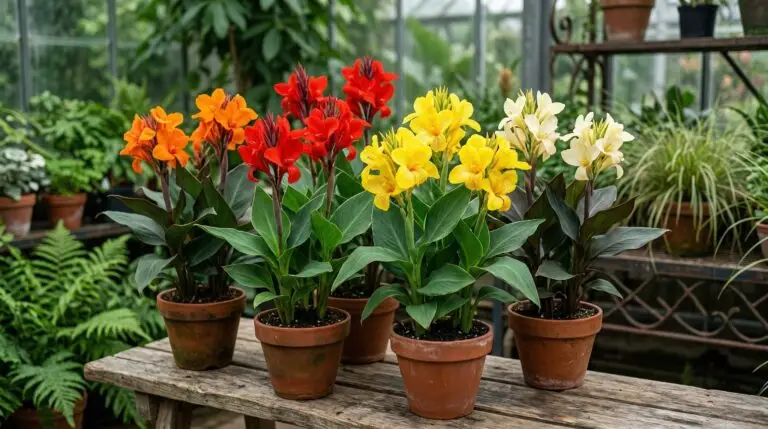
Dwarf canna varieties perfect for small gardens and front-of-border planting
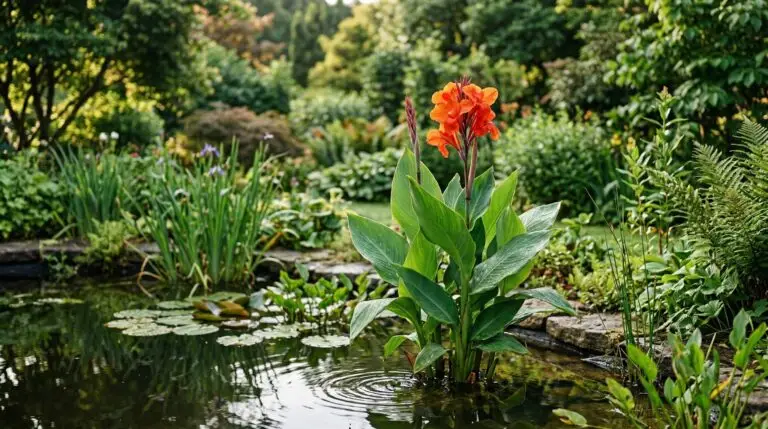
Growing cannas in water gardens and bog conditions for a lush waterside display
Best canna lily varieties for stunning foliage including dark-leaved and striped types
Growing cannas in containers for instant tropical impact on decks and patios
How to overwinter canna lily bulbs in cold climates and replant them in spring
Canna lily flower meaning and its tropical symbolism of beauty and confidence
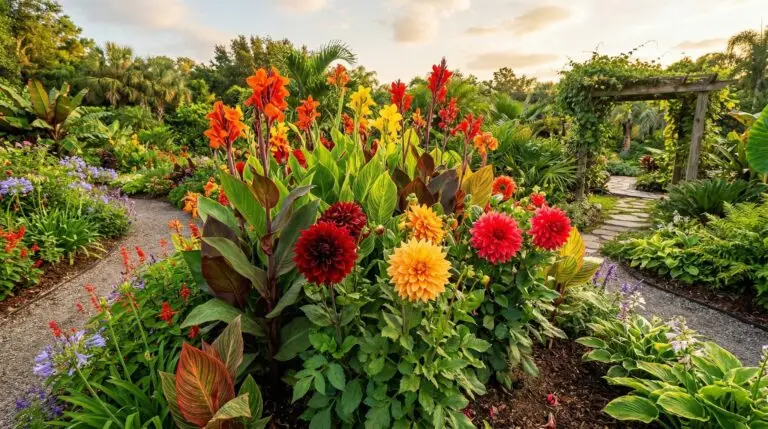
Canna and dahlia combinations for a bold late-summer garden border
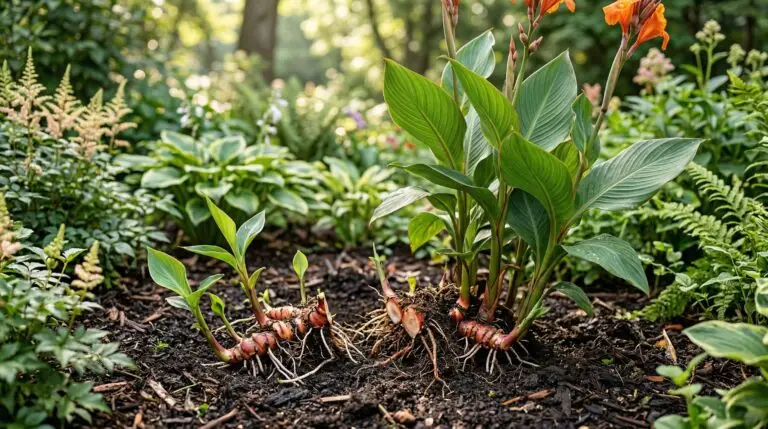
How to divide canna rhizomes in spring for more plants and bigger clumps