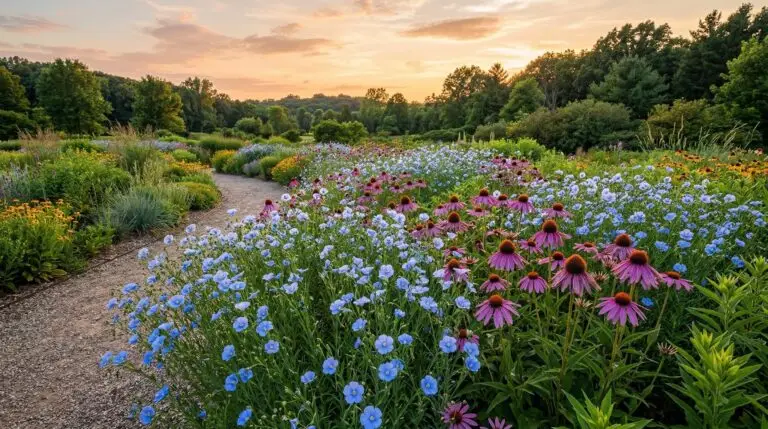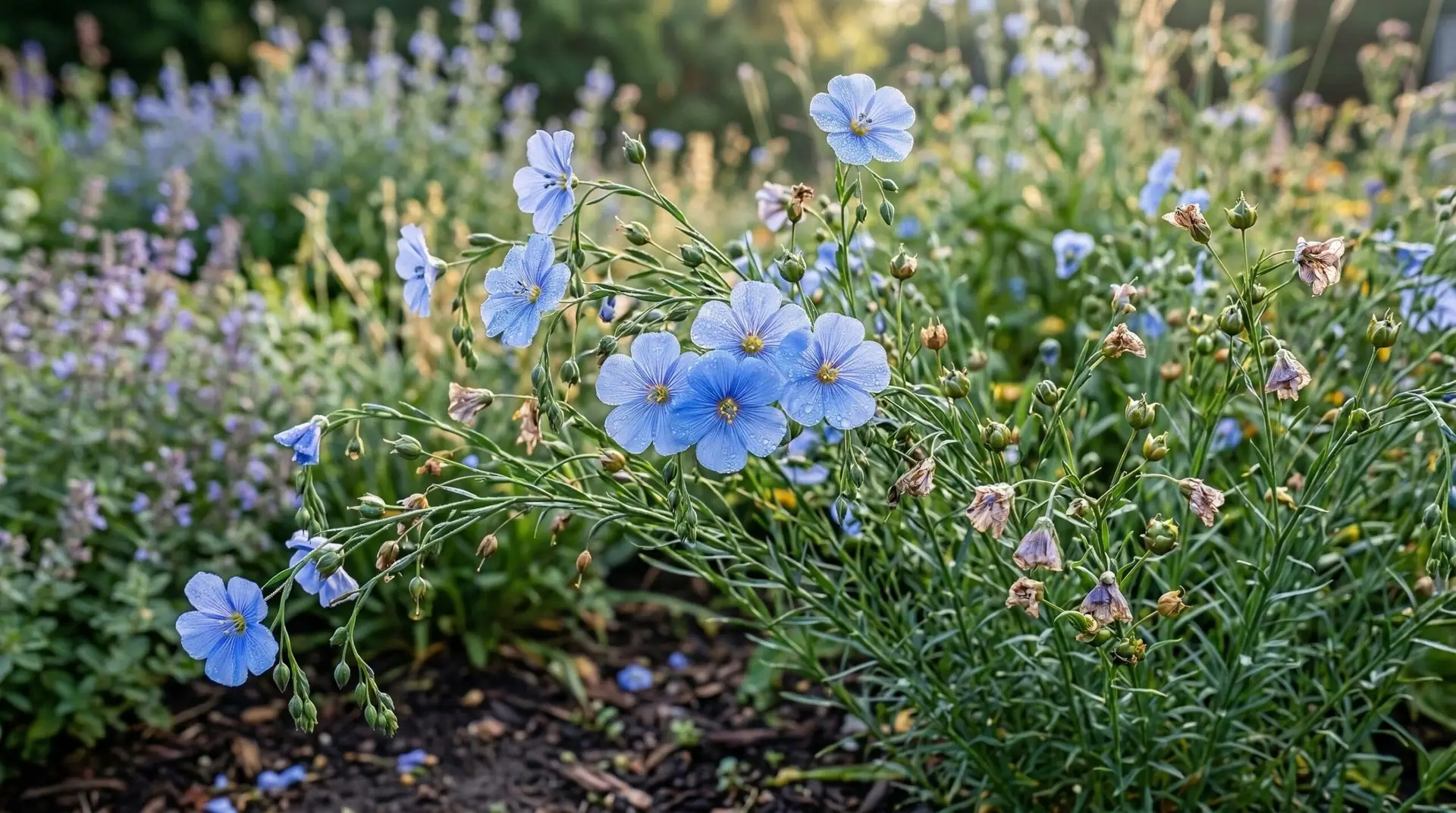
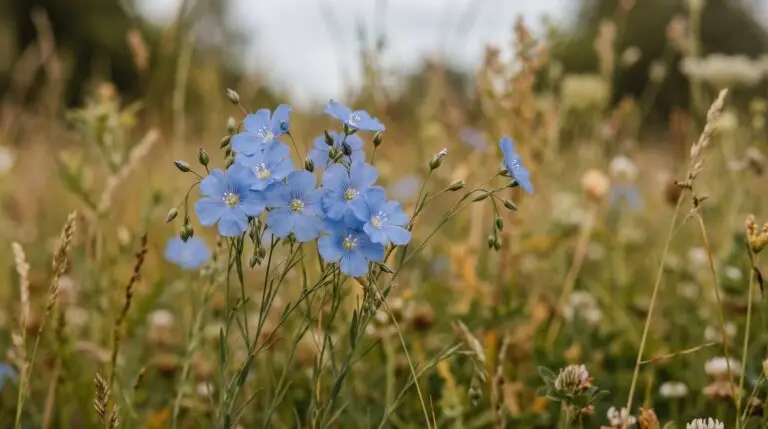
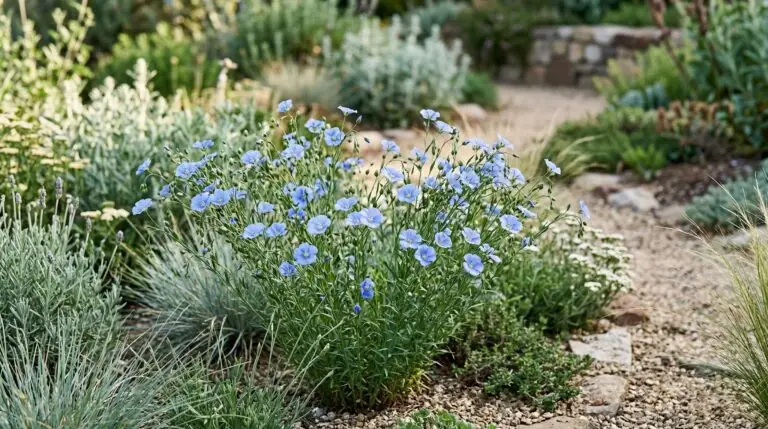
Walk out to a patch of blue flax just before sunrise, and you will see tightly coiled buds waiting for the first touch of light. By mid-morning, those buds open into wide, flat saucers of clear sky blue, attracting early-foraging bees with fresh pollen and nectar. Return to that exact same spot in the late afternoon, and the petals will be gone, scattered on the soil below like discarded tissue paper. This rapid life cycle defines the blue flax ephemeral flowers, a botanical strategy where individual blooms last for just a single morning. While garden catalogs often emphasize flowers that persist for weeks, Linum perenne takes the opposite approach by investing all its reproductive energy into a brief, intense window of attraction. The petals are attached by a fragile layer of cells at their base, an abscission zone that degrades rapidly as the day warms up, causing them to detach in the slightest breeze. Understanding this fleeting nature changes how you see the plant, shifting it from a static garden object to an active, daily performance of renewal.
The evolutionary logic behind dropping petals
Plants must balance the energetic cost of keeping a flower alive against the likelihood of successful pollination. Maintaining a large, colorful display requires a constant flow of water and carbohydrates to the petals, resources that a drought-tolerant species like Linum perenne needs to conserve. By utilizing a blue flax one day bloom strategy, the plant minimizes water loss during the hottest part of the afternoon. Once the morning pollinators have visited and the stigma has received pollen, the petals have completed their function and become an unnecessary drain on the plant’s reserves. Dropping them quickly allows the plant to immediately redirect its energy toward developing seeds rather than sustaining old floral tissue. We see this same highly efficient strategy in the daylily, another plant that builds entirely new flowers each morning rather than maintaining old ones. This daily shedding also removes the physical landing pads that might attract nectar robbers or pests later in the day, protecting the developing ovary from damage.
Managing the daily renewal cycle
To understand how a plant with such short-lived blooms can provide months of continuous color, you have to look closely at the architecture of its stems. A single, slender stalk of Linum perenne does not produce just one or two flowers at its tip. Instead, the plant develops an elongated inflorescence containing dozens of individual buds arranged in a staggered sequence. The Linum perenne flowering process operates like a slow-burning fuse, with only one or two buds on each stem reaching maturity on any given day. As the older buds at the bottom open and drop their petals, the stem continues to grow upward, developing new buds near the top. This sequential blooming means a mature plant with multiple stems will open hundreds of fresh flowers every morning for six to eight weeks. The sheer volume of buds held in reserve guarantees that even if a late frost or heavy rain ruins one day’s display, the plant will simply try again the next morning with a completely new set of flowers.
Pollinators and the morning rush
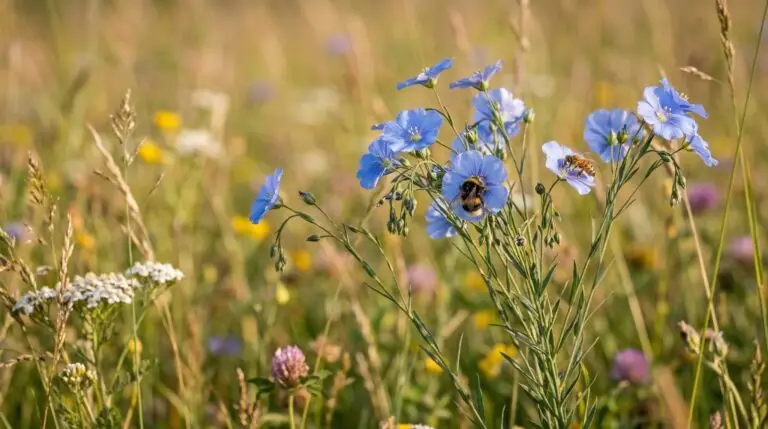
The timing of the blue flax bloom aligns perfectly with the activity patterns of its primary pollinators, which include solitary bees and early-rising syrphid flies. These insects are most active in the cooler morning hours when nectar is abundant and pollen is fresh, before the midday heat drives them to seek shelter. The wide, open shape of the flower provides an easy landing platform for these small insects, while faint lines on the petals guide them directly to the reproductive organs in the center. Because the flowers only last a few hours, pollinators learn that they must visit early to secure the rewards, creating a concentrated rush of activity that ensures rapid cross-pollination. This urgency benefits the plant immensely, as the pollen is transferred quickly before it can dry out or be degraded by intense ultraviolet sunlight. Much like morning glories, blue flax has tuned its biological clock to the precise window when its preferred insect partners are flying. Once the sun climbs high and the pollinators retreat, the plant drops its petals and closes up shop for the day.
The rapid transition from flower to seed
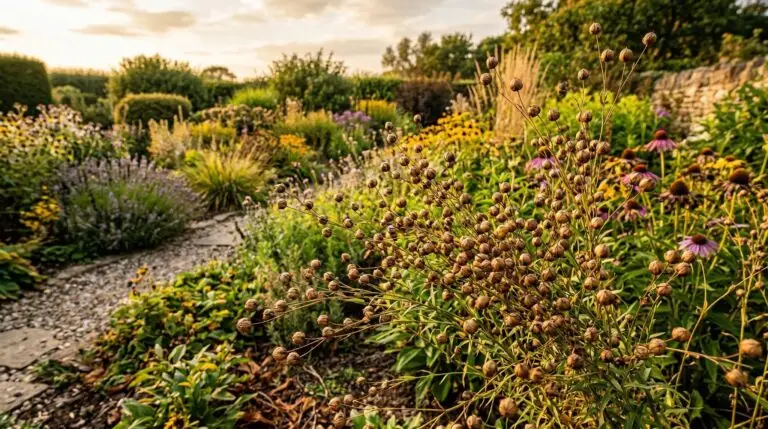
The moment the petals detach and fall to the ground, the plant shifts its internal resources entirely toward reproduction. The ovary left behind on the stem begins swelling almost immediately, transforming over a few days into a perfectly round, green seed capsule that resembles a small pea. Inside this capsule, the plant develops up to ten flat, glossy seeds protected by a rigid outer wall that hardens as it matures. Producing this much seed requires significant carbohydrate reserves, which explains why the plant cannot afford to maintain living petals for more than a few hours. By late summer, a single stem will carry dozens of these heavy seed capsules along its length while still attempting to open a few final flowers at the very top. The stems of Linum perenne are incredibly fibrous and strong, an adaptation that allows them to support the increasing weight of the maturing seed crop without snapping in the wind. When the capsules finally dry and turn brown, they split open at the top, allowing the wind to shake the stems and scatter the seeds across the surrounding soil.
Translating ephemeral habits to garden success
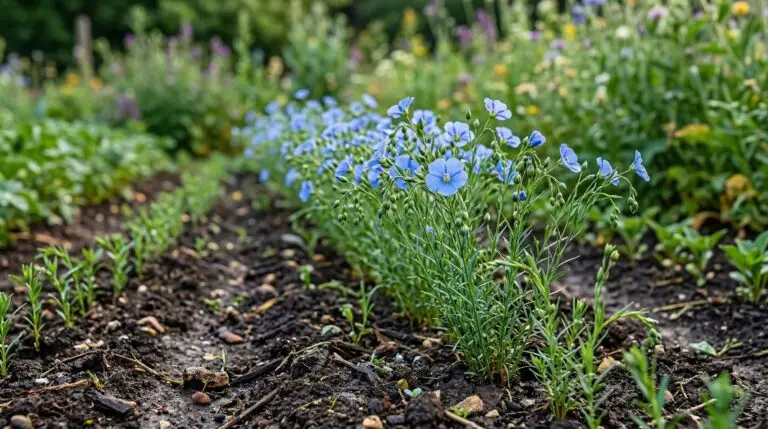
Recognizing the biology behind these daily cycles helps explain how blue flax behaves in a garden setting and what it needs to thrive. Because the plant sheds its own petals so efficiently, it is entirely self-cleaning and never requires deadheading to look tidy or to encourage new blooms. The energy saved by not maintaining old flowers goes directly into root development and seed production, allowing the plant to survive in harsh, dry environments. Linum perenne grows a deep, woody taproot to access moisture far below the surface, an adaptation that makes it incredibly drought-tolerant but also difficult to transplant once established. Understanding that this plant is a deep-rooted, dry-climate species explains why it struggles in compacted clay or poorly drained soils, where its roots can easily rot. Providing a gritty, lean soil mimics its native habitat, forcing the plant to rely on its taproot and encouraging a sturdier, more upright habit. The daily scattering of petals on the ground also contributes a small amount of organic matter back to the soil, a subtle part of its natural life cycle.
When you look at a patch of blue flax in full bloom, you are not seeing the same flowers you saw yesterday, nor the ones you will see tomorrow. You are witnessing a continuous, rolling wave of entirely new biological structures, built overnight and discarded by dusk. This rapid turnover is a masterclass in resource management, allowing a delicate-looking plant to thrive in punishing, arid environments while still attracting the insects it needs to reproduce. The ephemeral nature of the bloom is not a weakness or a flaw, but a highly refined evolutionary tool that ensures maximum pollination with minimal water loss. The next time you walk past a blooming Linum perenne in the morning light, take a moment to appreciate the sheer volume of cellular work required to paint that patch of ground blue. By tomorrow morning, the plant will have engineered a completely new display, offering a fresh reminder of how dynamic the botanical world truly is.
More About Blue Flax
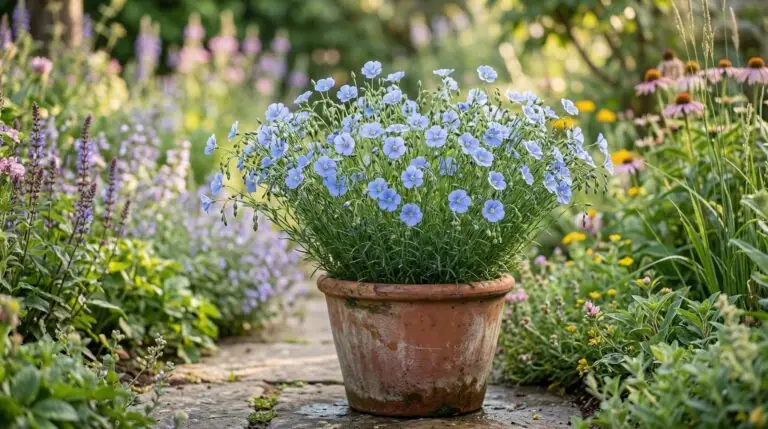
Growing blue flax in containers and window boxes for sky-blue summer color
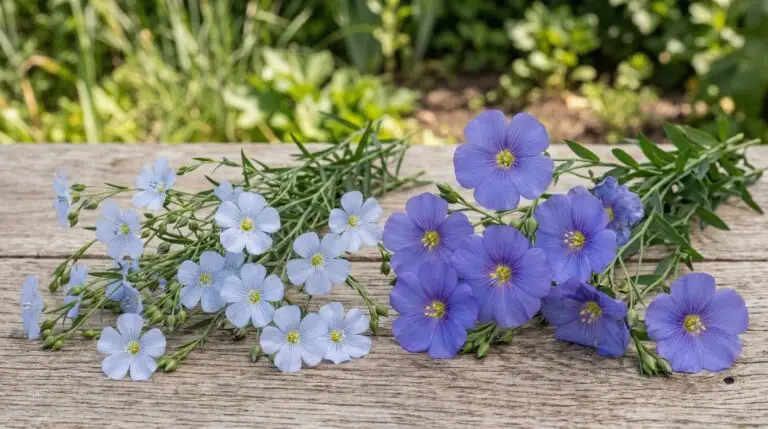
Lewis flax versus perennial blue flax and which native species to grow
How to grow blue flax from seed for a low maintenance wildflower meadow

Blue flax in rock gardens and gravel pathways for a natural alpine look
How to collect and save blue flax seeds for planting next season
Blue flax for pollinator gardens attracting native bees and beneficial insects
The history of flax from ancient linen production to ornamental garden flower
Blue flax for xeriscaping and drought-tolerant gardens that still look beautiful