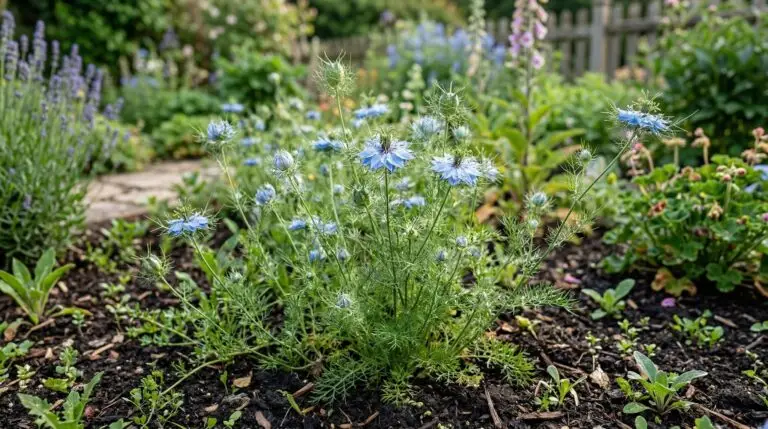
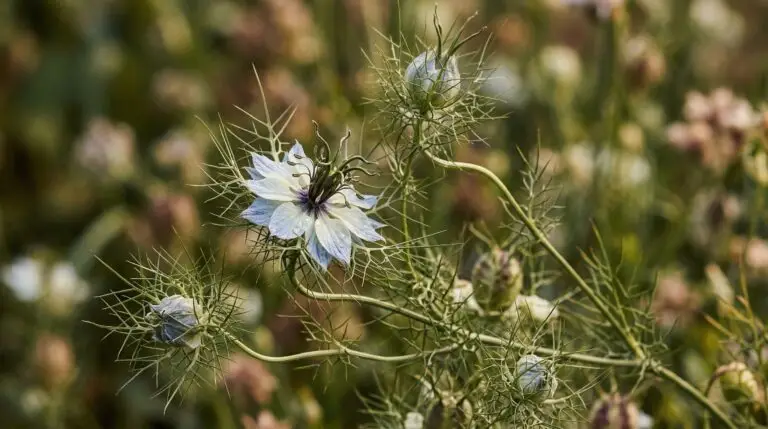
The morning light catches the dew on the thread-like leaves of the love-in-a-mist before it touches anything else in the garden. Each droplet rests in the fine, ferny foliage, holding a tiny reflection of the pale sky. Below the dew, the flower opens its blue petals, surrounded by a collar of green bracts that look like green mist settling around the bloom. A small hoverfly arrives almost immediately, hovering for a second before landing on the dark central stamens. The insect moves methodically in the cool air, gathering what it needs while inadvertently pollinating the flower. This plant is not a static object placed for human decoration, but a living participant in the waking ecology of the yard.
The presence of this particular flower in this exact location is entirely its own doing. I did not plant a seed in the crack between the gravel path and the stone retaining wall. The plant chose this spot, finding enough soil and moisture to send down a taproot last autumn. There is a sharp contrast between the rigid, human-planted rows of the vegetable beds and the spontaneous emergence of this blue star in the walkway. Allowing a plant to decide its own location shifts the role of the gardener from a director to an observer. The garden becomes a place of negotiation rather than a place of strict control.
The architecture of a seed pod
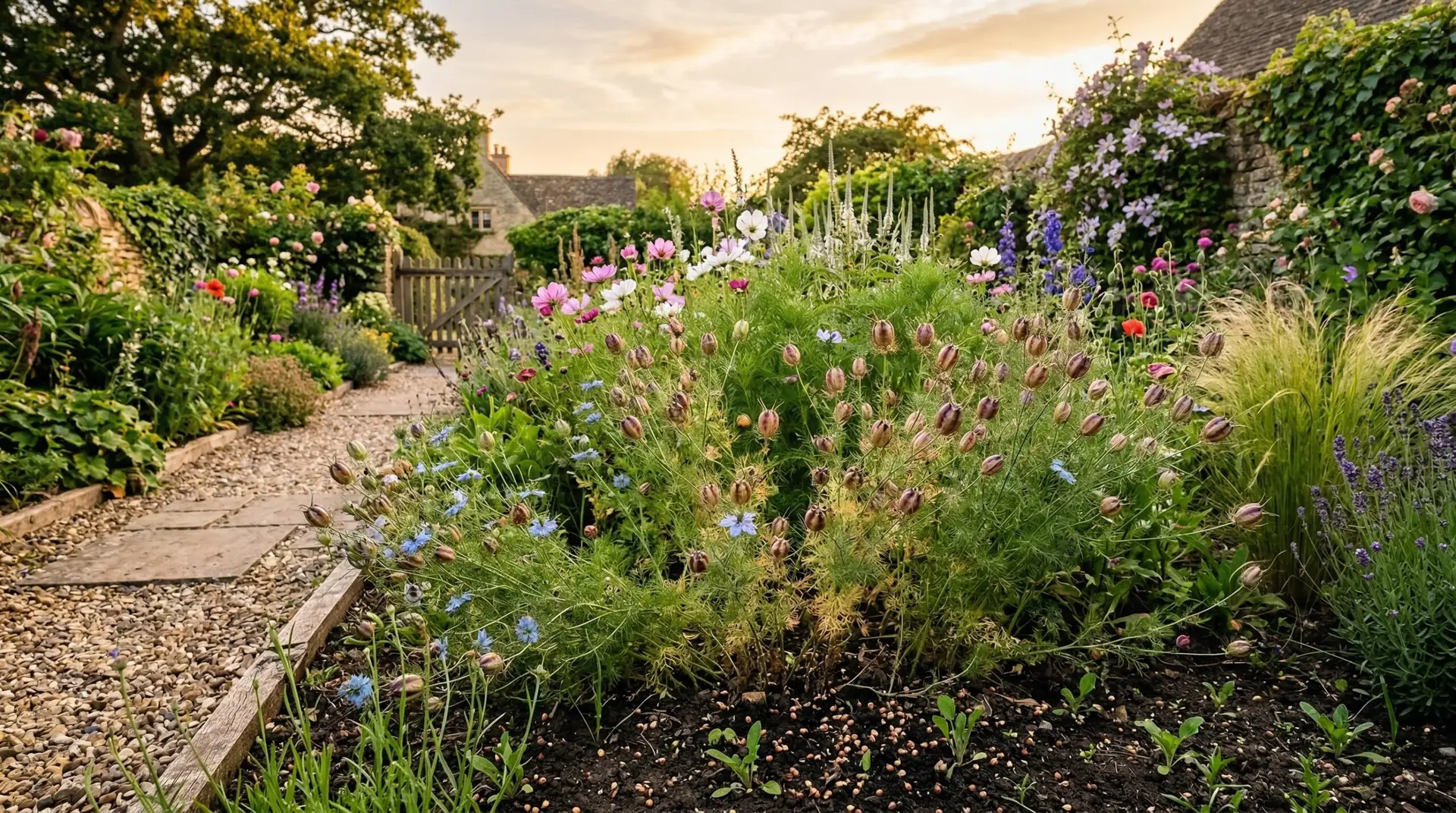
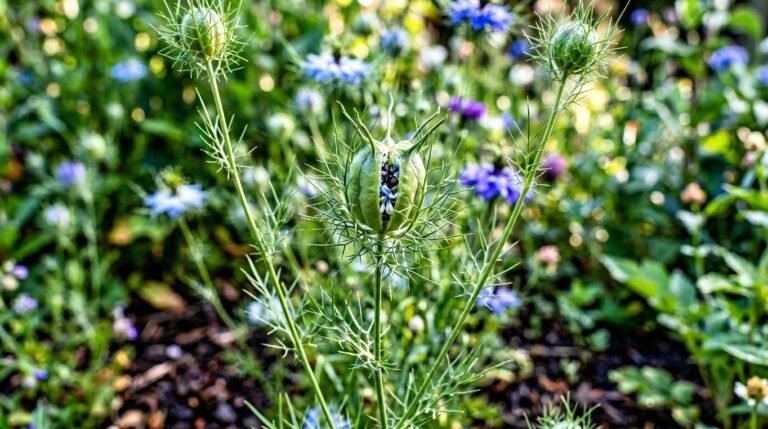
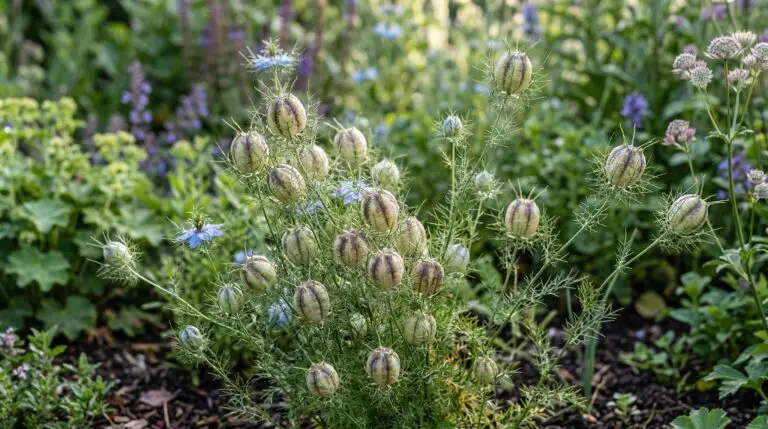
The soft blue petals drop away within a few weeks, leaving behind a structure that looks entirely different from the delicate flower. The center of the bloom swells into a balloon-like capsule, striped with maroon and green, and topped with small horns. This papery vessel is a marvel of biological engineering, designed specifically to protect the developing seeds from rot and hungry birds. The insects that visited the open flowers have moved on to other blooms, their vital work finished for the season. The plant now shifts all its stored energy into the future, pulling water and nutrients up from the soil to harden the seeds forming inside the pod. The stems grow stiff and woody as the summer heat begins to bake the ground.
By late August, the green pods turn a pale, dry tan, and the horns become brittle to the touch. Inside, dozens of coal-black seeds rattle against the papery walls when a passing animal brushes against the stalk. The wind catches the dry stems, shaking them violently enough to crack the pods open and scatter the seeds across the bare soil. The process of nigella self sowing is a quiet distribution that requires no human intervention or carefully timed planting schedules. The seeds fall where they may, some landing on fertile loam and others dropping onto inhospitable concrete. They will lie dormant through the autumn rains and the winter freezes, waiting for the precise combination of light and warmth to wake them.
Companions in the spontaneous border
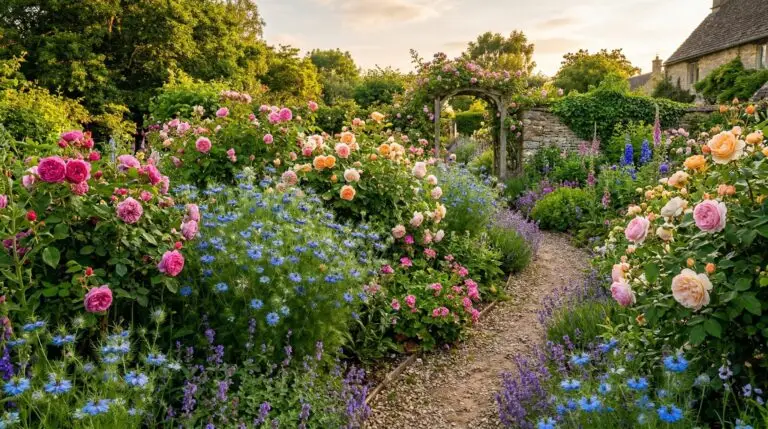
Love-in-a-mist does not work alone in creating this autonomous landscape, as it shares the soil with a whole community of wandering plants. Early spring brings up the low blue clouds of forget-me-nots around the base of the emerging green shoots. Soon after, the tall, wiry stems of cornflowers push through the green mass, opening their own blue and purple discs to the sun. These plants grow together to form a dense, living layer that holds moisture in the ground and shades out unwanted weeds. The soil beneath them stays cool and damp, creating a microscopic habitat for beetles, worms, and the fungal networks that feed the roots.
As the season warms, the cast of characters shifts, but the method of survival remains exactly the same. A scattered poppy drops its pepper-like seeds beside the fading pods, preparing the ground for the following year. By late summer, the wide, open faces of cosmos rise above the drying stalks, offering late nectar to tired bumblebees preparing for winter. The garden becomes a succession of self-seeding annuals that manage their own schedules, their own locations, and their own relationships with the local insects. The human hand is barely needed to maintain this cycle of bloom, seed, and return.
The quiet practice of editing
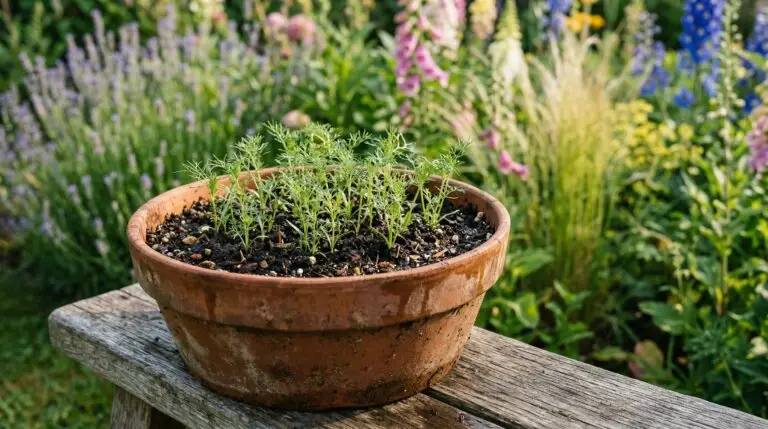
Gardening with plants that plant themselves requires a different kind of attention and a shift in daily habits. Instead of digging holes and setting out nursery transplants, the gardener becomes an editor of what already exists in the soil. In April, the seedlings often appear in thick, grass-like mats where a particularly heavy pod fell the previous autumn. Thinning these seedlings feels like a small act of cruelty, but crowded plants compete for light and water until none of them thrives. Pulling the excess allows the remaining few to develop their characteristic branching structure and deep, resilient taproots. The plants that remain are stronger for the space they have been given.
This editing process is a quiet conversation with the soil, the season, and the plants themselves. When you watch love-in-a-mist self seed across a garden bed, you are seeing a plant claim its own territory. You might leave a cluster near the edge of the border where they will spill softly over the stones. You pull them from the center of a perennial crown where they would smother a slow-waking neighbor before it could reach the sun. The discarded seedlings go to the compost pile, returning their gathered nitrogen and water to the earth to feed the next generation. The act of weeding becomes an act of curating a wildness that already knows how to grow.
Relinquishing the need for order
A garden built on volunteers asks us to accept a certain loss of control over the final picture. The plants will not stay where you first sowed them three years ago, no matter how carefully you planned the color scheme. They migrate according to the slope of the land, the direction of the autumn winds, and the movement of the soil under the heavy winter rains. Some years they form a solid river of blue through the middle of the yard, and other years they scatter into isolated, solitary stars among the tall grasses. This unpredictability is the true reward of allowing plants to complete their natural life cycles without interference.
There is a deep comfort in watching a plant know exactly what to do when left to its own devices. Long after the gardener has gone inside for the winter, the black seeds wait in the freezing mud. They endure the snow and the ice, holding the blueprint for next year’s leaves and flowers within a shell the size of a grain of sand. When the soil warms to the exact degree required, the root emerges and pushes downward into the dark earth. The cycle begins again, bound to the turning of the earth and the lengthening of the light, entirely independent of our hands.
More About Love in a Mist

Nigella seeds in the spice world and the culinary history of black cumin
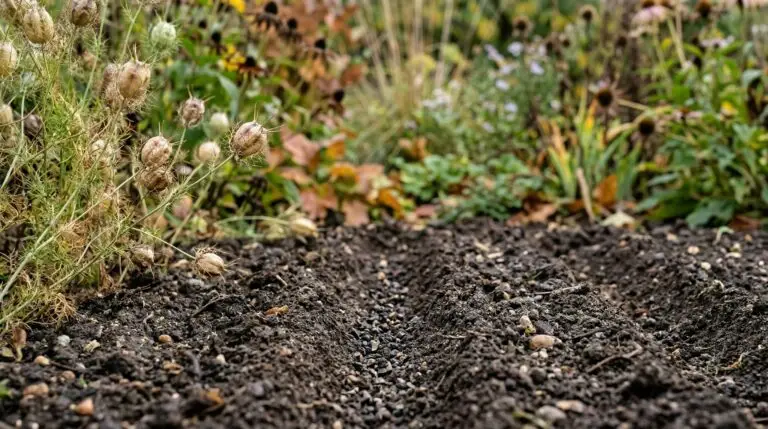
Growing love-in-a-mist from seed with the simple scatter and forget method
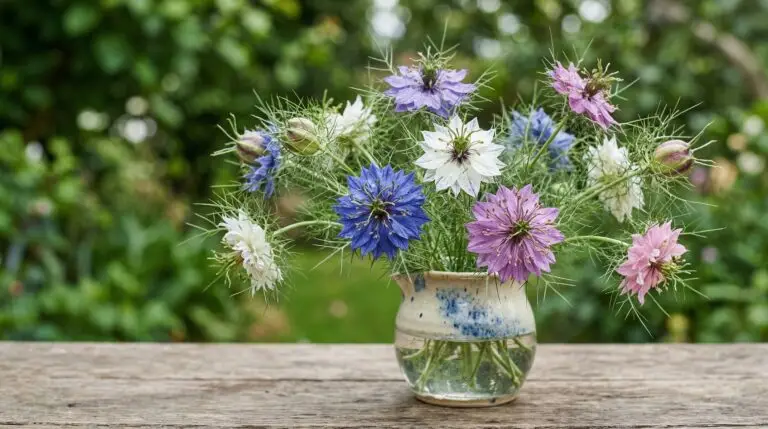
Best love-in-a-mist varieties from classic Persian Jewels to double Albion Green Pod
Love-in-a-mist in containers for a feathery cottage feel on balconies and windowsills
Companion plants for love-in-a-mist: what to grow and avoid
Love-in-a-mist flower meaning and the romantic mystery behind this enchanting bloom
Love-in-a-mist as a delicate cut flower for wildflower-style bouquets and arrangements
Love-in-a-mist seed pods that are as beautiful as the flowers and perfect for drying