By the end of this reading, you will understand exactly why the easiest way to grow sweet alyssum is to simply mimic how it behaves in the wild. You have likely seen these tiny white or purple flowers blooming stubbornly in the narrow crack between a sidewalk and a brick wall, thriving with absolutely no human intervention. That observation holds the secret to growing sweet alyssum from seed in your own garden. Instead of carefully burying seeds in sterile potting mix under artificial grow lights, we are going to learn how to step back and let the plant’s natural programming take over. When we understand what a seed actually needs to wake up and start growing, we can abandon complicated indoor seed-starting routines. We can instead embrace a method that relies on throwing seeds on the ground and walking away.
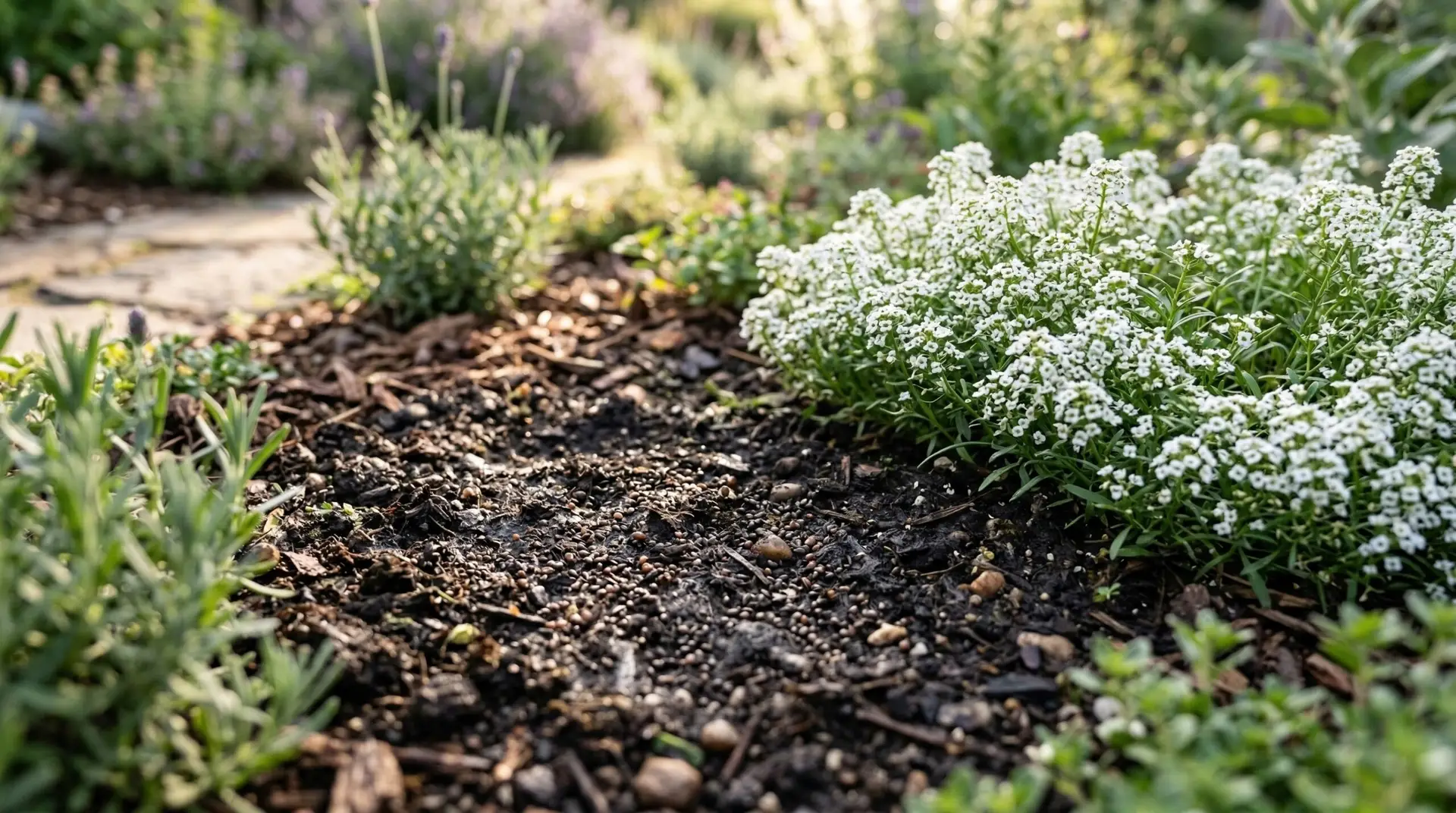
To grasp why this scatter-sow method works, we first need to look at the physical characteristics of sweet alyssum seeds. These seeds are incredibly small, resembling specks of dust or finely ground pepper rather than the plump, familiar shapes of beans or the long, needle-like seeds of Cosmos. Because they are so tiny, they contain almost no stored energy reserves to help a young sprout push its way up through a heavy layer of soil. If you bury them even a quarter of an inch deep, they will spend all their energy trying to reach the surface and simply die in the dark. This is why the instruction to surface sow sweet alyssum seeds is a strict biological requirement for the plant to survive.
The mechanics of surface sowing sweet alyssum
Think of a sweet alyssum seed as a microscopic solar panel that requires direct exposure to sunlight to turn on its internal machinery. When you scatter these seeds directly onto the surface of bare garden soil, the sunlight hits the seed coat and triggers the germination process. The scatter-sow method literally means taking a pinch of seeds and broadcasting them over the soil like you are seasoning a pot of soup with salt. You do not dig a hole or cover the seeds with dirt. You simply prepare a patch of loose soil, sprinkle the seeds on top, and let the rain and sun do the rest of the work.
This might seem contradictory, because we are traditionally taught that seeds must be buried to protect them from birds and to keep them moist while they sprout. The reason we leave sweet alyssum exposed is that its need for light outweighs its need for physical protection. The seed has also adapted a clever physical trait to handle the moisture problem on the soil surface. When a sweet alyssum seed gets wet, it develops a slightly sticky, gelatinous coating that anchors it to the ground and helps it retain a tiny bubble of water. This sticky layer prevents the seed from blowing away in the wind and keeps it hydrated enough to push out its first tiny root.
Timing your planting for spring blooms
Knowing when to scatter your seeds is just as important as knowing how to scatter them. While you can certainly sow sweet alyssum in the early spring after the danger of frost has passed, you will often get much stronger plants if you sow the seeds in late autumn. This practice is called fall sowing, and it closely mimics the natural life cycle of the plant in the wild. When a mature sweet alyssum plant finishes blooming in the late summer, it drops its seeds onto the ground, where they sit dormant through the freezing winter months. The freezing and thawing action of the winter soil actually helps break down the tough outer coating of the seed. This cold exposure prepares the seed to sprout the moment the soil warms up in the spring.
Many new gardeners feel nervous about leaving delicate seeds outside in the snow and ice. The cold winter weather will not harm these seeds at all, because they have evolved to survive harsh dormant periods. In fact, relying on the winter weather means you do not have to guess when the spring soil is warm enough to plant. The seeds will naturally wake up and germinate at the exact right moment in early spring, usually weeks before you would even think about going out to work in the garden. This takes a season or two to get a feel for, and that is completely normal. Once you trust the process, you will find your garden blooming much earlier with far less effort.
Establishing a self-sowing colony
Once you successfully grow your first patch of sweet alyssum from seed, you can easily transition from planting it every year to managing a permanent, self-sowing colony. A self-sowing annual is a plant that completes its entire life cycle in one year but drops enough viable seeds to replace itself the following spring. You can treat sweet alyssum much like you would treat Love-in-a-Mist, allowing the fading flowers to remain on the plant until they dry out and spill their contents onto the soil below. By resisting the urge to pull up the fading plants too early in the fall, you are letting the flowers do the scatter-sowing work for you. The dead plant material even provides a light protective cover for the seeds over the winter.
To maintain this self-sowing cycle, you simply need to leave the soil surface relatively undisturbed in the areas where you want the flowers to return. If you apply a thick layer of wood mulch over your garden beds in the late fall or early spring, you will accidentally bury the tiny seeds and block the sunlight they need to germinate. Think of heavy mulch as a thick blanket that smothers the seeds, whereas a bare soil surface acts like an open welcome mat for the new sprouts. You can still use mulch in your garden, but keep it pulled back a few inches from the specific patches where you expect your sweet alyssum to emerge. This same rule applies to any other light-dependent seeds you might be trying to naturalize, such as a taller self-sower like Cosmos.
The core principle to take away from this process is that successful gardening often requires us to do less rather than more. Growing sweet alyssum from seed is an exercise in trusting the biology of the plant and understanding that it already knows how to grow without our constant interference. By providing bare soil, ensuring the tiny seeds remain on the surface to receive sunlight, and allowing the natural weather cycles to dictate the timing of germination, you match your gardening practices with the laws of nature. You are no longer forcing a plant to grow in an artificial environment. You are instead creating the exact conditions for a remarkably tough seed to do exactly what it was born to do.
More About Sweet Alyssum
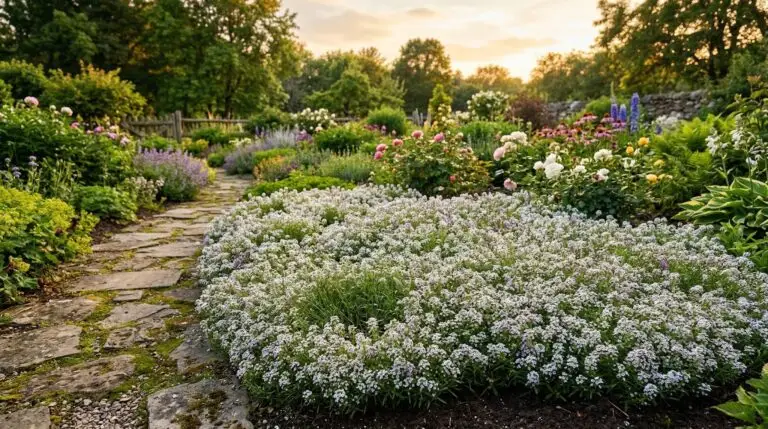
Sweet alyssum as a living mulch and ground cover that suppresses weeds while smelling amazing

Sweet alyssum between pavers and stepping stones for fragrant walkway edges
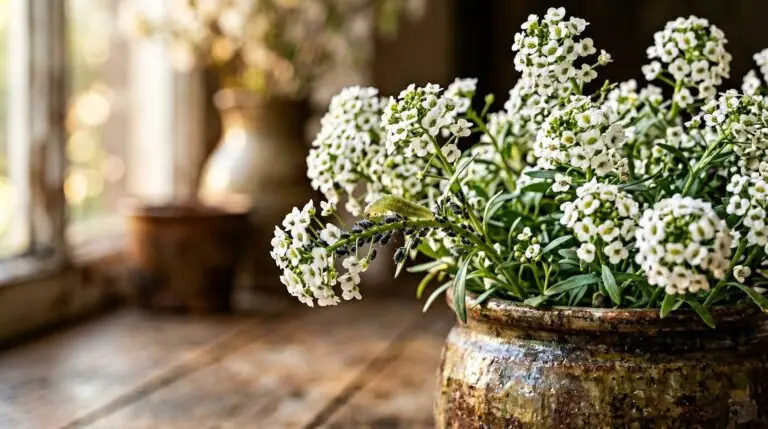
Sweet alyssum as a beneficial insect attractor that brings hoverflies and parasitic wasps
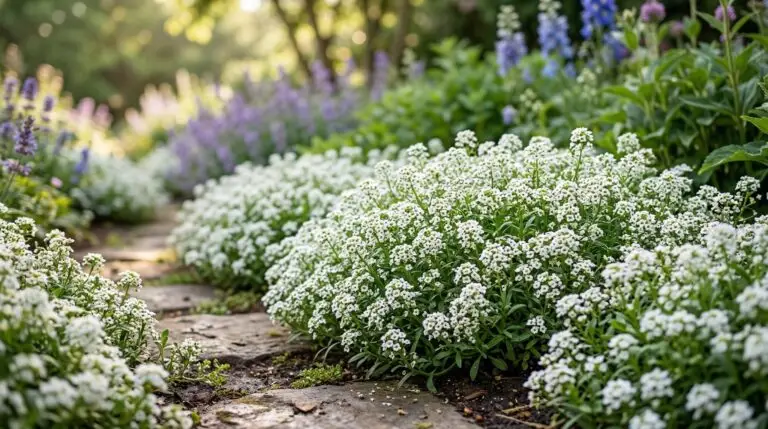
How to grow sweet alyssum for fragrant white carpets that spill over every edge
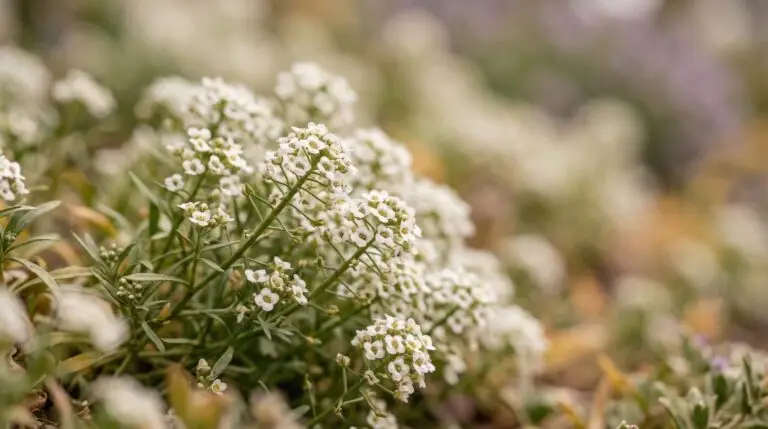
Sweet alyssum flower meaning and the modest charm of this honey-scented ground hugger
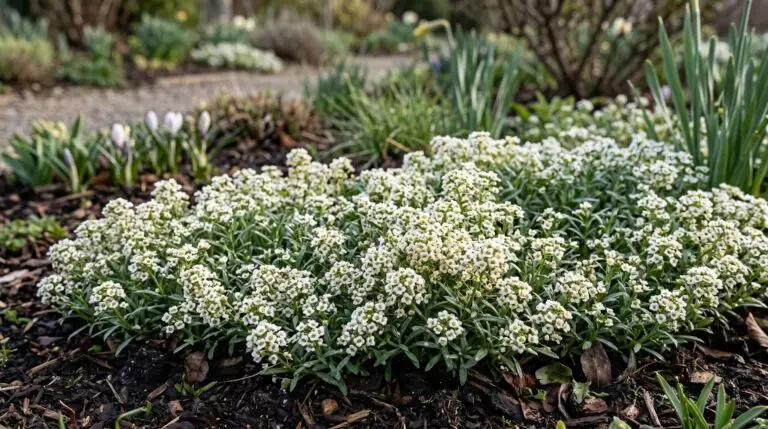
Why sweet alyssum dies in summer heat and the fall comeback you can count on
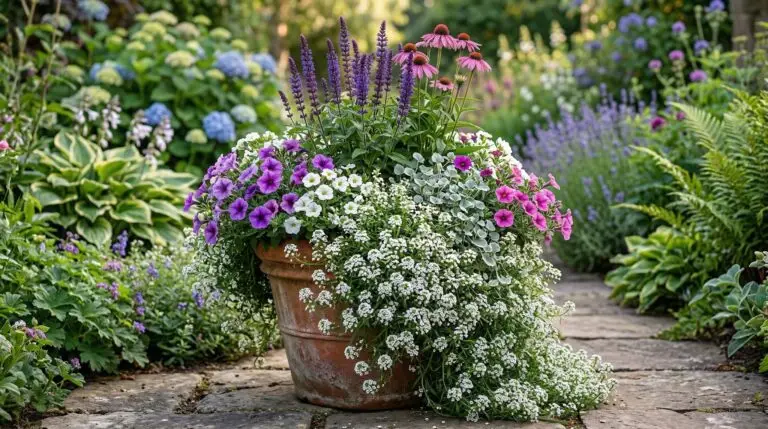
Sweet alyssum in containers and hanging baskets as the perfect fragrant spiller plant