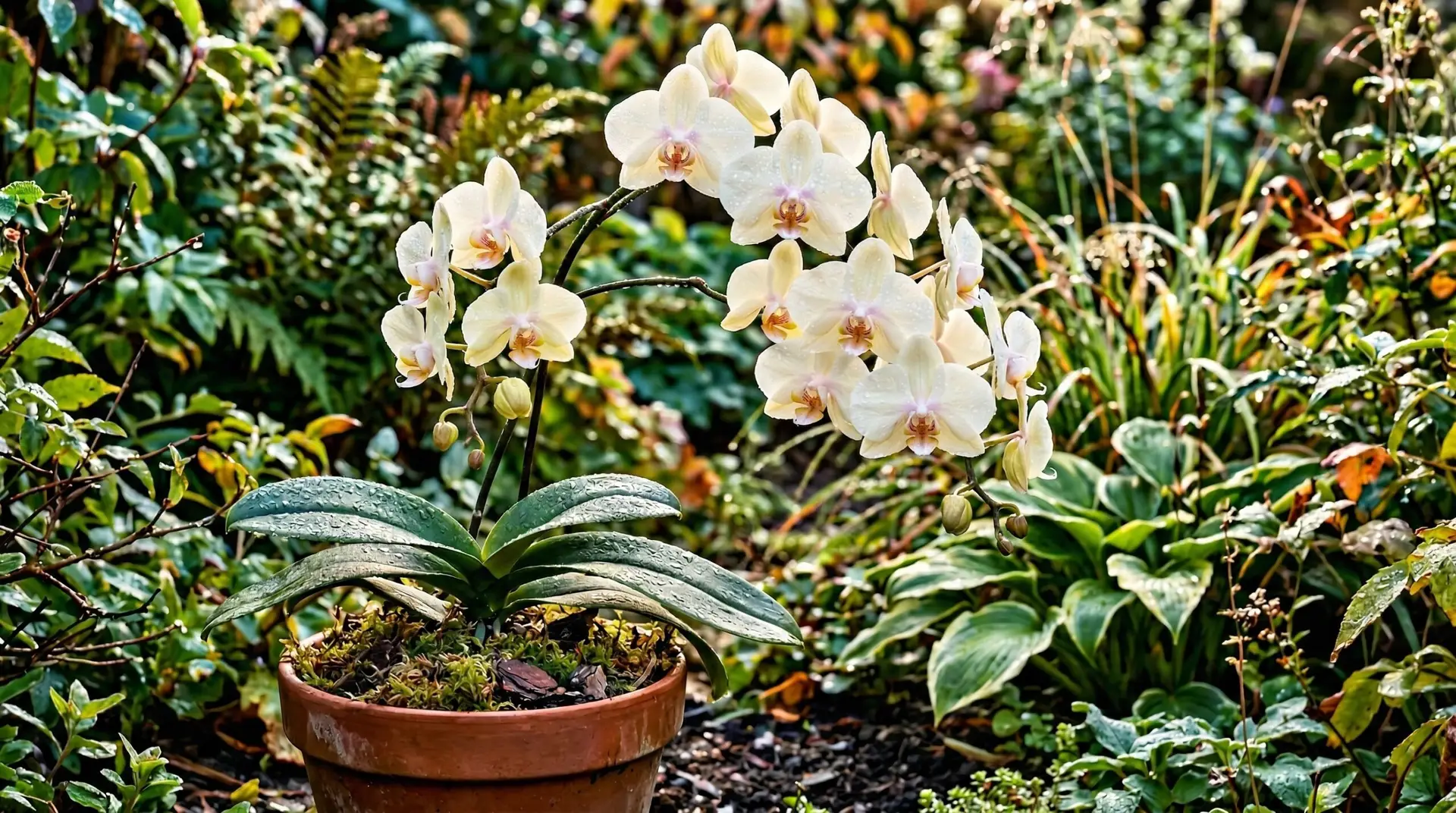
People bring me the same frustrating story every single week about their moth orchids. You buy a plant covered in beautiful blooms, enjoy those flowers for months, and then the petals eventually drop off. After that, the plant sits on a windowsill looking like a pair of limp green rabbit ears for two years without doing anything else. Many frustrated owners assume the plant is dead or broken and throw it in the trash out of sheer annoyance. When an orchid is not blooming, it usually means the plant is missing a specific environmental trigger that tells it the time has come to reproduce. These plants do not bloom on a continuous loop, and they need your help to simulate the changing seasons they would experience in the wild. If you understand how a Phalaenopsis orchid thinks, you can easily trick it into pushing out a brand new flower spike. The reality is that getting an orchid to rebloom is entirely within your control once you stop treating it like a regular houseplant.
Assessing your current light levels
Before you try any special tricks to force a rebloom, you have to look closely at where your plant is living. When an orchid receives too little light, it simply does not have the stored energy required to produce a massive stalk of flowers. You can tell exactly how much light your plant is getting by looking at the color of its leaves. A healthy moth orchid that is receiving the correct amount of light will have medium grass-green leaves with a slightly yellow tint. If the leaves on your plant are very dark, rich forest green, it is starving for sunlight and will never bloom for you regardless of what else you do. You need to move the pot to an east-facing window or a shaded south-facing window where it gets bright, indirect light for most of the day. Direct hot sun will scorch the leaves, so keep a sheer curtain between the glass and the plant if the afternoon rays are intense. Assessing your light levels is the absolute mandatory first step before you start manipulating temperatures or applying fertilizers.
The temperature drop that triggers flowers
Once your plant has enough energy from proper lighting, you can use the most reliable Phalaenopsis rebloom trick in the book. In their natural habitat, these plants wait for the cooler nights of autumn to signal that it is time to start growing a flower spike. You have to recreate this seasonal shift indoors by exposing the plant to a noticeable temperature drop for about two to four weeks. The goal is to give the orchid daytime temperatures around seventy-five degrees and nighttime temperatures around sixty degrees. You can achieve this by moving the plant right up against a cool windowpane at night, or you can place it in a room where you turn the heat down while you sleep. Other tropical epiphytes like the Oncidium orchid also rely on distinct seasonal changes to initiate their blooming cycles. When the moth orchid feels this consistent chill every night, it will almost always respond by pushing a small mitten-shaped spike out from the base of its leaves. You only need to maintain this temperature drop until you see the new spike emerge, at which point you can return it to normal room temperature.
Managing the old flower spikes
Gardeners constantly argue about what to do with the bare stem after the original flowers fall off. Some people recommend cutting the spike just above the second or third node from the bottom to force a quick secondary branch of flowers. When you leave the old spike attached, the plant will sometimes push out a small side shoot with a few smaller, short-lived blooms. I always advise my clients to cut the old spike completely off right at the base of the plant instead. Leaving the old stem forces the orchid to waste energy maintaining that tissue rather than growing new roots and leaves. By cutting the spike down to the bottom, you force the plant into a proper resting phase where it can build up strength for the next cycle. When it finally produces a brand new spike from the base, you will get a much larger, stronger, and more impressive display of flowers. Removing the old spike also prevents the plant from becoming top-heavy and awkward as it tries to support multiple weak branches.
Watering habits that support new growth
Many people fail to get flowers because their watering habits are actively rotting the root system. When an orchid sits in stagnant water, the thick, fleshy roots suffocate and turn into mush, leaving the plant unable to absorb moisture. A plant with a compromised root system will completely abandon any attempt to bloom because it is fighting for survival. You should only water your orchid when the potting medium has dried out almost completely and the roots have turned a silvery-gray color. Take the plastic nursery pot to the sink, run room-temperature water over the bark or moss for a minute, and let it drain completely before putting it back in its decorative cover. Never let water pool in the crown of the leaves, as this causes a fatal condition called crown rot that will kill the plant long before it ever flowers. Healthy roots are plump and green right after watering, and maintaining this root health is the foundation of getting your plant to rebloom. By mastering this basic watering technique, you prevent the most common cause of orchid death and set the stage for future flowers.
Feeding schedules and the reality of waiting
You cannot starve a plant and expect it to perform heavy lifting, so you need a consistent feeding schedule to support new blooms. During the active growing phase in the summer, you should apply a weak, balanced liquid fertilizer every time you water the plant. When you start the temperature drop treatment in the fall, switch to a fertilizer with a higher phosphorus number to encourage flower development. You must flush the pot with plain water once a month to wash away any built-up fertilizer salts that can burn the sensitive roots. People often get incredibly impatient waiting for results, much like they do when trying to coax blooms from a fussy gardenia indoors. You need to understand the patience timeline because an orchid spike grows painfully slowly, often taking two or three months to form buds. The single best piece of advice I can give you is to stop treating your orchid like a disposable bouquet and start treating it like a long-term companion. Give it bright light, a chill in the autumn, and the time it needs to do its work, and you will have flowers year after year.
More About Moth Orchid
Growing orchids in bathrooms and why humidity-loving phalaenopsis thrive near showers
Orchid arrangements and centerpieces that make any room feel luxurious and elegant
Orchid meaning, by colour and tradition, honestly explained
Repotting orchids step by step without killing the plant or damaging aerial roots
Best moth orchid varieties and the incredible range of phalaenopsis colors and patterns
How to care for moth orchids so they bloom again and again for years
Watering orchids correctly and the ice cube myth versus what actually works
Orchid roots growing out of the pot and why aerial roots are a sign of a healthy plant