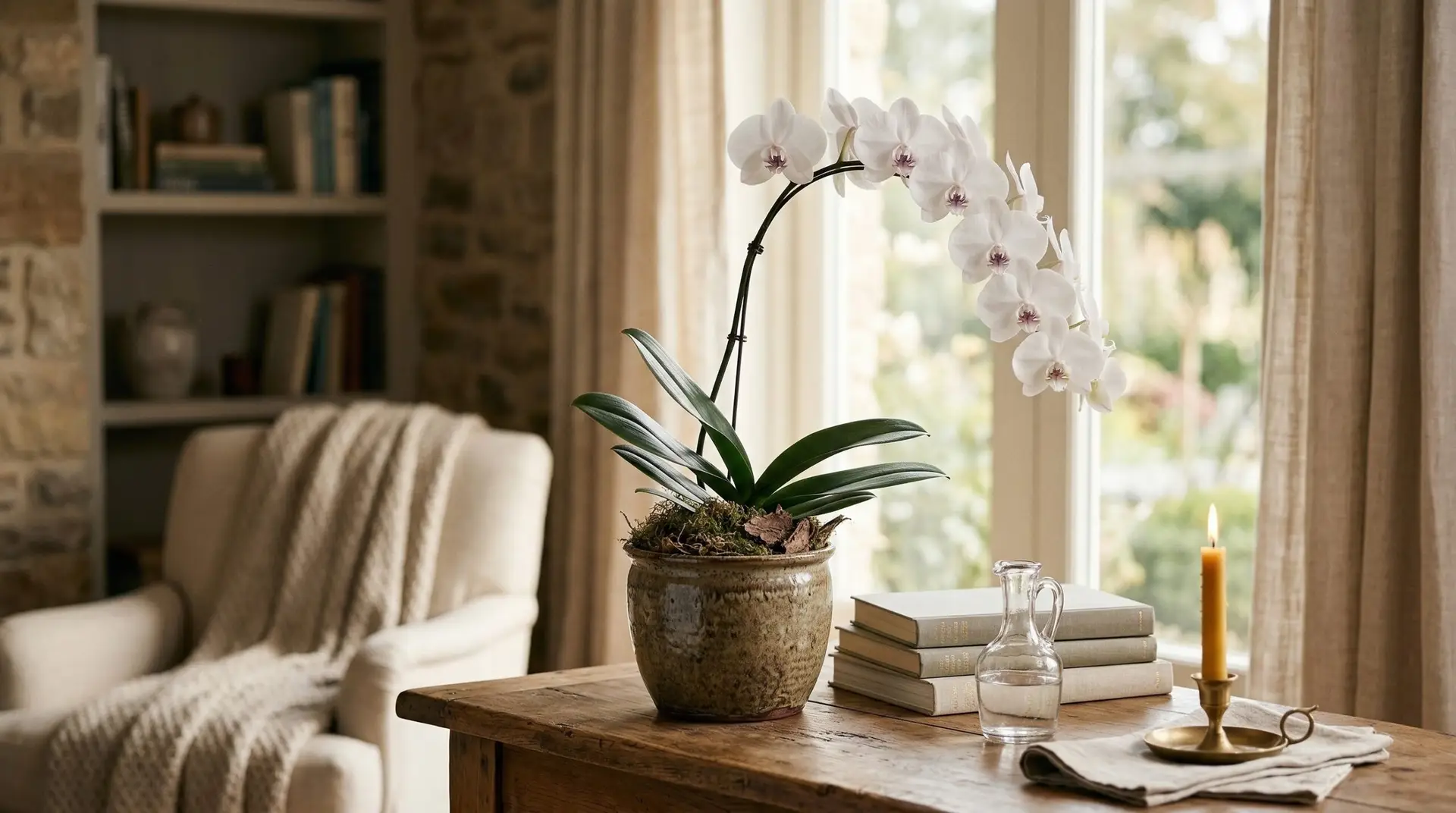
Walking into a grand hotel lobby, the eye is almost always drawn to a massive, sculptural floral display anchoring the central table. Often, this display relies on the graceful, arching stems of the moth orchid to command the cavernous space. The soft morning light catches the thick, waxy petals, illuminating subtle white and pale pink hues against the dark, polished wood of the furniture. There is a specific visual weight to these installations, grounded by a wide metallic basin and softened with mounds of vivid green moss. This level of intentional styling elevates a simple potted plant into a piece of living architecture. Gardeners and interior designers alike recognize that the moth orchid possesses a structural elegance that makes it perfectly suited for formal interior spaces. Bringing this exact look into a residential setting requires treating the plant as a primary design element rather than a simple potted houseplant.
The appeal of the moth orchid in home interiors lies in its remarkable longevity and clean, uncluttered lines. A well-constructed orchid centerpiece can hold its blooms for months, offering a semi-permanent focal point that outlasts any traditional cut flower bouquet. Moving away from the standard plastic nursery pot allows the plant to integrate fully into the surrounding decor. Placing the orchid in a vessel that matches the room’s aesthetic transforms it from a temporary gift into a deliberate piece of orchid decor.
Contents 4 sections
Creating the grand hotel lobby effect at home
Achieving that generous, oversized aesthetic starts with grouping multiple plants within a single, substantial container. A wide, shallow bowl made of hammered brass, aged silver, or matte ceramic provides the necessary physical and visual anchor for the tall stems. Instead of repotting the orchids directly into the bowl, you can leave them in their plastic nursery pots and arrange them closely together inside the larger vessel. This method allows you to water each plant individually in the sink, letting them drain completely before returning them to the display. Once the pots are positioned, tucking thick handfuls of preserved sheet moss or gray Spanish moss around the bases hides the plastic rims completely. The stems should be gently angled so they arch outward in a natural canopy, mimicking how they might lean toward the light in a forest canopy. Using natural bamboo stakes and subtle wire clips keeps the heavy flower spikes supported without drawing attention away from the blooms.
Adding complementary textures at the base of the container gives the orchid arrangement a finished, professional quality. Small ferns, trailing ivy, or a glossy Anthurium can be tucked between the orchid pots to fill the visual gap between the rim of the bowl and the lowest blooms. These companion plants thrive in similar indoor conditions and add a layer of lush, tropical greenery that grounds the tall, spindly orchid stems. The contrasting leaf shapes create a rich, layered look that feels far more intentional than a single plant standing alone.
Styling cut stems for dramatic impact
While moth orchids are almost exclusively sold as whole potted plants, snipping a mature stem transforms it into a highly sculptural cut flower. A single, heavy spray of white blooms placed in a tall, thick glass cylinder draws the eye upward and easily commands a dining room table or an entryway console. The clear water magnifies the submerged portion of the green stem, adding a liquid, light-catching element to the arrangement. Mixing these cut moth orchids with the sleek, architectural lines of a Calla Lily results in a display that feels distinctly modern and deliberate. The thick, waxy nature of the orchid petals allows them to last for several weeks in a vase, far outperforming standard mixed bouquets. Stripping away the leaves and the roots forces the viewer to focus entirely on the geometry of the flowers and the graceful curve of the stem.
Maintaining these cut stems requires only a few basic steps to keep the water clear and the blooms hydrated. Changing the water every few days and trimming a small portion off the base of the stem extends the life of the display significantly. A sharp, clean cut at a forty-five-degree angle prevents the stem from resting flat against the bottom of the vase, ensuring it can always draw up moisture. The absolute simplicity of a few cut stems in fresh water often makes a stronger statement than a heavily composed, cluttered vase.
Exploring organic forms with kokedama and mounts
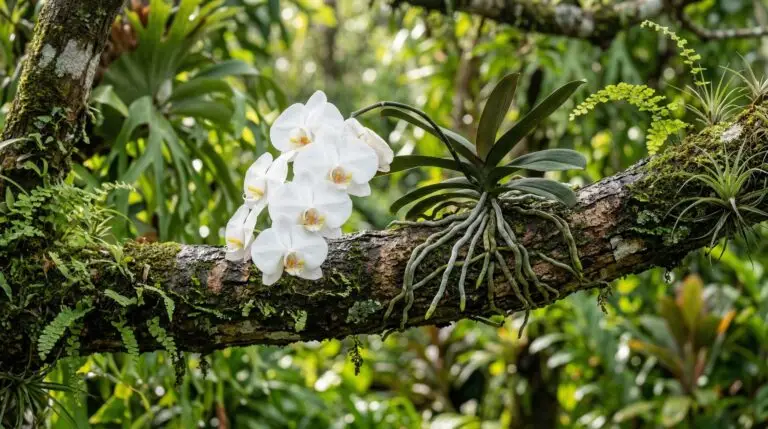
Moving away from traditional vases and heavy bowls, the Japanese art of kokedama turns the plant’s thick root system into the primary focal point. Wrapping the roots in a sphere of damp sphagnum moss and binding it tightly with dark twine creates a self-contained living sculpture. This moss ball can sit directly in a shallow ceramic dish or hang suspended in a window, appearing to float in midair. The kokedama method closely mimics the epiphytic nature of the moth orchid, which naturally grows clinging to rough tree branches rather than buried in soil. The moss sphere dries out slowly over a week or two, and watering becomes a highly tactile process of soaking the ball in a basin of water until it feels heavy again. Mounting orchids directly onto pieces of rough cork bark or weathered driftwood offers another way to bring the feeling of a wild forest indoors.
These highly organic presentations work beautifully in minimalist interiors where the texture of the moss and the wood can be fully appreciated. They invite close inspection of the thick, silvery roots that snake over the bark as the plant establishes itself. Sometimes, pairing these mounted moth orchids with a bright yellow Oncidium Orchid adds a sudden burst of contrasting color and ruffled texture to a sunroom wall. The combination of different orchid varieties growing on wood creates a vertical indoor garden that feels entirely natural.
Placing and maintaining your display
The location of an orchid centerpiece dictates how it influences the mood and flow of a room. A long, rectangular dining table benefits from a low, narrow trough filled with three or four plants lined up in a neat row. This horizontal arrangement allows dinner conversation to flow easily over the top of the dark green leaves while the flowers float gracefully above eye level. On a round foyer table, a tall, centralized display becomes the pivot point of the space, catching the morning light as people walk through the front door. The blooms possess a slight, paper-like translucence, and positioning them where indirect sunlight can filter through the petals reveals delicate veining that goes completely unnoticed in dark corners. Keeping the arrangement away from active heating vents and harsh, direct afternoon sun prevents the flowers from dehydrating and dropping prematurely. Careful placement ensures the display remains pristine for the duration of its long blooming cycle.
The final touch in any well-designed room is the atmosphere created by living elements that bring the space to life. A carefully considered moth orchid display shifts the entire mood of a room, bringing a quiet architectural grace that ordinary cut flowers eventually lose. The heavy arch of a white bloom casting a long shadow across a polished wooden table becomes a permanent fixture of the room’s daily rhythm. It is a quiet luxury that requires only a bit of water, filtered light, and the patience to watch a new bud slowly unfurl over the course of a still morning.
More About Moth Orchid
Growing orchids in bathrooms and why humidity-loving phalaenopsis thrive near showers
Why your orchid is not blooming and the simple temperature trick that triggers new flowers
Orchid meaning, by colour and tradition, honestly explained
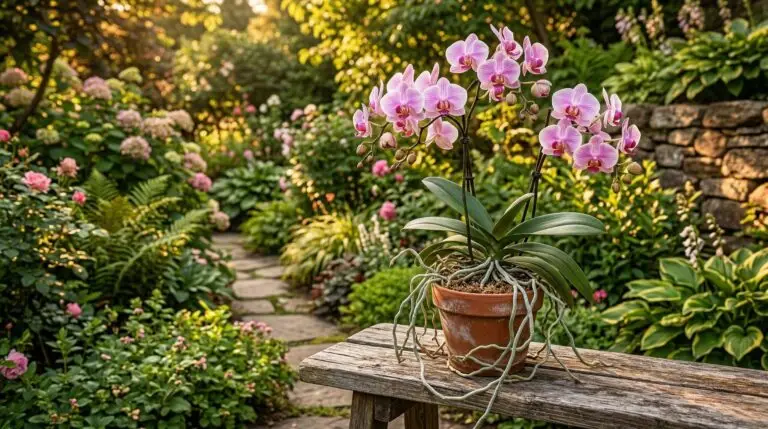
Repotting orchids step by step without killing the plant or damaging aerial roots
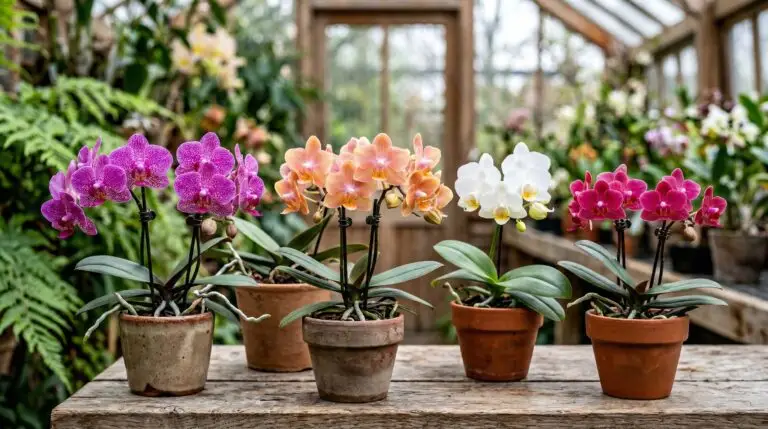
Best moth orchid varieties and the incredible range of phalaenopsis colors and patterns
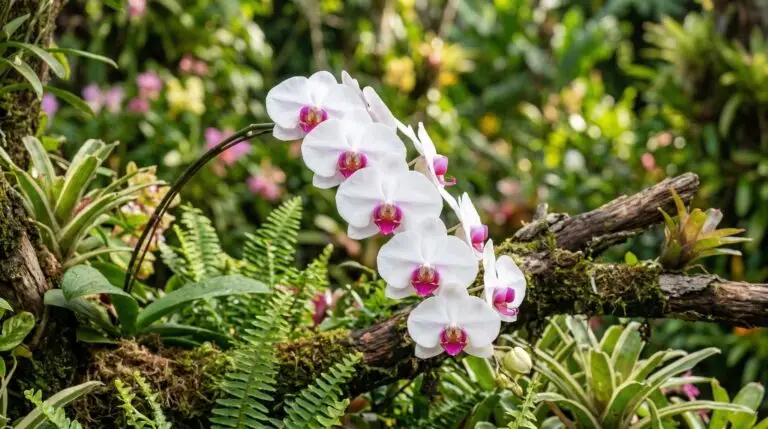
How to care for moth orchids so they bloom again and again for years
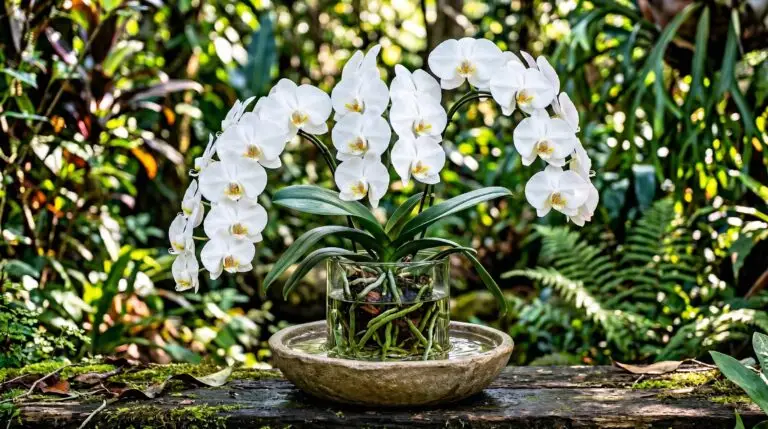
Watering orchids correctly and the ice cube myth versus what actually works
Orchid roots growing out of the pot and why aerial roots are a sign of a healthy plant

What to do when your orchid flower spike turns brown and whether to cut or keep it
Enjoying our flower guides? Add YourFlowersGuide as a preferred source on Google. It helps more readers find us.
Add to Preferred Sources