May birth flower: lily of the valley, hawthorn, and what they mean
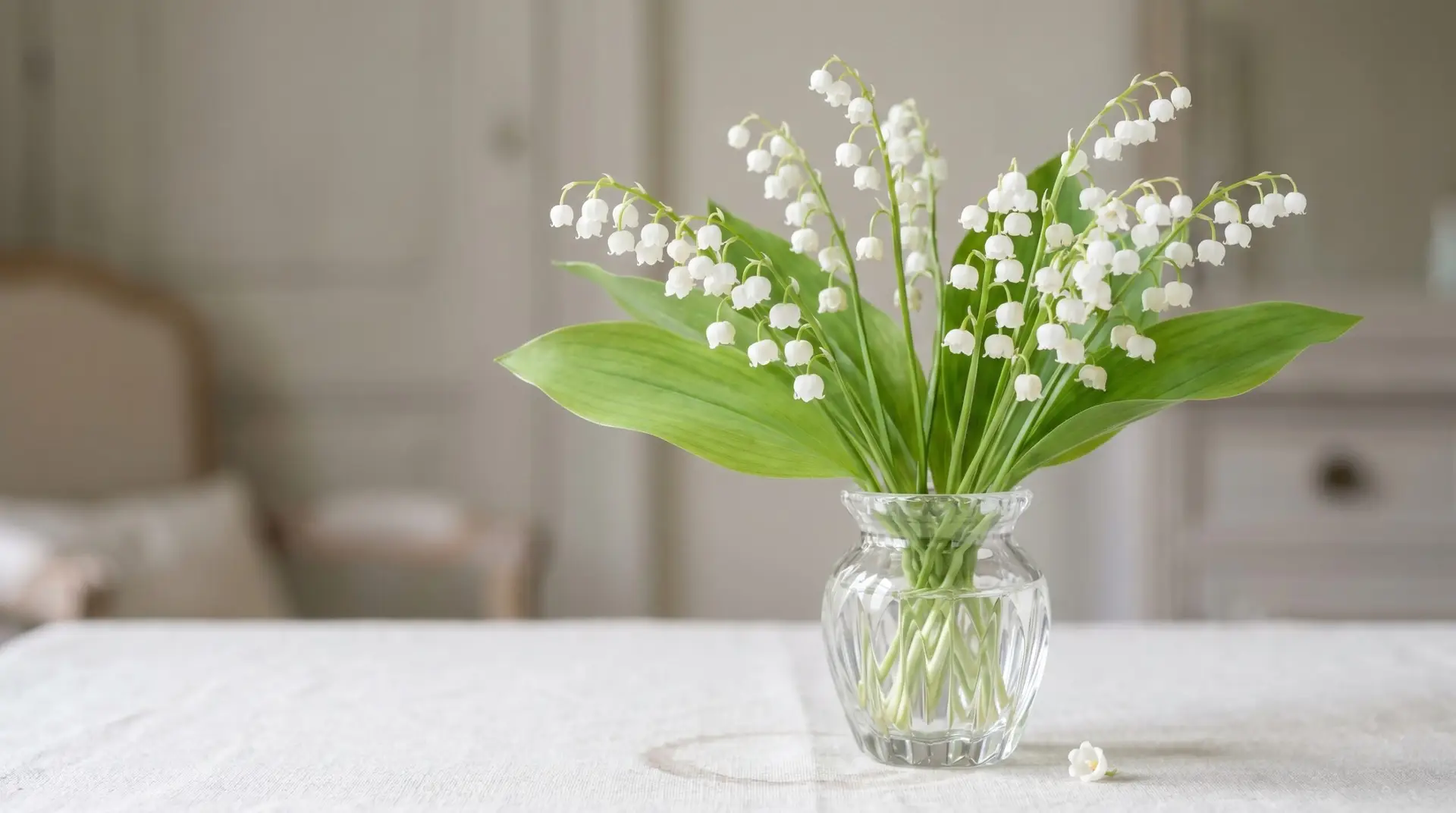
May has two birth flowers in Western tradition: lily of the valley (Convallaria majalis) as the primary, and hawthorn (Crataegus monogyna and related species) as the secondary. Lily of the valley stands for return of happiness, humility, and sweetness. Hawthorn stands for hope, supreme happiness, and the last great bloom before summer.
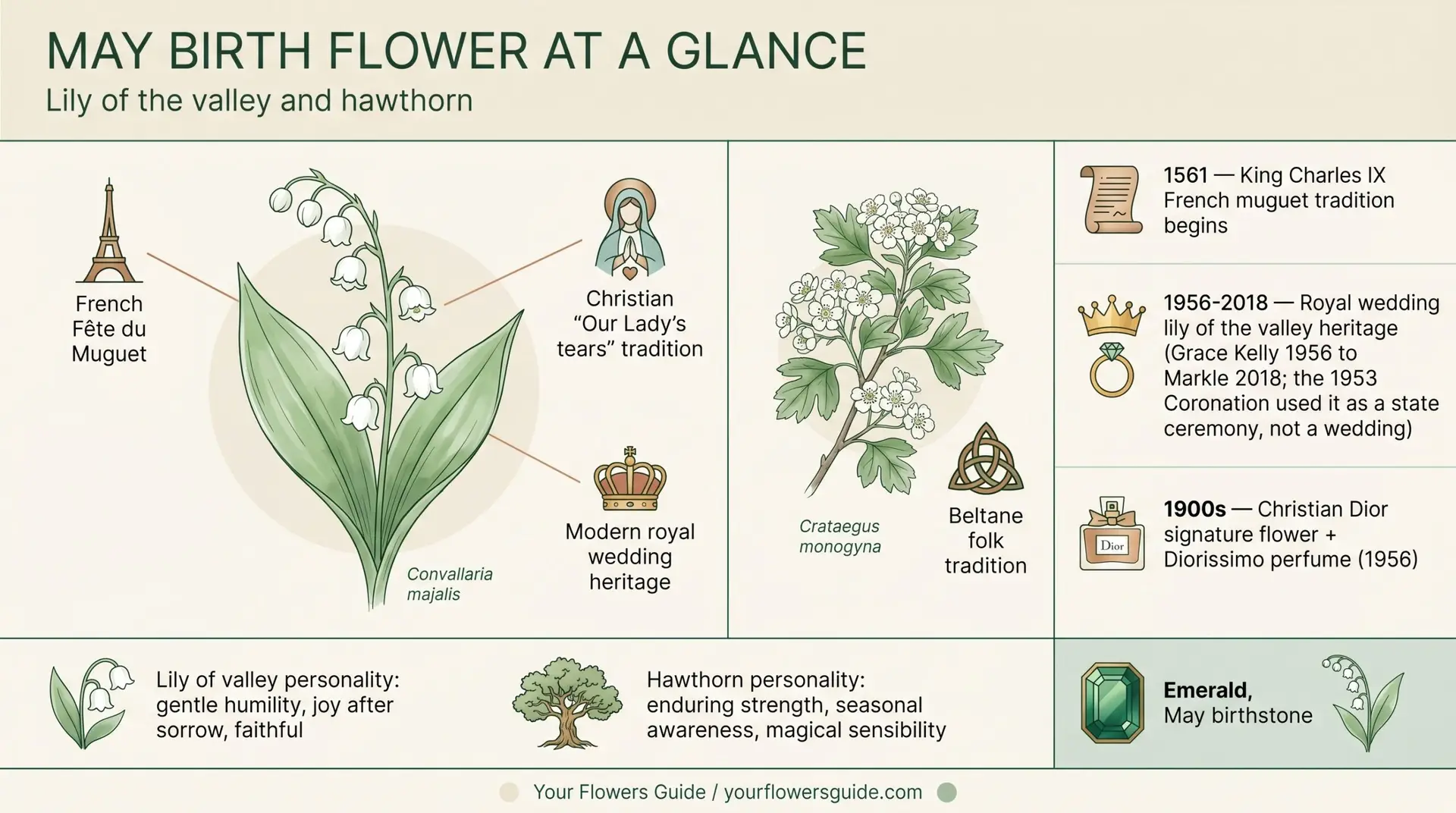
Lily of the valley has unusually deep cultural reach for a small white flower. The plant has three distinct documented cultural traditions. The French Fête du Muguet (Lily of the Valley Day) has marked May 1 since 1561. The Christian Marian tradition links the flower to the Virgin Mary and gives May its status as Mary’s month. The modern royal wedding heritage has made lily of the valley a defining bridal flower across British and Monégasque royal weddings, from Princess Grace of Monaco in 1956 through Kate Middleton in 2011 and Meghan Markle in 2018. The combination gives May one of the deepest cultural anchorings in the entire Western birth flower calendar.
Lily of the valley, the main May birth flower
Lily of the valley is Convallaria majalis, the only species in the genus Convallaria. The plant belongs to the family Asparagaceae (formerly classified in Liliaceae before the early-twenty-first-century taxonomic revision based on genetic analysis). The species is native to Europe, parts of Asia, and a small range in eastern North America, growing in deciduous woodland understory across its native distribution.
The plant grows from underground rhizomes that spread to form dense colonies. Each shoot produces two broad lance-shaped basal leaves followed by an arching flower stem that bears 5 to 15 nodding bell-shaped white flowers along one side. The individual flowers are small (6 to 9 millimeters across) but produce intense fragrance: sweet floral notes with a fresh green character that perfumers describe as one of the most distinctive single-flower scents in the European botanical vocabulary.
Bloom timing runs from late April through early June depending on climate, with peak May bloom across most of temperate Europe and North America. The flowers last about 2 to 3 weeks on the plant in cool weather, with the bloom ending more quickly in warm spring conditions. After flowering, the plant produces small red berries that are toxic (more on this below); the berries remain on the stems through summer before the plant dies back to the ground for winter dormancy.
Pure white is the standard color, with very rare pink variants (Convallaria majalis var. rosea) occurring naturally and through cultivation. The white form dominates virtually all commercial cut-flower production and garden cultivation. Specialty growers in France and the UK supply the May 1 muguet market with millions of stems each year, with peak harvest timed for the late April through early May window when the flowers reach their best vase quality.
Toxicity is critical to note. All parts of lily of the valley contain convallatoxin and other cardiac glycoside compounds that affect heart function in toxic doses. Ingestion causes nausea, vomiting, cardiac irregularity, and in severe cases serious cardiovascular effects. Cats, dogs, and small children are particularly at risk. Casual handling of the flowers is safe, but the plant should not be eaten, the red berries should be kept away from children, and household pets should be protected from access to growing plants. Cut-flower bouquets should be displayed where pets cannot reach the water, since the toxic compounds leach into vase water.
Hawthorn, the secondary May birth flower
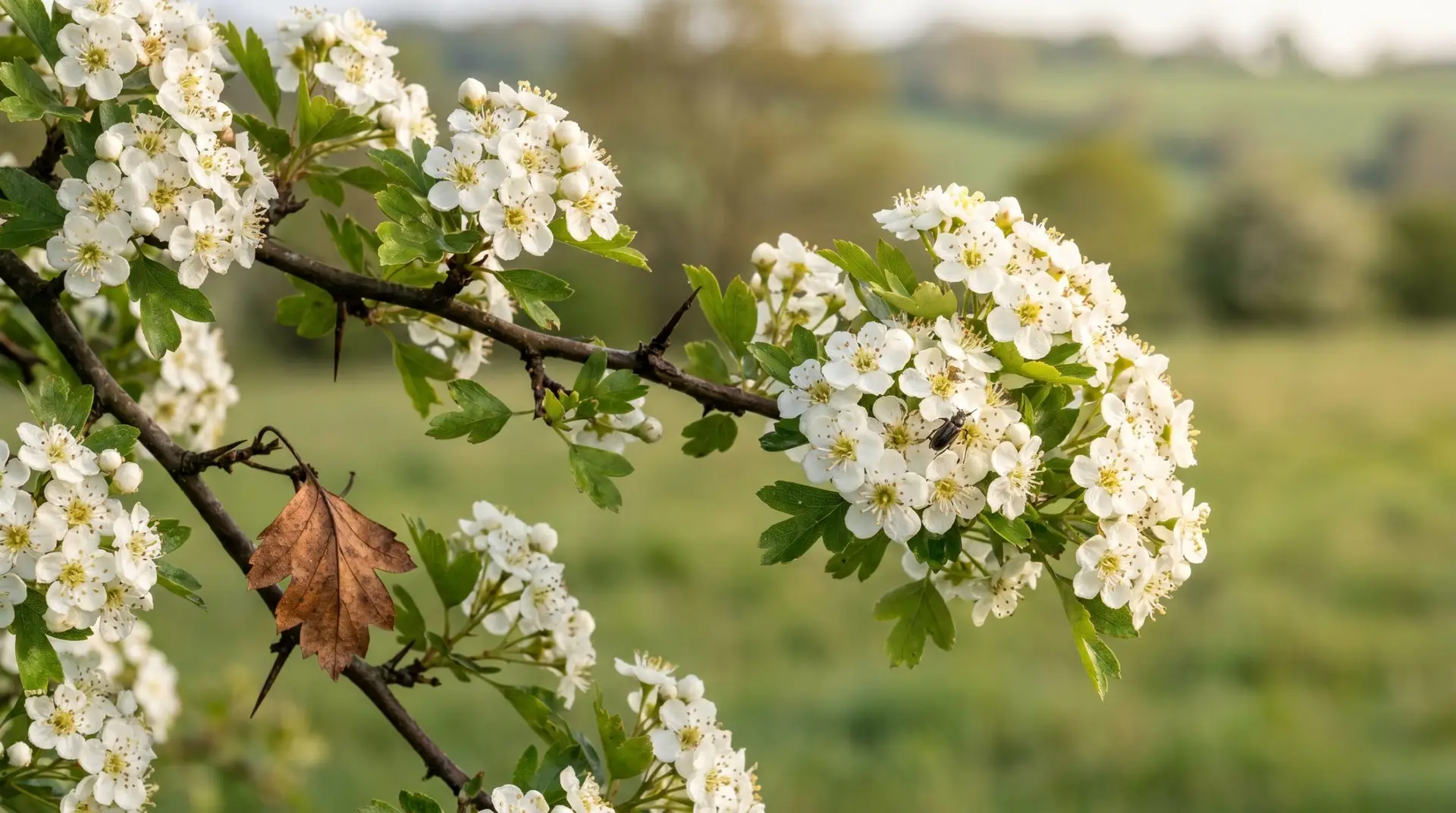
Hawthorn belongs to the genus Crataegus in the family Rosaceae (the rose family, also containing apple, pear, and cherry). The genus contains about 280 species globally, though species-level taxonomy is notoriously difficult because hawthorn species hybridize freely in the wild. The two species most associated with May birth flower tradition are Crataegus monogyna (the common hawthorn, also called the “May tree” in English folk usage) and Crataegus laevigata (the Midland hawthorn), both native to Europe.
The plant is typically a small tree or large shrub reaching 5 to 15 meters tall, with characteristically thorny branches that gave the genus its name (Greek “krataios” meaning strong, referring to the hard wood). The leaves are lobed and small. The flowers appear in dense corymbs (flat-topped clusters) at the ends of new growth in May, with each individual flower about 0.5 inch across. White is the most common color; pink and red cultivars exist (notably ‘Paul’s Scarlet,’ a deep red double-flowered cultivar). The flowers have a distinctive sweet but slightly heavy fragrance that some find pleasant and others find unpleasant.
Bloom timing in May gave the plant its common English name “May tree” or simply “the May.” The May 1 connection (Beltane in Celtic tradition, May Day in English tradition) embedded hawthorn deeply in European spring folklore. The phrase “ne’er cast a clout till May be out” in English tradition refers to the hawthorn bloom rather than to the month, advising listeners not to remove winter clothing until the May (hawthorn) is in flower.
After bloom, hawthorn produces small red fruits called haws. The haws are edible (commonly used in jellies, wines, and traditional folk medicines), though they are mealy and sour eaten raw. Hawthorn berries have been used in herbal medicine for centuries for cardiovascular support; modern phytomedicine confirms some active compounds in haws that affect cardiac function.
For deeper coverage of hawthorn botany, the Celtic Beltane tradition, and the May Day folk customs, see the hawthorn deep dive article.
The French muguet May 1 tradition
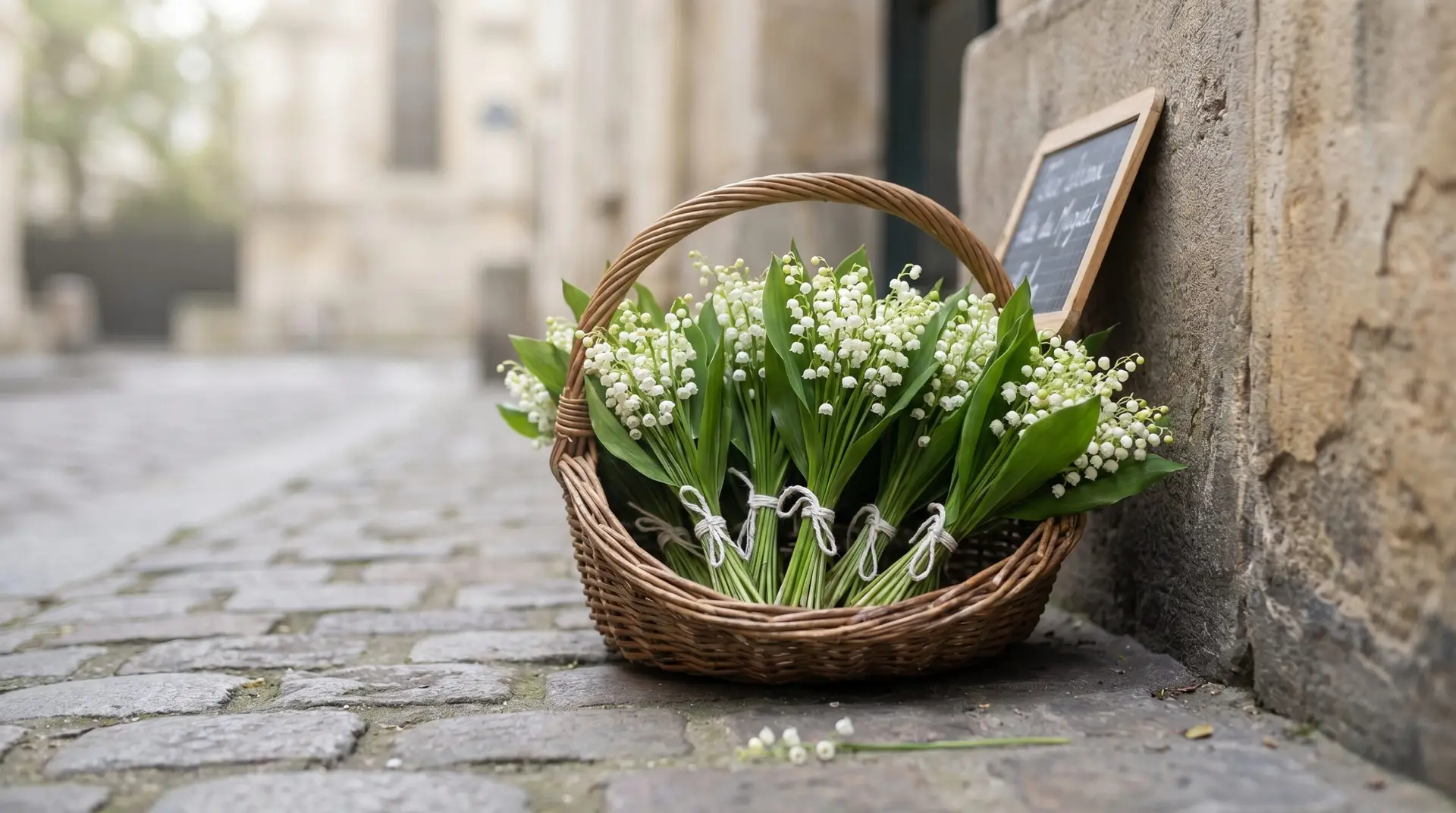
May 1 is the Fête du Muguet (Lily of the Valley Day) in France, one of the oldest continuously observed flower traditions in Europe. On this day, French people give small sprigs of lily of the valley (“muguet” in French) to family members, friends, romantic partners, and colleagues. The flower is called a “porte-bonheur” (good luck charm) and the tradition treats the giving of muguet as wishing good fortune to the recipient for the year ahead.
The documented origin dates to 1561. King Charles IX of France (then thirteen years old, in the second year of his reign) received a sprig of lily of the valley as a good-luck gift from Louis de Girard de Maisonforte on May 1, 1561. The young king was charmed by the gesture and decided to give sprigs of lily of the valley to the ladies of his court each May 1 thereafter as a personal tradition. The custom spread from the royal court to the broader French aristocracy through the late sixteenth and seventeenth centuries, and gradually expanded to all of French society across the eighteenth and nineteenth centuries.
The tradition gained an additional layer in the early twentieth century through its intersection with the international Labor Day. The 1889 Paris International Socialist Congress declared May 1 as the International Day of Workers, and Labor Day became the dominant May 1 observance in much of Europe and North America. In France, the French Communist Party adopted lily of the valley as the symbol of workers’ solidarity in 1907 (replacing an earlier dog rose symbol), reframing the existing muguet tradition through the labor movement lens.
Modern France treats May 1 as a dual celebration. Public sector workers and union members observe Labor Day with marches and rallies. The general population continues the muguet tradition by purchasing small sprigs of lily of the valley from street vendors and giving them to loved ones. French regulation allows individuals to sell lily of the valley on the street on May 1 without the usual commercial licensing requirements, a tradition rooted in the late nineteenth century. Paris and other French cities are filled with informal muguet vendors on May 1, with the flower available at prices from a single euro for a small sprig to twenty euros for an elaborate arrangement.
The tradition has spread beyond France’s borders. Belgium, Switzerland (particularly the French-speaking cantons), Quebec, and other French-influenced regions also observe muguet customs to varying degrees. The tradition has also influenced French fashion and perfumery: Christian Dior adopted lily of the valley as a signature flower for his fashion house, embedding it in label imagery and incorporating it into Dior’s fragrance line with “Diorissimo” (1956), composed by Edmond Roudnitska, which remains one of the most-recognized single-flower fragrances in modern perfumery.
The Christian Marian symbolism
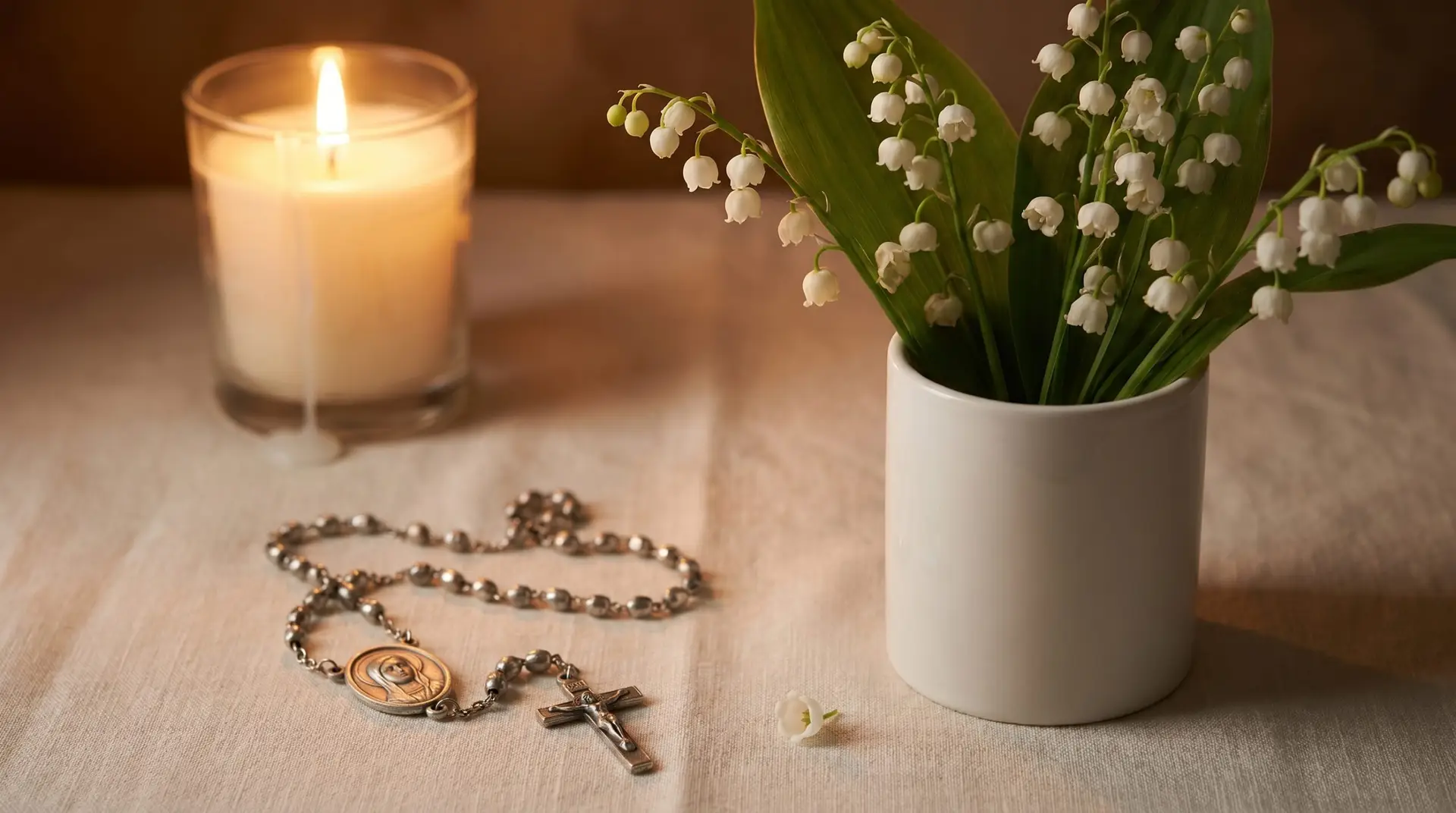
Lily of the valley has a second documented cultural tradition through Christian Marian symbolism. The traditional Christian legend tells that lily of the valley sprang from the tears that the Virgin Mary shed at the foot of the cross during the crucifixion of Christ. The story gives the flower its alternative English name “Our Lady’s tears,” a name still used in older devotional literature and in some Catholic liturgical references.
The Catholic Church recognizes May as Mary’s month, with special Marian devotions, processions, and prayers concentrated in this period. The May 1 specifically is also the Feast of Saint Joseph the Worker in the modern Catholic liturgical calendar, but the broader May Mary devotion tradition gives lily of the valley a natural religious association as the flower in season during Mary’s month. May processions in Catholic churches often include lily of the valley in floral decoration, particularly in churches with strong Marian devotional traditions across France, Italy, Poland, Ireland, and Latin America.
The Marian symbolic layers reinforce the flower’s broader cultural reading. Purity (white) connects to Mary’s traditional iconographic color in Christian art. Humility (low-growing, hidden under the broad leaves) reflects Marian humility in Christian devotional tradition. “Return of happiness” (the broader Victorian floriography reading) connects to Mary’s joy at Christ’s resurrection in Christian belief.
The Anglican and Lutheran traditions also incorporate lily of the valley in Mary-related observances, though with less emphasis than the Catholic tradition. The Eastern Orthodox Church references lily of the valley in some liturgical hymns and texts, though the specific cultivation and ceremonial use varies by regional Orthodox tradition.
The Christian Marian symbolism reinforces the French muguet tradition through the historical Catholicism of pre-revolutionary France. The May 1 tradition that began with King Charles IX in 1561 occurred within a fundamentally Catholic cultural context where Marian symbolism gave the flower additional religious weight beyond the secular court gift practice. The French Revolution and subsequent secularization gradually separated the religious and secular muguet meanings, but the layered cultural history remains embedded in modern French observance.
Modern royal wedding heritage
Lily of the valley has become the defining bridal flower of modern royal weddings across the past century. The convention began with Princess Grace of Monaco (born Grace Kelly), who incorporated lily of the valley into her 1956 wedding bouquet for her marriage to Prince Rainier III of Monaco. The wedding received extensive international press coverage as one of the most photographed events of the mid-twentieth century, and Grace Kelly’s bouquet choice influenced bridal fashion for the next several decades.
Queen Elizabeth II’s coronation in June 1953 used lily of the valley in ceremonial floral decoration, including in the bouquet carried by the young queen and in the floral arrangements throughout Westminster Abbey. The choice connected the coronation directly to the May Marian tradition (despite the June coronation date) and to the older British royal preference for white flowers in state ceremonies.
Princess Margaret’s 1960 wedding to Antony Armstrong-Jones featured lily of the valley as the dominant flower in the bridal bouquet. The 1960 event continued the developing royal-wedding lily of the valley tradition through the second mid-century royal generation.
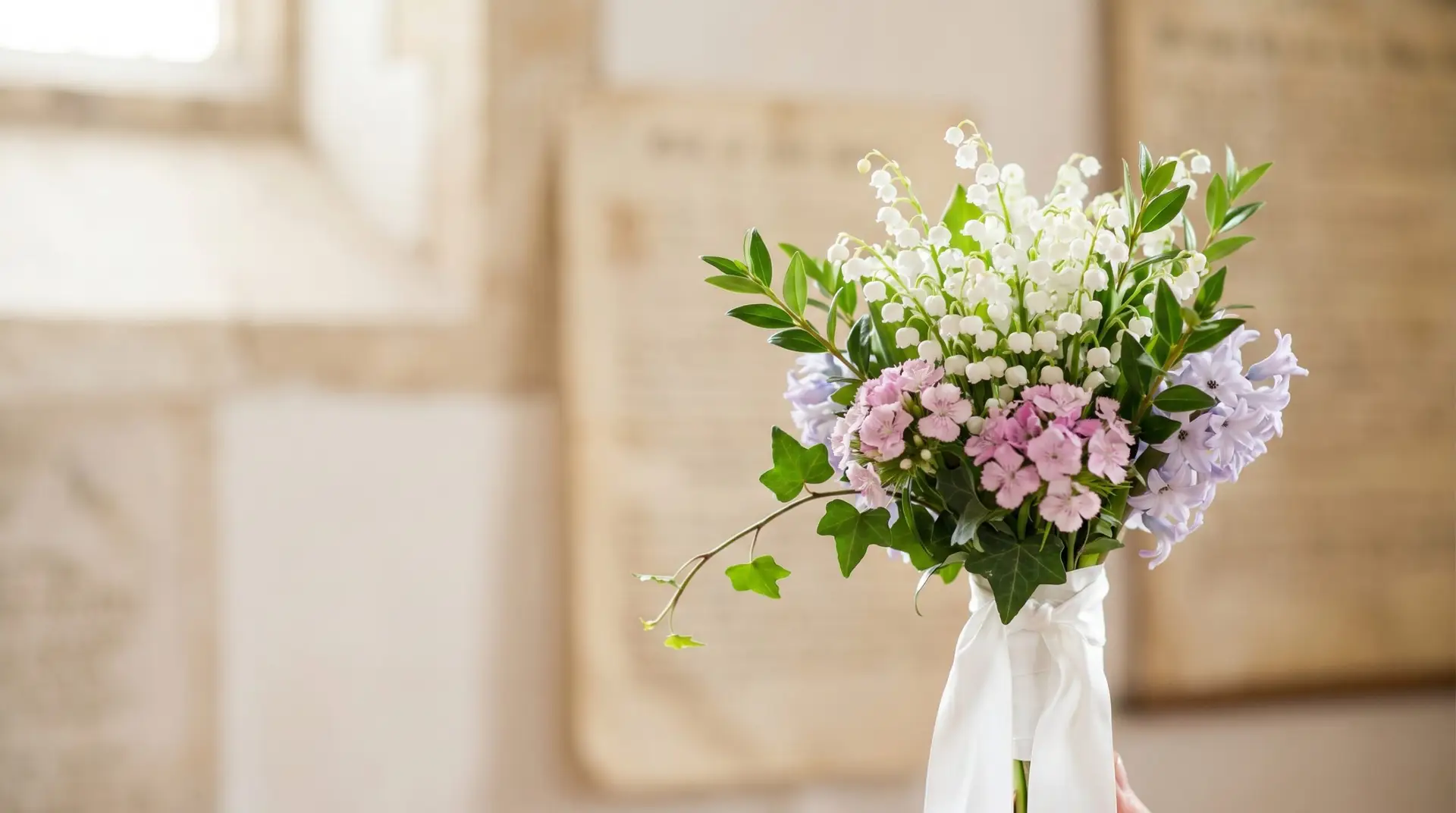
Kate Middleton (now Catherine, Princess of Wales) carried a bouquet featuring lily of the valley as a central element for her April 2011 wedding to Prince William. The complete bouquet included myrtle (the traditional royal wedding flower from Queen Victoria’s tradition), sweet william (a homage to her groom Prince William), ivy (loyalty), hyacinth (constancy), and lily of the valley (her personal favorite flower). The bouquet was widely photographed and inspired a global trend of “Kate Middleton bouquets” featuring lily of the valley as the central element in non-royal weddings across the early 2010s.
Meghan Markle’s May 2018 wedding to Prince Harry continued the tradition. Her bouquet was personally assembled by Prince Harry from flowers picked at Kensington Palace gardens, with lily of the valley among the included blooms alongside forget-me-not (in tribute to Princess Diana), sweet pea, jasmine, astilbe, and astrantia.
The 2023 coronation of King Charles III referenced lily of the valley in ceremonial floral arrangements throughout Westminster Abbey, continuing the established British royal preference for the flower in major state ceremonies.
The modern royal wedding tradition has made “Kate Middleton lily of the valley wedding bouquet” one of the most common search terms in the bridal-bouquet design space. Brides who do not have royal-family connections still actively seek out lily of the valley for their own weddings specifically because of the royal-wedding association, treating the flower as a symbolic gesture of joining a broader tradition of consequential weddings.
Situational meanings of lily of the valley
Lily of the valley is uniformly white in commercial trade (with rare pink variants), so its symbolic readings shift by occasion rather than by color. Standard situational readings include the following.
Wedding bouquet: purity, humility, return of happiness, and royal heritage. The combination of Marian symbolism and modern royal-wedding tradition makes lily of the valley one of the most symbolically loaded wedding flowers in the Western tradition. White-on-white bouquets with lily of the valley as a focal element work for both traditional and modern wedding aesthetics.
Funeral or sympathy: purity, peace, and the comfort of “return of happiness” framed as the promise of continuing joy beyond grief. The Marian symbolism reinforces the sympathy reading for Catholic recipients particularly.
Mother’s Day gift: the Marian connection makes lily of the valley a particularly meaningful Mother’s Day flower for mothers with Catholic family connections. Pairing the flower with a small Marian devotional item (a rosary, a Mary medallion) deepens the personal meaning.
May 1 Fête du Muguet: good luck, friendship, and romantic affection in the French tradition. A small muguet sprig is the standard observance form; recipients display the sprig in a small bud vase for the day.
Recovery or health restoration: the “return of happiness” reading particularly fits recovery contexts. A bouquet of lily of the valley for a person recovering from illness, surgery, or difficult life events draws on this symbolic register.
Spring birthday: the general May birth flower gift, with no specific situational emphasis. Mixed bouquets that include lily of the valley alongside other May flowers (hawthorn sprigs, peonies, ranunculus) extend the visual variety without losing the birth flower significance.
Hawthorn color variation provides some additional symbolic register for the secondary May flower. White hawthorn has the standard “hope” and “supreme happiness” readings. Pink hawthorn (‘Paul’s Scarlet’ and other cultivars) reads as “love” and “playful affection.” Red hawthorn (‘Crimson Cloud’ and similar) reads as “passionate love.” Cultivar selection for hawthorn birthday gifts works similarly to other flowers with color variations.
May personalities by flower symbolism
Reading personality from a birth flower is closer to a horoscope than to psychology. Take it as a useful lens, not as evidence. The two May flowers offer complementary readings that many May-born readers find recognizable.
The lily of the valley side of May reads as gentle humility paired with the capacity for joy after sorrow. People in this profile are the ones who manage difficult periods quietly and emerge with restored happiness, the partners who maintain devotion through challenges without making it visible, and the family members whose presence reliably appears each spring of life regardless of the previous winter’s difficulties. The Marian humility tradition adds a religious-or-spiritual register to this personality reading that some May-born readers find particularly fitting.
The hawthorn side reads as enduring strength paired with seasonal awareness. Hawthorn trees can live for several centuries (some recorded hawthorns in British countryside exceed 500 years), which connects the flower to long-term persistence and continuity across generations. The Celtic May Day folk tradition gives hawthorn associations with magical and spiritual sensibility, with hawthorn trees traditionally treated as faeries’ trees in Irish, Welsh, and Scottish folk belief. Hawthorn-profile people are the ones who maintain old family traditions, who notice seasonal changes others miss, and who treat the natural year as a meaningful organizing structure for their lives.
The combination describes a May personality that pairs gentle resilience (lily of the valley) with enduring connection (hawthorn). May-born readers who describe themselves as both quietly devoted across long timescales and deeply attentive to seasonal and natural rhythms will recognize the fit.
Gift ideas for May birthdays
A small sprig of lily of the valley (the traditional French muguet) is the most accessible May birthday gift in late April through mid-May when fresh-cut supply peaks. French and French-tradition florists across major cities (London, New York, Montreal, Brussels) stock muguet sprigs in this window at prices from about five to fifteen dollars per small sprig. The gift works well as a quick gesture for friends, colleagues, and family members where a full bouquet would be excessive.
A full lily of the valley wedding-style bouquet works for milestone birthdays (eighteenth, twenty-first, thirtieth, fortieth, milestone anniversaries). Specialty florists charge from about seventy-five to two hundred dollars for a small bouquet because lily of the valley is one of the more expensive cut flowers per stem due to short bloom window and limited commercial cultivation. The bouquet works particularly well for May birthdays close to wedding season, when the recipient may be attending or planning weddings and the lily of the valley reference resonates with the season.
A potted living lily of the valley plant gives a perennial gift that returns each May for years. Garden centers in temperate climates stock dormant rhizomes from fall through early spring, with potted plants becoming available in late April. Plant the rhizomes in a shady moist garden corner and they will spread to form a small colony over 3 to 5 years, blooming reliably each May for several decades. Plant prices typically run from about fifteen to thirty dollars per pot or rhizome cluster.
Christian Dior “Diorissimo” perfume (1956) is the iconic lily of the valley fragrance and a meaningful gift for May-born recipients who appreciate perfumery. The fragrance was composed by Edmond Roudnitska and remains in production in modified modern formulations. Current bottles run from about eighty to over two hundred dollars depending on size. The Dior connection to lily of the valley dates from Christian Dior’s personal use of the flower as a signature in his fashion design from 1947 onward.
For Catholic recipients, a lily of the valley bouquet paired with a small Marian devotional item (a rosary, a Mary medallion, a small statue) honors the religious tradition alongside the floral gift. Catholic specialty shops carry these items at price points from about ten to fifty dollars.
For royal-wedding enthusiasts, a “Kate Middleton replica bouquet” featuring the same flower combination as the 2011 royal bouquet (myrtle, sweet william, ivy, hyacinth, lily of the valley) gives an elevated wedding-themed gift. Specialty florists offer this as a custom bouquet at prices from about one hundred to three hundred dollars.
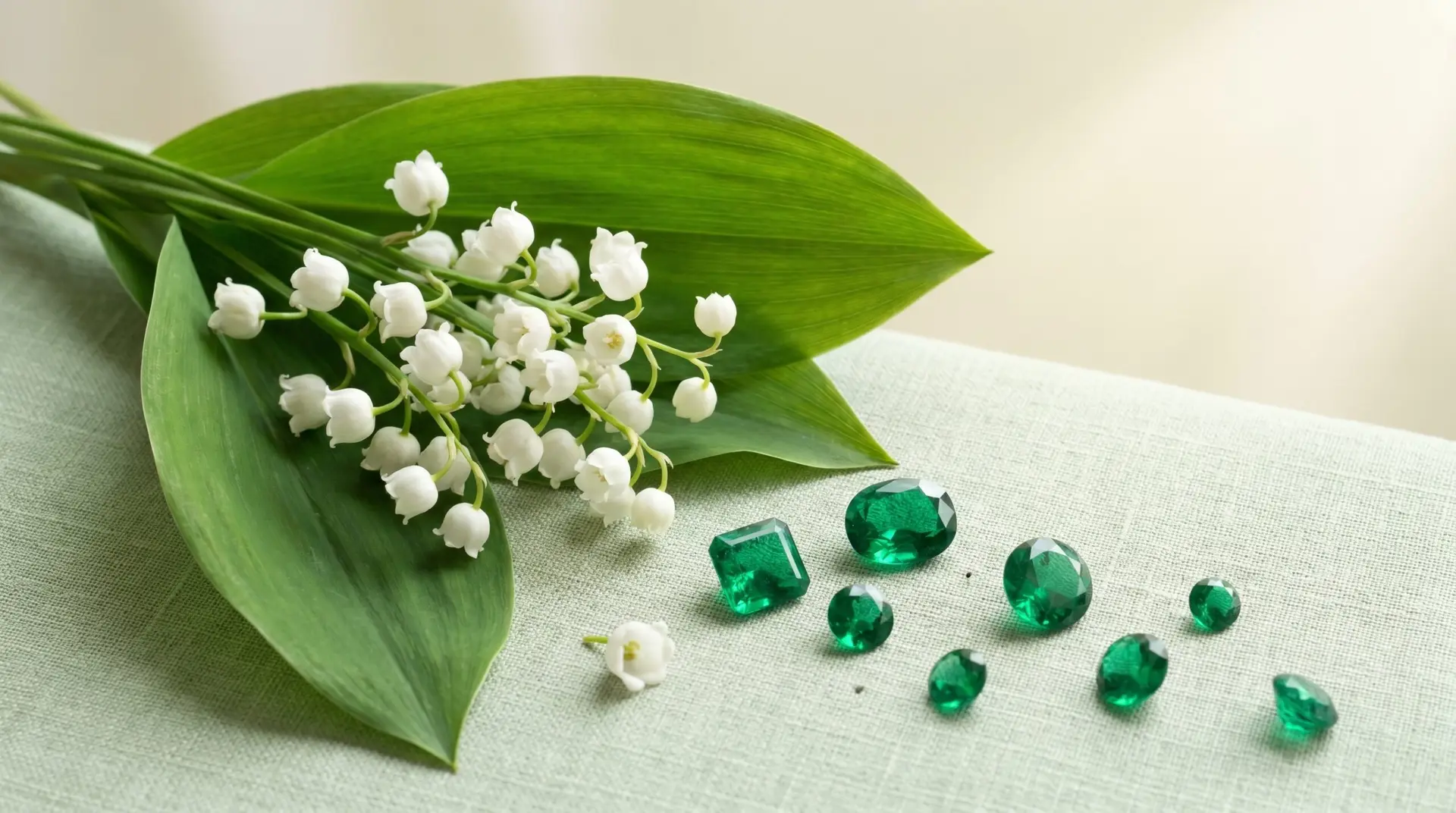
Emerald jewelry pairs naturally with lily of the valley because emerald is the May birthstone and the green color harmonizes with lily of the valley’s green leaves. Pairings work from simple emerald studs (about fifty dollars) through to fine emerald and gold pieces with lily of the valley motif work (over five hundred dollars).
Frequently asked
What is May’s birth flower?
Lily of the valley as the primary and hawthorn as the secondary. Lily of the valley is Convallaria majalis, the only species in its genus. Hawthorn is Crataegus monogyna or related species in the genus, native to Europe and known in English folk tradition as the “May tree.”
What is the May 1 lily of the valley tradition in France?
The Fête du Muguet (Lily of the Valley Day), one of the oldest continuously observed flower traditions in Europe. On May 1, French people give small sprigs of lily of the valley to family, friends, and romantic partners as a good-luck symbol (“porte-bonheur”). The tradition dates to 1561, when King Charles IX received a muguet sprig and began giving them to ladies of his court each May 1.
Why was Kate Middleton’s wedding flower lily of the valley?
Lily of the valley was her personal favorite flower. The 2011 royal wedding bouquet also included myrtle (Queen Victoria’s traditional royal wedding flower), sweet william (a homage to Prince William), ivy, and hyacinth. The combination built on the established British royal preference for lily of the valley in major weddings since Queen Elizabeth II’s coronation in 1953.
What does lily of the valley symbolize?
Return of happiness, humility, purity, and sweetness in basic Western reading. Christian Marian symbolism adds connection to the Virgin Mary and her grief and joy. French muguet tradition gives the flower good-luck associations. Modern royal wedding heritage adds the connotation of significant and consequential weddings.
Is lily of the valley poisonous?
Yes, all parts are toxic. The plant contains convallatoxin and other cardiac glycoside compounds that affect heart function. Ingestion causes nausea, vomiting, cardiac irregularity, and in severe cases serious cardiovascular effects. Cats, dogs, and small children are particularly at risk. Handle the flowers safely but do not eat any part of the plant, keep away from pets, and ensure vase water (which absorbs toxic compounds) is inaccessible to children and animals.
What is the Christian story about lily of the valley?
Traditional Christian legend holds that lily of the valley sprang from the tears that the Virgin Mary shed at the foot of the cross during the crucifixion of Christ. This gives the flower its alternative English name “Our Lady’s tears.” The Catholic Church treats May as Mary’s month, with Marian devotions concentrated in this period and lily of the valley featured in May procession floral decoration.
Why is hawthorn called the May tree?
Hawthorn blooms in May, giving the plant its traditional English folk name. The May 1 connection (Beltane in Celtic tradition, May Day in English tradition) embedded hawthorn deeply in European spring folklore. The English saying “ne’er cast a clout till May be out” refers to the hawthorn bloom rather than to the month.
What’s the difference between lily of the valley and lily?
Different families entirely despite the shared “lily” common name. Lily of the valley (Convallaria majalis) belongs to family Asparagaceae. True lilies (Lilium genus) belong to family Liliaceae. The two plants are not closely related botanically; the common name is misleading. Lily of the valley is small (6 to 9 mm flowers, plant 6 to 12 inches tall); true lilies are large (1 to 6 inch flowers, plants 2 to 7 feet tall) with very different growth habits.
What does French muguet mean?
“Muguet” is the French word for lily of the valley. The term refers both to the flower itself and to the May 1 tradition of giving lily of the valley sprigs. “Fête du Muguet” translates as “Lily of the Valley Day.”
What birthstone goes with May’s birth flower?
Emerald. The deep green of emerald harmonizes naturally with the green leaves of lily of the valley, making jewelry that combines emerald stones with lily of the valley motif work a coherent May birthday gift.
What perfumes feature lily of the valley?
Christian Dior “Diorissimo” (1956), composed by Edmond Roudnitska, is the most iconic single-flower lily of the valley fragrance. Other notable lily of the valley fragrances include Dior “Miss Dior” (which has featured the note in various reformulations since 1947), Penhaligon’s “Lily of the Valley,” and many specialty niche perfumery compositions.
Can I grow lily of the valley?
Yes, the plant is easy to grow in shade gardens. Plant rhizomes in a shady moist position with rich organic soil. The plant spreads aggressively through rhizome runners and can become invasive in suitable conditions. Some North American gardening references list lily of the valley as an invasive species in eastern US states where it has naturalized beyond garden cultivation. Divide established clumps every 3 to 5 years to maintain garden control and remove unwanted spread.
Sources
- Lily of the valley (Convallaria majalis) · Encyclopedia Britannica
- Convallaria growing guide · Royal Horticultural Society
- Hawthorn (Crataegus) · Encyclopedia Britannica
About this article. > Written and reviewed by the Your Flowers Guide editorial team. Botanical content from Britannica and the Royal Horticultural Society. French Fête du Muguet history from established French cultural references including the Élysée Palace archives. Christian Marian tradition references from Catholic devotional literature and the Catholic Encyclopedia. Royal wedding bouquet records from official British royal family communications and contemporary press coverage of the 1953, 2011, and 2018 weddings.