November birth flower: chrysanthemum, peony, and what they mean
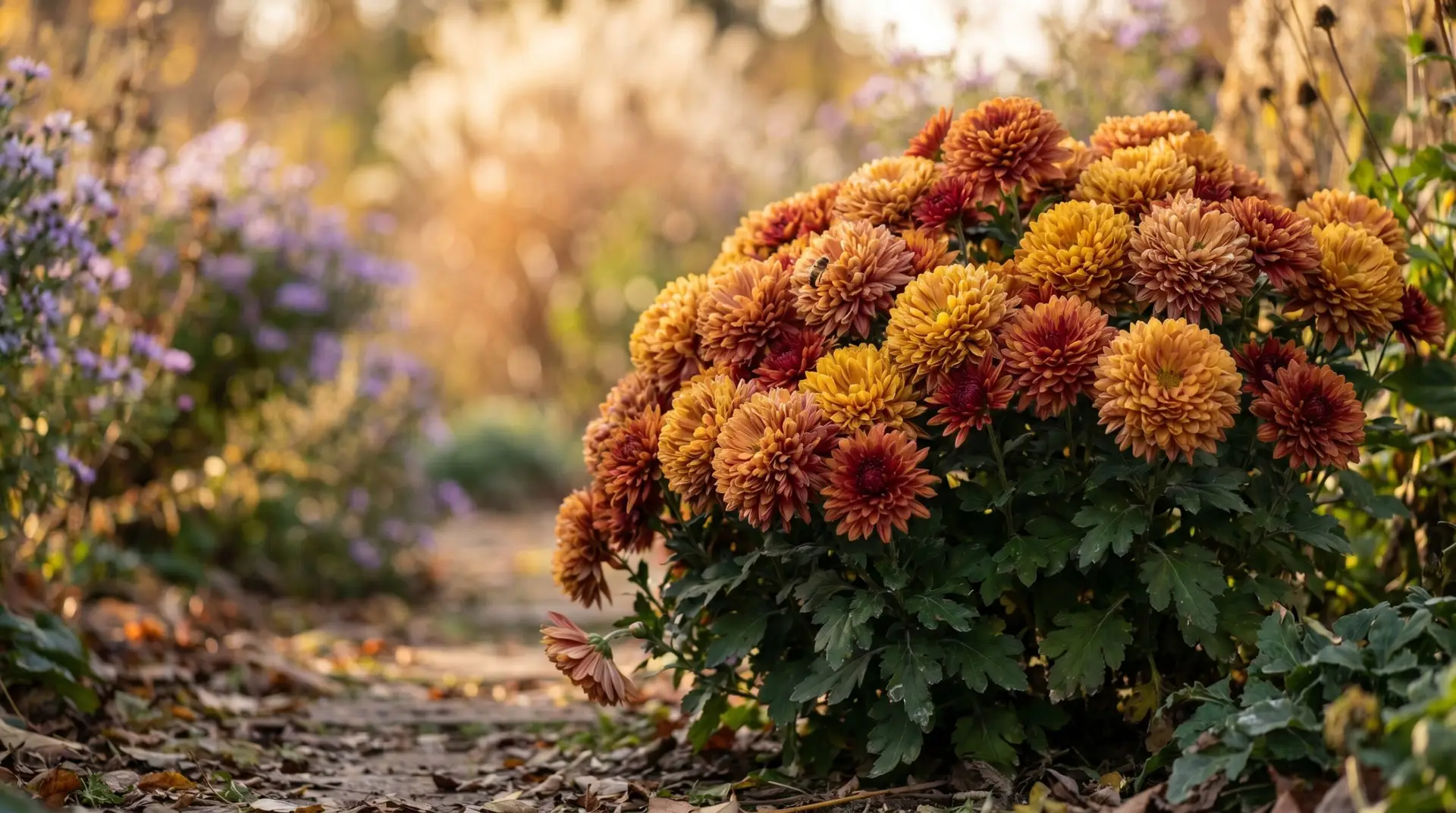
November has chrysanthemum (Chrysanthemum × morifolium and related cultivated species) as the primary birth flower in Western tradition, with peony (Paeonia) historically mentioned as a less common secondary in some Victorian-era sources. Chrysanthemum signals loyalty, friendship, and joyful longevity through its central role in East Asian flower culture spanning more than two thousand years. Peony signals romance, prosperity, and noble dignity through its imperial Chinese heritage and broader European garden tradition.
The two flowers share a register of cultural depth and formal symbolic register that suits November’s deep autumn position before winter dormancy. Chrysanthemum dominates November flower culture across both Western and East Asian traditions, with the genus holding the strongest single-month symbolic weight of any birth flower in the modern Western system. Peony provides historical alternative symbolism for wearers drawn to the imperial Chinese and broader Asian peony heritage. The deeper cultural weight of November comes from the Imperial Japan chrysanthemum tradition (the 16-petal chrysanthemum imperial seal that has been the symbol of the Japanese imperial family since the late twelfth century) and the broader East Asian chrysanthemum culture that gave the flower its modern symbolic richness.
Chrysanthemum, the main November birth flower
Chrysanthemum belongs to the genus Chrysanthemum in the family Asteraceae (the daisy family). The genus has been substantially reclassified by modern botanical taxonomy, with the cultivated florist chrysanthemums now usually classified as Chrysanthemum × morifolium (a complex hybrid group with parental species including Chrysanthemum indicum and other Asian species). The original genus Chrysanthemum has been narrowed in modern taxonomy, with many former Chrysanthemum species now placed in related genera (Tanacetum, Dendranthema, Argyranthemum, Glebionis).
The plants are herbaceous perennials in most cases, growing on upright stems from 12 inches (compact cushion mums) to 5 feet (tall garden chrysanthemums and exhibition cultivars). The leaves are typically deeply lobed with the characteristic strong chrysanthemum scent (the same essential oils that give the genus its insect-repellent properties similar to marigold). The flowers are composite blooms in the Asteraceae family pattern, ranging from simple single daisy forms with visible central disc to fully doubled pompom forms with no visible disc, and extending to the highly specialized Japanese exhibition forms (spider, quill, anemone, brush thistle, and many other classifications).
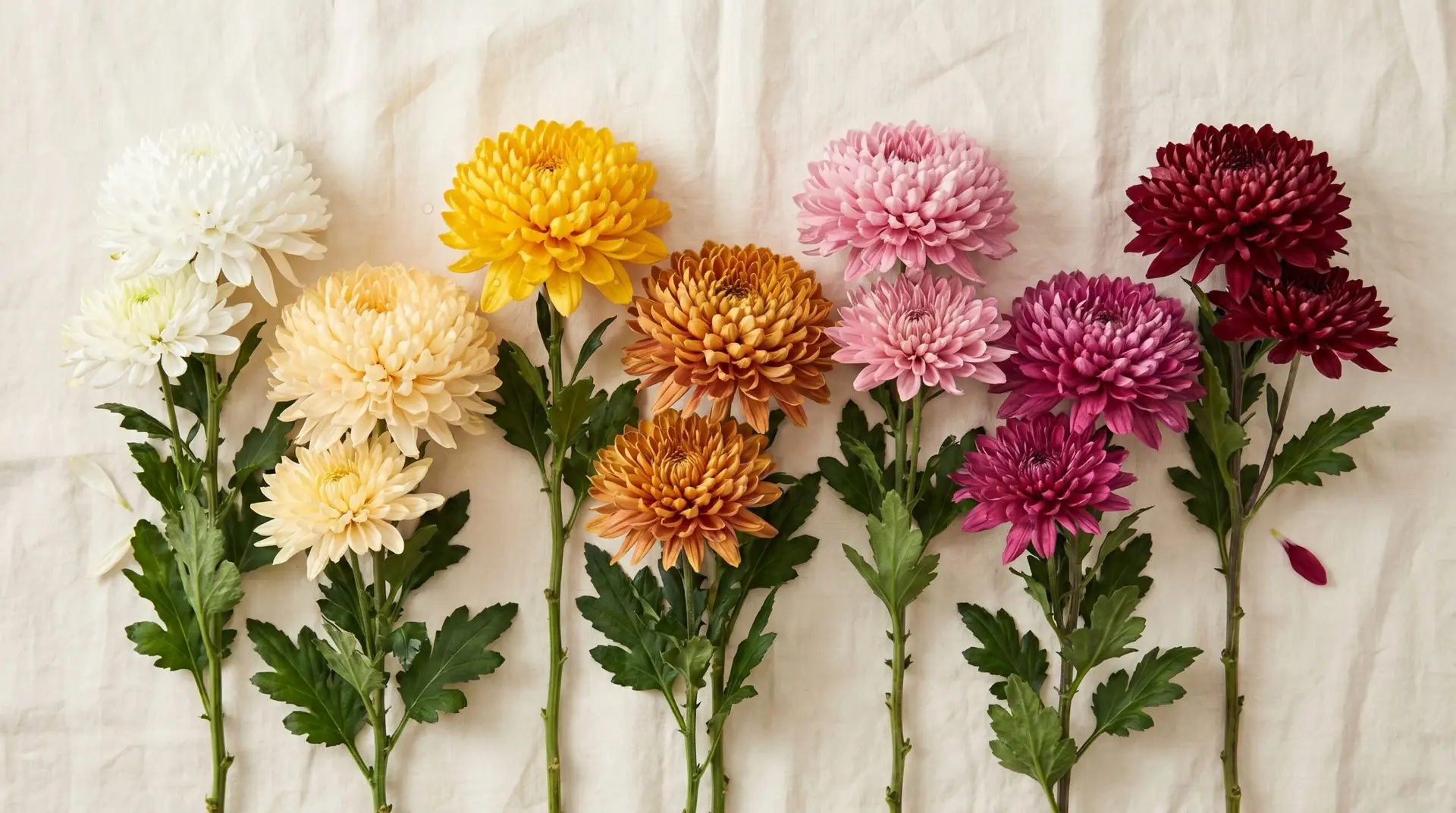
Modern chrysanthemum cultivation includes an extraordinary range of color and form developed through centuries of dedicated breeding programs across East Asia and the Western world. Color choices include white, cream, pale yellow, deep yellow, bronze, orange, pink, magenta, lavender, purple, deep red, and bicolor combinations. The American Chrysanthemum Society and the National Chrysanthemum Society (UK) maintain extensive classification systems with multiple flower form categories and thousands of registered cultivars.
Bloom timing runs from late summer through autumn frost in temperate climates, with peak abundance in October and November. The November position in the Western birth flower tradition reflects this peak late-autumn bloom timing combined with the flower’s central role in autumn flower culture across multiple cultures. Victorian flower writers chose chrysanthemum for November because it was the dominant late-autumn flower providing color and beauty when most other garden flowers had finished for the season.
The chrysanthemum genus name comes from Greek “chrysos” (gold) and “anthemon” (flower), referring to the bright yellow color of the wild ancestor species (Chrysanthemum indicum and related yellow species). The name was given by classical Greek and Roman writers, with the genus then cultivated for over two thousand years through Chinese, Japanese, Korean, European, and American horticultural traditions.
Chinese chrysanthemum cultivation extends back to at least the seventh century BC, with the first written references in the Liji (Book of Rites) dating from approximately the third century BC. The Chinese poet Tao Yuanming (365-427 AD) wrote extensively about chrysanthemum, establishing the flower’s enduring association with autumn contemplation, scholarly retirement, and reflective wisdom in East Asian literary tradition. The Double Ninth Festival (重陽節, Chongyang Festival) on the ninth day of the ninth lunar month (typically September or October in the Gregorian calendar) became the major Chinese chrysanthemum festival with traditions of chrysanthemum viewing, chrysanthemum tea drinking, and chrysanthemum cake eating that continue across East Asia.
Peony, the historical November secondary
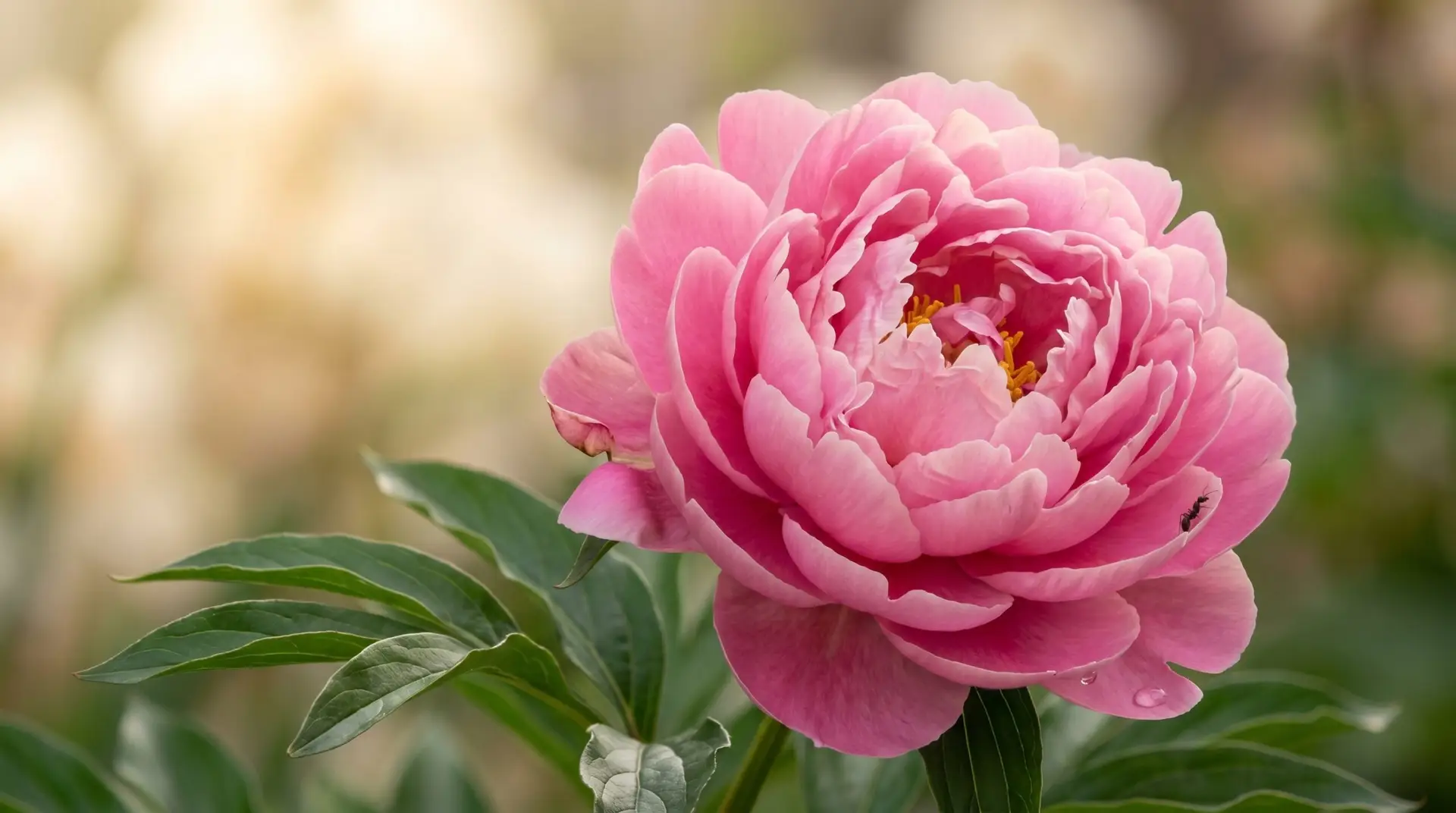
Peony belongs to the genus Paeonia in the family Paeoniaceae (the peony family, a small family containing only the genus Paeonia). The genus contains approximately 33 species native to Europe, Asia, and western North America. The most culturally significant species for the birth flower tradition is Paeonia lactiflora (Chinese peony), with related important species including Paeonia officinalis (European peony), Paeonia suffruticosa (Chinese tree peony), and Paeonia ostii (Chinese yellow tree peony).
Note on the secondary birth flower designation: peony’s place as November’s secondary birth flower is less universally recognized than the primary chrysanthemum. Modern Western birth flower sources increasingly list chrysanthemum alone as November’s birth flower without a clear secondary, while some traditional Victorian-era sources mention peony in connection with November. Peony is more strongly associated with April, May, and June in modern Western birth flower tradition. The inclusion of peony as a November secondary here reflects the historical sources while acknowledging that contemporary tradition more commonly places peony in spring months.
The plants are long-lived herbaceous perennials (herbaceous peony) or woody shrubs (tree peony) reaching 2 to 4 feet tall (herbaceous) or 4 to 7 feet tall (tree peony). The leaves are deeply divided and visually attractive throughout the growing season. The flowers are extraordinarily large for the temperate garden palette (4 to 10 inches across depending on species and cultivar), with single, semi-double, or fully double forms in colors ranging from pure white through cream, pale pink, deep pink, magenta, red, coral, and (in tree peony) yellow.
Bloom timing for herbaceous peony runs from late spring through early summer (typically May to June in temperate climates), making the November birth flower assignment somewhat unusual for the species. The autumn-month association may reflect the historical use of peony root for medicinal purposes in traditional Chinese medicine, where peony root was harvested in autumn and stored for winter medicinal use. The “November peony” tradition therefore likely refers to the harvested root rather than the bloom timing.
Peony symbolism in Western tradition includes romance, prosperity, noble dignity, happy marriage, and bashfulness. Chinese peony (Paeonia lactiflora and Paeonia suffruticosa) has unmatched cultural significance in Chinese tradition as the “King of Flowers” (花王, huawang) and the imperial flower of multiple Chinese dynasties. The Tang Dynasty (618-907 AD) particularly celebrated peony as the imperial flower, with the city of Luoyang becoming the historical peony cultivation center that continues today.
For deeper coverage of peony varieties, Chinese imperial peony tradition, color symbolism, growing notes, and the herbaceous vs tree peony distinction, see the peony deep dive article.
The Imperial Japan chrysanthemum tradition
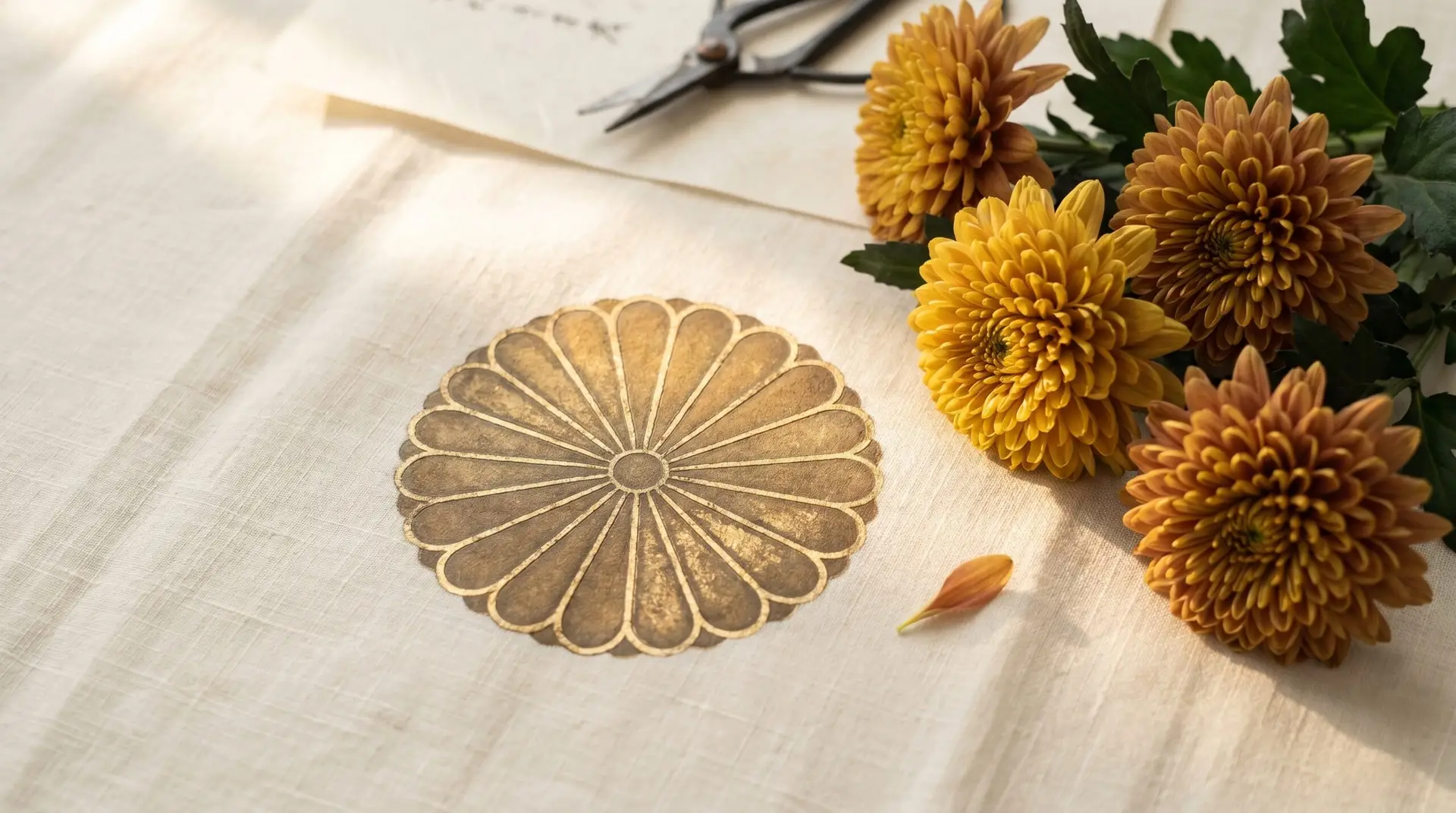
Chrysanthemum holds an unmatched political and cultural symbolic register in Japan through its central role as the emblem of the Japanese imperial family. The 16-petal chrysanthemum (菊花紋章, kikukamonshō, also called the Imperial Seal of Japan) has been the symbol of the Japanese imperial family since the late twelfth century, with the formal designation dating to Emperor Go-Toba (1180-1239) who first used the chrysanthemum design as his personal mon (heraldic crest).
The Imperial Seal of Japan shows a stylized 16-petal chrysanthemum bloom (with eight petals visible in the foreground and eight more partially visible behind, creating the characteristic 16-petal radial design). The seal appears on Japanese imperial documents, the Japanese passport, Japanese embassies and consulates abroad, and various official Japanese government contexts. The 16-petal seal is reserved exclusively for the imperial family; lesser members of the imperial extended family use 14-petal or 12-petal variants to indicate their relative position in the imperial succession.
The Order of the Chrysanthemum (大勲位菊花章, Daikun’i Kikkashō) is the highest honor of Japan, established 1876 and awarded to monarchs, presidents, and other heads of state in recognition of outstanding services or diplomatic significance. The order’s grand cordon and badge feature the chrysanthemum design, and recipients are formally addressed by the order title. The exclusive nature of the order makes it one of the most prestigious decorations in the world.
The Japanese national flower in popular usage is the cherry blossom (sakura, 桜), but the chrysanthemum is the imperial flower with the official seal status. The dual flower national symbolism (cherry blossom for spring popular culture, chrysanthemum for imperial autumn formal tradition) reflects the layered nature of Japanese national identity. Some Japanese sources designate chrysanthemum as the “national flower” in the formal-institutional sense, while sakura holds the popular-cultural national flower position.
Japanese chrysanthemum cultivation has produced extraordinary cultivar diversity through centuries of dedicated breeding programs. The Japanese exhibition chrysanthemum tradition includes specialized forms (ogiku 大菊, the giant single-stem exhibition mum reaching 6 to 8 inches across; kotengiku 古典菊, the classical Japanese small flower form; and many other specialized exhibition categories). The annual chrysanthemum exhibitions at Shinjuku Gyoen National Garden, Yasukuni Shrine, and other major Japanese gardens display thousands of exhibition chrysanthemums each November, attracting hundreds of thousands of visitors to view the cultivar diversity.
The cultural symbolism of chrysanthemum in Japan extends beyond the imperial context. Modern Japanese culture continues the autumn chrysanthemum tradition through chrysanthemum festivals (kiku matsuri 菊祭り) at temples, shrines, and public gardens across Japan during late October and November. The chrysanthemum appears extensively in Japanese poetry, visual art, ceramics, and traditional textile designs.
For modern wearers (particularly those of Japanese heritage), the chrysanthemum birth flower assignment connects directly to this layered Japanese cultural heritage. The November birthday for a Japanese-heritage reader has particular cultural resonance through both the imperial chrysanthemum tradition and the broader autumn chrysanthemum culture.
What chrysanthemum colors mean
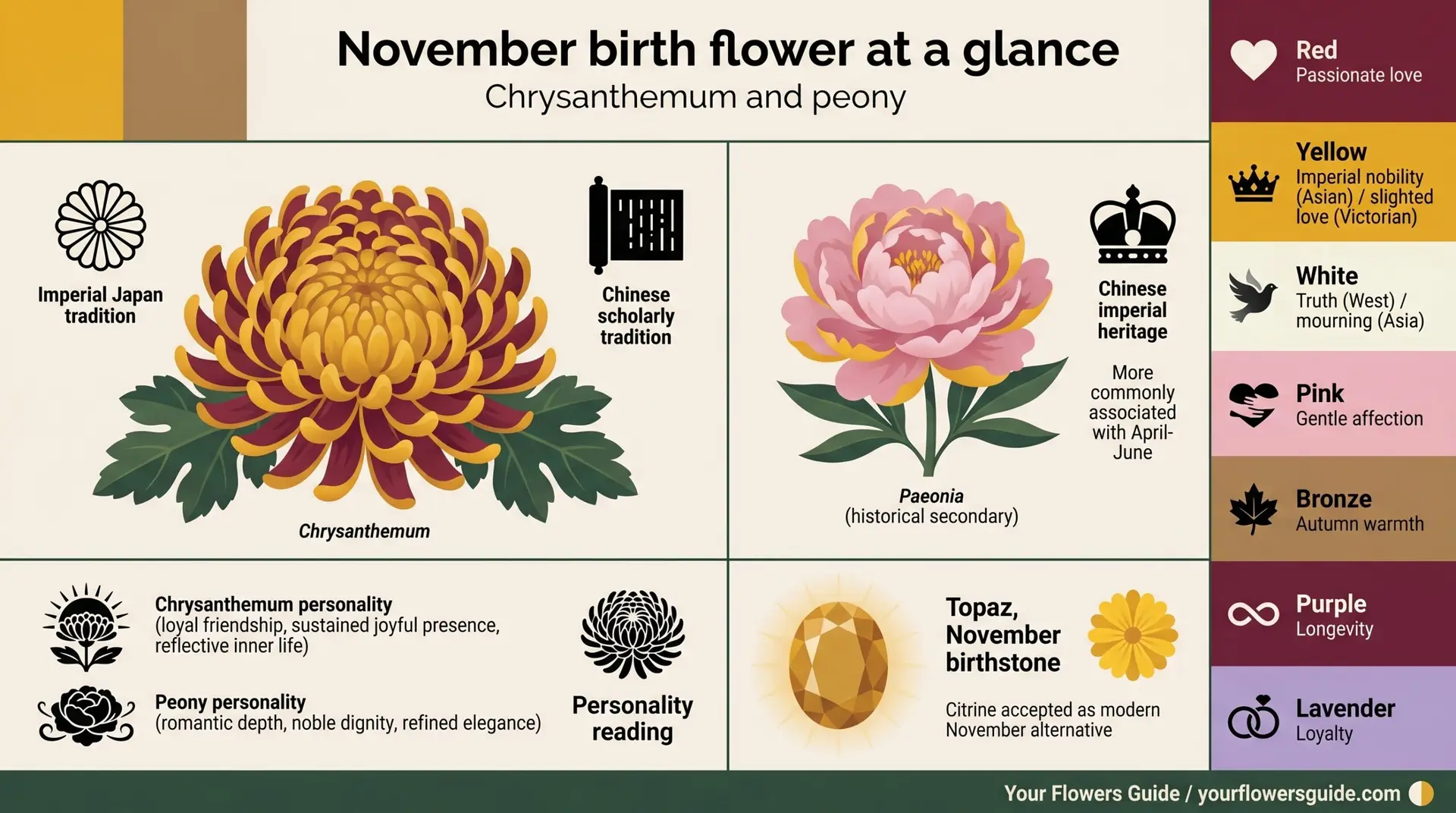
Chrysanthemum color shifts the symbolic reading significantly more than in most birth flowers, with each color holding distinct meaning across multiple cultural traditions:
Red chrysanthemum: love, passionate affection, deep emotional connection. The most romantic chrysanthemum color reading across both Western and East Asian traditions.
Yellow chrysanthemum: slighted love, sorrow (in some Western Victorian traditions), or imperial nobility and dignity (in East Asian tradition, particularly Chinese). The reading varies significantly by cultural context.
White chrysanthemum: truth, loyalty, honesty (in Western tradition); death, mourning, and funeral symbolism (in many Asian cultures including Japan, Korea, China, Vietnam, and others). The cultural distinction is significant: white chrysanthemums are appropriate for Western birthday and wedding contexts but should be avoided as gifts in many Asian cultural contexts where they read exclusively as funeral flowers.
Pink chrysanthemum: gentle affection, sweet remembrance, soft warmth. The pink color provides the most universally appropriate gift register across cultural contexts.
Bronze and rust chrysanthemum: autumn warmth, traditional masculine register (in some traditions), harvest abundance. Common autumn floral arrangement colors.
Purple chrysanthemum: longevity, wishes for long life, scholarly contemplation. The Chinese cultural reading particularly emphasizes the longevity symbolism.
Lavender chrysanthemum: loyalty, devotion, faithful friendship. Often used in friendship-emphasis gift contexts.
Spider chrysanthemum (any color): unique elegance, individual character. The distinctive spider form (long narrow ray petals creating dramatic radial pattern) suits gifts emphasizing the recipient’s distinctive qualities.
The cultural variation in chrysanthemum color reading creates important gift-giving considerations. White chrysanthemum gifts that are entirely appropriate in Western contexts can be offensive or unsettling in East Asian contexts because of the funeral association. Pink, yellow, and red chrysanthemum gifts are generally appropriate across most cultural contexts. Always consider the recipient’s cultural background when choosing chrysanthemum gift colors.
November personalities by flower symbolism
Reading personality from a birth flower is closer to a horoscope than to psychology. Take it as a useful lens, not as evidence. The two November flowers offer complementary readings that combine into a distinctive personality profile.
The chrysanthemum side of November reads as loyal friendship and sustained joyful presence. People in the chrysanthemum profile have the kind of steady reliable loyalty that maintains friendships across decades, the warm friendliness that draws others naturally into close relationship, and the kind of joyful contentment with daily life that produces happiness without requiring dramatic external events. The chrysanthemum’s autumn bloom timing (when most other flowers have finished) connects to a personality dimension of providing presence and color when others are absent: chrysanthemum-profile people often serve as the reliable supporters who maintain warmth in their relationships and communities through difficult seasons of others’ lives. The Chinese scholarly tradition of chrysanthemum (Tao Yuanming’s autumn contemplation poems) adds a reflective intellectual dimension: chrysanthemum-profile people often combine the warm social qualities with deep contemplative inner life.
The peony side reads as romantic depth and noble dignity. People in the peony profile have heightened awareness of beauty and refinement (the imperial Chinese peony heritage extended into personal sensibility), strong sense of personal honor and ethical commitment (the noble dignity reading of the peony’s symbolic vocabulary), and the kind of natural elegance that shows in their presentation and personal habits. The combination of large flower size and complex layered form suggests a peony-profile person who shows complexity beneath an attractive surface, with depth that rewards careful attention.
The combination describes a November personality that pairs loyal joyful friendship (chrysanthemum) with romantic dignified depth (peony). November-born readers who describe themselves as both reliably warm in relationships and naturally elegant or thoughtful in personal style will recognize the fit.
Gift ideas for November birthdays
November birthdays fall in deep autumn season across most of the northern hemisphere, which makes chrysanthemum particularly seasonally available. Gift logic varies by recipient preference and cultural context.
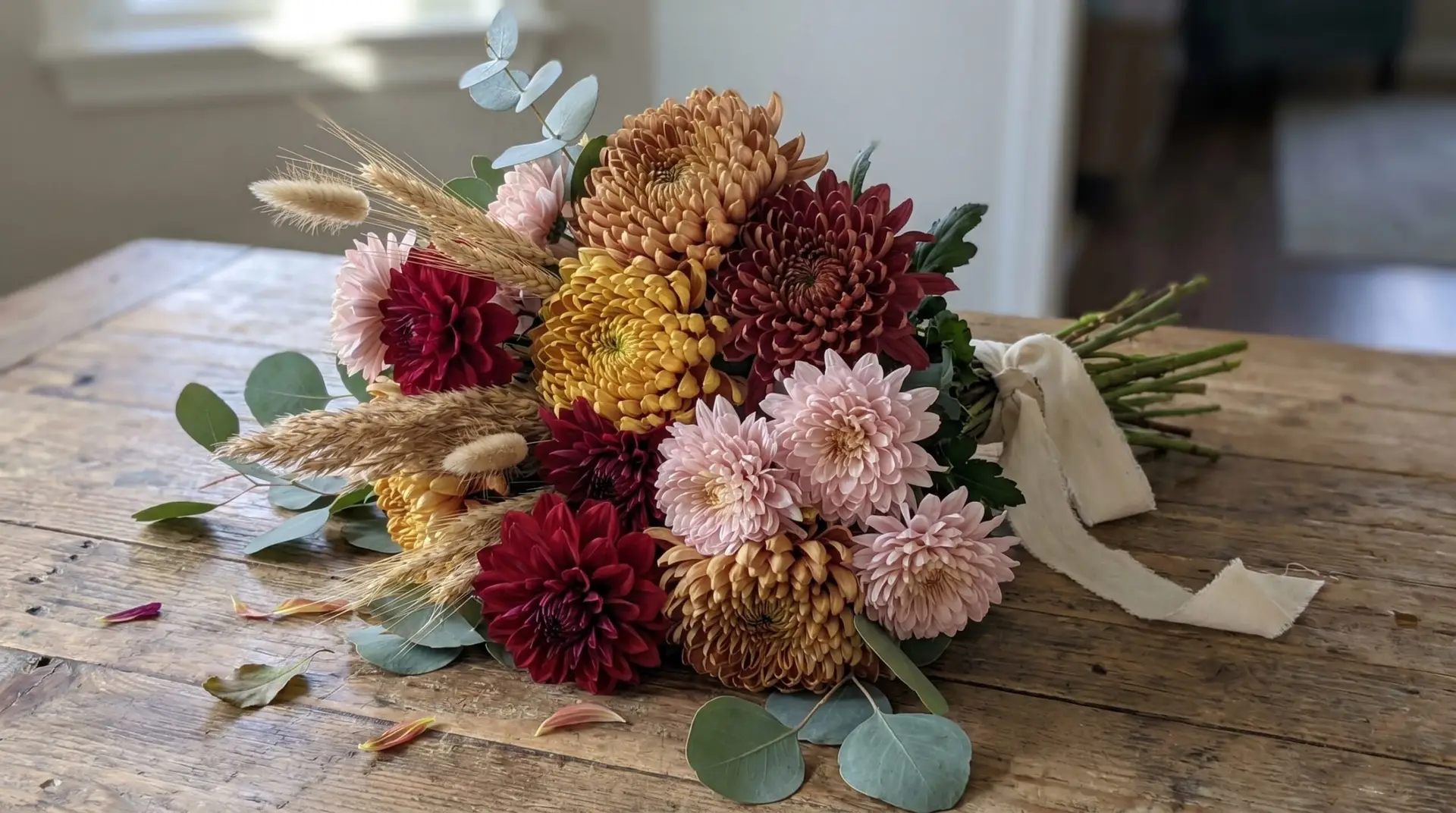
Chrysanthemum as a cut flower is the dominant November florist trade flower. A bouquet of mixed-color chrysanthemums (yellow, bronze, rust, pink) makes a meaningful November gift, with the warm autumn color palette suiting both the season and birthday celebration. Florist prices typically run from thirty to ninety dollars for a chrysanthemum-featured bouquet. Chrysanthemums combine well in bouquets with autumn dahlias, ornamental wheat or grasses, eucalyptus, and other autumn-season flowers.
Important cultural consideration: avoid white chrysanthemums as gifts for recipients of East Asian heritage (Chinese, Japanese, Korean, Vietnamese, and others) where white chrysanthemums specifically read as funeral flowers. Pink, yellow, red, or bronze chrysanthemums are universally appropriate. White chrysanthemums are fine for Western recipients without strong East Asian cultural connection.
A living chrysanthemum plant for the recipient’s garden provides a long-term gift that returns each autumn. Specialty perennial suppliers offer named hardy chrysanthemum varieties at prices typically running from fifteen to forty dollars per plant. The recipient plants the chrysanthemum in autumn or early spring for late-autumn bloom in subsequent years. Garden chrysanthemums are easy to grow in most temperate climate gardens with adequate sun and average soil.
Specialty exhibition or rare chrysanthemum varieties (spider chrysanthemums, quill chrysanthemums, brush thistle chrysanthemums, classical Japanese kotengiku forms) make distinctive gifts for serious gardener recipients or for those with interest in unusual flower forms. Specialty chrysanthemum nurseries offer these unusual cultivars at prices from twenty to sixty dollars per plant or per cutting.
Peony as a cut flower is not available in November (peony’s late-spring/early-summer bloom timing means cut peony is only available May-July in temperate climates). For November peony gift purposes, consider peony root for spring planting (dormant peony tubers for late winter or early spring planting cost from fifteen to fifty dollars per root, with the plants producing first flowers typically in the second or third year after planting).
For recipients with interest in Japanese culture or East Asian heritage, a chrysanthemum gift paired with a small reference book on Imperial Japan chrysanthemum tradition or on the Double Ninth Chinese chrysanthemum festival provides culturally layered gift content. The combination uses the flowers as the primary symbolic element and the educational supplement as the explanatory layer.
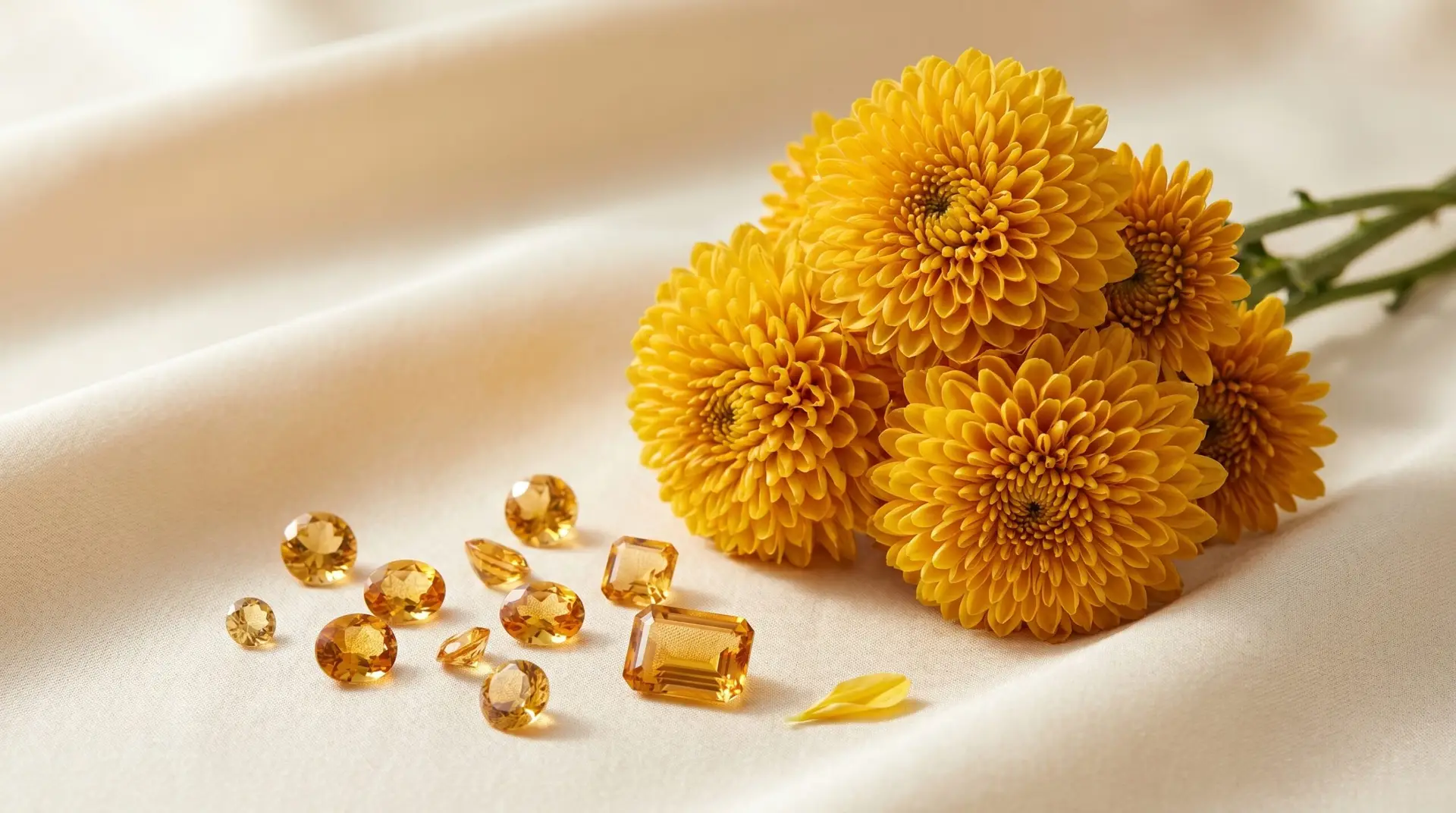
A jewelry piece combining chrysanthemum motif work with topaz (the traditional November birthstone) creates a coherent color and symbolic pairing. Yellow topaz particularly resonates with the chrysanthemum “chrysos” (golden) Greek etymological connection. Price tiers range from about forty dollars for simple topaz studs to several thousand dollars for fine pieces with floral motif work. Citrine is also accepted as a modern alternative to topaz for November birthstone purposes.
Frequently asked
What is November’s birth flower?
Chrysanthemum as the primary, with peony as a less commonly recognized historical secondary. Chrysanthemum refers to the genus Chrysanthemum in the family Asteraceae. Peony refers to the genus Paeonia in the family Paeoniaceae. Modern Western birth flower tradition often lists chrysanthemum alone for November without a secondary.
Why is chrysanthemum November’s birth flower?
Chrysanthemum has peak bloom in October and November across temperate climates, providing dominant autumn flower availability when most other garden flowers have finished. The flower also has unmatched cultural significance across East Asian flower traditions (Chinese, Japanese, Korean, Vietnamese) and serves as the imperial flower of Japan. Victorian flower writers chose chrysanthemum for November because of both seasonal availability and this layered cultural heritage.
What does the chrysanthemum flower symbolize?
Loyalty, friendship, and joyful longevity. The symbolism draws on Chinese scholarly tradition (Tao Yuanming’s autumn contemplation poems), Imperial Japan dignity (the 16-petal chrysanthemum imperial seal), and broader East Asian flower culture emphasizing sustained presence through late-autumn season when other flowers have finished.
Why does the Japanese imperial family use a chrysanthemum seal?
The 16-petal chrysanthemum imperial seal (Imperial Seal of Japan) has been the symbol of the Japanese imperial family since the late twelfth century, with formal designation dating to Emperor Go-Toba (1180-1239). The seal appears on Japanese imperial documents, the Japanese passport, and Japanese embassies abroad. The Order of the Chrysanthemum (established 1876) is Japan’s highest honor.
Why are white chrysanthemums associated with funerals in Asia?
White chrysanthemums specifically read as funeral flowers across many Asian cultures (Japan, Korea, China, Vietnam, and others), where they are used in funeral arrangements, memorial services, and Qingming (Tomb-Sweeping Day) commemorations. The cultural association makes white chrysanthemums inappropriate as birthday or congratulatory gifts in Asian cultural contexts. Always choose pink, yellow, red, or bronze chrysanthemums for Asian-heritage recipients.
What does peony symbolize?
Romance, prosperity, noble dignity, happy marriage, and bashfulness. Chinese peony has unmatched cultural significance as the “King of Flowers” and the imperial flower of multiple Chinese dynasties (particularly Tang Dynasty 618-907 AD). Peony is more strongly associated with April, May, and June in modern Western birth flower tradition than with November.
Why is peony listed as November’s historical secondary?
Some traditional Victorian-era Western sources mention peony in connection with November, possibly reflecting historical use of peony root for medicinal purposes in traditional Chinese medicine (peony root harvested in autumn for winter medicinal use). Modern Western birth flower tradition more commonly places peony in spring months. The November peony designation is acknowledged here as historical reference rather than as currently dominant tradition.
What birthstone goes with November’s birth flower?
Topaz (the traditional November birthstone) or citrine (modern alternative). Yellow topaz particularly resonates with the chrysanthemum “chrysos” (golden) Greek etymological connection. Both stones provide warm yellow color that pairs naturally with autumn chrysanthemum bouquet colors.
What is the Double Ninth Festival?
The Double Ninth Festival (重陽節, Chongyang Festival in Chinese, Jungyangjeol in Korean, Choyo in Japanese) is the ancient East Asian autumn festival on the ninth day of the ninth lunar month (typically September or October in the Gregorian calendar). The festival celebrates chrysanthemum through traditional practices including chrysanthemum viewing, chrysanthemum tea drinking, and chrysanthemum cake eating. The traditions continue across modern East Asia.
When do chrysanthemums bloom?
Chrysanthemums bloom from late summer through autumn frost in temperate climates, with peak abundance in October and November. Garden chrysanthemums are easy to grow in most temperate climate gardens with adequate sun and average soil; the plants are hardy perennials returning each year from established roots.
Sources
- Chrysanthemum (Chrysanthemum) · Encyclopedia Britannica
- Chrysanthemum growing guide · Royal Horticultural Society
- Peony (Paeonia) · Encyclopedia Britannica
About this article. > Written and reviewed by the Your Flowers Guide editorial team. Botanical content from Britannica and the Royal Horticultural Society. Imperial Japan chrysanthemum heritage references via Imperial Household Agency of Japan documentation. Chinese chrysanthemum literary tradition references via Tao Yuanming classical poetry (365-427 AD) and standard classical Chinese literature sources.