Contents
Amaryllis
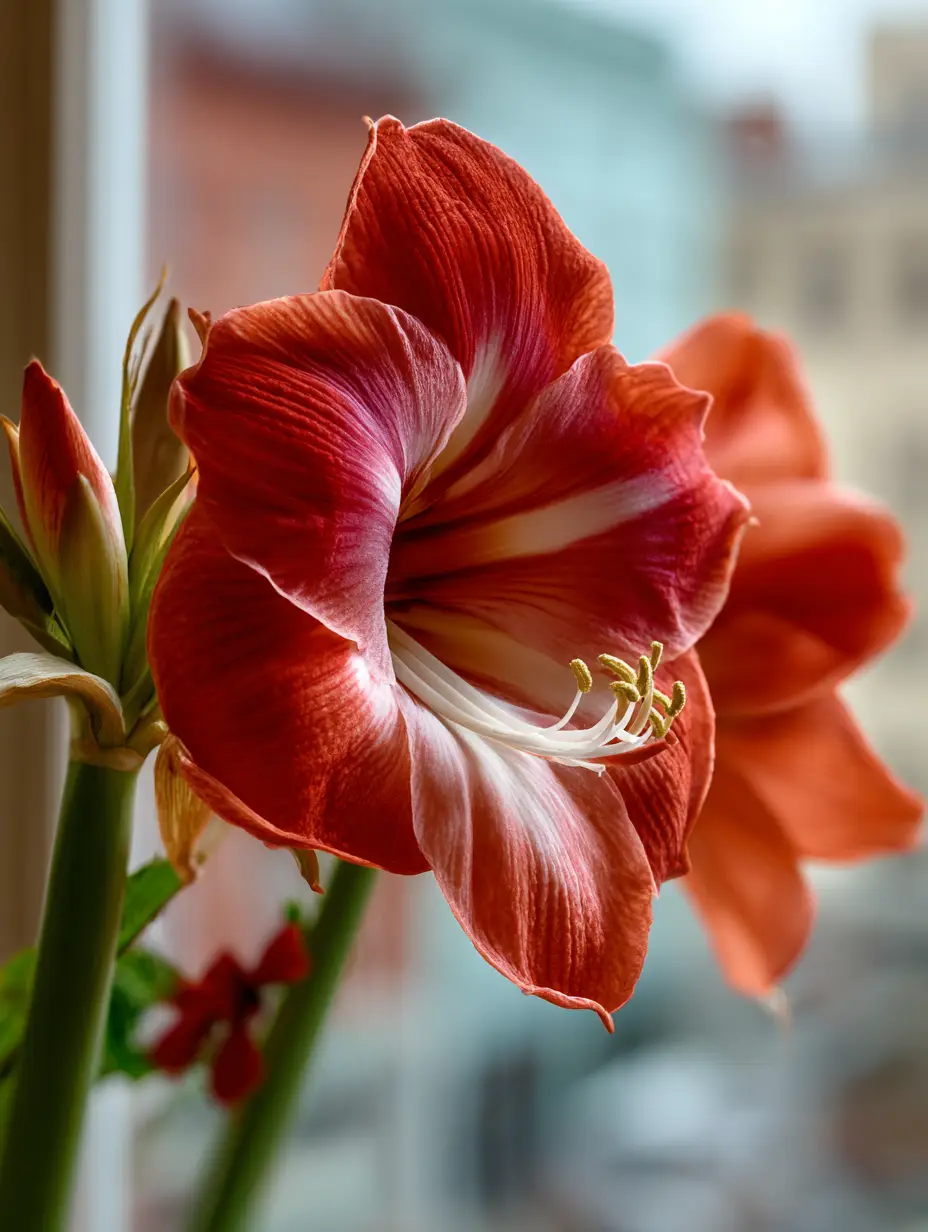
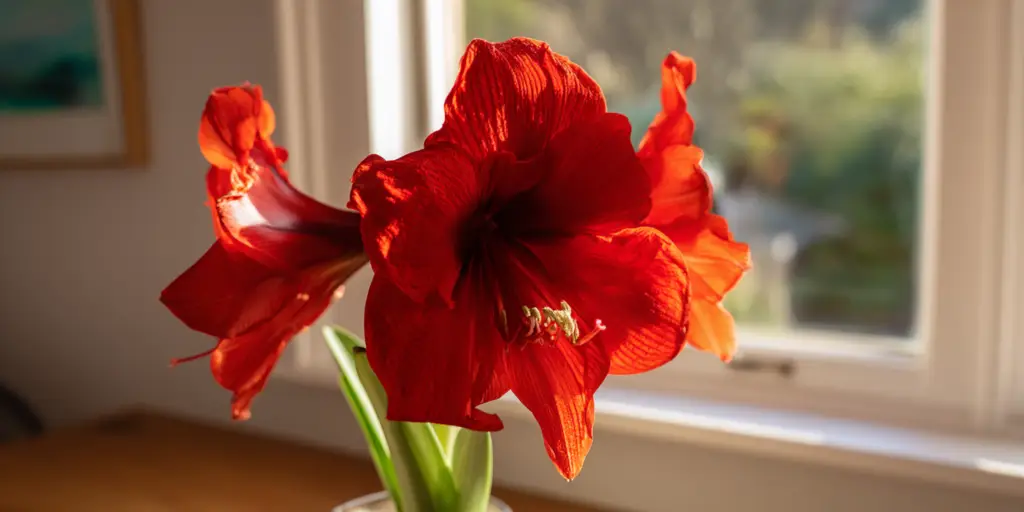
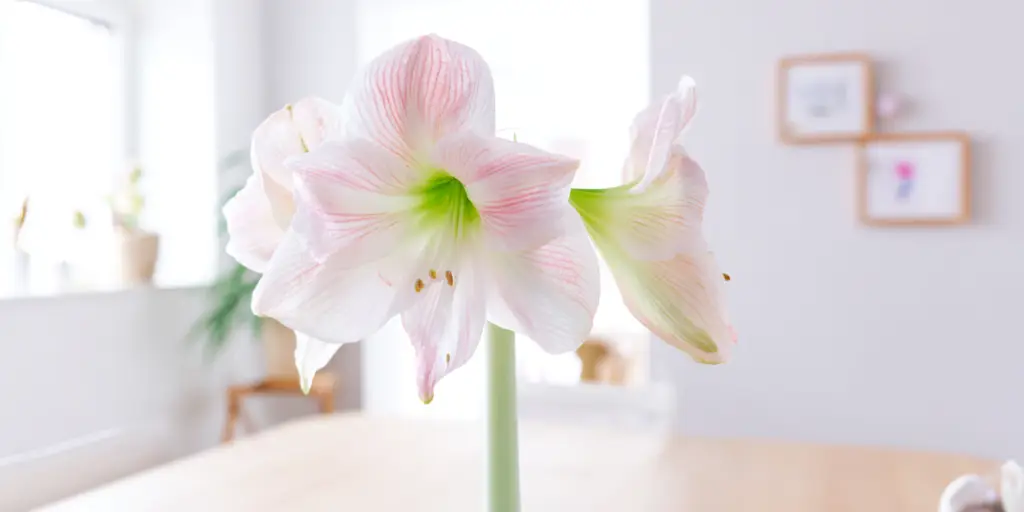
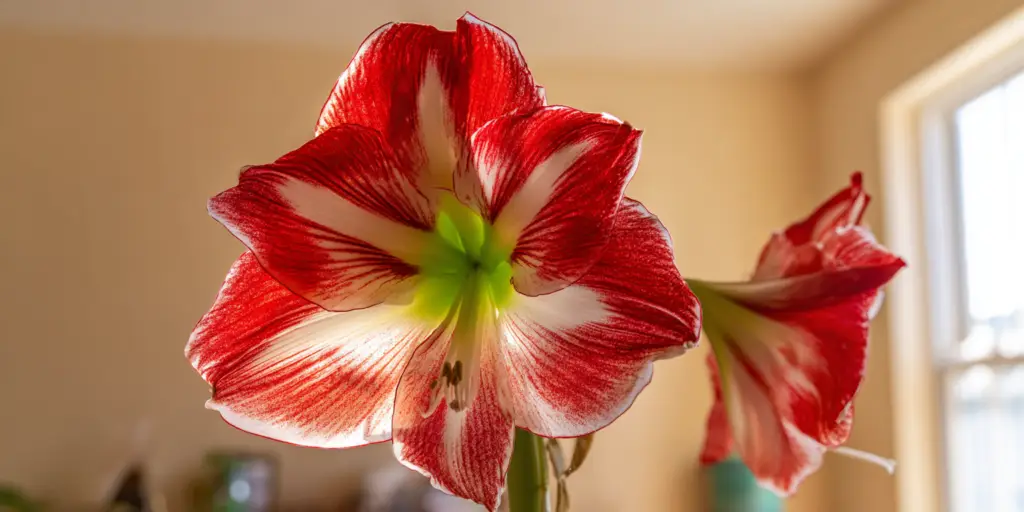
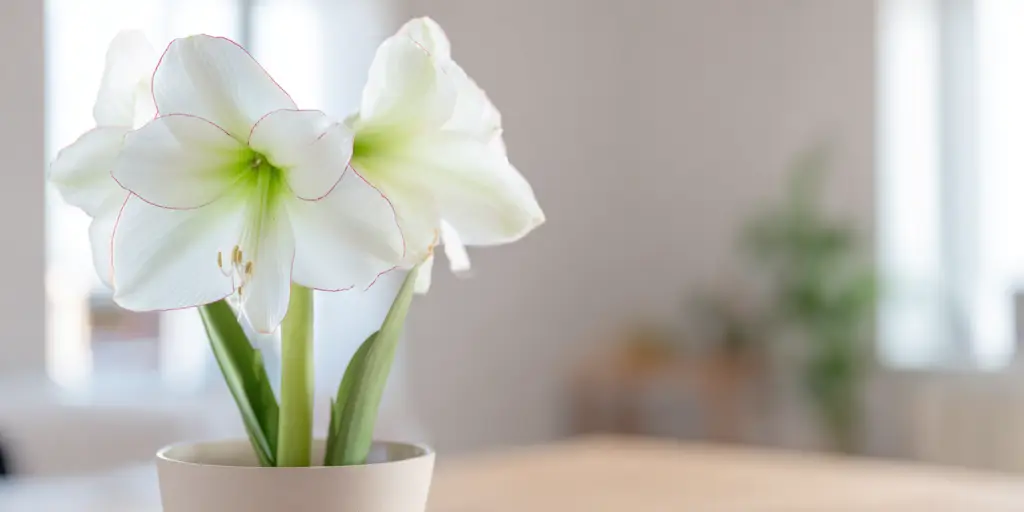
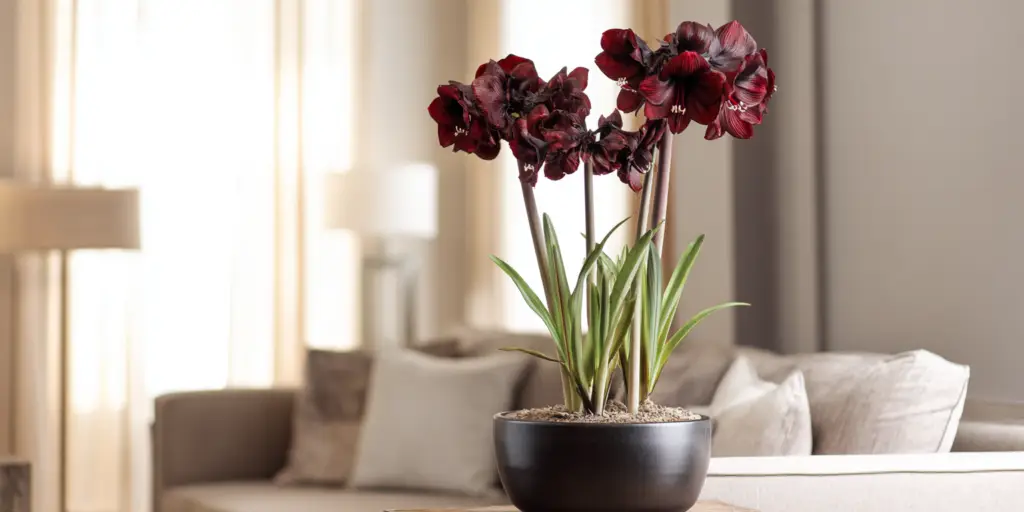
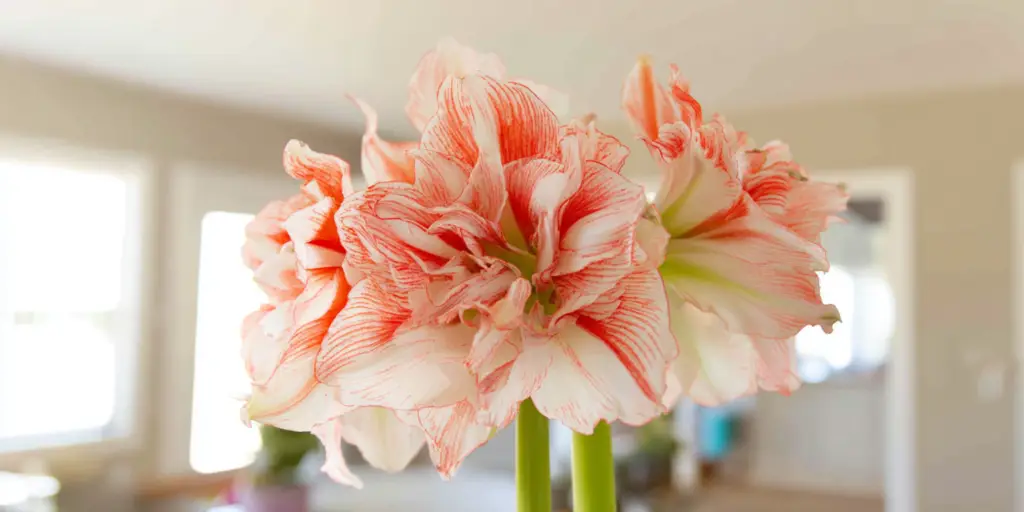
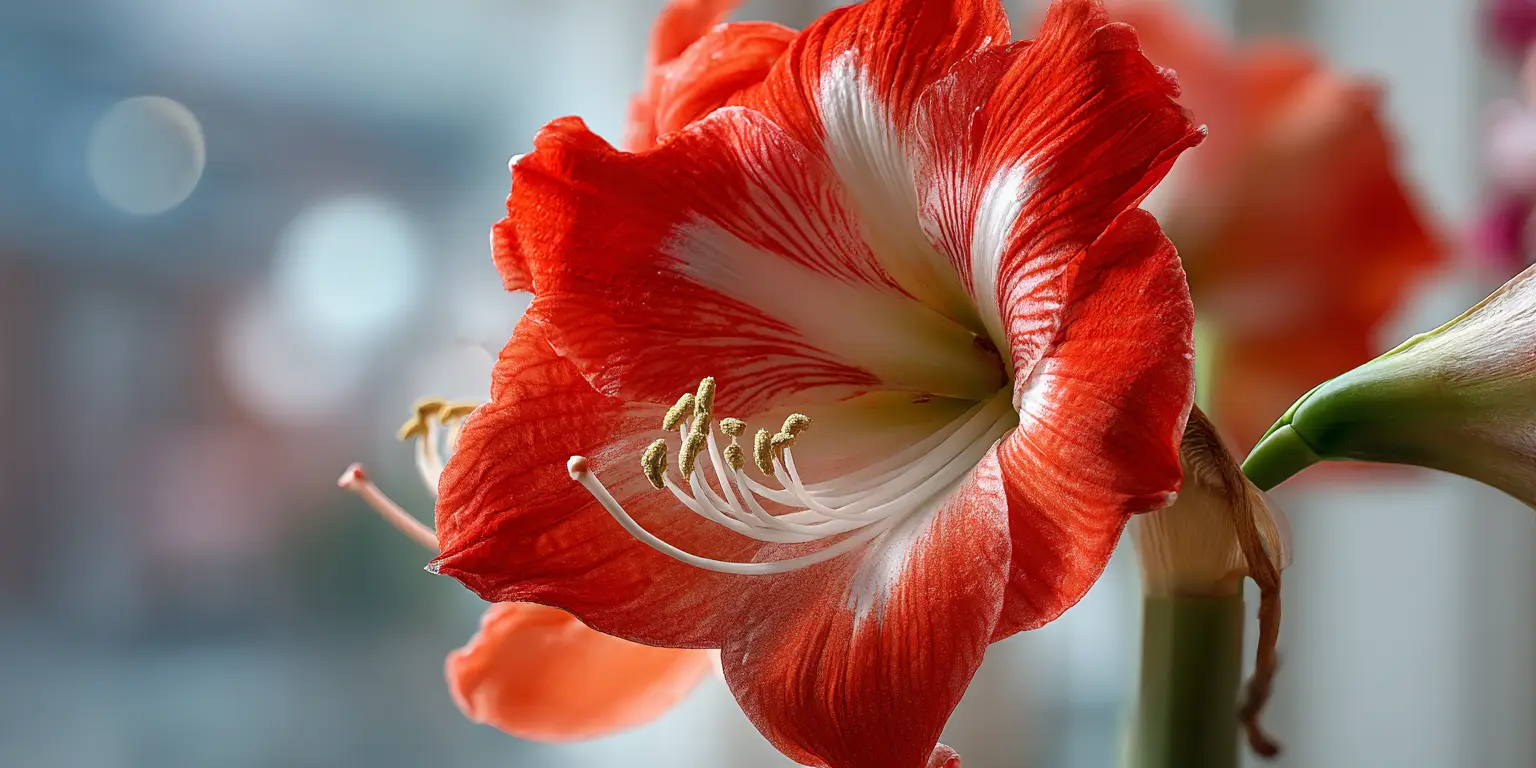
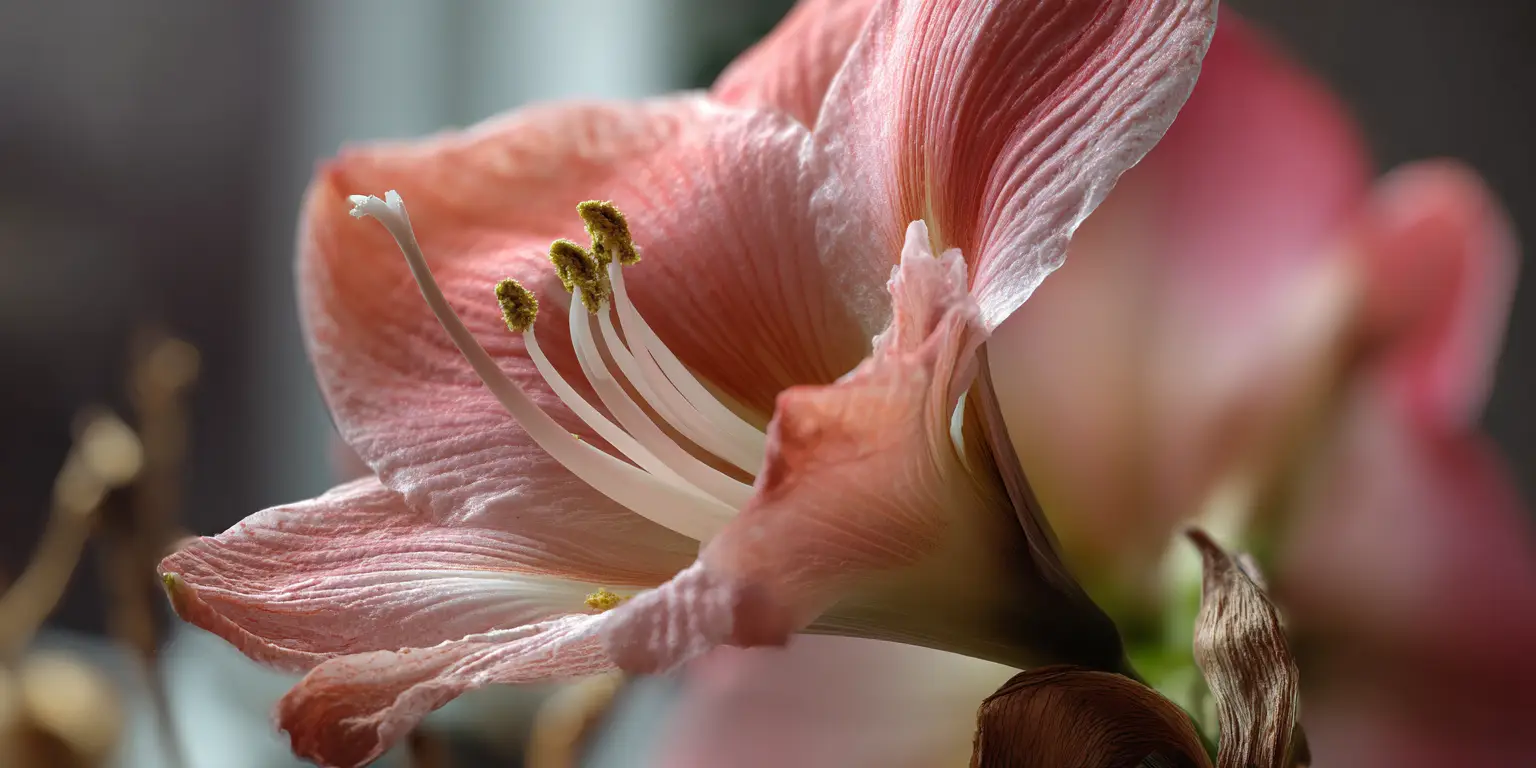
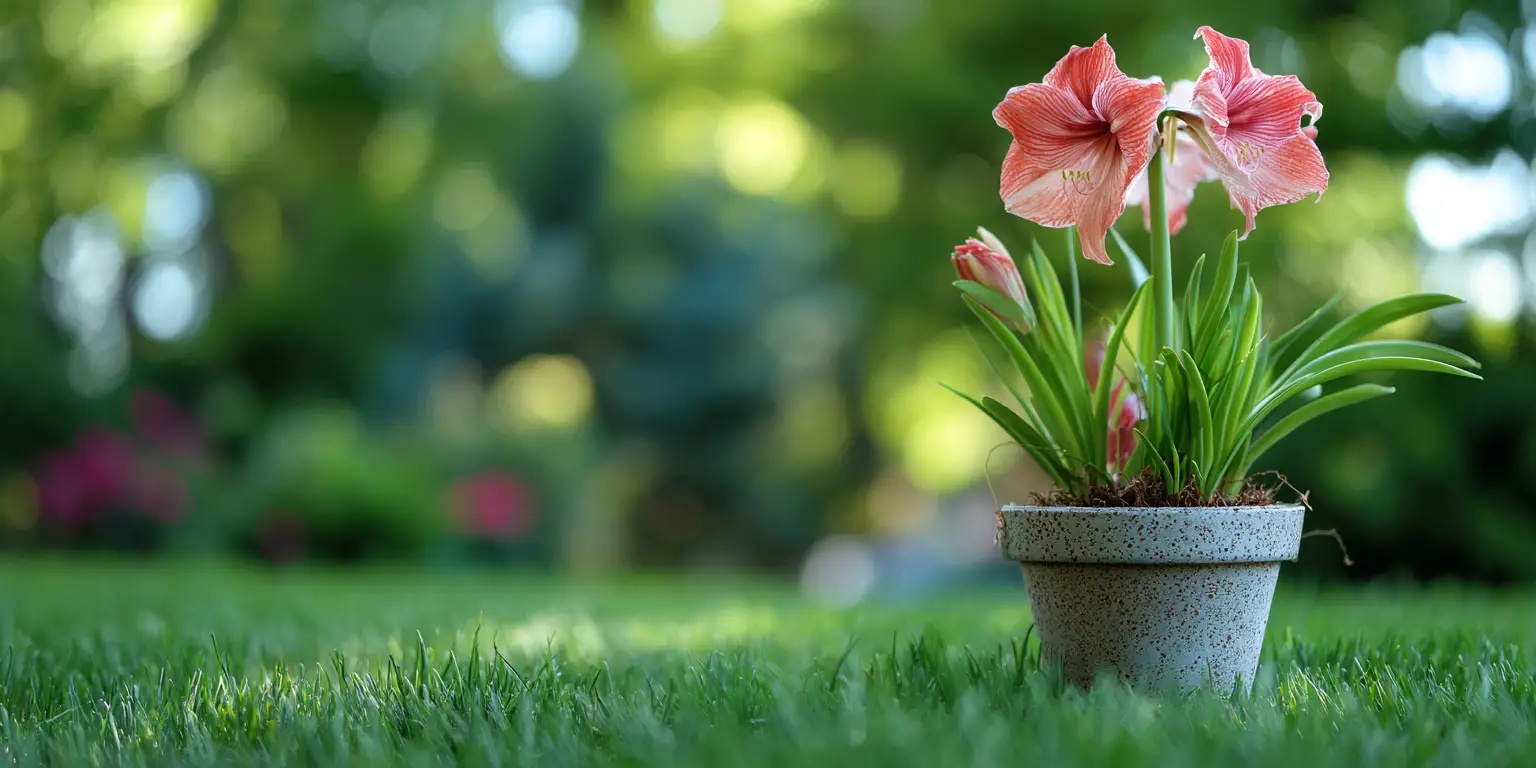
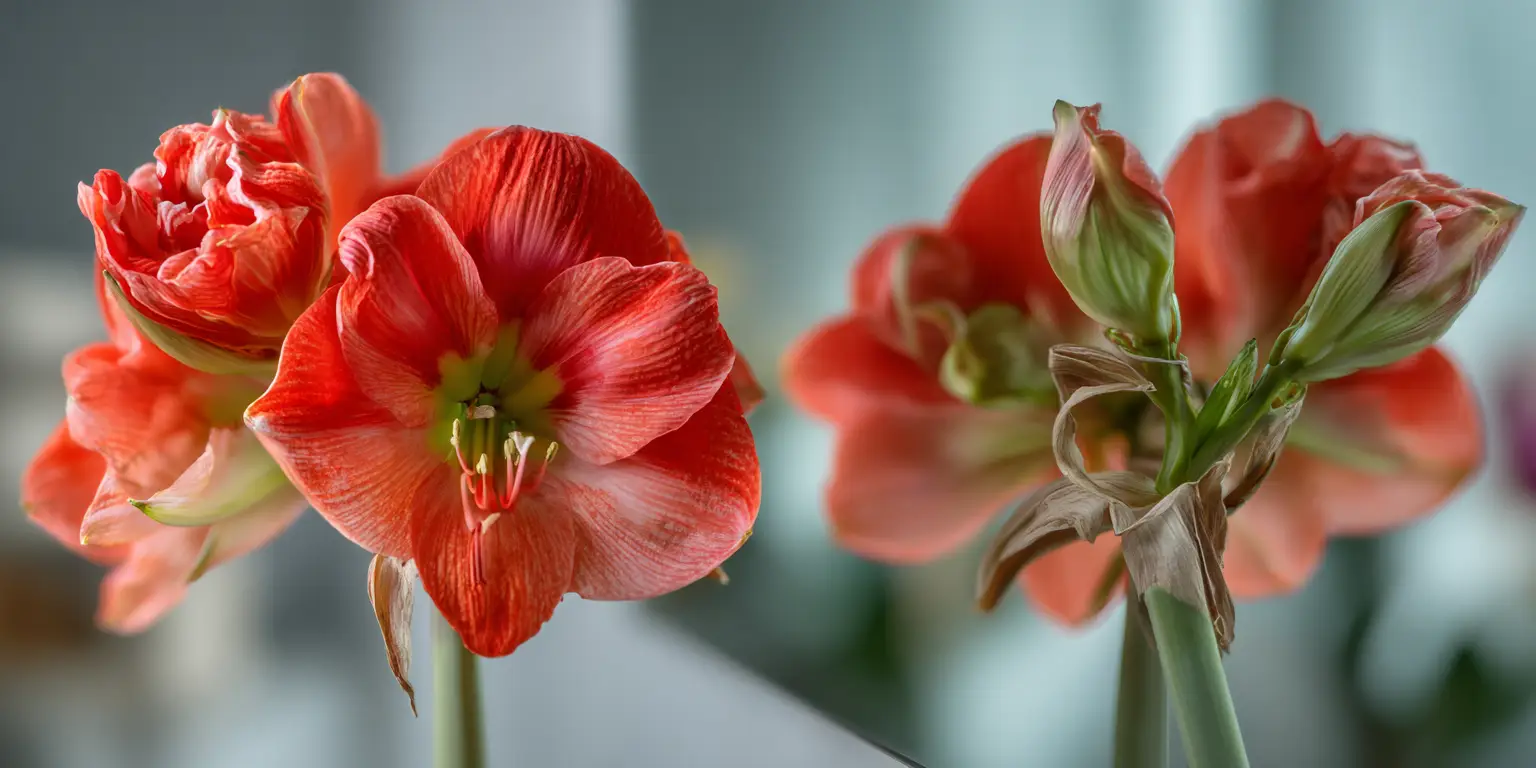
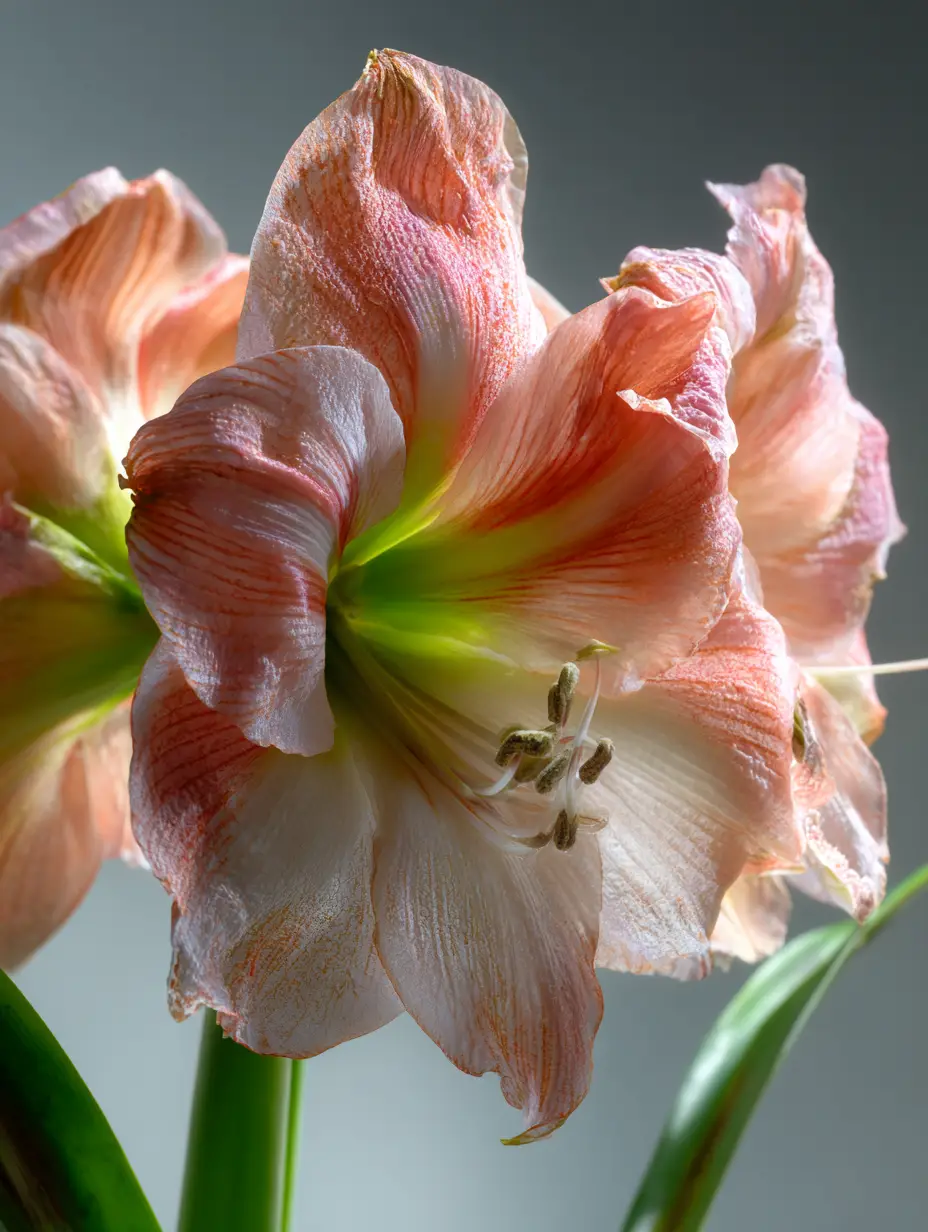
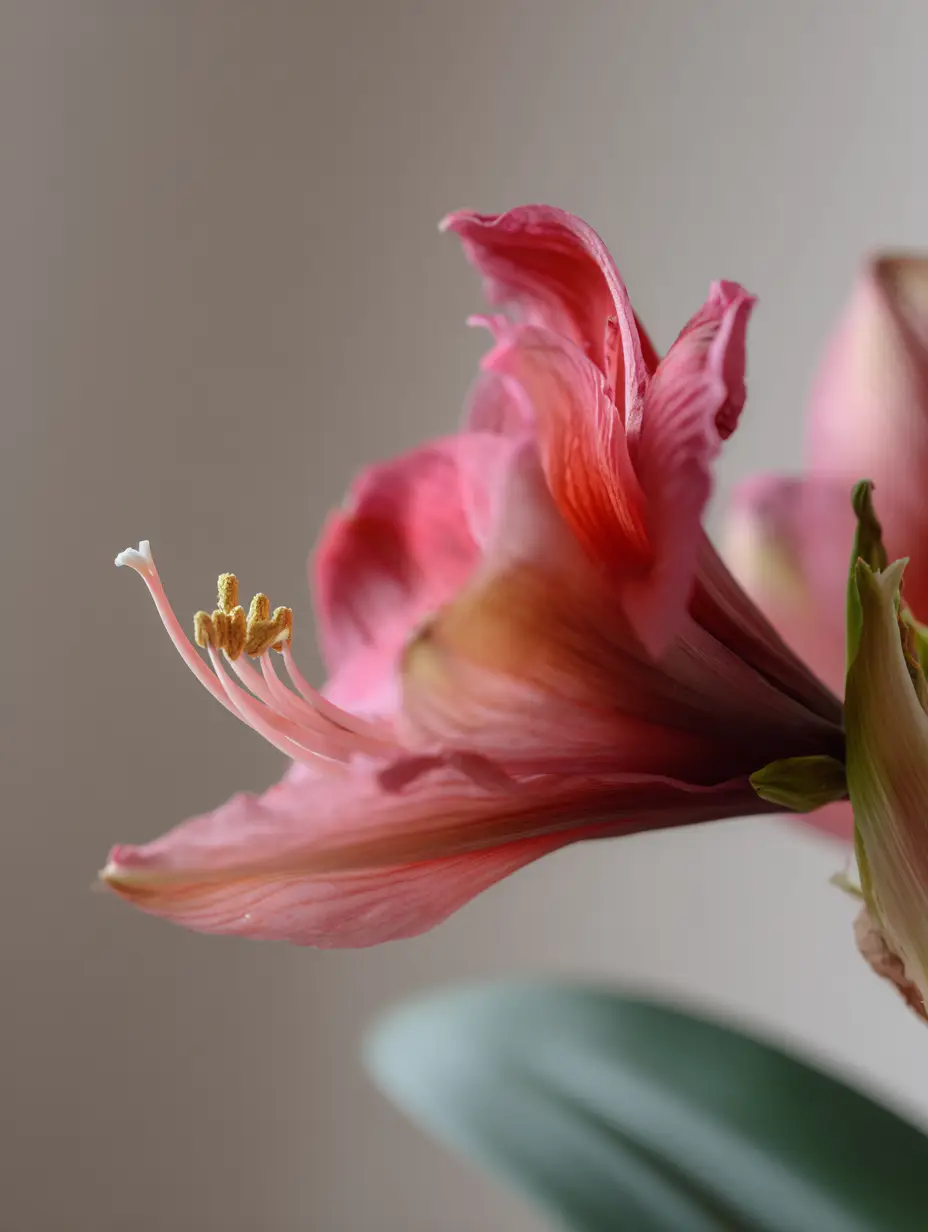
Amaryllis is a tropical flowering bulb celebrated for its spectacular winter flowers. Often grown as an indoor flowering plant, it brightens homes with brilliant holiday blooms during the colder months. Each bulb produces one or more tall, leafless stems (scapes) that bear 2 to 5 trumpet-shaped blossoms about 4 to 8 inches across (10 to 20 cm). These dramatic, long-lasting blooms come in rich shades of red, pink, salmon, and white, often with striped or bi-color patterns. Despite this variety, there are no true-blue flowers or purple flowers in amaryllis – its blossoms stay in warm hues – but breeders have created many striking cultivars ranging from pure white flowers to deep crimson blooms. They can remain vibrant for weeks, offering a welcome burst of color when most outdoor plants lie dormant. Notably, amaryllis will bloom without any winter chill period, setting it apart from many other flowering bulbs and making it an easy, rewarding houseplant for beginners.
Among all types of flowers cultivated indoors, amaryllis stands out as one of the most popular seasonal flowers for winter, renowned for its ability to bloom during the darkest days of the year. This tropical bulb has become a seasonal favorite in holiday décor, prized for its ease of cultivation and reliably showy display. Botanically, the plant commonly called amaryllis actually belongs to the genus Hippeastrum, which is native to Central and South America. True Amaryllis (such as the belladonna lily of South Africa) is a different genus entirely, but in everyday usage gardeners simply use the familiar name ‘amaryllis’ for these Hippeastrum hybrids. With minimal care, even novice growers can coax an amaryllis to bloom year after year, making it a popular holiday gift and a centerpiece of indoor winter gardens.
A clear, step-by-step guide to soil, planting, watering, feeding, pruning, and winter care. Includes zone timing, container tips, companions, and quick fixes for common problems.

Bouquet Ideas
Explore simple, beautiful bouquet ideas for the home, gifts, and special occasions from romantic mixes to clean, minimal styles. Each idea includes suggested flower combinations, color palettes, and sizes, with photos for quick inspiration.
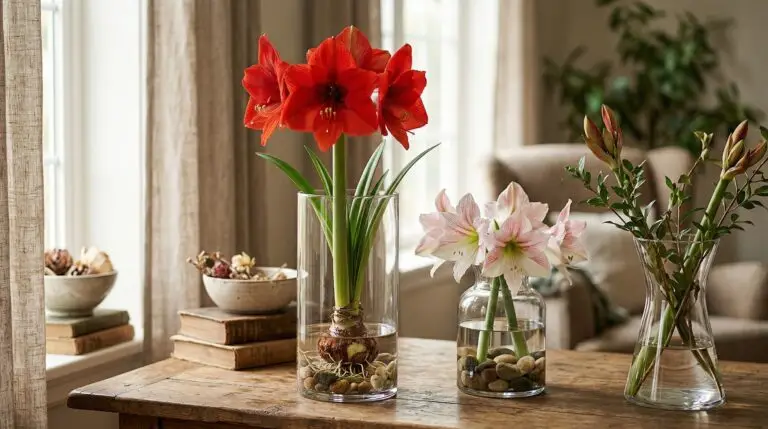
Creative ways to display amaryllis bulbs as winter home decor
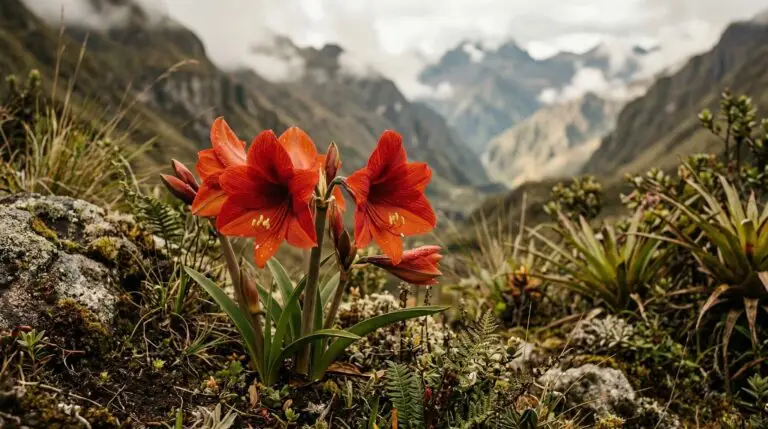
The fascinating history of amaryllis from South American wildflower to holiday tradition
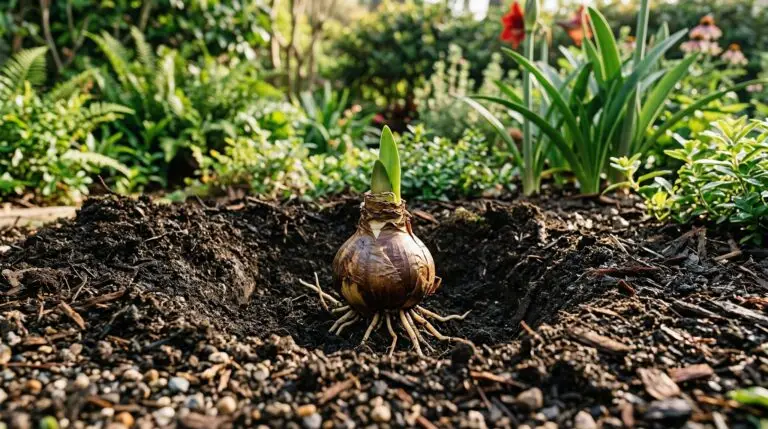
How to grow amaryllis outdoors in warm climates for year-round garden color
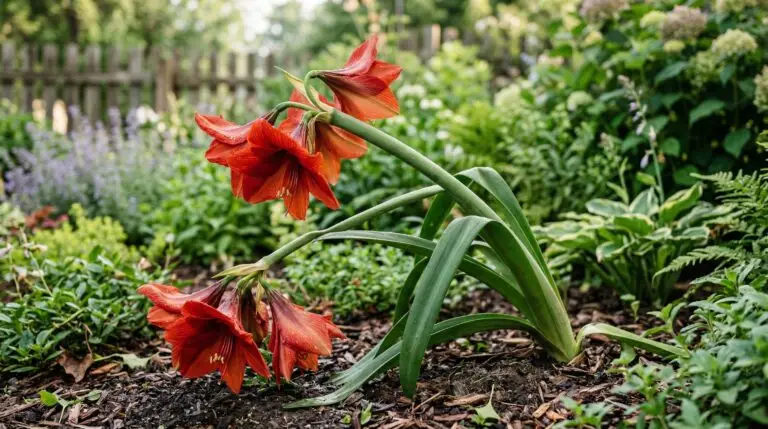
Common amaryllis problems including leaning stalks and split bulbs
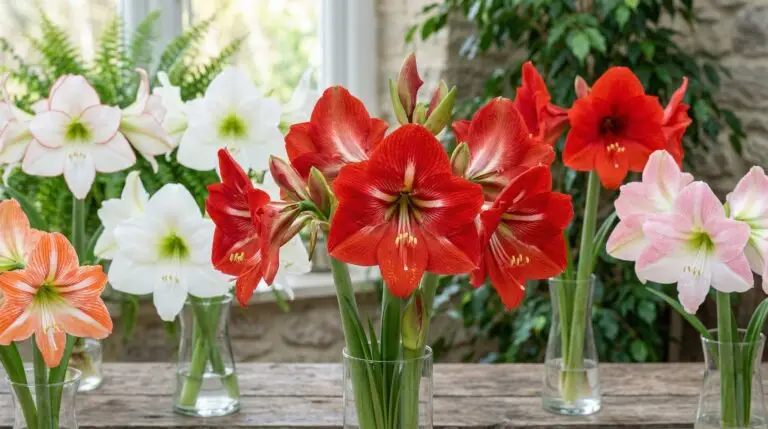
Amaryllis color guide and the most striking varieties to grow at home
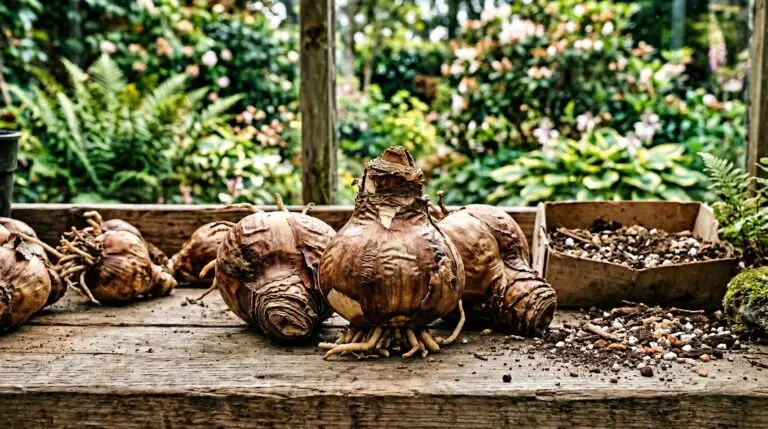
How to force amaryllis bulbs to bloom indoors for the holidays
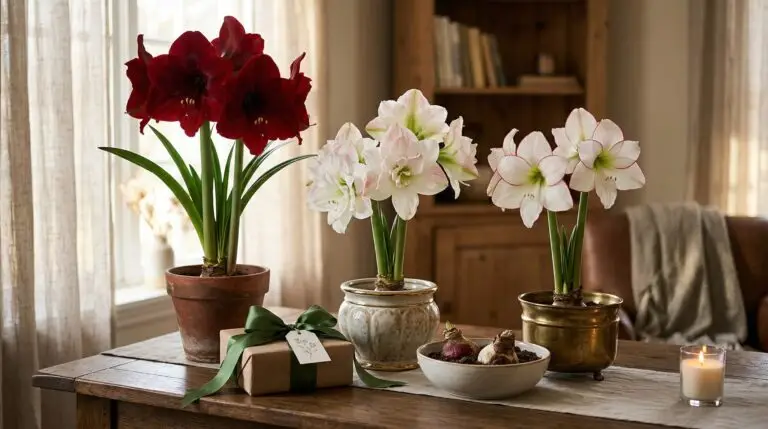
Amaryllis gift ideas and how to choose the perfect bulb for someone special
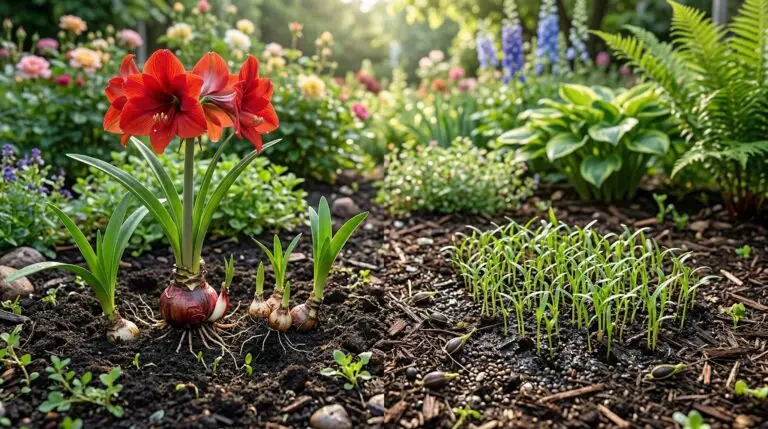
How to propagate amaryllis from offsets and seeds for a growing collection
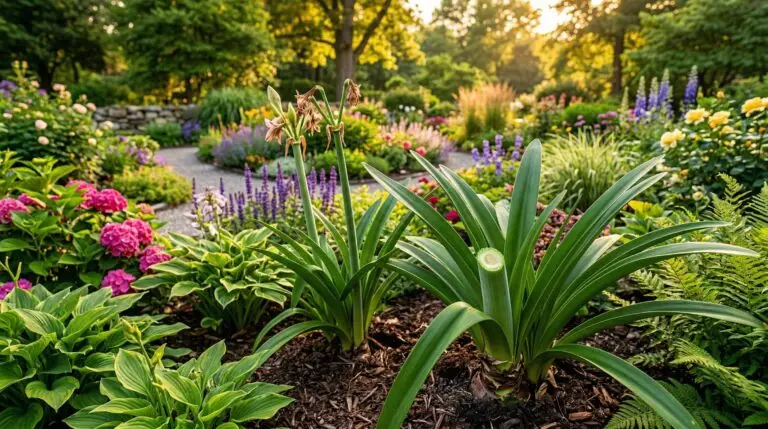
What to do with amaryllis after it finishes blooming so it flowers again next year
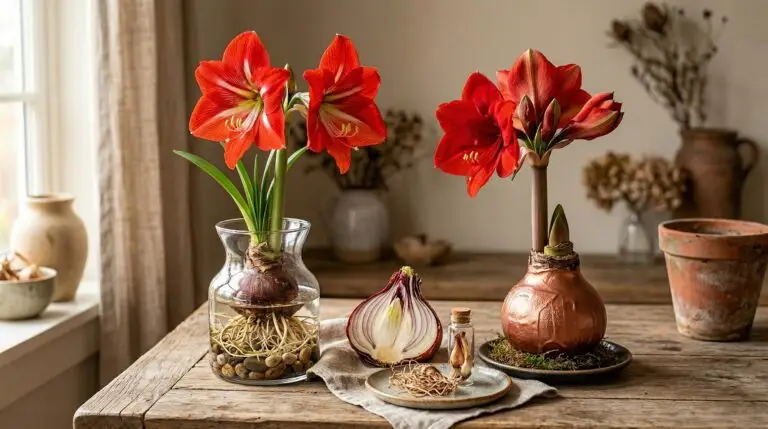
Growing amaryllis in water with no soil using the waxed bulb method
🌱 Taxonomy and origin
Amaryllis is classified in the Amaryllidaceae, the amaryllis or daffodil family. The plants most gardeners call amaryllis are actually in the genus Hippeastrum. This genus was separated from the true Amaryllis genus by botanists in the 19th century, ending a long-standing naming confusion. Hippeastrum includes around 90 wild species and is the correct botanical genus for the popular large-bulbed winter bloomers. By contrast, the true Amaryllis (native to South Africa) has only two species, best known being Amaryllis belladonna (the belladonna lily). The common name “amaryllis” has persisted in cultivation for the Hippeastrum hybrids. Many care guides and references will use the botanical name – for example, listing “Hippeastrum care” instructions – but these refer to the same plant. The genus name Hippeastrum comes from Greek words meaning “horse star” or “knight’s star,” alluding to the star-shaped flowers.
Hippeastrum species originate in the warm climates of the Americas, from the Andes of Peru and Bolivia to Brazil and parts of the Caribbean. They thrive in seasonal tropical habitats with a rainy growth season and a dry dormant period. The first amaryllis bulbs were brought to Europe in the 1700s, quickly gaining popularity in greenhouses and conservatories. Plant breeders in Holland and England crossed various wild species to create bigger blooms and new colors. By the mid-19th century, amaryllis (Hippeastrum) had become a beloved winter-blooming houseplant. Today there are hundreds of cultivars (over 600 named varieties) – from classic solid reds and whites to striped, double-petaled, and miniature forms – all descended from those South American ancestors. The Netherlands remains a major producer of Hippeastrum bulbs for the world market, which is why these flowers are sometimes called “Dutch amaryllis” in catalogs.
🌸 Bloom time
In cultivation, amaryllis is known for its off-season blooming during winter. Indoors, a bulb planted in autumn will typically flower about 6 to 8 weeks later, often in December or January. This makes amaryllis a star of the holiday season, providing vibrant color when garden beds lie barren. By contrast, hardy spring bulbs like tulips wait for the ground to thaw and bloom outdoors in spring, whereas amaryllis bulbs can be coaxed to bloom in the midst of winter. In warm climates (around USDA Zone 9 and above) where amaryllis can grow outdoors year-round, they usually bloom naturally in late spring to early summer after a winter dormancy. But in colder regions, they are most often enjoyed as indoor winter flowers.
The blooming period of an amaryllis is impressively long. Each individual flower can remain open and fresh for about a week or more. Since each stem bears several buds that open in succession, a single bulb’s blooming period may extend over two weeks. Large, healthy bulbs often send up a second flower stalk after the first, further prolonging the display into a span of three to four weeks. Gardeners often stagger the planting of multiple bulbs in fall to enjoy continuous blooms throughout winter. One advantage of amaryllis is that it does not require cold treatment to bloom-unlike many bulbs, it responds readily to simple timing of planting and watering. This ease of bulb forcing allows growers to plan for holiday blooms by potting the bulbs in October or November for December blossoms.
📏 Height and spread
Amaryllis presents a substantial presence for an indoor plant. When in bloom, most varieties stand about 18 to 24 inches tall (45 to 60 cm), and some can reach up to 30 inches. Each thick, hollow flower stalk holds the heavy blooms aloft. The strap-shaped green leaves, which often appear after or alongside the flowers, can grow 12 to 20 inches long (30 to 50 cm). A single bulb grown in a pot will have a spread of roughly 8 to 12 inches as the leaves arch outward. In garden settings over multiple years, bulbs may slowly multiply to form clumps several feet across, though amaryllis is not an invasive spreader. Its blossoms are large and eye-catching-often 6 inches across-rivaling hibiscus flowers in diameter. Because of the plant’s height and top-heavy blooms, using a stake or support can be wise for taller cultivars to prevent the stems from leaning or tipping over. Providing sufficient light helps keep the growth sturdy and upright.
☀️ Light
Amaryllis performs best with plenty of bright light. Indoors, a sunny window (south or west-facing) is ideal, especially during the short days of winter. A few hours of direct sunlight in the morning or late afternoon help keep the plant stocky and encourage robust blooms. Avoid very harsh midday summer sun on the foliage, as the leaves can scorch if the plant is moved outdoors in hot weather. If growing the plant outside in its hardy range, choose a location with full sun or partial shade – about six hours of light per day is optimal. Rotate potted amaryllis every few days because the flower stalk will lean toward the light source. Turning the pot periodically ensures the stem grows straight. In low-light conditions, the stems may become elongated and weak, so providing ample light is key for a sturdy, floriferous plant.
💧 Water
Proper watering is crucial for amaryllis health. As a bulb plant, it dislikes having “wet feet” – overly soggy soil can cause the bulb to rot. The soil should be kept evenly, lightly moist during active growth, but never waterlogged. A good rule is to water when the top inch of soil feels dry to the touch, then water thoroughly until excess drains out. Always use a pot with drainage holes so water does not collect at the bottom. Guidelines for Hippeastrum care emphasize finding a balance: amaryllis can tolerate short dry spells (thanks to the water stored in its bulb), but it also needs regular moisture while it is growing leaves and flowers. Avoid watering the crown or directly soaking the bulb. Instead, water the surrounding soil. After the plant finishes blooming, gradually reduce watering to allow the bulb to enter a rest phase.
🌍 Soil and pH
Amaryllis bulbs thrive in a well-draining, fertile soil. In containers, use a high-quality potting mix enriched with organic matter (like compost or peat) but also with good drainage – adding a handful of sand or perlite helps prevent waterlogging around the bulb. The bulbs prefer a neutral to slightly acidic soil pH, roughly in the 6.0 to 7.0 range. When planting, set the bulb so that the top third to half of it remains above the soil surface. This planting technique helps prevent rot and leaves room for the neck of the bulb. Choose a pot that is only a few inches wider than the bulb itself (amaryllis actually bloom better when somewhat snug in their pot). Always ensure the container has drainage holes. In garden beds, amend heavy clay soils with grit and organic matter to improve aeration and drainage for amaryllis bulbs.
❄️ USDA hardiness
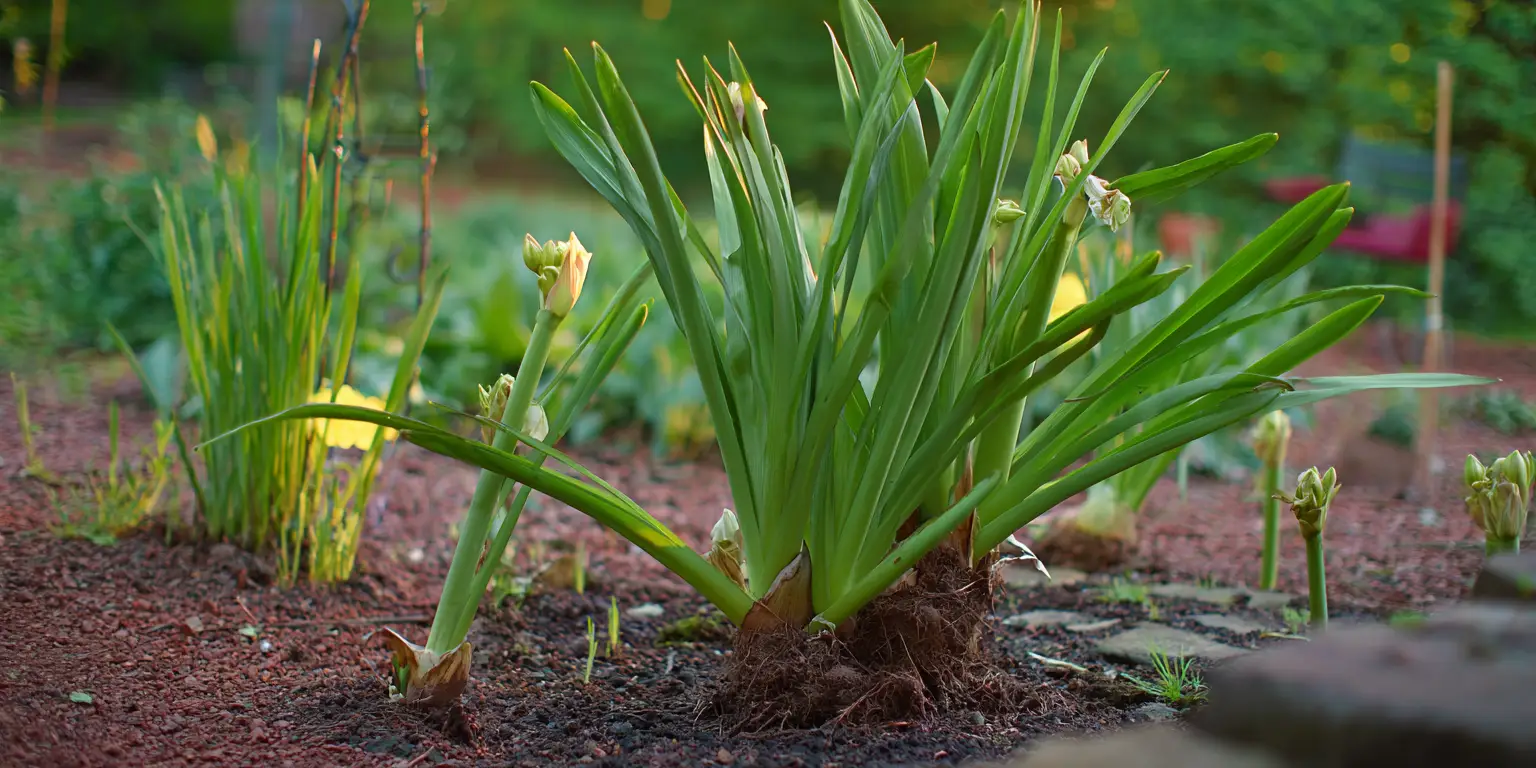
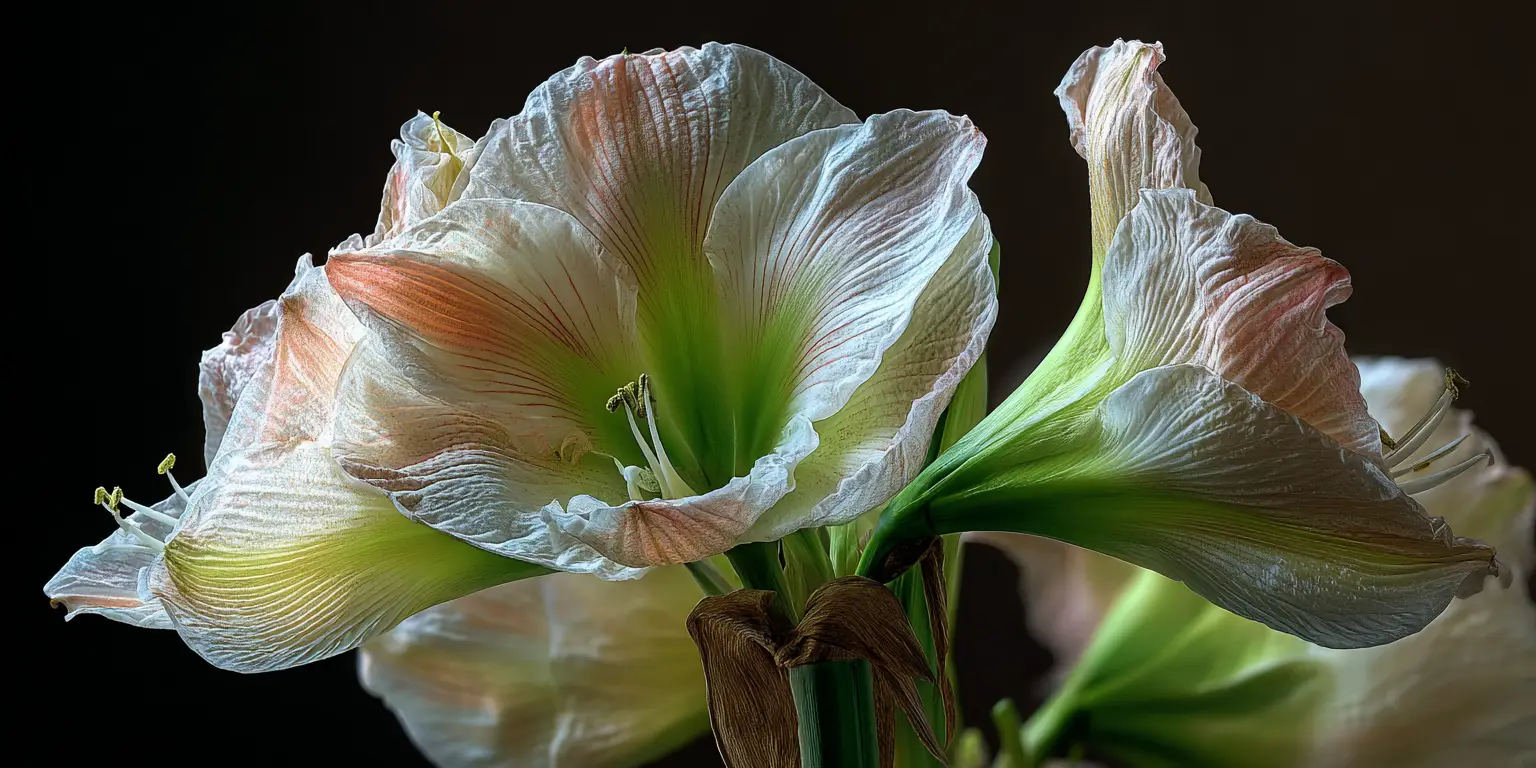
Amaryllis is a tender tropical bulb, which means it cannot survive freezing winter temperatures. In the United States, it is reliably hardy outdoors in about USDA Hardiness Zones 8 through 10. In those warm regions, bulbs can be left in the ground year-round and will bloom each year. In zone 8 (and marginally in zone 7 with heavy mulch), outdoor plantings may survive winters if the ground does not freeze deeply. However, in any climate colder than zone 8, amaryllis bulbs will not overwinter outside. Even a light frost can damage the plant. Generally, they begin to suffer below about 35 °F (2 °C). Gardeners in cold climates typically grow amaryllis as indoor potted plants or bring the bulbs inside during winter. Some may plant them outdoors in the garden after the last frost in spring (to let the foliage soak up sun over summer), then dig up the bulbs in fall for storage before freezing weather arrives. In short, if your winter temperatures drop below freezing, amaryllis needs to be kept in a protected, frost-free environment during those months.
🌼 Propagation and longevity
Amaryllis propagation is typically accomplished vegetatively, since the bulbs naturally multiply over time. A healthy mother bulb will sometimes produce small offset bulbs (bulblets) at its base. These can be separated and replanted once they grow a few inches in diameter. Dividing offsets is the simplest way to get new amaryllis plants, though patience is required – an offset may take 2 to 3 years of growth before it is large enough to bloom. Growing amaryllis from seed is also possible but much slower. If flowers are pollinated, they form seed pods with flat black seeds that can be sown. Seed-grown amaryllis can take 3 to 5 years (or more) to reach blooming size, and the offspring may not look exactly like the parent plant due to genetic variation. Commercial growers sometimes propagate amaryllis by cutting large bulbs into sections to induce each piece to form new bulbs (a method for advanced growers), but home gardeners usually stick to offsets or the occasional seed.
With proper care, an amaryllis bulb can live and rebloom for many years. After the plant finishes flowering, it’s important to allow the green leaves to continue growing – this is when the bulb replenishes its energy. Cut off the spent flower stalk near the bulb, but leave all leaves intact. Place the plant in bright light and water it regularly (and even feed with a balanced houseplant fertilizer every few weeks) through the spring and summer. By early fall, the leaves will begin to yellow and die back naturally. This signals that the bulb is ready for a rest. At this point, reduce watering and let the potting mix dry out as the foliage dries. The dormant bulb can be kept in its pot or lifted and stored in a cool, dark place for about 8 to 10 weeks. After this rest period, begin watering again and move the bulb to a well-lit, warm location – it should soon sprout a new flower stalk for another winter bloom. By following this annual cycle of growth and rest, the same amaryllis bulb can put on a show year after year, sometimes for decades.
👃 Fragrance
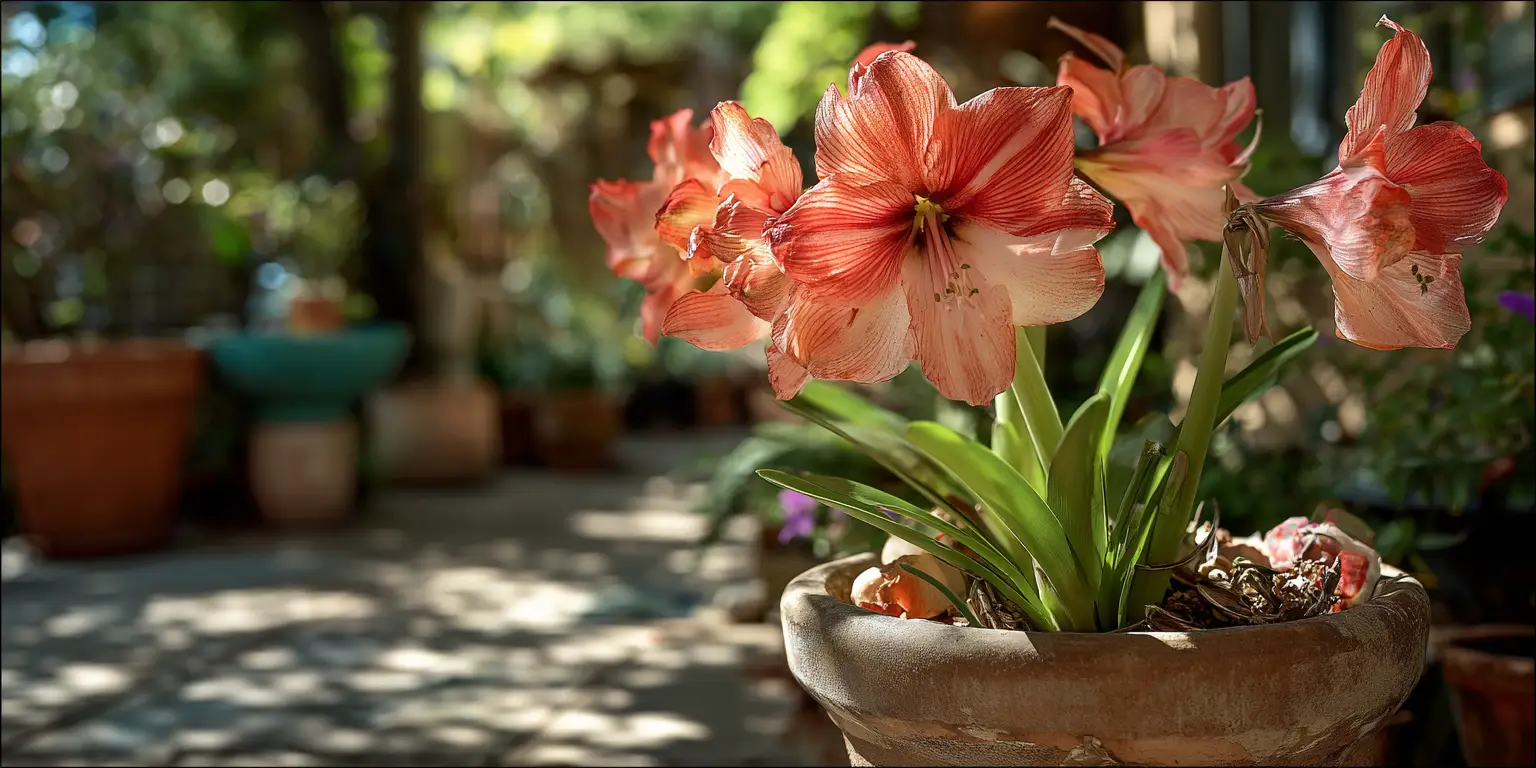
One noteworthy aspect of amaryllis flowers is their lack of strong fragrance. While many showy blooms carry a distinct perfume, most modern amaryllis hybrids are essentially scentless. This means an amaryllis in full bloom will not fill a room with fragrance – a clear difference from, say, the powerful scent of paperwhite narcissus or lilacs. A few rare amaryllis varieties (often heirloom or wild species) may have a faint sweet aroma, but generally this plant is grown for visual impact rather than smell. The upside is that its big blooms can be enjoyed indoors by those who might be sensitive to strong floral scents. Amaryllis delivers striking beauty without an overpowering fragrance. Interestingly, the belladonna lily (the true Amaryllis from South Africa) is quite fragrant, but the indoor Hippeastrum types lack any noticeable scent.
⚠️ Toxicity and pet safety
All parts of the amaryllis plant contain compounds that are toxic if eaten, so caution is required around pets and children. The primary toxin is an alkaloid called lycorine, which is present in the bulb, leaves, stem, and flowers (with the bulb having the highest concentration). Ingesting amaryllis can cause gastrointestinal distress – common symptoms include drooling, vomiting, diarrhea, abdominal pain, and reduced appetite. Pets (cats and dogs in particular) may also become lethargic or show tremors if they consume a large amount. Fortunately, severe or fatal poisoning is rare, but it can make an animal quite ill. Additionally, amaryllis contains needle-like calcium oxalate crystals that can irritate the mouth and throat if chewed, leading to excessive salivation or pawing at the mouth. Because of these risks, it’s best to keep amaryllis plants out of reach of curious cats, dogs, and young children. When handling the bulb (which has irritant sap), some gardeners wear gloves to avoid any skin irritation, although skin reactions are uncommon. Overall, while amaryllis is not as deadly as certain true lilies are to cats, it should still be treated as a poisonous plant and kept in a safe location.
🌿 Vase life
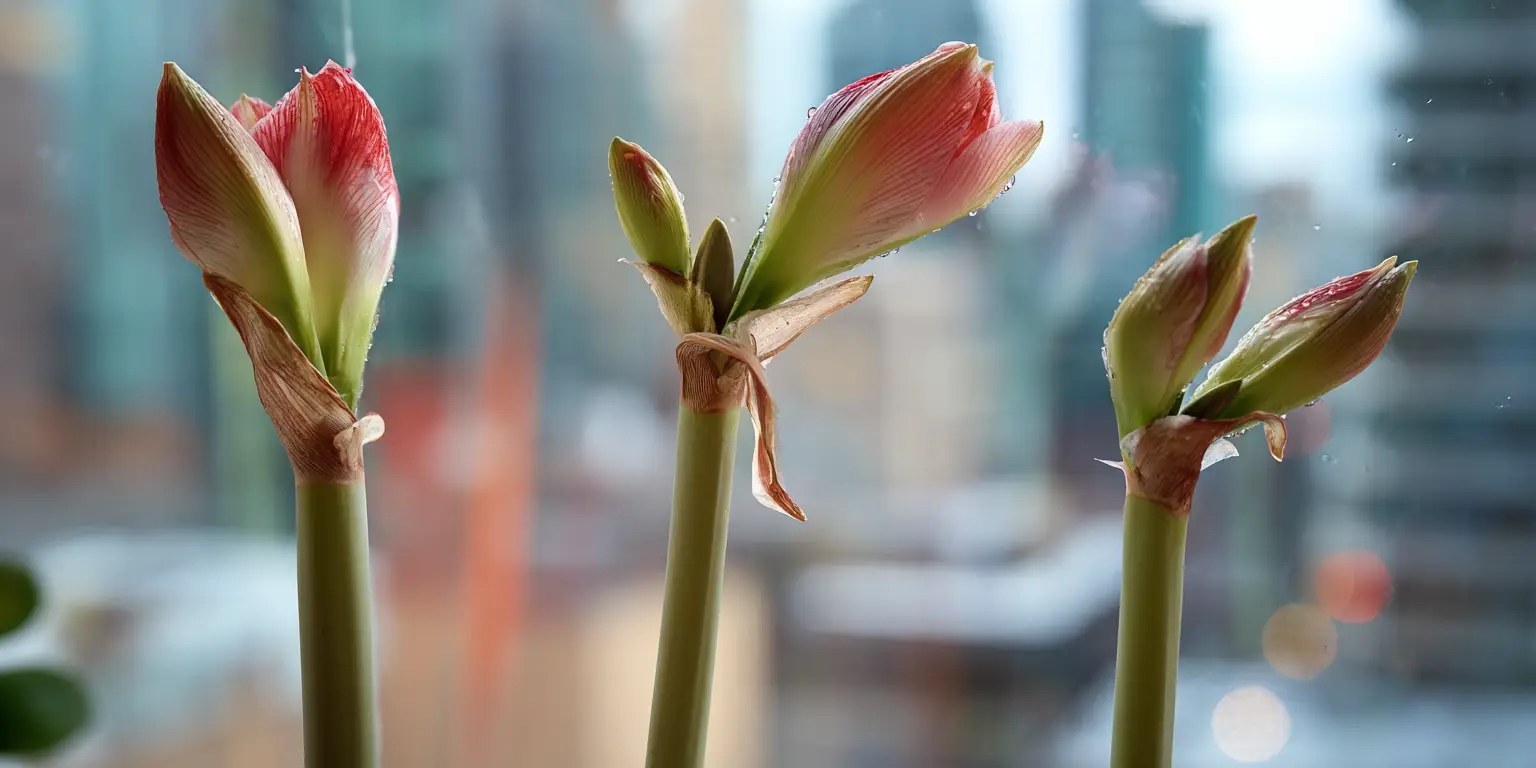
Amaryllis is not only a potted plant – it also makes an excellent cut flower. Florists often use amaryllis stems in holiday arrangements and winter weddings because of their bold presence and long vase life. A cut amaryllis stem can last anywhere from 7 to 10 days (sometimes up to two weeks) in a vase, which is on par with or longer than many other bouquet flowers like roses. To maximize vase life, it’s recommended to cut the stem at a diagonal with a sharp knife and place it in fresh water with floral preservative. The hollow stems are thick and somewhat delicate at the ends – wrapping a rubber band or tape around the base of each stem can prevent it from curling or splitting in the water. Refresh the water every few days and trim a bit off the stem end to help the blooms last. Amaryllis flowers usually open one after another along the stem, so even as the first bloom fades, the next bud will unfurl – giving a succession of beauty in the arrangement. Their striking colors and large size make them a focal point in any bouquet or centerpiece.
🐛 Pests and diseases
Amaryllis doesn’t face many pest problems, but a few can appear. Indoors, watch for houseplant pests like mealybugs (white cottony residue on bulbs and leaves), scale insects (brownish bumps), and spider mites (fine webbing and speckled leaves). These sap-sucking pests can weaken the plant. If seen, gently wipe the leaves and bulb with cotton swabs dipped in alcohol or use an insecticidal soap to eliminate them. Outdoors, slugs or snails may chew on leaves. Hand-picking or using safe baits can control them. A more unusual pest is the narcissus bulb fly, which can lay eggs in amaryllis bulbs, leading to tunneling larvae. Prevent issues by not leaving bulbs exposed outside and discarding any bulbs that become soft and rotten (a sign of infestation). Fortunately, rodents tend to leave amaryllis bulbs alone due to their toxicity, so digging pests are less of a concern compared to some other bulbs.
Among diseases, amaryllis can suffer from a few fungal issues, especially in damp or cool conditions. The most notorious is known as red blotch (or red leaf spot), caused by a fungus (Stagonospora curtisii) that creates small red spots on leaves, flower stalks, and bulbs. Severe infection can weaken the plant and distort new growth. If you notice red patches on your amaryllis, remove and destroy the affected leaves or outer bulb scales to prevent spread. Applying a fungicide approved for ornamental bulbs can help in persistent cases, though good cultural practices are the first line of defense. Amaryllis bulbs can also fall prey to basal bulb rot if kept too wet – the bulb may become soft, mushy, and start to decay. Prevent this by ensuring excellent drainage and watering sparingly. Another potential issue is mosaic virus, which shows up as yellowish streaks on leaves. Unfortunately, there is no remedy for viruses, and infected bulbs should be discarded to prevent spread. Overall, keeping the plant in well-drained soil, avoiding overwatering, and maintaining clean conditions will minimize most disease problems. With proper care, amaryllis generally remains healthy.
FAQ
How do I get my amaryllis to bloom again next year?
After your amaryllis finishes flowering, proper care will ensure it blooms the following year. First, cut off the spent flower stalk, but leave all the green leaves in place. Continue to water the plant and give it plenty of light for the next several months – this allows the leaves to photosynthesize and recharge the bulb. You can also fertilize lightly (about once a month during spring and summer) to help the bulb rebuild its energy. In early fall, gradually reduce watering and let the leaves die back naturally. The bulb needs a rest period of roughly 8 to 10 weeks in a cool, dark location (around 50 to 55 °F). After this dormancy, repot or refresh the soil if needed, return the bulb to warmth and light, and resume watering. Within a few weeks, you should see a new flower stalk emerge, leading to another round of beautiful blooms in winter.
When should I start my amaryllis for Christmas blooms?
Timing is important if you want amaryllis flowers for the holidays. In general, plant your amaryllis bulb about 6 to 8 weeks before the desired bloom time. For a Christmas display in late December, this means potting the bulb in early to mid-November. Keep the potted bulb in a warm, bright location after planting, and water it sparingly until you see growth. Most amaryllis varieties will bloom roughly two months after planting. If you have multiple bulbs, you can stagger the planting dates (for example, one in late October, another in early November) to enjoy a succession of blooms throughout the holiday season.
How long do the flowers last?
Amaryllis blooms are relatively long-lived. Each individual flower typically remains open and in good condition for about one to two weeks. On the plant, several flowers often open in sequence on the same stalk, so the overall display can last 2 to 3 weeks per flower stalk. If your bulb produces a second stalk (common with large bulbs), the blooming period is extended even further – potentially up to a month of color. To make the blooms last as long as possible, keep the plant in a cool room (around 65 °F if possible) and out of direct, harsh sunlight. Cooler temperatures tend to prolong the life of the flowers. In a vase as cut flowers, amaryllis blooms also last around 7 to 10 days each, especially with fresh water changes and cool conditions.
Can I plant my amaryllis outdoors?
Yes, you can plant amaryllis outdoors if your climate is suitable, or you can move your potted amaryllis outside for the warmer months. Amaryllis can be grown in the ground year-round in regions where winter temperatures stay above about 15 °F (roughly USDA Zone 8 and warmer). In such climates, you can plant the bulb in well-draining soil in a sunny spot. It will sprout leaves in spring and likely bloom outdoors in late spring or summer each year. If you live in a colder region (zones 7 and below), you can still give your amaryllis a summer vacation outdoors: after the last frost, place the potted amaryllis (or plant the bulb pot and all) in a sheltered spot in the garden where it gets partial to full sun. Water and feed it over the summer to let it grow strong. But be sure to bring the bulb back indoors before the first hard frost in fall, since it cannot survive freezing temperatures. Many gardeners in cool climates use this method – outdoor sun and rain in summer, then indoors for winter – to keep their amaryllis bulbs healthy and blooming annually.
Why is my amaryllis growing leaves but not blooming?
If your amaryllis has lots of healthy green leaves but no flower stalk, it’s usually a sign the bulb hasn’t stored enough energy or wasn’t given the right rest period. Amaryllis bulbs typically need a dormant phase (with no water and fading leaves) to trigger blooming. If the bulb was kept wet and green all year without a rest, it might skip a bloom cycle. Another reason can be that the bulb is too small or young – bulbs often won’t bloom until they reach a certain maturity. To encourage a reluctant amaryllis to flower, make sure you allow it a dormant period of at least 8 weeks in a cool, dark place. Also, ensure the plant gets ample sunlight and some fertilizer during the growing season so it can build up energy. Sometimes a previously forced bulb will take a year off to recuperate. With patience and proper care, it should bloom again once it has regained strength.
Are amaryllis plants toxic to pets?
Yes. Amaryllis (Hippeastrum) is considered toxic to cats and dogs (and to a lesser extent, other pets) if ingested. The plant contains an alkaloid called lycorine that can cause nausea, vomiting, diarrhea, and other symptoms in animals. The bulbs are the most toxic part (since the concentration of lycorine is highest there), but leaves and flowers can also cause stomach upset if a pet chews on them. Additionally, the sap has irritating properties. Fortunately, amaryllis poisoning in pets is usually not life-threatening – it tends to result in mild to moderate digestive upset – but it’s still important to keep the plant out of reach of curious pets. If you suspect your cat or dog has eaten part of an amaryllis, monitor them for signs of distress and contact a veterinarian if symptoms are severe or if you’re unsure how much was consumed.
Should I cut off the leaves after my amaryllis blooms?
No – you should not cut off the green leaves right after your amaryllis finishes blooming. The leaves are essential for photosynthesis, which allows the bulb to store energy for the next bloom cycle. After the flowers fade, you can remove the spent flower stalk, but continue caring for the leaves. Place the plant in a sunny window, water it when needed, and even give it a bit of fertilizer during spring and summer. The leaves will feed the bulb and help it recharge. Only trim off leaves once they have turned yellow or brown and died back naturally. At that point (usually in the fall), it’s fine to remove the dried leaves. By leaving the foliage until it withers on its own, you ensure your bulb has gathered enough resources to bloom again.
Can an amaryllis bloom more than once per year?
Generally, an amaryllis bulb will have one major bloom period per year. During that period, a healthy bulb might send up more than one flower stalk (one after the other), which can make it seem like it’s blooming “multiple times,” but it’s really just an extended single season of flowering. Once the plant has finished that round of blooms, it will need time to recover. It’s uncommon for the same bulb to bloom again in the same calendar year unless it’s a special reblooming variety or it was forced on an alternate schedule. Some gardeners have reported a surprise second bloom in early fall on outdoor-grown amaryllis, but this is the exception rather than the rule. Under normal conditions, you should expect one bloom season a year from each bulb, typically in winter (for indoor-forced bulbs) or spring/early summer (for bulbs grown in the garden). Giving the bulb proper care and a rest period will ensure it can flower again the following year, rather than trying to force multiple blooms in one year.
Interesting tips
- The name Amaryllis comes from the Greek word amarysso, meaning “to sparkle.” In Greek mythology, a maiden named Amaryllis gave her name to the flower. This brilliant bloom indeed adds a sparkling touch of color in midwinter.
- The botanical genus name Hippeastrum translates to “horse star” (sometimes interpreted as “knight’s star”), a nod to the star-like shape of the amaryllis flower. One old-fashioned common name for the plant is “Knight’s Star Lily.”
- The true Amaryllis (species like Amaryllis belladonna, often called the belladonna lily or “Naked Lady”) is a different plant that blooms in late summer with no leaves on the stem. It earned the nickname “naked lady” because its foliage emerges only after the blossoms fade. This can be a point of confusion, but generally when people say “amaryllis” they mean the winter-blooming Hippeastrum.
- Amaryllis bulbs are popular holiday gifts and often sold as easy-grow kits. Some bulbs even come pre-coated in wax and require no soil or water to bloom – all the energy they need is already inside the bulb! This makes them almost foolproof for beginners.
- While amaryllis is not an official birth flower by month for any month, it has a strong symbolic presence. In floriography (the language of flowers), amaryllis can signify pride, strength, and radiant beauty. Because it blooms in winter, it’s also associated with hope and festive cheer during the holiday season.
- Brides and event planners sometimes include amaryllis in winter bouquets and centerpieces for a dramatic touch. In some wedding flowers guide references, amaryllis is noted as a symbol of splendid beauty and determination – a fitting sentiment for weddings. The large blooms also provide great visual impact in wedding décor.
- Amaryllis bulbs are impressively long-lived. With good care, the same bulb can rebloom year after year – some gardeners have kept their bulbs blooming annually for decades. This longevity means an amaryllis can become a cherished seasonal houseplant that essentially becomes part of the holiday tradition in a household.
Related Guides & Flowers
- Lily
Large trumpet shaped blooms on tall stems make lily a natural companion for amaryllis. Both are dramatic focal points in borders and containers and both grow from bulbs that like well drained soil and bright light. - Calla lily
Calla lily also grows from a fleshy bulb and is often sold as a potted gift plant just like amaryllis. Its sculptural flowers and glossy foliage work well in holiday arrangements and indoor containers. - Daylily
Daylily has strappy leaves and showy funnel shaped blooms that echo the look of amaryllis in outdoor beds. It is a good warm season contrast to winter flowering amaryllis grown indoors. - Daffodils Narcissus
Daffodils share the same bulb culture basics as amaryllis such as cool storage and careful watering. Many gardeners force daffodil bulbs indoors for late winter color alongside amaryllis. - Tulips
Tulips are classic spring flowering bulbs that can also be forced for indoor bloom. They pair well with amaryllis in mixed bulb displays and let you show different shapes and colors under similar care. - Alliums
Alliums are ornamental onions with bold spherical flower heads on sturdy stems. They share the same bulb planting logic as amaryllis and add a strong vertical accent to bulb focused beds.
References
- Amaryllis care University of Maryland Extension
Clear step by step guidance on potting, watering, light, and after bloom care for amaryllis grown indoors. - Growing and caring for amaryllis University of Minnesota Extension
Practical advice on containers, potting mix, repotting, dormancy, and how to keep bulbs blooming for several years. - Amaryllis Hippeastrum Wisconsin Horticulture Extension
Overview of hippeastrum as a houseplant including temperature needs, watering, and tips to prolong the bloom period. - All about amaryllis Iowa State University Extension
Detailed guide that covers potting depth, storage before planting, flowering time, and how to manage bulbs after they bloom. - Toxic and non toxic plant list Amaryllis and Hippeastrum ASPCA
Nonprofit resource that summarizes the toxicity of amaryllis types to cats, dogs, and horses and notes that bulbs are the most hazardous part.
Written by: Your Flowers Guide editorial team
We are a small independent group of flower lovers who research and review each guide using trusted horticultural and educational sources. Learn more about us