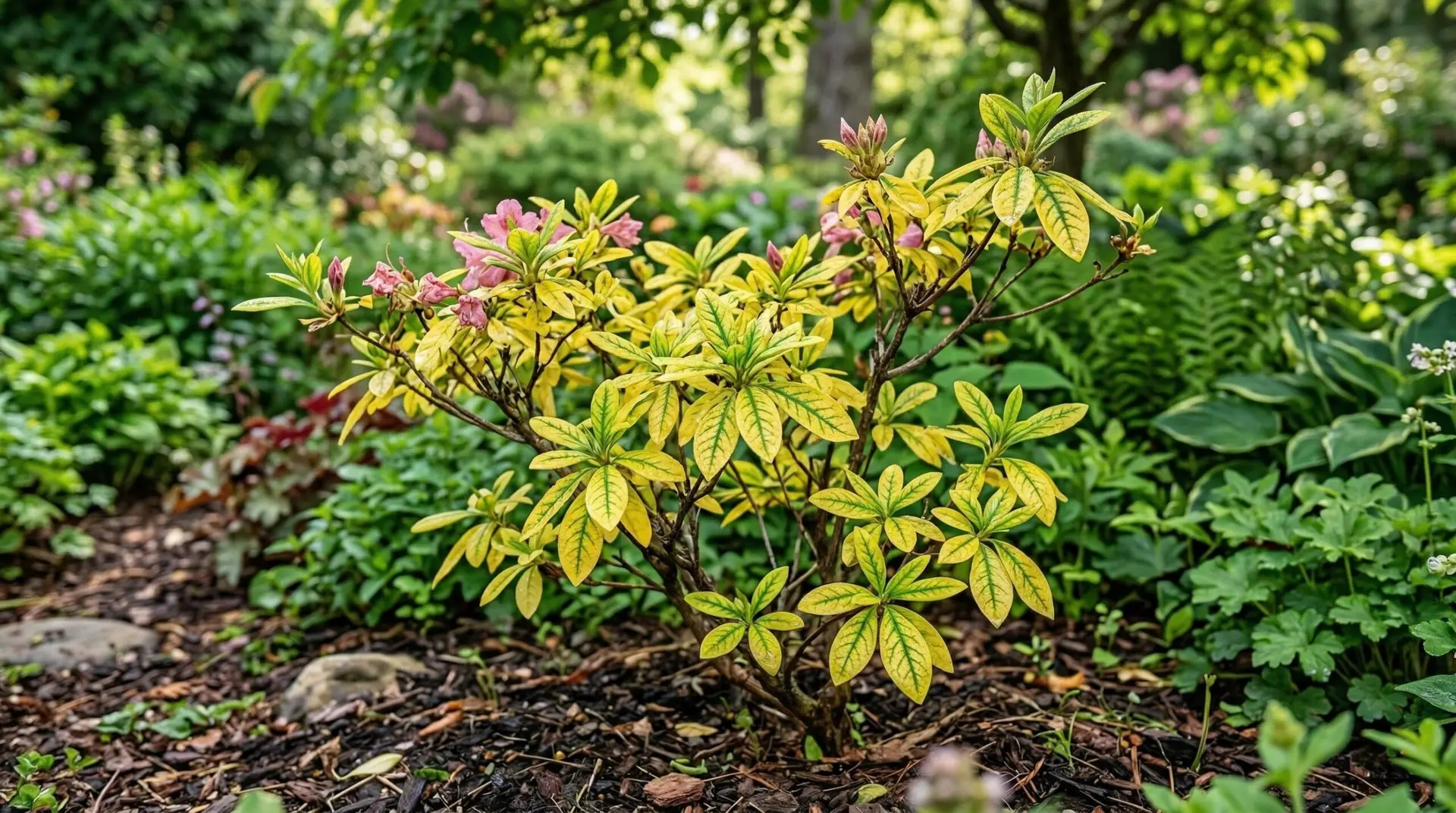
You walk out to your garden and notice your once-healthy azalea looks terrible. The leaves are turning yellow, brown patches are spreading across the foliage, and the entire shrub appears to be dying. This is one of the most common frustrations I see from home gardeners, and it usually leads to panic watering or dumping random fertilizers onto the roots. Azaleas communicate their problems very clearly through their leaves, and the specific pattern of discoloration tells you exactly what is going wrong. Instead of guessing, you need to look closely at the foliage and the soil to diagnose the actual issue. Most azalea problems stem from planting them in the wrong environment or failing to understand their shallow root systems. Once you identify the root cause, you can take specific steps to save your shrub and get it back on track.
Contents 3 sections
Decoding yellow leaves and soil chemistry
When an azalea develops yellow leaves with dark green veins, you are looking at a textbook case of iron chlorosis. This condition usually shows up on the newest growth first and happens because the plant cannot absorb iron from the ground. The problem is rarely a lack of iron in the dirt itself. Instead, the soil pH is too high, which locks up the nutrients and makes them unavailable to the roots. Azaleas require acidic soil with a pH between 4.5 and 6.0 to thrive. If you planted your shrub close to a concrete foundation, a concrete walkway, or in a yard with naturally alkaline soil, the lime leaching into the ground will slowly starve the plant over time.
Fixing iron chlorosis requires a two-step approach to correct both the immediate deficiency and the long-term soil chemistry. You can apply a liquid iron chelate spray directly to the leaves for a quick green-up, but this is only a temporary bandage. To solve the underlying problem, you must lower the soil pH by applying elemental sulfur or an acidifying fertilizer formulated for acid-loving plants. Much like a camellia, an azalea relies on this acidic environment to maintain its health year after year. Adjusting soil pH is a slow process that takes months to show permanent results, so you have to be patient and avoid over-applying chemicals. Maintaining a thick layer of pine needle or pine bark mulch will also help naturally acidify the soil as it breaks down.
Identifying pest damage and watering mistakes
Sometimes yellowing leaves are not a soil problem at all, but rather the work of azalea lace bugs. These tiny insects suck the sap from the foliage, leaving the tops of the leaves looking stippled, silvery, or pale yellow. Gardeners often confuse this washed-out appearance with a nutrient deficiency until the leaves eventually turn brown and drop off. If you suspect insect damage, flip a few leaves over and inspect the undersides. Lace bugs leave behind hard, black, tar-like spots of excrement that confirm their presence. Treating them requires coating the undersides of the leaves thoroughly with horticultural oil or insecticidal soap. You will need to repeat this application a few times throughout the season to break their life cycle and protect the new growth.
Brown, crispy leaves at the tips or margins usually point directly to a watering issue. Azaleas have extremely shallow, fine root systems that dry out rapidly during hot, dry weather, causing the foliage to scorch. On the opposite end of the spectrum, planting an azalea in heavy clay or a low-lying spot causes root rot. When roots drown, they cannot take up water, so the leaves turn a dull, sickly yellow-brown and wilt even though the ground is wet. You must check the soil moisture with your fingers before you water the plant again. If the dirt is completely dry, soak it deeply. If the soil is soggy and smells sour, you will need to dig the shrub up, trim away any mushy brown roots, and replant it in a spot with better drainage.
Managing winter weather and long term care
Evergreen azaleas often suffer from winter burn, which causes the foliage to turn a rusty brown or purple-brown during the colder months. This happens when the ground freezes solid and the roots are unable to replace the moisture that harsh winter winds strip away from the leaves. The damage is usually most severe on the side of the plant facing the prevailing wind. While the shrub might look dead or dying by late winter, you should not rush to cut off the brown branches. Many of these damaged leaves will simply drop off, and the seemingly dead branches will push out fresh green growth once the weather warms up in spring. Wait until after the plant finishes its normal blooming period to prune away any wood that is truly dead and brittle.
Preventing leaf problems is always easier than trying to rescue a declining shrub. Proper planting depth and consistent moisture management are your best defenses against both environmental stress and disease. Similar to the care required for a bigleaf hydrangea, keeping the roots insulated with organic mulch helps regulate soil temperature and moisture levels. The single most useful piece of advice I can give anyone planting an azalea is to plant it high. You should leave the top inch or two of the root ball sitting above the surrounding soil line and taper mulch up to the edges. This simple planting method prevents root rot, encourages the shallow roots to breathe, and eliminates half the problems gardeners face with these plants.
More About Azaleas
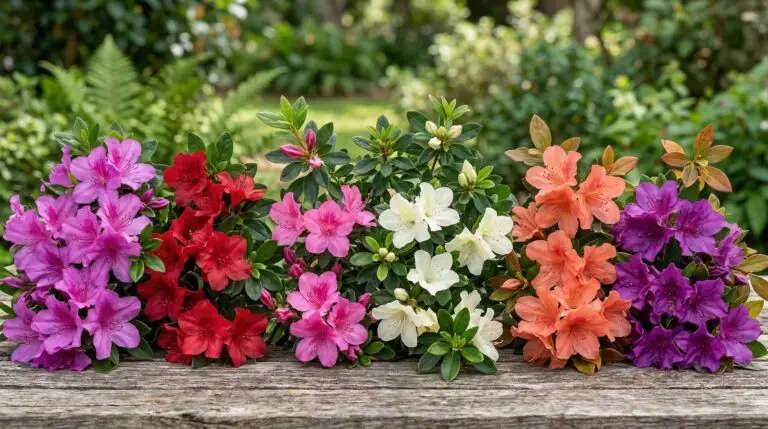
Encore azaleas that bloom three times a year for non-stop garden color
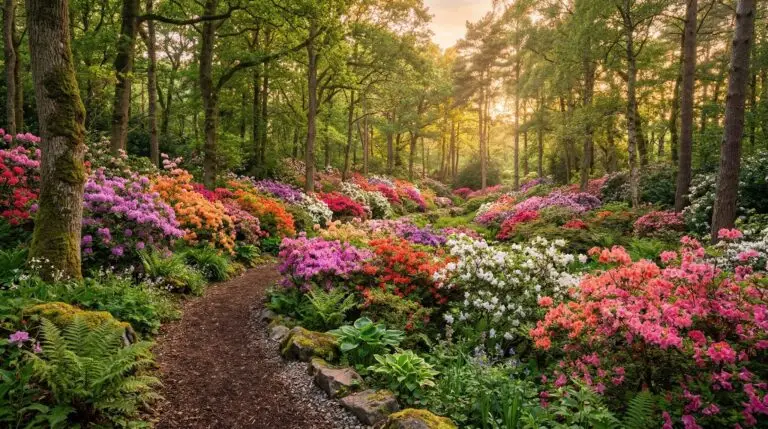
Azalea garden design ideas for a breathtaking spring landscape under trees
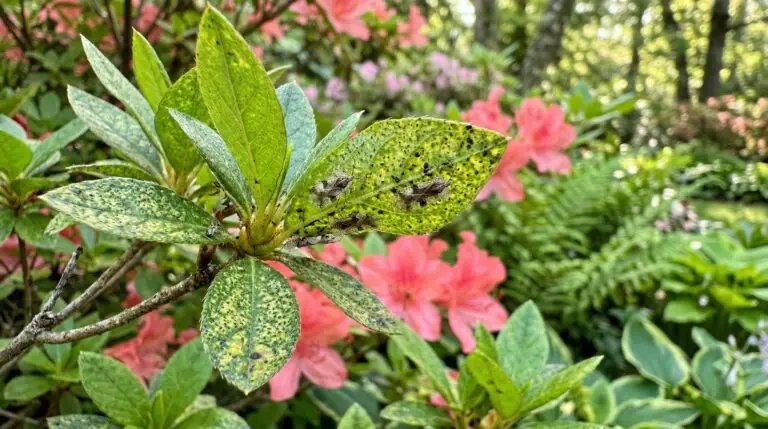
Common azalea pests and diseases and organic methods to control them
How to grow azaleas in containers for stunning patio and entryway displays
Native azaleas of North America and how to grow these fragrant wild beauties
Growing azaleas in acidic soil and how to lower soil pH naturally
How to choose the right azalea variety for your garden soil and climate
Azalea flower meaning and their place in Japanese garden culture and symbolism
How to prune azaleas at the right time without cutting off next year’s flowers
Enjoying our flower guides? Add YourFlowersGuide as a preferred source on Google. It helps more readers find us.
Add to Preferred Sources