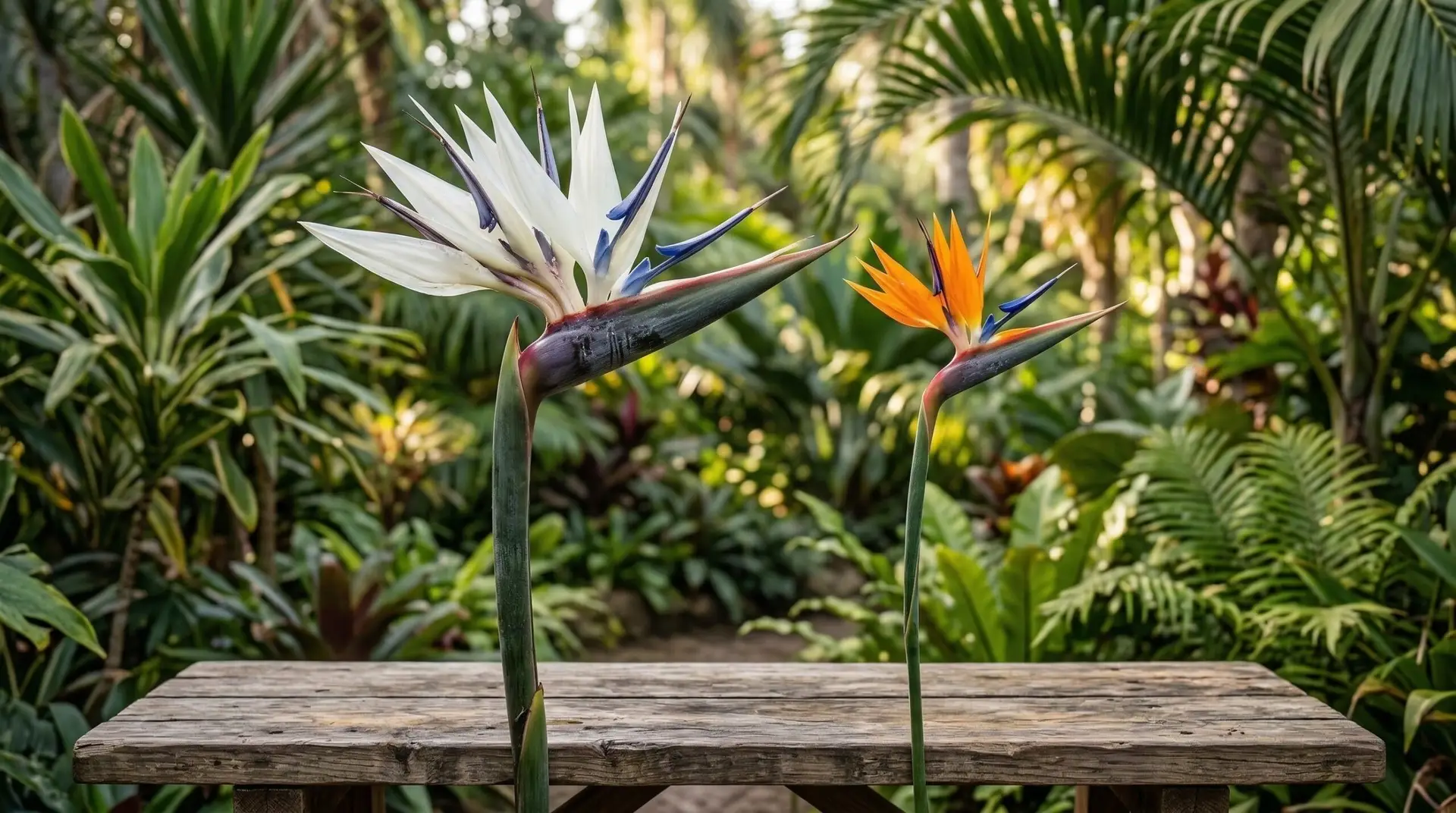
When you decide to add a tropical flair to your living space or garden, the bird of paradise is usually the first plant that comes to mind. Gardeners often head to the nursery and grab the first plant with that label, unaware that they are choosing between two entirely different species with vastly different futures. The choice between the giant white bird of paradise and the classic orange bird of paradise dictates whether you will end up with a manageable shrub or a towering tree. Strelitzia nicolai and Strelitzia reginae share a genus and a tropical aesthetic, but their growth habits, mature sizes, and care requirements diverge sharply. Understanding the strelitzia nicolai vs reginae debate helps you avoid planting a massive tree where you only wanted a small clump of colorful flowers.
Contents 5 sections
Size and growth habits
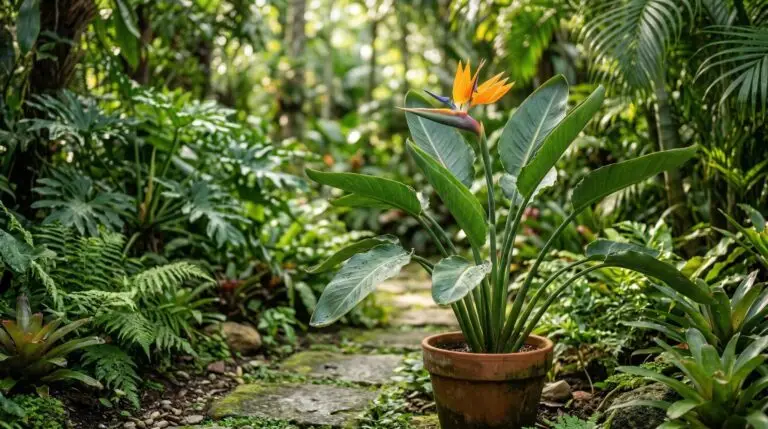
Strelitzia reginae is the classic orange bird of paradise that most people picture when they hear the name. This species grows as a trunkless, clumping evergreen that typically reaches four to six feet in height and spreads to a similar width. The leaves are stiff, gray-green, and shaped like narrow paddles or spears emerging directly from the soil line. Because of its moderate growth rate, this plant stays within its designated boundaries for years before needing division. It fits easily into small residential beds, courtyard gardens, and foundation plantings without overwhelming the surrounding architecture. You can plant it near walkways or windows knowing it will never grow tall enough to block your view or obstruct a path.
In sharp contrast, Strelitzia nicolai is a massive plant that easily earns its common name of giant bird of paradise. Outdoors in a warm climate, this species grows multiple woody trunks and can reach heights of twenty to thirty feet. The leaves are enormous, glossy green, and heavily split by the wind, giving the plant an appearance very similar to a wild banana tree. It grows rapidly when given enough water and warmth, quickly forming a dense, towering thicket that dominates the landscape. The root system of a mature giant white bird of paradise is aggressive and can lift sidewalks or damage plumbing if planted too close to a house. This is a canopy-level plant that provides deep shade and requires a substantial amount of horizontal and vertical space to thrive.
Bloom differences and visual appeal
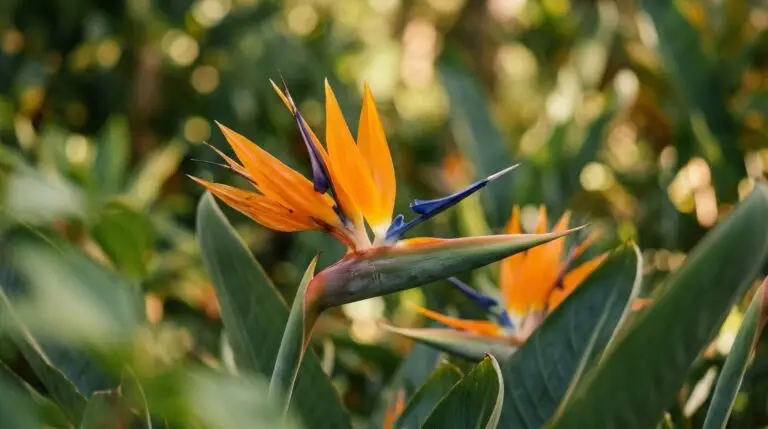
The flowers of Strelitzia reginae are the primary reason gardeners seek out this plant. The distinctive blooms feature bright orange sepals and deep blue petals that emerge from a stiff, beak-like green bract. These flowers sit on long stalks that rise just above the foliage, making them highly visible and accessible for cutting. A mature, healthy orange bird of paradise blooms heavily from late winter through early spring, and often produces sporadic flowers throughout the rest of the year. The blooms are long-lasting both on the plant and in a vase, making them a favorite for floral arrangements. The bright colors attract nectar-feeding birds and add a reliable splash of color at eye level.
The giant white bird of paradise produces a completely different type of flower that is much larger and less colorful. The blooms feature white sepals and dark blue or nearly black petals emerging from a purplish-black bract. While these flowers are structurally fascinating, they do not offer the same visual impact as the orange variety because they often bloom high up in the canopy, hidden among the massive leaves. Strelitzia nicolai requires several years of growth and significant size before it reaches maturity and begins to produce flowers. If you are growing this plant outside its ideal tropical zone or keeping it in a container, you will likely never see it bloom. Gardeners who choose the giant white variety usually do so for the architectural foliage rather than the flowers.
Indoor suitability and container growing
Bringing the giant white bird of paradise indoors has become a popular design choice for people wanting an instant indoor jungle. When confined to a pot, Strelitzia nicolai grows quickly and produces massive, sweeping leaves that fill empty corners and draw the eye upward. However, this rapid growth rate means the plant will eventually hit your ceiling and require frequent repotting into increasingly heavy containers. You have to accept that an indoor giant bird of paradise is cultivated strictly as a foliage plant, much like a large-scale Anthurium, because it lacks the light and space needed to trigger flowering. Maintenance involves regular dusting of the huge leaves and managing the inevitable splitting that occurs as the foliage unfurls. Eventually, most indoor giant white birds of paradise outgrow their homes and need to be cut back severely or replaced.
Strelitzia reginae offers a much more sustainable long-term relationship for indoor gardeners. Because it matures at a maximum of five or six feet, you can keep the orange bird of paradise in a living room or sunroom for decades without it taking over the entire house. It requires very bright, direct sunlight to thrive indoors, ideally placed directly in front of a south-facing window. If you provide enough light and maintain a tight fit in its container, an indoor Strelitzia reginae will actually reward you with its famous orange blooms. The slower growth rate means you will spend less time wrestling with heavy pots and messy soil changes. It remains a manageable, tidy houseplant that provides a tropical feel without the aggressive spatial demands of its giant cousin.
Climate requirements and outdoor care
Both types of bird of paradise are true tropical plants that thrive outdoors year-round only in USDA hardiness zones 10 and 11. They prefer well-draining soil, regular watering during their active growing season, and protection from freezing temperatures. The orange bird of paradise is slightly more forgiving of occasional cold snaps and can often survive in zone 9b if planted in a protected microclimate near a warm brick wall. In a mixed tropical bed, Strelitzia reginae pairs beautifully with the broad, colorful foliage of a Canna Lily to create a layered, bright garden. Maintenance for the smaller variety mainly involves cutting away dead leaves and removing spent flower stalks at their base. You will also need to divide the clumps every five to ten years to maintain vigor and prevent overcrowding.
Caring for a mature Strelitzia nicolai outdoors requires significantly more physical effort and planning. As the plant grows taller, the older, lower leaves naturally die and hang down against the trunks, creating a messy appearance. Removing these massive, heavy leaves requires tall ladders, long-handled pruning saws, and a way to dispose of substantial yard waste. The giant white bird of paradise also produces offshoots at its base, which must be aggressively cut back if you want to maintain a single or double-trunk tree form. Because the leaves act like giant sails, the plant is highly susceptible to wind damage, which shreds the foliage and can even snap the trunks in severe storms. You must plant it in an area protected from strong prevailing winds but open enough to accommodate its eventual thirty-foot height.
Selecting the right plant for your goals
Choosing between the giant white bird of paradise and the orange bird of paradise comes down to your available space and your primary reason for growing the plant. If you have a small residential yard, want reliable cut flowers, or need a permanent houseplant that will not hit the ceiling, Strelitzia reginae is the clear choice. It provides the tropical flowers you expect with a maintenance level that most homeowners can easily manage. On the other hand, if you have a large property in a frost-free climate and want a fast-growing, canopy-forming tree to create shade and privacy, Strelitzia nicolai is highly effective. You simply need to respect the giant white bird of paradise for the massive tree it is, planting it far away from foundations, pipes, and power lines. By matching the correct species to your specific environment, you ensure a healthy plant that fits your landscape rather than a constant maintenance headache.
More About Bird of Paradise
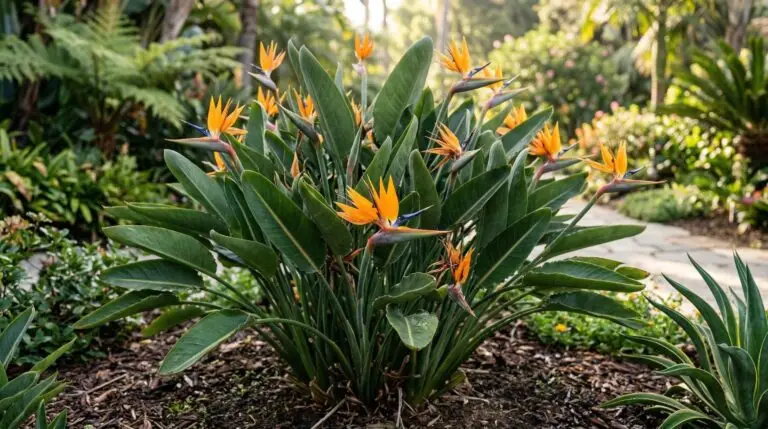
Growing bird of paradise outdoors in zones 9 through 11 for year-round tropical color
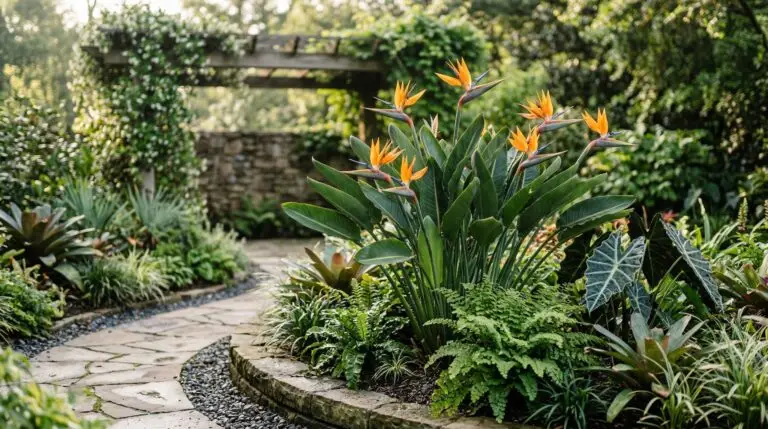
Using bird of paradise flowers in dramatic tropical floral arrangements
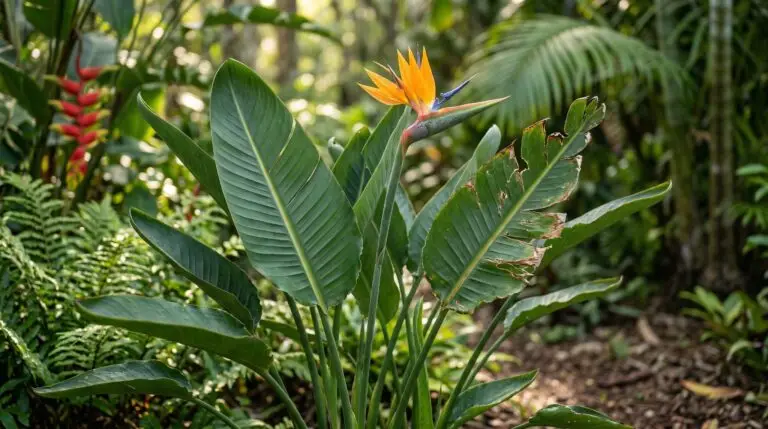
Bird of paradise leaf splitting and curling and what your plant is trying to tell you
How to divide bird of paradise to share with friends or fill your garden
Bird of paradise in modern interior design as a living sculptural statement
Bird of paradise in tropical landscape design for a resort-style backyard
Bird of paradise flower meaning and its connection to freedom and paradise
How to grow bird of paradise indoors and get it to bloom in your living room
How to repot a large bird of paradise plant without damaging the root system
Enjoying our flower guides? Add YourFlowersGuide as a preferred source on Google. It helps more readers find us.
Add to Preferred Sources